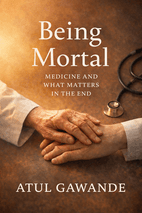
Atul Gawande's Being Mortal explores medicine's limitations in facing aging and death, advocating for care that prioritizes patient autonomy and quality of life. It is essential reading for medical professionals and anyone navigating end-of-life decisions.
Feature
Insta.Page
Blinkist
Shortform
Summary Depth
Full Chapter-by-Chapter
15-min overview
Section-by-section guides
Audio Narration
✓
✓
✓
Visual Mindmaps
✓
✕
✕
AI Q&A
✓
✕
✕
Quizzes
✓
✕
✕
PDF Downloads
✓
✕
✓
Price
$89.99/yr
$146/yr (PRO)
$199/yr
*Competitor data last verified July 2026.
1 Page Summary
Atul Gawande's Being Mortal examines the modern struggle with aging and death, arguing that medicine often fails to serve patients' true needs in life's final chapters. The book traces the historical shift from families caring for elders at home to the rise of nursing homes and institutionalized care, which prioritize safety and medical management over quality of life. Gawande introduces the crucial distinction between a mere existence—prolonged by medical interventions—and a meaningful life, defined by one's own priorities, such as independence, relationships, and cherished daily routines.
Through poignant patient stories and his own father's terminal illness, Gawande illustrates how the medical system, focused on fixing problems, frequently overlooks essential conversations about patients' fears and goals. He advocates for a paradigm shift toward geriatric and palliative care models that ask, "What is most important to you?" This allows for care plans that might trade some longevity for better days, enabling people to live as fully as possible until the very end. The book highlights practical frameworks, like the "best possible day" exercise, to guide these difficult discussions.
The lasting impact of Being Mortal lies in its powerful, humanistic call to reshape our approach to mortality. It has sparked widespread conversation among medical professionals and the public, emphasizing that our ultimate task is not to stave off death at all costs, but to ensure well-being and dignity throughout life's final journey. By championing honest communication and patient autonomy, Gawande provides a vital roadmap for navigating the complex choices at the end of life, making a profound case for why how we die is inseparable from how we have lived.
Introduction
Overview
This chapter introduces the profound disconnect between modern medicine's technical prowess and its ability to guide patients through mortality. The author, a surgeon, reflects on his own unpreparedness—despite his training—to help people face death, a subject glaringly absent from medical education. Through personal narrative and a critical case study, he argues that the medical system's failure to acknowledge and discuss dying has created a new, often more brutal, experience of the end of life, leaving both doctors and patients adrift.
The chapter opens with a striking admission: medical school taught him how to save lives but nothing about tending to their end. The sole discussion of mortality was a literary analysis of Tolstoy’s The Death of Ivan Ilyich, a story that seemed a relic of a less enlightened past. As students, they believed their modern compassion and honesty would prevent such suffering, focusing instead on the imperative to master diagnosis and cure.
A Patient's Story and a Doctor's Failure
This confidence was shattered during his surgical residency with a patient named Joseph Lazaroff. Facing paralysis from terminal cancer, Lazaroff chose a drastic, high-risk surgery with no hope of returning to his former life, driven by the delusion that it might. The medical team, including the author, facilitated this choice by meticulously outlining surgical risks while avoiding an honest conversation about the futility of his condition and what truly mattered to him in his remaining time. The operation was technically successful but led to a prolonged, torturous death in the ICU. The author’s realization is that the failure was not just the patient’s poor decision, but the collective avoidance by his doctors of a truthful discussion about his prognosis and desires.
The Modern Medicalization of Death
The narrative then widens to a systemic critique. Advances in science have turned aging and dying into medicalized experiences managed by professionals, yet medicine is "alarmingly unprepared" for this role. Death has been moved from the home to the hospital, becoming unfamiliar and shocking, even to doctors. The author describes his own early encounters with patient deaths as violating a perceived rule where "we always win," leading to nightmares and a deep sense of personal failure. He contrasts this with an earlier generation of doctors more willing to accept "nature's final victory."
The Crisis of Identity and Fixing
The author delves into the doctor's psyche, where professional identity and satisfaction are built on competence and the ability to fix problems. A patient who cannot be cured represents a profound threat to this identity. The medical system, brilliant at solving fixable issues, has no good answers for inevitable decline, leading to callousness and extraordinary suffering. The "experiment" of making mortality a medical experience is, he argues, failing.
The Purpose of the Inquiry
Finally, the chapter frames the book itself as an exploration of this modern experience of mortality. It questions the current state where the end of life is given over to aggressive, often dehumanizing treatments that deny people what they need most: comfort, connection, and honesty. The author seeks to understand how we arrived here and to look for better approaches, challenging the reader to consider whether, in our refusal to accept life's inexorable cycle, we are already sacrificing the sick and aged.
Key Takeaways
Medical training emphasizes curing disease but neglects teaching how to care for the dying, leaving doctors ill-equipped for one of their most critical roles.
Honest, compassionate conversations about mortality between doctors and patients are frequently avoided, leading to choices that prioritize false hope over quality of life.
The shift of death from the home to the hospital has medicalized dying, but the healthcare system is structured to "fix" problems and struggles profoundly when cure is impossible.
A doctor's professional identity is often tied to solving problems, making the inevitability of death for some patients a source of deep personal and systemic conflict.
The current approach to end-of-life care often inflicts unnecessary suffering, and there is an urgent need to find better ways to honor what matters most to people as they die.
Key concepts: Introduction
1. Introduction
The Medical Education Gap
Medical training focuses on saving lives but neglects teaching how to care for the dying
The sole discussion of mortality was a literary analysis of Tolstoy's 'The Death of Ivan Ilyich'
Students believed modern compassion would prevent suffering, focusing instead on diagnosis and cure
Case Study: Joseph Lazaroff
A terminal cancer patient chose high-risk surgery based on delusion rather than realistic hope
Doctors meticulously outlined surgical risks but avoided honest conversation about futility
Technically successful surgery led to prolonged, torturous death in ICU
Failure was collective avoidance of truthful discussion about prognosis and patient desires
Systemic Medicalization of Death
Advances turned aging and dying into medicalized experiences managed by professionals
Death moved from home to hospital, becoming unfamiliar and shocking
Medicine is 'alarmingly unprepared' for its role in managing mortality
Doctors experience patient deaths as violating the rule 'we always win'
Doctor's Psychological Conflict
Professional identity built on competence and ability to fix problems
Incurable patients represent profound threat to this identity
Medical system brilliant at solving fixable issues but has no answers for inevitable decline
Leads to callousness and extraordinary suffering when cure is impossible
The Failed Experiment
Making mortality a medical experience is failing as an experiment
End of life given over to aggressive, dehumanizing treatments
Denies people what they need most: comfort, connection, and honesty
Current approach inflicts unnecessary suffering while refusing life's inexorable cycle
Purpose of the Inquiry
Explores modern experience of mortality and how we arrived at current state
Seeks better approaches to end-of-life care
Challenges reader to consider if we're sacrificing the sick and aged
Urgent need to honor what matters most to people as they die
💡 Try clicking the AI chat button to ask questions about this book!
1. The Independent Self
Overview
This section introduces the book's central theme by contrasting two opposing models of aging and independence. Through the personal stories of the author’s grandfather in India and his wife’s grandmother in America, it explores how modern society’s cherished ideal of self-reliance ultimately collides with the unavoidable realities of decline and frailty.
Alice Hobson and the American Ideal
The narrative begins with the author’s introduction to Alice Hobson, his wife’s grandmother. At seventy-seven, Alice epitomized fierce independence, living alone in her Arlington home for two decades after her husband’s sudden death. She mowed her lawn, fixed her plumbing, drove a large car, and delivered meals-on-wheels to others. Her life represented a successful, self-directed American old age, a stark contrast to the author’s father’s Indian upbringing, where he believed families were obligated to care for their elders at home. His father’s assimilation into American culture never included accepting how the elderly could live—and die—alone.
Sitaram Gawande’s Interdependent World
The story then shifts to the author’s grandfather, Sitaram Gawande, in his rural Indian village. Over a hundred years old, he required assistance with most daily activities yet lived a life of great dignity and purpose within a multigenerational household. His family enabled his independence on his own terms, accompanying him on nightly inspections of his farm fields—an unthinkable risk in a Western context. His death at nearly 110, surrounded by family after a minor accident, completed a picture of traditional old age where how one lived was a personal choice, supported by a web of familial obligation.
The Historical Shift to the Autonomous Self
The chapter then examines how society moved from Sitaram’s world to Alice’s. Historically, elders were rare and held authority as repositories of knowledge. Multigenerational living was the practical solution for care. This changed with increased longevity, smaller families, economic development, and technologies that devalued old-age wisdom. Crucially, the shift was driven by desire, not coercion: when given resources and opportunity, both the young and the old sought freedom from obligatory interdependence. The rise of pensions, retirement, and communities like Sun City offered the elderly autonomy and “intimacy at a distance,” venerating the independent self over the venerated elder.
The Inevitable Crisis of Independence
The final part returns to Alice Hobson at eighty-four. Her remarkable independence begins to fray with episodes of confusion and a series of falls. A visit to the doctor yields prescriptions but no real solutions for her increasing frailty. Her story illustrates the fundamental flaw in the modern paradigm: the relentless pursuit of independent living offers no guide for what happens when it inevitably becomes unsustainable. The medical system is equipped to treat problems, not to provide direction or guidance for this phase of life, setting up the central dilemma the book will explore.
Key Takeaways
Modern society venerates the independent self, a dramatic departure from historical models where elders were cared for within family units.
This shift is not a tragedy but a product of progress—greater longevity, economic means, and personal freedom desired by both generations.
However, this ideal fails to account for the universal reality of decline. When independence becomes impossible, our society lacks a clear, supportive pathway, leaving individuals and families adrift without adequate systems or philosophy for this final chapter.
Key concepts: 1. The Independent Self
2. 1. The Independent Self
Introduction: Two Models of Aging
Contrasts traditional interdependent aging with modern independent aging
Uses personal stories of Alice Hobson (American) and Sitaram Gawande (Indian)
Highlights the central collision between self-reliance ideals and realities of decline
Alice Hobson: The American Independent Ideal
Epitomizes fierce independence at 77, living alone for decades
Maintains self-sufficiency through home maintenance, driving, and volunteering
Represents successful American old age through self-direction
Contrasts with author's father's Indian upbringing expecting family elder care
Sitaram Gawande: Traditional Interdependent Aging
Lives with dignity at over 100 within multigenerational household
Receives assistance for daily activities while maintaining purpose
Family enables independence on his terms through nightly farm inspections
Dies at nearly 110 surrounded by family, completing traditional old age model
Historical Shift to Autonomous Self
Elders historically held authority as repositories of knowledge
Multigenerational living was practical care solution
Shift driven by longevity, smaller families, economic development, and technology
Both young and old sought freedom from obligatory interdependence when possible
Pensions, retirement, and communities like Sun City offered autonomy and 'intimacy at a distance'
Crisis of the Independent Model
Alice's independence frays at 84 with confusion and falls
Medical system treats problems but provides no guidance for frailty
Modern paradigm lacks solutions when independent living becomes unsustainable
Sets up central dilemma: society venerates independence but has no pathway for its loss
Key Conclusions
Modern society venerates independent self over traditional family care models
Shift represents progress through longevity, economic means, and desired freedom
Ideal fails to account for universal reality of physical and cognitive decline
Society lacks supportive systems and philosophy for life's final chapter
2. Things Fall Apart
Overview
Medicine has reshaped our final years into a new, unfamiliar landscape. Instead of a sudden drop at the end of life, many now experience a long, slow fade, a prolonged period of decline where the body’s systems gradually fail. This universal process involves a systematic unraveling: muscles shrink, bones weaken, arteries stiffen, and the brain itself loses mass. While debate continues over whether aging is programmed genetic wear or simple wear-and-tear, the outcome is a state of frailty where the body’s built-in redundancies are exhausted.
Society and the medical system are strikingly unprepared for this new reality. Demographics have shifted, yet structures like retirement planning and medical training haven’t kept pace. The field of geriatrics, which specializes in the holistic care of the elderly, is powerful but undervalued. It focuses not on curing single diseases but on managing the whole person to preserve function and independence—simplifying medications, ensuring nutrition, and preventing crises like falls. This approach is vividly illustrated through contrasting stories: Jean Gavrilles, whose life was stabilized by a geriatrician’s focus on her feet and overall risk, and Alice, whose unrecognized decline led to a cascade of disasters.
However, geriatric care is in crisis. It is proven to keep people healthier and more independent, but the healthcare system financially prioritizes dramatic procedures over this meticulous management, leading to a dire shortage of specialists. A proposed solution is to train all primary care providers in geriatric principles, a monumental task given how few medical students currently learn them.
The chapter brings these themes to a deeply personal level with Felix Silverstone, an elderly geriatrician navigating his own aging. He manages his and his wife’s care with deliberate skill, embodying the goal of a well-managed old age. A drive with Felix highlights the poignant tension of aging: his complete competence behind the wheel is a testament to preserved autonomy, yet it exists under the shadow of the inevitable loss to come. The chapter closes not on decline, but on a quiet moment of capability and appreciation, capturing the quality of life that holistic care seeks to sustain.
The Altered Trajectories of Decline
Medicine has dramatically reshaped the arc of human health and dying. Historically, life was a straight line followed by a sudden, fatal drop. Medical advances first succeeded in delaying this drop, allowing people to live longer before a crisis, as with many cancers where decline is steep but postponed.
For chronic illnesses like congestive heart failure, the path downward is no longer a cliff but a drawn-out, hilly road. Interventions in hospitals can repeatedly rescue patients from the brink, but each recovery leaves them at a lower baseline, increasingly fragile, until no rally is possible.
The most significant new pattern is the "long, slow fade" of old age. An increasing number of people live out a full lifespan, dying not from a single disease but from the cumulative failure of multiple bodily systems while medicine performs maintenance. Despite this being a common modern experience, we often view this extended period of decline with shame, seeing the need for help as a weakness, a perspective the medical community often reinforces by focusing only on fixable problems.
The Systematic Unraveling of the Body
Aging is a universal process of accumulated decay across every bodily system. Teeth enamel wears away, gums recede, and jawbones weaken, often leading to tooth loss. Simultaneously, soft tissues harden as calcium deposits stiffen blood vessels, joints, and even the lungs, contributing to hypertension.
Muscle mass diminishes significantly, while the heart thickens and loses peak output. A detailed look at the hand reveals this multisystem collapse: thinning thumb muscles, bone-density loss, arthritic joints, deteriorating nerves that reduce sensitivity and dexterity, and slower processing speeds. The brain itself shrinks, particularly areas governing memory and judgment, increasing the risk of dementia. These processes can be slowed but not stopped.
The Debate: Why Do We Age?
The cause of aging is debated between two models. The classical "wear-and-tear" theory posits random, gradual accumulation of damage. The newer view suggests a more programmed, genetic process, citing how single-gene alterations can extend life in worms and flies.
However, evidence leans toward wear-and-tear. For most of history, humans died young from external causes, not old age. Genetics accounts for very little of an individual's lifespan. Instead, we seem to fail like complex engineering systems: we are built with layers of redundancy (extra kidneys, cell repair mechanisms), but as damage accumulates across many components, backups are exhausted, leading to the generalized state of frailty. This manifests in diverse ways—gray hair from exhausted pigment cells, age spots from cellular waste, and failing eyesight from hardened lenses.
Societal and Medical Unpreparedness
This extended aging presents profound challenges that society and medicine have largely failed to address. Demographics have "rectangularized," with as many fifty-year-olds as five-year-olds, yet we cling to outdated models like retirement at sixty-five and save too little for extended old age.
Medicine itself is unprepared. Despite a growing elderly population, the number of geriatricians has fallen, and medical students shun low-paying fields focused on complex, chronic care. Many doctors are overwhelmed by elderly patients with multiple, intertwined complaints that cannot be "cured," missing the crucial expertise required to manage them effectively. This expertise is not about fixing individual problems but about optimizing a person's entire function and quality of life, a skill exemplified in the comprehensive, patient-centered approach of a geriatrics clinic.
Dr. Bludau’s Focus: The Feet as a Window
Dr. Bludau’s examination of Jean Gavrilles takes an unexpected turn. Instead of focusing on her possible cancer or severe back pain, he dedicates significant time to inspecting her feet. He explains this is a critical diagnostic practice, revealing a bow-tied, seemingly fit patient whose neglected feet signaled dangerous self-neglect. For Gavrilles, her feet tell a specific story: swollen, with unclipped nails, sores, and calluses. Combined with her splay-footed gait, dry tongue, and five prescription medications, they point to her greatest immediate danger—not disease, but the high risk of a catastrophic fall.
He defines a doctor’s job as supporting quality of life: freedom from disease and retaining function for engagement. His intervention is practical and systemic: a referral to a podiatrist, a change in her blood pressure medication to avoid dehydration, and dietary and social adjustments to improve her nutrition. Almost a year later, the plan works; she is eating better, has gained weight, and, crucially, has not fallen.
Alice’s Unrecognized Decline
In stark contrast, Alice’s path shows what happens without this geriatric perspective. Her falls were missed as alarm bells. A car accident (backing into a neighbor's bushes) was rationalized. The final catalyst was a traumatic scam where contractors exploited her vulnerability, cheating her out of thousands. Neighbors, witnessing this event and her growing struggles with daily tasks, alerted the family to her unsafe living situation. The police caught the criminals, but the damage was done; the process highlighted her fragility, leading her son to suggest looking at retirement homes. Her decline was a series of unconnected crises, never understood as a manageable whole.
The Proven Power and Peril of Geriatrics
Research underscores what Jean Gavrilles received and Alice missed. A University of Minnesota study assigned high-risk elderly patients to either usual care or a geriatrics team. The geriatrics group was a quarter less likely to become disabled, half as likely to become depressed, and 40 percent less likely to need home health services—a dramatic improvement in resilience and independence.
Despite these proven results, geriatrics is financially unsustainable in the current system. The study’s lead investigator, Chad Boult, saw the university close his geriatrics division because Medicare wouldn’t cover the team’s cost, even as it pays for far more expensive, less comprehensively beneficial procedures. This reflects a societal preference for fixing specific problems over the difficult, holistic work of managing decline and sustaining function.
A Geriatrician Faces His Own Aging
The chapter then turns to Felix Silverstone, an eighty-seven-year-old geriatrician navigating his own aging. He meticulously manages his health—using lotion for dry skin, exercising, and focusing deliberately to combat memory lapses. His central purpose is caring for his blind, memory-impaired wife, Bella; this caregiving gives him worth but also forces honest self-assessment.
A dinner with Felix and Bella vividly illustrates the challenges of age. Both choke on their food, a common issue due to spinal changes that alter the angle of the head and throat. Felix notes the sound of others choking throughout the dining room. Yet, through careful management, luck, and financial planning, he maintains a life of independence and purpose, embodying the modest, achievable goal of a well-managed old age.
A Dire Shortage and a Proposed Solution
The system is not prepared for the coming age wave. Boult states it is “too late” to train enough geriatricians to meet demand, with fewer than three hundred graduating annually. His alternative strategy is to use geriatricians to train all primary care providers in geriatric principles. This is a daunting task, given that 97% of medical students take no geriatrics course, but it may be the only viable path to improve life for the elderly.
Key Takeaways
The greatest threat to an elderly person’s independence is often not a specific disease, but the cumulative effect of frailty, with falling being a critical risk.
Geriatric medicine focuses on holistic management—simplifying medications, ensuring nutrition, foot care, and social connection—to build resilience and maintain function.
While powerfully effective at preserving quality of life, geriatric care is undervalued and underfunded because it manages unfixable decline rather than offering dramatic cures.
Personal stories illustrate the stark difference between managed decline (Jean Gavrilles, Felix Silverstone) and unrecognized, cascading decline (Alice).
There is a severe shortage of geriatric specialists, necessitating a shift toward training all primary care professionals in core geriatric principles.
Felix Behind the Wheel
The narrative shifts to a direct observation as Felix drives the author to a store a few miles away. His vehicle is a meticulously maintained, low-mileage Toyota Camry. Despite the author's admitted apprehension—bolstered by statistics showing the elderly as the highest-risk drivers and grim anecdotes like the fatal Santa Monica crash—Felix demonstrates complete control. He navigates traffic, obeys signals, and even adeptly corrects course when confronted with a confusing construction zone. This competence stands in stark contrast to the earlier account of Alice's accident.
Yet, the underlying tension remains. The hour when he must surrender his keys is an inevitability, not an if but a when. For now, however, that concern is set aside. The passage concludes not with fear or decline, but with a moment of simple, capable pleasure. Driving on an open road with the window down, Felix appreciates the lovely night, embodying a fragile and temporary victory over the constraints of aging.
Key Takeaways
Competence and Risk Coexist: Even within a narrative of decline, moments of preserved ability and normalcy can persist, creating a complex picture of aging.
The Specter of Loss Looms: Every display of current capability is shadowed by the known statistical risks and the inevitable future loss of that same ability, such as driving.
The Value of Autonomy: The simple act of driving represents profound independence and a connection to the wider world, making its eventual relinquishment a deeply significant and difficult milestone.
A Moment of Presence: Amidst the clinical discussions of risk, the chapter ends on a human note—a quiet, appreciative moment that transcends the medical framework and captures a quality of life worth preserving.
Key concepts: 2. Things Fall Apart
3. 2. Things Fall Apart
The New Landscape of Aging and Decline
Medicine has transformed the end of life into a 'long, slow fade' rather than a sudden drop
The universal aging process involves systematic unraveling: muscle loss, bone weakening, arterial stiffening, and brain shrinkage
Society and medical systems are unprepared for this demographic shift toward extended frailty
The Altered Trajectories of Decline
Historical health trajectory was a straight line followed by a sudden fatal drop
Chronic illnesses now follow a 'drawn-out, hilly road' with repeated rescues leaving lower baselines
The 'long, slow fade' represents dying from cumulative system failure rather than single disease
Society often views extended decline with shame, seeing need for help as weakness
The Systematic Unraveling of the Body
Aging involves accumulated decay across all bodily systems simultaneously
Key manifestations include tooth loss, tissue hardening, muscle mass reduction, and heart changes
Proven to keep people healthier and more independent but financially undervalued by healthcare systems
Faces crisis due to shortage of specialists and lack of training in medical education
Societal and Medical Unpreparedness
Demographics have 'rectangularized' but structures like retirement planning haven't kept pace
Medical training prioritizes dramatic procedures over meticulous geriatric management
Proposed solution: train all primary care providers in geriatric principles
Current medical students receive minimal education in geriatric care
The Personal Dimension: Felix Silverstone's Story
Illustrates the goal of well-managed aging through an elderly geriatrician's experience
Demonstrates deliberate skill in managing both his and his wife's care
Highlights the tension between preserved autonomy and inevitable future loss
Captures the quality of life that holistic geriatric care seeks to sustain
The Geriatric Approach: Holistic Management vs. Crisis Care
Geriatric expertise focuses on optimizing overall function and quality of life, not just curing individual diseases.
The approach involves practical, systemic interventions like medication review, nutrition, foot care, and social support.
Without this perspective, decline appears as a series of unconnected crises rather than a manageable whole.
Feet as a Diagnostic Window and Fall Prevention
Foot examination reveals critical clues about self-neglect and overall health in elderly patients.
Neglected feet (swelling, unclipped nails, sores) combined with other signs point to a high risk of catastrophic falls.
Preventing falls is often more crucial for independence than treating specific diagnosed diseases.
Contrasting Case Studies: Managed vs. Unrecognized Decline
Jean Gavrilles: Successful geriatric intervention (podiatry, medication adjustment, nutrition) prevented falls and improved function.
Alice: Missed warning signs (falls, car accident, financial scam) led to cascading decline and loss of independence.
The difference highlights the impact of having or lacking a comprehensive geriatric assessment.
Evidence and Economic Paradox of Geriatric Care
Research shows geriatric teams dramatically reduce disability, depression, and need for home health services.
Despite proven effectiveness, geriatric care is financially unsustainable under current Medicare reimbursement models.
Society undervalues holistic management of decline, preferring to pay for specific, high-cost procedures over comprehensive care.
The Geriatrician's Personal Perspective on Aging
Felix Silverstone exemplifies managed aging through meticulous self-care and adaptive strategies.
Common age-related challenges, like choking due to spinal changes, are widespread but manageable.
Purposeful caregiving (for his wife) provides meaning and motivates careful management of his own health.
Systemic Shortage and a Strategic Alternative
A severe shortage of geriatricians exists, with too few trained annually to meet the growing elderly population.
A proposed solution is to use geriatricians to train all primary care providers in geriatric principles.
This task is daunting given most medical students receive no geriatrics training, but it may be the only viable path forward.
Felix's Driving Competence
Felix demonstrates complete control and skill while driving, contradicting stereotypes about elderly drivers
His meticulous vehicle maintenance reflects his ongoing capability and attention to detail
The direct observation contrasts sharply with earlier accounts of age-related driving accidents
Felix successfully navigates complex situations like confusing construction zones
The Tension Between Capability and Risk
Statistical evidence and anecdotes create apprehension about elderly driving safety
Every competent action exists alongside the knowledge of inevitable future decline
The narrative acknowledges both present ability and looming limitations
Driving represents a fragile victory over aging's constraints
Autonomy and Independence
Driving symbolizes profound personal freedom and connection to the world
The eventual loss of driving privileges represents a major life transition
Maintaining driving ability preserves quality of life and self-determination
The simple pleasure of driving reflects deeper values of independence
Human Experience Beyond Medical Frameworks
The chapter concludes with a moment of simple appreciation and presence
Personal experience transcends clinical discussions of risk and statistics
Quality of life moments are as important as safety considerations
The narrative balances objective risk with subjective human experience
3. Dependence
Overview
This chapter explores the heartbreaking transition into frailty and the systems we've built to manage it, revealing a deep tension between safety and a life worth living. It opens with the intimate story of Felix and Bella, whose decades-long interdependence is shattered not by a single event, but by a cascade of small losses that ultimately forces them into impersonal institutional care. Bella’s final days at home, though exhausting, underscore a fundamental human need: the comfort and identity found in one’s own space and rituals.
This theme is echoed in the story of Alice Hobson, whose logical move to a safe senior-living community results in a profound emotional exile. Despite its comforts, the place strips her of the autonomy and familiar routines that made life hers, leading to a withdrawn depression. Her experience forces a critical question: how did we create places that, while eliminating the material misery of the past, so often feel desolate?
To answer this, the narrative traces the accidental creation of the modern nursing home system. It didn't spring from a desire to care for the elderly, but as a byproduct of hospital expansion and government funding rules designed to solve other problems, like clearing out poorhouses and freeing up hospital beds. This origin story helps explain why these institutions are organized the way they are.
Life inside is analyzed through the lens of a total institution, a place where all daily activities are bundled under one authoritative schedule aimed at safety and medical management. For residents, this feels like a loss of personhood, where priorities like preventing falls outweigh privacy, choice, or purpose. In response, residents wage daily battles for autonomy—small rebellions like sneaking a cookie or refusing a walker—which are often seen as behavioral problems rather than expressions of human need.
The chapter concludes with Alice’s quiet but definitive reclamation of control. Within the institution that managed her life, she ultimately chose the manner of her death, a stark final act of self-determination. The overarching insight is that our system, built for safety and survival, frequently fails at its most important task: supporting what makes life meaningful in the face of dependence.
The Fragility of Interdependence
Felix and Bella’s story illustrates how dependence often arrives not through a single catastrophic event, but through a gradual accumulation of losses. Felix remained robust into his nineties, but Bella’s decline—her blindness, hearing loss, and dementia—transformed their relationship. He became her primary caregiver, bathing her, dressing her, and helping her eat. This care, while exhausting, was infused with profound meaning; their physical closeness and decades-long private conversation remained a deep source of comfort and love for them both.
Their carefully managed world was shattered by a seemingly minor medical event: a ruptured eardrum that rendered Bella completely deaf. This final sensory loss severed their ability to communicate, plunging her into severe confusion and making basic care impossible. Though a partial recovery of her hearing provided a temporary reprieve, it exposed the precariousness of their situation. Felix lived in dread of the next crisis, focusing only on the immediate future to avoid overwhelming depression.
That crisis arrived when Bella fell, breaking both her legs. Forced onto the nursing home floor for round-the-clock care, they encountered a system that was professionally competent but profoundly impersonal. Staff often treated Bella as a patient rather than a person, ignoring the nuanced care methods Felix had perfected. Frustrated, Felix moved her back to their apartment, hiring private aides. The exhausting six weeks that followed were nevertheless a relief because they were home. Bella died just four days after her casts were removed, leaving Felix despondent but comforted that her final weeks were spent in the warmth of their shared life, not in the disorientation of an institution.
The Unwilling Exile
Alice Hobson’s move to Longwood House, a modern senior-living community, was logical and meant to ensure her safety after she was victimized in her own home. Her family carefully selected a place near them, with friends, and arranged her apartment with her own belongings to create familiarity. Yet, from the outset, Alice was withdrawn and unhappy. The final blow to her independence came immediately when, confused, she mistakenly reported her car stolen and subsequently gave up driving for good.
Despite the facility’s comforts, activities, and safety, Alice disengaged. She stopped cooking, ate little, avoided social groups, and sank into a depression medication couldn’t alleviate. Her core complaint was universal: “It just isn't home.” The very structures that made Longwood House safe—monitored medications, enforced use of a walker, hired aides—felt like a loss of control. Her apartment was "independent living" in name only; in reality, it was a supervised environment where her autonomy was steadily eroded. For Alice, like the iconic Harry Truman who refused to leave his home before the Mount St. Helens eruption, having a life of one’s own was paramount. Longwood House, for all its benefits, felt like a cheerful prison where her keys and passport had been taken.
From Poorhouses to "Homes"
The modern system of care for the dependent elderly has its roots in the dreaded poorhouses of the past. In the early 20th century, before Social Security, destitute older people without family support often faced incarceration in these grim, filthy institutions where the frail were mixed with the mentally ill and indigent. They were places of neglect and horror, a terror that haunted the aged.
Social Security and growing prosperity abolished poorhouses in the industrialized world, replacing them with professional nursing homes that provide safety, nutrition, and medical care. Yet, as the account of a contemporary charity-run old age home in New Delhi makes viscerally clear, the specter of the poorhouse persists globally where development has fractured family structures without creating adequate societal support.
The critical question raised by Alice’s experience is how, in seeking to eliminate the material misery of the poorhouse, we created places that can still feel desolate and odious by stripping residents of autonomy and the essential feeling of being at home. This transition sets the stage for understanding how a medical model came to dominate society's approach to aging, prioritizing safety and care over personal sovereignty.
The Accidental Creation of a System
The modern nursing home emerged not from a conscious design to support the elderly but as a byproduct of other societal shifts. The mid-20th century saw medicine transform into a powerful, heroic enterprise. With breakthroughs like antibiotics and advanced surgeries, hospitals became symbols of hope and cure, funded aggressively by programs like America’s Hill-Burton Act. This created a new expectation: one could go to a hospital and demand, “Cure me.”
Simultaneously, policymakers discovered that pensions alone couldn't empty the poorhouses. Elderly individuals were there not due to poverty alone, but due to frailty and infirmity with no other support. As hospitals proliferated, they became the new, more attractive destination for the infirm, finally clearing out the poorhouses. However, hospitals couldn't cure chronic age-related debilities, leading to overcrowding. In response, government funding in 1954 created separate “custodial units” for extended recovery—the first official nursing homes. They were conceived to free up hospital beds, not to serve the needs of the dependent elderly.
This pattern of solving other problems continued. When Medicare passed in 1965, a fabricated concept of “substantial compliance” with standards allowed thousands of substandard nursing homes to qualify for funding. The industry exploded, followed by scandals of neglect and tragedies like fatal fires. While regulations later improved safety, the fundamental issue remained: these institutions were not built to make life worth living for their residents.
Life Within a "Total Institution"
The experience of living in a nursing home, as illustrated by Alice’s story and sociological study, is one of profound loss. After a hip fracture, Alice was moved to a skilled nursing unit, stripped of privacy and control over her daily schedule, belongings, and social environment. Sociologist Erving Goffman identified such places as “total institutions,” which break down the normal boundaries of life. All activities are conducted in one place, under a single authority, on a strict schedule, in the company of many others all treated the same, all in service of the institution’s official aims.
In a nursing home, those official aims are narrowly focused on safety and basic medical care—preventing bedsores, managing weight, avoiding falls. For residents, this feels less like living and more like being incarcerated for being old. As one self-admitted resident noted, she expected more from life than safety; she missed her friendships, privacy, and sense of purpose.
The Daily Battles for Autonomy
Within these facilities, a constant, quiet struggle occurs between institutional priorities and residents’ desires for autonomy. Staff describe residents as “feisty” when their assertiveness interferes with routines—such as demanding to use the bathroom on their own schedule, refusing walkers, or sneaking forbidden foods like cookies or cigarettes. These acts are rebellions against a life stripped of personal choice.
The conflict is managed with varying degrees of coercion, from confiscation of contraband to chemical restraints in the worst cases. Rarely is there an effort to understand what gives a resident’s life meaning and to help them build a home around that purpose. The system addresses logistical and safety goals but fails at the primary goal of supporting a life worth living in the face of frailty.
A Quiet Conclusion
For Alice, the conclusion to this loss of self was a conscious choice. After whispering “I’m ready” to her son, she secured a Do Not Resuscitate order. She then endured the institutional routine until a final medical crisis arrived. One night, experiencing abdominal pain and vomiting blood, she chose silence—pressing no call button, alerting no one. She was found dead the next morning, having exercised the ultimate control over her life by deciding when and how to end her time within the institution.
Key Takeaways
The modern nursing home system was created accidentally to solve hospital overcrowding and regulatory loopholes, not to address the needs of the frail elderly.
Life inside a nursing home often resembles a “total institution,” prioritizing safety, medical management, and efficiency over privacy, autonomy, and individual purpose.
Residents frequently engage in small, daily rebellions to assert control, which the system typically interprets as behavioral problems to be managed rather than expressions of human need.
The fundamental failure of the system is its focus on survival and safety instead of on what makes life meaningful for individuals in the final phase of life.
Key concepts: 3. Dependence
4. 3. Dependence
The Fragility of Interdependence
Dependence arrives gradually through an accumulation of small losses, not a single catastrophic event.
Caregiving, while exhausting, can be infused with profound meaning, love, and identity.
A final sensory or physical loss can shatter a carefully managed world, forcing institutional care.
Professional institutional care is often competent but impersonal, treating the person as a patient.
Home represents the ultimate comfort and identity, even when care there is more difficult.
The Unwilling Exile
Logical moves for safety can result in profound emotional exile and loss of self.
Institutions strip away autonomy and familiar routines, the very things that make life meaningful.
Supervised 'independent living' often erodes control, creating a 'cheerful prison'.
The core complaint is universal: 'It just isn't home,' leading to withdrawal and depression.
Having a life of one's own is paramount, often outweighing the benefits of safety and comfort.
The Accidental Creation of the System
The modern nursing home system was not designed to care for the elderly.
It originated as a byproduct of hospital expansion and government funding rules.
Its roots lie in the dreaded poorhouses, institutions of neglect for the destitute.
The system was created to solve other problems (clearing poorhouses, freeing hospital beds).
This accidental origin explains why institutions are organized for efficiency, not personhood.
Life Inside the Total Institution
Institutions bundle all daily activities under one authoritative, medicalized schedule.
The primary institutional priority is safety and risk management (e.g., preventing falls).
This structure leads to a loss of personhood, where privacy, choice, and purpose are secondary.
Residents wage daily battles for autonomy through small rebellions (e.g., sneaking food).
These acts of self-determination are often pathologized as 'behavioral problems'.
The Final Reclamation of Control
Even within a controlling system, individuals seek and can achieve self-determination.
The ultimate act of autonomy can be the choice in the manner of one's death.
The system built for safety and survival often fails to support what makes life meaningful.
There is a deep, unresolved tension between safety and a life worth living.
The Persistence of the Poorhouse Specter
Social Security and prosperity replaced poorhouses with professional nursing homes in industrialized nations
The fundamental experience of desolation and loss of autonomy persists despite improved material conditions
In developing regions like New Delhi, poorhouse-like conditions continue where family structures fracture without societal support
The transition prioritized safety and medical care over personal sovereignty and feeling 'at home'
Accidental Origins of the Nursing Home System
Nursing homes emerged as unintended byproducts of hospital expansion and funding policies, not from intentional design for elderly care
The Hill-Burton Act and medical advances created hospitals as centers of cure, but they couldn't address chronic age-related conditions
Government created 'custodial units' in 1954 primarily to free hospital beds, not to serve dependent elderly needs
Medicare's 1965 'substantial compliance' loophole allowed substandard facilities to qualify, leading to explosive industry growth followed by scandals
The Total Institution Experience
Nursing homes function as Goffman's 'total institutions' that break down normal life boundaries and personal autonomy
All activities occur in one place under single authority with strict schedules and standardized treatment
Official aims narrow to safety and basic medical care rather than meaningful living
Residents experience this as incarceration for being old rather than supportive living environment
Daily Struggles for Personal Autonomy
Residents engage in constant quiet rebellions against institutional routines through small acts of defiance
Staff often label assertive residents as 'feisty' when they interfere with efficiency and safety protocols
The system responds with coercion ranging from confiscation to chemical restraints rather than understanding resident needs
Conflict arises from institutional focus on logistical goals versus residents' need for purpose and personal choice
The Ultimate Assertion of Control
Alice's story demonstrates how loss of autonomy can lead to seeking ultimate control over life's conclusion
Her conscious choice to secure a DNR order represented a final exercise of personal sovereignty
By choosing silence during her final medical crisis, she controlled the timing and manner of her death within the institution
This quiet conclusion highlights the system's failure to support meaningful life until natural end
Systemic Failures and Core Issues
The fundamental failure is prioritizing survival and safety over what makes life meaningful
Institutions address medical and logistical needs but ignore psychological and social needs for purpose and autonomy
The system was built to solve other problems (hospital overcrowding, regulatory compliance) rather than serve elderly needs
Regulations improved safety but didn't address the core problem of creating environments worth living in
You've reached the end of the free chapters
Next chapter: “Assistance” is locked
Keep reading Being Mortal — and unlock all 600+ book summaries with audio, mindmaps and AI Q&A.
$0.00 due today · 7 days free, then $89.99/year ($7.49/mo) · Cancel anytime before day 7
Atul Gawande is a renowned surgeon, writer, and public health researcher. He is a professor at the Harvard T.H. Chan School of Public Health and Harvard Medical School. Gawande is the author of four bestselling books: *Complications*, *Better*, *The Checklist Manifesto*, and *Being Mortal*, which have profoundly influenced discussions on medicine, performance, and end-of-life care. His work has earned him critical acclaim, including being a finalist for the National Book Award and receiving a MacArthur Fellowship. His insightful books on how we can improve systems and care in medicine and life are available on Amazon.
📚 Explore Our Book Summary Library
Discover more insightful book summaries from our collection