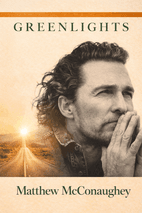
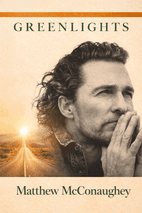
Matthew McConaughey's Greenlights shares stories and lessons from his journals, framing life's challenges as opportunities to accelerate toward personal fulfillment. It's for readers seeking an unconventional, motivational playbook for resilience and authenticity.
Feature
Insta.Page
Blinkist
Shortform
Summary Depth
Full Chapter-by-Chapter
15-min overview
Detailed analysis
Audio Narration
✓ (AI narration)
✓
✓
Visual Mindmaps
✓
✕
✕
AI Q&A
✓ Voice AI
✕
✕
Quizzes
✓
✕
✕
PDF Downloads
✓
✕
✓
Price
$59.99/yr
$146/yr (PRO)
$199/yr
*Competitor data last verified February 2026.
About the Author
Matthew McConaughey
Matthew McConaughey is an Academy Award-winning American actor, producer, and author, best known for his roles in films such as *Dallas Buyers Club*, *Interstellar*, and *True Detective*. He authored the bestselling memoir *Greenlights*, which shares stories and insights from his life and career. His expertise extends to motivational speaking, drawing from his personal philosophy of resilience and authenticity.
1 Page Summary
Greenlights is not a conventional memoir but rather a collection of stories, poems, prescriptions, and photographs from Matthew McConaughey's life, framed as a guide to catching more "greenlights"—moments of affirmation and alignment. The central concept, drawn from his 35 years of journaling, is that life's obstacles and red and yellow lights are not stop signs but preparations and opportunities to eventually accelerate. McConaughey advocates for a proactive, authentic approach to life, emphasizing that we can design our destiny by embracing hardships, listening to our instincts, and maintaining a relentless focus on our own personal truth, which he terms our "frequency."
The book's historical and narrative context spans McConaughey's Texas upbringing in a tumultuous, loving family, his sudden rise to fame in Dazed and Confused, his deliberate shift from romantic comedies to a dramatic "McConaissance," and his experiences as a husband and father. These anecdotes serve as parables for his philosophy, illustrating lessons learned from getting "arrested," living in a trailer in the desert, and embarking on a transformative solo trip to Africa. The raw, often humorous, and profane storytelling provides the empirical data for his more reflective maxims on resilience, responsibility, and joy.
The lasting impact of Greenlights lies in its unconventional, motivational format that resonated widely, becoming a #1 New York Times bestseller. It transcends celebrity memoir by offering a practical, albeit eccentric, playbook for self-examination and perseverance. McConaughey's core message—to "lower our denominators" to simplify our needs, embrace the struggle, and keep chasing our own greenlights—positions the book as a catalyst for readers to audit their own lives and pursue a more authentic and fulfilling path.
This opening serves not as a traditional introduction, but as a declaration of intent. Matthew McConaughey firmly establishes what this book is not—a nostalgic memoir or a preachy advice manual—and instead defines it as a personal playbook built on a life of adventures, meant to be subjectively useful to the reader.
What This Book Is and Is Not
McConaughey explicitly states that Greenlights defies easy categorization. He clarifies he has no interest in nostalgia or the "retirement" tone of typical memoirs. He also distances the work from being an "advice book," noting he is not here to preach. Instead, he frames it as an "approach book." The core offering is a collection of stories, insights, and philosophies that a reader can understand objectively and then, if it resonates, adopt subjectively by altering either their reality or their perspective on it.
The Philosophy of the "Playbook"
The book is presented as a "playbook," a practical guide derived from the raw material of his own life. The adventures he’ll share are labeled as significant and enlightening, but their humor often arises organically from situations that weren't trying to be funny. This sets the stage for a narrative that values authentic experience over crafted lessons, suggesting that wisdom is often found in the unvarnished and unexpected moments.
Optimism, Humor, and "Stepping in Shit"
McConaughey introduces his foundational outlook: he is an optimist by nature. He credits humor as a profound teacher that has helped him navigate pain and loss. He readily admits his own imperfections, using the vivid metaphor of stepping in shit as an inevitable part of life. The key, he proposes, is not avoiding all misfortune but in our response to it—learning to "scrape it off our boots and carry on." He challenges the reader to reframe obstacles and failures, to either see them as "good luck" or learn how to encounter them less frequently. This metaphor establishes the book's central theme of resilience and proactive engagement with life's challenges.
Key Takeaways
Greenlights is an "approach book" and a personal "playbook," not a standard memoir or a manual of advice.
Its value lies in offering stories and philosophies for readers to objectively understand and then subjectively adopt into their own lives.
The narrative embraces an optimistic worldview where humor is a critical tool for processing difficulty.
A core metaphor is introduced: "stepping in shit" (encountering problems) is inevitable; success is defined by how you clean up and move forward, potentially even viewing the setback as beneficial.
Key concepts: Introduction
1. Introduction
Book's Purpose and Format
Not a nostalgic memoir or preachy advice manual
Defined as a personal 'playbook' built on life adventures
An 'approach book' offering stories and philosophies for subjective adoption
Value lies in objective understanding followed by subjective application to one's own life
Philosophy of the Playbook
Practical guide derived from raw material of author's life experiences
Significant adventures presented as enlightening but often humorous organically
Values authentic experience over crafted lessons
Wisdom found in unvarnished and unexpected moments
Core Outlook and Resilience
Author identifies as an optimist by nature
Humor serves as profound teacher for navigating pain and loss
Metaphor of 'stepping in shit' represents inevitable life problems
Success defined by response: scraping it off and carrying forward
Challenges reader to reframe obstacles as 'good luck' or learn to encounter them less
If you like this summary, you probably also like these summaries...
💡 Try clicking the AI chat button to ask questions about this book!
Chapter 2: To Life
Overview
This opening chapter serves as both an introduction to the entire book and a personal manifesto. The author reflects on five decades of life, explaining how this collection of stories, lessons, and "bumperstickers" came to be. He frames the work not as a traditional memoir, but as a curated album of clues gathered on a lifelong quest for meaning, satisfaction, and authenticity.
The Diaries: A Tool to Forget and Remember
For thirty-five years, the author has kept diaries, not to preserve memories but as a tool to unburden his mind—to write things down so he could forget them. These journals became a repository for everything from successes and failures to jokes and profound realizations. Recently revisiting them, he found more value than expected: stories, lessons, poems, prayers, and a surprising amount of self-recognition. This excavation revealed a "reliable theme" running through his experiences.
The Bumpersticker Philosophy
The author introduces his love for "bumperstickers" (intentionally written as one word). He sees them as compact, potent expressions of identity—lyrics and one-liners that publicly declare personal beliefs, humor, or affiliations without apology. Collecting them for fifty years, he views these phrases as sticky truths that resonate. He promises the book will include his favorites, serving as thematic anchors or punctuations for the stories shared.
The Book's Purpose: A Love Letter to Life
The chapter culminates in a definition of the book itself. It is described as an album, a record of life assembled from the author's desert solitude. It contains "truth bombs," personal contracts, rites of passage, and the dance between "persistence and letting go." Ultimately, he hopes it acts as pleasurable medicine—a "love letter. To life."
Key Takeaways
The book is a curated collection of insights from a lifelong personal journey, not a linear autobiography.
Writing can be a tool for processing and releasing life's events, creating a tangible record for future reflection.
Recurring themes and a personal "frequency" can be discovered by examining one's own history with honesty.
Wisdom often comes in simple, sticky packages—like a good bumpersticker.
The pursuit of a satisfying life is portrayed as a great experiment, embracing both the graceful and the brutal truths.
Key concepts: To Life
2. To Life
The Book's Origin and Form
A curated album of clues from a lifelong quest for meaning and authenticity
Not a traditional memoir, but a collection of stories, lessons, and personal artifacts
Born from five decades of life and reflection during desert solitude
Contains 'truth bombs,' personal contracts, and rites of passage
The Diaries as a Tool
Kept for 35 years primarily to unburden the mind by writing things down to forget them
A repository for successes, failures, jokes, and realizations
Recent excavation revealed unexpected value: stories, lessons, and self-recognition
Revealed a 'reliable theme' running through the author's experiences
The Bumpersticker Philosophy
Compact, potent expressions of identity publicly declared without apology
Collected for 50 years as 'sticky truths' that resonate
Serve as thematic anchors and punctuation for the stories in the book
Represent wisdom in simple, memorable packages
Core Purpose and Hope
A love letter to life itself
Intended as pleasurable medicine for the reader
Explores the dance between 'persistence and letting go'
Documents the great experiment of pursuing a satisfying life
⚡ You're 2 chapters in and clearly committed to learning
Why stop now? Finish this book today and explore our entire library. Try it free for 7 days.
Chapter 3: How Did I Get Here?
Overview
This chapter serves as a raw, foundational memoir, establishing the author's life philosophy through a rapid-fire recounting of formative—and often traumatic—experiences. It presents a life shaped by love, pain, resilience, and a uniquely pragmatic worldview, all leading to the central metaphor of navigating life’s inevitable challenges.
A Forging in Fire and Love
The author describes a childhood defined by intense, contradictory forces. He was raised in a family that frequently expressed love yet also meted out severe physical discipline. This environment taught early lessons in consequences and resilience, as illustrated by being whipped for a childish infraction or having his bags packed when he threatened to run away. The love was “bloody sometimes, but never in question,” creating a complex emotional foundation where he learned “how to get relative: how to deal.”
A Catalog of Scars and Revelations
A series of stark, vivid anecdotes builds the author’s personal résumé of pain and discovery. These range from learning to swim by being thrown into a river to enduring sexual blackmail and assault. He lists reckless adventures, injuries treated unconventionally, and brushes with the law. Crucially, he states, “I've never felt like a victim,” reframing these events not as tragedies but as experiences that contributed to his education. He contrasts early religious fear over premarital sex with a more hopeful uncertainty in adulthood, showing an evolving perspective.
The Forged Philosophy
From this tumultuous history, a coherent life philosophy emerges. The author believes in a benevolent conspiracy of the universe and in the fundamental goodness of people. He was raised on “existential outlaw logic”—a pragmatic, sometimes fictionalized set of principles where the lesson mattered more than the literal truth. All his experiences taught him to navigate extremes: “highs and lows, hugs and blows.” This skill, this ability to “make a downfall my upfall,” is the core competency he identifies. He defines life as the process of “getting relative with the inevitable,” with the ultimate inevitable being death. The story of his first fifty years is thus framed as a collection of strategies for encountering and harnessing life’s inevitable moments, which he calls greenlights.
Key Takeaways
Resilience is a Learned Skill: The ability to cope and adapt (“get relative”) is forged through direct experience with consequences, hard work, and navigating contradictions.
Reframe the Narrative: Hardship and trauma need not define one as a victim; they can instead be integrated into a personal history of strength and education.
The “Outlaw Logic” of Pragmatism: Practical lessons and usable truths, even if imperfect or informally acquired, are often more valuable than rigid, conventional wisdom.
Life is Preparation for the Inevitable: The ultimate goal of accumulating experiences and wisdom is to learn how to meet life’s and death’s unavoidable challenges with grace and capability.
Benevolence as a Baseline: Despite evidence of pain and evil, maintaining a fearless belief in the fundamental goodness of oneself and humanity is a chosen and powerful perspective.
Key concepts: How Did I Get Here?
3. How Did I Get Here?
A Forging in Fire and Love
Childhood shaped by intense love paired with severe physical discipline
Early lessons in consequences and resilience from contradictory family dynamics
Learning to 'get relative'—developing pragmatic coping mechanisms from complex emotional foundations
A Catalog of Scars and Revelations
Vivid anecdotes of pain, discovery, and unconventional learning experiences
Reframing hardship not as victimhood but as educational life lessons
Evolving perspective from religious fear to hopeful uncertainty in adulthood
The Forged Philosophy
Belief in a benevolent universe and fundamental human goodness
Pragmatic 'existential outlaw logic' where usable truths matter more than literal facts
Core skill of navigating extremes and turning downfall into upfall
Life as the process of 'getting relative with the inevitable'—especially death
Key Takeaways
Resilience is a learned skill forged through direct experience with consequences
Hardship can be reframed as strength and education rather than victimhood
Pragmatic 'outlaw logic' often surpasses rigid conventional wisdom
Life prepares us to meet inevitable challenges with grace and capability
Choosing to believe in fundamental goodness despite evidence of pain
Chapter 4: What’s a Greenlight?
Overview
This chapter explores the metaphor of greenlights as those moments in life that signal us to advance—times of approval, success, and joy. It contrasts these with yellow and red lights, which represent cautions and stops, often disguised as setbacks. At its heart, the chapter reveals that catching greenlights isn't just about luck; it's a skill involving intent, timing, and the choices we make when faced with inevitability. Through a reflective and encouraging lens, it invites us to see challenges as potential greenlights in disguise, framing life as a journey where we can design our path to more "yeses."
Greenlights, in their purest form, are those welcome affirmations that propel us forward—think of success, health, or fresh starts. They feel effortless, like a shoeless summer, and give us what we want without resistance. Yet, the chapter gently reminds us that not all signals are so straightforward. Yellow and red lights, such as failures, pain, or interruptions, often appear as obstacles. While we might resent them for slowing us down, they sometimes offer exactly what we need, guiding us toward growth and eventual greenlights.
Catching more greenlights is presented as a blend of skill and awareness. It starts with identifying the red lights in our lives—those patterns or choices that consistently halt progress—and then consciously changing course to avoid them. But beyond avoidance, we can actively engineer greenlights through hard work, discipline, and thoughtful planning. By setting intentions and creating a path of least resistance, we take responsibility for our own momentum, scheduling future successes like a well-timed traffic flow.
Timing plays a crucial role, intertwining with luck, intuition, and fate. Sometimes, greenlights come simply because we're in the right place at the right time, riding the wave of fortune or karma. Other times, they emerge from accepting life's inevitable twists. The key insight here is that inevitability itself isn't relative, but our response to it is. When faced with a challenge, we have three choices: persist in our current pursuit, pivot to a new approach, or concede and live to fight another day. This decision-making process is where the art of living truly lies.
The chapter wraps up with a philosophical perspective, suggesting that everything in life is part of a larger plan, even when things don't go as intended. This realization is itself a greenlight, offering peace and clarity. Over time, yesterday's red lights—the struggles and setbacks—often transform into blessings, leading to new growth and opportunities. It's a reminder that destruction breeds construction, pain leads to pleasure, and what goes down will come up, whether in this life or the next. Ultimately, it's about how we see and engage with challenges, choosing to persist, pivot, or concede in pursuit of more greenlights.
Key Takeaways
Greenlights symbolize go-ahead moments—success, joy, and support—while yellow and red lights represent challenges that can ultimately guide us toward growth.
We can catch more greenlights through skill by identifying red lights in our lives, changing course, and actively designing our path through hard work and choice.
Timing and fate influence greenlights, but our response to inevitable situations—whether we persist, pivot, or concede—defines our satisfaction and progress.
Challenges often transform into blessings over time, with red lights leading to greenlights as part of life's broader plan, encouraging resilience and perspective.
Key concepts: What’s a Greenlight?
4. What’s a Greenlight?
The Nature of Greenlights
Greenlights are moments of approval, success, and joy that signal us to advance
They feel effortless and provide what we want without resistance
Contrast with yellow/red lights which represent cautions, stops, and setbacks
Some obstacles actually guide us toward growth and eventual greenlights
Catching Greenlights as a Skill
Involves identifying red light patterns that consistently halt progress
Requires consciously changing course to avoid recurring obstacles
Active engineering through hard work, discipline, and thoughtful planning
Setting intentions and creating paths of least resistance for future success
The Role of Timing and Response
Timing intertwines with luck, intuition, and fate
Greenlights sometimes come from being in the right place at the right time
Our response to inevitability defines our progress
Three choices when faced with challenges: persist, pivot, or concede
Transformation of Challenges
Yesterday's red lights often transform into blessings over time
Destruction breeds construction, pain leads to pleasure
Everything is part of a larger plan, even when things don't go as intended
Realizing this pattern is itself a greenlight offering peace and clarity
Philosophical Perspective on Greenlights
Life's journey involves designing paths to more 'yeses'
How we see and engage with challenges determines our greenlights
What goes down will come up, in this life or the next
The art of living lies in our decision-making process with obstacles
📚 Explore Our Book Summary Library
Discover more insightful book summaries from our collection