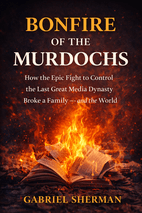
Gabriel Sherman's Bonfire of the Murdochs chronicles the seismic family power struggle over the Fox News and News Corp empire, revealing how the internal battle for succession reshaped global politics and media. It is essential reading for anyone interested in media dynasties and contemporary political discourse.
Feature
Insta.Page
Blinkist
Shortform
Summary Depth
Full Chapter-by-Chapter
15-min overview
Detailed analysis
Audio Narration
✓ (AI narration)
✓
✓
Visual Mindmaps
✓
✕
✕
AI Q&A
✓ Voice AI
✕
✕
Quizzes
✓
✕
✕
PDF Downloads
✓
✕
✓
Price
$59.99/yr
$146/yr (PRO)
$199/yr
*Competitor data last verified February 2026.
About the Author
Gabriel Sherman
Gabriel Sherman is an American journalist and author known for his in-depth reporting on the media industry and conservative politics. He is best recognized for his biography "The Loudest Voice in the Room," which chronicles the rise of Fox News founder Roger Ailes, and for his ongoing coverage as a national correspondent for *New York* magazine.
1 Page Summary
Bonfire of the Murdochs by Gabriel Sherman is a gripping narrative account of the seismic power struggles within the Murdoch family and their global media empire, Fox News and News Corp. The book’s central thesis is that the epic, years-long battle for succession—primarily between patriarch Rupert Murdoch and his sons, Lachlan and James—did not merely fracture a family but also had profound consequences for global politics and discourse. Sherman argues that the internal conflict, driven by personal ambition, ideological differences, and corporate scandal, ultimately led to a more extreme and politically weaponized Fox News, which in turn amplified polarization and destabilized democratic norms worldwide.
Sherman, a seasoned journalist with deep sources inside the Murdoch orbit, constructs his account like a Shakespearean drama, blending boardroom intrigue with deeply reported family psychology. His approach is distinctive for its access and granular detail, drawing on hundreds of interviews to chronicle key events from the phone-hacking scandals and the ouster of Roger Ailes to the pivotal post-2020 election crisis when Fox’s embrace of election fraud narratives ruptured the Murdoch dynasty. The narrative is less a dry business history and more a character-driven saga of loyalty, betrayal, and the corrosive effects of absolute power.
This book is intended for readers interested in media, contemporary politics, and high-stakes corporate dynasties. It will appeal to those who followed the headlines about Fox News and the Murdochs but seek a comprehensive, behind-the-scenes understanding of how the personal became irrevocably political. Readers will gain a sobering perspective on how the internal combustion of one family’s empire helped shape a world of fragmented truth and intensified partisan warfare, making it a crucial text for understanding the intersection of media power and 21st-century democracy.
This chapter establishes the foundational influences and early life events that shaped Rupert Murdoch's character and worldview. It traces the powerful legacy of his father, Sir Keith Murdoch, whose sensationalist journalism and ruthless business tactics provided both a model and a burden for his son. The narrative follows Rupert from a lonely childhood through rebellious schooling, into his abrupt inheritance of a small newspaper empire, and charts his first aggressive business moves, revealing the emergence of a driven, risk-taking publisher intent on expanding his power and avenging slights.
A Legacy of Power and Sensationalism
Rupert Murdoch’s destiny was framed by his father’s career. Sir Keith Murdoch, having overcome a childhood stutter, became a famous journalist by breaking the rules. His legendary "Gallipoli letter"—a sensationalized, arguably unfair account that helped end a military campaign—taught young Rupert that newspapers wield immense power and that impactful stories blend righteous outrage with stark heroes and villains. Keith further refined this philosophy under the tutelage of Lord Northcliffe, the British press baron who built an empire on the principle that newspapers should give the public what it wants: crime, sex, trivia, and propaganda. Keith brought these tactics to Australia, reviving the Melbourne Herald and building the country’s first media conglomerate, though he resented never being granted significant ownership in his flagship paper.
A Lonely Childhood and Formative Rebellion
Born into privilege at Cruden Farm, Rupert was a lonely child with an aloof, disapproving father and an overbearing mother who sought to "toughen him up." He found solace and purpose only in the world of newspapers, enchanted by the newsroom. Sent to the elite Geelong Grammar school, he was ostracized by his peers, partly due to his father’s "lowbrow" profession. In response, he rebelled, adopting socialist politics, sneaking out to gamble, and enduring corporal punishment that fostered a lasting desire for retribution. This rebellious streak continued at Oxford, where "Red Rupe" displayed a bust of Lenin and flirted with communism, largely to his father’s dismay. As Keith’s health failed, he worried his son was not ready to inherit the small chain of newspapers he held through Cruden Investments.
The Inheritance and First Conquests
After Keith’s sudden death in 1952, the 22-year-old Rupert, eager to prove himself, was briefly held back by his estate’s executors and sent to London for further training under the ruthless press baron Lord Beaverbrook. He was soon forced to return to Australia when the powerful Herald group, his father’s former employer, launched a competing Sunday paper in Adelaide, threatening the family’s Sunday Mail. Seeing this as an attack on his widowed mother, Rupert returned with a thirst for revenge. He waged a brutal, costly circulation war and, demonstrating a higher pain threshold, forced the Herald group to capitulate and merge their failing paper with his. This victory earned him the nickname "The Boy Publisher" and established his "expand or perish" creed, leading to rapid acquisitions of other papers and a television license.
Ruthless Ascent and Personal Transformation
Rupert’s move to Sydney marked a major escalation. After acquiring the struggling Sydney Mirror, he pushed it to new lows of sensationalism with fabricated and lurid headlines, shocking even his mother. His personal life mirrored his aggressive business style, involving excess and a whirlwind romance with a young reporter, Anna Torv, which led to a divorce from his first wife, Patricia Booker. His ambition also demanded sacrificial loyalty. He coldly betrayed his mentor and father-figure, Rohan Rivett, firing him via a callous letter when Rivett’s editorial independence became inconvenient. This period completed Rupert’s political transformation from Oxford socialist to a union-bashing conservative. By the late 1960s, having conquered Australian media, he felt constrained by its limits. Accumulating toys like yachts and farms was not enough; he craved greater power on a world stage.
Key Takeaways
The Father’s Shadow: Rupert’s entire career is a drive to prove himself worthy of, and ultimately surpass, his father’s legacy, internalizing Keith’s lessons that newspapers are instruments of power and that rules are barriers to be overcome.
Revenge as Motivation: Personal slights and perceived betrayals—from school canings to the Herald group’s business attack—became core motivators, fueling his competitive ruthlessness and framing his conquests as moral crusades against entrenched power.
The Fungibility of Loyalty: Relationships, principles, and promises were all secondary to business expansion. This is starkly illustrated by his betrayal of Rohan Rivett and the shedding of his socialist ideals when they no longer served his ambitions.
Sensationalism as Strategy: From his father’s Gallipoli letter to his own tabloid wars, Rupert learned that emotive, simplified narratives and a focus on crime, sex, and scandal were potent tools for winning circulation and influence.
The Insatiable Drive for Scale: Local victory in Adelaide was merely a stepping stone. His creed was "expand or perish," pushing him from city to city and foreshadowing his inevitable expansion beyond Australia.
Key concepts: Chapter 1: The Boy Publisher
1. Chapter 1: The Boy Publisher
Father's Legacy and Influence
Keith Murdoch's sensationalist journalism as model
Gallipoli letter taught power of emotive narratives
Northcliffe's principle: give public what it wants
Keith built Australia's first media conglomerate
Formative Childhood and Rebellion
Lonely child with aloof father and overbearing mother
Rebelled at school, adopting socialist politics
Endured corporal punishment fostering desire for retribution
Oxford 'Red Rupe' phase to dismay his father
Inheritance and First Business War
Inherited small newspaper chain at age 22
Herald group attack seen as betrayal of mother
Won brutal circulation war in Adelaide
Earned 'The Boy Publisher' nickname from victory
Ruthless Business Tactics Emerge
Pushed Sydney Mirror to new lows of sensationalism
Betrayed mentor Rohan Rivett for business convenience
Transformed from socialist to conservative politically
Personal life mirrored aggressive business style
Core Motivations and Driving Philosophy
Revenge for slights as primary motivation
Expand or perish business creed
Loyalty secondary to expansion goals
Craving for greater power beyond Australia
If you like this summary, you probably also like these summaries...
💡 Try clicking the AI chat button to ask questions about this book!
Chapter 2: Chapter 2: Persona Non Grata
Overview
This chapter chronicles Rupert Murdoch's explosive and ruthless entry into the British newspaper industry in 1968-69. It details his opportunistic takeover of the News of the World, his defiant publication of the Christine Keeler memoirs, and the subsequent launch of The Sun as a sensationalist tabloid. Through these maneuvers, Murdoch consciously positions himself as an outsider at war with the British establishment, a conflict that proves highly profitable but also brings personal danger and solidifies his controversial reputation.
The Hostile Takeover of News of the World
Amid the global turmoil of 1968, an investment banker presents Murdoch with a chance to acquire the venerable but declining News of the World. The paper's chairman, Sir William Carr, is a fading aristocrat desperate to block a sale to his rival, the left-wing publisher Robert Maxwell. Murdoch positions himself as a "white knight," promising a partnership that will keep Maxwell out. In a tense meeting, he uses brinkmanship to secure the role of co-CEO, then immediately begins breaking his promises. He secretly acquires a controlling stake and, within months, drives to Carr's estate to inform the recuperating man that he is no longer chairman. Carr dies a few years later, devastated by the loss of his family's paper.
The Christine Keeler Debacle and a Lesson Learned
Inheriting a bloated operation, Murdoch clashes with the paper's editor, Stafford Somerfield. Seeking a circulation-boosting scoop, Murdoch agrees to pay a record sum to re-publish call girl Christine Keeler's memoirs about the Profumo sex-and-spy scandal, despite the story being years old. The publication triggers massive backlash from politicians, journalists, and the Press Council, which censures him. Publicly, Murdoch remains defiant, celebrating the sales spike. Privately, he learns a crucial lesson: the establishment's fury proved his power to provoke them, and there was a profitable audience among working-class readers who resented elite moralizing.
Building The Sun and Declaring War
Murdoch’s marriage strains under the controversy and his relentless work. After a humiliating television interview with David Frost, Murdoch seeks a daily newspaper platform for his war on the establishment. He targets The Sun, a failing broadsheet. Through clever manipulation—including warning the print union that rival bidder Robert Maxwell would cut jobs—Murdoch acquires the paper for a paltry sum. He hires editor Larry Lamb, and together they reinvent The Sun as a raucous, sex-focused tabloid. The launch is shambolic, but the formula connects with readers. The accidental creation of the "Page 3 girl" feature solidifies its success and draws further contempt from critics, who brand Murdoch "The Dirty Digger."
Personal Cost and a New Target
Murdoch's victory turns perilous when a botched kidnapping plot reveals that criminals, having seen him on Frost's program, intended to abduct his wife, Anna. They mistakenly kidnapped and murdered the wife of his deputy instead. The trauma horrifies Anna, who wants to leave England. Murdoch, however, leverages the story for sensational coverage in The Sun. The episode convinces both Murdochs that Britain offers only profitable notoriety. With his publishing philosophy proven, Murdoch sets his sights on a place where an audacious outsider could truly rewrite the rules of power: America.
Key Takeaways
Murdoch's business philosophy is one of ruthless opportunism and strategic betrayal, exemplified by his dismantling of promises to the Carr family.
He consciously adopted the role of an anti-establishment populist, discovering that provoking elite outrage could be a successful commercial strategy with a mass audience.
The launch of The Sun and the creation of "Page 3" institutionalized a formula of sex, sports, and sensation, framed as giving the public what it wanted.
His methods made him a powerful but despised figure in Britain ("The Dirty Digger"), demonstrating that his pursuit of commercial success would deliberately court controversy and moral condemnation.
The personal cost of his notoriety was severe, culminating in a deadly kidnapping plot that accelerated his desire to depart for the United States.
Key concepts: Chapter 2: Persona Non Grata
2. Chapter 2: Persona Non Grata
Opportunistic Takeover of News of the World
Posed as a 'white knight' to block rival Robert Maxwell
Used brinkmanship to secure co-CEO role, then seized control
Betrayed promises, ousting the aristocratic chairman Sir William Carr
Provoking the Establishment: The Keeler Memoirs
Published old Christine Keeler memoirs for a circulation boost
Triggered massive backlash and official censure from the Press Council
Learned provoking elite outrage was a profitable commercial strategy
Launch of The Sun as a Tabloid Weapon
Acquired failing broadsheet through clever manipulation of unions
Reinvented it as a raucous, sex-focused tabloid with editor Larry Lamb
Accidental creation of the 'Page 3 girl' solidified its popular success
Cultivation of the 'Dirty Digger' Persona
Consciously positioned himself as an anti-establishment populist outsider
Profitable notoriety earned him contempt and the derogatory nickname
Framed sensationalism as giving the working-class public what it wanted
Personal Cost and Shift to America
Botched kidnapping plot (targeting his wife) ended in a deputy's murder
Leveraged the traumatic event for sensational coverage in The Sun
Convinced Britain offered only profitable notoriety, set sights on the US
⚡ You're 2 chapters in and clearly committed to learning
Why stop now? Finish this book today and explore our entire library. Try it free for 7 days.
Chapter 3: Chapter 3: “I can’t lose”
Overview
The chapter chronicles Rupert Murdoch’s high-stakes and turbulent invasion of the American media market in the 1970s. It details his initial struggles, the crucial and ultimately explosive friendship with editor Clay Felker that opened New York’s doors, and the ruthless dealmaking that secured him the New York Post. This period cemented his reputation as a disruptive, amoral force in journalism and demonstrated his formula for success: acquiring influence through sensationalist tabloids and using that platform to wield direct political power.
Establishing a Beachhead in America
Moving his family to a luxurious Fifth Avenue penthouse in 1973, Murdoch sought to disrupt what he saw as a stale, elitist American press. His first acquisition was a pair of struggling newspapers in San Antonio, which he used as a laboratory for his tabloid style. While sensational headlines like “AX ATTACKER KILLS SLEEPER” boosted circulation, they repelled local advertisers, revealing a key flaw in his British model. Undeterred by this mixed success and the failure of his new supermarket tabloid, The National Star, Murdoch remained determined to crack the major leagues of New York media.
A Fateful Alliance with Clay Felker
Murdoch’s fortunes shifted after meeting New York magazine founder Clay Felker at a dinner party in 1974. The two formed an unlikely bond—the shy, cunning Australian outsider and the boisterous, status-obsessed media tastemaker. Felker became Murdoch’s tutor in Manhattan society, advising him on everything from schools to summer homes. In return, Murdoch offered lessons in hard-nosed dealmaking. This symbiotic relationship was rooted in a shared fascination with power. Felker’s connections proved invaluable, most importantly his introduction to Dorothy “Dolly” Schiff, the iconic liberal owner of the New York Post who was growing weary of the paper’s losses.
Securing the New York Post
Through a patient courtship orchestrated with Felker’s help, Murdoch finally persuaded Schiff to sell him the Post for $31 million in November 1976. The acquisition was his long-coveted foothold in New York. On the celebratory night the deal closed, however, the seeds of betrayal were sown. During a cab ride, a vulnerable Felker confided his own troubles with the board of New York magazine, seemingly seeking Murdoch’s advice. Murdoch interpreted this as an invitation to buy the company himself.
The Betrayal: Taking New York Magazine
Without informing Felker, Murdoch began quietly negotiating to purchase New York magazine from its controlling shareholders. When he finally revealed his intentions, he coldly offered to sell Felker the California spin-off, New West, for a sum he knew Felker couldn’t afford. A shocked and enraged Felker fought back with lawsuits and rival bids, but Murdoch outmaneuvered him at every turn. His driving motivation was laid bare in a final confrontation: “I can’t back down. After losing the Observer, I’d be a journalistic untouchable around the world. I can’t lose.” Felker was forced out with $1.2 million, and Murdoch took control.
Sensationalism, Backlash, and Political Kingmaking
The hostile takeover made Murdoch a nationally famous—and infamous—figure. He then focused his energy on transforming the Post, quickly abandoning promises of moderate change. He installed loyalists, embraced a conservative editorial line, and pursued circulation at any cost. The “Summer of Sam” in 1977 provided the perfect tabloid fodder; Murdoch encouraged ethically dubious and fabricated stories to drive headlines, doubling the paper’s circulation. The media establishment condemned him as a “carpetbagger” peddling “ugly, violent journalism.”
Murdoch responded by using the Post to directly influence politics. He threw the paper’s full weight behind underdog mayoral candidate Ed Koch, overriding the protests of his own reporters. After Koch’s victory, which the mayor credited to Murdoch, the new mayor promptly granted the Post a political favor by lifting a trucking ban. This cycle demonstrated Murdoch’s new American playbook: use sensationalism to build a mass audience, then deploy that platform to elect allies who would serve his business and political interests.
Key Takeaways
Murdoch’s initial American strategy—directly importing his Australian/British tabloid model—initially faltered due to different market dynamics, but his relentless ambition remained undimmed.
His friendship with Clay Felker was a calculated stepping stone, providing essential social capital and connections that Murdoch leveraged for his own ends, ultimately discarding his ally when a greater opportunity arose.
The acquisition of the New York Post was the pivotal prize, giving him a powerful microphone in the world’s media capital.
Murdoch’s takeover of New York magazine was a ruthless demonstration of his “win at all costs” philosophy, permanently burning his bridges with the American media elite but solidifying his power.
His formula for success combined sensational, ethically flexible journalism to build circulation with the deliberate use of that media influence to secure political power, creating a self-reinforcing cycle of profit and clout.
Key concepts: Chapter 3: “I can’t lose”
3. Chapter 3: “I can’t lose”
Initial American Expansion Strategy
Sought to disrupt elitist American press from New York
Tested tabloid model in San Antonio with mixed success
Remained determined despite early failures
Calculated Alliance with Clay Felker
Felker tutored Murdoch in Manhattan society and connections
Symbiotic relationship based on shared fascination with power
Felker introduced Murdoch to New York Post owner
Acquisition of New York Post
Purchased from Dorothy Schiff for $31 million in 1976
Provided crucial foothold in New York media market
Celebration night revealed Felker's vulnerability
Ruthless Takeover of New York Magazine
Betrayed Felker by secretly negotiating to buy magazine
Outmaneuvered Felker with cold business tactics
Driven by fear of becoming 'journalistic untouchable'
Sensationalism and Political Power Formula
Transformed Post with conservative, sensationalist approach
Used tabloid journalism to double circulation
Deployed media platform to elect political allies
Chapter 4: Chapter 4: Broken Promises
Overview
This chapter traces the full maturation of Rupert Murdoch's ideological and business philosophy in the late 1970s and early 1980s, a period defined by decisive political alliances and a blatant disregard for promises. It charts his transformation from a media proprietor into a political kingmaker, his ruthless acquisition and manipulation of Britain’s most prestigious newspaper, and the consequent erosion of journalistic integrity. In parallel, it reveals the fracturing of his personal life, as the same pattern of broken commitments unfolds in his marriage to Anna.
The Contrarian Crusade Begins
By the decade's end, Murdoch's worldview had solidified. He interpreted Watergate not as a triumph of accountability but as proof of a dangerously powerful liberal press. This conviction fueled a mission to build a conservative media counterweight. His first major political move was deploying The Sun to endorse Margaret Thatcher in 1979, successfully realigning British working-class politics and previewing the populist playbook he would later perfect with Fox News.
A Deal Sealed with a Lie
Murdoch's ambition soon targeted the ultimate prize: The Times and The Sunday Times. To appease regulatory concerns, he publicly promised Parliament an independent board to protect the papers' editorial freedom, a vow he privately admitted he would ignore. His secret, unreported lunch with Prime Minister Thatcher at Chequers was followed by strategic cabinet changes, ensuring a pliant minister approved the takeover. Murdoch exploited a financial loophole by falsely claiming the papers were near bankruptcy, a lie noted by his own associate, to avoid antitrust review.
The Betrayal of Harold Evans
Murdoch lured esteemed editor Harold Evans with charm and guarantees of independence. Once Evans was in place, Murdoch immediately began undermining him, pressuring for pro-Thatcher coverage and openly disdainful of the paper's liberal leanings. The relationship disintegrated over financial pressures and ideological clashes. In a starkly cruel maneuver, Murdoch sent Evans a heartfelt condolence note after his father's death, only to coldly demand his resignation the day after Evans returned from the funeral. Evans's subsequent memoir cemented Murdoch's reputation for ruthless betrayal.
Scandal and Cynicism at The Times
Freed from Evans's restraints, Murdoch steered The Times into becoming a Tory mouthpiece. This decline in standards culminated in the 1983 Hitler Diaries scandal. Seduced by the story's sensational value and potential circulation boost, Murdoch rushed to publish despite glaring authentication issues. When the diaries were exposed as forgeries, his response revealed his core philosophy: he celebrated the temporary circulation increase and bluntly stated, "We are in the entertainment business," dismissing journalistic ethics as irrelevant.
Parallel Lives and Private Promises
Murdoch's pattern of broken vows extended to his wife, Anna. He agreed to her desire to relocate their family to Australia, then reneged, claiming business required his presence in the Northern Hemisphere. Isolated and unhappy in New York, Anna watched their marriage cool into a functional arrangement of separate lives. She pursued her own interests in writing and culture, which Murdoch dismissed, while she grew resentful of his thriftiness, tabloid sensibilities, and singular obsession with power and politics. She accepted he would never change.
Key Takeaways
Murdoch's political ideology became fully operational, viewing media not as a neutral Fourth Estate but as a weapon for conservative populist combat.
His business tactics relied on strategic deception: making public promises to gain power with zero intention of honor, and manipulating political systems through back-channel alliances.
Editorial independence was always subordinate to his financial needs and political goals, leading to compromised journalistic standards and outright scandal.
The same willingness to break commitments for personal gain defined his personal relationships, creating profound isolation and resentment in his private life.
Murdoch's driving motivation was revealed as a blend of political power and commercial entertainment, with traditional journalistic ethics seen as an impediment to both.
Key concepts: Chapter 4: Broken Promises
4. Chapter 4: Broken Promises
Political Ideology & Strategy
Saw media as a weapon for conservative populism
Endorsed Thatcher to realign working-class politics
Built alliances through secret political meetings
Acquisition of The Times
Made false promise of editorial independence to regulators
Exploited financial loophole with bankruptcy lie
Used political influence to ensure takeover approval
Betrayal of Editorial Independence
Lured editor Harold Evans with false guarantees
Undermined Evans for pro-Thatcher coverage
Fired Evans in a calculated, cruel manner
Decline of Journalistic Standards
Turned The Times into Tory mouthpiece
Published forged Hitler Diaries for circulation
Declared media was 'entertainment business' not journalism
Personal Pattern of Broken Promises
Reneged on promise to relocate family to Australia
Marriage cooled into separate, isolated lives
Dismissed wife's interests while pursuing power
📚 Explore Our Book Summary Library
Discover more insightful book summaries from our collection