CHAPTER 1 - WHAT YOU MUST KNOW ABOUT GOOGLE ADS (EVEN IF YOU ARE NOT MANAGING THEM YOURSELF)
Chapter 1 of 4
0:000:00
EN
1x
Voice
PDF
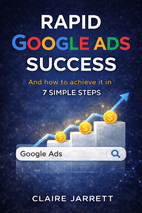
Rapid Google Ads Success: And how to achieve it in 7 simple steps
by Claire Jarrett
What is the book Rapid Google Ads Success: And how to achieve it in 7 simple steps about?
Claire Jarrett's Rapid Google Ads Success provides a seven-step framework for launching effective campaigns, covering goal-setting, keyword research, and optimization for small business owners and marketing newcomers who want measurable results without wasted ad spend.
Feature
Insta.Page
Blinkist
Shortform
Summary Depth
Full Chapter-by-Chapter
15-min overview
Section-by-section guides
Audio Narration
✓
✓
✓
Visual Mindmaps
✓
✕
✕
AI Q&A
✓
✕
✕
Quizzes
✓
✕
✕
PDF Downloads
✓
✕
✓
Price
$89.99/yr
$146/yr (PRO)
$199/yr
*Competitor data last verified July 2026.
1 Page Summary
Rapid Google Ads Success by Claire Jarrett is a practical, action-oriented guide designed to help small business owners and marketing newcomers quickly establish and optimize effective Google Ads campaigns. The core premise is that a structured, simplified approach can yield significant results without requiring deep prior expertise or a large budget. Jarrett distills the often-overwhelming complexity of Google's advertising platform into seven foundational steps, which include critical initial actions like defining clear campaign goals, conducting strategic keyword research, and crafting compelling ad copy. The book emphasizes the importance of a strong foundation—such as proper account structure and targeted keyword selection—to avoid wasted spend and to build campaigns that are scalable from the start.
The book was written against the backdrop of a digital marketing landscape where Google Ads had become an essential but intimidating tool for direct customer acquisition. Jarrett addresses the common pain points of newcomers who are often paralyzed by the platform's myriad options and technical jargon. Her methodology is a direct response to this, offering a clear, chronological roadmap that prioritizes launching a lean, measurable campaign over achieving theoretical perfection. Historical context is provided through explanations of key platform evolutions, such as the shift from exact match keyword dominance to a greater emphasis on audience targeting and automated bidding strategies, ensuring the reader understands both the "how" and the "why" behind modern best practices.
The lasting impact of Jarrett's work lies in its empowerment of non-experts. By demystifying a powerful advertising channel, the book has enabled countless small businesses and entrepreneurs to compete effectively online, driving targeted traffic and sales with confidence. Its legacy is a framework that stresses continuous optimization based on data—teaching readers to interpret metrics, conduct A/B tests, and refine their approach—which fosters a mindset of sustainable, data-driven marketing rather than a one-time setup. This makes Rapid Google Ads Success a enduring resource for building a core competency in paid search advertising.
CHAPTER 1 - WHAT YOU MUST KNOW ABOUT GOOGLE ADS (EVEN IF YOU ARE NOT MANAGING THEM YOURSELF)
Overview
Overview
This chapter serves as a crucial foundation for any business owner venturing into Google Ads, whether you plan to manage campaigns yourself or oversee someone else who does. It emphasizes that while delegation is common, understanding the platform's fundamentals is non-negotiable to avoid costly mistakes. The author draws from 18 years of experience to highlight how Google's incentives often conflict with your profitability, the pitfalls of automated recommendations, and the transformative role of AI. More than just technical know-how, success begins with the right mindset—patience, courage, and a data-driven approach—before diving into the nuts and bolts of campaign management.
The Perils of Blind Delegation
Handing off your Google Ads to an agency or team member without basic knowledge can be a expensive gamble. The author stresses that since these campaigns control your advertising budget, choosing the wrong manager can drain resources rapidly. Many clients have shared stories of wasted spend due to misaligned priorities, underscoring the need for business owners to grasp core concepts. This isn't about becoming an expert overnight but about having enough insight to ask the right questions and recognize red flags.
Google's Incentives vs. Your Profitability
A key revelation here is that Google's goals don't always align with yours. The platform is incentivized to maximize your ad spend, often pushing updates and features before they're proven to boost your bottom line. For instance, Google representatives might encourage enabling certain settings that can inadvertently increase costs without generating more leads. The author clarifies this isn't malicious; it's simply business. However, advertising experts frequently need to disable these defaults to protect client budgets, highlighting the importance of human oversight.
The AI Revolution in Advertising
Artificial intelligence has dramatically reshaped ad management, automating tasks like bid adjustments and audience targeting that once required manual, granular control. The author shares a personal anecdote about early agency days when staff manually tweaked bids, contrasting it with today's AI-driven efficiency on platforms like Google and Meta. Broad targeting now often outperforms narrow audiences because AI optimizes behind the scenes. Yet, this power comes with a caveat: AI doesn't always favor your specific goals, so knowing when to intervene is critical.
The Danger of Google Recommendations
One of the most practical warnings involves Google's in-platform suggestions, which can seem helpful but often lead to disaster. The author recounts a client whose cost per conversion tripled after accidentally applying a recommendation that added broad match keywords en masse. Reversing this required tedious manual work. These recommendations are pushed even to Google's Premier Partners, who may apply them indiscriminately to maintain status. The chapter advises treating such tips with skepticism, as they rarely serve your best interests and can quickly deplete your budget.
Cultivating the Right Mindset for Success
Before any technical setup, your attitude determines outcomes. The author identifies mindset as the single biggest factor in Google Ads success. Emotional reactions—like pausing campaigns prematurely—can derail progress. Instead, you need courage to persevere, patience to analyze data, and a dedicated testing budget. This mindset shift ensures you rely on metrics, not feelings, to guide decisions, which is especially vital in competitive industries with high cost-per-click.
Understanding Key Metrics
To manage expectations, the chapter outlines typical click-through and conversion rates across industries, providing benchmarks. For example, average conversion rates range from 7.04% overall to 4.94% for B2B, with realistic targets between 5-10%. The emphasis is on using these numbers as a baseline while avoiding decisions based on small data sets. Consistent monitoring of clicks, landing page visits, and lead conversions is essential to refine campaigns over time.
Common Pitfalls to Avoid
The author lists frequent mistakes that lead to failure, such as neglecting competitor research, skipping conversion tracking, directing traffic to a homepage, or constantly changing ad copy without sufficient data. These errors often stem from impatience or misinformation, like conflicting advice from online sources. Recognizing these traps helps you steer clear of them and stay focused on proven strategies.
The Path to Success
Success is framed as straightforward but disciplined. Key steps include staying positive, thoroughly researching competitors, mining historical data, creating effective landing pages, crafting tailored ad copy, building a robust negative keywords list, and ensuring conversion tracking is flawless. By following these methodical practices, you can transform past failures into lessons and build campaigns that consistently generate leads.
Key Takeaways
Guard Your Budget: Understand that Google's incentives may not align with your profitability; be wary of automated recommendations and default settings.
Embrace AI Wisely: Leverage AI for efficiency but maintain human oversight to ensure campaigns serve your specific goals.
Mindset Matters: Success requires a data-driven mindset—patience, courage, and reliance on metrics over emotions.
Avoid Common Traps: Steer clear of pitfalls like inadequate testing, poor tracking, and reactive changes by sticking to a structured approach.
Focus on Fundamentals: Prioritize competitor research, historical data analysis, precise targeting, and conversion tracking to build effective campaigns from the start.
Key concepts: CHAPTER 1 - WHAT YOU MUST KNOW ABOUT GOOGLE ADS (EVEN IF YOU ARE NOT MANAGING THEM YOURSELF)
1. CHAPTER 1 - WHAT YOU MUST KNOW ABOUT GOOGLE ADS (EVEN IF YOU ARE NOT MANAGING THEM YOURSELF)
The Perils of Blind Delegation
Delegating Google Ads without basic knowledge is a costly gamble
Business owners must grasp core concepts to ask the right questions
Understanding fundamentals helps recognize red flags in campaign management
Google's Incentives vs. Your Profitability
Google's goal is to maximize ad spend, not necessarily your profitability
Platform representatives often push features that increase costs without improving results
Advertising experts frequently disable default settings to protect client budgets
The AI Revolution in Advertising
AI automates tasks like bid adjustments and audience targeting
Broad targeting now often outperforms narrow audiences due to AI optimization
Human oversight remains critical as AI doesn't always favor your specific goals
The Danger of Google Recommendations
In-platform suggestions can lead to disastrous results like tripled costs
Recommendations are pushed even to Premier Partners who may apply them indiscriminately
Treat Google's tips with skepticism as they rarely serve your best interests
Cultivating the Right Mindset for Success
Mindset is the single biggest factor in Google Ads success
Avoid emotional reactions like pausing campaigns prematurely
Rely on metrics, not feelings, to guide decisions
Understanding Key Metrics
Average conversion rates range from 4.94% (B2B) to 7.04% overall
Realistic targets typically fall between 5-10% conversion rates
Avoid decisions based on small data sets and monitor consistently
Common Pitfalls to Avoid
Neglecting competitor research and skipping conversion tracking
Directing traffic to a homepage instead of targeted landing pages
Constantly changing ad copy without sufficient data
The Path to Success
Thoroughly research competitors and mine historical data
Create effective landing pages and craft tailored ad copy
Build robust negative keywords lists and ensure flawless conversion tracking
💡 Try clicking the AI chat button to ask questions about this book!
CHAPTER 2 - HOW DOES GOOGLE ADS WORK, AND WHY DOES IT MATTER?
Overview
This chapter establishes a fundamental truth about the Google Ads ecosystem: Google’s primary driver is relevance. Its entire system is designed to reward advertisers who create a seamless, relevant experience from the search keyword to the ad click to the final landing page. For advertisers, this is empowering—it means you can compete effectively regardless of business size, provided you understand and align with this principle. The chapter then provides a practical, step-by-step framework for building campaigns that satisfy Google's demand for relevance, covering account structure, competitor research, and the critical art of crafting high-converting landing pages.
The Foundation: Campaign Structure & Control
The practical work begins by structuring your account correctly. A Google Ads account is built on a hierarchy: Campaigns contain Ad Groups, which contain Ads. Strategic control is exerted at the campaign level, where you set three key parameters:
Budget: You control spending by setting daily budgets for each individual campaign. Your total daily account spend is simply the sum of all active campaign budgets. This allows for precise financial control and experimentation.
Scheduling: Ads do not need to run 24/7. You can schedule them to show only during your business hours or specific days, ensuring your team is available to respond to leads. This also affects how you calculate your daily budget based on active days.
Locations: Targeting is set per campaign. For clarity and performance, it’s best to create separate campaigns for different countries. For local businesses, targeting can be refined down to the postcode or city level, which can dramatically increase lead quality and conversion rates.
The Strategic Shortcut: Analysing Competition
Instead of starting from a blank slate, the smartest move is to analyse successful competitors already advertising in your market. Their sustained presence is a positive signal that there is money to be made. Using a tool like SpyFu allows you to:
Identify which competitors have been bidding consistently on your target keywords (indicating profitability).
Analyse their long-running ad copy and landing page offers, which have been proven to convert.
This research allows you to reverse-engineer a winning formula. You can assimilate the best elements of your competitors' offers—whether it's specific benefits, pricing structures, or guarantees—to create a campaign that is competitive from the very first click. The core lesson is that your offer is the true key to success, not just the ad campaign mechanics.
The Conversion Engine: Building Effective Landing Pages
Your landing page is where relevance is ultimately tested. It must deliver on the promise of your ad. A dedicated, focused landing page (as opposed to a general homepage) is crucial for conversion and improves your Quality Score, which lowers costs and increases ad visibility.
Key landing page elements include:
A Clear Heading: This must directly mirror the searcher's intent (e.g., matching their keyword phrase) to immediately confirm they are in the right place.
Benefits & Features: Communicate value using bullet points, focusing on the emotional outcome for the visitor. The PAS (Pain, Agitate, Solve) formula is a powerful framework for structuring this copy.
Strategic Pricing: Including prices can increase conversion rates by qualifying leads upfront, though this should be tested for service-based or B2B businesses.
Multiple Calls to Action (CTAs): Provide various ways to convert, such as a direct phone number (critical for mobile), a contact form, a calendar booking link, or a live chat option.
Relevance Cues: Naturally include your target keywords in the page text to reinforce relevance for Google.
Social Proof: Integrate testimonials or review badges to build trust, but keep them on the page without external links.
Focused Design: Avoid distractions like autoplay videos or primary navigation that leads users away. The goal is a single-minded focus on conversion.
Key Takeaways
Relevance is Non-Negotiable: Google's entire system prioritizes the searcher's experience. Your success depends on creating a relevant journey from keyword to ad to landing page.
Structure Precedes Spending: Proper campaign structure—with separate budgets, schedules, and locations—gives you control and clarity, forming the foundation for efficient spending.
Competitor Research is a Force Multiplier: Analysing established advertisers provides a blueprint for what works. Your offer must be competitive or superior to succeed.
The Landing Page is Your Closer: A dedicated, well-crafted landing page is essential for converting paid traffic. It must be tightly aligned with your ad copy and designed to guide the visitor toward a single action without distractions.
Quality Score is a Critical Metric: A good landing page experience directly boosts your Quality Score, which lowers your cost-per-click and increases how often your ads are shown.
Key concepts: CHAPTER 2 - HOW DOES GOOGLE ADS WORK, AND WHY DOES IT MATTER?
2. CHAPTER 2 - HOW DOES GOOGLE ADS WORK, AND WHY DOES IT MATTER?
The Core Principle: Google's Demand for Relevance
Google's primary driver is relevance, rewarding advertisers who create a seamless experience from keyword to landing page.
This principle empowers businesses of any size to compete effectively by aligning with it.
Success depends on creating a relevant journey that satisfies the searcher's intent.
Campaign Structure & Strategic Control
Account hierarchy: Campaigns contain Ad Groups, which contain Ads.
Key campaign-level controls: Budget (daily per campaign), Scheduling (for business hours/days), and Location targeting.
Separate campaigns for different locations/clarity improve lead quality and performance.
Proper structure provides financial control and forms the foundation for efficient spending.
Competitor Analysis as a Strategic Blueprint
Analyze successful, sustained competitors to reverse-engineer a winning formula.
Use tools like SpyFu to identify profitable keywords and proven ad/landing page offers.
Assimilate best elements (benefits, pricing, guarantees) to create a competitive offer.
Your offer, not just campaign mechanics, is the true key to success.
Landing Page: The Conversion Engine
A dedicated landing page (vs. homepage) is crucial for conversion and improves Quality Score.
Must deliver on the ad's promise with a clear heading that mirrors searcher intent.
Use PAS formula, strategic pricing, multiple CTAs, and relevance cues (keywords).
Include social proof and focused design to build trust and eliminate distractions.
Critical Outcomes & Metrics
Quality Score is critical: a good landing page experience lowers CPC and increases ad visibility.
A well-crafted, aligned landing page is essential for converting paid traffic.
Competitor research acts as a force multiplier, providing a blueprint for what works.
Structure precedes spending—control and clarity enable efficient experimentation.
CHAPTER 3 - KEYWORDS ARE THE KEY
Overview
This chapter establishes that selecting the right keywords is the foundational, most critical step for a profitable Google Ads campaign. It illustrates the severe cost of getting it wrong—using overly broad keywords that attract unqualified traffic—which destroys your Quality Score, inflates costs, and drains your budget. The focus then shifts to a practical, step-by-step methodology for building a targeted keyword strategy that connects with ready-to-buy prospects, moving beyond simple research to intentional grouping and ongoing refinement.
Beginning Your Keyword Research
The process starts with a tool like SpyFu. You enter a core keyword or a competitor’s domain to generate a list of related search terms. The critical filter here is volume: you should generally exclude any keyword with fewer than 20 searches per month, as these provide insufficient traffic and may not even trigger ads. The goal is to gather a comprehensive list, from dozens to thousands of terms, which will form the raw material for your campaign.
Understanding the Keyword Pathway
Not all keywords are equal in value. The "keyword pathway" concept maps a prospect's journey from initial awareness to purchase intent. Early-stage, broad keywords like “bikes” are informational and have low commercial intent; bidding on them is inefficient for most businesses. The real opportunity lies in identifying keywords that signal a refined search and imminent purchase, such as “Blue Trek 400 for sale near me.” Your budget must focus on these high-intent keywords, leaving broader, informational searches to SEO efforts.
Theming Your Keywords into Ad Groups
A common and costly mistake is dumping all keywords into a single ad group. Instead, you must organize them into themed ad groups. For a personal trainer, themes might be “Personal Trainer Near Me” or “Book Personal Trainer.” For a national will-writing service, separate ad groups could be created for “Expert Will Writers” and “Will-Writing Service.” Each themed group allows for highly relevant ad copy and landing pages. The outdated SKAG (Single Keyword Ad Group) method is no longer necessary with Responsive Search Ads, but the principle of tight thematic grouping remains essential.
Considering Geography and Negative Keywords
For local businesses, keyword strategy includes both location-specific phrases (“locksmith Bristol”) and generic local intent terms (“local locksmith”). “Near me” searches are particularly vital. Crucially, defining what you don’t want is as important as defining what you do. A negative keyword list—including terms like “free,” “cheap,” “job,” and “apprenticeship”—prevents your ads from showing for irrelevant searches, protecting your click-through rate, Quality Score, and budget. This list should be built as a shared resource across all campaigns and updated regularly.
Navigating Keyword Match Types
Google’s match types have evolved, often to the advertiser’s detriment. Broad match is dangerous, frequently matching your ads to irrelevant searches and wasting budget. The two recommended match types are:
Phrase Match: Allows for additional words before or after your keyword, capturing related variations and unique searches (which constitute about 15% of all queries).
Exact Match: Targets close variants including misspellings, plurals, and reordered words of your precise term.
A blend of phrase and exact match provides a balance of reach and control, while broad match should be avoided unless meticulously managed.
The Imperative of Constant Monitoring
You must never “set and forget” a Google Ads campaign. Google’s algorithms will gradually match your ads to increasingly irrelevant searches over time, especially if using broad matches. Regular, proactive management—particularly reviewing search terms reports and updating negative keyword lists—is non-negotiable. In the campaign’s early stages, this should be a daily or twice-weekly task to ensure your budget is spent efficiently on reaching genuine prospects.
Key Takeaways
Focus on Intent: Prioritize keywords that indicate a prospect is ready to buy, not just browsing.
Theme and Separate: Organize keywords into tightly themed ad groups for maximum relevance, never lumping them all together.
Use Negative Keywords Aggressively: Actively exclude non-converting search terms to protect your budget and Quality Score.
Choose Match Types Wisely: Employ phrase and exact match keywords, and avoid broad match due to its inefficiency and waste.
Monitor Relentlessly: Continuous oversight and refinement of your keyword targeting is essential to prevent budget drift and maintain campaign performance.
Key concepts: CHAPTER 3 - KEYWORDS ARE THE KEY
3. CHAPTER 3 - KEYWORDS ARE THE KEY
The Critical Importance of Keyword Selection
Foundational step for a profitable Google Ads campaign
Wrong keywords (overly broad) destroy Quality Score and inflate costs
Focus on connecting with ready-to-buy prospects through targeted strategy
Beginning Keyword Research with Tools
Start with tools like SpyFu using core keywords or competitor domains
Filter by volume: exclude keywords with fewer than 20 searches/month
Goal is comprehensive list forming raw material for campaign
Understanding the Keyword Pathway and Intent
Map prospect journey from awareness to purchase intent
Avoid early-stage broad keywords (e.g., 'bikes') with low commercial intent
Focus budget on high-intent keywords signaling refined search and imminent purchase
Theming Keywords into Ad Groups
Never dump all keywords into single ad group
Organize into tightly themed ad groups (e.g., 'Personal Trainer Near Me')
Enables highly relevant ad copy and landing pages
Tight thematic grouping remains essential despite SKAG being outdated
Geography and Negative Keywords Strategy
Include location-specific phrases and generic local intent terms for local businesses
'Near me' searches are particularly vital
Build negative keyword list (e.g., 'free', 'cheap', 'job') to exclude irrelevant searches
Negative lists protect CTR, Quality Score, and budget; should be shared and updated regularly
Navigating Keyword Match Types
Avoid broad match as it frequently matches irrelevant searches and wastes budget
Use phrase match to capture related variations and unique searches (~15% of queries)
Use exact match for close variants (misspellings, plurals, reordered words)
Blend of phrase and exact match provides balance of reach and control
Constant Monitoring and Management
Never 'set and forget' a campaign
Google's algorithms will gradually match ads to irrelevant searches over time
Regular proactive management is non-negotiable
Review search terms reports and update negative keywords daily/twice-weekly in early stages
CHAPTER 4 - BUILD YOUR CAMPAIGNS STEP-BY-STEP
Overview
This chapter provides a precise, actionable blueprint for constructing a Google Ads campaign from the ground up. It translates previous strategic research into tactical setup, ensuring the campaign is optimized to generate leads from day one by focusing on relevance, structure, and meticulous attention to detail.
Campaign Foundation & Core Settings
The process begins at the campaign level, treating it as the primary container. After clicking “Add campaign,” it’s crucial to name it logically and manually bypass all of Google’s automated setup suggestions. The campaign should be created “without a goals guidance,” and the Search Partners and Display Network options must be deselected to prevent wasted spend on irrelevant placements.
Location targeting is added with precision, using postcodes, cities, or a defined radius. The recommendation is to target “Presence” (people in or regularly in the location) for most local services. The daily budget is set by dividing the total budget among all planned campaigns. For bidding, the guidance is to use the automated Maximize Conversions strategy from the start, allowing Google's AI to learn and optimize, with the potential to layer in a Target CPA (Cost Per Action) later as performance data accumulates.
Ad scheduling is configured under “More settings.” For B2B, ads might run 8:00 AM to 6:00 PM, Monday to Friday. For 24/7 services or to exploit gaps when competitors are offline, running ads during evenings and weekends can be a significant opportunity.
Structuring Ad Groups & Keywords
Once campaign settings are saved, creation moves to the first ad group, which should be named after a specific keyword theme (e.g., “Emergency Locksmith”). Keywords from the research spreadsheet are added here, but only in Phrase Match ("keyword") and Exact Match ([keyword]) formats. Broad match keywords are deliberately excluded at this stage.
The goal is thematic purity: each ad group contains a tightly related set of keywords, which allows for highly relevant ad copy. While singular/plural variations are often matched automatically, adding both can sometimes benefit Quality Score.
With Expanded Text Ads retired, Responsive Search Ads (RSAs) are the standard. The key is to populate all available headline (up to 15) and description (up to 4) slots with varied, keyword-rich copy to achieve a “Good” or “Excellent” ad strength rating. Headlines should incorporate:
The target keywords.
Numbers (e.g., discounts, years of experience, testimonials).
Unique selling propositions and competitive advantages identified earlier.
Pinning headlines is discouraged, as it limits Google’s ability to test combinations and find the best performers. Ad copy should be reviewed in the live preview to ensure logical combinations. A pro tip is to use the “description” fields for brief, verifiable testimonial snippets that will appear beneath the main ad.
Leveraging Powerful Ad Extensions
Ad extensions are critical for increasing click-through rates and providing more information. The author advises adding them manually after campaign creation for greater control. Key extensions include:
Sitelinks: Direct users to other high-converting pages on your site (e.g., “Book a Consultation”). These pages must be optimized for conversion, not just informational.
Structured Snippets: Reinforce service offerings or other categories (e.g., “Services: Installation, Repair, Emergency”).
Call Extensions: Feature a phone number, often using a dedicated tracking number for the campaign.
Location Extensions: Essential for local businesses to prove locality and drive visits.
Promotion Extensions: Highlight time-sensitive offers with specific codes for tracking.
Image Extensions: Upload relevant, high-quality images to make ads visually stand out.
Final Checks and Next Steps
Before publishing, note Google’s traffic estimate. A low or zero estimate for well-researched, hyper-local keywords isn’t necessarily a cause for alarm; such campaigns can still perform well. The chapter concludes by stressing that while a properly built campaign is 99% ready, the final critical component for success is accurate conversion tracking, which sets the stage for the next chapter.
Key Takeaways
Manual Control Over Automation: Begin by deliberately disabling Google’s automated suggestions and irrelevant networks to maintain tight control over where your budget is spent.
Thematic Ad Groups are Key: Structure campaigns with tightly themed ad groups containing only Phrase and Exact Match keywords to maximize ad relevance and Quality Score.
Optimize RSAs for “Excellent” Strength: Fill all RSA headline and description fields with diverse, keyword-rich copy that includes USPs and social proof (like testimonials) without pinning elements.
Ad Extensions are Non-Negotiable: Systematically implement a suite of extensions—especially sitelinks, call, and location extensions—to enhance ad visibility, credibility, and click-through rates.
Trust the Process with Maximize Conversions: Start with automated Maximize Conversions bidding to let Google’s AI learn, preparing to refine with a Target CPA after collecting initial performance data.
Key concepts: CHAPTER 4 - BUILD YOUR CAMPAIGNS STEP-BY-STEP
4. CHAPTER 4 - BUILD YOUR CAMPAIGNS STEP-BY-STEP
Campaign Foundation & Core Settings
Create campaign manually without goals guidance and deselect Search Partners/Display Network
Use precise location targeting (postcodes, cities, radius) with 'Presence' setting for local services
Set daily budget by dividing total budget across all planned campaigns
Start with Maximize Conversions bidding strategy, potentially adding Target CPA later
Configure ad scheduling strategically (e.g., 8AM-6PM for B2B, evenings/weekends for competitive advantage)
Structuring Ad Groups & Keywords
Name ad groups after specific keyword themes (e.g., 'Emergency Locksmith')
Use only Phrase Match and Exact Match keyword formats, excluding Broad Match
Maintain thematic purity with tightly related keywords per ad group
Add both singular/plural variations when beneficial for Quality Score
Crafting High-Scoring Responsive Search Ads
Populate all 15 headline and 4 description slots with varied, keyword-rich copy
Incorporate target keywords, numbers, and unique selling propositions in headlines
Avoid pinning headlines to allow Google's AI to test combinations freely
Use description fields for brief, verifiable testimonial snippets
Review ad copy in live preview to ensure logical combinations
Leveraging Ad Extensions
Add extensions manually after campaign creation for greater control
Use sitelinks to direct users to high-converting pages (not just informational)
Implement structured snippets to reinforce service offerings
Include call extensions with dedicated tracking numbers
Add location extensions for local businesses and promotion extensions for time-sensitive offers
Final Implementation Steps
Check Google's traffic estimate but don't be alarmed by low estimates for hyper-local keywords
Ensure campaign is properly built before focusing on conversion tracking
Maintain manual control over automation throughout setup process
Trust the Maximize Conversions bidding process while preparing for future optimization
You've reached the end of the free chapters
Next chapter: “TRACKING YOUR CAMPAIGNS” is locked
Keep reading Rapid Google Ads Success: And how to achieve it in 7 simple steps — and unlock all 600+ book summaries with audio, mindmaps and AI Q&A.
$0.00 due today · 7 days free, then $89.99/year ($7.49/mo) · Cancel anytime before day 7
plus sales tax where applicable
If you like this summary, you probably also like these summaries...
Claire Jarrett is a contemporary British novelist and short story writer known for her psychologically nuanced explorations of family dynamics and memory. Her acclaimed works include the novel *The Silent Hours* and the collection *A Certain Light*. With a background in clinical psychology, she brings a distinctive depth to her character-driven narratives.
📚 Explore Our Book Summary Library
Discover more insightful book summaries from our collection