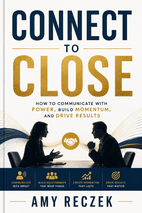
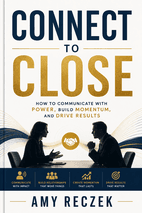
Amy Reczek's Connect to Close introduces the BREW Method, a psychology-backed toolkit for creating intentional moments that drive sales momentum. Written for sales professionals at all levels, from seasoned reps to newcomers, the book replaces recycled advice with actionable frameworks for prospecting, meetings, and negotiation.
Feature
Insta.Page
Blinkist
Shortform
Summary Depth
Full Chapter-by-Chapter
15-min overview
Detailed analysis
Audio Narration
✓ (AI narration)
✓
✓
Visual Mindmaps
✓
✕
✕
AI Q&A
✓ Voice AI
✕
✕
Quizzes
✓
✕
✕
PDF Downloads
✓
✕
✓
Price
$59.99/yr
$146/yr (PRO)
$199/yr
*Competitor data last verified February 2026.
About the Author
Amy Reczek
Amy Reczek is a Canadian author and illustrator known for her contributions to children's literature, particularly through her popular "Doodles" series, including "Doodles: A Place to Draw and Imagine." She specializes in creating interactive, creativity-boosting books that engage young readers in imaginative play and artistic expression. Reczek's background in graphic design and education informs her work, which focuses on fostering creative skills and self-expression in children.
1 Page Summary
In Connect to Close, Amy Reczek addresses a core frustration in sales: the mechanics of selling are well understood, but the art of genuine communication that builds momentum is rarely taught. She argues that most sales training falls short, offering either recycled advice or theory without practical application. The book’s central concept is the BREW Method, a psychology-backed toolkit for creating intentional, memorable moments that drive deals forward. Reczek reframes selling not as a process of convincing or conquering, but as a practice of human connection, using the ritual of brewing coffee as a metaphor for the hidden mechanics—structure, intention, and presence—that turn routine interactions into opportunities for progress.
The author’s approach is distinctive for its blend of personal narrative and actionable science. She opens with a story of a lost client that taught her the difference between likability and credibility, illustrating why sales has evolved in a post-COVID, AI-driven world. The BREW Method is broken into four components: Be the Moment (preparation), Raise Confidence (nonverbal presence), Engage (genuine connection), and What About...? (handling the unexpected). Each chapter delivers concrete frameworks—such as the ACT opening for meetings, the GUIDE discovery framework, and the SBI+I model for negotiation—alongside “Espresso Shots” for immediate application. The book avoids faking confidence in favor of becoming it, emphasizing small, intentional shifts (like replacing “sorry” with “thank you”) that build momentum over time.
The intended audience is sales professionals at every level, from seasoned reps struggling with ghosting to newcomers overwhelmed by cold calls. Readers will gain a repeatable system for prospecting, networking, meetings, presentations, follow-up, and negotiation, all rooted in the idea that 86% of clients value the experience as much as the product. Rather than a total overhaul, Reczek guides readers to identify their “Power Three” key takeaways and practice them until they become habit. The book’s ultimate promise is that by mastering the BREW Method, salespeople can move from pushing a button and hoping for the best to consistently brewing a close—creating moments of genuine connection that redefine both their results and how they show up in the world.
Chapter 1: Introduction
Overview
The introduction tackles a fundamental frustration shared by sales professionals at every level: the hardest part of selling isn't the mechanics—it's the communication. Not just any communication, but the kind that genuinely connects with another human being and creates forward momentum. Amy argues that this is the missing ingredient in most sales trainings, which fall into three tired categories: recycled advice, substance that runs dry after the first few chapters, or theory with zero practical application. The result? Even seasoned reps struggle with cold calls, follow-ups, and the dreaded ghosting, all while knowing they need “soft skills” but never being shown how to build them.
To illustrate this gap, she introduces a brilliant coffee-brewing analogy. Most of us treat selling like pushing a button on a coffee machine: we follow the steps and hope for the best. But what’s happening inside the machine—the heating, the timing, the extraction—is the real work. Similarly, the hidden mechanics of sales include how you structure a meeting, the words you choose, even your body language. Without understanding those inner workings, you might get a decent cup now and then, but you’ll never consistently brew a close.
What the Book Will Actually Do
Amy promises this isn’t just another sales book. It’s designed to fill that gap by teaching you how to turn moments into connection—and connection into momentum. The framework is laid out clearly:
Part 1 sets the stage: what it means to “connect to close” and why individual moments matter more than we realize.
Part 2 introduces the BREW Method, a concrete framework for making those moments happen, covering everything from physical presence to active listening.
Part 3 delivers the how-to: applying the method in every phase of the sales process.
Part 4 helps you hit the ground running, even when the approach feels new or awkward.
The message throughout is empowering: you don’t need to toss out everything you know. You just need small, intentional shifts that pave the way for more connection and more closes.
Key Takeaways
The core problem in sales isn’t lack of training—it’s training that ignores how to communicate in a way that creates momentum, not just relationship.
Soft skills aren’t fluffy afterthoughts; they are learnable, practical techniques that need a clear framework.
The coffee-brewing analogy highlights that sales success depends on hidden steps (meeting structure, word choice, body language) that most training overlooks.
The BREW Method will provide a step-by-step process to turn moments into connection and connection into closes.
You don’t need to reinvent yourself—small shifts create big results.
Key concepts: Introduction
1. Introduction
The Core Problem in Sales Training
Hardest part is communication, not mechanics
Most training falls into three tired categories
Soft skills are taught as theory, not practice
Even seasoned reps struggle with ghosting
The Coffee-Brewing Analogy
Selling is not just pushing a button
Hidden mechanics like structure and word choice matter
💡 Try clicking the AI chat button to ask questions about this book!
Chapter 2: Chapter 1: The Sales Evolution
Overview
Chapter 1 isn’t a standard sales playbook opener—it’s a personal story that reframes what selling really means. The author begins by describing her childhood as a quiet observer, a theater kid who studied audiences rather than chasing the spotlight. That natural curiosity became her foundation when she stumbled into her first sales job. She built strong relationships by listening more than talking, and it worked—until it didn’t. A seven‑year client left for a competitor named Tony, not because the relationship was weak, but because Tony brought something she hadn’t: credibility. That wake‑up call became the catalyst for everything that follows. The chapter then zooms out to show why sales itself has shifted—from the old pushy stereotype to a world where trust is harder to earn, especially after COVID and the rise of AI. The core of sales hasn’t changed—it still runs on connection—but how you earn that connection has. That’s where the BREW Method enters, using the ritual of brewing coffee as a metaphor for creating intentional moments that build momentum. The chapter closes with a direct promise to the reader: honest conversations, science‑backed ideas, and actionable “Espresso Shots” to try immediately.
The Observer’s Path to Sales
The author didn’t come to sales through a business degree or a stack of playbooks. She came with a habit of noticing—expressions, tone, the pauses between words. On stage, she wasn’t performing for attention; she was studying how people moved and responded. Off stage, that same instinct helped her tune into what engaged or bored an audience. When she landed her first sales job, she had no idea what “pipeline” meant. But she knew how to listen, how to read a room, and how to connect. That let her build relationships quickly. She climbed. Yet the loss of a long‑time client revealed a gap: relationship alone doesn’t create trust. Credibility does. Tony had engaged her client differently—not just with a friendly check‑in, but by showing how he could solve a real problem. He created moments that proved he understood the client’s business. That’s the missing piece.
Why Sales Has Shifted
Ask anyone to describe a salesperson, and the top word is still “pushy.” Even seasoned salespeople give that answer. But the stereotype is outdated. The modern sales landscape formed in the 1990s, when information was scarce and the buyer had fewer options. Now technology has flipped the script: buyers are informed, skeptical, and swamped with choices. They’re buying the person behind the product, the values the brand represents, and the trust it builds. COVID forced a leap into virtual meetings, making visual connection non‑negotiable. AI adds another layer—not a threat or a magic fix, but a tool that amplifies the need for genuine human communication. The core hasn’t changed: sales still starts and ends with trust. But earning that trust is harder than ever because distractions are everywhere. The only way to stand out is to focus on the moment‑by‑moment experience you create for your clients.
Coffee, Ritual, and the BREW Method
The author confesses a love for coffee—not for the caffeine, but for the moments it creates. The smell of brewing coffee can trigger memory; sitting in a café can foster a quiet sense of community; a simple morning ritual can become an anchor in a busy day. Coffee isn’t just a drink; it’s a process that requires intention, time, and patience. Sales works the same way. You don’t close a deal with a single push; you build it step by step, letting trust steep like a good cup. That metaphor gave birth to the BREW Method, which the rest of the book will unfold. The idea is to create small, deliberate moments—each one a kind of “brew”—that gradually turn connection into commitment.
What You’ll Get and What’s Asked of You
The chapter makes a clear promise: honest conversations, real science that backs up the ideas, plenty of stories (especially about coffee), and quick action tips called “Espresso Shots.” In return, the author asks readers to be open and curious, to show up differently even if it feels uncomfortable, and to actually take action. These skills may feel “soft,” but they’re anything but—they’re hard to do and game‑changing when applied. The advice is simple: just do it. One foot in front of the other, like lacing up for a run in the rain. The work is worth it because it changes how you show up, the relationships you build, and the way you communicate.
Key Takeaways
Relationships alone aren’t enough; credibility is what builds real trust and moves deals forward.
Sales has evolved from a pushy stereotype to a trust‑based craft, shaped by technology, COVID, and AI.
The core of selling hasn’t changed—it still hinges on human connection—but earning that connection is harder and requires intentional, moment‑by‑moment experiences.
The BREW Method uses the ritual of brewing coffee as a framework for creating those moments.
Practical action (“Espresso Shots”) and a willingness to get uncomfortable are essential to making the ideas stick.
Key concepts: Chapter 1: The Sales Evolution
2. Chapter 1: The Sales Evolution
The Observer's Path to Sales
Author's childhood as a quiet observer
Listening more than talking built relationships
Lost a client to Tony who had credibility
Relationships alone don't create trust
Why Sales Has Shifted
Old stereotype of pushy salesperson is outdated
Buyers are now informed, skeptical, and flooded
COVID and AI amplify need for genuine connection
Trust is harder to earn in a distracted world
Coffee, Ritual, and the BREW Method
Coffee creates intentional moments and community
Sales builds trust step by step like brewing coffee
BREW Method turns connection into commitment
Small deliberate moments create momentum
What You’ll Get and What’s Asked
Honest conversations and science-backed ideas
Actionable Espresso Shots to try immediately
Reader must be open, curious, and take action
Soft skills are hard but game-changing
Key Takeaways from Chapter 1
Credibility builds trust, not just relationships
Sales evolved from pushy to trust-based craft
Human connection is core but harder to earn
BREW Method and Espresso Shots drive results
Scroll to load interactive mindmap
⚡ You're 2 chapters in and clearly committed to learning
Why stop now? Finish this book today and explore our entire library. Try it free for 7 days.
Chapter 3: Chapter 2: The Power of a Moment
Overview
You’ve been trained to be productive, to multitask, to fill every silence with a screen. And in the process, you’ve learned to ignore the world around you. This chapter opens with a painfully familiar scene: a rushed morning where you check email before getting out of bed, grab coffee without really seeing the barista, and arrive at work already thinking about everything ahead. The question is, what did you miss? Maybe someone at home needed a moment of connection. Maybe a stranger in line could have become a client or a friend. Maybe the sky did something beautiful. But you’ll never know, because you were moving on autopilot.
This isn’t just a productivity problem—it’s a sales problem. When you’re distracted, you miss the chance to truly listen, to create an experience, and to build lasting relationships. And 86% of clients say the experience they have is just as important as the product or service they buy. So how do you deliver that experience? By learning to be present, to notice the moments, and to make them count.
Moments that Matter
The author’s father was a natural moment maker. From donut shop stops after school to listening to Yankees games on the radio from a side street, he intentionally created small traditions that made people feel safe, seen, and special. Christmas trees had to be just the right color. Christmas Eve dinners were always at the same hotel. Even the Post-it notes in lunchboxes were designed to lift up. His approach wasn’t about grand gestures—it was about being fully present in the ordinary.
That same mindset is what clients crave. When you become a moment maker for your clients, you’re not just closing a sale; you’re building trust and crafting an experience that keeps them coming back. It’s the difference between a transaction and a relationship.
Shifting the Mindset to Moments
So how do you become a moment maker? Not by sticking to a robotic sales script or focusing solely on the close. The key is shifting your focus from the big goal—like “getting business”—to the intention of the moment right in front of you. That means showing up authentically, listening without preparing your next response, and letting go of the pressure to seal the deal immediately.
Think of it like dating. You don’t propose on the first date. You focus on getting to a second date, then a third. Similarly, in sales, your intention might be to introduce yourself with impact and secure a follow-up conversation, not to make a sale on the spot. This approach prevents you from coming on too strong or too weak, and it keeps you present.
The chapter also highlights a powerful lesson from Two Beats Ahead: in music, the rests between the notes are what create emotion. In conversation, it’s the same. Pausing, observing what’s being said and what’s not being said, gives you insights you’d miss if you were racing ahead. That pause is your starting point for building moments that matter.
Key Takeaways
Most people rush through life on autopilot, missing countless opportunities to connect.
Clients value experience as much as product—86% say it’s equally important.
Being a “moment maker” means intentionally crafting small, meaningful interactions that make others feel seen and valued.
Shift your focus from the big goal (the sale) to the intention of each moment (e.g., getting to the next conversation).
Pausing and being present in conversations is like a musical rest—it creates space for deeper connection and insight.
Key concepts: Chapter 2: The Power of a Moment
3. Chapter 2: The Power of a Moment
The Problem of Autopilot
Rushed mornings cause missed connection opportunities
Distraction is a sales problem, not just productivity
86% of clients value experience as much as product
Moments that Matter
Father created small traditions making people feel special
Craft small interactions that make others feel valued
Shift from sale goal to moment intention
Presence creates deeper connection and insight
Scroll to load interactive mindmap
Chapter 4: Chapter 3: What Sets Certain Moments Apart?
Overview
You probably can’t recall every detail of what you did two weeks ago, and that’s by design. Back in 1885, psychologist Hermann Ebbinghaus mapped out what he called “The Forgetting Curve,” showing just how quickly our brains let go of ordinary experiences. Within twenty minutes of learning something, we forget 40% of it. By the end of the day, most of it’s gone. A month later, only 20% remains. And that’s for information we actively tried to remember. Day‑to‑day interactions? They vanish even faster.
So what does stick? The big milestones—promotions, life changes, the largest deal you ever closed. The negative moments too—rough conversations, failures. And then there are the surprisingly sticky everyday moments: a great cup of coffee, a warm exchange with a coworker, a client who felt like an instant friend. Those small, seemingly ordinary interactions can leave a lasting imprint. In sales, it’s your job to create those kinds of moments for your clients—little experiences that add up to something memorable.
Consider the simple things: a killer first impression, entering a room with quiet confidence, learning something new about your client, ending a meeting with a crystal‑clear next step. Or noticing a photo on their desk, bonding over a shared travel story, or having a dog pop into a Zoom call. None of these feel mystical or out of reach. Individually they might seem insignificant. But when you string them together with confidence, openness, and curiosity, you create an experience that sets you apart. You help your clients remember you long after the call ends.
What Made Those Moments Stick?
Think back to the moments my dad created for me—the trips to the donut shop, the rituals we repeated. They stuck for a few reasons. First, consistency—the routine made the details vivid. The smell of his coffee, the taste of the donut. If it had happened only once, I might not remember it at all.
Second, they were out of the ordinary. Not everyday occurrences, but special enough to stand outside the mundane. Third, they were built on connection—shared experiences that deepened our relationship. And fourth, they were intentional. My dad wasn’t trying to create lifelong memories; he was simply trying to make something special in that moment.
The same principle applies to sales. Your intention isn’t to close the deal. It’s to craft an experience for your client. You’ve heard that advice before—be intentional, listen more. It’s obvious. But obvious doesn’t mean easy. If it were easy, everyone would do it. Rare actions make a rare impact. When you learn to do this, you become memorable. You build trust. You make moments that create an experience.
The Choice That Defines You
Ebbinghaus’s curve reminds us that most interactions fade. Our brains clear out the unimportant to make room for what matters. The question is simple: Are you going to be part of the 80% that disappears from your client’s memory, or will you earn a place in the 20% that sticks?
Key Takeaways
Consistency + novelty + connection + intention are the ingredients of a memorable moment.
Small, everyday interactions (a warm follow‑up, a genuine question, a shared laugh) build an experience that sets you apart.
The goal isn’t to close the deal in that moment—it’s to create a moment worth remembering.
Most interactions are forgotten; being rare requires deliberate, human action.
Key concepts: Chapter 3: What Sets Certain Moments Apart?
4. Chapter 3: What Sets Certain Moments Apart?
The Forgetting Curve
40% forgotten within 20 minutes
80% forgotten after a month
Ordinary experiences vanish quickly
What Makes Moments Stick
Consistency makes details vivid
Out of the ordinary stands out
Built on connection and shared experience
Intentionally crafted, not accidental
Memorable Sales Interactions
Small moments like a warm exchange matter
Confidence, openness, and curiosity create impact
String together ordinary details for lasting memory
The Choice to Be Memorable
Most interactions fade from client memory
Rare actions create rare impact
Earn a place in the 20% that sticks
Key Ingredients for Memorable Moments
Consistency + novelty + connection + intention
Goal is to create a moment, not close a deal
Deliberate human action sets you apart
Scroll to load interactive mindmap
Frequently Asked Questions about Connect to Close
What is Connect to Close about?
This book tackles the hidden mechanics of sales communication, moving beyond tired tactics to focus on creating genuine human connection. It introduces the BREW Method—a psychology-backed toolkit for building intentional moments that drive momentum in prospecting, meetings, presentations, and negotiations. The book reframes selling not as persuasion, but as the art of being present, raising authentic confidence, and navigating unexpected curveballs, all aimed at forging lasting relationships.
Who is the author of Connect to Close?
Amy Reczek is a former sales professional who discovered the power of connection through personal experience, including losing a long-time client to a competitor. Her background as a quiet observer and theater kid shaped her approach to listening and reading a room. She developed the BREW Method to give salespeople practical, science-backed tools for creating memorable moments, rather than relying on recycled advice or empty theory.
Is Connect to Close worth reading?
Yes, this book is a refreshing departure from typical sales gurus offering vague 'soft skills' advice. It provides concrete, actionable frameworks like the ACT meeting opener and the GUIDE discovery process, all grounded in psychology and real-world examples. It's especially valuable for anyone tired of feeling ghosted or stuck in sales conversations, as it shows how small, intentional 1% changes can build lasting momentum and authentic confidence.
What are the key lessons from Connect to Close?
The core lesson is that sales success hinges on creating intentional, memorable moments rather than following a script or chasing quotas. Confidence is a learned skill, built through posture, presence, and curiosity—not faking it. The BREW Method (Be the Moment, Raise Confidence, Engage, What About...?) provides a repeatable framework for everything from prospecting to negotiation, emphasizing that connection, not persuasion, drives results. Finally, small, consistent changes—like replacing 'I'm sorry' with 'Thank you for your patience'—compound into transformational habits.
📚 Explore Our Book Summary Library
Discover more insightful book summaries from our collection