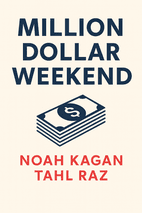
Noah Kagan's Million Dollar Weekend provides a practical framework for launching a profitable business in a single weekend, focusing on rapid idea validation and making the first sale. It's for aspiring entrepreneurs held back by overthinking who want to move from planning to action.
Feature
Insta.Page
Blinkist
Shortform
Summary Depth
Full Chapter-by-Chapter
15-min overview
Section-by-section guides
Audio Narration
✓
✓
✓
Visual Mindmaps
✓
✕
✕
AI Q&A
✓
✕
✕
Quizzes
✓
✕
✕
PDF Downloads
✓
✕
✓
Price
$89.99/yr
$146/yr (PRO)
$199/yr
*Competitor data last verified July 2026.
1 Page Summary
Million Dollar Weekend by Noah Kagan presents a radical yet practical approach to entrepreneurship, challenging the notion that starting a business requires extensive planning, significant capital, or a perfect idea. The core philosophy is the "Million Dollar Weekend" challenge: a framework for conceiving, validating, and launching a profitable business within a single weekend. Kagan argues that the biggest barrier for most aspiring entrepreneurs is not a lack of resources but a surplus of fear and overthinking. The book provides actionable steps to overcome this inertia, focusing on rapid idea validation through direct customer interaction and pre-selling before a product is even fully built.
The methodology is built on key concepts like "The One-Business-in-a-Box" (O.B.B.), which encourages leveraging existing skills to solve a known problem for a specific audience. Kagan emphasizes the critical importance of "doing things that don't scale" at the beginning, such as manually finding your first ten customers to gather invaluable feedback. The process systematically guides the reader from identifying a problem they care about, to finding a "tribe" of potential customers online, to making that crucial first sale as proof of concept. This approach is rooted in the modern context of low-code tools, digital marketing, and global connectivity, which have dramatically lowered the barriers to entry for creating an online business.
The lasting impact of Million Dollar Weekend is its potent demystification of entrepreneurship. It shifts the focus from complex business plans to decisive action and customer-centric problem-solving. By compressing the launch timeline to a weekend, it makes the process less daunting and more accessible to a wider audience, empowering individuals to become creators rather than just dreamers. The book's ultimate value lies in its ability to provide a clear, executable system that builds confidence and creates tangible momentum, turning the abstract goal of "starting a business" into a manageable, weekend-sized project with the potential for significant financial return.
Chapter 1: Just Fu**ing Start
Overview
Overview
The chapter opens with a raw, personal account of the author being fired from Facebook, a moment that shattered his confidence but ultimately became the catalyst for his entrepreneurial rebirth. He shares his journey from feeling like an outsider in the tech world to discovering that the secret to success isn't about having all the answers—it's about having the courage to begin. Through vivid stories of failure and experimentation, he introduces a mindset shift: stop overthinking and start doing, because the most fulfilling lives and businesses are built by those who dare to take the first step, no matter how small.
The Catalyst of Change
The author vividly recalls the day he was let go from Facebook, just months before his stock would have vested, leaving him grappling with shame and self-doubt. Surrounded by Ivy League elites, he always felt inadequate—a sentiment rooted in his upbringing as the son of an immigrant father and a nurse mother, and reinforced by academic struggles like testing into ESL despite being a native English speaker. Early career near-misses, including rejected offers from Microsoft and Google, compounded his belief that he wasn't "good enough." Yet, this rock-bottom moment forced him to reframe failure as liberation, freeing him to pursue entrepreneurship on his own terms.
Embracing the Experimenter's Mindset
After the firing, the author entered a phase of relentless experimentation, trying everything from launching online sports betting sites to organizing startup events and consulting. This period was not about immediate success but about learning through action. Key ventures like marketing for Mint.com—where he drove 100,000 sign-ups pre-launch without prior experience—showcased how starting quickly and adapting led to breakthroughs. He emphasizes that experimentation isn't just for business; it's a lifestyle that cultivates resilience and uncovers unexpected opportunities, turning rough ideas into refined skills.
Practical Tools for Immediate Action
The author introduces the "NOW, Not How" habit, urging readers to prioritize action over perfection. Instead of getting bogged down by planning, successful entrepreneurs act first and learn from real-world feedback. He illustrates this with examples, like streamlining a marketing campaign on the spot, to show how momentum builds from decisive moves. Coupled with this is the "Freedom Number"—a personalized monthly revenue goal (for him, $3,000) that represents financial independence. This number makes entrepreneurship tangible and urgent, shifting focus from abstract dreams to achievable steps that fuel motivation and focus.
Sparks to Ignite Your Journey
To translate theory into practice, the chapter offers simple challenges designed to break inertia. The Dollar Challenge involves asking someone for a $1 investment in your future business, symbolizing the leap from idea to action. Similarly, the NOW, Not How Challenge prompts you to text a friend for a business idea within minutes, reinforcing the habit of immediate execution. These exercises are framed as low-stakes ways to build confidence, with the author sharing how thousands have used them to start their entrepreneurial paths, proving that the hardest part is often just beginning.
Key Takeaways
Start before you're ready: Action, not preparation, is the true source of confidence and learning.
Embrace experimentation: Treat every attempt as a lesson, and you'll uncover opportunities hidden in failure.
Adopt the "NOW, Not How" mindset: Prioritize immediate action over endless planning to build momentum.
Define your Freedom Number: Set a simple, monthly revenue goal to make entrepreneurship tangible and motivating.
Small steps lead to big changes: Initiatives like the Dollar Challenge demonstrate that starting is often the only barrier to a more fulfilling life.
Key concepts: Chapter 1: Just Fu**ing Start
1. Chapter 1: Just Fu**ing Start
The Catalyst of Change
Being fired from Facebook became a turning point from shame to liberation
Lifetime of feeling inadequate due to immigrant background and academic struggles
Early career rejections reinforced belief of not being 'good enough'
Rock-bottom moment forced reframing failure as opportunity for entrepreneurship
Embracing the Experimenter's Mindset
Relentless experimentation after firing led to learning through action
Mint.com marketing success (100k sign-ups) without prior experience
Experimentation as lifestyle that builds resilience and uncovers opportunities
Rough ideas transform into refined skills through continuous testing
Practical Tools for Immediate Action
"NOW, Not How" habit prioritizes action over perfection and planning
Momentum builds from decisive moves and real-world feedback
Freedom Number ($3,000 monthly) makes entrepreneurship tangible
Financial independence goal shifts focus from dreams to achievable steps
Sparks to Ignite Your Journey
Dollar Challenge: Asking for $1 investment symbolizes idea-to-action leap
NOW, Not How Challenge: Texting for business ideas within minutes
Low-stakes exercises build confidence and break inertia
Thousands have used these challenges to start entrepreneurial paths
Core Mindset Principles
Start before you're ready - action creates confidence and learning
Embrace experimentation - every attempt reveals hidden opportunities
NOW, Not How mindset - immediate action over endless planning
Small steps lead to big changes - starting is the main barrier
💡 Try clicking the AI chat button to ask questions about this book!
Chapter 2: The Unlimited Upside of Asking
Overview
Overview
This chapter explores the transformative power of embracing rejection as a pathway to success, drawing from personal anecdotes and practical strategies. It reveals how reframing rejection as a goal can unlock unlimited opportunities in business and life, emphasizing that the act of asking—despite fear—is a crucial skill for entrepreneurs. Through stories of resilience and actionable exercises, the chapter guides readers in developing the courage to ask for what they want, turning potential setbacks into stepping stones.
The Father's Wisdom on Rejection
Noah's father, a charismatic salesman, demonstrated that rejection isn't a barrier but a treasure to collect. By setting weekly goals for rejections, he showed that each "no" brings you closer to a "yes," reframing failure as a positive step. His approach, rooted in chutzpah—a Yiddish term for audacity and tenacity—highlighted that the upside of asking is limitless, while the downside is minimal. This mindset allowed him to thrive as an immigrant with no formal training, proving that naive persistence can be a superpower in business.
Personal Awakening and Early Success
Inspired by his father, Noah applied this philosophy in fourth grade by selling magazine subscriptions door-to-door. Despite frequent rejections, he persevered and won a pizza party, discovering the intoxicating thrill of asking. This early experience cemented his belief that asking is a skill that produces more success than any other trait. It taught him that fear of rejection often holds people back, but overcoming it through repeated exposure can lead to breakthroughs.
Cultivating Your Ask Muscle
Developing the ability to ask requires intentionally facing fear and rejection. Noah shares that even he feels the sting of rejection daily, but he uses techniques like setting rejection goals and reminding himself of life's impermanence to lessen the emotional impact. He emphasizes that embracing discomfort is essential for growth, citing examples like Sara Blakely, who persisted through years of rejection to become a billionaire. The key is to desensitize yourself to pain by seeking it out actively, turning rejection into a game rather than a personal failure.
Strategies for Effective Asking
To master the art of asking, persistence and reframing are vital. Noah outlines pro tips: believe that "no" often means "not now," and follow up relentlessly, as studies show follow-ups double the chance of a yes. He also advises viewing selling as helping—if your product or service improves lives, asking becomes a moral obligation. For instance, Noah's college consulting business thrived by educating clients on benefits, leading to $50,000 in revenue. This approach transforms asking from a selfish act into a communal gift, making it easier and more rewarding.
The Coffee Challenge: A Practical Exercise
Noah introduces the Coffee Challenge as a simple yet powerful way to practice asking and facing rejection. By requesting a 10% discount at a coffee shop without explanation, participants experience discomfort but often gain confidence and real-world benefits. Testimonials from people like Dieter S. and Jennifer Jones show how this exercise empowers them to ask for more in their lives, proving that small, repeated actions build the Ask muscle. The challenge is designed to normalize failure, helping readers realize that rejection isn't catastrophic and can lead to personal growth.
Key Takeaways
Embrace rejection as a goal to unlock opportunities, as each "no" brings you closer to a "yes."
Develop chutzpah—audacity and tenacity—to ask for what you want, turning fear into a catalyst for success.
Use practical strategies like persistence, follow-ups, and reframing selling as helping to make asking feel natural and rewarding.
Practice with exercises like the Coffee Challenge to build confidence and desensitize yourself to rejection, fostering long-term entrepreneurial growth.
Key concepts: Chapter 2: The Unlimited Upside of Asking
2. Chapter 2: The Unlimited Upside of Asking
The Father's Wisdom on Rejection
Rejection is not a barrier but a treasure to collect
Setting weekly rejection goals brings you closer to yes
Chutzpah (audacity and tenacity) makes the upside of asking limitless
Naive persistence can be a superpower in business
Personal Awakening and Early Success
Early door-to-door selling taught the thrill of asking
Fear of rejection holds people back more than actual rejection
Asking is a skill that produces more success than any other trait
Overcoming fear through repeated exposure leads to breakthroughs
Cultivating Your Ask Muscle
Intentionally face fear and rejection to build asking ability
Set rejection goals to lessen emotional impact
Embrace discomfort as essential for growth
Desensitize yourself to pain by seeking rejection actively
Strategies for Effective Asking
Believe 'no' often means 'not now' and follow up relentlessly
Follow-ups double the chance of getting a yes
View selling as helping - asking becomes a moral obligation
Transform asking from selfish act into communal gift
The Coffee Challenge Exercise
Request 10% discount at coffee shop to practice facing rejection
Small repeated actions build the Ask muscle
Normalize failure to realize rejection isn't catastrophic
Build confidence through real-world asking practice
Chapter 3: Finding Million-Dollar Ideas
Overview
After investing over $100,000 in BetArcade only to see it fail without users, the author learned a hard lesson: never build a business without first confirming paying customers exist. This was turned around with Gambit, a payment software born from their own frustration with high fees, which quickly generated revenue and made over $15 million in its first year by solving a real problem for others. This experience highlights that customers crave solutions, not just ideas, and underscores the value of a Customer First Approach—starting with the customer experience and working backward to identify who you're selling to and what problem you're solving.
This mindset is perfectly captured by the story of AppSumo, which started as a basement experiment with just $50 and 48 hours of work. By validating the idea through cold emails and a simple PayPal button, it sold 200 licenses quickly and grew into a $65 million annual business. The author contrasts this with the Founder First mentality, where entrepreneurs might obsess over products without customer input, leading to costly mistakes. Instead, engaging directly with potential customers—like how a dog-walking app idea morphed into a profitable dog-sitting service after feedback—ensures solutions are tailored to real needs before any significant investment.
Real-world examples, such as Sumo.com validating email tools with influencers or a teacher testing cookie sales on Facebook, show how low-risk validation can lead to success. Entrepreneurs are encouraged to start within their zone of influence, tapping into networks of friends, colleagues, or online communities where they already have access and trust. By becoming a problem seeker, noting daily irritations like finding reliable services or healthy options, you can uncover opportunities—just as the author did with AppSumo for software discounts or TidyCal for subscription fatigue.
Practical idea generation involves solving your own problems, using exercises like answering four guiding questions about daily frustrations, and focusing on niches you understand. Other methods include leveraging bestsellers by creating accessories or services for popular products, scouring marketplaces like Craigslist for unmet needs, and analyzing search engine queries to spot must-have "painkiller" solutions over nice-to-have "vitamins." After compiling at least ten ideas, the process shifts to narrowing them down based on excitement and feasibility, emphasizing that no idea is perfect and businesses often evolve through iteration. Ultimately, this chapter teaches that personal pain points, existing demand, and real-time market insights are goldmines for building ventures that resonate, setting the stage for validating those opportunities next.
The BetArcade Failure and Gambit's Success
After investing over $100,000 in BetArcade—a fantasy sports betting site—the author and his partners faced a complete failure when no users showed up. Broke and desperate, they shifted focus to their own biggest pain point: the high commissions and poor service from their payments provider, OfferPal. By creating Gambit, a payment software that offered lower fees and better customer support, they quickly validated the idea with friends in the industry. Within weeks, Gambit was generating revenue, and in its first year, it made over $15 million. This experience underscored a critical lesson: never build a business without first confirming that paying customers exist.
Customers Want Solutions, Not Ideas
The author emphasizes that customers don't care about ideas; they care about solutions to their problems. A costly mistake with Disney—where he built a product based on verbal agreement without validation—reinforced this. Instead of focusing on the product first, entrepreneurs should adopt a Customer First Approach, inspired by leaders like Steve Jobs and Jeff Bezos. This means starting with the customer experience and working backward to identify who you're selling to, what problem you're solving, and where they are.
AppSumo: From Basement Idea to $65 Million Business
Living in a basement apartment, the author identified a gap in the market for discounted non-Mac software bundles. Drawing inspiration from MacHeist, he targeted Reddit users who loved Imgur and validated the idea by cold-emailing Imgur's creator and Reddit's engineer. With a minimal investment of $50 and 48 hours of work, he built a basic site with a PayPal button. The first sale came within minutes, and he quickly sold 200 licenses. This low-risk experiment grew into AppSumo, which now generates over $65 million annually.
Founder First vs. Customer First
Traditional approaches like the Minimum Viable Product (MVP) often overlook the customer. The author contrasts this with the Founder First mentality, where entrepreneurs obsess over products and business plans without customer input. Instead, the Customer First Approach involves direct conversations with potential customers to iterate on solutions before any significant investment. For example, a dog-walking app idea transformed into a dog-sitting service after real feedback, generating revenue without any upfront costs.
Real-World Validation Examples
Sumo.com: The team contacted influencers like Tim Ferriss to validate email list growth tools before building them.
Jennifer Jones: A teacher tested cookie sales on Facebook, leading to a $1,000 per month business without a website or commercial kitchen.
Boris Korsunsky: Validated a private chef service by emailing friends, securing sales and feedback before any formal setup.
Finding Customers in Your Zone of Influence
Successful entrepreneurs start within their existing networks—friends, colleagues, or online communities—rather than seeking opportunities elsewhere. Examples include Facebook's origin through Mark Zuckerberg's email to friends and Anahita's dog treat business starting at a local dog park. The author challenges readers to list three groups they have easy access to and would be excited to help, emphasizing that understanding your audience makes selling easier.
Becoming a Problem Seeker
Great businesses arise from frustrations. The author encourages noting daily irritations, such as finding a reliable house cleaner or healthy breakfast options, as potential business opportunities. By solving his own problems—like AppSumo for software discounts or TidyCal for subscription fatigue—he built multi-million dollar ventures. Tools like keeping a notebook to jot down problems can turn this into a profitable habit.
Idea Generation Challenges
The process involves identifying painful problems you're passionate about, within a niche you understand. Instead of copying influencers or waiting for inspiration, use practical exercises:
Solve Your Own Problems: Like Shane Heath with Mud/Wtr, who created a coffee alternative after his own caffeine issues.
Four Guiding Questions:
What irritated you this morning?
What's been on your to-do list for over a week?
What do you regularly fail at?
What did you want to buy but couldn't find?
By focusing on communities you belong to, such as subreddits or local groups, you can generate and test ideas quickly and cheaply.
Solve Your Own Problems
Drawing from personal experiences, the author illustrates how everyday frustrations can spark viable business ideas. For instance, struggling to decorate a home on a budget led to the concept of an affordable interior design service where users submit photos and receive curated Pinterest boards. Similarly, the desire for activity partners inspired a friend matchmaking service focused on individual connections rather than group events. The challenge here is to identify and document three personal problems that could be turned into business opportunities, emphasizing that even simple, niche issues can lead to profitable solutions.
Bestsellers Are Your Best Friends
This approach centers on piggybacking off popular products that already have massive customer bases. By accessorizing or offering complementary services, entrepreneurs can tap into existing demand without reinventing the wheel. Examples include creating custom stickers for iPhones, developing video game tutorials for热门 titles, or teaching novices how to use MacBooks. The key is to observe bestseller lists on platforms like Amazon and brainstorm ways to enhance or support these products. A challenge encourages writing down two accessory or service ideas, with a reminder to avoid self-editing—quantity over quality at this stage.
Marketplaces
Online platforms like Craigslist, Etsy, and Facebook Marketplace are treasure troves of unmet needs, where people openly seek solutions. By analyzing frequent requests or completed listings, you can spot gaps in the market. For example, Craigslist gigs might reveal demand for laundry services, freelance writing, or event staffing. The strategy involves honing in on overlooked niches, such as building walls or magic show assistance, and considering how to fulfill these needs efficiently. A practical challenge involves visiting a marketplace to identify at least one product or service idea, leveraging the fact that customers are already waving their wallets.
Search Engine Queries
With billions of daily Google searches, this method uncovers what people actively want by examining their queries. Tools like AnswerThePublic.com can reveal popular questions, such as how to train a cat or find family travel spots, pointing to potential business opportunities. The author also highlights Reddit’s r/SomebodyMakeThis subreddit as a goldmine for user-suggested ideas. To evaluate viability, ask whether a solution is a "vitamin" (nice-to-have) or a "painkiller" (must-have). The challenge is to use search engines and forums to generate two more ideas, focusing on problems with clear, urgent demand.
Narrowing Down Your Ideas
After compiling at least ten ideas using the methods above, the next step is selection. There’s no "perfect" idea—businesses like AppSumo evolved over time. The advice is to eliminate ideas that lack excitement and prioritize those that are easiest to implement and would thrill both you and potential customers. If the top three don’t stand out, lean toward simplicity and market enthusiasm. This process isn’t about perfection but about developing the skill to create, assess, and validate ideas, setting the stage for the next chapter on opportunity validation.
Key Takeaways
Personal pain points are fertile ground: Your own daily struggles can reveal untapped business opportunities.
Leverage existing demand: Building on popular products or services reduces risk by targeting pre-engaged audiences.
Marketplaces reveal real-time needs: Platforms like Craigslist and Etsy show where people are actively spending money.
Search data guides solution development: Use queries and forums to identify must-have solutions over nice-to-haves.
Ideation is iterative: Focus on generating many ideas without self-censorship, then refine based on excitement and feasibility.
Start with customer experience and work backward to identify problems
Customers want solutions, not just ideas
Direct customer conversations prevent costly mistakes
Validate before building to confirm paying customers exist
Learning from Failure and Success
BetArcade failed after $100k investment with no users
Gambit succeeded by solving own payment frustration
Gambit generated $15M+ in first year by addressing real pain points
Never build without confirming customer demand first
Low-Risk Validation Methods
AppSumo started with $50 and 48 hours of work
Cold emails and simple PayPal buttons for initial testing
Real-world examples: Sumo.com, teacher cookie sales, private chef service
Generate revenue before significant investment
Idea Generation Strategies
Solve your own problems and daily frustrations
Leverage bestsellers with accessories or complementary services
Scour marketplaces like Craigslist for unmet needs
Analyze search engine queries for painkiller solutions
Zone of Influence
Tap into existing networks of friends and colleagues
Leverage online communities where you have trust and access
Start with people who already know and respect you
Become a problem seeker in familiar environments
Starting Within Your Network
Begin with existing connections like friends, colleagues, or online communities rather than seeking external opportunities
Understanding your audience makes selling easier and more natural
Identify groups you have easy access to and would be excited to help
Becoming a Problem Seeker
Great businesses often arise from personal frustrations and daily irritations
Maintain a notebook to document problems as they occur throughout your day
Solving your own problems can lead to multi-million dollar ventures
Idea Generation Framework
Focus on painful problems you're passionate about within niches you understand
Use guiding questions to identify potential business opportunities
Leverage communities you belong to for quick and cheap idea testing
Solve Your Own Problems
Everyday personal frustrations can spark viable business ideas
Even simple, niche problems can lead to profitable solutions
Document personal problems that could be transformed into business opportunities
Bestsellers Are Your Best Friends
Piggyback off popular products with established customer bases
Create accessories or complementary services for existing bestsellers
Analyze bestseller lists to identify enhancement opportunities
Marketplace Opportunities
Online platforms reveal unmet needs through customer requests
Analyze frequent listings to spot gaps in the market
Focus on overlooked niches where customers are already spending money
Search Engine Insights
Billions of daily searches reveal what people actively want
Use tools to identify popular questions and unmet needs
Prioritize 'painkiller' solutions over 'vitamin' solutions
Narrowing Down Ideas
Generate multiple ideas without self-censorship before filtering
Eliminate ideas that lack personal excitement and market enthusiasm
Prioritize simplicity and ease of implementation over perfection
Key Principles for Idea Generation
Personal pain points provide fertile ground for business opportunities
Leveraging existing demand reduces market risk
Real-time market data reveals where people are actively spending
Ideation is an iterative process that improves with practice
Chapter 5: The 48-Hour Money Challenge
Overview
Faced with skepticism about making money quickly, Noah Kagan launched Sumo Jerky in a 24-hour challenge, demonstrating that rapid business validation is achievable even without established networks. This approach begins by assessing market viability using tools like Google Trends and Facebook Ads to determine if a market is growing and estimate customer potential, as seen with beard oil's steady demand versus a failed pho broth subscription. Next, crafting a One-Minute Business Model simplifies planning with the equation Revenue - Cost = Profit, highlighting scalability needs—like selling 80,000 units of beard oil for million-dollar profits. When initial numbers fall short, as in the jerky example, pivoting with Revenue Dials allows adjustments to variables like average order value or customer type, shifting from single sales to office subscriptions to reduce required sales from 200 to 33. The Million-Dollar Opportunity Challenge encourages testing ideas through validation steps, moving on if they don't pass quickly. Central to this is the Golden Rule of Validation, which mandates securing three paying customers within forty-eight hours without spending money, forcing action and creativity. Three methods support this: Direct Preselling involves reaching out to a Dream Ten list of contacts, using scripts that listen to pain points, offer solutions, and transition to payment requests; Marketplaces like Craigslist or Facebook enable testing with ready audiences, even for virtual products; and Landing Pages can validate demand through pre-orders, though they require minimal setup. Handling rejection is key, with a four-question script to gather feedback and referrals, turning setbacks into opportunities, as when a taco poster idea evolved into shirt sales. The 48-Hour Challenge puts it all into practice, urging contact with potential customers to secure payments using limited-time offers. Throughout, the focus is on acting swiftly, leveraging networks, collecting real money to gauge interest, learning from rejection, and choosing methods that deliver quick results without overcomplication.
The Jerky Challenge Begins
Faced with skeptical students who doubted anyone could make $1,000 in a week, Noah Kagan upped the ante by accepting a 24-hour challenge where his class would choose the business idea. They settled on beef jerky, leading to the birth of Sumo Jerky. With no access to his existing networks, the pressure was on to prove that rapid business validation was possible.
Assessing Market Viability
Before diving in, it's crucial to determine if an idea has million-dollar potential. The key is to ride a "tidal wave" – a growing market with existing demand. Tools like Google Trends and Facebook Ads help answer two questions:
Is the market growing or dying?
How many potential customers are there?
For example, searching "beard oil" on Facebook Ads revealed 2.5 million interested people, while Google Trends showed steady interest. This simple check prevents wasted effort on ideas with limited upside, like a monthly pho broth subscription that lacked sufficient demand.
Crafting Your One-Minute Business Model
Forget complex business plans – focus on this essential equation: Revenue - Cost = Profit
Using the beard oil example:
Selling price: $50
Cost per unit: $37.50
Profit per unit: $12.50
To make $1 million profit, you'd need to sell 80,000 units. While daunting, this highlights scalability through repeat customers, subscriptions, or product expansions. The model exposed a flaw in Noah's initial jerky plan: selling single bags at $20 with $15 costs meant needing 200 sales in 24 hours – nearly impossible.
Pivoting with Revenue Dials
When initial numbers don't work, pivot by adjusting key variables. Noah shifted from one-off jerky sales to six-month subscriptions for offices:
Subscription price: $120
Costs: $90
Profit per subscription: $30
This reduced the needed sales from 200 to just 33. The six Revenue Dials to tweak include:
Average order value
Purchase frequency
Price point
Customer type
Product line
Add-on services
Putting It to the Test
The Million-Dollar Opportunity Challenge simplifies decision-making: pick your first business idea and run it through the validation steps. If it passes, proceed; if not, move to the next idea without overthinking. This process saves time by focusing on ideas with real potential before investing further effort.
The Golden Rule of Validation
At the heart of this approach is a powerful principle: you must find three customers willing to pay for your idea within just forty-eight hours, without spending any money. This constraint isn't arbitrary—it forces you to act quickly and creatively, cutting through hesitation and focusing on what truly matters. The rule hinges on three critical elements: a tight time limit to spur action, the challenge of securing that third customer (which separates casual interest from real demand), and the necessity of collecting actual money upfront. Tools like PayPal or Venmo make this easy, but the real test is whether people are excited enough to hand over cash based on a mere description of your solution.
Three Methods to Validate ANY Business Idea
Direct Preselling
This hands-on method involves personally reaching out to potential customers, describing your offering, and asking for payment to gauge genuine interest. It’s about turning conversations into validation, not sales pitches. For instance, Eric built a $750,000-a-year painting business by knocking on doors with a simple flyer, while Dana pivoted from a costly app idea to a successful horse-care business by messaging friends and earning $1,000 in her first week. The key is starting with your "Dream Ten"—a list of ten ideal contacts from your network, like friends, family, or social media connections, who are most likely to support you. Using a structured spreadsheet with columns for names, contact details, and follow-ups helps track progress. If you struggle to list ten people, it might be a sign to reconsider the idea.
Scripts for Effective Preselling
Validation thrives on authentic conversations, not rigid pitches. A three-part framework guides these interactions:
Listen: Ask open-ended questions like, "What's the most frustrating part of your current situation?" to uncover pain points. Summarize their responses to show understanding.
Options: Suggest solutions tailored to their needs, such as a service or product, and observe their excitement level. Low energy or hesitation signals weak interest.
Transition: Move smoothly to the ask by combining price, benefit, and time—e.g., "For $50, I can fix your computer today." Presenting offers as comparisons (e.g., "like X but cheaper") can make them more relatable. Always ask for immediate payment to separate real buyers from the merely curious, and use limited-time discounts to create urgency.
Dealing with Rejection
Rejection isn't a setback; it's a goldmine of insights. When someone says no, use a four-question script to learn and adapt:
"Why not?"—Embrace criticism to refine your idea.
"Who is one person you know who would love this?"—Always seek referrals.
"What would make this a no-brainer for you?"—Explore alternative solutions.
"What would you pay for that?"—Gather pricing feedback. For example, when Noah's taco poster idea flopped, this process revealed a demand for taco shirts instead, leading to quick sales and a new direction.
Marketplaces
Leverage platforms like Facebook Marketplace, Craigslist, or Reddit to test ideas with minimal effort. These sites are filled with ready-to-spend audiences. Neville validated a camera rental business by posting an ad on Craigslist and earning $75 within hours, without any upfront cost. You can even test "virtual products" by listing items that don't exist yet, like custom disc golf discs, to see if people will pay before you invest in production.
Landing Pages
While setting up a simple landing page with tools like Instapage or Unbounce can validate demand through pre-orders or email sign-ups, it often involves time and ad spending. The key is to keep it minimal—focus on functionality over aesthetics. Justin Mares validated Kettle & Fire bone broth with a basic site, a $12 domain, and $50 in ads, netting $500 in revenue and paving the way for a $100 million company. Limit this approach to forty-eight hours to avoid over-investing.
The 48-Hour Challenge
Your mission is clear: use your Dream Ten list to contact people via text, call, or DM, and secure at least three paying customers within two days. A sample script might involve reminding them of a shared interest, pitching your solution, and asking for immediate payment with a limited-time offer. If you succeed, you've validated a viable business. If not, pivot to a new idea and restart the process.
Key Takeaways
Act Fast and Frugally: The 48-hour window forces decisive action and creativity, ensuring you test ideas without unnecessary costs.
Money Talks: Real validation comes from collecting payment, not just expressions of interest—use digital tools to make it easy.
Leverage Your Network: Start with people who know and trust you; their feedback and purchases provide the fastest path to validation.
Embrace Rejection: Every "no" is an opportunity to refine your idea, uncover new needs, and even discover better opportunities.
Choose the Right Method: Whether through direct preselling, marketplaces, or landing pages, focus on the approach that delivers quick, tangible results without overcomplication.
Key concepts: Chapter 5: The 48-Hour Money Challenge
4. Chapter 5: The 48-Hour Money Challenge
The 48-Hour Challenge Foundation
Proving rapid business validation is possible without established networks
Golden Rule: Secure three paying customers within 48 hours without spending money
Focus on action over perfection and collecting real money to gauge interest
Market Viability Assessment
Use Google Trends and Facebook Ads to identify growing markets
Determine if market is growing or dying and estimate customer potential
Ride 'tidal waves' - existing markets with demonstrated demand
One-Minute Business Model
Simplify planning with Revenue - Cost = Profit equation
Calculate scalability requirements for million-dollar profits
Identify flaws in initial assumptions through basic math
Revenue Dials Pivoting Strategy
Adjust key variables when initial numbers don't work
Six dials: average order value, frequency, price, customer type, product line, add-ons
Transform business model from single sales to subscriptions
Validation Methods
Direct Preselling: Contact Dream Ten list with pain-point scripts
Marketplaces: Test with ready audiences on Craigslist or Facebook
Landing Pages: Validate demand through pre-orders with minimal setup
Handling Rejection and Feedback
Use four-question script to gather feedback and referrals
Transform setbacks into opportunities for iteration
Learn from rejection to refine product-market fit
Direct Preselling
Personally reach out to potential customers to describe offerings and ask for payment to gauge genuine interest
Start with your 'Dream Ten' - ten ideal contacts from your network most likely to support you
Use structured spreadsheets to track names, contact details, and follow-up progress
Turn conversations into validation rather than sales pitches
If struggling to list ten supportive contacts, reconsider the business idea
Scripts for Effective Preselling
Use a three-part framework: Listen, Options, and Transition
Ask open-ended questions to uncover pain points and summarize responses to show understanding
Suggest tailored solutions and observe excitement levels to gauge interest
Combine price, benefit, and time in the ask (e.g., 'For $50, I can fix your computer today')
Always ask for immediate payment and use limited-time discounts to create urgency
Dealing with Rejection
Treat rejection as valuable insight rather than a setback
Use a four-question script: 'Why not?', 'Who would love this?', 'What would make this a no-brainer?', and 'What would you pay?'
Embrace criticism to refine and improve your business idea
Always seek referrals when facing rejection
Use feedback to pivot to better opportunities (e.g., taco posters to taco shirts)
Marketplace Validation
Leverage platforms like Facebook Marketplace, Craigslist, or Reddit to test ideas with minimal effort
Access ready-to-spend audiences without upfront costs
Test 'virtual products' by listing items that don't exist yet to validate demand before production
Quick validation possible - examples show earning $75 within hours of posting
Minimal time investment required for marketplace testing
Landing Page Validation
Use simple landing pages with tools like Instapage or Unbounce to validate demand
Focus on functionality over aesthetics to keep setup minimal
Limit approach to forty-eight hours to avoid over-investing time and money
Combine with small ad spending ($50 example) to test market response
Successful validation can lead from small tests to significant businesses ($500 to $100M company)
The 48-Hour Challenge Execution
Use Dream Ten list to contact people via text, call, or DM within two days
Secure at least three paying customers to validate business viability
Use sample scripts that combine shared interests, solution pitching, and immediate payment requests
Success means validated business; failure means pivot to new idea and restart
Include limited-time offers to drive urgency and commitment
Core Principles of the 48-Hour Challenge
Act fast and frugally - the time constraint forces decisive action and creativity
Money talks - real validation comes from collecting payment, not just expressions of interest
Leverage your network - start with people who know and trust you for fastest validation
Embrace rejection - every 'no' provides opportunities for refinement and new directions
Choose the right method - focus on approaches that deliver quick, tangible results without overcomplication
You've reached the end of the free chapters
Next chapter: “Social Media Is for Growth . . .” is locked
Keep reading Million Dollar Weekend — and unlock all 600+ book summaries with audio, mindmaps and AI Q&A.
$0.00 due today · 7 days free, then $89.99/year ($7.49/mo) · Cancel anytime before day 7
Noah Kagan is a prominent entrepreneur and the Chief Sumo at AppSumo, a company dedicated to helping small businesses thrive with valuable software deals. He is the author of the bestselling book "Million Dollar Weekend," which provides a practical framework for launching a successful business in a short timeframe. A former early employee at Facebook and Mint.com, Kagan leverages his extensive experience in the tech industry to mentor aspiring founders. His insights on entrepreneurship, marketing, and building a meaningful business have made him a sought-after voice in the startup community. His published works are available for purchase on Amazon.
📚 Explore Our Book Summary Library
Discover more insightful book summaries from our collection