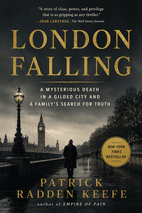
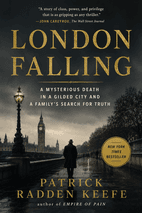
Patrick Radden Keefe's London Falling investigates the suspicious 2019 death of nineteen-year-old Zac Brettler, who jumped from a balcony into the Thames after a night with older, powerful men. The book exposes how the Metropolitan Police investigation crumbled, leaving the central mystery unresolved, and is for readers of true crime and investigative journalism interested in stories where justice remains elusive and institutions fail.
Feature
Insta.Page
Blinkist
Shortform
Summary Depth
Full Chapter-by-Chapter
15-min overview
Section-by-section guides
Audio Narration
✓ (AI narration)
✓
✓
Visual Mindmaps
✓
✕
✕
AI Q&A
✓ Voice AI
✕
✕
Quizzes
✓
✕
✕
PDF Downloads
✓
✕
✓
Price
$59.99/yr
$146/yr (PRO)
$199/yr
*Competitor data last verified February 2026.
About the Author
Patrick Radden Keefe
Patrick Radden Keefe is an award-winning American author and investigative journalist who writes for The New Yorker. He is known for his deeply researched narrative nonfiction, including *Say Nothing: A True Story of Murder and Memory in Northern Ireland* and *Empire of Pain: The Secret History of the Sackler Dynasty*, which explore themes of crime, power, and secrecy. Keefe has also worked as a contributor to *The New York Times Magazine* and *The Boston Globe*, and his expertise spans intelligence, geopolitics, and the pharmaceutical industry.
1 Page Summary
In London Falling, Patrick Radden Keefe investigates the suspicious 2019 death of nineteen-year-old Zac Brettler, who jumped from a balcony into the Thames after a night with older, powerful men. The book traces how Zac, the son of a prominent London rabbi's daughter, became entangled in a world of violent gangsters, Russian oligarchs, and dirty money by pretending to be a Russian oligarch's son. Keefe exposes how the Metropolitan Police investigation crumbled, leaving the central mystery unresolved: what happened in the apartment immediately before Zac's fall, and why did a key suspect, Akbar Shamji, lie about his movements that night?
Keefe's distinctive approach weaves Zac's personal tragedy into a broader portrait of modern London as a "twenty-four-hour laundromat for dirty money." He connects Zac's death to a pattern of suspicious deaths among those tied to exiled Russian oligarchs, to the violent legacy of the Brink's-Mat gold heist, and to a family history of survival through invention—from Zac's grandfather, the beloved Rabbi Hugo Gryn who fabricated his past to survive the Holocaust, to Zac himself, a "compulsive liar" who constructed an elaborate false identity. Through meticulous reporting, including GPS data from a rental car's "black box" and damning text messages, Keefe builds a case that the official inquest was designed to produce ambiguity rather than truth.
This book is for readers of true crime and investigative journalism who are interested in stories where justice remains elusive and institutions fail. Readers will gain a devastating understanding of how the convergence of organized crime, corrupt policing, and immense wealth can swallow a young person's life, leaving a family to conduct their own investigation while authorities look away. It is a haunting examination of grief, deception, and the invisible violence that powers a global financial capital.
The prologue opens at the headquarters of MI6, a fortress-like building on the Thames that was designed in such secrecy that its own architect was kept in the dark about its true purpose. But this scene is just a doorway into a much larger story about London itself—a city defined by its river, yes, but also by the astonishing transformations that have reshaped its banks over centuries. Through the lens of the Thames, the chapter traces the arc of London’s evolution: from Roman trading post to the busiest port in the world, from Dickensian industrial powerhouse to a gleaming financial capital where luxury towers stand mostly empty, their windows dark at night. And then, with a jolt, the story focuses on a single moment in 2019, when a security camera at MI6 catches a young man stepping onto a balcony at a nearby residential complex and jumping to his death.
London’s River, London’s Fate
The Thames is not merely a backdrop; it’s a character in its own right, tidal and unpredictable, capable of hiding bodies in its mud or luring lost whales far from the sea. The chapter explores a paradox Dickens noticed: the river was the city’s “pulsing artery,” choked with ships unloading the treasures of empire—tobacco, ivory, spices, tea—and yet also “an image of death,” a dangerous ribbon that could swallow the desperate or the unlucky. That duality lingered even as the industrial age gave way to something new. By the time MI6 opened in 1994, the factories and docks that had sustained London for generations were gone, killed off by the shipping container and the decline of manufacturing. The city had to reinvent itself.
The Gleaming New Metropolis
And reinvent itself it did. London shed its sooty past, cleaned its air, and remade itself as a global financial hub. The waterfront became a playground: derelict warehouses turned into galleries and restaurants, power stations transformed into museums and shopping malls. But this rebirth came with a shadow. We learn that foreign buyers snapped up luxury apartments as investments, leaving them vacant for most of the year. These “ghost mansions” drained neighborhoods of life, their windows dark after sundown. The Riverwalk development, built directly across from MI6 on the site of a former prison, shows this trend: sleek towers, opulent penthouses, owners hidden behind shell companies, and a building that felt eerily empty.
The Fall
In the early hours of November 29, 2019, that emptiness was shattered. A security camera at MI6 recorded movement on the fifth floor of the Riverwalk tower. A young man emerged onto a balcony, looked over the railing, and then jumped. It’s a striking image, like something from a movie: the brightly lit apartment, the dark figure, the cold Thames below. And with that, the prologue ends, leaving a mystery that will unfold in the pages to come.
Key Takeaways
The Thames is a symbol of London’s dual nature: source of wealth and danger, of life and death, of industry and reinvention.
London’s transformation from a manufacturing port to a financial capital created gleaming new buildings but also hollowed-out neighborhoods, with luxury apartments standing empty as “ghost mansions.”
The MI6 building and the Riverwalk complex face each other across the river, a physical and symbolic contrast between the secret state and opaque global capital.
The book’s central event—a mysterious death from a Riverwalk balcony—is introduced with chilling brevity, inviting readers to ask who the young man was and why he jumped.
Key concepts: Prologue
1. Prologue
London's Dual Nature Through the Thames
River as character: tidal, unpredictable, hides bodies
Dickens' paradox: pulsing artery and image of death
Source of wealth and danger, life and death
Industrial Decline and Reinvention
Factories and docks killed by shipping containers
London shed sooty past to become financial hub
Waterfront transformed into galleries and restaurants
The Shadow of Global Capital
Foreign buyers snapped up luxury apartments as investments
Ghost mansions drained neighborhoods of life
Riverwalk towers built on former prison site
MI6 and Riverwalk: Symbolic Contrast
Secret state faces opaque global capital across Thames
MI6 fortress designed in secrecy
Riverwalk owners hidden behind shell companies
The Mysterious Fall
November 29, 2019: young man jumps from Riverwalk balcony
Security camera at MI6 captures the event
Brightly lit apartment, dark figure, cold Thames below
If you like this summary, you probably also like these summaries...
💡 Try clicking the AI chat button to ask questions about this book!
Chapter 2: Chapter 1: The Big I Am
Overview
Zac Brettler's birth on a rainy September evening in 2000, with a shock of red hair no one expected, was the first sign that this child would be different. His parents, Rachelle and Matthew, came from families shaped by profound loss—both grandfathers were Holocaust survivors who rebuilt their lives in England, making the creation of new life a defiant answer to unspeakable tragedy. The story of how Rachelle and Matthew met in their mid-thirties, married just months before their first son Joe was born, and settled into a comfortable life in Maida Vale sets the stage for a family that valued substance over flash. But London itself was transforming around them. The 1986 Big Bang deregulation had cracked open the staid old banking world, flooding the city with American brokers, foreign money, and a new ethos of ambition and conspicuous consumption. By the time Zac was a toddler, the city was drunk on deregulation, cocaine, and construction—and this would shape his world in ways his parents never anticipated.
Zac was a performer from the start: a gravelly-voiced impersonator, a memorizer of shopping catalogs and car models, a natural entertainer who charmed neighbors and commanded a flock of younger children. His older brother Joe was the quieter, academically inclined one, and when Zac failed to follow Joe into the prestigious University College School—rejected twice despite intense appeals—the wound was deep. He landed instead at Mill Hill, a leafy private school on London's northern edge, where the student body had been dramatically reshaped by the arrival of children of post-Soviet oligarchs. These were teenagers who wore designer clothes, summoned Ubers for short walks, and seemed to answer to no one. Zac, initially miserable and ashamed of his perceived second-tier status, quickly became fascinated by their wealth and swagger. He started dealing cigarettes on campus, reselling sneakers, even paying for a limousine to take him off campus just to see what it felt like. His personality hardened: he began wearing suits to school, storing his work in a briefcase, and expressed admiration for hustlers like Jordan Belfort and for Vladimir Putin's vision of power over democracy. The Big I Am—a Manchester expression for pretension his parents' generation despised—became Zac's new creed. By the end of his teenage years, the irreverent, funny little boy had been replaced by a hard-edged young man obsessed with money and status, eager to leave school behind and make his fortune.
Zac's Unexpected Arrival
Zac Brettler entered the world on a rainy September evening in 2000, crowned with a soft tuft of red hair that surprised both his parents. Neither could recall any ginger coloring in their families. Matthew had been in his London office when Rachelle’s contractions began, and by the time he met her at the hospital, the tiny newborn wore a peculiar, wizened expression. One nurse remarked, “He looks like he's been here before.” The Brettlers had planned to name him Louis, but the baby’s distinctive nature demanded something sharper. They chose Zachary—Zac for short.
In this family, a child’s birth carried profound weight. Both of Zac’s grandfathers had survived the Holocaust. Rachelle’s father, Hugo Gryn, arrived in the UK in 1946 at age fifteen, having survived Auschwitz and lost nearly all his family. He became a beloved rabbi and BBC broadcaster. Matthew’s father, Benny Brettler, left Germany on one of the last Kindertransports at thirteen, entirely alone. His entire family was murdered during the war, but he learned English by going to the cinema, built a textiles business in Manchester, and eventually married. To create new life in this family was to answer the unspeakable loss of an earlier generation.
The City That Transformed
Matthew attended Manchester Grammar, then studied political science at the London School of Economics, graduating in 1983 as London stood on the edge of a sweeping transformation. In October 1986, Margaret Thatcher deregulated the banking industry. Before this, London’s banking sector had been a clubby domain of English gentlemen. The “Big Bang” cracked it open, ushering in American brokers and traders who worked with a more rapacious tempo. Foreign banks swept in, buying smaller English firms and poaching talent. The new breed fueled themselves with coffee, ambition, and cocaine. The Big Bang also triggered the greatest wave of new construction London had ever seen. Within fifteen years, a consortium of banks developed Canary Wharf into a sprawling seventy-acre complex of towers and trading floors. For Matthew, it felt thrilling to witness the city metamorphose. Standard of living rose. Central London flat prices jumped 30 percent and kept climbing. Wine bars replaced pubs, BMW became the car of choice, and a general atmosphere of conspicuous consumption took hold.
How Rachelle and Matthew Met
Matthew didn’t meet Rachelle until 1997, when both were in their mid-thirties. He had specialized in structured finance, making a comfortable living without being flashy. At a gallery opening, he got talking with a man who thought Matthew might be a good match for a friend—and gave him Rachelle’s phone number. They arranged to meet at a wine bar in St. John’s Wood. Rachelle was petite and stylish, with lively eyes and a wry sense of humor. Matthew was slim, balding, athletic, genial but quietly intense. “We just talked and talked,” Rachelle said. Though both their fathers were Holocaust survivors, Rachelle’s upbringing had been different. She grew up in London in a cosmopolitan family. Her father, Hugo Gryn, had married an Englishwoman, lived in Cincinnati during rabbinical training, then moved to Bombay before returning to London, where he became senior rabbi of the West London Synagogue. Rachelle and her siblings were artistically inclined. By the time she met Matthew, she was working as an assistant to film director Oliver Parker. Matthew, with his educational pedigree and stable income, seemed almost exotic. They married in September 1998, surrounded by friends and family. There was one conspicuous absence: Hugo Gryn had died of brain cancer at sixty-six not long after Rachelle and Matthew met. The ceremony was beautiful—elegant yet informal. And in at least one important respect it was spontaneous: as her brother walked her down the aisle, Rachelle was already six months pregnant. Joe was born in early 1999. Not long after Joe turned one, Rachelle was pregnant again. Before Zac arrived, the family moved to a spacious three-bedroom unit on Lauderdale Road in Maida Vale.
Zac the Performer
When Zac started speaking, his first word wasn’t “Mama” or “Dada” but “DoDo”—his name for Joe. The brothers looked similar, but Joe had brown hair that exploded into corkscrew curls, while Zac kept that auburn coloring. Where Joe was more subdued and thoughtful, Zac established himself as a cutup. He had a surprisingly deep, gravelly voice and was extremely quick-witted. He could deliver note-perfect imitations of family friends and mimic foreign accents. “He was the funniest little boy,” recalled one cousin. When Zac was scarcely out of diapers, he memorized the lyrics to the Notorious B.I.G. song “Going Back to Cali” and would launch into a rendition anytime he saw his cousin. He was uninhibited, chatty, and seemed to relish good conversation. Benny Brettler was known for his extraordinary memory, which he passed down to Matthew, and Matthew passed it to Zac. As a child, Zac would study the Argos shopping catalog, memorizing consumer electronics, brand names, and prices, then recite them in fantastic detail. He became the family consultant for new Kindles and other devices. Long before he could drive, he developed a fascination with automobiles and narrated family drives with running commentary on the models and prices of passing cars.
A Happy Life Unfolds
The Brettlers lived comfortably. Matthew made enough money to support a family in a city that grew more expensive every year. Rachelle became a freelance journalist, writing mostly about crafts and design. They traveled to Italy, Portugal, France, Germany, Spain. Along with two partners, Matthew founded a boutique structured finance firm that gave him pleasant professional autonomy. Many clients were in the United States, so the family bought a second apartment in New York City, spending a few weeks there each summer. Both Joe and Zac were athletic, and as they reached adolescence, they became increasingly competitive. They skied, biked, Rollerbladed, played cricket, soccer, squash, and tennis. For years, Joe was the better tennis player. But one summer when Zac was about twelve, he devoted all his time to improving—playing every day at the club, studying YouTube videos. That summer he got so much better that for the first time he beat his big brother. Matthew and Rachelle were aware of the sibling rivalry but weren’t overly troubled. Without a younger sibling himself, Zac became an informal camp counselor to a gaggle of kids who gathered on summer days in a communal garden. He organized cricket and soccer games and delivered little sermons on the importance of eating healthily. “He was like a kind big brother,” the mother of two of those kids remembered. “People loved him, because he had a great sense of fun.”
The UCS Rejection
When Joe was twelve, he was accepted at University College School (UCS), a selective private school in Hampstead.
Key concepts: Chapter 1: The Big I Am
2. Chapter 1: The Big I Am
Zac's Birth and Family Legacy
Born September 2000 with unexpected red hair
Planned name Louis changed to Zachary
Both grandfathers were Holocaust survivors
New life as defiant answer to tragedy
Parents' Background and Meeting
Rachelle and Matthew met in mid-thirties
Married months before first son Joe born
Settled in Maida Vale, valued substance
Matthew witnessed London's 1980s transformation
London's Big Bang Transformation
1986 deregulation cracked open banking world
Flooded city with American brokers and foreign money
Triggered massive construction and Canary Wharf
New ethos of ambition and conspicuous consumption
Zac's Early Personality
Natural performer: impersonator and memorizer
Charmed neighbors, commanded younger children
Gravelly voice and entertaining nature
Contrasted with older brother Joe's quietness
Rejection and Mill Hill School
Rejected twice from prestigious University College School
Landed at Mill Hill, felt second-tier
School reshaped by children of post-Soviet oligarchs
Initially miserable, then fascinated by wealth
Zac's Hustler Transformation
Started dealing cigarettes and reselling sneakers
Rented limousine just to feel status
Began wearing suits and carrying briefcase
Admired hustlers like Jordan Belfort and Putin
The Big I Am Creed
Manchester expression for pretension
Became Zac's new philosophy
Replaced funny boy with hard-edged young man
Obsessed with money and status, eager to leave school
⚡ You're 2 chapters in and clearly committed to learning
Why stop now? Finish this book today and explore our entire library. Try it free for 7 days.
Chapter 3: Chapter 2: A Fast Life
Overview
The contrast between Rachelle’s own upbringing and the parenting she later practiced couldn’t have been starker. Growing up in a warm but hands-off household in Marylebone, she was left to her own devices—skipping school to hang out with punks, drifting without guidance. Her parents’ benign neglect was typical of the 1960s and ’70s, but decades later, when she and Matthew faced their own challenges with Zac, the rules had flipped. In affluent Maida Vale, neglect was practically taboo. They wanted the warmth of their own childhoods but aimed to fix the previous generation’s bugs. For a while, it worked—their sons were easy, accomplished kids. But as Zac hit his mid-teens, a rift opened. Was it healthy rebellion? A way to reject liberal parents? Then came the slamming doors, the raised voice, and the night he put his hands around Rachelle’s throat. She insisted he see a psychiatrist.
Dr. Roger Howells diagnosed an asocial narcissistic flavor and a potentially dangerous lack of insight. Zac refused further therapy; Matthew was skeptical too. Rachelle attended alone. After that crisis, things seemed to settle. Zac transferred schools, talked about becoming a sports agent, and landed an internship with a chauffeur-service owner. Together they incorporated a company named after The Wolf of Wall Street. Home grew peaceful, but Zac also became remote and secretive—his parents tested his blood for drugs (clean), installed a hidden camera (just friends hanging out), and suspected a relationship with a glamorous neighbor.
Then came the Mayfair world. Zac befriended Akbar Shamji, a wealthy Cambridge graduate living in a £10 million apartment. Soon Zac was walking Akbar’s Instagram-famous Weimaraner, dining at Annabel’s, and brokering a real estate deal at One Hyde Park, earning a finder’s fee from Roman Abramovich’s right-hand. He leaked insider gossip about José Mourinho moving to Tottenham—and was right. He was suddenly connected, wearing Moncler, carrying wads of cash, and launching ventures from car imports to CBD skincare. His parents were baffled but impressed; an industry veteran found Zac “credible, not some kid in his dad’s suit.”
Then he announced he was moving out. Akbar had introduced him to a rubber tycoon who offered a luxury apartment overlooking the Thames. Zac showed Matthew his HSBC account balance—£850,000—attributed to oil and gas deals, real estate, and car imports. His parents oscillated between pride and fear, directly asking if he was dealing drugs or guns. He swore no. They practiced emotional triage, keeping him close rather than pushing him away. By summer’s end, Zac moved back home—the Riverwalk apartment had been nice, but he missed home. Joe, who had been floundering at university, also dropped out. In a role reversal, Zac gave his older brother a sweet pep talk: “Don’t worry. Come home.” For a brief moment, all four Brettlers were under one roof again, finding a messy, unconventional way forward.
A Wild Upbringing
Rachelle’s own adolescence provided a stark contrast to the careful, interventionist parenting she’d later practice. Growing up in a warm, boisterous household in Marylebone, she was largely left to her own devices. Her father, the polymathic rabbi Hugo Gryn, and her mother, Jacqueline, ran a home where notable figures drifted in and out, but the children were treated with benign neglect typical of 1960s and ’70s London. By sixteen, she was skipping school to hang out at a pub where the Sex Pistols congregated. When it came time for university, she lacked direction. Her parents offered no guidance. “I now would be a great mother to that girl, aged seventeen, named Rachelle,” she reflected. “I would have said, ‘Why don’t you go and learn design? Or learn to be a shoemaker. Or do something.’ But instead my parents said, ‘Go and learn to type.’” So she did.
Parenting in a New Key
Three decades later, when Rachelle and Matthew faced their own parenting challenges with Zac, the cultural norms had flipped. In affluent Maida Vale, benign neglect could practically get you arrested. The Brettlers wanted to emulate the warmth of their own upbringings while fixing the bugs of the previous generation. For a while, it worked—Joe and Zac were easy, accomplished kids. But as Zac entered his mid-teens, the Brettlers faced a dilemma: How interventionist should they be? Perhaps this was just a healthy rebellion, a way for Zac to differentiate himself from his liberal parents. When he admired wealthy thugs and autocrats, Rachelle wondered, “How do you reject liberal parents? He’d do anything to get a rise from us, perhaps.”
Signs of Trouble
Zac remained a nurturing presence for younger kids, got certified as a tennis coach, and occasionally played in Matthew’s Thursday soccer league. But he also applied to transfer to Harrow, one of the most selective schools in the UK, against the odds—and was rejected. The sting deepened after his brother Joe graduated and departed for a gap year, leaving Zac feeling dislocated. He started stomping around the apartment, slamming doors, and raising his voice. One night, after a bickering match in which Rachelle called him a “spoiled brat,” Zac put his hands around her throat. Although she believed it was more rage than earnest, the incident rattled her deeply, and she insisted he see a psychiatrist.
A Diagnosis and a Dead End
In January 2018, Zac visited Dr. Roger Howells. He arrived in athletic clothes, defiant, but soon warmed up. He boasted that nobody would mess with him, complained that his parents were “narrow-minded and restrictive,” but conceded they could be funny and capable. Rachelle had been frantically researching online—bipolar? borderline? narcissistic?—and described to Howells a “stark behavioral change” starting six months earlier, with “sporadic rage, contempt and extreme disdain.” Howells diagnosed a “strong asocial narcissistic flavor” and a “potentially dangerous lack of insight,” recommending therapy. Zac refused further sessions, and Matthew, dismissive of therapy, joined him in opting out. Rachelle attended the remaining sessions alone.
A Glimmer and a New Circle
After the kitchen incident, things seemed to settle. Zac transferred to Ashbourne College in Kensington, enjoyed more autonomy, and began talking about becoming a sports agent. Through a friend, he landed an internship with a chauffeur-service owner who called him “phenomenal.” Together they incorporated a company, Omega Stratton—a name that was an ironic nod to the crooked brokerage in The Wolf of Wall Street. Home grew more peaceful, but Zac also became remote and secretive. Rachelle surreptitiously tested his blood for drugs (clean), Matthew installed a hidden camera while they were away (just showed Zac hanging with friends), and Rachelle suspected a clandestine relationship with a beautiful Russian neighbor who drove a Bentley.
Into the Mayfair Milieu
In early 2019, Zac befriended Akbar Shamji, a wealthy Cambridge graduate who lived with his family in a £10 million Mayfair apartment. Akbar’s wife ran a couture label dressing Gwyneth Paltrow and Michelle Obama; their daughter attended Ashbourne with Zac. Soon Zac was spending so much time in Mayfair that he’d give Matthew and Rachelle dining recommendations near the Curzon cinema. One evening, Akbar took Zac to Annabel’s—the legendary private club on Berkeley Square. For a kid who worshiped wealth and status, it was the ultimate destination. Matthew and Rachelle had never been there, but they knew what it was. And there their eighteen-year-old son was, rubbing shoulders with the sort of people who made Annabel’s their second home.
Zac's Entrée into Mayfair's Elite Circles
Zac's alliance with Akbar Shamji deepened, beginning with mundane activities like walking Akbar’s black Weimaraner, Alpha Nero, around Mayfair. The dog was a celebrity in its own right, with an Instagram account featuring fashion model cameos. Rachelle noticed how Zac carried himself with newfound pride when accompanied by the expensive dog. Akbar's growing role in Zac's life became a source of quiet worry for his parents, though they rationalized it: a successful entrepreneur with a stable family could serve as a mentor.
The backdrop of their walks was One Hyde Park, a fortress-like mega-development in Knightsbridge touted as the most expensive residential building on earth. Its creators, Nick and Christian Candy, had risen from a modest £6,000 loan from their grandmother to become multimillionaires by catering to the whims of Russian oligarchs. Zac stunned his parents by revealing he played a role in a transaction related to One Hyde Park. Through a contact, he alerted Marina Granovskaia—Roman Abramovich’s right-hand—to an available unit. She bought it, and Zac pocketed a finder's fee. Soon after, he leaked insider gossip about José Mourinho moving to Tottenham, which proved correct weeks later. He was suddenly connected, working deals, and wearing a chic Moncler vest like a young finance bro.
Flourishing as a Young Dealmaker
Zac’s entrepreneurial endeavors with Akbar multiplied: car imports from Romania, a Kazakh mining project,
Key concepts: Chapter 2: A Fast Life
3. Chapter 2: A Fast Life
Contrasting Upbringings
Rachelle's hands-off 1960s-70s childhood in Marylebone
Benign neglect typical of the era
Skipped school, hung out with punks, no guidance
Later parenting aimed to fix previous generation's bugs
Parenting in Affluent Maida Vale
Neglect now taboo in wealthy circles
Warmth emulated but interventionist approach adopted
Sons initially easy and accomplished
Mid-teen rift opened with rebellion and rejection
Escalating Crisis at Home
Slamming doors, raised voices, and physical aggression
Zac put hands around Rachelle's throat
Rachelle insisted on psychiatric evaluation
Dr. Howells diagnosed asocial narcissistic flavor
Therapy Rejected, Surface Calm
Zac refused further therapy; Matthew skeptical
Rachelle attended sessions alone
Zac transferred schools, pursued sports agent career
Home peaceful but Zac became remote and secretive
Entry into Mayfair's Elite World
Befriended wealthy Cambridge graduate Akbar Shamji
Walked Instagram-famous dog, dined at Annabel's
Brokered One Hyde Park deal, earned finder's fee
Wore Moncler, carried cash, launched ventures
Mysterious Wealth and Parental Fear
Zac announced move to luxury Thames apartment
Showed £850,000 HSBC balance from vague deals
Parents oscillated between pride and fear
Directly asked about drugs or guns; he swore no
Temporary Family Reunion
Zac moved back home, missed family
Brother Joe dropped out of university
Zac gave Joe a supportive pep talk
All four Brettlers under one roof again
Chapter 4: Chapter 4: Missing Persons
Overview
Rachelle’s Thursday had felt ordinary enough—a haircut, an artist talk, a stranger snapping her picture beneath Piccadilly’s Christmas lights. But at home, her son Zac had left behind his credit cards, his house keys, his beloved Moncler vest. She emailed him, a wee bit worried. All good x, he replied at two in the morning. The next day, a tall Black man in a blue coat appeared at her door, demanding Zac. When Rachelle identified herself as his mother, a disembodied voice through the phone barked, That can’t be his mum. His mum’s in Dubai. The man climbed into a Range Rover and drove away, leaving Rachelle panicked and alone. The deep-seated fears she’d harbored for two years—the sense that Zac had tangled with dangerous people—came roaring back.
That Friday, five miles east, a man named Usman Khan walked into Fishmongers’ Hall and began stabbing people. London was seized by a more spectacular crisis, and a missing eighteen-year-old wasn’t met with alarm. But three days later, Matthew and Rachelle Brettler sat in the plush club lounge of Le Méridien, staring at a stranger named Akbar Shamji. Akbar told them he’d known Zac not as Zac Brettler, but as Zac Ismailov, the son of a Russian oligarch. Zac had been introduced by Mark Foley, a Chelsea FC executive who worked closely with Roman Abramovich. They’d pitched a luxury Lisbon tower to the young man with a thick Russian accent, and he’d promised to take it back to his family. The Brettlers were thunderstruck. Their son had been running around adult London pretending to be someone else—and real adults, people of substance, had fallen for it.
The more Akbar revealed, the more vertiginous the story became. Zac had claimed his billionaire father died of a heart attack in May, leaving him a £200 million inheritance. He’d lived, supposedly, in One Hyde Park, emerging from the elevator each time Akbar picked him up—except Akbar never saw him exit the lobby; Zac was always waiting outside. London’s culture of privacy among the ultra-wealthy made the fraud sustainable: no public records, no Google traces. Zac had even maintained a .ru email address. And Mark Foley had vouched for him. Why would anyone doubt further?
But the lies were collapsing. Zac had told Akbar he was homeless after clashing with his oligarch mother—he’d been taken in by Akbar’s friend Verinder Sharma at Riverwalk, a riverside apartment building near Vauxhall Bridge. Verinder, a man with a big heart and opaque businesses, had welcomed him as a broken rich kid. Rachelle and Matthew learned that Zac had also claimed a heroin addiction, which they dismissed as another invention—a cry for sympathy like the migraines he’d faked before exams. They saw the pattern: Zac was building an edifice of lies to buy himself a different life, and now the whole structure was caving in. What terrified them wasn’t an overdose; it was exposure to dangerous circles, people who felt betrayed and could be vicious. Akbar tried to reassure them that Verinder was powerful, that his protection could keep Zac safe.
Then the door to the lobby swung open, and the police arrived.
The missing persons unit had begun a perimeter search. Officers Gemma Scott and Judith McCabe entered the building and found an awkward standoff with the private investigator Clive Strong, whom the Brettlers had hired. Upstairs in Apartment 504, the apartment was sparse, the balcony overlooking the Thames locked from inside. Verinder, suddenly demanding a lawyer, grew shaky when pressed for a formal statement. Then Officer Scott’s eyes landed on the balcony door. In the gutter of the sliding rail, she spotted a dark object—the back half of a phone. Searching further, she found the other half wedged beneath a sofa, broken in two, as if it had hit the floor with force. It was a Punkt phone—a Swiss-made, encrypted device, a spy-fashion statement that Zac had bought at Harrods. He had left his secure phone behind.
Down in the lobby, Clive Strong reviewed the CCTV footage with building staff. Hours of cameras showed Zac and Akbar arriving, and Akbar leaving at 1:25 a.m. with Verinder’s daughter. But there was no footage of Zac Brettler exiting the building. Strong stepped outside, mystified, and spotted Akbar Shamji by the river wall, alone in the afternoon cold, holding a printed still of the CCTV. He stood there, gazing down into the Thames.
Key Takeaways
Zac’s double life as Zac Ismailov, son of a Russian oligarch, was elaborate and sustained for months, fooling adults like Akbar and Verinder.
The Brettlers’ anxiety, long simmering, finally boiled over when Zac disappeared and a menacing visitor appeared at their door.
London’s culture of secrecy among the ultra-wealthy made it easy for Zac to perpetuate his fraud—no one questioned the lack of an online footprint.
Akbar, though duped, emerged as a genuine ally, focused on finding Zac rather than nursing his own embarrassment.
The terrorist attack on London Bridge delayed police response, but also illustrated the chaotic backdrop against which Zac vanished.
Zac’s broken Punkt phone was discovered at the apartment—a device he left behind, deepening the mystery of his disappearance.
Verinder’s sudden demand for a lawyer signaled he was no longer willing to cooperate.
CCTV conclusively showed Zac entering Riverwalk but never leaving, contradicting any simple exit narrative.
Akbar’s solitary, contemplative posture by the river, holding a CCTV still, suggests he knows far more than he’s shared.
Key concepts: Chapter 4: Missing Persons
4. Chapter 4: Missing Persons
Zac's Double Life
Posed as Zac Ismailov, son of a Russian oligarch
Claimed £200 million inheritance from billionaire father
Used fake Russian accent and .ru email address
Lived at Riverwalk, pretending to be homeless rich kid
The Disappearance
Zac left behind credit cards, keys, and Moncler vest
Menacing stranger demanded Zac at Rachelle's door
CCTV showed Zac entering Riverwalk but never leaving
Broken encrypted Punkt phone found in apartment
The Deception Network
Mark Foley, Chelsea FC executive, vouched for Zac
Akbar Shamji and Verinder Sharma believed the lies
London's ultra-wealthy secrecy enabled the fraud
Zac faked heroin addiction and migraines for sympathy
Parental Fear and Realization
Brettlers saw pattern of lies building a new life
Feared exposure to dangerous, betrayed circles
Terrorist attack delayed police response to missing person
Deep-seated fears about Zac's dangerous associates
The Investigation Unfolds
Police found standoff with private investigator Clive Strong
Verinder Sharma suddenly demanded a lawyer
Officers discovered broken Punkt phone in balcony rail
Akbar stood alone by Thames, holding CCTV still
Frequently Asked Questions about London Falling
What is London Falling about?
The book unravels the mysterious death of Zac Brettler, a London teenager who fabricated an identity as a Russian oligarch's son and became entangled with dangerous criminals. Through the lens of Zac's final night, it explores the city's hidden underworld, the failures of the Metropolitan Police investigation, and a family's relentless quest for the truth. The narrative also examines patterns of suspicious deaths in London linked to Russian money and police corruption, all while tracing the river Thames as a silent witness to tragedy.
Who is the author of London Falling?
Patrick Radden Keefe is an award-winning investigative journalist and staff writer for The New Yorker, known for his deep dives into crime, corruption, and secret histories. His previous works include 'Say Nothing' about the Troubles in Northern Ireland and 'Empire of Pain' about the Sackler family and the opioid crisis. Keefe's meticulous research and narrative skill bring a true-crime story to life while exposing systemic failures.
Is London Falling worth reading?
Absolutely; this is a gripping true-crime investigation that reads like a thriller while delivering sharp social commentary on class, deception, and justice in modern London. Keefe’s reporting uncovers a web of lies, police negligence, and a grieving family’s struggle that will haunt you long after the last page. It’s a must-read for anyone interested in how the powerful evade accountability and how a mother's love can challenge an indifferent system.
What are the key lessons from London Falling?
One critical lesson is the danger of living a fabricated life: Zac Brettler’s compulsive lies about his wealth and connections drew him into a violent underworld he couldn't control. The book also highlights the profound failures of the Metropolitan Police, who ignored key evidence, protected informants, and effectively closed the case without justice. Finally, it shows the devastating cost of double lives—from the secret history of Rachelle Brettler’s own family to the hidden relationships between criminals and police, and how easily truth can be buried when institutions prioritize reputation over accountability.
📚 Explore Our Book Summary Library
Discover more insightful book summaries from our collection