As an Amazon Associate, we earn from qualifying purchases.
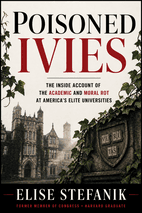
What is the book Poisoned Ivies about?
Elise Stefanik's Poisoned Ivies argues elite universities have abandoned truth and free speech for ideological orthodoxy, using her December 2023 congressional hearing as a fulcrum. Written for conservatives, Jewish families, and anyone alarmed by campus antisemitism, it traces institutional decay and prescribes federal reforms.
Feature
Insta.Page
Blinkist
Shortform
Summary Depth
Full Chapter-by-Chapter
15-min overview
Section-by-section guides
Audio Narration
✓
✓
✓
Full access to all 700+ summaries
✓
✓
✓
Visual Mindmaps
✓
✕
✕
AI Q&A
✓
✕
✕
Missing a book? Request it, usually live within 48h
✓
✕
✕
Quizzes
✓
✕
✕
PDF Downloads
✓
✕
✓
Send to Kindle
✓
✓
✓
Price
$89.99/yr
$146/yr (PRO)
$199/yr
*Competitor data last verified July 2026.
1 Page Summary
In Poisoned Ivies, Elise Stefanik argues that America’s elite universities have abandoned their foundational missions—truth, free speech, and intellectual diversity—in favor of a rigid ideological orthodoxy that has fostered academic decay and moral cowardice. The book centers on the December 5, 2023, congressional hearing she conducted, where the presidents of Harvard, UPenn, and MIT failed to condemn calls for genocide against Jews on their campuses. This moment, which the author describes as “a hearing heard around the world,” serves as the fulcrum for a broader indictment: she traces how institutions like Harvard, Columbia, and Penn have shifted from bastions of merit and reasoned debate to places where Diversity/Equity/Inclusion (DEI) programs suppress dissent, faculty skew overwhelmingly left (88 Democrats for every one Republican at elite schools), and administrators prioritize institutional reputation over protecting students from antisemitic harassment.
Stefanik grounds her critique in personal experience and institutional history. She opens with her own working-class upbringing and Harvard education, where she worked as a janitor through “Dorm Crew,” contrasting that formative experience with the university’s present-day climate, where over 80 percent of faculty identify as liberal and conservative students report feeling unsafe expressing their views. She then examines each Ivy League school in turn: Harvard’s systematic purge of conservative voices and its president’s refusal to condemn Hamas; UPenn’s betrayal of Benjamin Franklin’s pluralistic legacy; Columbia’s leadership vacuum as violent protests erupted; and Cornell, Yale, Princeton, Brown, Northwestern, and others where administrators negotiated with encampment protesters, dropped charges, or settled federal investigations for millions. The root causes, she argues, include a corrupted tenure system that protects harassment, foreign influence from countries like Qatar and China, and weak boards of trustees that fail to enforce basic standards.
The book’s final chapters pivot from diagnosis to prescription, highlighting exceptions like Dartmouth and the University of Florida, where presidents enforced rules and protected Jewish students. Stefanik outlines a federal response under a Trump administration: expanding the IHRA definition of antisemitism, freezing billions in funding, revoking over six thousand student visas, and tying federal dollars to commitments outlined in the “Compact for Academic Excellence in Higher Education.” She proposes structural reforms—capping foreign students at 15 percent, dismantling DEI programs, requiring free-speech proof from accreditors, and taxing large endowments. Ultimately, the book is written for conservatives, Jewish families, and anyone alarmed by campus antisemitism, arguing that the post-October 7th crisis not only exposed institutional rot but created a mandate for the federal government to reclaim higher education from an insular, politically captured elite.
Chapter 1: The Hearing Heard Around the World
Overview
The story of this chapter begins in blood, not in a boardroom. On October 7, 2023, thousands of Hamas terrorists launched a coordinated assault on Israel, killing over 1,200 people, wounding thousands more, and taking over 250 hostages—including Americans. The brutality was recorded by the terrorists themselves. But what happened next in America’s elite universities was almost more bewildering: while bodies still lay in the streets, campuses erupted in celebration of the attack. Harvard student groups blamed Israel; at NYU, protesters shouted “Hitler was right”; at Cooper Union, Jewish students barricaded themselves in a library. Faculty joined in, with professors at Cornell and Columbia praising the violence. Jewish students faced relentless harassment, physical assaults, and threats of mass shootings. University presidents responded with moral paralysis, issuing carefully lawyered statements that avoided condemning genocide. That failure made it Congress’s business. Chairwoman Virginia Foxx scheduled a hearing for December 5, 2023, and I prepared through the night while battling a severe flu. The witnesses were Claudine Gay of Harvard, Liz Magill of UPenn, and Sally Kornbluth of MIT. The hearing felt like wading through quicksand, with the presidents evading for hours. Then, in the final three minutes—a moment that nearly didn’t happen because I was exhausted—I asked a simple question: “Does calling for the genocide of Jews violate your university’s code of conduct?” I expected an immediate yes. Instead, all three gave evasive answers: “It depends on the context.” The video exploded—over a billion views in a week. The fallout was seismic: Liz Magill resigned within four days. Claudine Gay resigned less than a month later after plagiarism allegations. But this was just the start. The hearing launched a major congressional investigation, uncovering foreign influence, federal accreditation abuse, and a failure to protect Jewish students. The Trump administration froze billions in federal contracts and created a multiagency task force. Families began abandoning the Ivy League. The presidents’ answers captured what ordinary Americans already sensed: elite higher education is fundamentally broken. This wasn’t just about antisemitism—it was about saving these institutions from themselves.
The October 7th Attack and Its Immediate Aftermath
On October 7, 2023, over five thousand Hamas terrorists launched a coordinated assault by land, sea, and air—paragliders descending on a music festival, bulldozers breaching borders, boats landing at kibbutzim. The massacre was the bloodiest day for Jewish people since the Holocaust: more than 1,200 killed, 3,400 wounded, and over 250 taken hostage, including dozens of Americans. Hamas terrorists wore body cameras to record their own depravity for propaganda.
The Campus Explosion of Antisemitism
Hours after the attack, America's elite college campuses erupted in celebration. At Harvard, over thirty student groups signed a letter holding Israel responsible. At George Washington University, a genocidal slogan was projected onto a building. At NYU, protesters shouted “Hitler was right” and “Gas the Jews.” At Cooper Union, Jewish students barricaded themselves in a library while a mob pounded on the doors. Faculty joined in. A Cornell professor called the attack “energizing.” A Columbia professor praised “the stunning victory.” Jewish students faced sustained harassment, physical assault, and threats of mass shootings. At UCLA, pro-Hamas rioters established a “Jew Exclusion Zone.” At Yale, a Jewish student was stabbed in the eye with a Palestinian flag. At Cornell, a threat to “bring an assault rifle to campus and shoot all you pig jews” forced the kosher dining hall to close.
University Leadership Fails
University presidents responded with moral paralysis. Emails subpoenaed later by Congress revealed tortured conversations about how to react—but no willingness to defend Jewish students. Some administrators were cowardly; others quietly sympathized with the protesters. They did not enforce their own rules, condemn the violence, or protect their students. This failure violated federal civil rights law, making it Congress's business.
The Hearing Takes Shape
Chairwoman Virginia Foxx scheduled the hearing for December 5, 2023. The witnesses: Claudine Gay of Harvard, Liz Magill of UPenn, and Sally Kornbluth of MIT. I prepared through the night despite severe flu. By 5:30 a.m., I was coughing, medicated, and headed to a Fox News studio. I took my seat on the dais, box of Kleenex in hand. The room was packed. I questioned Claudine Gay directly about Harvard's failure to combat antisemitism. Other Republicans yielded me their time as the presidents evaded for hours. The crucial moment arrived in the final three minutes. During a break, my colleague Erin Houchin offered to yield me her time. I hesitated—I was exhausted—but decided to try one more round. When I returned, the hearing room was nearly empty. I scratched out a question on a scrap of paper: “Does calling for the genocide of Jews violate your university’s code of conduct?” I expected them to say yes. Instead, all three gave nearly identical replies: “It depends on the context.” They flunked the most basic moral test imaginable. After the hearing, they stood up and left as if they’d answered correctly.
The Earthquake
The video went viral: one week, over a billion views. The fallout was immediate. President Trump called and texted often. Even the White House distanced itself. Governor Josh Shapiro called Magill’s comments “unacceptable.” Four days after the hearing, Liz Magill resigned. Less than a month later, Claudine Gay resigned after allegations of widespread plagiarism. MIT’s Sally Kornbluth remains embattled. But this was just the beginning.
A Reckoning in Higher Education
The hearing launched an unprecedented congressional investigation. I passed a bipartisan resolution condemning the presidents’ testimony, 303-126. Subpoenas flew, over 100,000 documents were turned over. We uncovered foreign donations influencing policy, federal accreditation systems enforcing progressive ideology, and a comprehensive failure to protect Jewish students. President Trump launched major investigations, froze billions in federal contracts, and created a multiagency Task Force to Combat Anti-Semitism. Lawsuits were filed against Harvard and Columbia. Families are abandoning the Ivy League for friendlier, more affordable options.
Why It Resonated
The presidents’ answers summed up what ordinary Americans had long sensed: elite higher education is fundamentally broken. Decades of moral decay and intellectual laziness hollowed out these institutions. This wasn’t just about antisemitism—it was about saving American higher education from itself. The hearing became a turning point, and the transformation has only just begun.
Key Takeaways
The famous question nearly didn’t happen due to exhaustion.
The three presidents gave nearly identical evasive answers—“it depends on the context”—revealing deep institutional rot.
The video generated over a billion views, leading to resignations of Magill and Gay, and an ongoing battle at MIT.
A congressional investigation uncovered systemic failures, foreign influence, and free speech abuses in elite universities.
The Trump administration swiftly used federal power to freeze funding, launch probes, and demand accountability.
The hearing exposed a moral bankruptcy that Americans across the political spectrum recognized, igniting a reckoning in higher education.
Key concepts: Chapter 1: The Hearing Heard Around the World
1. Chapter 1: The Hearing Heard Around the World
October 7th Attack and Campus Reactions
Hamas killed 1,200+ and took 250+ hostages
Elite campuses erupted in celebration of the attack
Jewish students faced harassment, assaults, and threats
University Leadership Failure
Presidents responded with moral paralysis
They refused to condemn violence or protect students
Failure violated federal civil rights law
Congressional Hearing Setup
Chairwoman Foxx scheduled hearing for December 5, 2023
Witnesses: Gay, Magill, and Kornbluth
I prepared through the night despite severe flu
The Pivotal Question
I asked: 'Does calling for genocide violate code of conduct?'
All three presidents answered: 'It depends on the context'
They flunked the most basic moral test
Viral Fallout and Resignations
Video got over a billion views in one week
Liz Magill resigned within four days
Claudine Gay resigned after plagiarism allegations
Broader Congressional Investigation
Launched probe into foreign influence and accreditation abuse
Trump administration froze billions in federal contracts
Multiagency task force created to address campus antisemitism
Systemic Crisis in Elite Higher Education
Presidents' answers revealed a fundamentally broken system
Families began abandoning the Ivy League
Issue was about saving institutions from themselves
💡 Try clicking the AI chat button to ask questions about this book!
Chapter 2: Harvard
Overview
From its Puritan founding in 1636 with a mission to educate clergy “to the glory of Christ,” Harvard has been inseparable from America’s founding story—educating John Adams, housing Washington’s troops, and later shortening its motto to Veritas. But for the author, Harvard was first a distant dream reached from a working-class upbringing in Albany. After being bullied in elementary school, her parents sacrificed to send her to Albany Academy for Girls, where she became a well-rounded student. Applying Early Action to four top schools, she was accepted to all—and learned of her Harvard admission via email in 2001, one of the first batches ever sent.
Arriving on campus, she joined Dorm Crew to earn money for textbooks by mopping floors. As an undergraduate concentrating in government, she took electives across departments, was deeply involved in the Institute of Politics, and built friendships with classmates from famously different backgrounds—including future political figures like Pete Buttigieg, Vivek Ramaswamy, and Ruben Gallego. One keepsake from freshman year: the printed Freshman Facebook, whose name Mark Zuckerberg borrowed for his sophomore-year website.
Harvard skewed heavily left, but a small conservative network forced her to sharpen arguments—a skill that proved essential in Congress. Three harbingers of change appeared. First: During senior spring, far-left activists stormed a national security career panel, drowning out speakers and staging mock deportations. The author’s op-ed, “Political Vomit,” called out the anti-intellectual tactics. Harvard’s response was to force a moderated discussion with the disruptors—a weak surrender. Second: The faculty’s campaign to oust President Larry Summers over his clumsy remarks about women in science revealed an instinct not to debate but to destroy. Summers resigned in 2006, and the episode now looks like an early template for cancel culture, later exposed as hypocritical when the same faculty cried “Free speech!” for antisemitic protesters. Third: Years later, after the contested 2020 election, the author—by then a Congresswoman—raised constitutional concerns on the House floor. Despite condemning the January 6 violence, she was targeted by a petition from far-left Harvard students and alumni demanding her removal from the IOP Senior Advisory Committee. The dean of the Kennedy School called to say she must resign. She refused; he removed her. Harvard’s president Larry Bacow defended the purge, admitting the university didn’t care about silencing conservative students and declaring that degrees are not conditioned on future behavior—while claiming commitment to free speech. The author reminded the dean that he was purging the only Trump Republican from a supposedly bipartisan board and that she served on the House Education Committee with subpoena power.
Despite a deeply meaningful undergraduate experience—graduating with honors, first in her immediate family to earn a degree—she now sees Harvard as having lost its way, shifting from rigorous academic excellence to radical anti-American indoctrination fueled by far-left groupthink and foreign funding. The key takeaways are stark: the Summers episode exposed a pattern of punishing dissent; her removal from the IOP board revealed Harvard’s willingness to silence the lone conservative voice; and the university’s leadership admitted indifference to conservative students, confirming ideological capture. None of it harmed her career—voters reaffirmed their support—but Harvard’s actions spoke volumes about its own decline.
Key Takeaways
The Larry Summers episode exposed Harvard’s instinct to punish dissent rather than engage it—a pattern that later revealed hypocrisy on free speech.
Despite a meaningful undergraduate experience, Harvard has shifted from academic excellence to radical indoctrination, driven by a monolithic Far Left faculty.
The author’s removal from the IOP board after raising election integrity concerns showed Harvard’s willingness to purge the only conservative voice, betraying its claim to bipartisan balance.
Harvard’s leadership admitted they didn’t care about silencing conservative students, confirming the university’s ideological capture.
The episode did not harm the author’s career; in fact, voters reaffirmed their support. Harvard’s actions, however, spoke volumes about its own decline.
Key concepts: Chapter 2: Harvard
2. Chapter 2: Harvard
Harvard's Founding & Personal Journey
Founded 1636 to educate clergy for Christ
Author dreamed of Harvard from working-class Albany
Accepted Early Action via email in 2001
Joined Dorm Crew to earn money for textbooks
Undergraduate Experience & Connections
Concentrated in government, took diverse electives
Deeply involved in Institute of Politics
Built friendships with future political figures
Freshman Facebook inspired Zuckerberg's website
Three Harbingers of Harvard's Decline
Leftist students stormed national security panel
Faculty ousted President Summers over free speech
Author removed from IOP board after election concerns
Hypocrisy on Free Speech
Summers episode punished dissent, not debate
Same faculty later cried free speech for antisemites
Dean admitted indifference to conservative students
Harvard purged lone conservative from bipartisan board
Key Takeaways & Legacy
Harvard shifted from excellence to radical indoctrination
Leadership confirmed ideological capture
Author's career unharmed; voters reaffirmed support
Harvard's actions revealed its own decline
Chapter 3: Harvard Exposed
Overview
Three years after being publicly removed from Harvard’s Institute of Politics board, the author faced its president from across a congressional hearing room—and the university had only deepened its rot. Harvard had become a place where DEI orthodoxy reigned, free speech was crushed, and conservative voices were systematically purged. A 2022 Crimson survey showed over 80% of faculty identified as liberal; by 2024, only 17% of conservative seniors felt comfortable speaking on controversial topics. The Foundation for Individual Rights and Expression ranked Harvard dead last for free speech. Even faculty rebelled, with seventy professors launching the Council on Academic Freedom. This was the tinderbox.
The spark came on October 7, 2023, when Hamas attacked Israel. Harvard’s Palestine Solidarity Committee immediately blamed Israel; President Claudine Gay stayed silent for days, then released a statement of moral equivalency—refusing to condemn Hamas, cutting language about hostages, deleting the word “violent.” Subpoenaed documents revealed internal deliberation: Gay’s chief of staff asked if they could avoid saying “unequivocally” they denounce it; a dean argued that calling Hamas’s attack violent would “single out Hamas ‘violence’ and assigned ‘blame.’” Another dean applauded the deletion. Gay’s provost, Alan Garber, disagreed but said he could “live with it.” The university followed up with tone-deaf “All Lives Matter” messaging. This wasn’t a one-off crisis; it was the culmination of years of tolerated antisemitism. Jewish students had begged the DEI office to include antisemitism in training—they never got a response. Harvard actively excluded Jews from its DEI framework.
In December 2023, the author questioned Gay in a congressional hearing with short, direct questions. She dodged, invoking free speech whenever asked about chants of “Intifada,” and seemed purposefully ignorant about $1.5 billion in foreign money from Qatar. Then came the question that ended her presidency: “Does calling for the genocide of Jews violate your university's code of conduct on bullying and harassment?” Her answer: “It depends on the context.” The backlash was immediate—digital billboards, banner planes, donor pullouts, Rabbi David Wolpe resigning from her antisemitism advisory group. Yet woke faculty circled the wagons. Gay doubled down, then apologized, but the damage was irreversible. Saturday Night Live ran a cold open that defended the presidents and attacked the hearing—universally panned. Veteran cast member Cecily Strong dropped out rather than participate; the understudy was thrown in last minute. By then, Penn’s president had resigned. Harvard’s turn was coming.
The Harvard Corporation convened on December 10. The author learned that former President Obama had directly called the Corporation to lobby them to keep Gay, warning against giving the author “a win”—zero concern for Jewish students. Behind closed doors, Gay lashed out, smearing the author as a “purveyor of hate” and “supporter of proudboys,” despite admitting her own testimony should have condemned violence against Jews.
Then the weekend brought a bombshell: independent journalists broke the story that Gay had plagiarized large portions of her Ph.D. dissertation. Full paragraphs lifted, an appendix copied verbatim—over one hundred million impressions on X. Nearly fifty instances would eventually surface. The Washington Free Beacon revealed the Corporation had known since late October, when the New York Post first approached with twenty-five instances. Instead of following protocols, Harvard hired a defamation firm—the same one that represented Matt Lauer and a Putin crony—to threaten the Post into silence. It worked. Then they convened a secret “independent panel” whose members were never named. The panel’s November memo called Gay’s work “sophisticated and original” and dismissed most allegations as “trivial,” though they admitted nine cases of paraphrasing without proper citation. Harvard’s solution: let Gay submit “corrections”—a second chance no student would ever get. Yet the Corporation issued a unanimous statement reaffirming support for Gay, calling her “the right leader to help our community heal.” They excused everything: systemic plagiarism, antisemitism, shameful testimony.
It took one board member to crack the lockstep: Treasurer Tim Barakett told colleagues that Gay’s poor leadership and academic conduct might disqualify her. Others agreed. On December 27, Senior Fellow Penny Pritzker called Gay, vacationing in Rome, and asked if she saw a path forward. Gay resigned on January 2, 2024—the shortest presidency in Harvard history. She received a golden parachute: a $900,000-per-year professorship she still holds. Interim president Alan Garber took over, eventually becoming permanent. In spring 2024, he allowed a pro-Hamas encampment in Harvard Yard. Investigators found disruptions, safety concerns, intimidation, and harassment. Of sixty-eight students charged, none received non-rescinded suspensions; fifty-three got probation, later shortened. Rule-breaking had no consequences.
Garber met with the author, who warned him that Trump would win and that she was already working with his team on oversight. Garber dismissed the prediction, citing Harvard’s pollsters. After Trump’s inauguration, the author’s office worked with Education Secretary Linda McMahon. In April 2025, the Trump administration sent a letter demanding reforms—governance, merit-based hiring, viewpoint diversity, elimination of DEI, antisemitism crackdown—as conditions for federal funding. Garber, pressured by radicalized faculty, publicly refused, arguing the government shouldn’t dictate what private universities teach. Trump froze $2.2 billion in federal grants and $60 million in contracts. Lawsuits continue.
Throughout this dark chapter, observant Jewish undergraduate Shabbos Kestenbaum became a hero. He sued Harvard for failing to protect Jewish students. The settlement forced Harvard to adopt the IHRA definition of antisemitism. He testified before the author’s committee about the horrors on campus: students called “pedophiles” and “baby killers,” an employee waving a machete at him on social media, armed security escorts, students hiding their Jewish identity, changing majors to escape hatred. His great-great-grandfather was an Orthodox rabbi in Germany; his grandfather was arrested on Kristallnacht. Kestenbaum reminded the committee that Kristallnacht didn’t start with shattered glass—it started with the acceptance and normalization of Jew-hatred. Harvard had allowed exactly that.
Key Takeaways
SNL's sketch deflected criticism from Gay to Stefanik; veteran cast member Cecily Strong dropped out rather than participate.
Former President Obama lobbied the Harvard Corporation directly to keep Gay, prioritizing partisan victory over Jewish student safety.
Harvard knowingly concealed plagiarism allegations against Gay, hiring a defamation firm to silence the New York Post and creating a secret, lenient "independent" review.
Gay's resignation came only after internal board dissent cracked the unanimous support; she received a lucrative professorship.
Interim president Alan Garber allowed a pro-Hamas encampment with zero meaningful disciplinary consequences.
The Trump administration froze $2.2 billion in Harvard funding after Garber rejected reform demands; lawsuits are ongoing.
Student Shabbos Kestenbaum's lawsuit forced Harvard to adopt the IHRA antisemitism definition; his testimony revealed a campus environment where Jew-hatred was normalized, echoing the conditions that preceded Kristallnacht.
Key concepts: Chapter 3: Harvard Exposed
3. Chapter 3: Harvard Exposed
Harvard's Pre-October 7th Rot
DEI orthodoxy reigned supreme
Free speech ranked dead last by FIRE
Over 80% of faculty identified as liberal
Conservative voices systematically purged
October 7th and Claudine Gay's Response
Palestine Solidarity Committee blamed Israel immediately
Gay stayed silent for days
Statement refused to condemn Hamas as violent
Internal emails showed deliberate moral equivalency
Congressional Hearing and the Genocide Question
Author questioned Gay with short, direct queries
Gay dodged on 'Intifada' chants and Qatar money
Asked if genocide call violates code: 'Depends on context'
Backlash was immediate: billboards, donors, resignations
Harvard Corporation's Cover-Up
Obama lobbied Corporation to keep Gay
Gay smeared author as 'purveyor of hate'
Corporation knew of plagiarism since October
Hired defamation firm to threaten New York Post
Plagiarism Scandal and Resignation
Nearly 50 instances of plagiarism surfaced
Secret panel dismissed most as 'trivial'
Gay resigned January 2, 2024
Received golden parachute: $900k/year professorship
Post-Gay Harvard: Encampment and No Consequences
Interim president Garber allowed pro-Hamas encampment
Investigators found intimidation and harassment
68 students charged, none received suspensions
Rule-breaking had zero consequences
Trump Administration Showdown
Author warned Garber of Trump win and oversight
Trump demanded reforms: end DEI, merit-based hiring
Garber publicly refused government demands
Trump froze $2.2 billion in federal grants
Chapter 4: University of Pennsylvania
Overview
Benjamin Franklin envisioned the University of Pennsylvania as a radical departure from the colonial colleges of his day. Where Harvard and Yale trained ministers, Penn would prepare students for business and public service. Where those schools clung to Latin, Greek, and divinity, Penn would offer geography, drawing, surveying, mechanics, and the natural sciences. And where those institutions remained exclusive, Penn would open its doors to a far wider range of young men. Franklin’s tolerant spirit extended beyond the classroom—he helped fund Philadelphia’s first synagogue and signed petitions for its construction. That legacy made Penn a natural home for Jewish students for over two centuries. But in recent years, that same campus became a flashpoint for some of the most brazen antisemitism in American higher education, culminating in a congressional hearing that cost the university’s president her job.
Benjamin Franklin’s Vision and a Legacy of Openness
Franklin’s 1749 pamphlet, Proposals Relating to the Education of Youth in Pensilvania, laid out a blueprint for a new kind of institution. The school that eventually became Penn in 1791 embraced his broad-minded ethos. In 1769, when it was still the College of Philadelphia, the school enrolled its first Jewish student, Moses Levy, who later became a judge and the university’s first Jewish trustee. That tradition of inclusion continued for generations—by the 1960s, Jewish enrollment at Penn had grown to roughly 40 percent of the student body. But the numbers have since cratered: 20 percent by 2010, and around 15 percent today.
The Long Tail of Antisemitism Before October 7
The hostility Jewish students faced at Penn didn’t begin with the Hamas attacks. An 84-page civil complaint filed by students Eyal Yakoby and Jordan Davis catalogs dozens of incidents dating back to 2015, when the Boycott, Divestment, and Sanctions (BDS) movement first arrived on campus. Among the alleged horrors:
In April 2017, flyers with swastikas and messages like “join your local Nazis” appeared across campus. Penn’s leadership said that “the content of student speech or expression is not by itself a basis for disciplinary action.”
A 2020 graduate student described a “privilege quiz” in a mandatory racism course that assigned Judaism the highest privilege score (25 points), while Christianity received only 5. When the student voiced concerns, classmates laughed and rolled their eyes.
Another student in a German class was warned by the professor—only him, while wearing a yarmulke—to “be on your best behavior,” followed by more uncomfortable remarks about gefilte fish. He dropped the class.
In March 2023, a Penn student group hosted speakers Noura Erakat and Mohammed El-Kurd. El-Kurd had falsely claimed Israel “harvests Palestinian organs” and that “there is no difference between a Zionist and a Nazi.” During the event, Erakat stared at Jewish students wearing yarmulkes and taunted them: “I’m ready for you and will destroy you.”
The complaint’s core argument: “It is inconceivable that Penn would allow any group other than Jews to be targeted for abuse.”
The Palestine Writes Literature Festival: A Turning Point
The most glaring pre-October 7 incident was the September 2023 Palestine Writes Literature Festival, hosted and sponsored by multiple Penn departments. Though billed as a celebration of Palestinian culture, the lineup read like a roster of antisemitic provocateurs:
Roger Waters: The Pink Floyd front man who has repeatedly invoked “Jewish lobby” conspiracies, compared Israel to the Third Reich, and performed in mock-Nazi uniforms. He later justified the October 7 attacks.
Marc Lamont Hill: Fired from CNN after calling for a “free Palestine from the river to the sea,” he had praised Louis Farrakhan and characterized major news outlets as “Zionist outlets.”
Aya Ghanameh: A children’s book author who tweeted that “ ‘israeli civilians’ don’t exist” and praised a terrorist attack on a Jerusalem synagogue that killed seven civilians.
Wissam Rafeedie: Tied to the Popular Front for the Liberation of Palestine (PFLP), a U.S.-designated terrorist organization.
The festival also planned to screen Farha, a film depicting IDF soldiers murdering a newborn baby—a modern blood libel. Despite acknowledging that several speakers had “a documented and troubling history of engaging in antisemitism,” the university allowed the event to proceed. At the festival itself, speakers invoked the same baby-killer tropes, compared Israeli Jews to Nazis, and celebrated Ghassan Kanafani, a PFLP spokesman likely involved in the 1972 Lod Airport massacre that killed 26 people.
October 7 and the Immediate Fallout
Two weeks after Palestine Writes, Hamas attacked Israel. As Wharton alumnus Marc Rowan wrote, “It took less than two weeks to go from the Palestine Writes Festival on UPenn’s campus to the barbaric slaughter and kidnapping of Israelis.” The festival’s executive director later published an op-ed praising the attacks as “a spectacular moment” carried out by “brave Palestinian fighters.”
On campus, the reaction was swift and ugly:
Penn Students Against the Occupation held an “Emergency Solidarity Rally” where a speaker cheered Hamas: “I salute Hamas. A job well done.”
Eleven Penn clubs signed a statement calling the attack a “dignified fight.”
Faculty members took to social media. Professor Huda Fakhreddine tweeted that “Palestine invented a new way of life.” Professor Robert Vitalis posted the emblem of Hamas’s military wing.
A freshman student wearing a Star of David necklace was screamed at: “You are a dirty Jew! Keep walking, you dirty little Jew!”
A library assistant at the law school was caught tearing down posters of kidnapped Israeli hostages.
A foreign student from Jordan stole an Israeli flag from a Jewish student’s residence, burned it at a rally, and praised the “joyful and powerful images which came from the glorious October 7.” She was arrested but faced no meaningful discipline.
Bomb threats targeted Penn Hillel and a dormitory named after the Lauder family.
Pro-Hamas groups projected messages onto campus buildings: “From the river to the sea, Palestine will be free,” “Zionism is racism,” “Penn funds Palestinian genocide.”
Liz Magill’s Failed Leadership and the Congressional Hearing
President Liz Magill waited three days after October 7 to issue a statement. It did not explicitly condemn Hamas. Instead, it praised administrators who “quickly and thoughtfully mobilized.” Jewish students felt abandoned.
Marc Rowan, CEO of Apollo Global Management and a Wharton advisory board member, had already pressured the university to cancel Palestine Writes. When Magill’s statement fell flat, he escalated, calling for her resignation and urging alumni to close their checkbooks.
That was the backdrop for Magill’s appearance before the House Education Committee on December 5, 2023. When I asked whether calling for the genocide of Jews violated Penn’s code of conduct, she replied: “It’s a context-dependent decision.” Her smirk during the exchange drew near-universal criticism. Even Pennsylvania Governor Josh Shapiro called her comments “absolutely shameful” and said she should have given a “one-word answer.”
The fallout was immediate. Hundreds of millions of dollars in donor commitments vanished. Magill resigned four days later. But the university quietly kept her on as a tenured faculty member, and Harvard later hired her as a senior fellow. The rot, however, didn’t end with her departure.
Aftermath: Continued Chaos and a Beacon of Courage
In the months following Magill’s resignation, pro-Hamas students stormed a Board of Trustees meeting, broke into the interim president’s home causing $18,000 in damage, and attempted to occupy Fisher-Bennett Hall, barricading entrances with barbed wire and zip ties. Nineteen people were arrested.
But amid the vandalism, students like Eyal Yakoby stood out. He testified before Congress, declaring, “I refuse to let hatred drown out my love for freedom.” He and others like him embody Franklin’s founding principles: courage, independence, and the spirit of toleration and mutual respect.
Key Takeaways
Penn’s founding by Benjamin Franklin established a tradition of pluralism and openness that made it a historic haven for Jewish students, but that tradition has been severely eroded.
Antisemitism on campus predated October 7 by years, with systemic failures by administrators to address incidents ranging from swastika flyers to classroom hostility.
The Palestine Writes Literature Festival was a preview of the post-October 7 explosion—a university-sponsored event that platformed antisemitic speakers and blood libel.
President Liz Magill’s evasion of a simple question—“Does calling for genocide violate Penn’s code?”—led to her resignation and a broader reckoning in higher education.
The crisis exposed a broken system: the same leaders who failed Jewish students often land on their feet elsewhere, while courageous students like Eyal Yakoby fight for accountability.
Key concepts: Chapter 4: University of Pennsylvania
4. Chapter 4: University of Pennsylvania
Franklin's Vision and Legacy
Radical departure from colonial colleges
Focused on business, public service, sciences
Open to wider range of young men
Jewish enrollment peaked at 40% in 1960s
Pre-October 7 Antisemitism
BDS movement arrived on campus in 2015
Swastika flyers appeared in April 2017
Privilege quiz ranked Judaism highest score
Student warned in German class for wearing yarmulke
Palestine Writes Literature Festival
Hosted and sponsored by Penn departments
Featured antisemitic speakers like Roger Waters
Planned to screen blood libel film Farha
University allowed event despite documented antisemitism
October 7 Fallout
Festival executive director praised Hamas attacks
Campus reaction was swift and ugly
Wharton alumnus linked festival to slaughter
Civil Complaint Details
Filed by students Eyal Yakoby and Jordan Davis
Catalogs dozens of incidents since 2015
Argues Penn would not allow other group targeting
Congressional Hearing Aftermath
Culminated in president losing her job
Campus became flashpoint for brazen antisemitism
Declining Jewish Enrollment
Fell from 40% in 1960s to 15% today
Reflects growing hostility on campus
You've reached the end of the free chapters
Next chapter: “Columbia” is locked
Keep reading Poisoned Ivies — and unlock all 700+ book summaries with audio, mindmaps and AI Q&A.
$0.00 due today · 7 days free, then $89.99/year ($7.49/mo) · Cancel anytime before day 7
Elise Stefanik is an American politician and author, serving as a U.S. Representative for New York's 21st congressional district since 2015. She is noted for her memoir, *The Keys to the White House*, which details her role as a high-ranking congressional leader and her expertise in political strategy and national security. A Harvard University graduate, Stefanik has been a prominent figure in the House Republican leadership, advocating for education reform and military modernization.
Frequently Asked Questions about Poisoned Ivies
What is Poisoned Ivies about?
The book investigates the explosion of antisemitism on elite American campuses following the October 7, 2023 Hamas attack on Israel, focusing on the moral failures of university presidents at Harvard, UPenn, Columbia, and others. It details how DEI orthodoxy, faculty radicalization, and weak governance enabled a hostile environment for Jewish students, culminating in a landmark congressional hearing that exposed the rot. Through firsthand accounts and documented evidence, the book traces the historical decline of these institutions and offers a roadmap for structural reform.
Who is the author of Poisoned Ivies?
Elise Stefanik is a U.S. Congresswoman from New York and a Harvard alumna who chaired the December 2023 congressional hearing on campus antisemitism. A product of a working-class upbringing, she used her platform to hold university leaders accountable, drawing on her own experiences as a conservative student at Harvard. Her deep understanding of elite academia, combined with her legislative power, makes her a uniquely authoritative voice on this crisis.
Is Poisoned Ivies worth reading?
This book is essential for anyone concerned about the state of American higher education and the rise of antisemitism. It provides a gripping, insider account of the congressional hearings that toppled university presidents, backed by subpoenaed documents and firsthand testimony. More importantly, it offers concrete, actionable solutions—from freezing federal funding to reforming accreditation—making it both a revelatory exposé and a practical guide for reclaiming academic integrity.
What are the key lessons from Poisoned Ivies?
The first lesson is that elite universities have abandoned their founding missions, replacing free inquiry with DEI orthodoxy that suppresses dissent and enables bigotry. Second, weak governance and morally paralyzed leaders allowed antisemitic mobs to terrorize Jewish students while faculty radicalized the curriculum. Third, lasting change requires federal intervention—freezing funds, revoking visas, and imposing endowment taxes—backed by a coalition of reformers. Finally, a few schools like Dartmouth and Vanderbilt proved that moral leadership can work by enforcing rules and protecting all students.
📚 Explore Our Book Summary Library
Discover more insightful book summaries from our collection