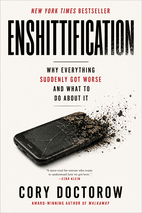
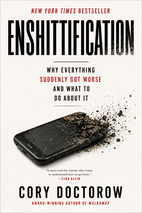
Cory Doctorow's Enshittification diagnoses why digital platforms systematically decay through a predictable four-stage cycle, tracing this pathology through Facebook, Amazon, the iPhone, and Twitter. It offers frustrated users, gig workers, and anyone trapped by modern technology an actionable understanding of the forces at work—plus a multi-pronged cure involving antitrust, regulation, right-to-repair, and labor power.
Feature
Insta.Page
Blinkist
Shortform
Summary Depth
Full Chapter-by-Chapter
15-min overview
Detailed analysis
Audio Narration
✓ (AI narration)
✓
✓
Visual Mindmaps
✓
✕
✕
AI Q&A
✓ Voice AI
✕
✕
Quizzes
✓
✕
✕
PDF Downloads
✓
✕
✓
Price
$59.99/yr
$146/yr (PRO)
$199/yr
*Competitor data last verified February 2026.
About the Author
Cory Doctorow
Cory Doctorow is a Canadian-British author, activist, and journalist known for his advocacy of digital rights and open access. His notable works include the science fiction novels *Little Brother*, which explores surveillance and civil liberties, and *Walkaway*, a post-scarcity exploration of society. He is also a co-editor of the blog Boing Boing and a former Electronic Frontier Foundation fellow.
1 Page Summary
This book offers a diagnosis and a name for the phenomenon many of us feel but struggle to articulate: the sudden, systemic collapse of the digital platforms we once loved. The author, a veteran internet activist, argues that this process—which he calls enshittification—is not random decay but a predictable four-stage cycle. First, platforms are generous to their users to attract them. Second, they abuse those users to benefit their business customers. Finally, they squeeze both groups to extract all value for themselves, leaving behind a "rotting" service. The book traces this pathology through detailed case studies of Facebook, Amazon, the iPhone, and Twitter, showing how each company transformed from a user-centric marvel into a surveillance-laden, profit-extracting machine.
What makes this book distinctive is its systematic dissection of why this is happening now, on such a massive scale. It dismisses popular explanations like the end of low interest rates or the departure of heroic founders. Instead, it argues that enshittification is the result of four key disciplines that historically kept corporate power in check—competition, regulation, self-help (interoperability), and tech worker power—being systematically dismantled over the past decade. The author explains how antitrust enforcement was gutted, how regulators were captured by the industries they oversee, how laws like the Digital Millennium Copyright Act turned simple repair into a crime, and how tech workers lost their leverage. It details the mechanics of this decay, from "twiddling" (invisible algorithmic adjustments that shift value) to "reverse-centaurs" (machines using humans as disposable appendages) and "chickenization" (forcing workers into debt to serve a single buyer).
The intended audience is anyone who has felt frustrated, exploited, or trapped by the modern digital world—from users of social media and gig economy apps to workers in surveilled warehouses. Readers will gain not just a vivid vocabulary for their anger, but a clear-eyed, actionable understanding of the forces at work. Crucially, the book is not a eulogy. The final third is dedicated to a multi-pronged cure, arguing that a resurgence of antitrust enforcement (championed by figures like Lina Khan), new European regulations like the Digital Markets Act, a revived right-to-repair movement, and resurgent labor power can all force the "enshittification lever" back to a neutral position. It is a call to arms for anyone who believes the internet can be better, and a manual for how to fight for it.
The internet is not just getting worse—it's collapsing at remarkable speed. The platforms we once loved have turned into what the author bluntly calls "piles of shit," and the rot is spreading beyond our screens. The physical world—our homes, our cars, our workplaces—is being built with the same broken logic, because everything around us is increasingly a computer we inhabit, or that inhabits us. And these computers, this digital infrastructure, sucks. It's infuriating, exhausting, and genuinely terrifying depending on how much your life depends on it.
The author brings serious credentials to this diagnosis: a quarter-century as an internet activist with the Electronic Frontier Foundation, UN observer, treaty drafter, lobbyist across multiple continents, veteran of street protests and virtual blackouts. And he's never seen anything like the current moment. In 2022, after decades of trying to get people fired up about arcane internet policy debates, he coined a single word to describe the sudden-onset platform collapse everyone was feeling: enshittification. The word went viral. Not because it's funny (though it is), and not because it's naughty (though that helps), but because it names a real, observable process. The American Dialect Society made it word of the year in 2023; the Macquarie Dictionary followed in 2024. Millions saw their own experience reflected in it.
But enshittification isn't just a colorful insult. It's a theory. It explains how services decay, why that decay is accelerating, and what we can do about it. This Great Enshittening isn't mysterious—it's not the impersonal hand of history or some inevitable fate. It's a material phenomenon, a disease with clear symptoms, a mechanism, and an epidemiology. The first part of this book lays out that anatomy. The second part—the real point—proposes a cure.
We are living in the Enshittocene, a direct result of specific policy decisions made by specific people. Name them. Reverse their decisions. Make sure they never hold that kind of power again. The goal isn't just to complain—it's to build a new, good internet. A digital nervous system capable of connecting and coordinating us through a century already haunted by climate collapse, genocide, authoritarianism, and economic chaos. Enshittification-resistant infrastructure for a new, good world.
Key Takeaways
The internet's rapid decay is not a mystery but a material process with identifiable causes—what the author calls enshittification.
The problem isn't limited to digital spaces; it's infecting the physical world as more of our environment becomes computerized.
Enshittification is a theory with three components: symptoms, mechanism, and epidemiology. Part one of the book explains these.
The author's decades of policy work inform the claim that this crisis is the product of deliberate choices by named individuals—and therefore reversible.
The book's ultimate purpose is not critique but cure: to propose concrete actions for building an enshittification-resistant digital future.
Key concepts: Introduction
1. Introduction
The Diagnosis: Enshittification
Internet platforms collapsing at remarkable speed
Physical world infected by same broken logic
Coined term 'enshittification' went viral in 2022
Word of the year by multiple dictionaries
The Author's Credentials
25-year internet activist with Electronic Frontier Foundation
UN observer, treaty drafter, multi-continent lobbyist
Veteran of street protests and virtual blackouts
Never seen anything like current moment
Enshittification as a Theory
Explains how services decay and why accelerating
Three components: symptoms, mechanism, epidemiology
Not mysterious fate but material phenomenon
Part one of book lays out anatomy
The Root Cause: Policy Decisions
Living in Enshittocene from specific policy choices
Named individuals made deliberate decisions
Crisis is reversible by reversing those decisions
Goal: ensure they never hold power again
The Cure: Building a New Internet
Book's real point is proposing a cure
Build enshittification-resistant digital infrastructure
Digital nervous system for climate and chaos
Concrete actions for a new, good world
If you like this summary, you probably also like these summaries...
💡 Try clicking the AI chat button to ask questions about this book!
Chapter 2: Part One: The Natural History
Overview
The chapter opens by defining its central villain: the platform, a business that operates a two-sided market connecting business customers and end users. Think eBay, Uber, Google, Facebook. The irony? "Platform" is just a snazzy word for middleman. And remember how excited we were about the internet cutting out the middleman? That was disintermediation, and for a brief, beautiful moment it seemed to work—Craigslist started as a hobby, not a takeover.
But that promise evaporated. Instead of a world of direct, person-to-person connections, we got consolidation on steroids. Five giant websites filled with screenshots of each other. In nearly every sector—publishing, music, shipping, finance—fewer than five firms came to dominate. A quarter century into the internet age, the power of intermediaries has never been greater.
Worse, these platforms aren't just oversized and abusive; they're sick. We're living in the Enshittocene. Like doctors observing a novel pathogen, we need a natural history of the disease. Here it is, in four stages:
Platforms start by being good to their users.
Then they abuse those users to make things better for their business customers.
Next, they abuse business customers to claw back all value for themselves.
Finally, they become a giant pile of shit.
This pattern repeats everywhere—once you see it, you'll spot it in service after service. The rest of the book will walk through case studies, but the pattern is already clear.
Key Takeaways
A platform is a two-sided market middleman, not a revolutionary disintermediator.
The early internet dream of cutting out powerful intermediaries failed; consolidation created a handful of even more powerful gatekeepers.
Enshittification follows a predictable four-stage natural history: be good to users → exploit users for business customers → exploit business customers → become a pile of shit.
This pattern is systemic and observable across digital platforms.
Key concepts: Part One: The Natural History
2. Part One: The Natural History
The Platform as Middleman
Platforms are two-sided markets connecting users and businesses
Pattern repeats across publishing, music, shipping, finance
Power of intermediaries never greater than today
We are living in the Enshittocene era
Once seen, pattern is observable everywhere
⚡ You're 2 chapters in and clearly committed to learning
Why stop now? Finish this book today and explore our entire library. Try it free for 7 days.
Chapter 3: Case Study: Facebook
Overview
Facebook's journey from a dorm-room project to a global behemoth is the textbook illustration of enshittification in action. This case study dissects the three distinct stages of that decay, showing how a service that once felt generous and user-friendly systematically transformed its users, advertisers, and publishers into hostages. The end result isn't a dead platform—it's a rotting one we can't escape.
Stage One: Good to Users
In its early years, Facebook was genuinely delightful for its users. The company had a surplus—investors' cash—and it allocated that surplus to the people who mattered most: the end users. It subsidized a clean, ad-free feed of content people actually wanted to see. It even built a bot to help MySpace refugees bring their messages over, making the switch painless. Users piled in, and the very nature of social media locked them in.
Three economic forces conspired to make that lock-in permanent. Network effects meant each new user made the platform more valuable to everyone else. Switching costs meant leaving meant abandoning all the connections built there. And the collective action problem made it nearly impossible to coordinate a mass exodus—even if everyone hated the place, no one could agree when to leave or where to go. Facebook realized its users were now holding one another hostage.
Stage Two: Good to Business Customers
Once that hostage situation was stable, Facebook flipped the switch. The surplus that had flowed to users began flowing to two new groups: advertisers and publishers.
To advertisers, Facebook confided that its promise not to spy was a lie. It offered hyper-targeted ads based on unprecedented surveillance, complete with a team of engineers fighting ad fraud to ensure ad dollars weren't wasted. To publishers, Facebook offered a deal: post your content on our platform and we'll force-feed it to users who never asked to see it—a free traffic funnel. Both groups piled in, becoming dependent on the users, which meant they, too, were now hostages.
Stage Three: A Giant Pile of Shit
With everyone locked in, Facebook turned the screws on its business customers and users alike. For advertisers, prices rose while ad fidelity plummeted. Rob Procter & Gamble slashed $200 million in programmatic ad spending with no sales hit, revealing those ads were either shown to the wrong people or to nobody at all. For publishers, the algorithm demanded longer and longer excerpts until they were forced to post entire articles on Facebook. Then Facebook began suppressing links and requiring payments to reach even their own followers. Publishers became commodity suppliers in Facebook's rigged ad marketplace.
Users, meanwhile, saw their feeds stripped of content from friends—replaced by paid ads and boosted posts. Facebook dialed the user experience down to the bare minimum needed to keep people glued to one another, extracting every penny of surplus for shareholders and executives.
This equilibrium is incredibly fragile. One scandal, one whistleblower, one livestreamed atrocity, and users bolt—dragging the hostages they held with them. In early 2022, lower-than-expected US user growth wiped $250 billion off Facebook's value in a single day. Desperate, Mark Zuckerberg pivoted to the Metaverse: a virtual world designed to surveil users even more intimately. That's end-stage enshittification—a platform turned into a pile of shit that refuses to die, trapping everyone inside its rotting carcass.
Key Takeaways
Enshittification unfolds in three predictable stages: generosity to users, then to business customers, finally extracting everything from both.
Network effects, switching costs, and collective action problems create hostage dynamics that make escaping a platform nearly impossible.
The brittle equilibrium of stage three means platforms are vulnerable to sudden collapses if key users trigger a mass exodus.
Facebook's pivot to the Metaverse is a desperate attempt to maintain control, not a genuine innovation.
Key concepts: Case Study: Facebook
3. Case Study: Facebook
Three Stages of Enshittification
Stage 1: Good to users via investor surplus
Stage 2: Good to advertisers and publishers
Stage 3: Extraction from both groups
User Lock-In Mechanisms
Network effects increase platform value with each user
Switching costs from abandoning connections
Collective action problem prevents mass exodus
Users become hostages to one another
Exploitation of Business Customers
Advertisers face rising prices and low ad fidelity
Publishers forced to post full content on Facebook
Algorithm suppresses links, demands payment for reach
Both groups become commodity suppliers
User Experience Degradation
Feeds stripped of friend content, replaced by ads
Dialed to bare minimum to keep users glued
Extracted surplus for shareholders and executives
Fragile Equilibrium and Desperate Pivot
Scandals or user exodus can trigger collapse
Lower user growth wiped $250 billion in one day
Metaverse pivot aims for even more surveillance
Platform becomes a rotting carcass we can't escape
Chapter 4: Case Study: Amazon
Overview
Amazon’s origin story is a lesson in branding—Jeff Bezos originally wanted to call the company “Relentless,” a name that critics saw as predatory but Bezos framed as a commitment to customer service. That tension between ruthless ambition and customer devotion runs through the entire arc of Amazon’s rise. This case study walks us through how Amazon transformed from a speedy logistics company into a digital content behemoth, where Prime membership means far more than free shipping. The playbook is familiar: first, be great to users; then, be great to business customers; finally, squeeze everyone so hard the platform becomes a pile of shit.
Stage One: Good to Users
Amazon started with a huge surplus from early investors and its stock market listing, and it poured that money straight into customer subsidies. It sold goods below cost, offered free shipping, and implemented a generous, postage-paid return policy with no questions asked. This was a powerful lure, just like Facebook’s early days. But unlike Facebook, Amazon didn’t rely on network effects to lock users in—your neighbor’s shopping habits don’t affect yours. Instead, Amazon used a softer form of lock-in: Prime membership. Paying for shipping a year in advance makes you want to get your money’s worth, and most Prime subscribers start and end their searches on Amazon without comparison shopping.
Then come the iron chains. Digital Rights Management (DRM) on ebooks, audiobooks, and movies means that if you leave Amazon, you lose everything you bought. That’s a high switching cost for anyone with a digital library. Meanwhile, years of selling below cost have squeezed out independent brick-and-mortar stores and most other e-commerce competitors, making it genuinely inconvenient to shop anywhere else. Prime, DRM, and predatory pricing: three tools that make it very hard to walk away.
Stage Two: Good to Business Customers
Once users were locked in, Amazon needed to lock in its merchants. And it was initially very good to them—paying full price for goods, selling them below cost to customers, subsidizing returns, and running a clean search engine that rewarded quality. This created a “path to glory” for sellers who offered fair prices.
Then came the flywheel. Amazon brags about this concept: low prices and selection bring in users, which attracts merchants, whose dependence lets Amazon demand deeper discounts, which lowers prices further, attracting more users, and so on. This flywheel isn’t just a business strategy—it’s a product of a radical legal theory. Since the late 1970s, antitrust law shifted from treating large corporations as inherently dangerous to a “consumer welfare standard” that only intervenes when monopolists raise prices or lower quality. Under this theory, a giant like Amazon is assumed to be excellent because so many people love it. The flywheel fits perfectly into this framework: it’s all about lowering prices, which the consumer welfare standard prizes above all else.
Stage Three: A Giant Pile of Shit
Now we see the enshittification in full swing. Amazon uses its overview of merchant sales and shipping data to clone bestsellers, pushing original sellers to page umpty-million. Junk fees are pitched as optional but are effectively mandatory. Prime inclusion costs merchants a huge slice of each sale; those who don’t pay are buried in search results. Fulfillment by Amazon is far more expensive than rival logistics, but merchants who use other shippers are also demoted. All told, Amazon gouges merchants so much that its own shipping is fully subsidized—meaning Amazon pays nothing to ship its own competing products.
These fees are enormous: 45 to 51 cents of every dollar earned on the platform goes to Amazon. Merchants can’t absorb that, so they jack up prices. Thanks to “most-favored-nation” clauses, they must raise prices everywhere—Target, Walmart, the corner store, their own website. You pay the Amazon tax no matter where you shop.
Then there’s Amazon’s “search” product. Those quotation marks are heavy with sarcasm because Amazon makes $38 billion a year charging for search placement. The top results aren’t the best matches—they’re the ones paying the highest bribes. On average, the first result is 29% more expensive than the best match. Click any of the top four links and you’ll pay 25% more. The best match is usually seventeen places down. So Amazon claims low prices, but no one can find them. That means the items at the top are often low-quality, high-priced junk.
Amazon also underinvests in fraud, so top-rated items are often terrible, garlanded with fake reviews. Honest merchants have two bad options: sink to the bottom or cheat. If they cheat, they raise prices to pay for fake reviews, and if caught, they’re banished. Amazon doesn’t care—it makes money whether you’re satisfied or furious. The brand names on Amazon are increasingly consonant-heavy nonsense strings from fly-by-night sellers.
This is end-stage enshittification. Users are locked in and getting less value. Merchants are locked in and earning less. The platform has become a pile of shit, and we’re all at the bottom of it.
Key Takeaways
Amazon used three tools to lock in users: Prime (soft lock-in), DRM (hard lock-in), and predatory pricing that eliminated alternatives.
The “flywheel” is designed to exploit the consumer welfare antitrust standard, which only cares about low prices, not monopoly power.
Most-favored-nation clauses mean Amazon’s fees inflate prices everywhere, not just on Amazon.
Amazon’s search is a $38 billion paid-placement scheme that buries the best deals and shows expensive junk at the top.
The platform’s incentives discourage quality and honesty, leaving users and merchants trapped in a degrading experience.
Key concepts: Case Study: Amazon
4. Case Study: Amazon
User Lock-In Strategies
Prime membership creates soft lock-in via prepaid shipping
DRM on digital purchases creates high switching costs
Predatory pricing eliminated most competitors
Merchant Lock-In and the Flywheel
Initially good to merchants with fair terms
Flywheel exploits consumer welfare antitrust standard
Merchant dependence allows Amazon to demand deeper discounts
Enshittification: Squeezing Users and Merchants
Amazon clones bestsellers using merchant sales data
Junk fees and Prime inclusion costs are effectively mandatory
Amazon takes 45-51 cents of every dollar earned
Corrupted Search and Fake Reviews
Search is a $38 billion paid-placement scheme
Top results are 29% more expensive than best matches
Amazon underinvests in fraud, encouraging fake reviews
Widespread Price Inflation
Most-favored-nation clauses force price hikes everywhere
Amazon tax inflates prices on Target, Walmart, and more
Users pay more regardless of where they shop
Frequently Asked Questions about Enshittification
What is Enshittification about?
This book dissects the systematic decay of digital platforms and physical products, tracing how services that once delighted users transform into extractive, user-hostile systems. Through detailed case studies of Facebook, Amazon, the iPhone, and Twitter, it reveals a four-stage process where companies first court users, then exploit business customers, and finally squeeze everyone for their own profit. The analysis extends beyond screens to show how the same broken logic pervades cars, appliances, and workplaces, making enshittification a pervasive societal issue. Ultimately, it argues this collapse isn't inevitable but stems from the deliberate weakening of competition, regulation, worker power, and user self-help.
Who is the author of Enshittification?
Cory Doctorow is a prominent internet activist with over 25 years of experience at the Electronic Frontier Foundation, a UN observer, and a treaty drafter who has lobbied across continents. He coined the viral term 'enshittification' in 2022, which the American Dialect Society named Word of the Year, to describe the sudden-onset platform collapse he had diagnosed. His background combines on-the-ground protest experience with deep policy expertise, giving him unique authority to explain how digital systems degrade.
Is Enshittification worth reading?
Absolutely—this book provides the clearest, most compelling explanation yet for why every app, website, and smart device seems to be getting worse. It transforms a widespread frustration into a concrete, understandable process, backed by vivid case studies and sharp analysis of the underlying economic and legal failures. More than a diagnosis, it offers a roadmap for reversal, making it essential reading for anyone who wants to understand—and fight back against—the degradation of our digital and physical worlds.
What are the key lessons from Enshittification?
The core lesson is that enshittification follows a predictable four-stage path: platforms first treat users well, then abuse them for business customers, then abuse business customers for themselves, and finally rot while trapping everyone inside. This decay is driven by the systematic weakening of four critical disciplines—competition, regulation, user self-help, and worker power—allowing companies to degrade products without consequence. The cure lies in reviving antitrust enforcement, mandating interoperability, restoring the right to repair, and strengthening labor rights, as demonstrated by recent successes like the EU's Digital Markets Act and the grassroots right-to-repair movement. Ultimately, enshittification is not capitalism's inevitable outcome but a specific policy failure that can be reversed through coordinated action.
📚 Explore Our Book Summary Library
Discover more insightful book summaries from our collection