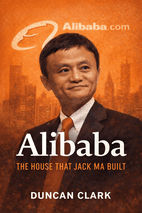
What is the book Alibaba: The House That Jack Ma Built about?
Duncan Clark's Alibaba chronicles the improbable rise of the e-commerce giant from a 1999 apartment startup to a global titan, detailing Jack Ma's journey and the company's pivotal role in China's digital transformation for readers interested in business and modern China.
Feature
Insta.Page
Blinkist
Shortform
Summary Depth
Full Chapter-by-Chapter
15-min overview
Section-by-section guides
Audio Narration
✓
✓
✓
Visual Mindmaps
✓
✕
✕
AI Q&A
✓
✕
✕
Quizzes
✓
✕
✕
PDF Downloads
✓
✕
✓
Price
$89.99/yr
$146/yr (PRO)
$199/yr
*Competitor data last verified July 2026.
1 Page Summary
Duncan Clark's Alibaba: The House That Jack Ma Built chronicles the improbable rise of the e-commerce giant from its 1999 founding in a Hangzhou apartment to its status as a global technology titan. The book's core narrative follows Jack Ma, a charismatic former English teacher with no technical background, whose relentless optimism and understanding of China's unique market dynamics allowed him to outmaneuver early competitors like eBay. Clark, an early advisor to the company, provides insider perspective on key milestones, including the creation of Taobao (a consumer-to-consumer platform), Alipay (a revolutionary digital payments solution), and the record-breaking 2014 IPO on the New York Stock Exchange.
The historical context is crucial, as Alibaba's story is inextricably linked to China's explosive economic transformation and the specific challenges of its early internet landscape. The company succeeded by building trust in a society lacking credit card penetration and commercial reliability, often navigating a complex, ambiguous regulatory environment. Clark details how Alibaba's structure—a constellation of sites serving businesses (Alibaba.com), consumers (Taobao and Tmall), and logistics—created an entire digital ecosystem, fostering millions of small entrepreneurs and fundamentally reshaping Chinese commerce and daily life.
The lasting impact of Alibaba, as Clark portrays it, extends far beyond e-commerce. The company pioneered the "platform" economy in China, demonstrating the power of enabling others to do business. Its creation of Alipay laid the groundwork for the world's leading fintech sector and a largely cashless society. Ultimately, the book presents Alibaba as both a driver and a symbol of China's arrival as a technological superpower, while also highlighting the ongoing tensions between its ambitious global aspirations and the realities of operating within the Chinese political system.
Maps
Overview
This chapter examines the profound impact of Alibaba, and specifically its platform Taobao, on the retail landscape and consumer culture in China. It argues that Alibaba’s rise was not merely a business success story, but a phenomenon shaped by unique Chinese economic conditions, where e-commerce filled voids left by an underdeveloped and inefficient traditional retail sector. The narrative positions Alibaba as a transformative force that turned online shopping from a convenience into a fundamental lifestyle for hundreds of millions.
Alibaba’s Iron Triangle of Success
The chapter attributes Alibaba’s dominance to a powerful, self-reinforcing ecosystem Jack Ma calls the “iron triangle”: e-commerce, logistics, and finance. Unlike Amazon, Alibaba’s core sites—Taobao and Tmall—carry no inventory. They act as marketplaces connecting merchants directly to consumers. This platform model is supported by a vast logistics network that ensures delivery and a finance arm (Alipay) that simplifies and secures transactions. This integrated system creates a seamless and trustworthy experience that competitors struggle to match.
The Mechanics of Taobao and Tmall
Taobao is depicted as a vibrant, chaotic digital bazaar with nine million free storefronts for small merchants and individuals. It generates revenue primarily through advertising, using pay-for-performance models like keyword bidding. Order is maintained by thousands of young xiaoer (customer service managers) who mediate disputes and enforce rules, wielding significant power over merchants. The platform replicates the interactive haggling and personal touch of a street market, complete with live chat, heavy discounts, and free gifts included with orders.
Tmall is positioned as the upscale counterpart—a “glitzy shopping mall” for major brands, both domestic and international. Unlike Taobao, merchants pay commissions on sales. It hosts flagship stores (run by the brand), authorized stores, and specialty stores. The presence of luxury brands like Burberry and major U.S. retailers like Costco signals its move beyond cheap goods and its role as a critical gateway to the Chinese consumer.
Why E-Commerce Became China’s “Main Course”
The chapter explains that Alibaba’s outsized role stems from the profound weaknesses of China’s offline retail environment, which made e-commerce a necessity rather than a luxury:
Legacy of State Planning: Traditional retail was dominated by state-owned enterprises that saw customers as an inconvenience, not a priority.
The Crippling Cost of Real Estate: Local governments rely on land sales for revenue, driving lease costs exorbitantly high. Successful brick-and-mortar stores face punishing rent hikes, stifling investment in customer service, marketing, and logistics.
A Fragmented, Inefficient Market: China’s retail sector is starkly decentralized compared to the West. The top grocery chains hold only 7% of the market (vs. 37% in the U.S.), and retail space per capita is less than a quarter of that in America.
Filling the Void: The internet and Alibaba filled this vacuum, offering consumers choice, convenience, and better service that physical stores failed to provide. As one executive noted, government policy effectively “channeled a lot of demand online.”
The Evolution of Products and Consumers
Alibaba’s platforms have evolved alongside their user base. What began with young, digital natives buying clothing and electronics has expanded to include their parents and grandparents. Product categories have broadened dramatically:
Apparel remains massive, with knock-offs of celebrity gowns appearing for sale within a day of TV events.
Groceries are a huge growth area, with over 40% of Chinese consumers buying groceries online (vs. 10% in the U.S.), driven by poor supermarket experiences.
High-Value Goods: The company now sells everything from imported Washington apples shipped in 72 hours to automobiles (with financing) and home appliances. Its Singles’ Day sales in appliances can exceed half the annual sales of major physical retailers.
Strategic Moves: Acquisitions like the stake in electronics retailer Suning illustrate the drive to merge online and offline (“O2O”) experiences, allowing Alibaba to capture sales even when product research happens in a physical store.
Key Takeaways
Alibaba’s success is deeply intertwined with the specific dysfunctions of China’s traditional retail economy, particularly the state-led system and exorbitant real estate costs that crippled physical stores.
The company’s “iron triangle” strategy—integrating marketplace platforms, logistics, and finance—created an ecosystem that is exceptionally difficult for competitors to challenge.
Alibaba didn’t just build a store; it cultivated a culture. Shopping on Taobao/Tmall became a interactive, community-driven “lifestyle,” fundamentally changing Chinese consumption habits.
The platform model, which profits from advertising and commissions without holding inventory, proved uniquely adaptable and scalable in the Chinese context, allowing it to serve both micro-merchants and global luxury brands.
Alibaba’s growth reflects the broader rebalancing of the Chinese economy toward domestic consumption, with the company acting as the primary conduit for this historic shift.
Key concepts: Maps
1. Maps
Alibaba's Transformative Role in Chinese Retail
E-commerce filled voids left by an underdeveloped traditional retail sector
Turned online shopping from a convenience into a fundamental lifestyle
Acted as a transformative force for hundreds of millions of consumers
The Iron Triangle Ecosystem
Three integrated components: e-commerce platforms, logistics network, and finance (Alipay)
Platform model carries no inventory, connecting merchants directly to consumers
Creates seamless, trustworthy experience that competitors struggle to match
Platform Mechanics: Taobao vs. Tmall
Taobao: Chaotic digital bazaar with free storefronts, revenue from advertising, replicates street market haggling
Tmall: Upscale shopping mall for major brands, merchants pay commissions, hosts flagship and authorized stores
Both platforms use xiaoer (customer service managers) to mediate disputes and enforce rules
Why E-Commerce Became China's Main Course
Legacy of state planning created retail sector that saw customers as inconvenience
Exorbitant real estate costs stifled investment in physical stores
Fragmented, inefficient market with decentralized retail chains
Internet filled the vacuum with choice, convenience, and better service
Evolution of Products and Consumers
Expanded from young digital natives to include parents and grandparents
Broadened categories from apparel/electronics to groceries and high-value goods
Strategic O2O (online-to-offline) moves through acquisitions like Suning
Singles' Day sales demonstrate massive scale in appliance categories
Key Strategic Implications
Success tied to dysfunctions in traditional retail economy
Cultivated interactive, community-driven shopping culture as lifestyle
Platform model proved uniquely adaptable and scalable in Chinese context
Acts as primary conduit for China's shift toward domestic consumption
💡 Try clicking the AI chat button to ask questions about this book!
Chapter One The Iron Triangle
Overview
Imagine the Beijing Water Cube pulsing with data, tracking billions of dollars spent in a single day. This spectacle of Singles’ Day is the explosive showcase of a much deeper revolution in Chinese commerce. It begins with the sheer scale and cultural force of online shopping, made possible by Alibaba’s vast digital marketplaces, Taobao and Tmall. These platforms succeeded not because traditional retail was good, but because it was notoriously inefficient and expensive, pushing a hungry consumer class online in search of better selection and service. But handling the torrent of orders—hundreds of millions of packages—required a logistical miracle. Alibaba’s genius was coordinating, not owning, a sprawling network of private courier companies, unified by its data platform Cainiao to ensure reliable delivery. None of this, however, would work without trust. The financial pillar, Alipay, provided that by holding payments in escrow and then blossoming into a full digital wallet. It leveraged gaps in China’s state-run banking system to offer innovative services, from high-yield savings to microloans. Together, retail, logistics, and finance lock into a self-reinforcing “iron triangle,” an ecosystem so powerful it defines how modern China shops, pays, and receives its goods.
The Singles' Day Phenomenon
On November 11, 2015, Beijing’s Olympic “Water Cube” transformed into a dazzling data command center, broadcasting the real-time spending frenzy of millions on Alibaba’s platforms. This wasn’t just a shopping day; it was a cultural event—Singles’ Day, or Double Eleven—a 24-hour spectacle featuring celebrity appearances, live television galas, and a countdown with Jack Ma alongside Daniel Craig. In a stunning display of consumer power, shoppers racked up over $14 billion in purchases, dwarfing Western equivalents like Cyber Monday. This annual ritual, which began with just 27 merchants in 2009, now involves tens of thousands of brands and serves as a vibrant testament to the unleashed spending appetite of China’s rising middle class.
Alibaba’s E-commerce Ecosystem
At the heart of this revolution are Alibaba’s twin marketplaces: Taobao and Tmall. Unlike Amazon, Alibaba doesn’t hold inventory; instead, it provides a digital bazaar where millions of merchants connect directly with consumers. Taobao, with its nine million small vendor storefronts, thrives on a lively, interactive shopping experience. Customers haggle via chat, receive personalized discounts, and even get extra goodies in their packages. The platform is free for sellers, but Alibaba profits handsomely from targeted advertising, using a pay-per-click model similar to Google’s AdWords. Keeping this vibrant chaos in check are the xiaoer—young client service managers who mediate disputes and enforce rules, wielding significant power to shut down dishonest merchants.
Tmall, by contrast, is the polished shopping mall of the online world, hosting major brands from Nike to Burberry. Here, Alibaba collects commissions on sales, and the site has become a crucial channel for both domestic and international retailers aiming to reach Chinese consumers. Together with Juhuasuan, a group-buying site, these platforms form a comprehensive e-commerce network that offers nearly everything imaginable, making “tao” a verb synonymous with online shopping in China.
Why E-commerce Thrives in China
The staggering success of online shopping in China isn’t just about convenience; it’s a direct response to the shortcomings of traditional retail. For decades, China’s brick-and-mortar stores, often state-owned or real estate-driven, offered poor service and limited selection. High land costs—fueled by local governments relying on land sales for revenue—meant exorbitant rents for physical stores, stifling investment in customer experience. As one executive put it, this inefficiency “pushed a lot of demand online.” With offline retail space per capita at a fraction of U.S. levels and a fragmented market, e-commerce stepped in as the “main course” for Chinese consumers, providing variety, value, and a sense of customer care previously unheard of.
The Logistics Edge
Alibaba's staggering sales volume, exemplified by the 467 million packages generated on Singles' Day 2015, is entirely dependent on a vast, low-cost logistics network. This army of couriers, operating via foot, bike, and truck, forms the vital delivery system for China's e-commerce. Crucially, Alibaba does not employ these couriers itself. After being rebuffed by the state-run China Post in 2005, private enterprise filled the void, leading to the rise of over eight thousand courier firms. Dominating this landscape are the "Three Tongs, One Da"—Shentong, Yuantong, Zhongtong, and Yunda—all hailing from Tonglu, a town near Alibaba's Hangzhou headquarters. More than two-thirds of their business comes from Alibaba's platforms.
To coordinate this ecosystem without owning physical assets, Alibaba co-founded Cainiao (China Smart Logistics) with its logistics partners. Cainiao’s strategy is "asset-light," focusing on integrating the data from its member companies to optimize routes and efficiency. This contrasts with competitor JD.com’s "asset-heavy" approach of owning its entire logistics chain. Cainiao’s data platform aims to handle a projected 100 million packages a day by 2020, using analytics to reroute deliveries in real-time and experimenting with innovations like drone trials. The ultimate goal is to solidify trust by ensuring reliable, timely delivery for customers and merchants.
The Finance Edge
The third pillar of Alibaba's dominance is its financial services, anchored by Alipay. Far more than a simple payment processor, Alipay acts as a critical escrow service, building trust by holding customer funds until goods are received and approved. It handles a colossal volume—three times that of PayPal—and has evolved into a digital wallet for over 300 million people, used for everything from bill payments to in-store purchases.
Alibaba leveraged the inefficiencies of China's state-dominated banking sector, where large banks offered low interest rates and ignored small businesses and individuals. Its disruptive move was the launch of Yu'e Bao, an online mutual fund that offered higher returns and easy withdrawals. It attracted $93 billion in under a year, shaking the financial establishment and drawing fierce backlash from state banks, which imposed transfer limits. Despite this, Alibaba continues to expand its financial footprint with microloans, credit scoring via Sesame Credit, wealth management, and the launch of MYbank, an online-only bank that uses smartphones for identity verification. Finance completes the triangle by increasing customer "stickiness" and leveraging Alibaba’s unique data to assess credit risk.
Key Takeaways
Alibaba’s logistics power comes from coordinating, not owning, a massive private courier network, primarily through the data-integration platform Cainiao.
This "asset-light" strategy contrasts with competitors like JD.com and aims to ensure reliable delivery to build trust.
Alipay is the financial engine and trust mechanism, evolving from a payment tool into a comprehensive digital wallet and financial services platform.
Alibaba successfully disrupted China's inefficient, state-controlled banking sector with products like Yu'e Bao, facing significant pushback from entrenched interests.
Together, retail (from the previous section), logistics, and finance form a self-reinforcing "iron triangle" that locks in customers and merchants, creating Alibaba's dominant ecosystem.
Key concepts: Chapter One The Iron Triangle
2. Chapter One The Iron Triangle
The Iron Triangle Concept
A self-reinforcing ecosystem of retail, logistics, and finance
Defines how modern China shops, pays, and receives goods
Built by Alibaba to coordinate rather than own assets
Responds to gaps and inefficiencies in traditional systems
Singles' Day Phenomenon
Cultural spectacle showcasing China's consumer power
Dwarfs Western equivalents like Cyber Monday ($14B in 2015)
Began with 27 merchants in 2009, now involves tens of thousands
Represents the unleashed spending of China's rising middle class
Alibaba's E-commerce Platforms
Taobao: Digital bazaar with 9M small vendors, free for sellers, monetized via advertising
Tmall: Polished mall for major brands, Alibaba collects commissions
Asset-light model: No inventory, connects merchants directly to consumers
Xiaoer (client service managers) enforce rules and mediate disputes
Why E-commerce Thrives in China
Response to inefficient traditional retail with poor service and selection
High land costs and exorbitant rents stifled physical store investment
Offline retail space per capita is a fraction of U.S. levels
E-commerce became the 'main course' offering variety and customer care
Logistics Network (Cainiao)
Coordinates 8,000+ private courier firms, dominated by 'Three Tongs, One Da'
Asset-light strategy: Integrates data rather than owning physical assets
Handled 467M packages on Singles' Day 2015
Aims to optimize routes in real-time and ensure reliable delivery
Financial Infrastructure (Alipay)
Built trust by holding payments in escrow between buyers and sellers
Evolved into full digital wallet with high-yield savings and microloans
Leveraged gaps in China's state-run banking system
Provided the trust pillar enabling the e-commerce transaction cycle
Alipay: The Financial Pillar and Trust Mechanism
Acts as a critical escrow service, holding customer funds until goods are received to build trust in transactions.
Processes a colossal transaction volume, three times that of PayPal, and serves as a digital wallet for over 300 million users.
Evolved beyond payments to handle bill payments, in-store purchases, and comprehensive financial services.
Disrupting China's Banking Sector
Leveraged inefficiencies in China's state-dominated banking sector, which offered low interest rates and ignored small businesses.
Launched Yu'e Bao, an online mutual fund offering higher returns and easy withdrawals, attracting $93 billion in under a year.
Faced fierce backlash and transfer limits from state banks but continued expanding its financial footprint.
Expansion of Financial Services Ecosystem
Developed microloans, credit scoring via Sesame Credit, and wealth management products.
Launched MYbank, an online-only bank using smartphones for identity verification.
Uses its unique transaction data to assess credit risk and increase customer 'stickiness' within the ecosystem.
The Iron Triangle: A Self-Reinforcing Ecosystem
Integrates retail (Taobao/Tmall), logistics (Cainiao network), and finance (Alipay) into a cohesive system.
Creates a locked-in ecosystem where each service reinforces the others, increasing dependency for customers and merchants.
Forms the foundation of Alibaba's market dominance by building trust, ensuring reliability, and providing comprehensive services.
Chapter Two Jack Magic
Overview
This chapter explores the profound and personal influence of Jack Ma on Alibaba, framing it not merely as corporate leadership but as a form of charismatic pedagogy he calls "Jack Magic." It details how his unconventional appearance, motivational communication style, and deeply ingrained values have shaped every aspect of the company, from its internal culture and physical campus to its core business philosophy.
The Unconventional "Alien" at the Helm
Jack Ma defies every stereotype of a corporate titan. His distinctive, "elfish" appearance—often compared to the movie alien E.T.—is something he has learned to leverage, even joking about it publicly. More importantly, he rejects traditional credentials, proudly stating he is "one hundred percent Made in China," without powerful family connections, an overseas education, or a technical background. This narrative of being an underestimated underdog, comparing himself to Forrest Gump, is a deliberate and powerful part of his persona. He cultivates an image of a simple, even "stupid" man who outsmarts the system, using this relatable identity to connect with employees and the public.
The Engine of "Jack Magic": Communication and Charisma
Jack’s true power lies in his exceptional skill as a communicator and motivator, a blend of "blarney and chutzpah" that creates a "Reality Distortion Field" akin to Steve Jobs. His speeches, always delivered without notes, are built on a stable of well-honed personal anecdotes and inspirational quotes, refined over decades. He masterfully blends humor and emotion, often moving audiences to tears. His fluency in English and savvy use of both Western pop culture and Chinese historical or martial arts references allow his message to resonate globally. This ability to attract talent, inspire loyalty, and build his public fame is the essence of "Jack Magic."
A Teacher's Mantra: Customers, Employees, Shareholders
Jack's foundational philosophy, repeated like a mantra, is "Customers first, employees second, and shareholders third." He describes supporting small businesses ("the shrimp") as his "religion." Employees are treated as "disciples," motivated by his stark, challenging rhetoric about surviving "brutal" days to reach a "beautiful" future. Shareholders are explicitly ranked third, and Jack often publicly ridicules Wall Street's short-term demands, positioning himself as a maverick. However, this populist stance coexists with a shrewd strategy of creating regular, lucrative exit opportunities for long-term investors and employees.
Imprinting Culture on Campus and Community
Jack's influence is physically manifested in Alibaba’s sprawling Wetlands headquarters, which blends futuristic offices with a classical Chinese lake scene, reflecting his environmental interests and love for martial arts novels. The company culture emphasizes camaraderie and sacrifice for the collective good, illustrated by perks like interest-free home loans, mass wedding celebrations, and a fleet of tandem bicycles symbolizing teamwork. Informality is encouraged through the use of nicknames (often from Jin Yong novels), and an internal forum allows direct, pseudonymous feedback to Jack’s online persona, "Feng Qingyang."
Codifying the Culture: The Six Vein Spirit Sword
Alibaba’s values are formalized in the "Six Vein Spirit Sword," a concept borrowed from Jin Yong, representing internal strengths. The six veins are: Customer First, Teamwork, Embrace Change, Integrity, Passion, and Commitment. These are not empty slogans; they account for half of an employee's performance review. The culture enforces these through intense teamwork rituals, frequent job rotations to "embrace change," a zero-tolerance policy on corruption, and an expectation of passionate, "hot-blooded" commitment. The HR department, wielding significant power, is informally called the "Political Commissar," tasked with guarding this culture.
The Enduring Alibaba Diaspora
Jack’s early generosity with equity and the strong cultural imprint have created a powerful alumni network. Former employees, connected by a "Long March" ethos of sacrifice and ambition, have founded hundreds of start-ups. This "Former Orange Club" diaspora acts as an innovation ecosystem and potential pipeline for future Alibaba acquisitions, demonstrating how the founder’s influence extends far beyond the company's walls.
Key Takeaways
Jack Ma’s leadership is defined by his charismatic communication skills ("Jack Magic") and a carefully crafted persona as an underestimated, everyday underdog.
His core business philosophy prioritizes customers and employees over shareholder demands, shaping Alibaba’s strategic decisions and internal culture.
The company’s values, codified in the Six Vein Spirit Sword, are rigorously enforced and integrated into daily operations and performance reviews.
Alibaba’s physical campus, perks, and rituals are direct reflections of Jack’s personal interests and his emphasis on teamwork, camaraderie, and ideological commitment.
The powerful culture cultivated by Jack has spawned a significant network of alumni entrepreneurs, extending his and Alibaba’s influence across the Chinese tech sector.
Key concepts: Chapter Two Jack Magic
3. Chapter Two Jack Magic
The Persona of Jack Ma: The Unconventional Leader
Defies corporate titan stereotypes with distinctive 'elfish' appearance
Cultivates narrative of being an underestimated underdog ('Made in China', no elite credentials)
Uses relatable 'simple man' identity to connect with employees and public
Leverages his unconventional image deliberately as part of his leadership persona
Jack Magic: Communication and Charismatic Influence
Exceptional communicator and motivator with 'Reality Distortion Field' effect
Speeches built on well-honed personal anecdotes and inspirational quotes
Masterfully blends humor and emotion to move audiences
Uses fluency in English and cultural references to resonate globally
Attracts talent, inspires loyalty, and builds public fame through charismatic delivery
Values account for half of employee performance reviews
Enforced through teamwork rituals, frequent job rotations, zero-tolerance on corruption
Expectation of passionate, 'hot-blooded' commitment to company mission
HR department acts as 'Political Commissar' guarding the culture
Extended Influence: The Alibaba Diaspora
Early generosity with equity created powerful alumni network
Former employees connected by 'Long March' ethos of sacrifice and ambition
'Former Orange Club' diaspora has founded hundreds of start-ups
Acts as innovation ecosystem and potential acquisition pipeline for Alibaba
Demonstrates founder's influence extends beyond company walls into broader tech sector
Chapter Three From Student to Teacher
Overview
This chapter traces Jack Ma's transformation from a persistent student into a charismatic teacher, set against the backdrop of China's gradual opening to the world. It details his humble beginnings in Hangzhou, his repeated academic failures, and the formative cross-cultural friendship that expanded his horizons. The narrative captures how he leveraged his passion for English and innate communication skills to build connections, ultimately paving his path away from formal education and toward his entrepreneurial destiny.
Early Life in a Transforming China
Jack Ma was born in 1964 in Hangzhou during a period where private enterprise was virtually nonexistent. His parents, factory worker Cui Wencai and photographer Ma Laifa, shared a love for pingtan, a traditional Chinese storytelling art, which likely influenced Jack’s own communicative flair. His childhood was marked by the Cultural Revolution, during which his family faced political risk due to his grandfather's past role under the Nationalist government. Despite being taunted, the family remained intact. The geopolitical landscape shifted during his youth with Nixon’s 1972 visit to Hangzhou, which began reopening China to the West.
The Power of Language and a Fateful Friendship
A young Jack Ma developed a love for English, listening to The Adventures of Tom Sawyer on shortwave radio. After Deng Xiaoping’s “open door” policy began in 1978, foreign tourists flocked to Hangzhou. At fourteen, Jack began biking to the Hangzhou Hotel every morning for nine years to practice English with tourists, offering free tours in exchange. One American tourist suggested he adopt the name “Jack.” This dedication, though he remained self-critical of his grammar, gave him a crucial window to the world.
In 1980, this pursuit led to a life-changing encounter with the Morley family from Australia. Fifteen-year-old Jack approached David Morley in a park, eager to practice English. This meeting blossomed into a deep, lasting friendship. David’s father, Ken Morley—a retired electrical engineer and committed socialist—became a mentor, painstakingly correcting Jack’s letters to help him improve. The Morleys’ visit and subsequent correspondence profoundly impacted Jack’s worldview.
Academic Struggles and Relentless Persistence
Jack’s path was not academic. He twice failed the notoriously difficult national college entrance exam, the gaokao, scoring exceptionally poorly in math (1 out of 120 on his first attempt). He took menial jobs, like delivering magazines on a pedicab, and faced repeated rejections, including from KFC. Undeterred, he studied relentlessly, memorizing formulas at a university library. On his third attempt in 1984, he scored 89 in math and secured a spot at the low-prestige Hangzhou Teachers College, largely because it had spaces for male students.
University Life and Cross-Cultural Bonds
At university, Jack thrived in leadership roles, becoming student union president. In 1985, Ken Morley invited him to Australia—Jack’s first trip abroad. The month-long stay was transformative, shattering his preconceptions about China’s wealth and teaching him to think independently. The bond between the families deepened; Ken later helped pay Jack’s college living fees and, after Jack graduated and married fellow student Zhang Ying (Cathy), gifted the couple A$22,000 for their first apartment. Jack and Cathy later named their first son “Kun” after Ken.
The Teacher and the Entrepreneurial Spark
After graduating in 1988 with an English degree, Jack became a lecturer at the Hangzhou Institute of Electronic Engineering. He was an unconventional teacher, favoring free-flowing conversation over rigid grammar lessons. He also ran a popular nighttime English corner at a local park, using the darkness to put students at ease. However, Deng Xiaoping’s 1992 “southern tour” and declaration that “to get rich is glorious” ignited a new ambition in him. While fulfilling his teaching contract, he began to look beyond the classroom, resolving to start his own business before he turned thirty.
Key Takeaways
Resilience is forged through failure: Jack Ma’s early life was defined by rejection and academic failure, yet his persistent, almost stubborn, determination became a cornerstone of his character.
Cross-cultural connections can be transformative: The genuine, generous friendship with the Morley family provided Jack with not only financial and educational support but also a critical shift in perspective that was essential for his future global vision.
Passion can create opportunity: His self-driven mastery of English, a skill largely divorced from his formal education, became the primary tool through which he accessed the world and built his initial network.
Historical context shapes individual destiny: Jack’s journey from student to teacher to aspiring entrepreneur mirrors China’s own transition from isolation to a tentative embrace of market-oriented policies under Deng Xiaoping.
Charismatic leadership emerges early: His natural abilities as a communicator, networker, and motivator were evident in his roles as a student leader, tour guide, and popular teacher, long before he founded a company.
Key concepts: Chapter Three From Student to Teacher
4. Chapter Three From Student to Teacher
Historical Context: China's Opening
Born in 1964 Hangzhou during Cultural Revolution with political family risks
Nixon's 1972 visit began China's gradual reopening to the West
Deng Xiaoping's 1978 'open door' policy brought foreign tourists
1992 'southern tour' declaration 'to get rich is glorious' ignited entrepreneurial ambition
Early Influences and Character Formation
Parents' love for pingtan storytelling influenced his communicative flair
Faced childhood taunting but family remained intact
Developed resilience through repeated academic and professional failures
Natural leadership abilities emerged early in student and teaching roles
Mastery of English as Gateway
Self-taught English listening to shortwave radio broadcasts
Biked to Hangzhou Hotel for 9 years to practice with tourists
Offered free tours in exchange for conversation practice
Adopted Western name 'Jack' from an American tourist suggestion
Transformative Friendship with Morley Family
Met Australian David Morley in park at age 15
Ken Morley became mentor, correcting letters and improving language
1985 Australia visit shattered preconceptions about China's wealth
Financial support included college fees and apartment down payment
Named first son 'Kun' after Ken Morley, showing deep bond
Academic Struggles and Persistence
Failed gaokao college exam twice with very poor math scores
Took menial jobs like delivering magazines and faced KFC rejection
Studied relentlessly, memorizing formulas at university library
Third attempt succeeded, entering low-prestige Hangzhou Teachers College
University Development and Leadership
Thrived as student union president despite academic challenges
Australia trip taught independent thinking and global perspective
Married fellow student Zhang Ying (Cathy)
Graduated in 1988 with English degree
Teaching Career and Entrepreneurial Spark
Became lecturer at Hangzhou Institute of Electronic Engineering
Unconventional teacher favoring conversation over rigid grammar
Ran popular nighttime English corner in park to ease students
Fulfilled teaching contract while planning business before age 30
Transition from teacher to entrepreneur mirrored China's market shift
You've reached the end of the free chapters
Next chapter: “Chapter Four Hope and Coming to America” is locked
Keep reading Alibaba: The House That Jack Ma Built — and unlock all 600+ book summaries with audio, mindmaps and AI Q&A.
$0.00 due today · 7 days free, then $89.99/year ($7.49/mo) · Cancel anytime before day 7
plus sales tax where applicable
If you like this summary, you probably also like these summaries...
Duncan Clark is a British author and technology consultant specializing in China's tech industry, best known for his book "Alibaba: The House That Jack Ma Built." He founded the investment advisory firm BDA China and has over two decades of experience advising leading technology companies and investors on the Chinese market.
📚 Explore Our Book Summary Library
Discover more insightful book summaries from our collection