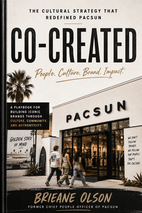
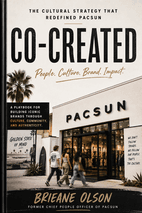
Brieane Olson's Co-Created details how Pacsun transformed from a bankrupt mall brand into a cultural force by shifting from chasing trends to co-creating with its community, offering a practical blueprint for marketers and business leaders seeking authentic brand relevance.
Feature
Insta.Page
Blinkist
Shortform
Summary Depth
Full Chapter-by-Chapter
15-min overview
Detailed analysis
Audio Narration
✓ (AI narration)
✓
✓
Visual Mindmaps
✓
✕
✕
AI Q&A
✓ Voice AI
✕
✕
Quizzes
✓
✕
✕
PDF Downloads
✓
✕
✓
Price
$59.99/yr
$146/yr (PRO)
$199/yr
*Competitor data last verified February 2026.
About the Author
Brieane Olson
Brieane Olson is a novelist and short story writer known for her Southern Gothic and literary fiction works, including *The Sinners' Refuge* and *Dust and Shadow*, which delve into themes of family secrets and resilience. With a background in creative writing and Appalachian studies, she brings a nuanced perspective on rural life and cultural identity to her narratives. Her work has been featured in journals like *The Georgia Review* and *Oxford American*.
1 Page Summary
In Co-Created: The Cultural Strategy That Redefined Pacsun, Brieane Olson details the dramatic transformation of a struggling legacy mall brand into a cultural force, arguing that the key was not chasing trends but fundamentally rethinking the brand’s relationship with its audience. The book centers on the concept of "co-creation," where Pacsun learned to "listen first, build together, and let the community lead." This shift is illustrated through a pivotal 2023 moment when a micro-creator named Astrid sparked a viral sales phenomenon, validating a strategy far removed from the brand’s past. The author traces Pacsun’s descent from riding the surf-and-skate wave of the early 2000s to filing for Chapter 11 bankruptcy in 2016, a period marked by a one-note identity, a leadership vacuum that stalled promising initiatives like "Project Mavericks," and a bloated real estate portfolio. The turnaround began with authentic partnerships, such as the hands-on "Jenner Effect" with Kendall and Kylie, and required overcoming internal friction between men’s and women’s divisions to ask the radical question: what does the consumer actually want?
The book’s distinctive approach lies in its practical methodologies for building a brand that is culturally relevant rather than merely reactive. Olson outlines a "listening toolkit" that combines 24/7 social listening across platforms with empowering store associates as frontline ears, moving beyond data crunching to understand how people want to express themselves. This led to building "digital muscle" by handing control to the community, elevating raw user-generated content from real customers over polished ad campaigns. Crucially, the strategy extended beyond marketing to a reinvention of purpose, as exemplified by redirecting funds from a celebrity suite at Rams games into quiet community work—such as providing clean laundry for students in Inglewood—transforming a marketing budget into a mission. Pacsun actively embedded a cultural "operating system" of inclusivity, integrity, and teamwork, using campaigns like "This is Y(our) Story" to turn customers into active co-creators and proving that authenticity in representation drives results.
This book is intended for business leaders, marketers, and brand strategists seeking a blueprint for cultural relevance in a fast-moving retail landscape. Readers will gain a concrete methodology for moving from trying to set trends to authentically reflecting the culture of their customers. Olson argues that the future of retail lies in treating the brand as a platform for community and belonging rather than a place for transactions, advocating for concepts like loyalty redesigned around shared purpose and decentralized, youth-led collectives. The key takeaway is that sustainable brand relevance comes not from chasing the next platform or trend, but from a disciplined, long-term commitment to genuine listening, community co-creation, and a purpose that cannot be an afterthought.
Chapter 1: Prologue | Eleven Thousand Astrids
Overview
The prologue opens with a vivid scene from Black Friday 2023, when Pacsun experienced a transformation that had been years in the making. A single post by a micro-creator named Astrid—with only eleven thousand followers—catalyzed a viral moment, driving sales of a specific pair of jeans that customers began calling "the TikTok Jean." That weekend didn’t just boost revenue; it validated a strategic methodology that the company had been quietly refining: listen first, build together, and let the community lead. This chapter sets the stage for the entire book, framing the question that the author will answer: How did a struggling legacy brand become a cultural force? The answer, it turns out, is rooted not in chasing platforms but in a fundamental rethinking of what it means to be relevant.
The Unexpected Catalyst: Astrid and the Open Creator Platform
What surprised the Pacsun team most about this breakthrough was its source. They hadn’t anticipated that the viral moment would come from TikTok’s open creator platform—a structured program where brands partner with vetted creators for sponsored content, as distinct from the organic, algorithm-driven regular TikTok feed. Astrid was a micro creator with fewer than ten thousand followers, yet her content ignited a buying frenzy. The halo effect rippled beyond TikTok: physical stores saw customers walking in and specifically requesting the “TikTok Jean,” proving that social e-commerce doesn’t operate in a silo. The lesson was clear: even a small creator, when given the right tools and trust, can move the needle across every channel.
Co-Creation as the New North Star
That spirit of co-creation didn’t stop with one viral moment. The chapter makes clear that Pacsun’s transformation required a deeper shift in how the brand engaged with its audience. Instead of dictating trends from above, the company began amplifying what the community already cared about. This philosophy extended to partnerships as well—working with Formula 1, The Metropolitan Museum of Art, and Japanese designer Yohji Yamamoto not because of name recognition, but because those collaborations aligned with shared values. The partnership with Rare DNM and Selena Gomez, where every transaction contributed to a mental health foundation, exemplifies this approach. The brand was no longer using celebrities to tell its story; it was joining a story already being told by the community.
Relevancy as a Living Practice
A key undercurrent of the prologue is the idea that relevancy isn’t a destination. It’s an ongoing, iterative process that requires staying in lockstep with a moving consumer. Pacsun’s success on TikTok wasn’t about mastering a platform—it was about building a community that would travel with the brand wherever it went. The author acknowledges that future technologies (TikTok itself may not be the primary connection point in five years) are uncertain, but the community is the constant. The chapter closes by framing the rest of the book as both a methodology and a road map, grounded in the principle that the work of staying relevant is never finished.
Key Takeaways
Micro creators can spark macro impact: A single post from a creator with fewer than 10,000 followers triggered an omnichannel sales surge, proving that influence is not tied to follower count.
Community leadership over brand dictation: The most powerful marketing happens when brands listen first, then co-create with their audience rather than broadcasting messages.
Relevance is a continuous process, not a fixed state: Staying in sync with consumers requires constant refinement, and the community—not any specific platform—is the true asset.
Purpose-driven partnerships build lasting trust: Collaborations that align with brand values and give back (like Rare DNM’s mental health initiative) deepen connection and demonstrate authenticity.
Key concepts: Prologue | Eleven Thousand Astrids
1. Prologue | Eleven Thousand Astrids
The Viral Catalyst
Astrid, a micro-creator with 11K followers, sparked a sales surge
Her post drove demand for 'the TikTok Jean' across all channels
Success came from TikTok's open creator platform, not organic reach
Small creators with trust can move the needle omnichannel
Co-Creation Philosophy
Brand shifted from dictating trends to amplifying community values
Partnerships with F1, Met Museum, Yohji Yamamoto aligned on values
Rare DNM and Selena Gomez partnership supported mental health
Brand joined existing community stories instead of using celebrities
Relevancy as a Living Practice
Relevancy is an ongoing iterative process, not a fixed state
Community is the constant asset, not any specific platform
Future technologies may change, but community loyalty endures
Staying relevant requires constant refinement and lockstep with consumers
Methodology for Transformation
Listen first, build together, let the community lead
Validated strategic methodology refined over years
Book frames a road map for staying relevant
Work of relevance is never finished
Legacy Brand Revival
Pacsun transformed from struggling legacy to cultural force
Black Friday 2023 validated years of quiet refinement
Success rooted in rethinking what it means to be relevant
Not about chasing platforms but fundamental strategic shift
Scroll to load interactive mindmap
If you like this summary, you probably also like these summaries...
💡 Try clicking the AI chat button to ask questions about this book!
Chapter 2: Chapter 1 | Still Selling California
Overview
Pacsun’s story in this chapter is a cautionary tale about the danger of riding a cultural wave too long and mistaking legacy for direction. The brand was born from the golden imagery of Southern California—sandy beaches, perfect surf, and a laid-back lifestyle that felt aspirational to teenagers across the country. In the early 2000s, when surf and skate brands like Volcom, Quiksilver, and Roxy dominated mainstream fashion, Pacsun rode that wave straight into rapid expansion. But that growth was unstrategic, fueled by a trend rather than a clear sense of what the brand actually stood for. By the mid-2010s, the wave had receded, and Pacsun found itself still trying to sell California to a generation that had already moved on.
The Trap of a One-Note Identity
The chapter paints a vivid picture of how Pacsun’s early success became its biggest liability. The brand’s identity was so tightly tied to surf-and-skate culture that when that culture slipped from the mainstream, Pacsun was left clutching an empty shell. Internally, people sensed trouble—there was a quiet acknowledgment that something was off—but no coordinated response emerged. Instead of defining a new direction, the company scrambled. They started copying competitors like Abercrombie and Urban Outfitters, chasing whatever seemed to be working elsewhere. This reactive approach pulled them in too many directions at once. They tried to elevate existing brands while simultaneously jumping on new trends, but without a foundation of their own, they failed on both fronts. The result was a brand that didn’t stand for enough—neither product nor culture—and that ambiguity was fatal with younger consumers who demand authenticity and purpose.
When Legacy Becomes a Cage
What makes this section so resonant is the honest admission that Pacsun had never truly developed a brand culture of its own. It had borrowed one. The surf-and-skate lifestyle was a cultural moment the company latched onto, not something it created or deeply owned. So when that moment passed, there was no internal compass to guide the next move. The chapter frames this as a problem of clarity: clarity about consumer desires, about strategic direction, and most importantly, about what Pacsun itself stood for. Without that clarity, the brand became interchangeable—a store you could skip without thinking twice. The author’s voice here is reflective, not accusatory, but the stakes are clear: a brand without a soul cannot compete with purpose-driven rivals, and for Pacsun, that meant heading into a crisis of relevance that would only deepen.
Key Takeaways
Brand legacy can be a double-edged sword: A strong past identity becomes a liability if it prevents evolution.
Reactive strategies create confusion: Copying competitors without a clear brand foundation leads to failure in both product and culture.
Younger consumers demand authentic purpose: Without a distinct, values-driven identity, a brand becomes invisible in a crowded market.
Clarity is everything: Knowing what you stand for—not just what you sell—is the only way to navigate cultural change.
Key concepts: Chapter 1 | Still Selling California
2. Chapter 1 | Still Selling California
The Trap of a One-Note Identity
Pacsun tied identity too tightly to surf-and-skate culture
When the trend faded, the brand had no direction
Reactive copying of competitors like Abercrombie and Urban Outfitters
Lack of foundation led to failure in product and culture
When Legacy Becomes a Cage
Pacsun borrowed a culture, never created its own
No internal compass to guide strategic evolution
Brand became interchangeable and irrelevant to youth
Clarity about purpose is essential to navigate change
Mistaking Trend for Strategy
Early 2000s growth was unstrategic, fueled by trend
Rapid expansion without clear brand direction
By mid-2010s, generation had moved on from California image
Pacsun failed to stand for enough in product or culture
Key Lessons from Pacsun's Decline
Brand legacy becomes liability if it prevents evolution
Reactive strategies create confusion and failure
Clarity about what you stand for is the only guide
Scroll to load interactive mindmap
⚡ You're 2 chapters in and clearly committed to learning
Why stop now? Finish this book today and explore our entire library. Try it free for 7 days.
Chapter 3: Chapter 2 | Not Quite Maverick
Overview
Project Mavericks wasn’t a failure, but it wasn’t quite the breakthrough everyone had hoped for. The initiative produced a sixty-plus-page book called Mavericks, which outlined eight big shifts the company needed to make—shifts that touched on leadership foundation, internal culture, external relationships, and execution. It also ended with a rallying cry to keep exploring, collaborating, leading, and going. Yet despite all the energy and insight, Pacsun filed for Chapter 11 bankruptcy less than a decade later. The seeds of transformation were planted, but they didn’t take root. Why? Because change requires more than good ideas—it requires full commitment, honest listening, and a willingness to let go of control.
Leadership Vacuum at the Top
One of the biggest obstacles was that Project Mavericks was largely driven by outside consultants. Brilliant as they were, consultants can only recommend—they can’t implement. Implementation demands unwavering buy-in from the organization’s leadership. Unfortunately, Pacsun was in flux: the project launched under an interim CEO, and by the time a permanent CEO came in, that new leader had their own vision. Incoming executives often want to do things their way, not execute someone else’s playbook. So the promising path Team Mavericks had identified was left half-walked. The company continued trying to dictate change from the inside out, rather than fully embracing the consumer-driven insights that had been gathered.
Inviting Consumers In—But Still Holding the Reins
A bright spot was the Style Leader program. Team Mavericks handpicked real consumers—from Pacsun stores and even competitors’ stores—and asked them straightforward questions: What were the last three pairs of jeans you bought? What’s on your wish list? What stores do you shop most often and why? These two-way conversations marked a real shift. They finally let customers lead, acknowledging that the brand couldn’t dictate what was cool. And yet, even here, there was a tug-of-war. After hosting focus groups behind one-way mirrors, they’d sort people into tidy buckets: “He’s a surf guy. She’s a Brandy girl.” They were listening, but they were still trying to control the story, categorizing rather than truly co-creating.
Partnerships That Shone, But Change That Stalled
Project Mavericks did yield tangible wins: more thoughtful consumer listening, modernized branding and retail spaces, and high-profile partnerships with Kendall and Kylie Jenner and the legendary Virgil Abloh. Virgil, who later transformed fashion as artistic director of Louis Vuitton menswear and founder of Off-White, brought a belief that streetwear belonged in high fashion. Working with him was a gift—his creativity, his generosity to emerging voices, his insistence on accessibility and inclusion continue to inspire. But even with these moves, the deeper transformation didn’t stick. Leadership buy-in remained shaky, silos persisted, and the dialogue with customers never fully evolved beyond “What do you want to see on the racks?” There was collaboration, yes, but not the authentic co-creation that would later define their success.
Key Takeaways
Real change needs unwavering leadership commitment—especially from the CEO who will implement the plan.
Outside consultants can light the way, but they can’t walk the path for you; internal alignment is non-negotiable.
Listening to consumers is a start, but true co-creation requires handing over the wheel, not just inviting them to speak through a one-way mirror.
Even partial wins (partnerships, updated branding) can be valuable, but without systemic shifts, they won’t save the company from deeper structural issues.
Culture, execution, and authentic relationship-building must go hand in hand—seeds planted without water and sunlight will stay seeds.
Key concepts: Chapter 2 | Not Quite Maverick
3. Chapter 2 | Not Quite Maverick
Why Project Mavericks Fell Short
Produced 60+ page book with eight big shifts
Ended with rallying cry but lacked follow-through
Pacsun filed Chapter 11 bankruptcy less than decade later
Seeds planted but didn't take root
Leadership Vacuum at the Top
Project driven by outside consultants, not internal leaders
Interim CEO launched project; permanent CEO had own vision
Incoming executives want to do things their way
Promising path left half-walked
Inviting Consumers In But Holding Reins
Style Leader program asked real consumers direct questions
Two-way conversations marked real shift
Still sorted people into tidy buckets after focus groups
Listened but tried to control the story
Partial Wins That Didn't Stick
Modernized branding and retail spaces
High-profile partnerships with Kendall, Kylie, and Virgil Abloh
Virgil brought streetwear to high fashion
Deeper transformation stalled without systemic shifts
Key Takeaways for Real Change
Unwavering leadership commitment is essential
Consultants can light way but can't walk path
True co-creation requires handing over the wheel
Culture, execution, and relationships must go hand in hand
Scroll to load interactive mindmap
Chapter 4: Chapter 3 | Reality Hits Hard
Overview
The story of Pacsun's Chapter 11 filing is told through three distinct media lenses, each capturing a piece of the truth without the full picture. Bloomberg saw a company drowning in debt and failed reinventions; GQ acknowledged the strategic pivot toward streetwear but questioned the pace; the Los Angeles Times placed the struggles within the broader collapse of teen retail. None of these stories grasped the strategic context we were building toward, yet they became part of our public story—reinforcing how urgently we needed clearer brand communication and a more focused transformation. For all the noise in business and fashion press, the filing barely registered with our core customers. Social media stayed quiet. But the retail and investment communities took note, and even today people ask me about that Chapter 11 as if I were the CEO at the time, when I was actually senior VP of merchandising and design.
The Weight of a Bloated Fleet
The bankruptcy came down to real estate specifics. Pacsun had swelled to over 900 stores, many in what the industry calls B- or C-malls—shopping centers with lower sales per square foot, weaker tenant mixes, and declining foot traffic. An A-mall might generate $1,000 per square foot with anchors like Apple and Whole Foods; a B-mall might scrape by at $500 with H&M and Bath & Body Works. Our founders and early management had grown the company by opening stores, not by growing same-store sales. That strategy left us locked into expensive, long-term leases above market rates, many in locations that were never strategically chosen—just opened to show growth. As the American mall itself faltered, foot traffic evaporated, and Pacsun's narrow SoCal surf-and-skate positioning couldn't pull in the dwindling number of shoppers still walking through those doors. We were simply over-penetrated relative to actual demand. The Chapter 11 filing was the painful reset.
The Lesson That Finally Stuck
What emerged from the wreckage wasn't just a legal restructuring—it was a hard-won understanding. Sustainable transformation requires both creative vision and operational discipline working together. Earlier efforts had swung between extremes: creative initiatives without financial rigor, or cost-cutting so aggressive that innovation starved. Under stable leadership that finally understood both sides, Pacsun gained the platform for something real. The bankruptcy silenced the hollow optimism that had carried previous leadership. We looked inward and realized that many of the problems first identified by the Team Mavericks group over a decade ago were still alive—only partially addressed, never fully solved. Mavericks had been right about a lot; those insights just hadn't been implemented with the depth and persistence required.
Internal silos remained stubborn. Men's and women's departments operated like separate planets, even as consumers embraced more gender-fluid fashion. Disconnects showed in glaring ways. As we emerged from bankruptcy, we studied our own past successes, asking: What had worked before? How could we build on what was already functioning well, rather than starting from scratch? The answer would define the real transformation to come.
Key Takeaways
Media narratives simplify complex turnarounds; all influenced external perception.
Overexpansion through new store openings, rather than same-store growth, created a fragile fleet of poorly located, expensive leases.
Real estate metrics (A, B, C mall classifications) directly correlate with brand health and customer traffic.
Authentic transformation requires both creative vision and operational discipline—not one at the expense of the other.
Lessons from earlier turnaround efforts (like Team Mavericks) must be deeply implemented, not partially applied, to avoid repeating mistakes.
Post-bankruptcy reflection focused on building on what already worked, rather than discarding all prior progress.
Key concepts: Chapter 3 | Reality Hits Hard
4. Chapter 3 | Reality Hits Hard
Media Narratives and Public Perception
Bloomberg focused on debt and failed reinventions
GQ noted streetwear pivot but questioned pace
LA Times linked struggles to teen retail collapse
Chapter 11 barely registered with core customers
Real Estate Overexpansion
Pacsun swelled to over 900 stores
Many stores in B- or C-malls with declining traffic
Long-term leases at above-market rates locked in
Over-penetration relative to actual demand
Lessons from Bankruptcy
Sustainable transformation needs creative and operational balance
Earlier efforts swung between extremes
Team Mavericks insights were only partially implemented
Post-bankruptcy focus on building on what worked
Internal Silos and Disconnects
Men's and women's departments operated separately
Gender-fluid fashion trends were ignored
Glaring disconnects in strategy and execution
Path to Authentic Transformation
Stable leadership understood both sides
Bankruptcy silenced hollow optimism
Deep implementation of past lessons required
Focus on existing successes, not starting from scratch
Scroll to load interactive mindmap
Frequently Asked Questions about Co-Created
What is Co-Created about?
The book chronicles Pacsun's transformation from a struggling legacy mall retailer into a cultural force by shifting from trend-chasing to community co-creation. It details how the brand learned to listen to customers, empower micro-creators like Astrid with 11,000 followers, and build digital muscle through authentic user-generated content. The narrative covers the pivotal moments—from a Chapter 11 filing to viral successes—and explains the strategic methodology of letting the community lead, treating culture as an operating system, and embedding purpose into the business. Ultimately, it offers a blueprint for any brand seeking relevance in a fast-changing retail landscape.
Who is the author of Co-Created?
The author is Brieane Olson, a former senior vice president of merchandising and design at Pacsun who was instrumental in the brand's turnaround. Her first-hand experience overseeing collaborations, listening initiatives, and digital transformation provides the insider perspective that drives the book. The story is told from her vantage point, offering authentic insights into the internal struggles and strategic pivots that reshaped the company.
Is Co-Created worth reading?
Absolutely—this is a must-read for anyone in marketing, retail, or brand strategy who wants to move beyond outdated playbooks. The book offers a rare, detailed look at how a company actually executed a cultural reinvention, not just theorized about it. Packed with real-world examples, from the Jenner Effect to the viral 'TikTok Jean' moment, it provides actionable lessons on listening, co-creation, and building community that any brand can apply.
What are the key lessons from Co-Created?
The most important lesson is that brands must listen first and let the community lead, as Pacsun did by empowering micro-creators and store associates to shape the conversation. Another key takeaway is that culture should function as an operating system—embedding values like inclusivity and integrity into daily practice rather than just displaying them. Purpose cannot be an afterthought; Pacsun redirected marketing budgets into meaningful community work, proving that belonging drives loyalty far more than discounts. Finally, building digital muscle means handing control to customers, elevating raw user-generated content over polished campaigns to create authentic connections.
📚 Explore Our Book Summary Library
Discover more insightful book summaries from our collection