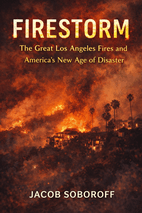
Jacob Soboroff's Firestorm is a deeply personal and investigative account of the 2025 Los Angeles wildfires, the costliest in American history,told by a journalist who watched his own childhood neighborhood burn while reporting live on national television. Weaving together the voices of firefighters, displaced residents, scientists, and political leaders, the book exposes how failures in preparedness, political misinformation, and deep social inequalities all fueled the catastrophe.
Feature
Insta.Page
Blinkist
Shortform
Summary Depth
Full Chapter-by-Chapter
15-min overview
Section-by-section guides
Audio Narration
✓
✓
✓
Visual Mindmaps
✓
✕
✕
AI Q&A
✓
✕
✕
Quizzes
✓
✕
✕
PDF Downloads
✓
✕
✓
Price
$89.99/yr
$146/yr (PRO)
$199/yr
*Competitor data last verified July 2026.
1 Page Summary
Firestorm by Jacob Soboroff
The Disaster Unfolds
On January 7, 2025, journalist Jacob Soboroff received a frantic text from his brother: the Palisades were on fire and his family was evacuating. Soboroff, who grew up in Pacific Palisades, rushed to report from the front lines — only to watch his childhood neighborhood and family home burn in real time. The book provides a minute-by-minute account of both the Palisades and Eaton fires as they tore through Los Angeles, told through the eyes of firefighters, residents fleeing their homes, meteorologists who had warned about tinderbox conditions, and Soboroff himself, struggling to stay professional while his personal world turned to ash.
The Political Firestorm
As the fires raged, a parallel disaster played out in the political arena. Trump spread false claims about water being withheld and repeatedly attacked California's governor, while Elon Musk amplified conspiracy theories on X about the fires being part of a globalist plot. Meanwhile, Governor Newsom scrambled for a cell signal to reach President Biden, and local officials faced scrutiny over emergency preparedness failures. Soboroff documents how powerful figures poured rhetorical fuel on the flames rather than focusing on relief — and how the aftermath exposed deep fissures in LA around inequality, immigration, and corporate investors buying up burned lots instead of displaced residents.
A Warning for the Future
Soboroff's reporting leads him to a sobering conclusion: the 2025 LA fires were not a freak event but a harbinger. Experts he interviewed described them as "the fire of the future" — a preview of what's coming as cities continue expanding into fire-prone wildland areas in a changing climate. The book argues that without a serious reckoning with how and why Los Angeles burned, worse disasters are inevitable. Despite the bleakness, Soboroff finds small moments of hope in community resilience, family bonds forged in crisis, and the birth of his niece weeks after the fires destroyed her parents' home.
Note to Readers
Overview
The chapter opens not with abstract theory, but with visceral, immediate action. It places the reader directly into the passenger seat of a news vehicle racing toward a catastrophe, establishing the personal stakes and chaotic urgency that will define the narrative. This personal memoir of disaster response seamlessly transitions into the scientific and bureaucratic prelude to the crisis, showing how individual experience intersects with systemic preparedness.
A Journalist’s Race into the Inferno
The narrative begins with the author, an NBC News journalist, responding to the initial reports of the Palisades Fire. Driving a rented Jeep Wagoneer at high speed on the dangerous curves of Sunset Boulevard, he is accompanied by producer Bianca Seward and followed by cameraman Jean Bernard Rutagarama. The scene is charged with tension—personal protective equipment slides across the floor, radio chatter is urgent, and a massive, orange-backlit plume of smoke dominates the horizon. The author’s personal connection to the threatened area adds a layer of dread; he is racing toward the neighborhood where he grew up, planning to broadcast from the intersection of Swarthmore and Sunset, a corner filled with childhood memories. The segment closes with his raw, repeated exclamation—“Fuck, dude.”—as they approach a wall of flame, setting the stage for a direct confrontation with the disaster.
The Forecaster Who Saw It Coming
The perspective then shifts four days earlier to the quiet, analytical world of David Gomberg, a lead forecaster for the National Weather Service in Oxnard. His office, humorously compared to Dunder Mifflin from The Office, is the nerve center where data is translated into public warnings. On January 3rd, Gomberg’s analysis of critical conditions—extreme wind gusts, very low humidity, and dangerously dry vegetation—compelled an unusually early “fire weather watch.” This triggered a chain of official preparedness, activating California’s wildfire threat center and leading to the prepositioning of firefighting resources. By the morning of January 6th, Gomberg and his colleague Dr. Ariel Cohen reviewed the unequivocal data. Cohen’s grim pronouncement, “This is going to be horrific,” was both a professional assessment and a gut feeling, confirming that all the scientific indicators pointed to an imminent and severe disaster.
Key Takeaways
The modern disaster experience is framed by a jarring contrast: the chaotic, personal, and sensory reality on the ground versus the calm, data-driven foresight of预警 systems.
Effective emergency response relies on the crucial link between scientific forecasting (like Gomberg’s early warnings) and the activation of bureaucratic and logistical protocols.
The author establishes the “Great Los Angeles Fires” (the Palisades Fire and the impending Eaton Fire) as a defining case study for a new, intensified era of catastrophic events in America.
The narrative is grounded in deep personal stakes, transforming the disaster from a mere news event into a visceral threat to home, memory, and community.
Key concepts: Note to Readers
1. Note to Readers
Narrative Opening: A Journalist's Race into the Inferno
The chapter begins with immediate, visceral action placing the reader in a news vehicle racing toward the Palisades Fire.
The author's personal connection to the threatened neighborhood adds emotional depth and dread to the response.
The scene establishes chaotic urgency through sensory details: protective equipment sliding, urgent radio chatter, and a massive plume of smoke.
The raw, repeated exclamation 'Fuck, dude.' marks the direct confrontation with the disaster, setting the narrative tone.
Scientific Prelude: The Forecaster Who Saw It Coming
Perspective shifts four days earlier to forecaster David Gomberg at the National Weather Service in Oxnard.
Gomberg's analysis of extreme wind, low humidity, and dry vegetation triggered an unusually early 'fire weather watch'.
This scientific warning activated a chain of official preparedness, prepositioning firefighting resources.
The grim professional assessment 'This is going to be horrific' confirmed all indicators pointed to imminent severe disaster.
Core Themes and Takeaways
The modern disaster experience is framed by a jarring contrast: chaotic personal reality vs. calm data-driven foresight.
Effective emergency response relies on linking scientific forecasting to bureaucratic and logistical protocol activation.
The 'Great Los Angeles Fires' serve as a defining case study for a new era of intensified catastrophic events in America.
The narrative is grounded in deep personal stakes, transforming disaster from news event into threat to home and memory.
💡 Try clicking the AI chat button to ask questions about this book!
Maps
Overview
The chapter escalates from a dire meteorological forecast to a hidden, lingering threat, all while grounding the narrative in a personal journey through California’s cultural history. It details the issuance of a rare and severe weather warning for Southern California, juxtaposes this modern alarm with a silent, subterranean fire, and then shifts to the author’s pilgrimage to celebrate a beloved figure who documented the state’s diverse realities, including its fiery dangers.
The "Particularly Dangerous Situation" Warning
At 3:24 p.m. on January 6, 2025, NWS meteorologist David Gomberg transmitted a "Particularly Dangerous Situation" (PDS) Red Flag Warning—a designation reserved for the most extreme forecasts. The warning, marked by urgent, all-caps language and a stark magenta graphic, predicted a catastrophic windstorm for Los Angeles and Ventura counties. It forecast "destructive wind gusts" of 80-100 mph in foothill and mountain areas, widespread power outages, downed trees, and critically low humidity. The alert explicitly compared the coming event to a devastating 2011 windstorm, signaling its historic potential. This warning triggered immediate consultations with emergency managers across the region, launching a coordinated preparedness effort for a predictable atmospheric event.
The Unpredictable Ember: The Lachman Fire
While officials mobilized for the forecasted winds, an entirely unpredictable variable persisted: the Lachman Fire. Unbeknownst to the weather service and fire agencies, the fire was not fully extinguished. It continued to smolder underground, within the root systems of the landscape. Described poetically as resembling a "radiant orange sunset," this hidden fire was a dormant catastrophe waiting for the right conditions. The chapter creates stark tension here: authorities were preparing for a known, large-scale wind event, but the actual ignition source for a potential disaster was already present, quietly alive and vulnerable to being reawakened by the coming winds.
A Personal Interlude: Huell Howser and Fire History
Ninety-five miles away, the author is unaware of either the official warning or the smoldering roots. They are traveling to Orange County to visit a Chapman University exhibit honoring broadcaster Huell Howser, a figure who celebrated everyday Californian life. This personal reflection serves as a narrative bridge and a thematic deepening. Howser’s work, which included an episode at a Los Angeles County Fire Department controlled burn in 1998, represents a historical engagement with fire—not as a looming catastrophe, but as a managed element of the California landscape. The author’s journey to connect with Howser’s archive underscores a search for understanding California’s complex relationship with its environment, even as a new, uncontrolled chapter of that relationship is simultaneously beginning to unfold.
Key Takeaways
The National Weather Service’s PDS warning represents the peak of modern, large-scale environmental forecasting, predicting a historic and destructive wind event with specific, terrifying detail.
In stark contrast, the lingering Lachman Fire is an unpredictable, micro-scale threat that exists completely outside official awareness, highlighting the limits of prediction and control.
The narrative intertwines a imminent crisis with a personal cultural pilgrimage, suggesting that to understand California’s perpetual fire risk, one must consider both hard data and the human stories embedded in the landscape.
Key concepts: Maps
2. Maps
The Official Warning: A Predictable Catastrophe
Issuance of a rare 'Particularly Dangerous Situation' Red Flag Warning for extreme windstorm
Forecast of 80-100 mph winds, power outages, and critically low humidity
Explicit comparison to historic 2011 windstorm, signaling historic potential
Triggered immediate, coordinated emergency preparedness efforts across the region
The Hidden Threat: The Lachman Fire
Fire continued to smolder underground in root systems, unknown to officials
Described as a dormant catastrophe resembling a 'radiant orange sunset'
Created narrative tension between predictable wind event and unpredictable ignition source
Highlighted the limits of official awareness and environmental control
Cultural Context: Huell Howser and California's Fire History
Author's pilgrimage to Chapman University exhibit honoring broadcaster Huell Howser
Howser's work documented California's everyday life, including managed fire practices
1998 episode featured Los Angeles County Fire Department controlled burn
Represents historical engagement with fire as managed element of landscape
Thematic Synthesis: Understanding California's Fire Reality
Juxtaposition of modern forecasting with unpredictable micro-scale threats
Intertwining of imminent crisis with personal cultural pilgrimage
Suggests understanding fire risk requires both hard data and human stories
Highlights California's complex, perpetual relationship with environmental danger
Prologue: “I See Smoke”
Overview
The prologue opens with the chilling account of how the most destructive wildfire in American history began not with a dramatic explosion, but with a nearly week-long, hidden smolder. It traces the path of a single ember from a maliciously set New Year's Day fire, its survival underground, and its terrifying re-emergence driven by shifting winds. This slow-burn ignition sets the stage for a catastrophic event that would intertwine with the author's personal history and mark the beginning of a new era of disaster.
The Hidden Ignition
According to federal prosecutors, the catalyst for the costliest wildfire event in American history was a remnant of the earlier Lachman Fire. A single ember, lost during the initial firefight, nestled into the dry soil and ignited the root system beneath the chaparral. For six days, this underground fire burned unnoticed, even as residents like the author's brother returned to normal life and firefighter Eric Mendoza left for his days off. The threat remained dormant until Tuesday, January 7, 2025, when powerful Santa Ana winds unearthed the fire, giving it new life and allowing it to explode above ground. Captain Jeff Brown's alert, "I see smoke," launched the emergency response to what would become the Palisades Fire.
A Personal Race Toward the Flames
The narrative shifts to the author's frantic, first-person drive toward the burgeoning disaster. Rushing from the NBC bureau in a rented Jeep Wagoneer, he and producer Bianca Seward navigate hazardous roads like "Dead Man's Curve" on Sunset Boulevard, heading directly into the neighborhood where he grew up. The massive, sun-backlit plume of smoke dominates the horizon, replacing the famous sunset with a looming catastrophe. His destination is the intimate corner of Swarthmore and Sunset in Pacific Palisades, a place central to his childhood, chosen as the spot to report on his hometown burning. The drive is fraught with tension, marked by near-misses with traffic and the grim understanding that their protective gear would soon be vital, not just for show.
Converging Catastrophes
Arriving at the scene, the author and his team are immediately met with an overwhelming wall of flames and heat, forcing them to retreat. Their live reporting captures a firestorm exceeding any single department's capacity to control. This chaos is compounded within hours by the eruption of a second, even more destructive blaze across Los Angeles County—the Eaton Fire in Altadena. Together, these simultaneous disasters are framed as the inaugurating events of "America’s New Age of Disaster," a period of escalating crises set to unfold just thirteen days before a pivotal presidential inauguration.
Key Takeaways
Disaster Can Smolder Unseen: The most catastrophic events can begin from the smallest, most hidden sources—a single ember—and develop with patient, terrifying slowness before erupting with full force.
The Personal is Catastrophic: Large-scale disasters are not abstract events; they unfold in people's backyards, childhood neighborhoods, and communities, forcing a deeply personal confrontation with loss.
The New Normal: The prologue establishes that the simultaneous, overwhelming fires are not isolated incidents but rather the beginning of a predicted pattern of escalating, concurrent disasters defining a new era.
Immediate Action vs. Slow Build: There is a stark contrast between the rapid, adrenaline-fueled emergency response and the slow, geological patience of the fire's initial underground development, highlighting how modern disasters challenge traditional response frameworks.
Key concepts: Prologue: “I See Smoke”
3. Prologue: “I See Smoke”
The Hidden Ignition
A single ember from a previous fire smoldered underground for six days, unnoticed
Powerful Santa Ana winds on January 7, 2025, unearthed the fire, allowing it to explode above ground
The slow-burn ignition began the Palisades Fire, which would become the costliest wildfire in American history
The threat remained dormant while residents returned to normal life and firefighters left for days off
Personal Race Toward Disaster
The author frantically drives toward his childhood neighborhood as the fire erupts
The massive smoke plume replaces the famous Pacific Palisades sunset with looming catastrophe
The journey is fraught with tension and hazardous roads, heading directly into the burning area
The destination—Swarthmore and Sunset—holds deep personal significance as his hometown
Converging Catastrophes
Arriving at the scene reveals an overwhelming firestorm exceeding any single department's capacity
Within hours, a second destructive blaze erupts—the Eaton Fire in Altadena
These simultaneous disasters mark the beginning of 'America's New Age of Disaster'
The chaos unfolds just thirteen days before a pivotal presidential inauguration
Thematic Significance
Catastrophic events can begin from small, hidden sources and develop slowly before erupting
Disasters unfold in personal spaces—backyards and childhood neighborhoods—creating intimate confrontations with loss
Simultaneous overwhelming fires represent a new pattern of escalating, concurrent disasters
Modern disasters challenge traditional response frameworks with their slow build and rapid eruption
1. “This Is Going to Be Horrific”
Overview
The chapter introduces us to David Gomberg, a seasoned forecaster at the National Weather Service in Oxnard, California, whose expertise becomes pivotal as ominous data signals an impending wildfire crisis. Through his meticulous analysis, early warnings are issued, escalating to a grave "particularly dangerous situation" alert for a destructive windstorm. The narrative seamlessly blends this professional urgency with personal vignettes—from the author's nostalgic reflection on television icon Huell Howser to neighbor Jake Levine's planned reunion—painting a vivid picture of a community on the brink, unaware of the smoldering threat beneath their feet.
Gomberg's Expertise and Early Actions
David "Dave" Gomberg, with over three decades of experience, works from a modest office in Oxnard, translating complex meteorological data into public forecasts. On January 3, observing critical indicators like high winds, low humidity, and dry fuels, he advocates for an early "fire weather watch." This proactive step triggers California's wildfire response center into action. By January 6, after days of intense monitoring alongside colleague Dr. Ariel Cohen, Gomberg's conviction hardens; Cohen's grim assessment, "This is going to be horrific," underscores the blend of data and instinct guiding their warnings.
The Escalation to Crisis
The situation demands unprecedented urgency. Gomberg's office issues a red flag warning ahead of schedule, prompting fire agencies to pre-position resources. On the morning of January 6, with conditions peaking—gusts over 60 mph, humidity below 10%, and critically low fuel moisture—the decision is made to declare a "particularly dangerous situation" (PDS). At 3:24 p.m., Gomberg personally transmits a detailed, 2,770-word PDS alert, emphasizing life-threatening winds and extreme fire risk across Los Angeles and Ventura counties, comparing it to a devastating 2011 windstorm.
Personal Threads Amidst the Gathering Storm
While officials brace for impact, personal stories unfold. The author, driving to Orange County after a family celebration, reminisces about Huell Howser's immersive 1998 segment on inmate firefighter training, admiring Howser's ability to find significance in everyday moments. Meanwhile, Jake Levine, a climate advisor in the Biden administration, returns to Pacific Palisades for a father-son trip to see the president, unaware that plans might soon unravel. These threads highlight the normalcy that persists even as professional circles sound alarms.
Coordinating the Response
As night falls on January 6, emergency management gears up. Carol Parks, Los Angeles's emergency management general manager, texts police and fire chiefs, noting the activation of the Emergency Operations Center due to the forecasted windstorm and President Biden's upcoming visit. With Mayor Karen Bass abroad, the exchange reflects a calibrated readiness, with chiefs affirming their availability. This coordination underscores the bureaucratic machinery shifting into place, even as the hidden Lachman Fire smolders undetected, waiting to erupt.
Key Takeaways
David Gomberg's seasoned judgment and early warnings were instrumental in preparing for a potentially catastrophic wildfire event.
The "particularly dangerous situation" alert represented a peak in meteorological concern, based on a confluence of extreme weather factors.
Personal narratives, like the author's admiration for Huell Howser and Jake Levine's family plans, humanize the backdrop of impending disaster.
Emergency management protocols activated swiftly, highlighting the structured response to looming threats, yet unpredictability remained with the dormant Lachman Fire.
Key concepts: 1. “This Is Going to Be Horrific”
4. 1. “This Is Going to Be Horrific”
David Gomberg's Meteorological Expertise
Seasoned forecaster with over 30 years of experience at the National Weather Service in Oxnard
Identifies critical indicators: high winds, low humidity, and dry fuels on January 3
Advocates for and issues an early 'fire weather watch', triggering California's wildfire response
Collaborates with colleague Dr. Ariel Cohen, whose grim assessment underscores the severity
Escalation to a Critical Warning
Issues a red flag warning ahead of schedule, prompting pre-positioning of fire resources
Conditions peak on January 6 with gusts over 60 mph and humidity below 10%
Declares an unprecedented 'particularly dangerous situation' (PDS) alert
Personally transmits a detailed 2,770-word PDS warning at 3:24 p.m., comparing risk to a 2011 disaster
Community and Personal Narratives
Author's nostalgic reflection on Huell Howser's 1998 segment about inmate firefighter training
Jake Levine's planned father-son trip to see President Biden in Pacific Palisades
Highlights the normalcy and personal plans persisting alongside professional warnings
Humanizes the backdrop of the impending disaster through individual stories
Emergency Response Coordination
Carol Parks activates Los Angeles's Emergency Operations Center for the windstorm and presidential visit
Police and fire chiefs are alerted and confirm availability despite Mayor Bass being abroad
Demonstrates the bureaucratic machinery shifting into readiness before the fire erupts
The undetected Lachman Fire smolders as official protocols are implemented
2. “Hydrate Up”
Overview
The chapter paints a striking parallel between two groups bracing for the same natural threat under the harsh California sky. In the arid expanse of the Mecca Hills Wilderness, a coordinated security detail battles intensifying Santa Ana winds to secure a presidential proclamation event. Meanwhile, over two hundred miles to the west, a tight-knit crew of Los Angeles firefighters in the idyllic Pacific Palisades monitors the same rising storm, knowing it could turn their community into a tinderbox. Through these dual narratives, the story explores themes of preparedness, the clash between human ceremony and elemental force, and the quiet professionalism of those who stand watch.
As dawn breaks in the desert, the Santa Ana winds already whip through the gathering of law enforcement. Riverside County deputies, U.S. Rangers from the Bureau of Land Management in their distinctive tan uniforms, and Secret Service agents in black bulletproof vests assemble amid a landscape shaped by the San Andreas Fault. Their focus, however, isn't on the "Big One" earthquake today, but on the immediate, gritty reality of a windstorm threatening to derail President Biden's visit to establish Chuckwalla National Monument. The staging area is in disarray—white tents tear from their moorings, porta-potties sway, and sand pelts the shrouded presidential podium. The production team struggles to secure a sign behind a bulletproof shield, and an American flag twists on its scaffolding. The National Weather Service's forecast of a "particularly dangerous" storm looms, casting doubt on the day's plans and offering a raw preview of the powerful winds racing toward Los Angeles.
Simultaneously, in the coastal community of Pacific Palisades, veteran firefighter Eric Mendoza begins his shift at the coveted Station No. 69, known affectionately as "Sixty-Nines." With nearly three decades of service, Mendoza now considers himself one of the "old-timers" he once admired, proud to work in a station that feels like a "boys’ club" and a community pillar. As the crew gathers in the kitchen for their morning lineup, the sound of the wind outside echoes the chaos unfolding in the desert. They discuss a detailed and alarming Red Flag Warning issued by the National Weather Service, specifically highlighting the mountains above them. The warning predicts sustained winds of 35 to 50 mph with gusts up to 100 mph, single-digit humidity, and a high risk for rapid fire spread, downed power lines, and widespread outages.
The firefighters immediately shift into a mode of seasoned readiness. They remind each other to "hydrate up," check that their gear packs are prepared, and ensure all equipment is properly stowed on their vehicles—the pump, the ladder truck, and the rescue rig. For Mendoza, working a 24-hour shift, this preparedness is routine yet critical. The chapter closes with the crew driving down Temescal Canyon Boulevard toward the Pacific Coast Highway for morning exercise, their vehicles loaded and their senses alert, embodying a state of poised anticipation for whatever the dangerous winds might bring.
Key Takeaways
The narrative expertly juxtaposes the high-stakes, planned world of a presidential security detail with the routine vigilance of urban firefighters, both united by the threat of an approaching Santa Ana windstorm.
It highlights the profound impact of environmental forecasts on human activity, showing how a single weather warning can dictate actions from canceling a national event to preparing for potential community evacuation.
Through Eric Mendoza's perspective, we gain insight into the camaraderie and deep-seated professionalism within fire stations, where advice like "hydrate up" underscores a culture of mutual care and operational readiness.
The detailed description of the Red Flag Warning serves not just as a plot device but as a sobering reminder of the specific, life-threatening conditions that define fire weather in Southern California.
The chapter sets a tense, atmospheric stage, emphasizing vulnerability to natural forces and the dedicated individuals who stand as first lines of defense.
Key concepts: 2. “Hydrate Up”
5. 2. “Hydrate Up”
Dual Narratives: Parallel Threats
Contrasts a presidential security detail in Mecca Hills with firefighters in Pacific Palisades
Both groups face the same intensifying Santa Ana windstorm
Highlights themes of preparedness and professionalism against elemental force
The Mecca Hills Security Operation
Multiple agencies (Riverside County, U.S. Rangers, Secret Service) secure a presidential proclamation event
Windstorm threatens to derail President Biden's visit to establish Chuckwalla National Monument
Physical disarray: tents tearing, porta-potties swaying, sand pelting the podium
National Weather Service forecast of a 'particularly dangerous' storm casts doubt on plans
Fire Station 69: Routine Vigilance
Veteran firefighter Eric Mendoza and crew at Pacific Palisades Station No. 69
Immediate discussion of detailed Red Flag Warning for their area
Warning predicts extreme winds (gusts to 100 mph), single-digit humidity, high fire risk
Crew embodies deep-seated professionalism and community protection role
Culture of Preparedness
Firefighters' immediate shift to 'seasoned readiness' mode
Routine yet critical 24-hour shift preparations for Mendoza
Mutual care and operational readiness as core cultural values
Atmospheric Tension & Foreshadowing
Wind serves as connecting element between desert and coast narratives
Chapter closes with crew driving alertly, in 'poised anticipation'
Sets stage for vulnerability to natural forces and dedicated response
Red Flag Warning serves as sobering plot device and real-world threat reminder
4. “I Should Go”
Overview
What begins as a routine morning of news monitoring is shattered by two disruptive forces: the political winds from a presidential news conference and the very real, ferocious Santa Ana winds howling through Southern California. These winds first cancel a presidential event and then reignite a smoldering fire above Pacific Palisades, triggering an immediate and massive firefighting response. As crews like those from Station 69 scramble uphill, the crisis becomes terrifyingly personal for the author, whose brother texts that the family is evacuating from the path of the growing inferno.
Watching the news, the author sees his childhood neighborhood engulfed and recognizes the perfect storm of conditions for disaster. The response escalates regionally, with veteran firefighters from across the basin converging on a surreal scene where air tankers scoop seawater to battle the flames. On the ground, however, the situation devolves into pure pandemonium. The sole evacuation route becomes completely gridlocked, trapping residents who flee on foot and immobilizing even command vehicles. As top fire chiefs coordinate a desperate mutual-aid command post, the crisis overloads the system.
For the author, the abstract news story violently collides with personal history when a live broadcast shows children evacuating his old preschool and flames threatening iconic neighborhood landmarks. This visceral connection transforms professional observation into a compelled mission. Declaring “I should go,” he overcomes logistical hurdles and a personal reluctance to cover fires, securing gear and transportation. The chapter closes with this decisive pivot, as the distant journalist becomes a committed participant, drawn into the heart of the disaster striking his home.
A Routine Morning Interrupted
The author begins a typical Tuesday at the NBC bureau in Los Angeles, half-listening to a news conference by President-elect Trump as he searches for story ideas. Trump’s comments attacking windmills near Palm Springs spark the idea for a potential fact-checking piece. As the author researches, a parallel drama unfolds: President Biden’s planned event to designate the Chuckwalla National Monument is canceled due to dangerously high winds in the Coachella Valley, forcing staff and Governor Gavin Newsom to scramble.
Unbeknownst to the author, those same ferocious Santa Ana winds are reigniting a smoldering fire in the Santa Monica Mountains above Pacific Palisades. Firefighters from Station 69, finishing a beach workout, spot the smoke and race uphill. Captain Jeff Brown’s urgent radio call for “thirty, forty, fifty fire engines right now” signals this is no ordinary brush fire. Governor Newsom, already en route back to Los Angeles, redirects his caravan toward the new blaze after receiving word of its ignition.
The Fire Escalates and a Family Evacuates
The narrative shifts to the firefight’s initial stages. Firefighter Eric Mendoza and his crew from Station 69 focus on structure protection in the Palisades Highlands, believing they have the situation contained. Meanwhile, the author’s personal world collides with the disaster when a text from his brother, Miles, appears in a family group chat: “Big Palisades fire. We are evacuating.” A photo shows a terrifying plume of smoke near his brother’s home.
Watching the local news coverage in his office, the author sees the horrifying scale of the fire, which quickly grows from a reported 2 to 20 acres. The footage reveals an inferno that looks like a bomb has gone off in his childhood neighborhood. He frantically tries to convey the personal stakes to his newsroom colleagues, who are mobilizing for coverage. Expert analysis on TV underscores the extreme danger, with dry vegetation and high winds creating a perfect storm for rapid, uncontrollable spread.
Converging Paths Toward the Inferno
The perspective broadens to show the regional response mobilizing. Veteran firefighter James Stratton and his crew from Manhattan Beach, sensing the severity of the wind event, proactively prepare and are soon dispatched north. As they race up the freeway, the enormous, moving plume of smoke confirms their fears of a major incident. The scene they encounter—air tankers (Super Scoopers) dipping into the ocean for water—feels surreal, like a disaster movie coming to life.
The chapter concludes with multiple threads converging on the fire: firefighters from different agencies speeding toward the flames, the governor altering his travel to assess the crisis, and the author, a journalist, now personally and professionally gripped by the disaster unfolding in his own community. The initial, isolated incidents of wind-related disruptions have exploded into a shared, urgent reality.
The Descent into Chaos
The situation rapidly deteriorates on the ground. Reporter Karma Dickerson broadcasts a scene of "pure pandemonium" at the base of the Palisades, where Palisades Drive—the sole escape route—is utterly gridlocked. Terrified residents abandon their vehicles, fleeing on foot with pets and suitcases as fire engines from across Los Angeles (Threes, Ninety-Eights, Fives) struggle to move uphill against the tide of evacuation. The imagery is visceral: a blaring smoke alarm, dark-brown smoke shrouding neighborhoods, and palm trees igniting like matchsticks from wind-blown embers.
A System Under Strain
The crisis quickly overwhelms local command. A civilian desperately offers to help direct traffic, but an LAFD assistant chief, trapped in his own command vehicle, can only urge that police allow a "free flow" of escaping residents. The scale of the disaster becomes clear in a text exchange between the top fire chiefs of Los Angeles, Ventura, and Orange counties. A photograph from LA County Fire Chief Anthony Marrone shows the smoke plume growing "wider and darker." LAFD Chief Kristin Crowley’s plea is stark: "Starting to lose homes and people trapped." A mutual-aid command post is established at Will Rogers Beach as resources mobilize.
A Personal Vortex
For the narrator, watching from a distance, the crisis transforms from a news story into a personal nightmare. As a news crew drives up Temescal Canyon Road, the broadcast captures familiar landmarks: the mural of the Chumash and Tongva people, and Kehillat Israel synagogue, where the narrator attended preschool. Seeing children stream out of that preschool, fleeing the fire, triggers a profound reaction. The narrator immediately texts their family, calling the scene a "total shitshow," and then walks into their bureau chief's office with a decisive statement: "I should go. I grew up in the Palisades."
The Decision to Act
Despite logistical hurdles—other correspondents are already deployed and no camera crew is available—the bureau chief, Polly Powell, springs into action. She tasks a colleague with securing a rental car and confirms the bureau has extra fire gear, as the narrator's own gear is buried in storage, a subconscious rejection of fire coverage until this moment. The professional and the personal have collided, compelling action.
Key Takeaways
Panic and Gridlock: The evacuation descends into chaos, with the single escape route completely paralyzed, forcing residents to flee on foot amid advancing flames.
Systemic Overload: Even command-level emergency vehicles are immobilized, and fire chiefs across counties coordinate a massive mutual-aid response as the fire outpaces local resources.
The Personal is Professional: For the narrator, the crisis shifts from an abstract event to a deeply personal one upon recognizing childhood landmarks and seeing their community in peril, catalyzing the decision to return and report.
Moment of Commitment: The chapter culminates in the narrator's assertive decision to deploy, overcoming both logistical barriers and a personal aversion to fire coverage to respond to the disaster hitting home.
Key concepts: 4. “I Should Go”
6. 4. “I Should Go”
The Santa Ana Winds Trigger Dual Crises
President-elect Trump's windmill comments spark a potential news story
President Biden's Chuckwalla National Monument event is canceled due to dangerous winds
The same winds reignite a smoldering fire above Pacific Palisades
Station 69 firefighters spot the smoke and urgently call for massive resources
Governor Newsom redirects his caravan toward the new blaze
Personal Collision with the Disaster
The author's brother texts that the family is evacuating as the fire grows
Local news reveals the horrifying scale engulfing the author's childhood neighborhood
The author struggles to convey personal stakes to newsroom colleagues
Expert analysis confirms a 'perfect storm' of dry vegetation and high winds
The abstract news story becomes viscerally personal through live broadcasts
Regional Firefighting Response Mobilizes
Veteran crews like James Stratton's proactively prepare and race toward the fire
The enormous, moving smoke plume confirms a major incident
Surreal scene of air tankers (Super Scoopers) dipping into the ocean for water
Multiple agencies and the governor converge on the growing inferno
Initial wind disruptions explode into a shared, urgent regional reality
Ground Zero Descends into Pandemonium
Sole evacuation route (Palisades Drive) becomes completely gridlocked
Terrified residents abandon vehicles and flee on foot with pets and belongings
Fire engines struggle to move uphill against the tide of evacuation
Visceral imagery: blaring smoke alarms, dark-brown smoke, palm trees igniting
The crisis overloads the system, creating 'pure pandemonium' at the base
The Journalist's Decisive Pivot
Professional observation transforms into a compelled personal mission
The author declares 'I should go' to cover the disaster striking his home
He overcomes logistical hurdles and a personal reluctance to cover fires
Secures gear and transportation to become a committed participant
The distant journalist is drawn into the heart of the disaster
A System Under Strain
Local emergency command is overwhelmed, with even an LAFD assistant chief trapped in his vehicle.
A civilian offers to direct traffic as the evacuation route becomes paralyzed.
Fire chiefs across counties coordinate via text, with LA County's chief noting the smoke plume growing 'wider and darker.'
LAFD Chief Kristin Crowley reports losing homes and people trapped, signaling the fire's rapid escalation.
A mutual-aid command post is established at Will Rogers Beach to mobilize regional resources.
A Personal Vortex
The narrator's perception shifts from a distant news story to a personal nightmare as familiar landmarks appear on broadcast.
Recognition of childhood sites—a Chumash and Tongva mural and Kehillat Israel synagogue—triggers a visceral connection.
Seeing children evacuate from the preschool they attended heightens the emotional impact.
The narrator immediately texts family, describing the scene as a 'total shitshow.'
Personal history compels the decisive statement to their bureau chief: 'I should go. I grew up in the Palisades.'
The Decision to Act
Bureau chief Polly Powell quickly mobilizes support despite logistical hurdles like no available camera crew.
A colleague is tasked with securing a rental car for the narrator's deployment.
The bureau provides extra fire gear, as the narrator's own is buried—a sign of previous avoidance of fire coverage.
Professional duty and personal attachment collide, overriding past reluctance.
The narrator's assertion transforms a logistical challenge into an immediate, actionable plan.
Key Takeaways
Evacuation chaos leads to gridlock, forcing residents to flee on foot as flames advance.
Emergency systems are overloaded, requiring multi-county mutual-aid coordination.
The crisis becomes personal when childhood landmarks and community are threatened, driving professional action.
A moment of commitment overcomes both logistical barriers and personal aversion to fire reporting.
You've reached the end of the free chapters
Chapter 7 is locked
Keep reading Firestorm — and unlock all 600+ book summaries with audio, mindmaps and AI Q&A.
$0.00 due today · 7 days free, then $89.99/year ($7.49/mo) · Cancel anytime before day 7
Jacob Soboroff is an American journalist and NBC News correspondent known for his coverage of immigration and border issues. He is the author of "Separated: Inside an American Tragedy," which details the Trump administration's family separation policy, and he previously served as a host and correspondent for MSNBC and NowThis News.
📚 Explore Our Book Summary Library
Discover more insightful book summaries from our collection