Firestorm Key Takeaways
by Jacob Soboroff
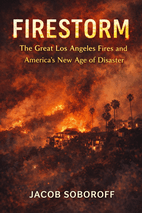
5 Main Takeaways from Firestorm
Modern Disaster Forecasting Clashes With On-The-Ground Chaos
The book contrasts precise meteorological warnings, like the PDS alert, with the unpredictable reality of fires like Lachman and the gridlock during evacuations. This gap highlights how even the best science can be overwhelmed by the sheer chaos of a crisis, forcing responders to adapt in real-time.
Catastrophic Events Strike at the Heart of Personal and Community Identity
Soboroff grounds the disaster in personal stakes, from childhood neighborhoods threatened to family plans disrupted. This transforms statistical risks into urgent, emotional experiences, reminding us that disaster response must account for human attachment to place.
Concurrent and Intensifying Disasters Define a New Era of Catastrophe
The simultaneous Palisades and Eaton fires are not anomalies but part of a predicted pattern. The book argues that climate change and urban expansion have created a 'new normal' where multiple, overwhelming events test the limits of response systems.
Bridging Scientific Warnings to Bureaucratic Action Saves Lives
Key figures like David Gomberg translate complex forecasts into activated protocols, such as mutual-aid responses and evacuations. This crucial link between data and deployment is what enables communities to prepare before disaster strikes.
Human Instinct and Local Knowledge Remain Essential in Systemic Overload
When systems fail, as in the gridlocked evacuation, personal decisions—like the author's choice to return—become vital. The book shows that alongside technology, the camaraderie of first responders and residents' intimate understanding of their environment are irreplaceable assets.
Executive Analysis
Jacob Soboroff's 'Firestorm' argues that in an age of escalating disasters, survival hinges on the tense interplay between advanced forecasting, bureaucratic protocols, and human resilience. The five takeaways together reveal a central thesis: while technology provides crucial warnings, the chaos of real-world crises exposes gaps that only coordinated action and personal commitment can bridge.
This book matters as a gripping case study for the climate change era, blending narrative journalism with urgent insights into disaster management. It sits at the intersection of environmental science, policy, and human story, offering vital lessons for policymakers, first responders, and anyone seeking to understand our vulnerability and strength in the face of catastrophe.
Chapter-by-Chapter Key Takeaways
Note to Readers (Chapter 1)
The modern disaster experience is framed by a jarring contrast: the chaotic, personal, and sensory reality on the ground versus the calm, data-driven foresight of预警 systems.
Effective emergency response relies on the crucial link between scientific forecasting (like Gomberg’s early warnings) and the activation of bureaucratic and logistical protocols.
The author establishes the “Great Los Angeles Fires” (the Palisades Fire and the impending Eaton Fire) as a defining case study for a new, intensified era of catastrophic events in America.
The narrative is grounded in deep personal stakes, transforming the disaster from a mere news event into a visceral threat to home, memory, and community.
Try this: Chapter 1: Ground emergency planning in both data-driven forecasts and personal community stakes to ensure protocols resonate when crisis hits.
Maps (Chapter 2)
The National Weather Service’s PDS warning represents the peak of modern, large-scale environmental forecasting, predicting a historic and destructive wind event with specific, terrifying detail.
In stark contrast, the lingering Lachman Fire is an unpredictable, micro-scale threat that exists completely outside official awareness, highlighting the limits of prediction and control.
The narrative intertwines a imminent crisis with a personal cultural pilgrimage, suggesting that to understand California’s perpetual fire risk, one must consider both hard data and the human stories embedded in the landscape.
Try this: Chapter 2: Integrate large-scale environmental forecasts with vigilant on-the-ground monitoring of micro-threats to capture the full spectrum of risk.
“I See Smoke” (Prologue)
Disaster Can Smolder Unseen: The most catastrophic events can begin from the smallest, most hidden sources—a single ember—and develop with patient, terrifying slowness before erupting with full force.
The Personal is Catastrophic: Large-scale disasters are not abstract events; they unfold in people's backyards, childhood neighborhoods, and communities, forcing a deeply personal confrontation with loss.
The New Normal: The prologue establishes that the simultaneous, overwhelming fires are not isolated incidents but rather the beginning of a predicted pattern of escalating, concurrent disasters defining a new era.
Immediate Action vs. Slow Build: There is a stark contrast between the rapid, adrenaline-fueled emergency response and the slow, geological patience of the fire's initial underground development, highlighting how modern disasters challenge traditional response frameworks.
Try this: Prologue: Cultivate vigilance for subtle, slow-building warning signs in your environment, as catastrophic events often begin from hidden sources.
1. “This Is Going to Be Horrific” (Chapter 3)
David Gomberg's seasoned judgment and early warnings were instrumental in preparing for a potentially catastrophic wildfire event.
The "particularly dangerous situation" alert represented a peak in meteorological concern, based on a confluence of extreme weather factors.
Personal narratives, like the author's admiration for Huell Howser and Jake Levine's family plans, humanize the backdrop of impending disaster.
Emergency management protocols activated swiftly, highlighting the structured response to looming threats, yet unpredictability remained with the dormant Lachman Fire.
Try this: Chapter 3: Heed early warnings from experienced professionals and ensure personal preparedness plans are flexible enough to adapt to official alerts.
Next chapter: “2. “Hydrate Up”” is locked
Keep learning from Firestorm — and unlock all 600+ book summaries with audio, mindmaps and AI Q&A.
$0.00 due today · 7 days free, then $89.99/year ($7.49/mo) · Cancel anytime before day 7
plus sales tax where applicable