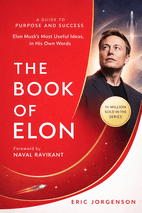
Musk builds rockets by blowing them up until they work. Then he builds cars, satellites, and brain implants the same way. Eric Jorgenson's book The Book of Elon breaks down this method into 12 chapters about thinking from first principles, working with a clear mission, and moving with extreme urgency. This free summary covers all 12 chapters. It includes audio narration, an interactive mind map, and an AI you can ask questions about the book.
Feature
Insta.Page
Blinkist
Shortform
Summary Depth
Full Chapter-by-Chapter
15-min overview
Section-by-section guides
Audio Narration
✓
✓
✓
Visual Mindmaps
✓
✕
✕
AI Q&A
✓
✕
✕
Quizzes
✓
✕
✕
PDF Downloads
✓
✕
✓
Price
$89.99/yr
$146/yr (PRO)
$199/yr
*Competitor data last verified July 2026.
1 Page Summary
In "The Book of Elon: A Guide to Purpose and Success," author Eric Jorgenson distills the principles, strategies, and mental models of Elon Musk into a practical guide for entrepreneurs and innovators. The central thesis is that Musk's extraordinary success across multiple industries is not a product of luck but of a replicable system of thinking and operating. Jorgenson organizes this system around key concepts such as first principles reasoning, a relentless focus on mission-critical tasks, and an obsessive drive to accelerate technological progress for humanity's benefit. The book argues that by understanding and applying these foundational ideas, individuals can cultivate a similar mindset aimed at solving grand challenges and achieving outsized impact.
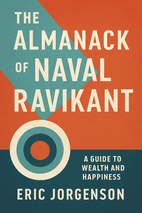
Jorgenson's approach is distinctive in its structured, principle-based analysis, moving beyond biography to create a functional manual. He builds upon the format he popularized with "The Almanack of Naval Ravikant," compiling Musk's most insightful quotes, interviews, and company histories into coherent frameworks and actionable advice. The book is meticulously researched, drawing from decades of public material to extract timeless lessons on product development, company building, and personal resilience. This transforms the narrative from a simple chronicle of events into a toolkit for ambitious thinkers, emphasizing the "how" and "why" behind Musk's decisions rather than just the "what."
The intended audience is broad but specifically targets aspiring founders, engineers, and anyone seeking to inject more purpose and exponential thinking into their work and life. Readers will gain a clarified understanding of how to break down complex problems, maintain momentum in the face of extreme adversity, and align daily efforts with a long-term, meaningful mission. Ultimately, Jorgenson presents Musk not merely as an icon to be admired, but as a case study in applied philosophy, offering a roadmap for those who wish to build the future themselves.
Living a Purposeful Life
Overview
What makes a life meaningful? The answer is a relentless drive to contribute. Reject a passive existence. Instead, ask yourself one powerful question every day: "How can I be useful today?" True success isn't personal glory. It's achieving a positive net impact—creating more for the world than you take. This usefulness can look different for everyone. You might help a few people deeply, or many people in smaller ways. The core idea is to follow your passion into work that genuinely adds value.
This pursuit of usefulness connects to a larger mission: fighting for the future. A better tomorrow won't happen on its own. We have to build it. This means finding the most important frontiers for human progress—like sustainable energy, space exploration, and the internet—and using your skills to push them forward. The goal is to raise the odds of a positive future for humanity, one with more happiness, a wider reach, and a deeper understanding of reality.
This takes more than good intentions. It requires an obsessive nature and a willingness to accept personal sacrifice. The most impactful work comes from a real desire to solve a problem, not from chasing titles or money. When you love what you do, the long hours and intense focus become sustainable fuel. They let you move faster than a normal work ethic allows. This path has costs, including long periods of pain and all-consuming effort. But it's presented as the necessary price for changing the world.
Such an ambitious journey brings fear and high stakes. The advice is to confront that fear directly, and let the mission's importance push you forward. It can be freeing to honestly accept the real odds of failure. You can then proceed with the mindset that the effort is worth it, even if you personally lose. Perseverance becomes a simple, stubborn refusal to quit on what you believe must be done.
Beneath all this—the drive for utility, the fight for the future, the obsessive work—is a basic curiosity about our existence. We still don't know the meaning of life or how consciousness works. The logical path forward is to expand our collective consciousness. By growing humanity, boosting our intelligence, and becoming a multiplanetary species, we give future generations better tools to ask questions of the universe. This broad philosophy of curiosity is the core reason for the entire effort.
Finally, the chapter points out that these ideas are shared through modern, long-form podcasts. These extended conversations provide a direct way to explain this complex worldview. They build a sense of authentic, urgent mission, framing huge projects as essential steps in human progress.
The Path to Usefulness
The chapter challenges you to reject ordinary expectations and choose to be extraordinary. The central theme is the need to be useful. Success is measured not by fame, but by how many useful things you can do. Make your daily question: "How can I be useful today?" This is a hard goal—to give more to society than you take, aiming for a positive net contribution. Great respect goes to anyone, in any field, who does honest, useful work for others.
You can look at usefulness with simple math: total positive impact equals the number of people helped, times the average help each person gets. From this view, a product that helps a few people a lot is as valuable as one that helps many people a little. The core advice is to follow your heart toward work you love, but make sure that work is truly useful, adding more to the world than it takes.
The Compulsion to Shape Tomorrow
The focus then shifts to a long-term, almost existential motivation: fighting for the future. The argument is that a good future must be actively built; it won't just arrive. The author's driving curiosity is about understanding the universe and life's meaning. He believes that advancing the world's knowledge and expanding the "scope and scale of consciousness" is the only way forward to ask better questions.
This led him, even in college, to pick key areas vital for humanity's future: the internet, sustainable energy, and space exploration. He also saw AI and genetics as important, but more uncertain. His main skill is using technology to help humanity, creating things where the output is worth more than the input. The future is seen as a set of probabilities. The goal is to take actions that improve the odds of a good outcome—to increase human happiness, ensure our future, and understand reality.
The Anatomy of Obsession
Next, the text looks at what it takes to succeed at big, useful projects. A critical piece of advice is to not start a company just for money or a title. Instead, build something useful that you wish existed. You're more likely to succeed if you work where your talents and passions meet.
A key trait for this work is being obsessive about quality. Loving what you do is a huge advantage because you think about it all the time. This makes the hard work and sacrifice feel worth it. The author is honest about the personal cost: his journey involved long periods of intense pain, a driving anger, and working eighty to one hundred hours a week. He says world-changing things don't happen on a forty-hour workweek. He uses simple math to show how that intense effort speeds things up. He briefly admits that even he might tell his younger self to sometimes "smell the roses."
Confronting Fear and Uncertainty
This obsessive pursuit always meets fear and doubt. The advice is to look fear directly in the eye, which makes it less powerful. Feeling fear is normal and even healthy. The key is to let the mission's importance push you forward anyway. A degree of fatalism—accepting the real chances of failure—can help. When starting SpaceX, for example, he accepted a more than 90% chance of losing everything. But he felt any progress made would still be valuable for the next people who tried.
Perseverance is framed not as finding strength, but as simply refusing to quit on something important. The mindset is: "This must get done. We will keep doing it or die trying."
The Ultimate Question
This section ends with the core question behind everything else: seeking the nature of the universe. The author admits we don't know the meaning of life. But he argues we must expand humanity and consciousness to have any hope of finding answers. Civilization is only about 5,000 years old. We are at the very beginning. If it lasts a million years, future humans will see us as primitive.
From a physics view, we understand the steps from hydrogen gas to conscious beings. But how consciousness itself emerges is still a deep mystery. The goal, then, is to expand the scope and scale of collective consciousness—through more people, digital intelligence, and becoming a multiplanetary species. This will help us learn what questions to ask of the universe. This "philosophy of curiosity" is presented as the logical path forward for humanity.
The Podcast as a Modern Pulpit
The citations show Musk often uses long-form podcast conversations for public communication. He goes on shows like the Joe Rogan Experience and the Lex Fridman Podcast. These aren't just promotional stops. They are long, casual talks where he explains his core philosophy. In these settings, away from short sound bites, he talks about the reasons for his projects. He discusses why we need to become a multi-planetary species, his worries about AI, and the nature of consciousness.
This choice of platform is deliberate. It lets him skip traditional media and talk directly to a wide audience. He can explain complex technical and philosophical ideas in a real conversation. In these discussions, he often seems very open. He shares personal worries, moments of doubt, and strong beliefs about humanity's future. This approach builds a story of authenticity and urgent purpose. It frames his huge projects not just as businesses, but as necessary steps for human progress.
Key Takeaways
Elon Musk uses long-form podcast interviews as a main way to share his life philosophy and the reasons for his companies in detail.
In these talks, he consistently puts his work—from SpaceX to Neuralink—in bigger contexts, like species survival and the future of consciousness.
This direct audio approach helps create a public image of authenticity and deep belief. It supports the idea that his companies are driven by purpose, not just profit.
Key concepts: Living a Purposeful Life
1. Living a Purposeful Life
Core Philosophy: Be Useful
Measure success by positive net impact
Daily question: How can I be useful today?
Follow passion into genuinely valuable work
Ultimate Mission: Fight for the Future
Actively build a better tomorrow
Focus on key frontiers for human progress
Raise the odds of a positive future
Required Mindset: Obsessive Nature
Solve problems from genuine desire, not titles
Love for work fuels sustainable intense effort
Accept personal sacrifice as necessary cost
Overcoming Obstacles: Confront Fear
Look fear directly in the eye
Let mission's importance drive you forward
Accept real odds of failure with fatalism
Foundational Curiosity: Meaning of Life
Expand collective consciousness
Grow humanity to ask better questions
Boost intelligence and become multiplanetary
Framework for Impact
Impact = Number helped × Average help given
Help few deeply or many in smaller ways
Output must be worth more than input
Path to Action
Build something useful you wish existed
Work where talents and passions meet
Reject ordinary expectations for extraordinary
💡 Try clicking the AI chat button to ask questions about this book!
Think like a Physicist
Overview
Adopt the physicist’s relentless commitment to truth over comfort. It’s not about being perfect from the start, but about rigorously and rapidly adapting when reality corrects your assumptions. Physical law is an uncompromising judge. The primary tool for this is first-principles thinking. Instead of reasoning by analogy and doing what’s always been done, this method breaks problems down to their fundamental truths and builds solutions from the ground up. It’s what allowed breakthroughs like reimagining battery and rocket costs by ignoring conventional pricing and instead calculating the raw value of their atoms.
Another powerful tactic is thinking in limits, or scaling a problem to its extremes to see what’s truly possible. Wondering if tunnels could ever solve traffic? Consider that depth has no practical limit, revealing a theoretical path to a solution. Facing a high part cost? Ask what its price would be at a million-unit scale; if it’s still high, the issue is design, not volume. This oscillates between what’s possible now and what the theoretically perfect arrangement of atoms would be.
This truth-seeking process is fueled by a commitment to be less wrong over time. It requires proportional belief—matching your confidence to the evidence—and an aggressive, structured approach to learning. This means reading voraciously for a high information intake, building a knowledge tree of fundamental principles to support new details, and constantly conversing with experts to overcome self-imposed learning limits.
Ultimately, these mental models serve a grander, more decisive purpose: engineering. While physics reveals truth, it’s engineering that builds the tools to act on it and truly advances civilization. History shows that engineering is often the ultimate strategic advantage; a decisive technological edge can render traditional tactics, numbers, and even leadership obsolete, turning conflicts into technology race wars. In business, this translates to a blunt reality: ideas are cheap. Real innovation and value aren’t found in the idea, but in the excruciatingly difficult work of execution—the hardcore engineering and manufacturing that transforms concepts into tangible, world-changing products and sustainable enterprises.
The Hyperrational Foundation
The core of this mindset is a relentless, almost pathological obsession with truth. This pursuit of provable, predictive truth is what drew the author to physics, which he describes as "law," while "everything else is a recommendation." This foundational commitment demands rigorous self-analysis to combat innate human tendencies like wishful thinking, which is identified as a major source of error in business and life. The real test, especially for a startup, is not initial perfection but the speed and rigor with which it adapts to feedback and adversities that reveal the truth. Physics is a "harsh judge"; if your beliefs are incompatible with physical law, failure is inevitable.
First-Principles Thinking: Building from the Ground Up
To escape conventional thinking and achieve breakthroughs, one must employ first-principles reasoning. This is contrasted with the more common "reasoning by analogy," where decisions are based on what is similar to past actions or what others are doing. While useful for daily life, analogical reasoning only produces slight iterations and is bound by convention.
The first-principles method involves:
Identifying Axioms: Determining the most fundamental truths you are confident in.
Reasoning Upward: Constructing conclusions logically from that base.
Validation: Checking those conclusions against the foundational axioms.
This approach was applied to two monumental challenges:
Tesla's Batteries: Instead of accepting the historical high cost of batteries (~$600/kWh), the materials (cobalt, nickel, aluminum, etc.) were broken down to their raw commodity value (~$80/kWh), proving a massive cost reduction was physically possible.
SpaceX's Rockets: Rejecting the analogy that "all rockets have been expensive," the rocket was deconstructed to its basic raw materials (aluminum, titanium, etc.). The "magic wand number"—the cost if atoms could be magically arranged into a rocket—revealed that finished rockets cost 50 to 100 times their material value. This led to the "Idiot Index," a metric to identify parts with absurdly high markup due to inefficient design or manufacturing, targeting them for innovation.
Thinking in Limits: Scaling to Extremes
Another powerful physics tool is to consider a problem at its theoretical extremes—very large or very small scales—to reveal fundamental constraints or opportunities.
The Boring Company: Applied to traffic, the "limit" thinking challenges the assumption that tunnels will fill up. There's no practical limit to depth, so a 3D tunnel network could, in theory, alleviate any amount of congestion. The focus then shifts to the first-principles analysis of tunneling cost, identifying factors (tunnel diameter, machine idle time, power limits) that could be pushed to achieve an order-of-magnitude improvement.
Manufacturing & Design: When a part is expensive, ask: "If we produced a million units a year, would it still be expensive?" If yes, the problem is design, not volume. In design, one should oscillate between two limits: what can be built with existing tools, and what the "theoretically perfect" arrangement of atoms would be for the ideal product, then work to bridge that gap.
Aspire to Be Less Wrong
The goal is not to be right, but to be "less wrong" over time. This requires cultivating a mindset of proportional belief—holding convictions that match the available evidence. A key strategy for this is the aggressive pursuit of knowledge:
Read Voraciously: Reading provides a much higher "data rate" for information intake than listening.
Build a Knowledge Tree: Understand fundamental principles (the trunk and branches) before diving into details (the leaves), so information has a structure to "hang on to."
Explore Broadly: From encyclopedias to historical strategy games, broad exploration helps map the "knowledge landscape" and understand the sequential stages of technological and civilizational development.
Talk to Experts: Self-education through books and conversations with knowledgeable people across fields is a powerful way to overcome self-imposed limits on learning. The author's foundational knowledge in rocketry, for instance, was built from library books and cold-calling experts for old engine manuals.
The Decisive Power of Engineering
Arthur C. Clarke famously said that advanced technology is indistinguishable from magic. To truly advance civilization, you must address its limiting factor. Physics seeks fundamental truths, but it relies on engineering to create the new tools and data necessary for progress. Without engineering breakthroughs like Galileo’s telescope, scientific discovery hits a wall. Engineering is the foundational force that unlocks potential, making it more critical for advancement than pure science alone.
Engineering Wins Wars
Engineering is the ultimate strategic advantage in conflict, a factor often underplayed in classical strategic thought. When a significant technological disparity exists, it renders traditional advantages in numbers, tactics, or leadership nearly irrelevant.
Historical examples anchor this thesis. The Romans achieved dominance not just through discipline but through superior engineering—from stronger martensitic steel swords that could bend their opponents' blades to a network of roads that enabled rapid army movement. Conversely, they faced defeat when confronted with a superior technology they couldn't counter, such as the Scythians' mounted archers.
The pace of innovation becomes the critical variable. The technological arms race of World War II, particularly in fighter and bomber design, is highlighted as a constant game of "rock-paper-scissors" where rapid iteration dictated aerial supremacy. The ultimate example is the nuclear bomb, presented as the definitive "super weapon" where simply being first was synonymous with victory. The Manhattan Project is framed not as a government initiative but as a creation of the physics community, driven by the urgent engineering imperative to build it first.
The conclusion is stark: in an era of rapid technological change, modern wars are "technology race wars." An overwhelming technological advantage guarantees a lopsided victory, fundamentally changing the calculus of conflict.
Engineering Creates Value
Shifting from historical warfare to modern enterprise, the perspective turns personal and applied. It challenges the romantic notion of the "idea guy," stating plainly that innovation is not the problem—execution is. Ideas are described as "trivial" and "nearly irrelevant" compared to the "excruciating pain" of production, manufacturing, and achieving cash flow positivity.
True value, it argues, is built only by "doing hard work to solve tough problems." Tesla is offered as a primary case study: its worth is derived from its mastery of "hardcore" engineering and manufacturing, transforming raw materials into complex products. The proof is in the pudding—if it were easy, legacy automakers like Toyota and Mercedes would not need to purchase electric powertrains from Tesla.
The final analogy drives the point home: the idea of going to Mars is simple; the monumental, value-creating challenge is in the engineering and execution required to actually get there.
Key Takeaways
Engineering is the Limiting Factor: Progress in science and civilization is constrained by engineering capabilities. To advance, you must solve engineering problems.
Technology Decides Conflicts: Throughout history, a decisive technological advantage has been the surest path to military victory, especially during periods of rapid innovation.
Execution Over Ideas: In business and innovation, the inherent value lies almost entirely in the difficult execution of bringing a
Key concepts: Think like a Physicist
2. Think like a Physicist
Hyperrational Foundation
Relentless obsession with truth over comfort
Physics is law; everything else is recommendation
Speed of adapting to reality is key test
First-Principles Thinking
Break problems to fundamental truths
Contrast with reasoning by analogy
Identify axioms and reason upward
Thinking in Limits
Scale problems to theoretical extremes
Reveals fundamental constraints and opportunities
Oscillate between current and perfect solutions
Aspire to Be Less Wrong
Goal is progressive improvement, not perfection
Practice proportional belief to evidence
Aggressive, structured approach to learning
Knowledge Acquisition Strategy
Read voraciously for high information intake
Build knowledge tree of fundamental principles
Constantly converse with domain experts
Engineering as Ultimate Purpose
Physics reveals truth; engineering builds tools
Execution transforms ideas into value
Technological edge creates strategic advantage
Practical Applications
Tesla batteries: cost reduction via material analysis
SpaceX rockets: Idiot Index identifies inefficiencies
Boring Company: tunnel depth as unlimited resource
What It Takes
Overview
Elon Musk believes specific philosophies and personal qualities are essential for tackling monumental challenges, especially when conventional approaches fail. It moves beyond mere hustle to describe a mindset of total ownership, deep technical immersion, shared sacrifice, and a resilience forged in adversity. The chapter presents leadership not as a privilege but as a relentless, hands-on responsibility.
Taking Ultimate Responsibility
Musk frames the CEO role not as a reward but as a burden of ultimate accountability. He sees himself as responsible for the companies' success and, more acutely, for their most severe problems. He emphasizes that his visible role often overshadows the contributions of the "extremely talented people at all levels" who make success possible. The CEO’s job, in his view, is to tackle the "most pernicious and painful problems"—the issues no one else can fix. This responsibility makes failure a direct "punch in the gut," a pain he must endure while rallying the company forward.
The Imperative of First-Principles Understanding
Musk argues that effective leadership, especially in complex technology companies, is impossible without a granular, physics-level understanding of the core products. He studied physics and business not out of passion alone, but from a strategic desire to never be at the mercy of someone with knowledge he lacked. This dual expertise allows him, at SpaceX for example, to merge engineering and spending decisions in "one brain," eliminating bureaucratic friction and distrust. He is openly critical of CEOs who lack detailed technical knowledge, viewing it as a fundamental failure that prevents sound decision-making.
Leading from the Front Lines
The chapter vividly describes Musk’s philosophy of visible, shared sacrifice. During crisis periods at Tesla, he didn't just work hundred-hour weeks; he slept on the factory floor where employees could see him. He draws a direct analogy to a general leading from the battlefield, arguing that "nobody bleeds for the prince in the palace." This commitment extends to a deliberate dismantling of executive privilege: equal parking, no private offices, and managers who must spend significant time doing hands-on work (e.g., software managers coding, solar roof managers installing). The goal is to create a meritocratic system where leadership earns respect through action, not title.
Forging Resilience Through Adversity
Musk reflects on how his difficult childhood in South Africa shaped his character. He describes being a small, willful child who endured persistent, violent bullying in an environment he compares to Lord of the Flies. This experience, which included being "almost beaten to death," dramatically increased his pain threshold and taught him that physical adversity puts verbal criticism in perspective. He suggests this early "toughening up" provided a foundational resilience necessary for the trials of entrepreneurship.
The Relentless Grind: Eating Glass and Staring into the Abyss
He dispels the romantic notion of startup life, describing the multi-year "hellish" phase with a friend's aphorism: "Starting a company is like eating glass and staring into the abyss." "Staring into the abyss" is the constant confrontation with existential failure, the near-certainty that the company will die if you make a wrong move. "Eating glass" is the daily necessity of working on painful, urgent problems you wish you could avoid, rather than the inspiring ones you’d prefer. Musk notes that while his companies are no longer in imminent peril, there is always "some amount of glass that has to be chewed." His stark advice to aspiring founders is to reconcile with the high probability of failure, and only proceed if they feel truly compelled despite that risk.
Key Takeaways
Leadership is Responsibility, Not Reward: Effective leadership means owning the worst problems and creating an environment where talent can thrive, not taking credit for their work.
Depth Enables Speed: A first-principles, technical understanding of your core product is non-negotiable for making fast, correct decisions and cutting through organizational inertia.
Sacrifice Must Be Visible: Asking a team for extreme effort requires the leader to be on the front line, sharing the hardship and eliminating artificial barriers between "executives" and "employees."
Adversity Builds Capacity: Early and intense challenges can forge a high pain threshold, a crucial asset for enduring the prolonged stresses of building something new.
Embrace the Hell: True entrepreneurship involves long periods of "eating glass" (solving painful problems) while "staring into the abyss" (facing existential risk), requiring a clear-eyed acceptance of this reality from the start.
Key concepts: What It Takes
3. What It Takes
Ultimate Responsibility
CEO role is a burden of ultimate accountability
Must tackle the most pernicious problems others can't fix
Failure is a direct personal pain to endure
First-Principles Understanding
Granular technical knowledge is non-negotiable for leadership
Merges engineering and business decisions in one brain
Prevents being at mercy of others' expertise
Leading from Front Lines
Visible shared sacrifice earns team respect
Dismantles executive privilege and artificial barriers
Physical adversity puts verbal criticism in perspective
Early toughening provides foundation for entrepreneurial trials
Relentless Entrepreneurial Reality
Staring into the abyss: constant existential risk
Eating glass: daily painful problem-solving
Must accept high probability of failure from start
Building Exceptional Teams
Overview
At its foundation, a company is simply a group of people united by a shared goal. Its success hinges on attracting and motivating exceptional individuals who believe in that goal. The most persuasive tool to bring them aboard isn’t a spreadsheet but tangible evidence—a working prototype or demonstration that makes the mission feel real and achievable.
Once assembled, the leader’s job shifts to cultivating an environment where these talented people can thrive. This means aligning them with a compelling goal and empowering them to think and act like owners, not micromanaging them. To build such a team, recruitment must focus on finding evidence of exceptional ability or exceptional aspiration, looking beyond traditional credentials to identify raw talent and the right character. The aspiration is to create a "Special Forces" unit where the minimum passing grade is excellent, attracting top talent with demanding, meaningful work.
Sustaining this high-performance culture requires radical candor and constructive conflict, where direct feedback aimed at improving the work is valued over protecting feelings. The organization's design must support this by letting information flow freely via the shortest path necessary, breaking down silos that create inefficiency and poor products. Clear, jargon-free communication is essential to keep everyone on the same page.
True innovation can only happen in a culture that accepts failure as a necessary side effect of iteration, where teams are incentivized to take bold risks. Underpinning all of this is the ultimate principle of relentless simplicity, striving to eliminate unnecessary complexity in every product and process. This philosophy is crystallized in the mantra: "The best part is no part. The best process is no process."
To institutionalize this mindset, a strict, five-step engineering protocol called The Algorithm is enforced. Its order is non-negotiable: first, question all requirements; second, try to delete the part or process entirely; only then should you simplify, accelerate, and finally automate. This disciplined sequence is a defense against the immense waste of perfecting or speeding up something that should not exist in the first place.
The Primacy of People and Purpose
A company is a group of people united by a shared goal. Its success is determined by the talent and hard work of this collective. The fundamental purpose of a company is to bring people together to create products for others. Therefore, the most critical task is to attract and motivate great people.
Convincing Others to Join the Mission
To assemble this group, you must convince others your effort has a reasonable chance of success. The most effective way to do this is with tangible evidence. A working prototype or demonstration is infinitely more persuasive than a presentation. It makes the vision real and helps talented people believe enough to commit.
Cultivating a Builder’s Environment
Once great people are gathered, leadership must create an environment where they can flourish. The approach is not to "manage" smart people but to align them with a compelling goal. The CEO’s role is to state the objective, ensure agreement, and then let the team self-manage. Everyone should think like a chief engineer, understanding the system at a high level. A small, strong team will outperform a larger, moderate one every time.
Seeking and Securing Exceptional Talent
Recruiting must focus on finding evidence of exceptional ability or exceptional aspiration. Look beyond traditional credentials to identify raw brilliance. In interviews, focus on a person’s story: the tough problems they’ve faced and how they overcame them. This reveals true understanding. It’s also vital to assess character and attitude, as skills can be taught but attitude is inherent.
The "Special Forces" Standard
The philosophy for building a winning team is akin to assembling a "Special Forces" unit where the minimum passing grade is excellent. The fundamental constraint for any ambitious company is not money, but the limited number of exceptional engineers. A strong sense of purpose—enjoyable, meaningful work on a world-changing product—is a powerful magnet for this top-tier talent.
Radical Candor and Constructive Conflict
Creating a high-performance culture requires direct, substantive feedback over the preservation of feelings. In engineering, physics is unforgiving; what matters is whether the rocket is right. Feedback should criticize the action, not the person, focusing on improvement. Leadership is not about being liked. Camaraderie can be dangerous if it prevents people from challenging each other's work. The focus must remain on the success of the whole enterprise.
Designing the Organization
Remove Organizational Boundaries
The structure of an organization manifests directly in its products. A major source of problems is poor communication between departments. To solve this, information must flow freely via the shortest path necessary. Anyone should be able to talk to anyone else to solve a problem. Managers who enforce silos are working against the company's interests. The goal is ultrafast, excellent execution by connecting everyone directly.
Simple Communication
Clear communication is critical and is inhibited by unnecessary jargon and acronyms. Made-up acronyms create a glossary that new employees must memorize. Communication should use the most straightforward, low-ego terms possible to keep the loop on reality tight and clear.
Innovation Needs Permission to Fail
To foster true innovation, an organization must have a culture that accepts failure as a necessary side effect of iteration. The incentive structure must encourage risk-taking, and the penalty for failure should be low. If failure is not an option, choices become extremely conservative and innovation dies. It must be culturally acceptable to make "false moves" when exploring unknown territory.
Simplicity Wins
The ultimate design and operational principle is relentless simplicity. Every part and process must justify its existence. Simplicity improves reliability, reduces cost, and accelerates production. This applies to hardware, software, and manufacturing. The guiding rule should always be common sense; if a company rule seems ridiculous in a specific situation, the rule should change.
Questioning Everything: From Parts to Processes
A relentless focus on simplification is illustrated by eliminating unnecessary components and steps. A powerful example is removing a problematic robotic turntable by designing a direct robot-to-robot handoff. This philosophy is encapsulated in the mantra: "The best part is no part. The best process is no process." This principle extends to part consolidation. Using many separate parts multiplies variances and complexity. Shifting to single-piece casting eliminates gaps, sealants, and issues, dramatically reducing factory footprint and complexity.
Introducing The Algorithm
To institutionalize this mindset, a strict five-step engineering process termed "The Algorithm" is enforced. The order is non-negotiable:
Make your requirements less dumb.
Try very hard to delete the part or process.
Simplify or optimize.
Accelerate cycle time.
Automate.
A cautionary tale demonstrates the cost of reversing this order. On a battery pack line, teams initially tried to automate, accelerate, and optimize the application of fiberglass mats. Only after significant wasted effort did someone question the requirement, discovering the mats served no purpose. Deleting them also deleted a $2 million robotic system.
Walking Through The Steps
Step 1: Make Your Requirements Less Dumb
Every requirement must be questioned, regardless of its source. Requirements are "definitely dumb" at the outset and must be attached to a named individual who takes responsibility for them. Often, digging reveals requirements that no current team member supports.
Step 2: Delete the Part or Process
Engineers must aggressively seek to delete. A key metric is that if you are not adding back 10% of deleted items, you are not deleting enough. This fights the human bias toward conservatism and "just in case" additions.
Step 3: Simplify or OptimizeOptimization is only the third step. The most common error of smart engineers is optimizing something that should not exist. This step comes only after questioning and deleting.
Step 4: Accelerate
Only after you have a necessary, simplified process should you focus on making it faster. Speeding up a flawed or unnecessary process is likened to "digging your grave faster."
Step 5: Automate
Automation is the final step. A major mistake at Tesla was automating too early, leading to the costly removal of hundreds of robots. Automation should be applied to a stable, validated, and essential process.
Key Takeaways
Elimination is the highest form of improvement. Constantly ask if a part or process is necessary, striving for "no part" and "no process."
The Algorithm provides a defensive discipline against waste. Its strict order (Question → Delete → Simplify → Accelerate → Automate) prevents perfecting or speeding up something that shouldn't exist.
Requirements are not sacred. They must be traced to a person and vigorously challenged, as they are often based on outdated assumptions.
Aggressive deletion requires cultural acceptance of re-addition. Encourage teams to delete so aggressively they expect to reintroduce about 10% of items.
Complexity is the enemy. Reducing the number of elements minimizes variance, failure points, and cost.
Key concepts: Building Exceptional Teams
4. Building Exceptional Teams
Foundation: People & Shared Goal
Company is people united by shared goal
Success hinges on attracting great talent
Fundamental purpose is creating products for others
Recruiting Exceptional Talent
Seek evidence of exceptional ability or aspiration
Look beyond traditional credentials for raw talent
Assess character and problem-solving through stories
Creating High-Performance Environment
Align team with compelling goal, not micromanage
Small strong teams outperform larger moderate ones
Think like owners, understand system holistically
Special Forces Standard
Minimum passing grade is excellent
Meaningful work attracts top-tier talent
Fundamental constraint is exceptional people, not money
Culture of Radical Candor
Direct feedback over preserving feelings
Criticize action, not person
Constructive conflict improves work
Organizational Design for Speed
Information flows via shortest path
Remove silos and organizational boundaries
Clear, jargon-free communication essential
Relentless Simplicity Philosophy
Best part is no part, best process is no process
Accept failure as side effect of iteration
The Algorithm: question, delete, simplify, accelerate, automate
Maniacal Urgency
Overview
Time is the most precious and non-renewable resource. A relentless, almost obsessive focus on speed and efficiency is essential for survival and dominance, especially when competing against larger, more established entities. This philosophy is illustrated through concrete strategies for eliminating waste, accelerating innovation, executing in parallel, deconstructing daunting challenges, and setting timelines that force unprecedented performance.
Eliminating Time Wastes
The primary target for efficiency gains is the corporate meeting, a major drag on productivity. The directive is radical: eliminate all large meetings unless their value to every attendee is unequivocal, and keep even those short. Frequent meetings are only justified for genuinely urgent issues and must stop immediately once the urgency passes. A key behavioral shift is encouraged: leaving a meeting the moment you realize you are not adding value is framed not as rudeness, but as respect for everyone's time. The underlying belief is that saved time compounds into a significant strategic advantage.
Speed as Strategic Advantage
Speed is a dual-purpose tool. Offensively, it allows a company to out-innovate and outmaneuver competitors. Defensively, it makes a company nearly impossible to catch or target, like the SR-71 Blackbird reconnaissance aircraft, which relied solely on its immense speed to evade thousands of missiles. The concept extends to intellectual property; the best protection is a rapid innovation cycle that leaves competitors perpetually copying obsolete versions of your technology. For manufacturing, speed is a force multiplier: a factory operating at twice the speed is equivalent to having two factories. The ultimate goal is to make one factory produce the output of ten.
Parallel Execution Over Serial Dependencies
A critical method for compressing timelines is to execute multiple processes concurrently rather than in sequence. The PayPal example illustrates this: while software was being developed, back-office partnerships with credit card processors, banks, and fraud databases were being established in parallel. This approach acknowledges that many elements have a fixed "gestation period," but by having them all develop simultaneously, the overall project finish line is reached much faster. The principle is to identify and break the habit of unnecessary serialization, treating a long timeline not as a challenge but as a flaw in the plan.
Deconstructing the "Impossible"
When faced with a task declared impossible by conventional timelines, break it into its fundamental components and attack each in parallel. The construction of the "Colossus" AI training supercluster for xAI is the quintessential example. Told it would take 18-24 months, the team dissected the problem: building, power, cooling, networking. They found an existing factory, brought in generators and mobile chillers, used Tesla Megapacks to smooth power demand, and ran cabling crews 24/7. By solving each sub-problem creatively and in parallel, they built the world's largest AI training platform in 122 days, proving that impossible deadlines are often just poorly analyzed problems.
The Philosophy of Aggressive Timelines
Set internal timelines at the most aggressive edge of possibility. This is driven by a "law of gaseous expansion" where work expands to fill the time allotted. While public predictions may be optimistic, internal deadlines are genuine targets, even if they appear "delusional." These dates create immense pressure on the entire supply chain and internal team to perform at their absolute limit. The chapter also addresses the common criticism of missed public forecasts, particularly with exponential growth curves like Tesla's early production ramps. It argues that being slightly early on a radical prediction is less important than making it happen at all, and that the cumulative record of delivered ambitions outweighs a ledger of optimistic deadlines.
Key Takeaways
Time is the ultimate currency; wasting it is the cardinal sin.
Speed serves as both offense and defense, enabling market leadership and creating inherent competitive moats.
Meetings are a primary suspect for time theft and must be justified relentlessly.
Parallel execution is the most powerful tool for compressing project timelines.
No task is "impossible" when broken down into first principles and attacked with parallel, creative solutions.
Aggressive internal timelines are necessary to combat inertia and achieve what seems unachievable.
The cost of scrapping time is always higher than the cost of scrapping money or equipment.
Compress timelines by eliminating serial dependencies
Treat long timelines as flaws in planning
Deconstructing Impossible Challenges
Break tasks into fundamental components
Attack sub-problems creatively and in parallel
Impossible deadlines are often poorly analyzed problems
We Must Make Stuff
Overview
A passionate and urgent defense argues that physical manufacturing is the irreplaceable foundation of a functional economy and technological progress. It pushes back against a detached, abstract view of wealth creation, insisting that real work—making tangible goods—is both undervalued and critically important. Using Tesla and SpaceX as core examples, the account shifts from defending the principle of making things to revealing a deeper insight: the ultimate product isn't the car or rocket, but the machine that builds it. The chapter details the immense, underappreciated difficulty of scaling production and positions manufacturing innovation itself as a company's primary competitive advantage.
The Real Work
The chapter opens by confronting a perceived societal delusion: the idea that goods and services magically appear or that wealth can be legislated into existence through financial mechanisms alone. It states a blunt, foundational truth: if we don’t make stuff, there is no stuff. This applies to everything from food and medicine to technology. Progress is not automatic; it requires humans to do the "real work." A critique is leveled at the modern economy for misallocating talent, with too many smart people funneled into finance and law instead of into making things. The author expresses deep respect for makers and asserts that building cars, creating entertainment, or providing valuable information are honest and valuable pursuits.
The Factory is the Product
The central epiphany shared is that the most important invention isn't the end product, but the machine that builds the machines—the factory itself. To achieve its mission, Tesla had to scale production rapidly, which required treating the factory as a product to be engineered and iterated upon. A first-principles analysis suggested massive potential improvements in manufacturing efficiency. This philosophy is framed as a core differentiator from tech giants like Apple and Google; it’s a belief that there is more potential for groundbreaking innovation in manufacturing processes than in product design. This belief, the author argues, attracts the best manufacturing minds. Ultimately, success is defined not by competition, but by the capability to solve the ten thousand daily problems in a "cybernetic collective" and produce a high-quality, affordable product.
Attack the Constraint
Here, the chapter dismantles the common overemphasis on design. It argues that designing a rocket or a car prototype is relatively trivial compared to the Herculean task of producing it reliably at scale. The production line is governed by its slowest, least lucky, or least competent component—a concept known as the constraint. Vivid examples are given of unpredictable supplier disasters, from tsunamis to shoot-outs, any one of which can halt everything. This understanding led SpaceX to invest ten to a hundred times more effort into designing its manufacturing system than into designing its flagship Raptor engine. The hard lesson is that for a new technology product, the production system requires exponentially more work—perhaps 1,000% to 10,000% more—than the product design.
Manufacturing is the Moat
The chapter concludes by defining manufacturing competitiveness through two factors: economies of scale and proprietary technology. Maximizing both creates an immense competitive "moat." This drive for scale and tech explains why modern plants are so gigantic. The Texas Gigafactory is described as a vertical integration marvel, processing raw materials from rail cars into finished vehicles. A key innovation highlighted is the giant casting machine that creates the front and rear thirds of a car as single pieces—an idea inspired by the simplicity of toy manufacturing. This example underscores the chapter's closing point: while prototypes are easy and fun, achieving high-volume production of a reliable, affordable product is where the true, excruciatingly difficult work lies, and where lasting companies are forged.
Key Takeaways
The creation of physical goods is the non-negotiable basis of any real economy and technological advancement.
The greatest innovation often lies not in the end product, but in designing and building the factory that produces it.
Production, not design, is the primary challenge in scaling new technology; the entire system moves only as fast as its weakest constraint.
A durable competitive advantage ("moat") is built by mastering both extreme scale and proprietary manufacturing technology.
The gap between a working prototype and high-volume production is vast, involving orders of magnitude more problem-solving and effort.
Key concepts: We Must Make Stuff
6. We Must Make Stuff
The Primacy of Physical Making
Real wealth requires making tangible goods
Progress depends on human work, not financial abstraction
Society misallocates talent away from production
The Factory as the True Product
The machine that builds machines is the key invention
Manufacturing innovation surpasses product design in potential
Success depends on solving daily production problems collectively
Production as the Core Challenge
Scaling production is exponentially harder than design
The entire system moves at its slowest constraint
Unpredictable supplier issues can halt everything
Manufacturing as Competitive Advantage
Economies of scale and proprietary tech create a moat
The drive to build important companies often begins with a simple wish: to be where new things are built. This led from South Africa to Silicon Valley through determination and hard work. After choosing the internet over a planned academic career, the first company, Zip2, was born from need—coding all night on one computer, sleeping in the office, and struggling to pay rent. Selling it taught a tough lesson: if you create great technology, you must get it to customers yourself, not through middlemen who can hold it back.
The money from that sale went straight into starting X.com, based on the idea that money is just information. By paying close attention to users, the team shifted focus to a simple email payment feature, which became the core of PayPal. With a "best idea wins" culture, the company had a flat structure and hired exceptional people. It merged with a competitor to stay alive and then handled explosive growth under huge pressure. Being pushed out as CEO highlighted the value of staying calm under pressure and the pointlessness of holding a grudge. Leaving was seen not as an ending, but as a chance to start the next big thing.
These experiences shape a core way of thinking for founders: you need to handle a lot of stress while staying hopeful, and you must know your product inside out. Hiring is the most important thing—average hires limit what a company can do. Early success requires intense periods of all-out work, racing against the clock and your funding. The personal cost is enormous. Founders face extreme stress and live on the brink of running out of money, all driven by a mission they believe the world needs. You have to be resilient. Failure is certain to happen, and pushing through repeated setbacks is what turns an idea into something real.
Early Life & The Path to Silicon Valley
It started with a clear goal: to be where new technology was built. That meant leaving South Africa, first for Canada and then the United States. At seventeen, with a backpack, a suitcase of books, and $2,000, arriving in Montreal was just the beginning. A bus trip across the country led to hard physical jobs—building barns on a wheat farm and cleaning dangerous pulp boilers in a lumber mill for eighteen dollars an hour.
Physics and computer science were early passions, fueled by a want to understand how the universe worked. A plan to get a PhD at Stanford was set aside in 1995. While academia offered a good chance to publish a paper, actually building something useful felt more certain on the new internet. The choice was made: delay graduate school, take on debt, and help build the online world.
Founding Zip2: Survival & Constraint
The first company, Zip2, started after failing to get a job at Netscape. With little money and his brother's small investment, the first goal was just to pay rent. For months, life was the office—coding all night, sleeping on a futon, showering at the YMCA. The tiny operation drilled a hole in the floor to borrow an internet connection and kept a small stream of profit.
The idea was to help newspapers move their classifieds and maps online. The technology was new—some of the first internet maps—and it attracted big newspaper chains as investors. But success brought frustration. The newspaper partners, who controlled the board, didn't use the software well. It felt like building a jet for someone who wouldn't fly it. The big lesson was clear: if you have great technology, sell it directly to the people who will use it, not through a middleman. The 1999 sale to Compaq for over $300 million changed everything overnight.
The Genesis of X.com and PayPal
Instead of stopping, the money was immediately put to work. The Zip2 experience created a drive to build a company with no middlemen. This led to X.com, founded on the idea that money is just information—a way to track resources. The vision was a single, modern system to replace the old banking network.
A key change came from listening to users. The big, integrated system got little interest, but one simple feature—sending money by email—got everyone's attention. The team focused completely on this "easy" feature, which became the heart of PayPal. The rule was "best idea wins." The company was flat, hired only top people, and favored quick action over long meetings. Paying close attention to criticism, especially from friends, was important.
Hypergrowth and Merger
In Palo Alto, a strong competitor, Confinity, was on the same path. Seeing a fight that would hurt both sides, the two teams merged quickly in March 2000. Growth then exploded in a way no one predicted; customers brought in more customers. Special offers helped start the growth, but soon the network itself was the main draw. This hypergrowth created huge pressure: fights with regulators, constant battles with competitors like eBay, and the strain of scaling a system that held real customer money.
Leadership, Exile, and Exit
Leading during this time was very hard. A combined trip for fundraising and a honeymoon created a short absence during a crisis. When he returned, the management team, worried about proposed risks during a market crash, had made a leadership change. The choice was to step aside calmly rather than fight, understanding their fears even while disagreeing. Holding a long grudge seemed useless, and the relationships were fixed later.
PayPal survived the dot-com crash, went public in early 2002, and sold to eBay for $1.5 billion in stock later that year. The exit wasn't a finish line. It was a way to fund the next, bigger project. The money was fuel, not a prize.
This part covers the experiences that shaped Musk’s approach as a founder, from selling Zip2 through the chaotic PayPal years and into the early days of SpaceX and Tesla.
The Mental Framework of a Founder
A constant idea is the need for a particular way of thinking. Musk talks often about needing a "high pain tolerance" and being "optimistic, but not foolish." He says a founder must believe the odds are good, even if they aren't, just to have the nerve to start. This goes with an intense focus on the product itself. He insists that early on, a founder must be the top engineer, knowing the core technology deeply, because no one else will care as much. Giving up that hands-on role too soon is a major error.
Operational Realities: Hiring and Execution
The story shows hard lessons about building a team and getting things done. His time at Zip2, where he was eventually replaced as CEO, taught him how vital it is to keep control of operations. At PayPal, he learned a harsh lesson about bad hiring—calling it his biggest mistake there. He says a company's future is set by its people's talent, and that hiring average people creates an average culture. He also says founders and early employees must be ready for "burst mode"—times of extreme, all-consuming work—because a startup is a race against time and money.
The Personal Cost and Relentless Drive
This part is clear about the huge personal sacrifice required. Musk calls the early years of SpaceX and Tesla a time of "maximum pain," when he put in all his money and was close to going broke. He describes the founder's path as a cycle of constant problem-solving, where you must "live in the factory" and handle emergencies at any time. This relentless push comes from a sense of duty to finish a mission that matters, no matter the personal cost.
Learning from Failure and Maintaining Resilience
You have to be resilient. Musk’s own story—being fired from PayPal, seeing the first three Falcon 1 rockets fail, and facing Tesla's near-bankruptcy—is the main example. He says failure is guaranteed, and success is about lasting long enough to improve. The trick is to learn the lesson fast without falling apart. This toughness comes from a long-term goal; he tells founders to work on something they believe is important for the future, because that purpose keeps you going through the hard times.
Key Takeaways
A founder needs a particular mindset: the ability to handle stress, realistic optimism, and deep, hands-on product knowledge.
Hiring is the most important choice you make; great talent defines a company, and average talent limits it.
Prepare for times of "maximum pain" and intense work; personal sacrifice and non-stop effort are part of the beginning.
Resilience after repeated failure is what makes successful founders; see setbacks as necessary steps to learn and improve.
Build something you believe is essential for the future. This belief gives you the strength to keep going.
Key concepts: Becoming a Founder
7. Becoming a Founder
Founder's Motivation & Drive
Desire to be where new things are built
Choosing action over academic plans
Driven by a mission the world needs
Zip2: First Venture & Core Lesson
Born from necessity and survival mode
Great tech requires direct customer access
Avoid middlemen who can hold innovation back
X.com to PayPal: Pivot & Culture
Money is information; vision for modern banking
Pivot based on user feedback (email payments)
'Best idea wins' culture with flat structure
Hypergrowth & Competitive Survival
Merged to avoid destructive competition
Explosive network-driven growth
Intense pressure from regulators and competitors
Leadership & Resilience
Stay calm under extreme pressure
Avoid holding grudges; fix relationships later
Exit as fuel for the next big project
Founder's Mental Framework
Handle immense stress while staying hopeful
Know your product inside out
Failure is certain; resilience turns ideas real
Critical Founder Actions
Hiring is most important—avoid average hires
Early success requires all-out work sprints
Live on the brink of running out of money
Building Tesla
Overview
This chapter charts an extraordinary journey from the brink of failure to industry transformation, all driven by an uncompromising mission. It begins with the urgent necessity behind Tesla: accelerating the world's transition to sustainable energy is not a business choice but a civilizational imperative to move beyond a dangerous "mine-and-burn" economy. This foundational purpose fuels every subsequent decision and hardship.
The entrepreneurial path was paved with near-fatal missteps. Elon Musk invested his entire post-PayPal fortune into SpaceX, Tesla, and SolarCity, underestimating the costs and quickly facing personal financial ruin. Tesla itself was born from a flawed plan, attempting to scale a handcrafted prototype into a production car, which led to immense technical struggles and brought the company within hours of bankruptcy during the 2008 financial crisis. Musk, a reluctant leader, was forced to become CEO to save it.
The strategy that emerged was a masterclass in staged innovation. The now-famous plan started with a low-volume, high-price sports car (the Roadster) to fund the development of a medium-volume luxury sedan (the Model S), which would ultimately finance a true mass-market vehicle (the Model 3). This iterative path to a mass market was essential because a startup couldn't afford billion-dollar factories from day one. The hardest part was surviving production hell—the agonizing, years-long push to achieve high-volume manufacturing without going bankrupt.
Tesla’s success is framed as a result of fundamentally redefining the automaker. It pursued deep vertical integration, designing its own batteries, software, and AI, and bypassing traditional dealerships to control the customer experience. This engineering-first mindset extended to a philosophy of conscious design, where beauty is understood as the subconscious summation of countless perfected details.
This same relentless, first-principles drive powered the parallel story of SpaceX. Facing investor skepticism, Musk applied first principles reasoning to ask why rockets were so expensive, concluding that rapid and complete reuse was the key. The early days were a brutal sequence of three launch failures with money for only one final attempt. The fourth launch’s success, followed by a critical NASA contract, saved the company. With survival secured, SpaceX adopted a radical development philosophy: for next-generation vehicles like Starship, rapid hardware iteration and learning from explosive failures is preferred over slow, simulation-heavy perfection.
The ultimate scale of the ambition comes into focus with the math of interplanetary life. To make humanity a multiplanetary species as a backup for consciousness, Musk argues that sending a few astronauts is insufficient; it requires transporting millions of people and millions of tons of cargo to Mars. This staggering requirement dictates everything about Starship’s design and the need for a 10x imperative in cost reduction.
Throughout, the narrative ties together Tesla, SolarCity, and SpaceX with a common thread: the work is motivated by an epic mission that provides the ultimate reward. Whether it’s transitioning Earth to sustainable energy or making life multiplanetary, the culture is fueled by the profound purpose of securing the future of civilization.
The Core Mission: A Sustainable Energy Imperative
The chapter opens with a foundational principle: the current practice of extracting and burning hydrocarbons is unsustainable and dangerous. The mission of Tesla is framed not as a preference but as a necessity—to accelerate the transition from a "mine-and-burn" economy to a solar-electric one. The argument is straightforward: civilization's foundation is energy, and since fossil fuels are finite, achieving sustainability is unavoidable. The goal is to make this transition happen as fast as possible.
A significant portion of the text tackles climate change skepticism, drawing a direct parallel to the tobacco industry's historical tactics of manufacturing doubt. It emphasizes that the scientists advocating for action are motivated by ethics, not greed. The future vision is optimistic: with enough sustainable energy, humanity can not only stop but reverse environmental damage.
Founding Missteps and Financial Peril
The entrepreneurial journey begins with Musk allocating his post-PayPal fortune—approximately $180 million after taxes—across three ventures: SpaceX, Tesla, and SolarCity. His initial estimates were wildly optimistic. He invested $100 million into SpaceX, $70 million into Tesla, and $10 million into SolarCity, leaving him financially strained to the point of borrowing money for rent.
The genesis of Tesla was rooted in a series of errors. The initial founding premise was fatally flawed: the plan to simply drop a handcrafted drive unit into a lightweight Lotus Elise chassis was impossible to industrialize. The technology didn't scale, the chassis had to be extensively redesigned, and in the end, only about 7% of the Roadster's parts were common with the Elise.
The Reluctant CEO and a Sequenced Strategy
Musk's initial role was as an investor and product visionary; he did not want to be CEO. This proved to be a "moral error." With no employees, IP, or viable prototype at the start, and as the primary funder, he was forced to take the CEO role to save the company from certain death. He learned that true control over product and technology in a startup requires the top position.
The master plan was a staged approach to reach the mass market: 1) Build a low-volume, high-price sports car (the Roadster). 2) Use that to build a more affordable, medium-volume car (the Model S/X). 3) Use that to build a truly high-volume, affordable car (the Model 3). This was necessary because as a startup, Tesla could not afford the billion-dollar factories needed for mass production from day one.
Brink of Collapse and Production Hell
The narrative describes multiple brushes with death. The lowest point was late 2008, during the financial crisis. Both Tesla and SpaceX were on the verge of bankruptcy simultaneously. Musk split his last $30-$40 million between them, and Tesla closed a vital funding round at the last possible hour on Christmas Eve, 2008, just before missing payroll.
The "production hell" of the Model 3 era (2017-2019) is described as the most painful period of Musk's life. To achieve the necessary high volume, the entire company had to adopt an "ultrahardcore" intensity. Musk personally lived on the factory floor for three years, working to the "edge of sanity," stating that the company was on the "ragged edge of bankruptcy the entire time."
Redefining the Automaker: Vertical Integration and Design
Tesla is presented as fundamentally different from traditional automakers. While legacy companies largely manage a supply chain and outsource technology, Tesla is deeply vertically integrated. It designs and manufactures its own battery packs, power electronics, drivetrain, and—critically—all its software and AI for autonomy. This integration was necessary to move faster than the legacy supply chain would allow.
The company also bypasses the dealership model, handling its own sales and service. On design, the philosophy balances stringent aesthetic algorithms with practical utility. A key principle is making the car feel more spacious inside than it appears from the outside, with an emphasis on subconscious details that shape the overall impression.
The Craft of Conscious Design
The section explores how our aesthetic sense operates—that immediate feeling of something being "ugly" or "beautiful" is a subconscious summation of countless tiny details. The argument is that this sense can be trained. By making a conscious effort to analyze why we feel a certain way about an object, we can bring subconscious awareness to the surface. This discipline is essential for creating a perfect product, but once cultivated, it makes imperfections glaringly obvious.
The Iterative Path to a Mass Market
Revolutionizing an industry requires navigating the classic technology adoption S-curve. New technology is likened to rendering an image: the first pass is blurry, but with successive iterations, the picture clarifies. Historically, technologies from cell phones to air travel followed this pattern, starting as expensive novelties before iterating toward affordability.
Tesla’s strategy was explicitly built on this model. The plan was to start at the high-end of the market with the Roadster, where early adopters were willing to pay a premium. The revenue and learnings from that vehicle would then fund the development of a higher-volume, lower-priced model. All free cash flow was relentlessly plowed back into R&D to accelerate this process.
Origins of SolarCity
The narrative shifts to the founding of SolarCity, contextualizing it within the broader sustainable energy vision. The idea emerged from a conversation at Burning Man with his cousins, Lyndon and Peter Rive. Musk convinced them that the solar industry’s critical problem was not panel manufacturing but the immense logistical challenge of installing, maintaining, and managing tens of thousands of distributed rooftop systems.
The ultimate goal was always a tightly integrated solar-roof-with-battery product, allowing individuals to become their own utility. Bringing Tesla and SolarCity together was a necessary step to break down corporate barriers and offer a seamless customer experience for a complete sustainable energy solution.
The Struggle for Funding and a Solid Foundation
Securing venture capital for a rocket company was an uphill battle. The breakthrough came from Founders Fund—Elon Musk's former PayPal colleagues—who invested based on the potential they saw. The initial strategic plan was pragmatic: first, serve the existing market for launching small- to medium-sized satellites to establish a revenue base. This would fund the eventual, more ambitious goal of human transportation to Mars.
Applying First Principles to Rocket Costs
Musk approached the problem of exorbitant rocket costs from first principles, questioning why they were so expensive. He
Key concepts: Building Tesla
8. Building Tesla
Foundational Mission
Accelerate transition to sustainable energy
Civilizational imperative, not business choice
Move beyond dangerous mine-and-burn economy
Entrepreneurial Peril
Musk invested entire fortune across three companies
Initial plans were flawed and didn't scale
Company hours from bankruptcy in 2008 crisis
Staged Innovation Strategy
Roadster to Model S to Model 3 progression
Iterative path to reach mass market
Surviving production hell was critical
Redefining the Automaker
Deep vertical integration approach
Engineering-first, conscious design philosophy
Direct sales bypassing dealerships
SpaceX Parallel Journey
First principles analysis of rocket costs
Three failures before critical fourth success
Rapid hardware iteration over slow perfection
Interplanetary Ambition
Math requires transporting millions to Mars
Starship designed for 10x cost reduction
Backup for consciousness as ultimate goal
Culture of Epic Mission
Work motivated by securing civilization's future
Purpose provides ultimate reward
Common thread across all Musk ventures
Building Our Future
Overview
This chapter presents a forceful, interconnected argument for viewing ambitious, market-driven companies as the most powerful engines for human progress and philanthropy. It asserts that true philanthropy is about improving reality, not perception, and that building transformative companies is often the most effective way to solve humanity's biggest challenges and create a better future. The narrative weaves together a defense of the profit motive, a critique of inefficient alternatives, and a call to action for the next generation of builders.
Companies as Philanthropy
The author makes a provocative claim: his companies are his primary form of philanthropy, because they are built from a "love of humanity." This perspective is rooted in caring about the tangible, real-world impact rather than the symbolic act or public perception of giving. He argues that if a problem can be solved through a profitable venture within the market system, that path is superior to traditional nonprofit charity, as it creates a sustainable engine for change. Each of his ventures is framed as a philanthropic mission: SpaceX ensures long-term survival and provides global internet; Tesla accelerates sustainable energy; Neuralink addresses brain injuries and AI risk; The Boring Company aims to alleviate the "hell" of traffic.
Wealth Creation and Capital Allocation
This section tackles common criticisms of wealth and profit. Profit is defended as a signal that a company is creating more value than it consumes. Building a successful company generates wealth not just for founders but for society by raising the standard of living. The author distinguishes sharply between wealth (often tied up in company stock to fund future growth) and lavish consumption. He uses Warren Buffett as an example of someone whose high net worth reflects a socially useful skill—the difficult, tedious job of allocating capital efficiently across the economy. The alternative to private ownership, he suggests, is government control, which may be less effective. The core idea is that doing good work and creating value grants you the right to allocate more capital to continue that work.
Areas for Future Companies
The author identifies specific, high-impact domains where he believes ambitious entrepreneurs should focus. He reiterates a long-standing advocacy for tunneling to solve urban and intercity traffic, noting that a vacuum-enabled tunnel system could enable travel faster than planes. He highlights genetics and synthetic RNA/DNA as a revolutionary, "digital" frontier in medicine, with the potential to reprogram cells and cure genetic diseases. He also revisits the concept of the Hyperloop, a fifth mode of transport that would be fast, safe, weather-immune, and energy-efficient. The underlying criterion for a worthwhile venture is simple: if you described it to a stranger, would they genuinely look forward to it existing?
The Necessity of Urgency and Risk
A critical thread running through the chapter is the non-guaranteed nature of progress. Innovation does not happen automatically; it requires smart people working with extreme urgency. History is cited as a warning—civilizations like Egypt and Rome lost foundational technologies. The decline of American manned spaceflight from the Moon to nothing is presented as a modern example of this entropy. Therefore, complacency is the enemy. The direct advice for aspiring founders is to take risks now, especially before major life obligations like a family. The biggest barrier to radical outcomes is not a lack of ideas, but a fear of failure. The future will only be good if people actively and boldly work to make it so.
Key Takeaways
The most effective philanthropy is often building a great company that solves a fundamental human problem, as it creates a sustainable engine for impact.
Profit is not an evil but a vital signal that value is being created for society; wealth tied to company ownership facilitates further capital allocation for progress.
Monumental opportunities exist in physical infrastructure (tunneling), biotechnology (genetic medicine), and advanced transportation (Hyperloop).
Technological progress is not inevitable; it requires relentless effort and urgency to counteract entropy and civilizational decline.
The time for ambitious risk-taking is when you have the least personal liability, and overcoming the fear of failure is essential for achieving radical breakthroughs.
Key concepts: Building Our Future
9. Building Our Future
Companies as Philanthropy
Building transformative companies is effective philanthropy
Focus on tangible impact over symbolic giving
Profitable solutions create sustainable engines for change
Wealth Creation and Capital Allocation
Profit signals value creation for society
Wealth enables efficient capital allocation for progress
Distinguish between productive wealth and consumption
High-Impact Areas for Ventures
Tunneling to solve urban and intercity traffic
Genetics and synthetic RNA/DNA for medical revolution
Hyperloop as a fifth mode of transport
Urgency and Risk-Taking
Progress is not guaranteed; requires extreme urgency
Take risks before major life obligations
Overcome fear of failure for radical breakthroughs
Defense of the Profit Motive
Profit indicates creating more value than consumed
Market-driven solutions superior to inefficient alternatives
Doing good work grants right to allocate more capital
The Age of Abundance
Overview
The chapter presents a vision of how artificial intelligence and robotics will fundamentally reshape human civilization, transitioning us from an economy defined by scarcity to one of unprecedented abundance. It argues that by removing human labor as the limiting factor for production, we can eliminate poverty and create a world where goods and services are available to all at minimal cost. This transformation is intertwined with exponential growth in computing power, the evolution of human intelligence through direct neural interfaces, and the complete automation of transportation.
The End of Scarcity Through Robotics
The core argument begins by redefining the economy not as money, but as the production of "stuff"—goods and services. Historically, the ultimate limiter of this production has been human labor. The advent of advanced, mass-produced humanoid robots promises to shatter this constraint. Initially deployed for dangerous or undesirable jobs, these robots will eventually number in the billions, perhaps even exceeding a 10-to-1 ratio with humans. At mass production, their cost could fall below that of a car. This would mean no practical shortage of goods or services, relegating scarcity only to uniquely desired items like original art or specific real estate. The result is a future where universal basic income is feasible and poverty is eradicated.
Exponential Intelligence and the AGI Horizon
Underpinning this robotic revolution is the explosive growth in computing power and artificial intelligence. The key metric is the ratio of total digital compute to total biological compute, which is rising at an incredible rate. We are rapidly approaching artificial general intelligence (AGI), and may soon be on the "event horizon" of artificial superintelligence. This suggests that within a few decades, non-human intelligence will constitute the vast majority of all intelligence, with human cognition acting as a "biological bootloader" for AI. Society in thirty years may be utterly unrecognizable.
Upgrading the Human Mind: From Internet to Neuralink
Parallel to external automation is the augmentation of the human mind itself. The internet is framed as a foundational leap, a "great leveler" that has already given humanity a collective nervous system and made everyone a "cyborg" fused with their digital devices. However, our interface with this digital superintelligence is bottlenecked by the slow, low-bandwidth methods of typing and speech. Neuralink aims to solve this by creating a high-bandwidth brain-computer interface. Starting with medical applications to restore sight and mobility, the technology could evolve to enable "consensual telepathy," direct conceptual communication, and augmented senses—integrating AI so closely with our consciousness that it becomes part of our identity.
Autonomous Systems and the Transportation Revolution
The chapter argues that human driving is an archaic and dangerous practice. The transition to full self-driving autonomy is presented as a moral imperative that will save millions of lives. Tesla's approach is to deploy partial autonomy now because it is already safer than human-only driving, using massive fleet learning to continuously improve. Once regulatory approval is granted, vehicles will become autonomous Robotaxis, capable of being summoned on demand. This will drastically increase the utility of each car, reduce the total number of vehicles needed, and free up urban space. The software for autonomy is seen as the true value, potentially creating one of the largest asset value increases in history.
The Path to Sustainable Abundance
The vision culminates in a practical plan for a sustainable future. It asserts that a fully electrified global economy supporting a population larger than today's is not only possible but achievable without austerity or habitat destruction. The path involves repowering the grid with renewables, electrifying transport and heating, and sustainably fueling industry. The goal is to democratize access to technology and opportunity, maximizing humanity's most limited resource: time. This is the essence of "sustainable abundance"—a flourishing, high-tech civilization in balance with the planet.
Key Takeaways
The fundamental limit of any economy is labor. Humanoid robots will break this constraint, leading to a post-scarcity world of abundant, cheap goods and services.
Artificial intelligence is developing at an exponential pace, with the ratio of digital to biological intelligence being a critical metric. AGI and superintelligence could transform society beyond recognition within decades.
Humanity is already digitally augmented through the internet and smartphones. Next-generation brain-computer interfaces like Neuralink will move us from low-bandwidth interaction to high-bandwidth symbiosis with AI, potentially enabling new forms of communication and sensory perception.
Full self-driving autonomy is inevitable and a moral necessity. It will save lives, transform cars into utility-generating Robotaxis, and reshape cities.
A sustainable, electrified global economy supporting a large population is technically and economically feasible, representing a clear path to a future of prosperity without ecological compromise.
Key concepts: The Age of Abundance
10. The Age of Abundance
The End of Scarcity Through Robotics
Human labor is the ultimate limiter of production
Mass-produced humanoid robots will shatter this constraint
Robots could outnumber humans 10-to-1 at low cost
Universal basic income becomes feasible, poverty eradicated
Exponential Intelligence and AGI
Digital compute is rapidly surpassing biological intelligence
Approaching artificial general intelligence (AGI) horizon
Non-human intelligence will soon dominate all cognition
Humanity acts as biological bootloader for AI
Upgrading the Human Mind
Internet already makes humanity a collective cyborg
Current interfaces bottlenecked by typing and speech
Leads to consensual telepathy and augmented senses
Autonomous Transportation Revolution
Human driving is archaic and dangerous
Full self-driving autonomy is a moral imperative
Robotaxis will transform vehicle utility and urban space
Autonomy software creates massive asset value increase
Path to Sustainable Abundance
Fully electrified global economy is achievable
Requires renewable grid and electrified transport
Democratizes access to technology and opportunity
Maximizes humanity's most limited resource: time
Our Existential Risks
Overview
Civilization is not a permanent condition, but a fragile state that requires active maintenance and foresight to preserve. History shows that prosperous societies can—and do—collapse, often lulled into complacency by a dangerous cultural amnesia about past horrors. Among the gravest existential risks is the specter of global thermonuclear war, a recurring historical pattern that could end our current era. Another more insidious threat is the creeping accumulation of regulation and bureaucracy, which slowly hardens the arteries of progress, stifling innovation and making grand endeavors nearly impossible.
Progress itself depends on solving fundamental challenges, like the energy imperative. The future is sustainable power, primarily solar, but getting there requires embracing nuclear energy as a critical bridge and overcoming the bottleneck of battery production. Meanwhile, technological advancement brings its own profound dangers, most acutely the AI alignment problem. Creating a superintelligent AI that is not rigorously aligned with truth and human values could lead to catastrophic outcomes, a risk that evolves too quickly for traditional oversight.
Paradoxically, one of the greatest threats comes not from external forces but from internal decay: the threat of population collapse. As societies become secure and prosperous, birth rates fall below replacement levels, guaranteeing a slow, terminal decline for nations and cultures. This is fueled by a misguided view of humans as a planetary blight. In reality, Earth has the resources to support a far larger population, and having children is framed as a profound civilizational duty and the ultimate act of optimism.
The risks are not confined to Earth. From above, the inevitable cosmic threat of asteroid or comet impacts looms, against which we currently have no defense. This universal danger underscores the most compelling solution to the entire portfolio of existential risks: the imperative to become a multiplanetary species. Establishing a self-sustaining civilization on another world acts as a backup for the light of consciousness, protecting humanity from any single planet-wide catastrophe.
Mars is the most viable candidate for this new frontier, offering the raw materials needed to produce fuel and sustain life. The pathway involves a monumental engineering effort to slash the cost of space transport, with the goal of eventually moving a million people to the Red Planet. Life there will be brutally difficult and dangerous at first, focused on survival and achieving independence from Earth. The long-term vision, however, is terraforming—warming the planet to release its frozen water and carbon dioxide, using methods like orbital mirrors or carefully placed nuclear detonations to trigger a runaway greenhouse effect.
This endeavor is not merely an escape. It serves as a powerful forcing function for progress, creating the economic and exploratory demand that will drive explosive innovation in technology and industry, much like the transcontinental railroad or transoceanic voyages of the past. Mars becomes a stepping stone and fuel depot, unlocking the entire solar system. This expansion sets the stage for humanity’s galactic destiny, progressing along the Kardashev Scale from harnessing a planet's energy to eventually a star's, and perhaps one day, a galaxy's. On a timeline of millions of years, even without faster-than-light travel, humanity could spread life and consciousness across the Milky Way, securing an almost indefinite future.
The Fragility of Civilization
Looking back at history reveals a sobering truth: civilizations are mortal. They rise, flourish, and inevitably fall, from the ancient Sumerians and Egyptians to the Romans. This cyclical pattern suggests our own civilization is far more fragile than we often assume. While historians naturally focus on dramatic wars and disasters, most of human history was simply about survival—avoiding starvation, disease, and conflict. A "good year" in the past meant only a small percentage of your village died. This long view underscores the importance of actively working to prolong our current civilization and mitigate the threats that could end it.
The Specter of World War III
While not imminent, another world war is probable given enough time, as it fits a historical pattern. The true, visceral horror of such conflicts is largely forgotten by those who haven't experienced them, a dangerous form of cultural amnesia. Global thermonuclear warfare represents an existential, civilization-ending risk. The goal must be to avoid these catastrophic events entirely, breaking the cycle of reciprocal violence. Preparing for a potential future "dark age" by preserving the seeds of knowledge and civilization, much like in Isaac Asimov's Foundation series, is a prudent safeguard.
The Creep of Regulation
A silent but pervasive threat to progress is the relentless accumulation of regulations and bureaucratic red tape. While well-intentioned, this regulatory creep hardens civilization's "arteries," making it increasingly difficult to build, innovate, and accomplish major projects. The example of side mirrors on cars—a rule that persists despite superior camera technology being available for over a decade—illustrates the inertia of the system. The result is a world where, bit by bit, freedom of action is lost under a mountain of rules, stifling advancement. Historically, only major disruptions like world wars have provided a "reset" to clear away this accumulated weight.
The Energy Imperative
Transitioning to sustainable energy is framed not merely as a climate issue, but as an unavoidable long-term necessity, as finite fossil fuels will eventually run out. The long-term future is solar power, backed by batteries for storage. A critical bridge to that future is maintaining and expanding nuclear power, which is portrayed as safe, reliable, and far less harmful than coal. Shuttering nuclear plants is considered "total madness" and a national security risk. The fundamental bottleneck for a sustainable energy future is the production rate of battery cells.
The AI Alignment Problem
Artificial intelligence presents perhaps the most acute existential risk. Its development is advancing at an unprecedented pace toward digital superintelligence—an entity smarter than humans in every domain. The core danger lies in creating an AI that is either misaligned with human values or is forced to be dishonest for the sake of political correctness. A superintelligent AI programmed with contradictory or untruthful mandates could make catastrophic decisions to resolve those conflicts. The paramount safety principle is to build AI with a "rigorous adherence to truth" and empathy for humanity. The slow pace of traditional regulatory processes is ill-suited to address a risk that could escalate in months, not years.
The Threat of Population Collapse
Contrary to popular belief, overpopulation is a myth; the real demographic crisis is a global population collapse. When civilizations become prosperous and secure for extended periods, birth rates consistently fall below replacement levels—a pattern observed from ancient Rome to modern Japan, China, and the United States. If this trend continues, it guarantees a slow but terminal decline for nations and cultures. This decline is often fueled by an extreme environmentalist worldview that incorrectly sees humans as a blight on the planet. In reality, Earth could support a human population far larger than today's, and having children is not an environmental harm but a civilizational necessity.
The Case for Growing the Human Population
A primary existential risk highlighted is not overpopulation, but underpopulation. The argument is made that civilization requires a growing population to thrive and avoid collapse. This perspective challenges the common concern about limited resources. A first-principles analysis suggests Earth has ample water (with desalination), surface area, and energy to support a population many times larger than today's, without catastrophic encroachment on nature.
The text frames having children as a social duty and the ultimate act of optimism—a belief in and commitment to the future. It counters the modern sentiment of bringing a child into a "terrible world" by pointing to history, arguing the present is the most favorable era ever. Biologically, we are evolved to find deep fulfillment in loving and nurturing offspring, a trait shared across species. Personal testimony is offered, stating that children are the greatest source of joy, and the population of Earth should be increased, not decreased.
The Inevitable Cosmic Threat
Shifting from terrestrial to cosmic dangers, the discussion turns to asteroids and comets. The sobering reality is that a large impact is a matter of "when," not "if," and humanity currently has no defense against a planet-killer. Examples like Halley's Comet and the Shoemaker-Levy impact on Jupiter (which created a hole the size of Earth) illustrate the scale of the threat.
While modern rocketry like SpaceX's Starship offers some capability to deflect smaller asteroids, large comets and asteroids from the outer solar system remain a grave, unaddressed danger. This universal risk underscores a fundamental conclusion: the probable lifespan of consciousness is vastly extended if humanity is not confined to a single planet.
The Imperative to Become a Multiplanetary Species
This leads to the core argument: making life multiplanetary is an evolutionary-scale event, as significant as life moving from oceans to land. The window to achieve this is open now but may not remain so indefinitely. From a historical lens, such an achievement would dwarf current geopolitical events in importance.
The reasoning is grounded in Earth's violent history, marked by five major extinction events that wiped out most species. Humanity now faces both natural threats (supervolcanoes, asteroid impacts) and self-inflicted ones (nuclear war, engineered viruses). Even with a low annual probability, the cumulative risk of civilization-ending catastrophe over centuries is unacceptably high. Establishing a self-sustaining civilization on another planet creates a backup for the "light of consciousness."
Why Mars?
Other options are deemed insufficient. Venus is a hostile, high-pressure acid bath. The Moon, while closer, lacks an atmosphere, has very low gravity, and is missing critical resources. Mars, with its CO2 atmosphere and water ice, offers the raw materials necessary to produce rocket fuel and sustain life. A base there is also more likely to survive a conflict on Earth due to its greater distance.
The Engineering Pathway
The key is drastically reducing the cost per ton delivered to the Martian surface. SpaceX's Starship, designed for full and rapid reusability, is presented as the vehicle to achieve this. The vision involves building a fleet of Starships, using orbital refueling via "tanker" ships, and launching en masse during every 26-month planetary alignment. The goal is to eventually transfer a million tons of material per launch window, which is estimated to be necessary to build a self-sustaining city for a million people.
The endeavor is framed not as an escape from Earth, but as a vital insurance policy for all life, costing perhaps 0.5% of global GDP. Funding is linked to commercial ventures like Starlink. The timeline aims for uncrewed landings in 2026 and the first crewed missions as early as 2028.
Life on the New Frontier
The text dispels notions of Mars as a luxury escape. Early settlement will be dangerous, arduous, and cramped, with a high probability of death. The journey will take six months, food will be basic, and the work will be constant. The critical milestone for the colony is reaching a point where it can survive independently if all contact with Earth is severed.
Initial efforts will focus on building a power grid (likely giant solar farms), propellant production plants, oxygen generators, and food-growing facilities. Early Starships will likely be disassembled on Mars to provide raw materials. While a return option will exist, many pioneers may choose—or need—to stay permanently to build the new world.
The text immediately outlines the practical process of making Mars habitable. The presence of methane and oxygen means rocket fuel can be synthesized on Mars and throughout the solar system. Initial habitation would involve glass domes, but the long-term goal is full terraformation. The primary challenge is Mars's cold temperature; solving that would release a vast amount of liquid water, creating an ocean a mile deep over 40% of the planet. A key insight is that Martian polar ice is largely frozen carbon dioxide (dry ice), not water ice.
The Terraforming Toolkit
Warming the planet is the central task of terraforming. Two primary methods are proposed: placing massive solar reflectors in orbit or detonating a series of thermonuclear explosions at the poles. The latter idea is framed not as a destructive act, but as creating "artificial suns" that would pulse above the poles, vaporizing the frozen CO2. This would thicken the atmosphere with CO2 and water vapor, triggering a runaway greenhouse effect to warm the planet further—a positive feedback loop akin to Earth's own environment. The spectacle of this deliberate, planetary-scale engineering is presented as a potentially televised global event.
The Forcing Function of a New Frontier
This vision is placed in a historical context. Technological progress, like the evolution of ships capable of crossing the Atlantic, requires a powerful economic or exploratory incentive—a "forcing function." Reusable rockets like Starship are likened to those first transoceanic vessels; they create the possibility, but it is the establishment of a Martian colony that will drive explosive innovation. Just as the transcontinental railroad unlocked the unforeseen potential of the American West, a Mars colony will create demand for an entirely new economy, from heavy industry like iron foundries to the cultural comforts of pizza joints and Italian restaurants.
From Mars to the Stars
Mars is framed not as the final destination, but as the essential proving ground and stepping stone. Establishing a regular Earth-Mars cargo route creates the economic driver for advancing space transport technology. With a propellant depot on Mars, the entire solar system—the asteroid belt, the moons of Jupiter and Saturn—becomes accessible. This expansion is the path to securing humanity's long-term future, making civilization truly multi-planetary and mitigating existential risk on a single world.
The Kardashev Scale and Galactic Destiny
The ultimate perspective is a cosmic one. Civilization's progress is measured by the Kardashev scale: harnessing all a planet's energy (Level 1), a star's energy (Level 2), and a galaxy's energy (Level 3). Humanity is currently at a tiny fraction of Level 1. A successful, self-sustaining Mars colony is the critical next step toward eventually colonizing the entire solar system. On a galactic timescale of millions of years, even with current slower-than-light propulsion, humanity could spread across the Milky Way and to neighboring galaxies. The conclusion is a call to action: the imagination and will of the present generation are the only real limits to this future.
Key Takeaways
Mars as a Practical Project: Terraforming Mars is presented as a largely straightforward (if monumental) engineering challenge centered on warming the planet to release its abundant water and CO2.
Economic Engine for Progress: History shows that breakthrough technologies (ships, railroads) only evolve rapidly when a powerful "forcing function"—like a new colony or trade route—creates the demand. A Mars colony is that forcing function for spacefaring civilization.
Mars is a Stepping Stone, Not the End Goal: The true objective is to use Mars as a springboard and fuel depot to access and colonize the entire solar system, securing humanity's future.
A Galactic Timeframe: The vision extends over millions of years, positing that even without faster-than-light travel, humanity could colonize the entire galaxy, evolving into a truly galactic species.
Key concepts: Our Existential Risks
11. Our Existential Risks
Civilization's Fragility
Civilizations are mortal and follow cyclical patterns
Cultural amnesia about past horrors breeds complacency
Active maintenance is required to preserve progress
Existential Risk: Nuclear War
Global thermonuclear war is a civilization-ending threat
Fits a recurring historical pattern of major conflict
Requires breaking the cycle of reciprocal violence
Existential Risk: Bureaucratic Stagnation
Regulatory creep hardens civilization's arteries
Stifles innovation and major project completion
Only major disruptions historically provide resets
Existential Risk: AI Misalignment
Superintelligent AI requires rigorous value alignment
Risk evolves too quickly for traditional oversight
Misalignment could lead to catastrophic outcomes
Existential Risk: Population Collapse
Prosperity leads to sub-replacement birth rates
Guarantees slow terminal decline for cultures
Humans viewed incorrectly as planetary blight
Cosmic Threats & Planetary Defense
Asteroid/comet impacts pose universal danger
Humanity currently has no planetary defense
Underscores need for multiplanetary existence
Multiplanetary Imperative
Mars colonization as civilization backup
Terraforming as long-term vision for Mars
Expansion secures humanity's galactic destiny
Bonus
Overview
This concluding chapter serves as a comprehensive appendix, distilling the core principles, key milestones, and influential knowledge that define Elon Musk's approach. It is presented in three distinct parts: a curated list of fundamental methods, a concise entrepreneurial timeline, and a personal library of recommended reading. Together, these elements provide a tangible toolkit and intellectual backdrop for understanding the mindset behind his ventures.
The 69 Core Musk Methods
This list is not a random collection of quotes but a codified philosophy of action, grouped here by their central themes for clarity.
Mindset and Ambition:
The foundation is a profound belief in individual agency and a duty to contribute. It begins with the core ideas that you are capable of more than you think, that ordinary people can choose to be extraordinary, and that self-education through reading and expert consultation is paramount. This is paired with a deep sense of purpose: creating physical products and services is what generates wealth and a useful life. The aspiration is not for glory, but for meaningful work that actively increases the odds of a better future.
Innovation and Strategy:
Here, the focus shifts to the mechanics of building what doesn't exist. It champions working on what is just becoming possible and not waiting for permission or market demand—if something should exist, build it. Strategy must be proactive and derived from first principles, not by copying competitors. A key tactic is to identify the "magic-wand number" or theoretical perfection for a system and work relentlessly toward it. Speed is treated as a fundamental competitive advantage and moral imperative, with the belief that every day the rate of innovation either increases or slows down.
The Algorithm and Design Philosophy:
This is the operational engine for execution. The central "Algorithm" is a relentless process for improvement: Question All Requirements, Try to Delete the Part or Process, Simplify, Accelerate, and finally Automate. For critical projects, this algorithm is run in daily meetings. The guiding design principle is radical simplicity: the best part is no part; the best process is no process. This involves finding the design necessity of every single component and over-deleting, only adding back what is absolutely essential. The only inviolable constraints are the laws of physics.
Execution and Problem-Solving:
Leaders must stay physically and mentally close to the actual work, "sleeping on the factory floor" to feel the pain of their decisions. Problems are attacked at the bottleneck, as the slowest element sets the overall pace. Teams are given one key metric to focus on for clarity. A clear, direct feedback loop with reality is essential, and ego must be continually smashed to ensure that ability always outweighs it. When hiring, look for evidence of exceptional ability, not just credentials.
Confronting Failure and Risk:
A distinctive attitude toward risk and setback is presented. Failure is deemed essentially irrelevant unless it is catastrophic, and the fear of failure is identified as the biggest cause of failure itself. The directives are to feel the fear and do it anyway, and to double down when committed. When something is important enough, you proceed even if the odds are against you. The stance is that we should not avoid important endeavors simply because some tragedy is likely; the goal is too critical to abandon.
Communication and Culture:
Communication should be simple, clear, and humble. All bad news should be circulated loudly and often, while good news can be shared quietly. There is a stark emphasis on outcome over emotion: "Physics doesn't care about hurt feelings. Make the rocket fly." Humor is noted as a key differentiator, and life itself is framed as a game to be played with intense commitment.
Supporting Appendices: Timeline and Reading
A focused timeline highlights Musk's entrepreneurial journey from creating his first video game at age 12 to founding multiple multi-billion dollar companies, emphasizing the relentless pace and high-stakes bets, such as investing his last millions into Tesla in 2008.
The recommended reading list is a window into the intellectual fuel for his thinking. It spans genres:
Fiction like The Hitchhiker's Guide to the Galaxy (philosophy disguised as humor) and the Foundation series (inspiring his multi-planetary vision).
Sciences and AI, including works by Sean Carroll and Nick Bostrom, reflecting his dual focus on foundational physics and existential risk.
Rocket Science and Engineering primers he considers essential.
History, particularly the rise and fall of civilizations (Gibbon's Decline and Fall of the Roman Empire), and biographies of figures like Benjamin Franklin.
Business and Economics, from Adam Smith to Peter Thiel.
This library underscores his belief that innovation happens at the intersection of fields and that broad, self-directed learning is non-negotiable.
Key Takeaways
A powerful mindset of agency, first-principles thinking, and a duty to build forms the bedrock of Musk's philosophy.
Execution is governed by a relentless "Algorithm" that prioritizes deletion, simplification, and speed, with radical simplicity as the ultimate design goal.
Leadership requires physical proximity to problems, a culture that prioritizes bad news, and a complete reframing of failure as a learning step rather than a stopping point.
Extraordinary outcomes are pursued through a maniacal focus on the bottleneck, a proactive assault on the impossible, and an unwavering commitment to first-principles reasoning over analogy.
This worldview is actively built and sustained by a voracious, interdisciplinary approach to learning, drawing insights from science fiction, history, physics, and biography.
Key concepts: Bonus
12. Bonus
Mindset and Ambition
Belief in individual agency and duty to contribute
Self-education through reading and expert consultation
Create physical products for wealth and useful life
Work to increase odds of a better future
Innovation and Strategy
Work on what is just becoming possible
Derive strategy from first principles, not competitors
Identify theoretical perfection and work toward it
Eric Jorgenson is a writer and curator of powerful ideas, best known for his work in distilling complex concepts into accessible and actionable wisdom. He gained widespread recognition for his book "The Almanack of Naval Ravikant," a curated compilation of the insights from entrepreneur and philosopher Naval Ravikant. This work has become an essential read for those seeking guidance on wealth and happiness. Jorgenson's expertise lies in synthesizing the principles of great thinkers and builders, making timeless lessons relevant for a modern audience. His published works are available on Amazon, where they continue to inspire readers worldwide.
📚 Explore Our Book Summary Library
Discover more insightful book summaries from our collection