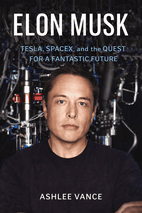
Ashlee Vance's Elon Musk chronicles the entrepreneur's journey from his difficult childhood to building SpaceX and Tesla, revealing his relentless drive and complex personality. This biography is for readers fascinated by the ambition and turmoil behind world-changing technological ventures.
Feature
Insta.Page
Blinkist
Shortform
Summary Depth
Full Chapter-by-Chapter
15-min overview
Section-by-section guides
Audio Narration
✓
✓
✓
Visual Mindmaps
✓
✕
✕
AI Q&A
✓
✕
✕
Quizzes
✓
✕
✕
PDF Downloads
✓
✕
✓
Price
$89.99/yr
$146/yr (PRO)
$199/yr
*Competitor data last verified July 2026.
1 Page Summary
Ashlee Vance’s Elon Musk: Tesla, SpaceX, and the Quest for a Fantastic Future is a landmark biography that chronicles the life and ambitions of one of the most influential and controversial entrepreneurs of the 21st century. Based on over 40 hours of interviews with Musk and unprecedented access to his inner circle, Vance constructs a detailed narrative tracing Musk’s difficult childhood in South Africa, his early successes with Zip2 and PayPal, and his high-stakes bets on SpaceX and Tesla. The central thesis portrays Musk not merely as a businessman, but as a relentless, often tortured visionary whose ultimate goal is to ensure humanity’s survival by making life multi-planetary and transitioning the world to sustainable energy.
Vance’s approach is distinctive for its balanced, journalistic rigor. He neither deifies nor demonizes his subject, instead presenting a clear-eyed portrait of Musk’s extraordinary drive, engineering prowess, and capacity for strategic thinking alongside his notorious temper, brutal management style, and personal eccentricities. The book is rich with revealing anecdotes—from Musk sleeping on the factory floor and pushing employees to their breaking points to his profound despair during the near-failures of both SpaceX and Tesla—that illustrate the immense personal and financial cost of his endeavors. This depth is achieved through meticulous reporting, giving readers an insider’s view of the chaotic, all-consuming cultures at Musk’s companies.
The book is intended for a broad audience interested in technology, entrepreneurship, and the psychology of groundbreaking innovators. Readers gain a comprehensive understanding of the pivotal moments and sheer force of will behind SpaceX’s revolution of the aerospace industry and Tesla’s upheaval of the automotive sector. Beyond the corporate sagas, Vance explores Musk’s motivations and personal life, offering a compelling study of how childhood experiences shape adult obsessions. Ultimately, the biography serves as an essential account of how one man’s unwavering commitment to seemingly impossible goals is reshaping multiple industries and forcing humanity to look toward a more ambitious future.
1 ELON’S WORLD
Overview
The chapter opens with an immediate, visceral question from Musk himself, framing a portrait of a leader operating at an extreme, relentless pace. He is shown as a hands-on commander, immersing himself in minute details of car and rocket design while moving through his factories with a regal, demanding presence. This intensity is set against the backdrop of a Silicon Valley still recovering from the dot-com bust, a period marked by risk-aversion and a shift toward social media and advertising over tangible, ambitious hardware. In this climate of lowered expectations, Musk’s defiant counter-strategy stands out: he risked his entire fortune to simultaneously revolutionize space travel, automotive, and energy industries with SpaceX, Tesla, and SolarCity.
His approach is defined by a rare talent for deep integration, seamlessly blending software intelligence with physical machinery in a way that challenges entire industrial sectors. These high-stakes ventures, often dismissed as risky novelties, have consistently defied critics by achieving what was deemed impossible. Musk is portrayed as a modern inventor-industrialist, a figure who has redirected the valley's ambitions toward long-term, physically transformative goals and revived a sense of American manufacturing prowess. His personal life mirrors this frenetic ambition, a transcontinental juggling act punctuated by theatrical escapades, all in service of a unifying vision: to save humanity from stagnation and make life multi-planetary.
If his trajectory continues, the future he envisions—a nation of solar-powered electric vehicles and routine spaceflight—feels within reach. The driving force behind it all is a relentless, world-shaping will, perfectly summarized by the observation that it is Elon’s world, and the rest of us are living in it.
The Intensity of Musk Land
The chapter opens not with a formal introduction, but with a jarring, personal question from Elon Musk himself: “Do YOU THINK I’M INSANE?” This sets the stage for an intimate, high-pressure portrait. The author describes a demanding dinner with Musk, a man who moves with purpose, eschews small talk, and operates without the typical entourage of handlers. He is a commanding, almost regal presence in his own domain.
A Hands-On Leader in Action
A visit to Tesla’s design studio reveals Musk’s immersive, rapid-fire management style. He strides through the space, absorbing concentrated “information dumps” from employees at various stations, making quick decisions on everything from tire designs to software purchases. He is deeply involved in minute details, like critiquing the scaffolding for charging station towers, while also evaluating high-tech presentations. His uniform—black T-shirt, designer jeans, leather shoes—underscores a workmanlike focus amidst the chaos of creation.
Silicon Valley’s Post-Boom Malaise
The narrative then pivots to provide crucial context, contrasting Musk’s world with the Silicon Valley of the early 2000s. The author arrived during the dot-com bust, witnessing the grim aftermath of irrational exuberance from San Francisco’s gritty Tenderloin district. After the collapse, the valley fell into a deep depression and a risk-averse mindset. Innovation stagnated; the grand ambitions of building transformative hardware and industries gave way to a focus on social media, apps, and advertising—a shift cynically summarized by an early Facebook engineer: “The best minds of my generation are thinking about how to make people click ads.”
This lull was formally analyzed by physicist Jonathan Huebner, who argued that humanity had mined most “game-changing ideas” and was now just refining past inventions. By 2010, influential voices like Peter Thiel were lamenting the lack of ambitious, tangible innovation, captured in his mantra: “We wanted flying cars, instead we got 140 characters.”
Musk’s Defiant Counter-Strategy
Against this backdrop of lowered ambitions, Musk’s endeavors stand in stark, revolutionary relief. After making a fortune from the dot-com boom (Zip2 and PayPal), he deliberately rejected the prevailing Silicon Valley caution. Instead of waiting for the “next big thing,” he risked his entire fortune by investing over $180 million into three capital-intensive, physically demanding companies: SpaceX, Tesla, and SolarCity.
SpaceX aims to revolutionize space travel with reusable rockets, challenging military-industrial giants and foreign nations, and making Musk powerful enemies.
Tesla seeks to overhaul the automotive industry with all-electric cars, a direct sales model, and a proprietary, free solar-powered charging network.
SolarCity (chaired by Musk and run by his cousins) became a leading solar energy utility, disrupting traditional power companies.
Together, these companies form an industrial empire with a unifying, audacious worldview: to save humanity from stagnation and potential annihilation, with the ultimate goal of making life multi-planetary. This “Mars agenda” provides a rallying cry that pushes employees to extreme limits, inspiring a mix of devotion and resentful loyalty.
The Preposterous Pace of a Visionary
Musk’s personal life is a frenetic reflection of his business ambitions. His weekly routine is a transcontinental shuffle between SpaceX in Los Angeles and Tesla in Silicon Valley, crammed into a private jet, often sleeping at hotels or on friends’ couches. He juggles this with shared custody of his five young sons. His idea of relaxation involves equally intense, theatrical escapades: costume parties, late-night bicycle tours, knife-throwing acts, and sumo wrestling matches—often orchestrated by his then-wife, Talulah Riley, in an attempt to compensate for his “miserable childhood.”
Yet, the work never stops. Even on a Saturday with a full parking lot at Tesla, Musk criticizes his workforce for growing “fucking soft,” embodying the relentless, demanding drive of historical industrialists like Howard Hughes or Steve Jobs. The author concludes this section by positioning Musk as a unique figure who has applied Silicon Valley’s software-speed ethos to the hardest of hardware, recapturing American ambition in aerospace and automotive industries, and setting the stage for a deeper exploration of the “tortured soul” behind this colossal ambition.
The Art of Integration
Elon Musk possesses a rare talent for blending software expertise with hardware innovation, merging atoms and bits in ways that have yielded spectacular results. While his creations may not yet have the ubiquitous consumer reach of an iPhone or Facebook, they represent a profound shift in applying Silicon Valley principles to physical machines.
Balancing Risk and Innovation
Musk's ventures, from Tesla to SpaceX, are often characterized as "rich people's toys" and face existential threats—be it a rocket explosion or a major recall. Yet, they have consistently surpassed the low expectations of critics, achieving what many deemed impossible and injecting a sense of optimistic possibility into even the most hardened observers.
Redefining Silicon Valley's Ambitions
Famed software engineer Edward Jung sees Musk as a model for how Silicon Valley can reinvent itself, moving beyond quick IPOs and incremental products toward longer-term, deeply integrated technologies. This integration—of software, electronics, advanced materials, and computing power—is Musk's signature gift, positioning him as a modern Thomas Edison: an inventor and industrialist turning grand ideas into tangible products.
An Industrialist's Resurgence
At a time when American manufacturing was thought to be in irreversible decline, Musk is employing thousands in U.S. factories, forging metal and shaping industries. Born in South Africa, he has emerged as America's most innovative and outlandish industrial thinker, pushing Silicon Valley toward more ambitious, physically grounded pursuits.
Visions of Tomorrow
If Musk's trajectory holds, the future looks transformative. Within a decade, Americans might experience the world's most modern highway: a network powered by solar-charging stations and filled with electric vehicles. Simultaneously, SpaceX could achieve daily rocket launches, ferrying people and cargo to orbital habitats and laying the groundwork for journeys to Mars. These advances feel both astonishing and inevitable, contingent only on Musk having the time to execute his plans.
The relentless drive behind this vision is captured by his ex-wife, Justine: “He does what he wants, and he is relentless about it. It's Elon's world, and the rest of us live in it.”
Key Takeaways
Musk's core innovation lies in his deep integration of software with physical hardware, a blend that is reshaping industries.
His companies operate under significant risk but have already achieved breakthroughs that defy conventional wisdom.
He is seen as a catalyst for redirecting Silicon Valley's focus toward long-term, ambitious industrial and technological goals.
Musk embodies a modern-day inventor-industrialist, reviving U.S. manufacturing while pursuing sci-fi-inspired futures in transportation and space.
The realization of his visions for electric infrastructure and space travel hinges on sustained execution over time.
Key concepts: 1 ELON’S WORLD
1 ELON’S WORLD
Musk's Leadership Style
Hands-on commander immersed in minute details
Rapid-fire decision-making during factory walkthroughs
Regal, demanding presence without typical handlers
Silicon Valley Context
Post dot-com bust risk-aversion and depression
Shift from hardware to social media and ads
Lowered expectations for tangible innovation
Defiant Counter-Strategy
Risked entire fortune on three capital-intensive ventures
Simultaneously targeted space, automotive, and energy
Rejected prevailing Silicon Valley caution
The Three Ventures
SpaceX: Revolutionize space with reusable rockets
Tesla: Overhaul automotive with electric cars
SolarCity: Disrupt traditional power utilities
Unifying Vision
Save humanity from stagnation and annihilation
Ultimate goal of making life multi-planetary
Mars agenda as rallying cry for employees
Personal Freneticism
Transcontinental shuffle between SpaceX and Tesla
Juggles work with custody of five sons
Theatrical escapades as form of relaxation
Impact and Legacy
Redirected Silicon Valley toward transformative goals
Revived sense of American manufacturing prowess
Created Elon's world where others operate
💡 Try clicking the AI chat button to ask questions about this book!
2 AFRICA
Overview
The public first glimpsed Elon Musk as a twelve-year-old wunderkind, publishing a video game called Blastar under a sci-fi pseudonym. This early act hinted at a mind already orbiting fantasies of space and technology, a preoccupation that soon solidified into an ultralogical mission statement derived from his reading: to expand human consciousness itself. This profound sense of purpose was matched by an extraordinary tolerance for risk, a trait deeply inherited from his adventurous maternal grandfather, whose legendary expeditions became family lore.
As a child, Musk was markedly different. He drifted into deep, impenetrative trances and was a compulsive reader, absorbing encyclopedias and developing a near-photographic memory that isolated him from peers. His family life fractured when his parents divorced, and he chose to live with his father, Errol Musk. While this provided access to books, travel, and his first Commodore VIC-20 computer—a device he mastered with astonishing speed—it came at a severe cost. Musk describes a childhood of profound misery under his father's intense, psychologically damaging influence, a trauma so lasting he vowed his own children would never meet their grandfather.
Outside the difficult home, Musk’s burgeoning entrepreneurial and engineering spirit found expression in dangerous, hands-on experiments. He led his brother and cousins in ventures ranging from selling Easter eggs to mixing homemade explosives and rockets, activities that normalized high risk. Yet, this leadership stood in stark contrast to his torment at Bryanston High School, where he endured years of violent bullying that left him hospitalized and emotionally scarred. At Pretoria Boys High School, he was a quiet, isolated student, though he showed early sparks of his future convictions in classroom debates about solar power and futuristic finance.
His singular focus became escape. Viewing South Africa as a prison for his ambitions, he seized the first legal opportunity, leveraging his mother’s Canadian citizenship to meticulously plan his departure. At seventeen, he left for good, driven by a desire to reach Silicon Valley and flee both a painful personal history and the political system of apartheid, setting the stage for everything that would follow.
Early Public Appearance and Formative Philosophy
The public first encountered Elon Musk in 1984 through a South African tech magazine. At age twelve, he had designed a video game called Blastar and sold its source code for five hundred dollars, choosing to publish under the sci-fi-sounding name "E. R. Musk." This early achievement hinted at a boy deeply immersed in fantasies of space and conquest, a mindset that would evolve from childhood escapism into a driving personal mission.
By his mid-teens, Musk experienced a profound existential crisis. He explored various religious and philosophical texts, but found his guiding principle in Douglas Adams's The Hitchhiker's Guide to the Galaxy. He latched onto the idea that the fundamental challenge is figuring out the right questions to ask. From this, Musk crafted his own "ultralogical mission statement": to strive for greater collective enlightenment by expanding the scope of human consciousness. He saw saving the world not as optional, but as the only thing that made sense.
Roots: The Adventurous Haldeman Lineage
Musk's unusual tolerance for risk and adventure appears deeply inherited, particularly from his maternal grandfather, Joshua Norman Haldeman. An eccentric, self-reliant man, Haldeman was a chiropractor, rodeo performer, and avid pilot in Canada before suddenly moving his family to South Africa in 1950, seeking less government interference and more adventure.
Haldeman and his wife Winnifred undertook legendary, dangerous flights across Africa, Europe, and Australia in a single-engine plane, and embarked on long bush expeditions searching for lost cities. They raised their children with a remarkably hands-off, confident philosophy, believing them capable of anything and expecting them to intuit proper behavior. Musk grew up hearing these stories and saw his grandfather as a direct model for his own risk-taking temperament.
Parental Dynamics and Early Childhood
Musk's mother, Maye, grew from a self-described "nerd" into a renowned model. She married Errol Musk after years of his persistent pursuit. Elon was born soon after, followed by his brother Kimbal and sister Tosca.
From a very young age, Elon displayed unique traits. He often drifted into impenetrable trances, leading his family to initially believe he was deaf. He describes this as his mind's visual processing power being hijacked for internal thought, allowing him to run vivid mental simulations—akin to having a built-in graphics processor.
He was a compulsive reader, consuming books for up to ten hours a day, eventually plowing through two sets of encyclopedias, which gifted him a photographic memory but alienated him from other children. He was awkward, socially abrasive, and not "sporty," which led to loneliness and teasing.
Family Fracture and Life with Errol
The family's comfortable life in Pretoria fractured when Elon was about eight. After his parents' divorce, Elon and later Kimbal made the difficult decision to live with their father, Errol—a choice driven by logic, a sense of duty, or familial pressure, depending on the account.
On the surface, life with Errol had advantages: travel, books, a new computer, and practical engineering lessons. However, both brothers describe a dark undercurrent. Errol was "ultra-present and very intense," subjecting them to hours-long lectures and deliberately making their lives harsh to dissuade Elon's dreams of America. While they protect his privacy for the sake of younger half-sisters, Elon and Kimbal’s recollections point to an profoundly difficult and formative experience during these years, cementing Musk's desire to escape his surroundings.
A Father's Shadow and a First Computer
The chapter details the profound and damaging impact of Errol Musk on his sons. Both Elon and Kimbal describe enduring psychological torture, with Kimbal acknowledging inheriting "serious chemical stuff" from their father. Maye Musk is reticent and protective, simply stating Errol is "not nice to anyone." Errol’s own emailed account presents an idyllic picture of a supportive father, a portrayal Elon vehemently warns against trusting. Elon himself offers a pained, fragmented assessment: "It would certainly be accurate to say that I did not have a good childhood... It was like misery." The trauma was severe enough that Elon and his first wife, Justine, vowed their children would never meet their grandfather.
A pivotal escape emerged when a young Elon encountered a computer at a Johannesburg mall. The experience was awe-inspiring: "It was like, ‘Whoa. Holy shit!’" He relentlessly hounded his father for a Commodore VIC-20. When it arrived, he devoured the BASIC programming manual in three days, defying his engineer father’s dismissal of the machine as a mere toy. This computer became a portal to a new world.
Entrepreneurial and Explosive Adventures
Elon’s childhood was not solely defined by books and code. He often led his brother Kimbal and their cousins, the Rive brothers, on various ventures. These ranged from selling overpriced Easter eggs to far more dangerous pursuits with homemade explosives and rockets, mixing chemicals like saltpeter and brake fluid. "I'm lucky I have all my fingers," Musk later reflected. They also undertook perilous train journeys between Pretoria and Johannesburg, trips Kimbal credited with altering their perception of risk. "You don't grow up thinking getting a job is the hard part," he said.
Their entrepreneurial spirit even led to a clandestine attempt to open a video arcade, securing a lease and navigating permits before being thwarted by their refusal to sign legal documents. Socially, they found a niche in Dungeons & Dragons tournaments, where Elon excelled as a Dungeon Master, captivating his group with his imagination and mastery of the game’s lore.
The Torment of School
In stark contrast to his leadership among cousins, Elon was a target at school. His time at Bryanston High School was marred by severe, prolonged bullying. In one brutal attack, a boy kicked him down a concrete staircase, leading to a beating that left him hospitalized. The persecution lasted for years, with bullies even coercing his best friend into betraying him. Recounting this, Musk became visibly emotional: "It was just like nonstop horrible." The trauma was lasting, requiring a nose job in adulthood to correct the damage.
His later years at the prestigious Pretoria Boys High School were better, but he remained an isolated figure, remembered by classmates as a quiet, unspectacular student with eccentric hobbies like launching model rockets. He showed early signs of his future convictions, arguing for solar power over fossil fuels in class, and discussing futuristic concepts like paperless banking with his brother. While not top of his class academically—disinterested in subjects like Afrikaans—he excelled in physics and computing and participated in an advanced computer programming program.
The Escape to North America
At seventeen, Musk’s singular focus was on leaving South Africa. He briefly attended the University of Pretoria, an inconsequential five-month stint he later framed as marking time. His motivations were a blend of personal ambition and political aversion; he wanted to reach the technological epicenter of Silicon Valley and also wished to avoid compulsory military service under apartheid. As Kimbal summarized, "South Africa was like a prison for someone like Elon." When a change in law allowed Maye to pass her Canadian citizenship to her children, Musk seized the opportunity, meticulously handled the paperwork, and boarded a plane without hesitation, leaving his homeland for good.
Key Takeaways
The emotional and psychological abuse from his father, Errol, created a profoundly difficult home life, the effects of which Elon acknowledges and has sought to shield his own children from.
An early, obsessive encounter with a Commodore VIC-20 computer unlocked Musk's passion for programming and technology, serving as a critical intellectual escape.
His childhood was marked by a high-risk tolerance, fostered by dangerous homemade experiments, perilous urban journeys, and early, failed business ventures with his brother and cousins.
Musk endured years of violent school bullying, a traumatic experience that compounded his miserable home life and left lasting physical and emotional scars.
Viewed by peers as an unremarkable, isolated student, he nonetheless displayed early flashes of his future interests in space, sustainable energy, and financial technology.
His departure from South Africa was a deliberate, determined act of self-liberation, driven by a desire to reach the opportunities of North America and escape the limitations and politics of his birthplace.
Key concepts: 2 AFRICA
2 AFRICA
Formative Philosophy & Mission
Crafted 'ultralogical mission' to expand human consciousness
Inspired by existential crisis and sci-fi philosophy
Believed saving the world was the only logical pursuit
Inherited Risk Tolerance
Modeled after adventurous grandfather Joshua Haldeman
Grandfather's legendary expeditions and self-reliant philosophy
Family stories normalized dangerous undertakings and risk
Early Traits & Isolation
Prone to deep, impenetrative trances from young age
Compulsive reader with near-photographic memory
Socially awkward and isolated from peers
Family Fracture & Trauma
Chose to live with father Errol after parents' divorce
Childhood of misery under father's damaging influence
Lasting trauma led to vow to protect his own children
Early Entrepreneurship & Experiments
Sold video game Blastar at age twelve
Led dangerous homemade explosives and rocket projects
Early ventures normalized high-risk activities
School Bullying & Suffering
Endured years of violent bullying at Bryanston High
Hospitalized from bullying, left emotionally scarred
Quiet, isolated student at Pretoria Boys High
Escape from South Africa
Viewed South Africa as prison for his ambitions
Leveraged mother's Canadian citizenship for departure
Driven to reach Silicon Valley and flee painful history
3 CANADA
Overview
A Chaotic New Beginning
Elon Musk's arrival in Canada at age seventeen was an act of pure, unplanned determination. Fleeing a difficult childhood in South Africa, he boarded a flight to Montreal with little more than the address of a great-uncle. Upon landing, he discovered via a collect call to his mother that the uncle had moved. Stranded, Musk resorted to a youth hostel before purchasing a cross-country bus ticket with a vague plan to connect with distant relatives scattered across the nation. This inauspicious start marked the beginning of a gritty, character-building year.
The Year of Grunt Work
Musk's first year in Canada was defined by a series of physically demanding, often miserable jobs. He worked on a cousin's farm in Saskatchewan, shoveling grain bins and tending vegetables for his eighteenth birthday. In Vancouver, he learned to cut logs with a chainsaw. The most brutal job was cleaning a lumber mill's boiler room for $18 an hour—a suffocating, hazardous task performed in a hazmat suit where workers risked death from heat exposure if they stayed too long. Of the thirty who started, only Musk and two others lasted the week. This period forged his formidable work ethic and tolerance for extreme discomfort.
University Life and Strategic Networking
After his family joined him, Musk enrolled at Queen's University in Ontario, partly attracted by its social scene. Here, his ambitious nature found new outlets. He and his brother Kimbal developed a bold habit of cold-calling prominent figures from the newspaper—like a Toronto Blue Jays executive or a senior banker—to request lunch meetings. Their persistence paid off with an audience with Peter Nicholson of the Bank of Nova Scotia, who was impressed by their "gumption." Nicholson became a mentor and provided Musk with a crucial summer internship, offering an early glimpse into the high-stakes business world.
Formative Relationships
Musk's time at Queen's was shaped by key personal connections. His courtship of Justine Wilson, a fellow student, revealed his relentless, Terminator-like perseverance. After she stood him up for an ice cream date, he tracked her down with her favorite flavor. Their relationship became a competitive, on-again-off-again partnership. He also befriended Navaid Farooq, a dormmate with whom he bonded over strategy games and a shared loner temperament. Farooq observed that Musk’s intensity and capacity for deep, uninterrupted focus already set him apart from their high-achieving peers.
The Wharton and Penn Years
Seeking greater opportunity, Musk transferred to the University of Pennsylvania on a scholarship, pursuing dual degrees in economics (Wharton) and physics. He thrived intellectually, finally finding a community of "nerds" who shared his passion for complex subjects. His social life revolved around his eccentric friend, Adeo Ressi. Together, they rented large off-campus houses that Ressi transformed into wildly popular, unlicensed weekend nightclubs. Musk, ever pragmatic and mostly sober, managed the door, earning enough in a night to cover a month's rent.
Crystallizing Ambitions
At Penn, Musk's futuristic business ideas began to take academic form. He wrote detailed papers on solar power stations in space, a database for all scholarly research (a precursor to Google Scholar), and the revolutionary potential of ultracapacitors for energy storage. These works demonstrated his unique ability to blend advanced physics with practical business planning. He consciously rejected a career in video games, despite his passion, deeming it insufficiently impactful. Instead, he repeatedly told friends and romantic partners that his future lay in three transformative areas: the internet, renewable energy, and space exploration—a master plan he insists was genuine long-term intent, not retroactive myth-making.
Key Takeaways
Musk's Canadian escape was an exercise in resilience, forcing him through a series of brutally difficult jobs that cemented his extraordinary work ethic.
He proactively built his own opportunities through audacious cold-calling, turning a chance lunch into a pivotal mentorship.
His university years provided an intellectual home where his ambition was respected, and he forged lifelong friendships with individuals who complemented his intense personality.
Academic papers from this period prove his deep, early engagement with the core technological concepts—solar power, energy storage, information systems—that would define his later ventures.
Musk claims he arrived at his "master plan" for impacting humanity through the internet, sustainable energy, and space exploration during his college years, framing his entire career as one of deliberate purpose rather than opportunistic trend-chasing.
Key concepts: 3 CANADA
3 CANADA
Arrival and Early Struggles in Canada
Fled South Africa at 17 with no concrete plan
Stranded upon arrival, moved between hostels and relatives
Endured brutal manual labor jobs to survive
University and Strategic Networking
Enrolled at Queen's University in Ontario
Cold-called prominent figures to secure mentorship
Gained crucial internship through persistence and gumption
Formative Personal Relationships
Pursued Justine Wilson with relentless determination
Bonded with Navaid Farooq over strategy games
Demonstrated intense focus that set him apart
Intellectual Development at Penn
Pursued dual degrees in economics and physics
Found community with fellow 'nerds'
Ran profitable weekend nightclubs to fund education
Crystallizing Future Ambitions
Wrote academic papers on space solar power and energy storage
Rejected video games as insufficiently impactful
Articulated master plan in internet, energy, and space
4 ELON’S FIRST START-UP
Overview
Fresh out of college in 1994, Elon Musk and his brother Kimbal took a road trip across America, brainstorming business ideas as the early internet sparked their imaginations. That same summer, Elon sharpened his skills with Silicon Valley internships, working on futuristic energy storage by day and complex video game coding by night, which solidified his desire to build his future there. Soon after, he dropped out of a Stanford PhD program and convinced Kimbal to join him in launching their first company. The idea for Zip2—a pioneering online directory with integrated maps for local businesses—came from watching the clumsy world of early web advertising.
The brothers started from a shabby Palo Alto office, with Elon coding the entire platform and Kimbal hitting the streets for sales. They lived in the office, surviving on fast food and showcasing a now-legendary, relentless work ethic. Their big break came with a $3 million venture capital investment, which brought growth and painful changes: a new CEO was installed, Musk was demoted to Chief Technology Officer, and professional engineers were hired to rebuild his scrappy code. Through this period, Musk’s confidence grew, even as he struggled to temper his blunt, demanding style.
Zip2 found success by partnering with major newspapers, but a strategic rift emerged. Musk wanted to pivot toward consumers, while the board preferred the safer business of serving media companies. A planned merger with competitor CitySearch collapsed, creating internal chaos and leading to Musk being stripped of his chairman title. Just as the company's future looked uncertain, Compaq Computer swooped in with a $307 million cash offer. The sale netted Elon his first major fortune—$22 million—and crucial lessons. He realized his early, overbearing management could be counterproductive, but the experience of losing control also cemented his lifelong drive to retain CEO-level authority in all his future ventures.
The Cross-Country Brainstorm
In the summer of 1994, Elon and Kimbal Musk embarked on a road trip across America in a beat-up BMW, a journey that mixed youthful adventure with capitalist dreaming. As the early internet began to captivate the public, the brothers brainstormed business ideas, with the most promising being an online network for doctors to exchange information—a concept they ultimately abandoned because they “didn’t love it.”
Silicon Valley Apprenticeships
That same summer, Elon held two internships in Silicon Valley. By day, he worked at Pinnacle Research Institute, exploring the use of ultracapacitors for electric vehicles and even futuristic laser weaponry, which fueled his academic and business ambitions. By night, he coded at Rocket Science Games, a video game start-up filled with elite talent. There, he taught himself complex assembly programming to multitask video and game functions, impressing colleagues with his boundless energy and hacker mentality. This dual exposure cemented his desire to pursue his future in the Valley.
The Zip2 Genesis
After graduating from Penn and spending just two days in a Stanford PhD program, Musk dropped out to answer the internet’s call. He persuaded Kimbal to join him. The idea for their first company, initially called Global Link Information Network and later Zip2, was born from witnessing a Yellow Pages salesman’s clumsy pitch for online listings. Musk realized most small businesses in 1995 had no idea how to establish a web presence. Their ingenious concept was a searchable directory integrated with maps—essentially, Yelp meets Google Maps before either existed.
Grinding It Out in Palo Alto
The brothers launched Zip2 from a tiny, shabby office in Palo Alto. Elon coded the entire initial platform, merging a cheap business database with free mapping technology from Navteq. Kimbal led sales. Broke, they lived in the office for three months, showering at the YMCA and surviving on Jack in the Box. Their early, motley sales team faced relentless rejection as they tried to convince local businesses of the web’s value. Musk’s relentless work ethic was legendary; he often slept on a beanbag by his desk, asking employees to kick him awake to start coding again.
Inflection Point: Venture Capital and Growing Pains
In early 1996, Zip2 secured a $3 million investment from Mohr Davidow Ventures. This influx of cash came with major changes: a move to a better office, a name change to Zip2, a pivot from direct sales to providing white-label software for newspapers, and most critically, the installation of an experienced CEO, Rich Sorkin. Musk was relegated to Chief Technology Officer, a demotion he deeply resented.
The funding also allowed the hire of top-tier engineering talent, like Jim Ambras from Silicon Graphics. These professionals rewrote Musk’s “hairball” code with more efficient software and imposed realistic deadlines, a contrast to Musk’s habit of declaring any task a one-hour job. A stabilizing influence was cofounder Greg Kouri, an older Canadian mentor who could calm Musk and even mediate physical fights between the brothers.
The Evolution of a Leader
Through Zip2's growth, Musk’s confidence soared. Friends noted a newfound assertiveness, though he consciously worked to temper his blunt, hyper-critical nature with senior staff—with mixed success. He remained intensely driven, a trait highlighted during a grueling bike ride where he pushed himself to physical extremes rather than quit. Despite ceding operational control, his samurai-like devotion to the company impressed early investors and defined the frantic, demanding culture of the office as Zip2 raced to build its platform.
Growth, Conflict, and a Sudden Exit
Zip2’s strategy of partnering with major newspapers like The New York Times and Knight Ridder proved highly successful, attracting an additional $50 million in funding. The company grew rapidly, eventually moving to a more spacious headquarters. However, a strategic rift emerged: while Musk wanted to pivot Zip2 toward a direct consumer service (even securing the domain city.com), the board and CEO Sorkin preferred the safer, revenue-generating path of serving media companies.
In an attempt to dominate the market, Zip2 announced a high-profile merger with its main competitor, CitySearch, in April 1998. The deal, valued at around $300 million, would create a combined entity under the CitySearch name. During due diligence, however, concerns about CitySearch's financials and the potential loss of jobs and influence for Zip2 executives caused Musk and others to turn against the merger. The deal collapsed publicly the following month, creating internal chaos.
In the aftermath, Musk urged the board to remove Sorkin and reinstate him as CEO. Instead, the board appointed venture capitalist Derek Proudian as the new CEO and stripped Musk of his chairman title. With the merger failed, Zip2 was losing money and facing intense competition from Microsoft and numerous startups. The company’s future was uncertain.
Salvation came unexpectedly in February 1999 when Compaq Computer offered to buy Zip2 for $307 million in cash. The board accepted. The sale netted Mohr Davidow a twentyfold return on its investment, while Elon received $22 million and Kimbal $15 million. Musk showed no interest in staying with Compaq, immediately moving on to his next venture.
Key Takeaways
The Cash-Out: The sale to Compaq provided Musk with his first major financial windfall ($22 million), giving him the capital and confidence to pursue more ambitious ventures.
Leadership Lessons Learned: Musk reflected that his early management style—often correcting or overriding employees' work without consultation—was counterproductive and damaged team morale. He began to understand the importance of communication and perspective.
The Drive for Control: The experience of being overruled by investors and losing operational control at Zip2 cemented Musk’s lifelong determination to maintain CEO-level authority in his future companies, believing that vision is diluted without it.
Key concepts: 4 ELON’S FIRST START-UP
4 ELON’S FIRST START-UP
Zip2 Genesis & Concept
Idea born from clumsy Yellow Pages online sales pitch
Online directory with integrated maps for local businesses
Solved small businesses' lack of web presence in 1995
Founding & Early Grind
Elon coded platform, Kimbal handled sales
Lived in shabby Palo Alto office for months
Legendary work ethic with Elon sleeping by his desk
Venture Capital Inflection
$3M investment from Mohr Davidow Ventures
New CEO installed, Elon demoted to CTO
Professional engineers rewrote Elon's original code
Ashlee Vance is an American business columnist and author best known for his biography "Elon Musk: Tesla, SpaceX, and the Quest for a Fantastic Future," a definitive work on the entrepreneur. His expertise lies in profiling technology innovators and companies, and he has written for publications like Bloomberg Businessweek and The New York Times.
📚 Explore Our Book Summary Library
Discover more insightful book summaries from our collection