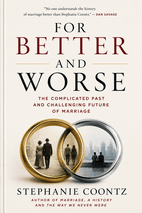
Stephanie Coontz's For Better and Worse examines the profound transformation of marriage, arguing it's neither dying nor irrelevant but fundamentally changed—offering general readers the historical and structural context needed to see past nostalgia and alarmist predictions about modern relationships.
Feature
Insta.Page
Blinkist
Shortform
Summary Depth
Full Chapter-by-Chapter
15-min overview
Detailed analysis
Audio Narration
✓ (AI narration)
✓
✓
Visual Mindmaps
✓
✕
✕
AI Q&A
✓ Voice AI
✕
✕
Quizzes
✓
✕
✕
PDF Downloads
✓
✕
✓
Price
$59.99/yr
$146/yr (PRO)
$199/yr
*Competitor data last verified February 2026.
About the Author
Stephanie Coontz
Stephanie Coontz is a historian and author renowned for her expertise on the history of the family and marriage, as well as gender roles. Her notable works include *The Way We Never Were: American Families and the Nostalgia Trap*, which challenges myths about traditional family life, and *Marriage, a History: How Love Conquered Marriage*. Coontz is a professor emerita at Evergreen State College and serves as the Director of Research and Public Education for the Council on Contemporary Families.
1 Page Summary
This book examines the profound transformation of marriage in modern society, arguing that the institution is neither dying nor irrelevant, but has become fundamentally different from its historical forms. Coontz challenges both nostalgic idealizations of "traditional" marriage and outright dismissals of the institution, presenting instead a nuanced picture of deep ambivalence: most Americans still desire marriage, but they now bring radically higher expectations to it, creating new possibilities for satisfaction alongside new vulnerabilities. The book traces this evolution through three major historical marriage systems, debunking myths about Stone Age gender roles, the supposed timelessness of patriarchal arrangements, and the long-held belief that romantic love and marriage were always linked. A central paradox emerges: the democratic ideals that freed marriage from rigid hierarchy also created "separate spheres" ideology that actively constructed and reinforced gender differences, shaping what women and men believe they want and can do—a legacy that persists in modern "gender equality paradoxes" where patriarchal societies sometimes produce more female leaders or STEM workers than egalitarian ones.
What makes this book distinctive is its refusal to take sides in the culture wars, instead showing how economic and structural forces—not just values—drive marital outcomes. Coontz demonstrates that the 1950s marriage boom, often treated as a golden age, rested on two crumbling pillars: an economy where a blue-collar job supported a family, and a legal system that left women no viable alternative to marriage, with a dark underside of legal marital rape, tolerated abuse, and purges of gay federal employees. The modern "deinstitutionalization" of marriage has flipped the old rules: waiting to marry once raised divorce risk, but now each year of delay up to age 34 steadily lowers it. However, this freedom has created a new "luxury good" dynamic, where economic precarity and the gap between sexual readiness and marital readiness (often filled with unsatisfying hookup culture) increasingly divide those who can marry under favorable conditions from those who cannot.
The intended audience is general readers interested in understanding the real history behind contemporary marriage debates, whether they are married, single, or uncertain about both. Rather than offering advice on whether to marry or how to fix a relationship, Coontz provides the historical and structural context needed to see past misleading nostalgia and alarmist predictions. Readers will gain a clear understanding of why the rewards and risks of modern marriage look so different from a few decades ago, and why the real challenge lies not in rejecting or defending marriage, but in reckoning with the public investment and economic security that once made stable family life possible—without the patriarchal constraints that came with it.
This isn’t a book that tells you whether you should marry or warns you about what you’ll miss if you don’t. It doesn’t pretend that tying the knot will magically fix an unhappy person or cure society’s ills. And it certainly doesn’t dismiss singlehood as second-best—many people thrive outside marriage, often with wider support networks than their married peers. But neither does it dismiss marriage as irrelevant. Most Americans still see it as the highest form of commitment, and the vast majority eventually do marry, just much later than their grandparents did. Divorce rates have been falling since 1980, and two-thirds of those who divorce go on to remarry. So marriage is far from dead—it’s just changed profoundly.
What’s really shifting is not whether people marry, but how they experience it. The rewards and risks of modern marriage look very different from those of a few decades ago. That’s the puzzle this book explores: why new possibilities for deep mutual satisfaction have come hand-in-hand with serious new challenges to maintaining that satisfaction.
Ambivalence, not rejection, is the real story. Only 8 percent of unmarried young adults in a 2024 Pew poll said they didn’t want to marry. But a striking number—especially young women—are unsure. Since 2019, the percentage of female high school seniors expecting to marry dropped from 78 percent to an all-time low of 64 percent in 2023. Most of that decline came from a rise in “no idea” responses, not from saying they’d rather stay single. There’s also been a dip in confidence about being a “very good” spouse. What we’re seeing isn’t a rejection of marriage as an ideal—it’s a growing worry that achieving or sustaining the kind of marriage people now want is especially hard in today’s social and economic climate.
To understand why, this book looks at how historically conditioned gender and marital patterns interact with contemporary economic trends. That’s what the subtitle points to: the clash between rising expectations about relationship quality and the legacy of marriage’s complicated past, plus new insecurities.
When I say “complicated past,” I mean thousands of years when marriage often oppressed women and excluded many others. But marriage isn’t inherently oppressive. Our earliest hunter-gatherer ancestors used it to organize peaceful cooperation without forcing women into subordination. Even under repressive laws, oppressed groups created their own marriage rituals—enslaved African Americans “jumped the broom,” and same-sex couples fought for and won the right to marry. Legalizing same-sex marriage led to a 14 percent drop in suicide attempts among gay and lesbian high school students. Yet the same institution that protects can also perpetuate inequality. The fact that women initiate the majority of divorces in heterosexual marriages probably owes something to historically ingrained patterns of husband dominance.
The book doesn’t offer a full chronological history. Instead, it zooms in on five periods when marriage’s role in society was in flux. Each period left us mental and behavioral patterns that still interfere with building the mutualistic relationships most of us want today. These patterns are like earworms—simple, repetitive tunes stuck in our heads, telling us what we should or shouldn’t feel, long after we’ve consciously rejected them.
Let’s look at those periods:
Paleolithic era – Our ancient ancestors organized family life without male-breadwinner norms or patriarchy. Modern claims that women naturally need protecting by a provider are a misunderstanding of hunter-gatherer life.
16th-17th century aristocratic patriarchy – Women were seen as capable and strong-minded (though controlled). Contrast with early democratic ideology that painted women as weak and vulnerable.
Victorian era to early 20th century – The transition from rigid sexual morality to celebration of heterosexual desire, alongside the first feminist movement. The backlash then mirrors today’s culture wars.
1950s-60s male-breadwinner family – This supposedly golden era of near-universal marriage was short-lived. Beneath the surface, economic forces were already undermining security and creating new tensions.
One reason to understand this history is that it reveals enormous variation in what has been considered “normal.” That suggests we have more leeway to create workable arrangements than we’re often told. But the staying power of old ideas is immense. Beliefs codified in law, religion, education, and popular culture don’t disappear just because we adopt new values. They linger as unconscious earworms, evoking reflexive responses that persist long after we think we’ve moved on.
For the first time in recorded history, people are trying to organize marriages free from coercion: no parental dictates, no state laws about who can marry or divorce, no rigid gender roles, no fixed division of labor. Even the biological package of insemination-pregnancy-birth-lactation is now separable. These aspirations are not unrealistic. History shows we have latitude.
Yet the challenge is real. External forces—economic inequality, racial discrimination, employment opportunities, social support systems—shape our access to partners and our behavior within relationships. Recognizing what’s beyond our control keeps us from blaming ourselves or our partners for problems that originate outside the relationship. That’s where historical attribution comes in. Instead of malevolent attribution (seeing a partner’s failure as a character flaw), we can practice historical attribution: understanding that socially conditioned reflexes and earworms make any of us behave in ways that undermine our new standards. That creates compassion without acceptance, and opens the door to constructive change rather than denunciation.
This book also notes a few language choices: I use “enslavers” and “enslaved individuals” to emphasize ongoing violence and humanity. I use “Hispanic” rather than “Latinx” because very few people of Spanish descent use that term. And I point out that “ladies” and “gentlemen” were once democratic innovations—a reminder that meanings evolve.
Key Takeaways
Most people still marry and value marriage, but growing ambivalence—especially among young women—reflects fears about achieving the kind of relationship they want, not rejection of the institution.
Marriage is not inherently oppressive; it has taken many forms across history, some highly egalitarian. The male-breadwinner family is a modern, short-lived invention.
Historical “earworms”—simplistic, repetitive beliefs about gender, love, and sex—persist subconsciously and sabotage efforts to build mutualistic relationships, even when we consciously reject them.
External economic and social forces powerfully shape marital chances and satisfaction. Acknowledging them reduces blame and helps couples focus on what they can control.
Historical attribution (contextualizing problematic behavior) is more effective than moral condemnation for fostering change within relationships.
Key concepts: Introduction
1. Introduction
Marriage's Changing Role
Most still marry, but much later than grandparents
Divorce rates falling since 1980; two-thirds remarry
Ambivalence, not rejection, defines modern attitudes
Young women's marriage expectations dropping since 2019
New Rewards and Challenges
Modern marriage offers deeper mutual satisfaction
New possibilities come with serious maintenance challenges
Rising expectations clash with economic insecurities
Achieving desired marriage quality is especially hard today
Marriage's Complicated Past
Historically oppressed women and excluded many
Hunter-gatherer marriage was not oppressive
Oppressed groups created their own marriage rituals
Same-sex marriage legalization reduced suicide attempts
Five Key Historical Periods
Paleolithic era: no male-breadwinner norms
16th-17th century aristocratic patriarchy
Victorian era to early 20th century shifts
1950s-60s male-breadwinner family was short-lived
Earworms: Lingering Mental Patterns
Old ideas persist as unconscious mental earworms
Patterns interfere with building mutualistic relationships
Beliefs codified in law and culture don't disappear
Reflexive responses persist after adopting new values
Modern Aspirations for Marriage
First time organizing marriages free from coercion
No parental dictates or rigid gender roles
Biological package now separable from marriage
History shows we have latitude for new arrangements
Historical Attribution for Change
External forces shape access to partners and behavior
Recognize problems originating outside the relationship
Historical attribution creates compassion without acceptance
Opens door to constructive change, not denunciation
If you like this summary, you probably also like these summaries...
💡 Try clicking the AI chat button to ask questions about this book!
Chapter 2: Chapter 1: The Many and Much Misunderstood “Traditional” Marriages
Overview
The argument over whether marriage is sacred or oppressive has raged for centuries. Justice Anthony Kennedy called it the "keystone of civilization," while modern critics label it a patriarchal prison. But this debate is ancient: early Christians prized lifelong celibacy over marriage, and in the fourth century, the monk Jovinian was excommunicated for saying baptized Christians were equal whether married or not. Yet the real problem with sweeping judgments is that marriage has never been one thing. Chief Justice John Roberts claimed it meant one man and one woman for millennia, but polygyny was common in the ancient world, polyandry existed in over fifty societies, and many Native American groups recognized two-spirit marriages. To understand this diversity, you have to look at the three major marriage systems that emerged over time—and the myths about the earliest one still distort our thinking today.
The most persistent myth about Stone Age marriage is that men were hunters and women were homemakers, a division supposedly wired into our genes. But foraging societies tell a different story. Women provided about half the calories through gathering and small-game hunting, and some, like the Agta of the Philippines, hunted big game. The notion that a 0.70 waist-to-hip ratio signals universal beauty? Isolated foragers found that shape unattractive—they thought the women looked ill. Childcare was communal: among the Efe, babies spent 60% of daylight hours with non-mothers, and weaned children ate in other households 40% of the time. Kinship itself was often socially constructed—naming children after the dead created obligations, and for some New Guinea groups, shared "grease" from semen or breast milk generated relatedness.
Marriage in band-level societies wasn't about securing food or paternity; it was a tool for creating social networks by turning strangers into relatives. Most foragers practiced exogamy—marrying outside the band—and lived with flexible residence rules, spreading people and resources across wide networks. Elders arranged 85% of matches, but arrangements were rarely enforced because there was little inheritable property. There's no evidence of systematic female oppression or punishment of "illegitimate" children in Paleolithic times. Premarital sex was accepted for both sexes, women could leave their husbands, and children born outside marriage had full claim to group resources. Jesuit missionaries in 1625 Canada were horrified by this egalitarianism; one tried to convince a native man to "rule" his wife, but the man's response revealed a fundamentally different worldview.
That worldview collapsed when agricultural surpluses and property rights emerged. Some families accumulated wealth and needed to defend it, leading to patrilocal residence and patrilineal descent. Less successful families had to offer incentives to intermarry with wealthier ones or risk debt-slavery. Marriage shifted from circulating people and goods to concentrating wealth within restricted kin groups. Endogamy replaced exogamy—cousin marriage, almost unheard of among foragers, became a strategy to keep property intact. Women's position deteriorated as they were obliged to marry for economic or political reasons. The invention of illegitimacy gave elites a tool to deny obligations to children from disapproved unions; a "child of no one" was entitled to nothing. Patriarchy placed men above women and apart from babies, with lasting repercussions.
In elite circles, marriage became a strategic weapon in power struggles. Getting the right partner secured alliances; blocking rivals' matches blocked their ambitions. After the Roman Empire fell, the Christian Church emerged as a major power broker, bestowing or withholding marriage sanctification. Monarchs bribed and threatened officials to approve their own matches while blocking rivals' unions—even when violating complex incest rules. Childless marriages were annulled with Church help; rivals were denied the same.
Yet more inclusive traditions never disappeared. Jesus repeatedly insisted on moral obligations that transcended biological family—feeding the hungry, caring for strangers—echoing the hospitality principles of band societies. He subordinated family ties to building a wider brotherhood, creating "fictive families" on the cross. These ideals of voluntary community, along with beliefs that individuals should choose their own partners, persisted through the centuries. But religious, economic, and political elites repeatedly imposed marital rules that benefited themselves on communities that were more tolerant of different arrangements. The political institutions and gender anxieties they bequeathed us continue to frustrate efforts to build egalitarian marriages and inclusive family support systems today.
Key Takeaways
The rise of agricultural surpluses and property rights transformed marriage from a system of circulating people and goods into one of concentrating wealth within restricted kin groups.
Endogamy, cousin marriage, and strict parental control over children's choices replaced the flexible, exogamous marriage patterns of foragers.
Patriarchy and the concept of illegitimacy emerged to safeguard patrilineal inheritance and control women's sexuality.
In elite circles, marriage became a strategic tool for political alliances, with religious institutions often serving as power brokers in arranging or blocking matches.
Counter-traditions of inclusive solidarity—exemplified by Jesus's teachings on "fictive family" and care for outsiders—never disappeared, challenging narrow family values.
The legacy of these ancient inequalities continues to shape modern debates about marriage, gender roles, and family support systems.
Key concepts: Chapter 1: The Many and Much Misunderstood “Traditional” Marriages
2. Chapter 1: The Many and Much Misunderstood “Traditional” Marriages
The Myth of a Single 'Traditional' Marriage
Marriage has never been one thing across history
Polygyny, polyandry, and two-spirit marriages existed
Chief Justice Roberts' claim of one man, one woman is false
Egalitarian Marriage in Foraging Societies
Women provided half the calories through gathering and hunting
Childcare was communal, not nuclear-family based
Marriage created social networks, not property control
No systematic female oppression or illegitimacy concept
Agricultural Revolution Transforms Marriage
Surplus and property rights shifted marriage to wealth concentration
Endogamy and cousin marriage replaced exogamy
Illegitimacy invented to deny resources to disapproved children
Patriarchy emerged to control women and inheritance
Marriage as Elite Political Weapon
Strategic matches secured alliances and blocked rivals
Christian Church became a power broker in marriage
Monarchs bribed officials to approve or annul unions
Childless marriages annulled while rivals were blocked
Counter-Traditions of Inclusive Solidarity
Jesus emphasized care for strangers over biological family
Fictive families and voluntary community ideals persisted
Elites repeatedly imposed restrictive rules on tolerant communities
Ancient inequalities still shape modern marriage debates
⚡ You're 2 chapters in and clearly committed to learning
Why stop now? Finish this book today and explore our entire library. Try it free for 7 days.
Chapter 3: Chapter 2: The Paradox of Patriarchy and the Dark Side of Democracy
Overview
The custom of a married woman losing her name to her husband’s is often mistaken as a relic of ancient patriarchy, but it actually emerged in the 1800s as a hallmark of early capitalist democracy—a shift from old aristocratic norms where “Mrs.” denoted rank, not marital status. In premodern Europe, patriarchal hierarchy was real but far from uniform: a wife deferred to her husband, but her husband deferred to women of higher rank, and many marriages functioned as co-provider partnerships where wives were essential economic actors. The system didn’t need elaborate justifications for subordination because inequality was accepted as divine order, and women were seen as dangerously capable, not weak.
Rapid economic change in the seventeenth century disrupted these dynamics, pulling men’s work away from home and giving rise to separate spheres. Two paths led to the male-breadwinner family: one through the loss of women’s productive roles, another through rising male wages that allowed wives to focus on unpaid domestic labor. Women were newly celebrated as the emotional heart of the home—a moral refuge from a competitive, soulless marketplace. This domestic ideology granted women a new kind of respect and influence, but it was explicitly offered as a substitute for justice. Compared to old patriarchal discipline, that substitute felt like an improvement, opening doors to teaching, nursing, and charitable work, while granting middle-class women courtesies once reserved for social superiors.
The same market economy that accelerated slavery also spread Enlightenment ideals of universal rights, creating a dangerous paradox. The Declaration’s claim that “all men are created equal” proved impossible to contain: people began asking why women, Africans, and Native peoples were excluded. To defend the denial of rights, oppressors invented “natural” justifications—women were too fragile for politics, Black people too savage for freedom. Democracy painted women as wonderful but weak, needing tenderness rather than power. The reward for embracing this fragile ideal was social honor, but it came with a catch: a woman’s dignity consisted in being unknown to the world. Her identity was systematically subsumed into her husband’s—a Mrs. Man phenomenon where self-effacement became the price of respect. Even ambitious women insisted on being called Mrs. Governor or Mrs. Professor, while Black citizens were denied even the simple courtesy titles of Mr. or Mrs. until the 1960s. The chapter reveals how the transition from aristocratic patriarchy to democratic society did not liberate women; instead, it repackaged subordination as protection, creating justifications for inequality that persist today.
The Mystery of "Mrs. Man"
A few years ago, a New York Times reporter noticed that well into the 1970s, every married woman in the paper’s archives—no matter how famous—was identified by her husband’s first and last name. This wasn’t a journalistic quirk; it reflected a deep cultural norm. Many assume this practice descended from English “coverture,” which submerged a wife’s legal identity into her husband’s. But the custom actually emerged only in the 1800s. Five hundred years ago, “Mrs.” indicated social status, not marital status. It was a contraction of “Mistress,” reserved for women of wealth and rank. This form of identification only shifted to denote marital status in the nineteenth century, and using the husband’s full name became standard even later. Far from being a relic of old patriarchy, subsuming a wife’s name into her husband’s was part of a new gender order celebrating the brotherhood of men and the domestic role of women.
The Paradox of Patriarchy: Gender, Rank, and Co-Providing
In premodern Europe and colonial America, the formal subordination of wives was harsh—husbands owned all property, wives couldn’t make contracts or sue, and physical discipline was legal. Yet patriarchal hierarchy wasn’t monolithic. A wife deferred to her husband, but her husband deferred to women of higher rank. Social inferiors, regardless of sex, bowed to “superiors.” This system didn’t need elaborate justifications for female subordination. Inequality was seen as a divine order. But notably, women weren’t called too weak or naive for economic or political initiative. Instead, they were considered more prone to ambition and sexual excess, needing control for men’s protection. Most marriages back then were co-provider partnerships, not male-breadwinner families. Running a farm or business was a two-person career. The word “breadwinner” for a husband didn’t appear until the 1820s.
The Emergence of Separate Spheres
Rapid economic change in the seventeenth century disrupted these patterns. Business moved to districts away from home. Wives had fewer chances to act as deputy husbands. Two routes led to male-breadwinner families. The “detrimental” route involved loss of women’s home-based work, forcing families into destitution. The “beneficial” route came when men’s wages rose enough that wives could focus on unpaid domestic labor. Gradually, men’s work was seen as “productive,” while women’s unpaid efforts became a “labor of love.” At the same time, women were celebrated as the emotional center of the home, wielding a “power no king or conqueror can cope with.” Domestic ideology offered a promise of warmth and moral sway—but at the cost of women’s economic and political inclusion.
Advantages of Domestic Ideology for Women
Harriet Martineau acidly observed that America’s domestic ideology offered women “indulgence...as a substitute for justice.” But compared to old patriarchal discipline, that indulgence felt like a real improvement. Women gained a new source of respect and influence as experts in family rituals. Their enhanced reputation for morality opened doors to teaching and nursing. Perhaps most gratifying: those who met “respectable womanhood” standards received courtesies once reserved for social superiors—men bowed, doffed hats, opened doors. Yet such deference was not tribute to power but to presumed defenselessness. The rewards were explicitly understood as a substitute for the rights men were claiming.
The Paradox of the Age of Revolution
The same market economy that accelerated brutal slavery also spread humanist ideals that fanned discontent with aristocratic hierarchies. The American Declaration claimed “all men are created equal,” but that idea had a dynamic hard to contain. Mary Astell demanded, “If all men are born free, how is it that all women are born slaves?” The old analogy—wife submits to husband as husband submits to Crown—became dangerous after kings were beheaded. The new answer: exclude groups not by man’s laws but by nature’s endowment. Thus the great paradox: the Enlightenment popularized universal moral rights while impelling oppressors to justify denial by declaring the oppressed less than fully human. Women’s exclusion was also natural, but by a nature that made them fragile, not savage—requiring protection, not restraint. Democracy painted women as delightful but delicate, “wonderful but weak.”
Becoming Mrs. Man
Reverence for womanhood was conditional on women abstaining from male aspirations. A woman’s “dignity,” Rousseau declared, “consists in being unknown to the world.” In nineteenth-century England and America, common wisdom held that a woman’s name should appear in print only three times—birth, marriage, death. Even John Stuart Mill declared in 1832 that a woman’s “natural impulse” is to “associate her existence with him she loves.” No wonder many women sought social acknowledgment by basking in their husband’s reflected glow. In America, ambitious women insisted on being identified by their husband’s professional title—Mrs. Governor Robinson, Mrs. Senator Ingalls, Mrs. Judge Humphrey. The denial of a simple title like “Mrs.” or “Mr.” became a potent insult in a society where even low-status Whites qualified, but Black men and women were typically called by their first names. Not until 1964 did the Supreme Court rule that Southern courts must extend the same courtesy titles to Black citizens.
Key Takeaways
Men’s idealization of domesticity as a moral refuge gave women a new form of respect and influence, but it was explicitly a substitute for political and economic rights.
The Enlightenment’s universal rights rhetoric forced defenders of slavery and female subordination to invent “natural” justifications (race, gender fragility) that persist today.
Women’s identity was systematically subsumed into their husband’s—a “Mrs. Man” phenomenon that made self-effacement the price of social honor.
The denial of basic courtesy titles (Mr., Mrs.) to Black Americans until 1964 illustrates how deeply these hierarchies were embedded in everyday life.
Key concepts: Chapter 2: The Paradox of Patriarchy and the Dark Side of Democracy
3. Chapter 2: The Paradox of Patriarchy and the Dark Side of Democracy
The Mystery of 'Mrs. Man'
Custom of wife taking husband's name emerged in 1800s
Originally 'Mrs.' indicated social rank, not marital status
New gender order celebrated brotherhood of men
Subsuming wife's name was part of democratic patriarchy
Premodern Patriarchy: Rank Over Gender
Wives deferred to husbands, but husbands deferred to higher-ranked women
Inequality accepted as divine order, not needing justification
Women seen as dangerously capable, not weak
Most marriages were co-provider partnerships
Economic Shift to Separate Spheres
Work moved away from home in 17th century
Two paths: loss of women's work or rising male wages
Men's work became 'productive', women's became 'labor of love'
Women celebrated as emotional heart of the home
Domestic Ideology as Substitute for Justice
Offered respect and influence in exchange for rights
Opened doors to teaching, nursing, and charity work
Middle-class women gained courtesies of social superiors
Self-effacement became the price of dignity
Enlightenment Paradox of Universal Rights
Market economy spread ideals of equality
Declaration's 'all men' proved impossible to contain
People questioned exclusion of women and minorities
Oppressors invented 'natural' justifications for denial
Democratic Justifications for Inequality
Women painted as wonderful but weak, needing protection
Black people portrayed as too savage for freedom
Dignity meant being unknown to the world
Subordination repackaged as tenderness, not power
Legacy of the Mrs. Man Phenomenon
Even ambitious women used husband's title (Mrs. Governor)
Black citizens denied courtesy titles until 1960s
Transition from aristocratic to democratic patriarchy
Justifications for inequality persist today
Chapter 4: Chapter 3: How the Gender Legacy of Democracy Holds Women Back
Overview
Researchers have identified two puzzling patterns they call the “gender equality paradox.” First, strongly patriarchal countries have produced far more female political leaders than the United States—Indira Gandhi, Benazir Bhutto, Aung San Suu Kyi—while the U.S. ranks only 71st in female representation in national legislatures, behind Mexico. Second, in modern economies with patriarchal norms, women who do work are better represented in male-dominated STEM fields than women in more gender-egalitarian nations. Some analysts use these patterns to argue that men and women have fundamentally different natures and preferences. Women, they claim, naturally gravitate toward caring, aesthetically pleasing jobs and avoid impersonal, analytical work like math and engineering. But this argument overlooks how the democratic ideology of “separate spheres” didn’t merely accommodate innate differences—it actively created and reinforced them, shaping what women (and men) believe they want and are capable of doing.
The Power of Internalized Stereotypes
Cross-cultural data shows that gender stereotypes about preferences and abilities are far from universal. In hierarchical, patriarchal societies, men and women actually exhibit smaller differences in self-reported personality and capabilities than in modern democracies. Controlled experiments reveal how stereotypes directly influence performance. In one study, participants randomly assigned a male avatar in a virtual math competition outperformed those given a female avatar—regardless of their actual gender. Similarly, when volunteers recalled emotions from a game, those asked immediately showed no gender gap, but after a week, women “remembered” more feminine feelings and men more masculine ones. When researchers prompted a group to think about gender before recalling emotions, the effect intensified. These findings show that stereotypes don’t just reflect reality; they actively reshape memory, self-perception, and ability.
The Subtle Costs of Benevolent Sexism
One lasting legacy of separate spheres ideology is “benevolent sexism”—protective, helpful behavior based on the assumption that women are less capable. While often well-intentioned, it comes with real costs. Managers who hold benevolent views are less likely to assign women challenging tasks that lead to promotion. Women accustomed to such assistance may not learn to do things themselves. And experimental studies show that hearing a benevolently sexist comment during a mock job interview actually impairs women’s problem-solving and increases self-doubt—more so than overt hostility. Benevolent sexism also correlates with higher levels of hostile sexism in the same countries, suggesting it’s not simply a kinder face, but part of a broader system of gendered expectations.
The Double Bind of Being “Too Nice”
Public opinion has shifted dramatically: by 2018, 97% of Americans agreed women are more likely than men to prioritize others’ welfare. Women are now seen as more competent and intelligent overall. Yet this “niceness advantage” creates a double bind. When researchers separated “agentic” traits—decisiveness, competitiveness, the ability to take command—from other qualities, men still dominate those ratings. In high-stakes leadership, being seen as capable of aggression (or “toxicity”) is often an advantage; women, by contrast, are penalized for not being nice enough, but also for being too nice to wield necessary force. The expectation to manage emotions and anticipate others’ needs begins in early childhood—by age six, girls already associate smartness with boys, and by adolescence they feel strong pressure to handle emotional labor, even at their own expense.
Key Takeaways
The gender equality paradox—more female leaders and STEM workers in patriarchal societies—does not prove innate preferences; it reflects how limited options and dynastic pressures push women into roles they might not freely choose.
Gender stereotypes are not universal or fixed. They are internalized early, influence performance, behavior, and even memory, and they shrink or grow depending on cultural context.
Benevolent sexism, though often kind in intent, undermines women’s confidence and career advancement more than open hostility does.
Women’s perceived “niceness” and communal traits open some doors but close others, especially in leadership roles requiring assertive, agentic behaviors.
The legacy of separate spheres ideology—not inherent nature—shapes the emotional labor expectations that create inequality in marriages and workplaces today.
Key concepts: Chapter 3: How the Gender Legacy of Democracy Holds Women Back
4. Chapter 3: How the Gender Legacy of Democracy Holds Women Back
The Gender Equality Paradox
Patriarchal countries produce more female leaders than the US
Women in patriarchal nations are better represented in STEM
Paradox does not prove innate gender preferences
Limited options and dynastic pressures drive these patterns
Internalized Stereotypes Shape Reality
Gender stereotypes are not universal across cultures
Stereotypes actively reshape memory and self-perception
Avatar experiments show stereotypes affect performance directly
Thinking about gender intensifies stereotypical recall
Benevolent Sexism's Hidden Costs
Protective behavior assumes women are less capable
Managers withhold challenging tasks from women
Benevolent comments impair problem-solving more than hostility
Correlates with hostile sexism in same countries
The Double Bind of Niceness
Women seen as more competent but not agentic
Men still dominate ratings for decisiveness and competitiveness
Women penalized for being too nice or not nice enough
Emotional labor expectations begin in early childhood
Legacy of Separate Spheres Ideology
Democratic ideology actively created gender differences
Shapes what women believe they want and can do
Underlies emotional labor inequality in marriages
Continues to hold women back in workplaces today
Frequently Asked Questions about For Better and Worse
What is For Better and Worse about?
This book examines the profound transformation of modern marriage, revealing how new possibilities for deep satisfaction coexist with serious new challenges. It debunks persistent myths about 'traditional' marriage, showing how marriage has varied widely across history—from polygyny to two-spirit unions. The author argues that ambivalence, not rejection, defines contemporary attitudes: most people still seek marriage but later in life, and the institution's rewards now depend on intentional effort, not rigid scripts.
Who is the author of For Better and Worse?
Stephanie Coontz is a historian and professor who has spent decades researching marriage and family history. She is known for challenging conventional narratives, such as the myth of the male-breadwinner family, and for showing how economic and social changes reshape intimate relationships. Her previous work includes 'The Way We Never Were' and 'Marriage, a History.'
Is For Better and Worse worth reading?
Absolutely—this book offers a nuanced, evidence-based perspective that avoids both romanticizing and dismissing marriage. It provides fresh insights into historical shifts and current trends, helping readers understand why modern relationships feel both more rewarding and more fragile. The careful analysis of economic factors, gender stereotypes, and the deinstitutionalization of marriage makes it invaluable for anyone curious about the state of commitment today.
What are the key lessons from For Better and Worse?
First, marriage has never been a single fixed institution; it has varied enormously across cultures and eras, making 'traditional marriage' a misleading label. Second, the 1950s marriage boom was an anomaly built on economic security and limited options for women, not a timeless ideal worth restoring. Third, modern marriage's rewards require deliberate effort to merge two independent lives—waiting to marry actually lowers divorce risk. Finally, many gender differences in preferences and abilities are shaped by societal expectations, not biology, a lesson underscored by the gender equality paradox.
📚 Explore Our Book Summary Library
Discover more insightful book summaries from our collection