For Better and Worse Key Takeaways
by Stephanie Coontz
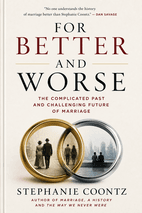
5 Main Takeaways from For Better and Worse
The 'traditional' marriage is a modern myth, not ancient ideal.
Coontz reveals that the male-breadwinner nuclear family, often portrayed as timeless, is a short-lived 1950s anomaly. Forager societies were egalitarian, agriculture introduced patriarchy, and marriage has always been shaped by economic and political forces. Letting go of this myth helps couples build relationships based on mutual respect rather than outdated scripts.
Unconscious gender stereotypes still sabotage modern relationships.
Even when we consciously reject sexism, 'historical earworms'—internalized beliefs about separate spheres, emotional labor, and male stoicism—persist. These subconscious biases undermine trust, intimacy, and equality. Actively identifying and challenging these patterns is essential for building healthy partnerships.
Marriage has become a luxury good, shaped by economic status.
Rising inequality, stagnant wages, and the lack of paid leave and childcare have made financial security a prerequisite for stable marriages. Poverty-related stress directly impairs relationship quality. Acknowledging these structural forces reduces self-blame and shifts focus toward systemic solutions.
Benevolent sexism and female self-effacement are legacies of separate spheres.
The 19th-century ideal of women as morally superior but politically powerless lives on in modern expectations of emotional labor and career sacrifice. This 'Mrs. Man' phenomenon undermines women’s confidence and career advancement. Recognizing this history empowers couples to consciously equalize power and support.
Rigid sexual and family categories are modern inventions, not timeless truths.
Coontz shows that same-sex romantic friendships were once accepted, and the rigid labeling of homosexuality as deviance emerged only in the early 1900s. Similarly, patriarchy was always contested. Understanding this fluidity frees us to create relationships that honor diversity and personal authenticity.
Executive Analysis
These five takeaways collectively argue that marriage is not a fixed institution but a dynamic social arrangement continually reshaped by economic, political, and cultural forces. Coontz’s central thesis is that our current relationship crises stem from a clash between historically unprecedented expectations for emotional intimacy and the persistence of unequal structures—gender stereotypes, economic inequality, and rigid categories—that make truly mutual partnerships difficult to achieve. The book shows that by recognizing these historical roots, we can stop blaming ourselves for systemic problems and instead focus on building relationships grounded in equality, empathy, and realistic support.
This book matters because it offers a historically grounded antidote to nostalgia and pop psychology that often blame individuals for marital struggles. For the reader, it provides practical tools to identify subconscious biases, advocate for social policies that strengthen families, and craft relationships that align with modern values rather than outdated traditions. In its field, Coontz’s work stands as a masterful synthesis of social history, feminist theory, and relationship science, challenging both conservatives and progressives to rethink what marriage can and should be in the 21st century.
Chapter-by-Chapter Key Takeaways
Introduction (Introduction)
Most people still marry and value marriage, but growing ambivalence—especially among young women—reflects fears about achieving the kind of relationship they want, not rejection of the institution.
Marriage is not inherently oppressive; it has taken many forms across history, some highly egalitarian. The male-breadwinner family is a modern, short-lived invention.
Historical “earworms”—simplistic, repetitive beliefs about gender, love, and sex—persist subconsciously and sabotage efforts to build mutualistic relationships, even when we consciously reject them.
External economic and social forces powerfully shape marital chances and satisfaction. Acknowledging them reduces blame and helps couples focus on what they can control.
Historical attribution (contextualizing problematic behavior) is more effective than moral condemnation for fostering change within relationships.
Try this: Recognize that your ambivalence about marriage likely stems from fear of not achieving a fulfilling partnership, not rejection of the institution itself—use historical context to reduce self-blame and focus on building mutual respect.
The Many and Much Misunderstood “Traditional” Marriages (Chapter 1)
The rise of agricultural surpluses and property rights transformed marriage from a system of circulating people and goods into one of concentrating wealth within restricted kin groups.
Endogamy, cousin marriage, and strict parental control over children's choices replaced the flexible, exogamous marriage patterns of foragers.
Patriarchy and the concept of illegitimacy emerged to safeguard patrilineal inheritance and control women's sexuality.
In elite circles, marriage became a strategic tool for political alliances, with religious institutions often serving as power brokers in arranging or blocking matches.
Counter-traditions of inclusive solidarity—exemplified by Jesus's teachings on "fictive family" and care for outsiders—never disappeared, challenging narrow family values.
The legacy of these ancient inequalities continues to shape modern debates about marriage, gender roles, and family support systems.
Try this: Challenge the idea that patriarchal marriage is 'natural' by remembering that forager societies were egalitarian and that inclusive 'fictive family' traditions offer an alternative model for care and solidarity.
The Paradox of Patriarchy and the Dark Side of Democracy (Chapter 2)
Men’s idealization of domesticity as a moral refuge gave women a new form of respect and influence, but it was explicitly a substitute for political and economic rights.
The Enlightenment’s universal rights rhetoric forced defenders of slavery and female subordination to invent “natural” justifications (race, gender fragility) that persist today.
Women’s identity was systematically subsumed into their husband’s—a “Mrs. Man” phenomenon that made self-effacement the price of social honor.
The denial of basic courtesy titles (Mr., Mrs.) to Black Americans until 1964 illustrates how deeply these hierarchies were embedded in everyday life.
Try this: Notice when you or others use 'benevolent sexism' to justify women's domestic roles as a 'choice'; instead, support policies that grant women equal economic and political power, not just moral respect.
How the Gender Legacy of Democracy Holds Women Back (Chapter 3)
The gender equality paradox—more female leaders and STEM workers in patriarchal societies—does not prove innate preferences; it reflects how limited options and dynastic pressures push women into roles they might not freely choose.
Gender stereotypes are not universal or fixed. They are internalized early, influence performance, behavior, and even memory, and they shrink or grow depending on cultural context.
Benevolent sexism, though often kind in intent, undermines women’s confidence and career advancement more than open hostility does.
Women’s perceived “niceness” and communal traits open some doors but close others, especially in leadership roles requiring assertive, agentic behaviors.
The legacy of separate spheres ideology—not inherent nature—shapes the emotional labor expectations that create inequality in marriages and workplaces today.
Try this: Actively question gender stereotypes by observing how they vary across cultures; when you catch yourself assuming women are 'too nice' for leadership, recall that such traits are learned, not innate.
Next chapter: “Separate Spheres, Soulmate Love & Sexual Tension” is locked
Keep learning from For Better and Worse — and unlock all 600+ book summaries with audio, mindmaps and AI Q&A.
$0.00 due today · 7 days free, then $89.99/year ($7.49/mo) · Cancel anytime before day 7
plus sales tax where applicable