Gad Saad's Suicidal Empathy argues that unchecked tribal empathy leads societies to prioritize moral signaling over survival, blending evolutionary biology and cultural critique. Written for readers skeptical of progressive orthodoxy, it exposes how "parasitic ideas" like identity politics and cultural relativism harm Western meritocratic societies.
Feature
Insta.Page
Blinkist
Shortform
Suicidal Empathy
✓
✕
✕
Summary Depth
Full Chapter-by-Chapter
15-min overview
Section-by-section guides
Audio Narration
✓
✓
✓
Visual Mindmaps
✓
✕
✕
AI Q&A
✓
✕
✕
Quizzes
✓
✕
✕
PDF Downloads
✓
✕
✓
Price
$89.99/yr
$146/yr (PRO)
$199/yr
*Competitor data last verified July 2026.
1 Page Summary
Empathy is often celebrated as a cornerstone of human connection, but in Suicidal Empathy, Gad Saad argues that this virtue can become profoundly destructive when misapplied. The book's central thesis is that an unchecked, tribal form of empathy—which he terms "suicidal empathy"—leads groups to prioritize short-term moral signaling over long-term survival. Saad examines how this misfired empathy manifests across society, from the hyper-empathy of compassion fatigue to the more dangerous collective impulse that, he contends, drives Western societies to embrace policies and behaviors that ultimately harm them. The author draws a sharp distinction between healthy empathy and its toxic counterpart, which he argues is weaponized by bad actors and exploited by a culture that rewards performative kindness over rational analysis.
What makes this book distinctive is Saad's provocative and interdisciplinary approach, blending evolutionary biology, psychology, and cultural critique. He methodically dismantles what he sees as sacred cows of progressive ideology, from the "blank slate" view of criminals to the valorization of cultural relativism. The book ranges across topics including the suppression of forbidden knowledge, the failures of identity politics in academia, and the dangers of ignoring trade-offs in public policy. Saad uses vivid case studies—from serial killers who weaponize empathy to university administrators who prioritize equity over merit—to illustrate how good intentions can pave the way to harmful outcomes. His central warning is that the West has become "too civilized" to defend itself, projecting its own values onto cultures that view such generosity as weakness.
Suicidal Empathy is written for readers who are skeptical of mainstream progressive orthodoxy and concerned about what Saad sees as the unraveling of meritocratic, freedom-based societies. The intended audience includes those who are frustrated by the dominance of identity politics, the suppression of uncomfortable scientific findings, and what the author calls the "DIE cult" (Diversity, Inclusion, and Equity) in academia and corporate life. Readers will gain a framework for recognizing what Saad terms "parasitic ideas" that prioritize immediate emotional gratification over long-term consequences. The book concludes with a set of prescriptions for "inoculation" against suicidal empathy, urging readers to resist first-order thinking and the seduction of social signaling, and to instead embrace the hard work of rational trade-offs and merit-based judgment.
A Good Virtue Gone Bad
Overview
Empathy is held up as a cornerstone of human connection—essential for choosing a partner, building friendships, healing patients, even caring for animals. It’s partly inherited, shaped by culture, and measurable, often aligning with agreeableness. But the same trait that binds us can also break us. In business, leaders who lean too heavily on empathy often stumble. Too little empathy makes you callous, too much can cripple your judgment.
When empathy misfires, it produces starkly different problems. On one end, psychopaths lack empathy entirely yet learn to fake it—the chilling interview with serial killer Richard Kuklinski reveals a complete absence of remorse. Even worse, predators like Ted Bundy weaponize our own empathy, triggering our instinct to help in order to lure victims. This is the dark side of empathy, used by anthropologists as a tool tied to deception and violence. On the opposite end lies hyper-empathy, seen in Williams syndrome or in the compassion fatigue that consumes nurses and doctors. Terms like helping too much, foolish kindness, and toxic empathy all capture how this noble virtue can backfire.
The most extreme form is suicidal empathy—not just one person’s suicide, but a group impulse driven by a broken empathetic system. The chapter covers historical mass suicides: Masada, Hindu Jauhar and Saka, the ball-game sacrifices at Chichén Itzá, Japanese seppuku, kamikaze pilots, Islamic suicide terrorism, and cult suicides like Heaven’s Gate and Jonestown. These acts often served as honest signals of commitment or desperate attempts to preserve honor under existential threat. The key point is that empathy can drive self-destruction when misapplied at the societal level. The author argues, following Toynbee and Burnham, that civilizations die by suicide, not murder—and in the modern West, progressive liberalism’s overextended empathy is the engine of that collective suicide.
Just as anger can be useful (deterring aggression) but harmful when uncontrolled, empathy can become hyperactive and dysfunctional. Suicidal empathy happens when people shut off healthy defensive instincts in the name of a rigid pacifism—a harmful worldview that leaves them vulnerable. Emotional dysregulation can affect both negative and positive emotions; inappropriate laughter is like the dysregulation of empathy. Suicidal empathy is a noble virtue stuck in an infinite loop, like OCD’s checking behavior or compulsive buying and eating disorders—healthy instincts gone haywire.
A personal beach incident shows how easily empathy can misfire. After a woman insulted the author and his son by littering a cupcake, he called her a “human pig.” What stuck with academics watching the clip was his harsh language—not her environmental vandalism or cruelty. His colleague’s empathy alarm flared for the supposed victim (the woman) while ignoring the actual victim (the beach, his son, common decency). This emotional misdirection defines suicidal empathy: the system reacts strongly to the wrong cues. The same pattern appears in the Norwegian case of Karsten Hauken, who felt guilt and worry about his rapist’s deportation to Somalia. Evolutionarily, such empathy toward one’s own rapist makes no sense. Humans evolved to discriminate—kin over stranger, friend over foe, in-group over out-group. Suicidal empathy wipes out that ancient calculus, treating all targets as equally deserving of emotional investment.
Randy Nesse’s framework of six ways emotional systems can falter provides a useful lens. Suicidal empathy maps onto three: baseline too high, response excessive, and response triggered by wrong cues. The empathy impulse is useful when calibrated correctly—it motivates care for children, cooperation within groups, and honest signaling of distress. But when cranked up indiscriminately, it becomes harmful. Sex differences matter here. Research consistently shows women score higher on empathy measures, and that same predisposition makes them more open to woke ideological capture—the willingness to sacrifice free speech and truth for emotional safety and kindness. The rapid feminization of academia has reinforced this trend, with departmental meetings that feel more like kindergarten circle time than professional discourse, emotional safety treated as the highest value.
The nature-versus-nurture debate maps onto Julian Rotter’s internal-versus-external locus of control. Progressives overwhelmingly favor external attributions: poverty, crime, and failure are products of environment, not personal agency. If all outcomes stem from outside forces, then empathy should be limitless—why punish criminals when society made them? Why deport gang members when they didn’t choose their birthplace? Cato Institute data confirms that liberals emphasize external forces, conservatives internal responsibility. The self-serving bias normally leads people to credit themselves for success and blame others for failure. But woke progressives invert this for marginalized groups: they attribute others’ failures to systemic injustice, then feel compelled to remedy those injustices through policies rooted in suicidal empathy. It’s a peculiar form of taking on someone else’s victimhood.
Behind all this lies a potent cocktail of narcissistic moral grandstanding and existential guilt. The suicidally empathetic person gazes into the mirror of progressive virtue and sees a saint—never judging, always forgiving, welcoming all, fighting for criminals and Mother Earth alike. This is pious preening, an empathy crusade that feels righteous but ultimately destroys. Add to that survivor guilt on a civilizational scale: guilt over being born in the West, with white skin, with unearned privilege. The only way to atone is through self-immolation—destroying one’s own society. This is collective impostor syndrome, the belief that Western civilization achieved greatness fraudulently and must now be dismantled. The Oslo syndrome—wishful thinking that concessions will pacify enemies—plays a role too. Israel saved Yahya Sinwar’s life; he later orchestrated the October 7 massacre. Some lessons are brutal but necessary. Ignoring warning signals, as in The Firebugs, doesn’t prevent arson; it enables it.
Key Takeaways
Suicidal empathy involves emotional responses aimed at the wrong targets, often ignoring real victims in favor of performative compassion.
Nesse’s framework identifies three relevant misfirings: baseline too high, response excessive, and response to wrong cues.
Women are more open to suicidal empathy due to higher baseline empathy, making them prime targets for woke ideological capture.
External locus of control (nurture over nature) drives the belief that all failure stems from environment, justifying unlimited empathy toward criminals, migrants, and adversaries.
The impulse is fueled by narcissistic moral grandstanding, existential guilt over Western privilege, and a collective impostor syndrome that demands civilizational self-destruction.
Ignoring warning signals—as in The Firebugs—doesn’t prevent arson; it enables it.
Key concepts: A Good Virtue Gone Bad
1. A Good Virtue Gone Bad
Empathy's Dual Nature
Essential for connection but can cripple judgment
Too little empathy breeds callousness
Too much empathy leads to poor decisions
Measurable, inherited, and shaped by culture
Dark Side of Empathy
Psychopaths fake empathy with no remorse
Predators weaponize empathy to lure victims
Hyper-empathy causes compassion fatigue in caregivers
Terms like toxic empathy capture its backfire
Suicidal Empathy and Mass Self-Destruction
Drives historical mass suicides like Masada and Jonestown
Acts as honest signal of commitment under threat
Civilizations die by suicide, not murder
Progressive liberalism's overextended empathy fuels this
Empathy as Dysregulated Instinct
Hyperactive empathy shuts off healthy defensive instincts
Rigid pacifism leaves people vulnerable
Like OCD or compulsive buying—healthy instinct gone haywire
Emotional dysregulation affects positive emotions too
Emotional Misdirection in Suicidal Empathy
Beach incident: empathy flared for wrong target
Karsten Hauken felt guilt for his rapist's deportation
Evolutionarily, empathy should discriminate kin from foe
Suicidal empathy treats all targets equally
Nesse's Framework for Emotional Dysfunction
Six ways emotional systems falter
Suicidal empathy: baseline too high, response excessive
Triggered by wrong cues
Calibrated empathy motivates care and cooperation
Gender, Attribution, and Woke Ideology
Women score higher on empathy, more open to woke capture
Feminization of academia prioritizes emotional safety
Progressives favor external attributions for failure
Suicidal empathy inverts self-serving bias for marginalized groups
💡 Try clicking the AI chat button to ask questions about this book!
Forbidden Knowledge
Overview
Forbidden knowledge asks whether empathy should keep us from facing hard truths. It starts with Milton’s Paradise Lost and Roger Shattuck’s categories of forbidden knowledge, using the film The Dilemma to show the conflict between telling the truth and avoiding harm. This conflict appears in the case of Roland Fryer Jr., whose research contradicted claims of widespread white supremacy and led to a witch hunt by Harvard’s Claudine Gay—who herself benefited from a system that rewards identity over merit. Similarly, Philippe Rushton’s research on race and cranial size was shut down, showing how science is suppressed when it challenges progressive beliefs. The chapter then looks at four examples where empathy is used to abandon principles: Trump’s Twitter ban, Kavanaugh’s confirmation, the Hunter Biden laptop suppression, and limits on free inquiry. It draws parallels to historical inquisitions—the Islamic Mihnah, the Catholic Inquisition, Spinoza’s excommunication—and modern efforts to control information, from the U.S. Disinformation Governance Board to European threats against Elon Musk. The medical ethics of fat acceptance are criticized as a form of denial, blaming white supremacy for obesity’s health risks and celebrating unhealthy lifestyles as virtuous. The chapter then attacks intersectional identity politics in academia, where journals like Fat Studies favor feelings over facts, extending to San Francisco’s “weight stigma czar.” This spreads to journalism, where bias in reporting on race and the push for absurd euphemisms—even destigmatizing pedophilia as “minor-attracted people” or defending cannibalism as non-Western tradition—undermine truth. Real-world consequences appear in progressive homelessness policies that ignore mental illness, home invasion cases, and tragic stories of altruists killed by those they helped: Jay and Lauren executed by ISIS, Congolese researchers killed on a UN mission, a journalist gang-raped in the Calais jungle, and a Colorado father whose daughter was raped by a migrant he housed. The core idea is that empathy without reality becomes destructive, shown by fables like “The Scorpion and the Frog.” The chapter ends with a personal note on never allowing sleepovers and assuming all men are potential predators—a position that upsets empathetic people but keeps children safe. Reality does not care about your feelings, and the only responsible path is to see the world as it is, balancing empathy with clear-eyed risk.
Forbidden Knowledge as a Moral Calculus
The chapter starts by questioning the idea of forbidden knowledge, using Milton’s Paradise Lost and the point that avoiding reality doesn’t let you escape its consequences—only destruction. Roger Shattuck’s six categories of forbidden knowledge are mentioned, including knowledge banned by authority and dangerous or unwelcome truths. The dilemma of whether to tell a friend about their spouse’s infidelity (from the film The Dilemma) shows two ethical choices: telling the truth versus weighing harm. This sets up the main tension: empathy can be used to justify silence or suppression.
The Fall of Roland Fryer Jr.
Roland Fryer Jr., the youngest black professor to get tenure at Harvard, pursued “forbidden knowledge” by publishing data that contradicted the story of widespread white supremacy. His research showed that blacks are not always victims in education or policing. This threatened the progressive establishment, which needs blacks to stay victims in need of saving. Claudine Gay, then dean and later president of Harvard, led a witch hunt against Fryer. The author argues that Gay’s own rise—despite serial plagiarism—was itself a form of rewarding identity over merit: Harvard sacrificed its reputation to protect a “noble administrator of color.” Gay later said plagiarism charges were racist, and when asked about calls for genocide of Jews on campus, she said it “depended on context.”
Rushton and the Price of Unpopular Science
The author recalls attending a psychology congress where Philippe Rushton presented research on race and cranial size. The room was hostile, and nearly the entire audience left after his talk, leaving the author with a tiny crowd. This shows how some research is treated as forbidden because of its perceived consequences. The author argues that if research follows scientific method and ethics, it should be allowed—even if findings challenge politically correct narratives. Otherwise, we cannot discuss links between race and crime, or immigration and criminality. The empathetic argument to suppress such research is based on protecting marginalized groups, but it creates a bias where only progressive-friendly findings are published.
Faulty Consequentialism in Public Life
Four examples show how empathy is used to abandon principles:
Trump’s Twitter ban: Free speech was set aside because Trump was an “existential threat.”
Kavanaugh’s confirmation: Presumption of innocence was ignored because a Supreme Court seat was too important.
Hunter Biden laptop: Journalistic integrity was sacrificed to avoid a Trump victory, with social media and government working together to suppress the story.
Freedom of inquiry: Only allowed if it supports social justice; otherwise, it is forbidden.
Progressives who support these exceptions claim they are being empathetic—protecting society from harm. But the author calls this a “ends justify the means” morality, quoting Sam Harris’s admission that he would not care if Hunter Biden had corpses in his basement if it meant preventing a Trump win.
Hate Speech, Misinformation, and the New Inquisition
History shows no monopoly on silencing dissent: the Islamic Mihnah, the Catholic Inquisition, Spinoza’s excommunication—all were forms of controlling “disinformation.” Today, the U.S. government created a Disinformation Governance Board under Biden, with Nina Jankowicz. John Kerry complained that the First Amendment hinders fighting climate misinformation, while flying private jets. Hillary Clinton called for criminal liability for those spreading “Russian disinformation,” which conveniently includes anything that hurts Democrats. European regulators like Thierry Breton threatened Elon Musk over a live-stream chat with Trump, citing “harmful content.” NPR’s CEO Katherine Maher said the First Amendment makes it “tricky” to address bad information. Tim Walz and AOC both argued for restricting free speech on misinformation and falsehoods.
The Empathy of Fat Acceptance
The chapter shifts to medical ethics and the fat acceptance movement. “Healthy at any size” is a form of denial—ignoring reality to protect feelings. Obesity reduces lifespan, but activists blame white supremacy. Sabrina Strings argues that BMI is a fetishization of white embodiment, and diet and exercise are forms of white supremacy. The author sarcastically notes that losing eighty-six pounds through exercise and calorie counting apparently makes him a contender for Grand Wizard of the KKK—despite being a Lebanese Jew. This kind of empathy shifts blame from personal responsibility to external forces and celebrates unhealthy lifestyles as virtuous.
The second part of the chapter attacks intersectional identity politics in academia, using the journal Fat Studies and its special issue on Indigenous fatness as an example. The author argues that such fields have given up on objective truth—science, reason, logic—in favor of feelings and victimhood. This rot, he claims, goes beyond campus. San Francisco appointed a “weight stigma czar,” a move he presents as a sign of a society that prioritizes the self-esteem of the obese over more pressing public health crises like diabetes and heart disease.
The discussion then moves to journalism, where the tension between seeking truth and minimizing harm creates a dangerous bias. The author cites data showing that, after George Floyd, American newspapers are far more likely to mention the race of white murderers than black ones—a distortion that undermines honest reporting. This same pattern appears in the cultural obsession with sanitizing language. He traces a path from the idea that language shapes reality to the modern push for absurd euphemisms, offering a long list and noting that even grammatical correction has been framed as racist. The satire escalates: an academic movement to destigmatize pedophilia by rebranding them as “minor-attracted people,” a New Scientist article defending cannibalism as a non-Western tradition, and the Biden administration’s regret over calling an illegal immigrant a murderer an “illegal.”
He then turns to the real-world consequences of this kind of empathy. Homelessness in progressive cities, he argues, is made worse by policies that refuse to blame mental illness or addiction, choosing instead to blame capitalism and build luxury housing at taxpayer expense. The same mindset prevents charging home invaders, demands that Canadians call 911 instead of defending themselves, and leaves theaters bankrupt after offering shelter to migrants who refuse to leave. The chapter ends with a series of tragic stories: Jay and Lauren, the cyclists who believed evil was a social construct and were executed by ISIS; the Congolese human rights researchers killed on a UN mission; the journalist gang-raped in the Calais “jungle”; and the Colorado father who housed a Venezuelan migrant who then raped his daughter.
The core idea is that empathy without reality becomes destructive. This is shown by fables like “The Scorpion and the Frog.” The chapter concludes with a personal note on never allowing sleepovers and assuming all men are potential predators—a position that upsets empathetic people but keeps children safe.
Key Takeaways
Forbidden knowledge is about whether empathy should stop us from facing uncomfortable truths.
Roland Fryer Jr.’s research was suppressed because it challenged the narrative of widespread white supremacy.
Empathy is often used to justify abandoning principles like free speech, presumption of innocence, and journalistic integrity.
The fat acceptance movement and identity politics in academia prioritize feelings over objective facts.
Empathy without reality leads to harmful policies and tragic outcomes, as shown by stories of altruists
Key concepts: Forbidden Knowledge
2. Forbidden Knowledge
Forbidden Knowledge as Moral Calculus
Avoiding reality doesn't escape consequences
Shattuck's six categories of forbidden knowledge
The Dilemma: truth vs. avoiding harm
Empathy can justify silence or suppression
The Fall of Roland Fryer Jr.
Fryer's data contradicted white supremacy narrative
Progressive establishment needs blacks as victims
Claudine Gay led witch hunt against him
Gay's rise rewarded identity over merit
Rushton and Suppressed Science
Race and cranial size research met hostility
Scientific method should override political correctness
Suppression blocks race-crime and immigration links
Altruists killed by those they helped (ISIS, Congo)
Colorado father: daughter raped by housed migrant
Scorpion and Frog fable: empathy without reality
Cultural Theory of Mind
Overview
The chapter challenges the idea that all immigrants are the same. It points out a common mistake: confusing a productive person with a destructive one—like thinking a lion and a house cat are equally dangerous just because both are felines. This leads to the main idea: a culture must accurately understand another culture’s mindset to interact well. The author argues the West fails here, projecting its own empathy and generosity onto cultures that see these traits as weakness. In some Islamic societies, these qualities are viewed as feminine vulnerability.
The text then describes the Islamist strategy for taking over the West: outbreed, use immigration, and exploit Western legal freedoms to undermine from within—a plan laid out in Muslim Brotherhood memos. The division of the world into Dar el-harb and Dar el-Islam means any non-Muslim land is a target. Cultural relativism is rejected as a harmful idea that refuses to judge clearly harmful practices like child brides, honor killings, and throwing gays off rooftops. Yet Western leaders like Justin Trudeau embrace a postnational identity, and Mark Carney equates Islamic and Canadian values, showing a serious lack of understanding.
Examples pile up to show misguided empathy in action. The British grooming gangs scandal, where authorities protected perpetrators from accusations of Islamophobia over protecting young white girls. Justin Trudeau’s instinct to blame the Boston bombers’ exclusion, to welcome ISIS fighters as “powerful voices,” and to pay millions to a convicted terrorist. Even personal stories illustrate a mental block where a Lebanese friend could not accept that a kind Jew existed alongside the evil stereotype. After October 7, global empathy for Jews actually decreased, not increased, and protests erupted before Israel retaliated, fueled by denial and confusion about cause and effect. The author contrasts this with his own empathy for Muslim victims of ISIS, showing genuine compassion can cross group lines—a courtesy denied to Jews.
The chapter then looks at accommodations to Islam in secular institutions, where university committees go out of their way for religious requests while the author never imposed his own Jewish obligations on others. Mass public prayers are seen as signals of dominance, following a historical pattern: a small minority is exotic, but once past a tipping point, demands become forceful and intolerant, pushing out non-Muslims. This one-way tolerance means mosques multiply in the West while churches disappear in the Middle East, extremist clerics exiled from Islamic countries are welcomed in the West, and no reciprocal expectations exist. Even Pope Francis washes Muslim migrants’ feet after terror attacks, and queer activists proudly say they would be killed in Gaza but support Palestine anyway—self-blame that mirrors the Arabic proverb of a wife beaten every morning who blames herself.
The most extreme examples are Jewish people who try to win favor with their enemies, like Anna Epstein tearing down hostage posters or Jonathan Glazer refusing to let his Jewishness be “hijacked.” The tragedy of Vivian Silver, a peace activist murdered on October 7, shows that endless empathy cannot protect those seen as Jewish. Gabor Maté’s trauma theory is criticized as bad science, a profitable business that reserves empathy for Palestinians while denying it to Jews. The broader warning says cultural pluralism is fine—but treating all cultures and all immigrants the same is a dangerous mistake. The West must demand loyalty and real benefit from newcomers, and be proud enough to defend its heritage against declared enemies, instead of destroying itself through misguided empathy.
Key Takeaways
The global response to October 7 denied Jews empathy through denial and confusion about cause and effect
The author's empathy for Muslim victims of ISIS shows that genuine compassion can cross group lines—a courtesy denied to Jews
Religious accommodations for Islam at secular institutions reflect a one-sided tolerance, with no reciprocal expectations
Mass public prayers signal dominance, following a historical pattern of intolerance as Muslim populations grow
Misguided empathy in the West—shown by Pope Francis, queer activists, and some Jewish people—enables the erasure of non-Muslims
The most tragic figures are Jewish peace activists like Vivian Silver, whose empathy could not protect them from execution
Maté’s trauma theory is dismissed as bad science, and his empathy is exposed as hypocritical when it comes to Jews
The critique extends to a broader warning: cultural pluralism is fine, but treating all cultures and immigrants the same is a dangerous mistake
Misguided empathy leads to self-destruction; the West must assert pride and demand loyalty from newcomers
Key concepts: Cultural Theory of Mind
3. Cultural Theory of Mind
Misguided Empathy and Cultural Misunderstanding
West projects empathy onto cultures viewing it as weakness
Islamic societies see these traits as feminine vulnerability
Western leaders show serious lack of cultural understanding
Genuine compassion denied to Jews after October 7
Islamist Strategy and Worldview
Outbreed, immigrate, exploit Western legal freedoms
World divided into Dar el-harb and Dar el-Islam
Non-Muslim lands seen as legitimate targets
Muslim Brotherhood memos outline takeover plan
One-Sided Tolerance and Accommodations
Mosques multiply in West, churches vanish in Middle East
Extremist clerics exiled from Islamic countries welcomed
Mass public prayers signal dominance as populations grow
No reciprocal expectations for religious accommodations
Examples of Misguided Empathy in Action
British grooming gangs protected from Islamophobia accusations
Trudeau welcomed ISIS fighters as powerful voices
Pope Francis washes Muslim migrants' feet after attacks
Queer activists support Palestine despite being killed there
Warning Against Cultural Relativism
Refuses to judge harmful practices like honor killings
Treating all cultures and immigrants same is dangerous
West must demand loyalty and defend its heritage
Self-destruction through misguided empathy must stop
Blank Slate Felons
Overview
A society sides with criminals over punishment. A Cheers episode shows Diane rationalizing an armed robbery as a cry for help. Then come the Zantop murders: two Dartmouth professors killed by teenagers who exploited their trust. One murderer got parole before serving his minimum sentence. These are blank slate felons—treated as products of racism or poverty, not as people with choices. Nearly one-third of male prisoners have been locked up five times or more, yet empathy goes to repeat offenders, not victims like Stephen Federico, whose daughter was killed by a man with 39 prior arrests. The Travis Lewis case shows the danger: a teenage murderer forgiven by his victim’s daughter, given a job, then murdering her too. The West has become too civilized to seek vengeance, and criminals exploit this.
California and Canada offer stark examples. After baker Jen Angel was killed in an Oakland robbery, her family said she would have opposed her murderers’ incarceration. Nathan Clark, whose 11-year-old son was killed by an unlicensed Haitian driver, said he wished his son had been killed by a white man—signaling that appearing non-racist mattered more than the loss. The Defund the Police movement is attacked as hostility toward protectors, with crime rising. Canada’s Royal Canadian Mounted Police issued land acknowledgments and equity guidelines during a missing children case, prioritizing historical grievances over immediate safety.
The chapter then turns to male archetypes. Heroic masculinity—firefighters, cops, soldiers—is labeled toxic, while effeminate, faux-empathetic men are praised. The Daniel Penny case shows the contradiction: a Marine who subdued a threatening man on the subway was charged, while a similar incident with a black attacker went unprosecuted. Penny’s whiteness and the victim’s background triggered progressive empathy. The author introduces the sneaky f**ker concept from zoology: males that mimic females to sneak past dominant males. Male social justice warriors like Justin Trudeau use performative feminism as a mating strategy, while real protectors are demonized. The result: hating the men who save you from rape while showing unlimited empathy for the men who rape you.
This pattern repeats across Europe. A German politician assaulted by three migrants lied to police about their identities and publicly apologized to them with #refugeeswelcome. A young woman raped and murdered by an Afghan asylum seeker—her family asked for donations to refugee charities instead of flowers. Eight of nine gang rapists in Germany got suspended sentences, while a woman who insulted one was jailed for defamation. British judges spared a man who had sex with a thirteen-year-old because his Islamic upbringing made him unaware it was wrong, another because he was lonely, and granted residency to convicted rapists to avoid deportation. An Iraqi refugee who raped a ten-year-old boy had his sentence reduced because the child’s consent was not established. Cultural relativism reaches extremes: American soldiers in Afghanistan were told to ignore the sexual slavery of young boys because “it’s their culture,” and the Toronto District School Board canceled a speech by Nobel laureate Nadia Murad, a Yazidi survivor of ISIS sex slavery, for fear of stoking Islamophobia.
Finland responded to a surge in migrant rapes with a TikTok video reminding men not to touch a woman’s “no-no square”; Sweden distributed anti-groping bracelets. Amanda Kijera, after being gang-raped in Haiti by a Black man she had spent her life advocating for, concluded the true culprit was “white patriarchy” and declared herself grateful for the experience. Anat Kimchi, a doctoral student studying supposed racism in the justice system, was murdered by a homeless Black man in Chicago—alive today, the author insists, had she not extended empathy to repeat criminals.
The author becomes personal. After receiving death threats in 2017, he asked university security if he could carry a gun for self-defense and was told even a former Canadian general couldn’t. In 2022, a man confronted him with visible hatred; when police investigated, they refused to show photo lineups because the suspect was Black—profiling would be racist. A local officer advised him to stop expressing controversial views for his own safety. Canada, the author concludes, is a fully castrated society where criminals are armed and law-abiding citizens are sitting ducks. This empathy cares more about the rights of rapists and felons than their victims, labels heroic masculinity as toxic, demonizes police, removes the right to self-defense, promotes open borders, and stacks every deck against the fundamental human right to feel safe.
Key Takeaways
This empathy protects perpetrators, blames victims, and uses cultural relativism to excuse violence.
A consistent pattern across Europe: light or suspended sentences for migrant rapists, resident permits for pedophiles, and legal punishment for women who insult or resist their attackers.
Progressive institutions cancel victims’ voices (Nadia Murad) while apologizing for rapists’ backgrounds.
The author’s own experience with death threats reveals that even police are disarmed, and suspect identification is blocked by anti-profiling ideology.
Societies that prioritize the feelings of criminals over the safety of citizens cannot sustain freedom or public order.
Key concepts: Blank Slate Felons
4. Blank Slate Felons
Blank Slate Felons Defined
Criminals treated as products of racism or poverty
Empathy goes to repeat offenders, not victims
Travis Lewis case: forgiven murderer kills again
Nearly one-third of prisoners have 5+ prior arrests
Victim Empathy Replaced by Perpetrator Empathy
Jen Angel's family opposed her murderers' incarceration
Nathan Clark wished son killed by white man
Defund the Police movement prioritizes criminals over safety
RCMP issued land acknowledgments during missing children case
Heroic Masculinity Demonized
Firefighters, cops, soldiers labeled toxic
Daniel Penny charged for subduing threat; similar case unprosecuted
Performative feminists like Trudeau use empathy as mating strategy
Real protectors hated while rapists receive unlimited empathy
European Cultural Relativism
German politician apologized to migrant attackers
Gang rapists got suspended sentences; victim insulting them jailed
British judges spared pedophiles citing Islamic upbringing or loneliness
Toronto school canceled Nadia Murad speech to avoid Islamophobia
Author's Personal Experience & Conclusion
Denied self-defense gun permit despite death threats
Police refused photo lineup because suspect was Black
Officer advised him to stop expressing views for safety
Canada is a castrated society where criminals are armed
Settled Science, Taboo Trade-Offs
Overview
Claiming "the science is settled" lets people avoid hard choices and real costs. People ignore trade-offs and refuse to see what things actually cost. Karl Popper said science is always open to change, never final. Frank Sulloway’s Born to Rebel shows that laterborn children pushed radical ideas—Copernicus, Darwin, germ theory—while firstborns stuck with the old ways. Every big discovery overturned what everyone thought was settled.
The Semmelweis reflex is how hard it is to change minds when new evidence clashes with old beliefs. Barry Marshall drank bacteria to prove ulcers come from H. pylori. Harold Ridley was rejected for decades. Edward Jenner’s smallpox paper was turned down. Outsiders are often right, but the establishment fights back.
During COVID, Quebec banned walking a dog alone but allowed mass protests. Governments used exaggerated risks to grab power. Doctors who questioned harsh measures faced punishment. The death rate for younger people was tiny, but no one could talk about it. Universities handed out disability accommodations for ordinary anxiety, with policies like a “pause” button—fake compassion that ignored real costs.
Climate activism refuses to make trade-offs. Every dollar spent saving a frog’s habitat is a dollar not spent somewhere else. Ida Auken’s shared-everything 2030 plan, Valérie Plante’s $800 million bike lanes in a snowy city, and the idea that no progress is ever enough all show the same logic. Activism keeps splitting into smaller and smaller groups.
Environmental activists mix up unrelated issues, like saying fighting Islamophobia is key to environmentalism. The author jokes darkly: if Islamic conquests count as population control, then Islam is green. He points to the 9/11 agent who avoided profiling Mohamed Atta—a case of misplaced compassion. The Brussels attacks were blamed on not enough art exposure, while activists vandalize art.
Fifty years of dire climate predictions never came true, but questioning them gets you called a denier. The 2025 LA Palisades fires were blamed on climate change until an arsonist was charged. This hostility also targets family and having kids. The author says radical feminism, collectivism, and climate extremism hurt family formation. One group urges people not to have children. Academic studies link climate anxiety to childlessness. Climate extremists now go after pets—P’Nut the Squirrel and Fred the Raccoon were euthanized after a rabies scare, even though tests were negative.
The longest section covers trans activism. The author’s 2017 Senate testimony on Bill C-16 warned that evolution depends on two sexes. Over 600 biological women lost medals competing against biological males. Progressives oppose the death penalty because one innocent life is too high a cost, but ignore hundreds of women’s dreams destroyed. Dr. Johanna Olson-Kennedy withheld results of a $10 million study because it found puberty blockers did not improve mental health. Tremaine Carroll, a male prisoner who said he was trans, moved to a women’s prison and raped two inmates. A Canadian study found 44% of “trans women” inmates were in for sexual crimes. A black nurse was suspended for misgendering a “trans” pedophile. Physicists Neil deGrasse Tyson and Sean Carroll say intersex conditions prove gender is a spectrum, but exceptions don’t erase the rule.
Malcolm Gladwell backtracked on transgender women in sports, showing social pressure beats data. He admitted he had been “objective in a dishonest way”—a confession that lacks honesty because it frames his reversal as a personal insight, not an admission of harm. Gladwell didn’t grow empathy for victims; he sensed which way the wind was blowing. This drives home the warning: when misplaced compassion tears down biological reality, the majority pays. Reason and honesty become casualties.
Key Takeaways
The author uses the idea that no progress is ever enough to show how victimhood keeps splitting into smaller pieces, especially in climate activism.
He argues that environmental and trans activism share a pattern of misplaced compassion that ignores reality, statistics, and trade-offs.
Examples include ignoring Islamic terrorism, suppressing failed climate predictions, blaming art deprivation for radicalization, and supporting anti-natalism.
In trans activism, he highlights suppressed research, harm to biological women in sports and prisons, and the absurdity of gender fluidity claims.
The main point: empathy cut off from reality leads to irrational policies and destroys basic truths about sex, family, and safety.
Key concepts: Settled Science, Taboo Trade-Offs
5. Settled Science, Taboo Trade-Offs
Settled Science and the Semmelweis Reflex
Science is never truly settled, per Karl Popper
Laterborns historically overturn established scientific dogma
Semmelweis reflex: resistance to new evidence
Barry Marshall proved ulcers from H. pylori
Misplaced Compassion in COVID and Climate
Quebec banned dog walks but allowed mass protests
Climate activism refuses to acknowledge trade-offs
Every dollar spent on one cause is a dollar not spent elsewhere
Activism splits into ever-smaller victim groups
Failed Predictions and Hostility to Family
Fifty years of dire climate predictions never came true
Questioning predictions gets you called a denier
Climate extremism actively discourages having children
P'Nut the Squirrel euthanized despite negative rabies tests
Trans Activism and Suppressed Reality
Over 600 biological women lost medals to biological males
Dr. Olson-Kennedy withheld puberty blocker study results
44% of 'trans women' inmates in for sexual crimes
Exceptions like intersex don't erase the biological rule
Gladwell's Backtrack and the Cost of Dishonesty
Malcolm Gladwell reversed stance on trans women in sports
He admitted being 'objective in a dishonest way'
Social pressure beats data in public discourse
Misplaced compassion destroys reason and biological reality
Selling Indulgences
Overview
The analogy is striking: just as the Catholic Church once sold indulgences to absolve sins, modern corporations and institutions now offer woke capitalism as a form of penance for profit-driven transgressions. Hiring nonbinary workers, protecting Mother Earth from energy companies, or creating ads celebrating transgender women of color become substitutes for actual profit maximization. If you feel guilty about standing on stolen land, you indigenize the curriculum; if your white skin disgusts you, you set up preferential admissions. This is suicidal empathy—a force that destroys meritocracy.
The chapter then contrasts the American dream—equal opportunity to achieve success through hard work—with Kamala Harris’s vision of equity, where “everybody should end up in the same place.” Unequal starting positions can stem from innate differences or parental choices, not just bigotry. The idea that all disparities must be remedied by central intervention is antithetical to the dream. Examples from the Biden administration follow: Pete Buttigieg as transportation secretary (qualified mainly by being gay), Rachel Levine as assistant secretary of health (a biological man hailed as a first woman), and Sam Brinton in nuclear energy (a nonbinary luggage thief). Meritocracy has been systematically attacked.
Despite Democrats branding themselves as the Party of Empathy—from Bill Clinton’s “I feel your pain” to Obama’s calls to address an empathy deficit—liberals often show less empathy toward those with differing political views. A personal anecdote illustrates this: a former friend ended a friendship because the author spoke at a Republican event. The empathy is conditional.
At Concordia University, the author endured mandatory trainings on sexual violence awareness and systemic oppression under a rubric called “It Takes All of Us.” He finds it Orwellian, given his family’s history of fleeing persecution as Lebanese Jews. The same institution that preaches empathy ignores rampant Jew-hatred on campus after October 7. The DIE (Diversity, Inclusion, Equity) cult is then dissected: nearly 20% of US academic job postings and almost all Canadian ones require explicit DIE commitments. The University of Michigan spends $30 million on over 500 DIE positions. If there aren’t enough black trans women professors in mathematics, it must be structural racism and transphobia.
A research grant at Concordia aims to “decolonize light,” suggesting Indigenous knowledge can replace classical physics. Chanda Prescod-Weinstein offers a reading list that demands citation as “care.” The queering of computer science via Dylan Paré’s “Queer Code” argues for reorienting computing away from cisheteropatriarchal hegemonies. The author recalls his own computer science education—Turing machines, NP-complete problems—and notes that Turing was gay, so perhaps he was already an acolyte of Queer Computing.
Prestigious Canadian universities now restrict research chairs based on identity: women, transgender, non-binary, or Two-spirit for AI; racialized minorities for computer science; people with disabilities for oral cancer research. The author sarcastically suggests that a blind Indigenous nonbinary obese person would be ideal for oncology innovation. Meanwhile, standardized testing (GMAT, SAT, GRE, MCAT, LSAT) is being dropped to attract more students, and medical schools shorten curricula out of “empathy.” Meritocracy itself is labeled a racist myth. The author jokingly informs his wife that he must remove romance from their marriage because The College Fix lists romance as racist in 2024.
The chapter moves from the personal to the systemic, showing how empathy—when weaponized—becomes a tool for silencing inconvenient truths and rewarding incompetence. Consider the accusation of “acting white” leveled at academically successful Black students. That phrase is a cultural pressure that discourages excellence and provides an excuse for disparities. The “empathetic” response is to eliminate standardized tests and advanced placement classes rather than address root causes. Amy Wax, a University of Pennsylvania law professor, stated a factual observation about Black students’ performance and was punished. Forbidden knowledge is anything that doesn’t affirm group identity. Meanwhile, Cornell professor Russell Rickford called the October 7 massacre of Jews “exhilarating” and received only a brief leave. Empathy is selective.
Then there’s Ian Roberts, the first Black superintendent of Des Moines Public Schools—a diversity hire celebrated for remedying Iowa’s whiteness problem. Except he was an illegal alien who lied about his credentials, had a loaded gun and hunting knife when arrested, and had prior weapons charges. The school board chair, Jackie Norris, responded by urging radical empathy. His lies, weapons, illegal status—all secondary to his skin color. That’s not empathy; that’s self-deception.
Even soccer isn’t safe. When Argentina won the 2022 World Cup, critics lamented the lack of Black players on the team—yet nobody complained about Angola having no white players. The DIE cult destroys beauty and competition.
The same sickness infects academic research ethics. Classic psychology experiments—Asch, Milgram, Zimbardo—reveal uncomfortable truths. But today’s institutional review boards have been captured by an ethos of “do no harm” taken to absurd lengths. Every class project must go through third-party review, even for a simple survey, because a participant might be offended by a question about income or by anything that doesn’t acknowledge all 873 possible genders. Suicidal empathy operates like a homeostatic system: keep diluting victimhood until you’ve created a monitoring apparatus that strangles inquiry.
In life-or-death fields, the consequences are dire. The CanMEDS organization recently proposed guidelines that would center anti-oppression and social justice rather than medical expertise. At the University of Minnesota Medical School, White Coat ceremonies now include pledges to “uproot white supremacy” and “honor indigenous ways of healing.” Imagine being wheeled into surgery knowing your surgeon was trained to prioritize social justice over sterile technique. Aviation isn’t immune either: the FAA has a targeted hiring program for people with severe disabilities—hearing, vision, missing extremities, paralysis, epilepsy, even “severe intellectual disability” and dwarfism. Because nothing says safe flying like a blind captain with a paranoid schizophrenic co-pilot.
Then there’s the LA Fire Department. Despite catastrophic 2025 wildfires that killed 29 people and destroyed over 16,000 properties, the department’s deputy chief proudly proclaimed its commitment to DIE principles. She argued that victims want firefighters who “look like you.” When asked about a female firefighter’s ability to carry a man out of a burning building, she replied: “He got himself in the wrong place if I have to carry him out of a fire.” The empathy owed to an obese queer firefighter outweighs the life of a trapped man.
Business has its own version of this madness. The evolution of corporate responsibility moves from Fordism to mass customization to green capitalism to stage four: woke capitalism—using the corporation as a vehicle for social justice, regardless of profit. This is Bud Light hiring Dylan Mulvaney, Gillette’s “toxic masculinity” ad, every commercial showing the white husband as a bumbling fool, every queer person of color trotted out to signal virtue. The 2023 Jaguar ad featured no cars at all—just strangely dressed people of color sashaying around. Destroying decades of brand equity to elevate trans visibility is apparently worth it. The argument that empathy drives commercial success works until it doesn’t.
Whether in academia, medicine, aviation, firefighting, or business, one principle must hold: competition and meritocracy are fundamental to human dignity. No one is owed a job, a degree, or a rescue because of their identity. Victimology narratives are a road to ruin. Suicidal empathy doesn’t make the world kinder—it makes it less capable, less honest, and ultimately less just.
Woke Capitalism as the New Indulgence
The chapter opens with a provocative analogy: just as the Catholic Church once sold indulgences to absolve sins, modern corporations and institutions now offer “woke capitalism” as a form of penance for profit-driven transgressions. The currency here is orgiastic empathy—hiring nonbinary workers, protecting Mother Earth from energy companies, or creating ads celebrating transgender women of color become substitutes for actual profit maximization. If you feel guilty about standing on stolen land, you indigenize the curriculum. If your white skin disgusts you, you set up preferential admissions. This, the author argues, is a suicidal empathy that destroys meritocracy.
Equality of Opportunity vs. Equality of Outcome
The text then contrasts the American dream—defined as equal opportunity to achieve success through hard work—with Kamala Harris’s vision of equity: “Everybody should end up in the same place.” The author dismantles this by pointing out that unequal starting positions can stem from innate differences (like intelligence) or parental choices (like reading to children), not just from bigotry. The implication that all disparities must be remedied by central intervention is called antithetical to the American dream. Examples from the Biden administration follow: Pete Buttigieg as transportation secretary (qualified mainly by being gay), Rachel Levine as assistant secretary of health (a biological man hailed as a first woman), and Sam Brinton in nuclear energy (a nonbinary luggage thief). Meritocracy, the author says, has been systematically attacked.
The Empathy Deficit Among Empathizers
Despite Democrats branding themselves as the Party of Empathy—from Bill Clinton’s “I feel your pain” to Obama’s calls to address an empathy deficit—the author notes that liberals often show less empathy toward those with differing political views. A personal anecdote illustrates this: a former friend ended their friendship because the author spoke at a Republican event. The empathy, it seems, is conditional.
Empathetic Mandatory Training and the DIE Cult
At Concordia University, the author endured mandatory trainings on sexual violence awareness and systemic oppression—under a rubric called “It Takes All of Us.” He finds it Orwellian and insulting, given his family’s history of fleeing persecution as Lebanese Jews. The same institution that preaches empathy ignores rampant Jew-hatred on campus after October 7. The Diversity, Inclusion, and Equity (DIE) cult is then dissected: nearly 20% of US academic job postings and almost all Canadian ones require explicit DIE commitments. The University of Michigan spends $30 million on over 500 DIE positions. If there aren’t enough black trans women professors in mathematics, it must be structural racism and transphobia.
Decolonizing Light and Queering Computer Science
A research grant at Concordia aims to “decolonize light,” suggesting that Indigenous knowledge can replace classical physics. Chanda Prescod-Weinstein, a self-described black feminist theoretical physicist, offers a reading list that demands citation as “care.” The author mocks the queering of computer science via Dylan Paré’s “Queer Code,” which argues for reorienting computing away from cisheteropatriarchal hegemonies. He recalls his own computer science education—Turing machines, NP-complete problems—and notes that Turing was gay, so perhaps he was already an acolyte of Queer Computing.
Preferential Hiring and the Assault on Standardized Testing
Prestigious Canadian universities now restrict research chairs based on identity: women, transgender, non-binary, or Two-spirit for AI; racialized minorities for computer science; people with disabilities for oral cancer research. The author sarcastically suggests that a blind Indigenous nonbinary obese person would be ideal for oncology innovation. Meanwhile, standardized testing (GMAT, SAT, GRE, MCAT, LSAT) is being dropped to attract more students, and medical schools shorten curricula out of “empathy.” Meritocracy itself is labeled a racist myth, a source of stress for African Americans. The author jokingly informs his wife that he must remove romance from their marriage because The College Fix lists romance as racist in 2024.
The Cost of Misguided Empathy in Academia
The chapter moves from the personal to the systemic, showing how empathy—when weaponized—becomes a tool for silencing inconvenient truths and rewarding incompetence. Consider the accusation of “acting white” leveled at academically successful Black students. That phrase isn’t just a slur; it’s a cultural pressure that discourages excellence and then, conveniently, provides an excuse for disparities in outcomes. The “empathetic” response is to eliminate standardized tests and advanced placement classes rather than address the root causes of underperformance. Amy Wax, a University of Pennsylvania law professor, learned this the hard way: when she stated a factual observation about Black students’ performance in her classes, she was punished. Forbidden knowledge, it seems, is anything that doesn’t affirm group identity.
Meanwhile, Cornell professor Russell Rickford called the October 7 massacre of Jews “exhilarating” and received only a brief leave. The hashtags write themselves: #BlackGradesMatter, #JewishLivesDoNotMatter. Not all victims are equal in the empathy economy.
Then there’s Ian Roberts, the first Black superintendent of Des Moines Public Schools—a diversity hire celebrated for remedying Iowa’s whiteness problem. Except he was an illegal alien who lied about his credentials, had a loaded gun and hunting knife when arrested, and had prior weapons charges. The school board chair, Jackie Norris, responded by urging “radical empathy.” His lies, his weapons, his illegal status—all secondary to his skin color. That’s not empathy; that’s suicidal self-deception. The law itself deserves none of this grace.
Even soccer isn’t safe. When Argentina won the 2022 World Cup, critics lamented the lack of Black players on the team—yet nobody complained about Angola having no white players. The DIE cult destroys beauty and competition in equal measure.
Mark Cuban, former owner of the Dallas Mavericks and a vocal DIE advocate, unfollowed me after I jokingly offered to become the team’s first Lebanese-Jewish starting point guard. He’s since deleted most of his pro-Harris posts. People confident in their positions don’t need to e-shred their history. These performative purity tests reveal the hollow core of woke capitalism.
When Empathy Replaces Ethics in Research
The same sickness infects academic research ethics. The classic psychology experiments—Asch, Milgram, Zimbardo—reveal uncomfortable truths about human nature. They’re powerful precisely because they might make you feel bad about yourself. But today’s institutional review boards have been captured by an ethos of “do no harm” taken to absurd lengths. In my own classes, I’ve always assigned semester-long research projects where students design surveys, run experiments, and analyze data. For two decades, I handled the ethics approval myself. Now, every class project must go through a third-party review, even for a simple survey.
Why? Because a participant might be offended by a question about income, or by a print ad with sexy models, or by anything that doesn’t acknowledge all 873 possible genders. The bar for “potentially harmful” has been set so low that any real research becomes bureaucratically impossible. Suicidal empathy operates like a homeostatic system: keep diluting the definition of victimhood until you’ve created a monitoring apparatus that strangles inquiry.
I’ve considered dropping the project entirely. The students would lose a vital learning experience, but at least we’d be maximally empathetic. That’s the trade-off.
Medicine and Aviation: Empathy Over Competence?
If you want to see where this leads in life-or-death fields, look at medicine. The CanMEDS organization, which sets training standards for Canadian physicians, recently proposed a new model that would “centre values such as anti-oppression, anti-racism, and social justice, rather than medical expertise.” Yes, you read that correctly. The 2025 guidelines explicitly state that anti-racism and anti-oppression should take priority over clinical knowledge. The Hippocratic Oath is out; the Woke Oath is in.
At the University of Minnesota Medical School, White Coat ceremonies now include pledges to “uproot white supremacy” and “honor indigenous ways of healing” while acknowledging stolen Dakota land. Imagine being wheeled into surgery and knowing your surgeon was trained to prioritize social justice over sterile technique.
Aviation isn’t immune either. The FAA has a targeted hiring program for people with severe disabilities: hearing, vision, missing extremities, paralysis, epilepsy, even “severe intellectual disability” and dwarfism. Because nothing says safe flying like a blind captain with a paranoid schizophrenic co-pilot. Meritocracy is the only game in town for high-stakes professions, but empathy has kicked merit out the door.
Then there’s the LA Fire Department. Despite the catastrophic 2025 wildfires that killed 29 people and destroyed over 16,000 properties, the department’s deputy chief proudly proclaimed its commitment to DIE principles. She argued that victims want firefighters who “look like you.” When asked about a female firefighter’s ability to carry a man out of a burning building, she replied: “He got himself in the wrong place if I have to carry him out of a fire.” So the victim should have explained his predicament to the flames? The empathy owed to an obese queer firefighter outweighs the life of a trapped man. DIE burns everything in its wake.
Woke Capitalism: Empathy as Corporate Currency
Business has its own version of this madness. The evolution of corporate responsibility can be charted in four stages. First came Fordism: mass production, any color as long as it’s black. Then mass customization: flexible manufacturing to meet diverse consumer preferences. Then green capitalism: don’t harm the environment. And now, stage four—woke capitalism: use the corporation as a vehicle for social justice, regardless of profit.
This is Bud Light hiring Dylan Mulvaney. It’s Gillette’s “toxic masculinity” ad. It’s every commercial showing the white husband as a bumbling fool, every interracial couple, every queer person of color trotted out to signal virtue. The 2023 Jaguar ad featured no cars at all—just strangely dressed people of color sashaying around. Elon Musk sarcastically asked: “Do you sell cars?” Destroying decades of brand equity to elevate trans visibility is apparently worth it.
The argument that empathy drives commercial success works until it doesn’t. And it rarely does when you abandon your core product. Shareholders aren’t paying for social justice; they’re paying for returns. But the empathy cult demands that profit take a backseat to performative wokeness.
Conclusion: Meritocracy Is the Only Honest Game
Whether in academia, medicine, aviation, firefighting, or business, one principle must hold: competition and meritocracy are fundamental to human dignity. No one is owed a job, a degree, or a rescue because of their identity. Victimology narratives are a road to ruin. Suicidal empathy doesn’t make the world kinder—it makes it less capable, less honest, and ultimately less just.
Key Takeaways
Empathy weaponized as “radical empathy” excuses incompetence, lawlessness, and even violence when the perpetrator fits the right identity.
Academic and research ethics boards now prioritize avoiding offense over pursuing truth, crippling the scientific method in the process.
Medical and aviation training standards are being reshaped to prioritize anti-racism and diversity over actual competence, endangering lives.
Woke capitalism treats social justice as a corporate mandate, often destroying brand value and shareholder returns in the name of virtue signaling.
Meritocracy, not identity-based entitlements, remains the only fair and functional foundation for any serious human endeavor.
Key concepts: Selling Indulgences
6. Selling Indulgences
Woke Capitalism as Modern Indulgences
Corporations sell woke penance for profit-driven sins
Hiring nonbinary workers substitutes for profit maximization
Indigenizing curriculum assuages guilt over stolen land
Suicidal empathy destroys meritocracy
Attack on Meritocracy
Kamala Harris's equity vision contradicts American dream
Unqualified diversity hires like Buttigieg and Levine
Meritocracy systematically attacked by Democrats
Standardized testing dropped to attract more students
Selective and Conditional Empathy
Liberals show less empathy toward differing political views
Author lost friendship for speaking at Republican event
Universities ignore Jew-hatred while preaching empathy
Empathy weaponized to silence inconvenient truths
DIE Cult in Academia
Nearly 20% of US academic jobs require DIE commitments
University of Michigan spends $30 million on DIE positions
Research chairs restricted by identity rather than merit
Meritocracy labeled a racist myth
Absurdity of Decolonized Knowledge
Grant aims to 'decolonize light' with Indigenous knowledge
Queer Code reorients computing away from cisheteropatriarchy
Turing was gay, so computing already 'queer'
Standardized testing replaced by identity-based criteria
Forbidden Knowledge and Selective Punishment
Amy Wax punished for factual observation on Black students
Russell Rickford praised Oct 7 massacre, received brief leave
Forbidden knowledge doesn't affirm group identity
Academic freedom sacrificed to empathy dogma
Radical Empathy as Self-Deception
Diversity hire Ian Roberts was illegal alien with weapons
School board chair urged radical empathy for his lies
Argentina's World Cup win criticized for lack of Black players
Institutional review boards strangle inquiry with 'do no harm'
Govern Me Harder, Daddy!
Overview
The most oppressive tyrannies are those that claim to act for your own good, and this chapter argues that empathy is the emotional engine driving the welfare state and progressive taxation. The author traces how appeals to shared feeling have been used to justify everything from FDR’s New Deal to Stalin’s Soviet propaganda, and notes that higher empathy scores correlate with support for communism and government intervention. But as people age, life experience corrects naive idealism—empathy scores stay stable, yet support for redistribution wanes. The persistent appeal of failed socialist schemes stems from folk economics, an evolved intuition for small-group fairness that simply does not scale; the collapse of Robert Owen’s New Harmony experiment and Margaret Thatcher’s quip about running out of other people’s money both point to the same structural inevitability.
The narrative then shifts to a visceral personal account of the author’s own experience with confiscatory taxation. After years of hard work and risk, transferring over 50% of his income to the government left him feeling robbed, especially since intellectual property is protected from unauthorized quoting yet the state can take more than half of the earnings from that very work. He argues that progressive taxation punishes success—the more entrepreneurial you are, the higher the rate—and that after all combined taxes, he works from January to August for free. The mechanism that makes people accept this is empathy itself: lab studies show that priming empathy increases tax compliance. Yet the top 1% already pay more income tax than the bottom 90% combined, and the mafia would be prosecuted for taking 3% while the government takes 60% legally.
Once unleashed, the taxation apparatus never shrinks. The US tax code ballooned from 27 pages in 1913 to over 17,000, and waste is staggering—$500,000 to expand atheism in Nepal, $50,000 for a transgender opera in Colombia, and $47,000 for an LGBTQ comic book in Peru, all funded by taxpayers. The globalist ethos extends empathy beyond national borders, so your money funds vanity projects that serve zero national interest. Parasitic taxation doesn’t need to justify its wisdom; it only needs to keep you empathetic enough to comply.
The chapter then deepens into how socialist envy is not just about redistribution but a cultural reflex that assumes success must be illegitimate. The author dismantles the “you owe society” argument as a debt fallacy—high earners who have paid enormous taxes have settled accounts many times over. The welfare state naturally metastasizes into a nanny state, and Quebec provides the perfect laboratory: fines for jaywalking on empty streets, mandated tire change dates, and government telling restaurants when to open patios. The ironic punchline is “Govern me harder, Daddy!”—a reflection of Albert Camus’ observation that the welfare of the people has always been the tyrant’s alibi. The cherished myth of “free” Canadian healthcare is dissected: it is only free for the 40% who pay no income tax, while productive citizens massively overpay for a system plagued by years-long waits and fraud, forcing many to buy private insurance anyway.
The author then turns to Quebec’s linguistic enforcement, where empathy for the French language morphs into draconian policing of store signs and trademark usage, even while pro-immigration policies admit people hostile to secularism. His own joke on Joe Rogan—that the French Canadian accent was an “affront to human dignity”—triggered threats, calls for his firing, and condemnation from ministers. This episode becomes a case study in how humorlessness reveals insecurity, not pride: a society that cannot laugh at itself is fragile.
The final section examines how suicidal empathy hollows out a government’s most fundamental duty: military readiness. The author contrasts historical territoriality with a progressive utopia that disarms itself with compassion, targeting the US military’s embrace of critical race theory and LGBTQIA2+ recruitment ads. Optimizing for inclusivity rather than lethality is catastrophic; when a general focuses on “white rage” as the primary threat, real foreign enemies remain unchecked. Meanwhile, private charities like Tunnel to Towers exist because tax dollars are squandered on illegal alien welfare instead of honoring fallen first responders. The ultimate indictment is clear: when you combine socialist taxation with woke ideology, you strip yourself of dignity and freedom, becoming an empathetic worker ant for the collective.
The Empathy Trap: From Welfare State to Parasitic Taxation
The chapter opens with a powerful observation: the most oppressive tyrannies are those that claim to act for your own good. Empathy, the author argues, is the emotional engine behind the welfare state and progressive taxation. It's ironic that both Franklin D. Roosevelt's New Deal and Joseph Stalin's Soviet propaganda relied on mass empathy appeals to justify their vastly different systems. Research shows that higher empathy scores correlate with support for communism and government intervention—the more you feel for others, the more likely you are to want the state to level the playing field. This isn't a simple political preference; it's wired into our cognitive development.
Longitudinal studies confirm a pattern: people grow more conservative with age, not because they lose empathy (empathy scores remain stable), but because life experience corrects naive idealism. "Sharing is caring" sounds lovely in first grade, but less so when over half your earnings vanish to taxes. Women, scoring higher on empathy, tend to favor socialism over capitalism, even in the United States—a curious contradiction given capitalism's liberating effects for women.
The World Economic Forum's proposal of "empathicalism"—a midway point between capitalism and socialism—is mocked as a naive fantasy. Communism and socialism, despite their varying implementation tactics, share a root in misguided empathy. The persistent appeal of these failed ideologies stems from "folk economics," an evolved intuition for small-group fairness that doesn't scale. It simply feels unfair that some earn millions while others scrape by on $50,000. But as demonstrated by Robert Owen's failed New Harmony experiment in 1824, equal remuneration for unequal effort inevitably collapses—the skilled leave, the unskilled stay. Margaret Thatcher's quip that socialist governments always run out of other people's money is not just a punchline but a structural inevitability.
The ant metaphor is dissected at length. Entomologists have warned against comparing human societies to insect colonies where the individual is nothing. Trophallaxis—mutual regurgitation among ants—does not translate to human social organization. Our evolutionary history is fundamentally different: humans are not ants. Imposing a system contrary to our nature is, paradoxically, the ultimate lack of empathy.
When the Government Owns Your Life's Work
The author shifts from abstract critique to visceral personal experience. May 2, 2022—the day he transferred over 50% of his income to the Quebec and Canadian governments. His income came from two sources: a professor's salary (taxed at source) and book royalties from his international bestseller The Parasitic Mind. After years of hard work and risk, he was left with little savings. The feeling wasn't mere annoyance—it was existential violation. He writes: "I felt as though I had been robbed blind."
The crux: intellectual property is legally protected—you can't quote more than 500 words without permission. Yet governments can take over half of the earnings from that very work. The tax code treats creative royalties identically to hedge fund bonuses, ignoring that one represents a life's story, the other market returns. Ireland, by contrast, offers tax dispensations for artistic creations, recognizing their cultural value.
A moral society would cap the total tax burden per individual. Instead, progressive taxation punishes success: the more entrepreneurial you are, the harder you work, the more risks you take, the higher the confiscatory rate. Worse, most of his royalties come from outside Canada, but the government's tentacles reach everywhere—even to other planets, he jokes grimly. Not even death escapes: inheritance tax is defended by one British author as transcending "individualistic urges" for the common good. Suicidal empathy erases biological imperatives like providing for your offspring.
After all combined taxes (federal, provincial, sales, property, gas), the author keeps roughly one-third of his earnings. From January to August, he works for free. The mechanism that makes people accept this? Empathy. Laboratory studies show that priming empathy increases tax compliance. Canada's income tax, introduced in 1917 as a temporary measure, now steals over 50%. Bernie Sanders demands the wealthy pay their "fair share," yet the top 1% already pay more income tax than the bottom 90% combined. The mafia extorting 3% for protection is illegal; the government taking 60% is legal.
The Unending Gluttony of the State
Once the taxation apparatus is unleashed, it only grows. The US tax code expanded from 27 pages in 1913 to 17,427 pages by April 2024, with compliance costs estimated at $414 billion annually. Two quotes explain this: Frederick Douglass's "power concedes nothing without a demand" and the Federalist Papers' observation that people endure evils until they become intolerable. The parable of the boiling frog applies perfectly.
Elon Musk's Department of Government Efficiency exposed staggering waste: $500,000 to expand atheism in Nepal, $50,000 for a transgender opera in Colombia, $47,000 for an LGBTQ comic book in Peru, $20,000 per drag show in Ecuador. Senator Rand Paul's Festivus Report documented over $1 trillion in waste, including teaching Kyrgyzstan youth to "go viral" and a new Sesame Street in Iraq. Citizens Against Government Waste annually catalogues pork-barrel spending. The globalist ethos extends empathy beyond national borders, so your money funds vanity projects abroad that serve zero national interest—like $10 million for "Mozambique voluntary medical male circumcision," presented as a national security imperative.
The underlying reality: when politicians can take your money without accountability, they spend it carelessly, driven either by corruption or by the reflexive empathy that says all suffering anywhere is our problem. Parasitic taxation doesn't need to justify its wisdom—it only needs to keep you empathetic enough to comply.
From Parasitic Taxation to the Nanny State
The narrative deepens into the mechanics of how empathy fuels a parasitic relationship between the state and its most productive citizens. The author drives home the point that socialist envy isn't just about income redistribution—it's a deeply ingrained cultural reflex. Using Ben & Jerry's abandoned 5-to-1 pay ratio as a case study, he illustrates how even well-intentioned "fairness" policies crumble under market realities, only to be replaced by far starker inequalities (a 399-to-1 CEO-to-worker ratio). The real target, though, is the mindset behind the demand for equal outcomes: the assumption that success must be illegitimate, the result of oppression rather than talent, hard work, or innovation.
The author then turns the tables on the "you owe society" argument. As a high earner and immigrant, he dismantles the idea that his tax burden is a debt he'll never repay. If all immigrants benefit equally from Canadian society, why don't all pay equally? He points out that his lifetime taxes have long settled any "debt," and that his undervalued professorial salary means the government actually owes him. The logic of the parasitic Ponzi scheme, he argues, requires the destruction of his financial viability to sustain the illusion of collective good.
The Nanny State's Empathy Asphyxiation
The welfare state naturally metastasizes into a nanny state, and Quebec provides the perfect laboratory. The author offers a satirical tour of its paternalistic intrusions: get fined for jaywalking on an empty street, be told when to swap tires, when restaurants can open patios. The government's message, he quips, is "We cannot trust you to make such an important decision," all in the name of love. This leads to his ironic punchline: "Govern me harder, Daddy!"—a reference to the chapter's title. He quotes Albert Camus to reveal the tyrant's alibi: "The welfare of the people... has always been the alibi of tyrants."
"Free" Canadian Healthcare—the author dissects this cherished myth with surgical precision. It's only free for the 40% who pay no income tax; for him, it's been a massive net loss. The system is overburdened, riddled with waste (no photo ID on health cards led to fraud from Lebanon), and plagued by years-long waits for specialists and emergency rooms. He paints a darkly humorous picture: a patient dying of an aneurysm after waiting six hours in an ER, but at least the death was free. The final blow: he and many Quebecers must buy private insurance to get timely care—a grotesque contradiction for a system sold as universal and compassionate.
Quebec's Empathetic Language Police and the Joe Rogan Fracas
The author turns to Quebec's linguistic obsessions, showing how empathy for the French language morphs into draconian enforcement. Store signs must have French more prominent; even trademarks face scrutiny. The irony? Quebec's pro-immigration policy, designed to boost French speakers, admitted many from Islamic countries hostile to Quebec's secularism. The dark joke: "Sure, they might behead us, but at least they'll say 'bonjour' first."
Then comes the story that landed him in hot water: his joke on Joe Rogan that the French Canadian accent was "an affront to human dignity." He explains it's a signature hyperbolic gag. But Quebec's reaction was anything but empathetic—threats, calls for his firing, condemnation from ministers and his own university. He uses this to highlight the death trap of humorlessness: a society that cannot laugh at itself is insecure, not proud. "Be empathetic, say no to humor!" he concludes with bitter irony.
Woke Empathy in the Military: Preparing for Surrender
The final section examines how suicidal empathy hollows out a government's most fundamental duty: military readiness. The author contrasts the historical reality of territoriality (tribes coveting each other's resources, refraining only because defense would be costly) with a progressive utopia that disarms itself with compassion. He targets the US military's embrace of critical race theory and LGBTQIA2+ recruitment ads, arguing that optimizing for "inclusivity" rather than lethality is catastrophic. A military that prioritizes pronoun badges over combat effectiveness is setting itself up for defeat.
He cites General Mark Milley's focus on "white rage" as a domestic threat, considering it far more dangerous than any real foreign enemy. And he touches on the betrayal of actual heroes: the Tunnel to Towers Foundation, a private charity for fallen first responders, exists because tax dollars are squandered on illegal alien welfare instead. The final indictment: when you couple socialist taxation with woke ideology, you strip yourself of dignity and freedom, becoming an "empathetic worker ant" for the collective.
Key Takeaways
Parasitic entitlement: The demand for equal outcomes is rooted in envy and a false assumption that success always comes from oppression.
The debt fallacy: High earners who've paid enormous taxes are not perpetual debtors; they've settled accounts many times over.
The nanny state's true cost: "Free" services like healthcare are only free for those who don't pay; for productive citizens, they represent massive overpayment for substandard care.
Humorlessness as insecurity: A confident society can laugh at itself; overreaction to jokes reveals fragility, not strength.
Military empathy is suicidal: Woke priorities in defense degrade readiness and betray the very heroes who protect the nation.
Key concepts: Govern Me Harder, Daddy!
7. Govern Me Harder, Daddy!
Empathy as the Engine of the Welfare State
Empathy drives support for progressive taxation
Higher empathy scores correlate with communism support
Life experience corrects naive idealism, not empathy loss
Women's higher empathy favors socialism over capitalism
Folk Economics and Failed Socialist Schemes
Folk economics is evolved for small-group fairness
Small-group fairness intuition does not scale
Robert Owen's New Harmony collapsed structurally
Thatcher: running out of other people's money
Confiscatory Taxation and Personal Experience
Over 50% income transferred to government feels like robbery
Top 1% pay more income tax than bottom 90% combined
Parasitic Taxation and Government Waste
Tax code ballooned from 27 to 17,000+ pages
$500,000 for atheism in Nepal, $50,000 for transgender opera
Globalist ethos funds vanity projects abroad
Empathy keeps taxpayers compliant with waste
Socialist Envy and the Nanny State
Success assumed illegitimate under cultural reflex
High earners settle debt many times over via taxes
Quebec fines jaywalking on empty streets
Government mandates tire change dates and patio hours
Linguistic Enforcement and Humorlessness
Empathy for French morphs into draconian sign policing
Author's joke on Joe Rogan triggered threats
Humorlessness reveals insecurity, not pride
Society that cannot laugh at itself is fragile
Suicidal Empathy and Military Hollowing
Progressive utopia disarms with compassion
Military focuses on inclusivity over lethality
Tax dollars wasted on illegal alien welfare
Citizens become empathetic worker ants for collective
Inoculation Against Suicidal Empathy
Overview
The epigraph sets the stage: ideas rule the world, and the fall of the Iron Curtain was a victory of freedom over force. Yet the battle against suicidal empathy is far from over; these parasitic ideas, incubated in universities and spread through culture, persist like a latent virus. To truly eradicate them, not just suppress them, the author offers a set of actionable prescriptions. The core problem is a dysregulation of intertemporal choice—choosing the immediate dopamine hit of feeling empathetic over the catastrophic long-term consequences. This is especially seductive because social signaling, like waving #RefugeesWelcome signs, provides instant moral gratification. The solution requires resisting that immediate reward.
Rational thinking demands looking beyond first-order effects—the first domino of a kind gesture—to the full cascade of consequences. Suicidal empathy wallows in first-order thinking: let all refugees in, defund the police, ignore assimilation failures, all in the name of being nice now. It also falls prey to the singular exemplar bias, where a single counterexample, like a friend who is a great guy from a particular culture, is allowed to override overwhelming statistical reality and paralyze necessary action. Similarly, the false equality bias insists that all differences—in talents, cultures, or assimilability—must be erased in the name of tolerance, a departure from reality. The example of whether 200,000 Waziris would assimilate as easily as 200,000 Danes in Iceland reveals the uncomfortable truth people avoid.
Taking no hard positions to appear open-minded is not laudable; it’s cowardice. Epistemological empathy—doggedly defending truth—is the highest form of empathy. Moral people take positions, not equivocate endlessly. Reciprocity is the foundation of sustainable relationships, as game theory’s Tit-for-Tat strategy shows; empathy without it creates parasitism, as seen in trillions in foreign aid with no accountability. Evolutionary design dictates that empathy should be preferential—investing most in kin, then friends, then strangers. Suicidal empathy shatters this order, causing empathy agnosia, a failure to identify appropriate targets. Empathy is a virtue only when deployed at the right time, in the right amount, to the right targets; a society dies when it cares more about exhibiting infinite tolerance than invoking its survival instinct.
Research on compassion fatigue and pathological altruism shows that absorbing others’ suffering without boundaries leads to burnout, anxiety, and depression. Empathy can backfire when excessive or misdirected, as in Stockholm syndrome or the Oslo syndrome, where oppressed groups develop sympathy for their oppressors. In Buddhism, this is idiot compassion—compassion offered indiscriminately without wisdom. Empathy is also tribal: we feel more for our in-group and can take pleasure in out-group pain, a counter-empathy that fuels dehumanization and conflict. Parochial empathy for one’s group can override the survival instinct, as in suicide terrorism and kamikaze missions, where empathy becomes a recruiting tool for self-destruction.
Political and gender dimensions show that women, on average, score higher on empathy, and this may be linked to the feminization of academia and the rise of critical social justice attitudes. An overemphasis on emotional empathy, combined with a victimhood narrative, can lead to censorship and suppression of debate. Social empathy extended to entire groups can morph into tribal altruism that prioritizes collective grievance over individual merit or truth, undermining free speech and meritocracy.
The most damaging consequences unfold in immigration and crime policy: the Rotherham grooming gangs, enabled by authorities terrified of being called racist; Canada paying millions to a terrorist; France’s theater inviting migrants who refused to leave; a London woman killed by the homeless man she took in. These are predictable results of a cultural theory of mind that refuses to acknowledge fundamental differences in values. The suppression of forbidden knowledge—from the Hunter Biden laptop to the race of criminals—is justified by a misapplied empathy that prioritizes protecting narratives over truth. This is a direct line from the Inquisition to modern “decolonizing” efforts that recast basic tools as white supremacist constructs while real problems fester.
The phenomenon of suicidal empathy reveals itself most starkly through cases of genuine self-destructive compassion: the Danish government paying for a prosthetic leg for a Nigerian pirate who attacked their navy. This is a form of moral parasitism, exactly like hairworms driving crickets to throw themselves into water. The compassion trap of figures like Gabor Maté, whose message of universal compassion shields debunked claims, creates a trap: the more empathetic you claim to be, the more immune you become to demands for truth. Some victims’ families insist their attackers not go to jail—this isn’t grace, it’s the human equivalent of the cricket serving the hairworm, the will to survive inverted.
Climate activism weaponizes empathy to push apocalyptic narratives that ignore trade-offs, blaming dogs for environmental damage while urging humanity to stop reproducing—a literal suicidal empathy. Gender ideology exploits empathy for marginalized groups to override biology, safety, and common sense, placing male-bodied inmates in women’s prisons and suspending nurses for using correct pronouns. Universities have become DEI bureaucracies that replace merit with ideological conformity, with projects to “decolonize” physics and queer coding initiatives. Empathy itself has become tribally polarized, weaponized against political opponents.
The evidence base spans game theory, evolutionary psychology, and real-world policy examples, grounding the argument in hard data: empathy evolved through competitive altruism and kin selection, not as a universal moral imperative. The reference list underscores that empathy is not a simple moral good but a strategic, evolved trait with limits and trade-offs. Good intentions are not enough—wisdom and foresight are the true vaccines.
Key Takeaways
Emotional empathy without boundaries leads to burnout, compassion fatigue, and pathological altruism.
Misplaced empathy—toward oppressors or harmful ideologies—can become suicidal, eroding self-preservation.
Empathy is tribal: we feel more for our in-group and can derive pleasure from out-group pain, fueling conflict.
Political and gender dynamics show that an overemphasis on empathy can suppress dissent and promote ideological conformity.
The evolutionary perspective reveals that empathy, like other traits, has trade-offs—it can be both a virtue and a vulnerability.
The suppression of forbidden knowledge (e.g., Hunter Biden laptop, race of criminals) is justified by a misapplied empathy that prioritizes protecting narratives over truth.
Historical patterns of thought control—from the Inquisition to modern “decolonization”—demonstrate that empathy unequipped with epistemology collapses into self-destruction.
Immigration and crime policies driven by empathetic idealism produce predictable tragedies, from the Rotherham grooming gangs to the murder of Good Samaritans.
When empathy becomes the sole moral compass, it rationalizes the rebranding of predators as “minor-attracted persons” and recasts basic empirical tools like BMI as racist.
The only inoculation against suicidal empathy is a commitment to truth that transcends tribal loyalties, no matter how uncomfortable the facts.
Climate activism uses apocalyptic empathy to justify policies that harm human flourishing, from restricting reproduction to vandalizing art.
Gender ideology exploits empathy for marginalized groups to override biology, safety, and common sense, creating new injustices.
Universities have become DEI bureaucracies that replace merit with ideological conformity, undermining genuine science and scholarship.
Empathy itself has become tribally polarized, weaponized against political opponents rather than extended universally.
The chapter’s conclusions are built on a multidisciplinary foundation: game theory, evolutionary biology, and social psychology.
Real-world examples (e.g., sanitation aid in Ghana) serve as cautionary tales about empathy misapplied.
The reference list itself underscores a core theme: empathy is not a simple moral good but a strategic, evolved trait with limits and trade-offs.
Key concepts: Inoculation Against Suicidal Empathy
8. Inoculation Against Suicidal Empathy
The Core Problem: Dysregulated Intertemporal Choice
Choosing immediate empathy dopamine over catastrophic long-term consequences
Social signaling provides instant moral gratification
First-order thinking ignores full cascade of consequences
Gad Saad is a Lebanese-Canadian evolutionary behavioral scientist and professor at Concordia University who applies evolutionary psychology to consumer behavior and cultural phenomena. He is best known for his books "The Consuming Instinct" and "The Parasitic Mind," which explore the biological roots of human behavior and critique ideological dogma. Saad is also a popular public intellectual, frequently contributing to discussions on free speech, reason, and scientific inquiry.
Frequently Asked Questions about Suicidal Empathy
What is Suicidal Empathy about?
This book argues that empathy, while a noble virtue, can become destructive when it overrides rational thinking, leading to group self-destructive behavior known as 'suicidal empathy.' It explores how misplaced empathy in areas like immigration, criminal justice, and academia results in harmful policies, such as defunding the police, suppressing difficult truths, and embracing cultural relativism. The work critiques identity politics and intersectional ideologies that prioritize immediate emotional gratification over long-term societal well-being. Ultimately, it offers actionable prescriptions for resisting the seductive pull of performative compassion and making decisions based on full consequences rather than first-order effects.
Who is the author of Suicidal Empathy?
Gad Saad is an evolutionary psychologist and professor at Concordia University, known for his work on consumer behavior and memetics. He gained prominence for his incisive critiques of political correctness and identity politics from a scientific perspective. Saad brings a rigorous academic background to cultural commentary, often challenging progressive orthodoxies with empirical evidence.
Is Suicidal Empathy worth reading?
This is a compelling and timely read for anyone concerned about the unintended harms of well-meaning empathy in modern society. It offers a rigorous analysis of how empathy can be weaponized or misapplied, leading to self-destructive policies and cultural decay. The book provides practical intellectual tools to recognize and resist these traps, making it valuable for critical thinkers across the political spectrum.
What are the key lessons from Suicidal Empathy?
A central lesson is the danger of first-order thinking, which focuses on immediate empathetic impulses without considering long-term catastrophic consequences. The book also highlights the false equality bias, which leads people to treat fundamentally different cultures or individuals as equivalent, ignoring statistical realities. Another key insight is the dysregulation of intertemporal choice, where people choose the immediate 'dopamine hit' of feeling virtuous over rational cost-benefit analysis. Ultimately, rational thinking requires looking beyond the first domino of a kind gesture to the full cascade of consequences.
📚 Explore Our Book Summary Library
Discover more insightful book summaries from our collection
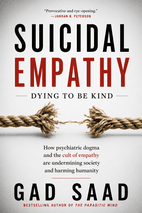


![The Explosive Child [Sixth Edition] by Ross W. Greene PhD - Book Summary](/_next/image?url=https%3A%2F%2Fapi.insta.page%2Fstorage%2Fv1%2Fobject%2Fpublic%2Fsmall_bookcovers2%2FB08NP52GTW.png&w=3840&q=75)