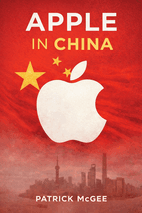
Patrick McGee's Apple in China investigates the strategic costs of the tech giant's deep reliance on China, exploring how this dependence compromises principles and creates geopolitical vulnerability for readers of global business and technology.
Feature
Insta.Page
Blinkist
Shortform
Summary Depth
Full Chapter-by-Chapter
15-min overview
Section-by-section guides
Audio Narration
✓
✓
✓
Visual Mindmaps
✓
✕
✕
AI Q&A
✓
✕
✕
Quizzes
✓
✕
✕
PDF Downloads
✓
✕
✓
Price
$89.99/yr
$146/yr (PRO)
$199/yr
*Competitor data last verified July 2026.
1 Page Summary
In Patrick McGee's Apple in China: The Capture of the World's Greatest Company, the central thesis is that Apple’s deep and lucrative entanglement with China has come at a significant strategic cost, making the tech giant vulnerable to geopolitical pressures and compromising its core principles. McGee, a Financial Times journalist, argues that Apple’s reliance on China for manufacturing, engineering talent, and a massive consumer market has effectively given the Chinese Communist Party substantial leverage over the company. This "capture" is explored not as a sudden event but as a gradual process, where Apple's pursuit of efficiency, scale, and profit in China has necessitated concessions on issues ranging from data privacy and censorship to intellectual property and supply chain control.
The book's distinctive approach is that of a detailed business and geopolitical investigation, built on McGee's reporting and interviews with current and former Apple employees, supply chain executives, and analysts. It moves beyond the well-known narrative of Apple's manufacturing partnership with Foxconn to examine the less visible but critical areas of Apple's dependence, such as its engineering hubs in Shanghai and Beijing and its compliance with Chinese laws that require data localization and the removal of apps displeasing to authorities. McGee presents Apple's relationship with China as a Faustian bargain, illustrating how the company's operational success has created a fundamental vulnerability that could be exploited during times of political tension.
Intended for readers interested in global business, technology, and international relations, this book serves as a cautionary case study of the risks inherent in the interdependence between Western corporations and authoritarian states. Readers will gain a nuanced understanding of the immense complexities and compromises faced by even the most powerful and principled companies when operating in a market like China. McGee’s work ultimately questions the sustainability of Apple's current model, highlighting the precarious position of a company whose future is inextricably linked to a geopolitical rival of its home country.
Prologue: “Incomparable” Arrogance
Overview
The prologue opens not with a product launch or corporate triumph, but with a stark political signal. Immediately after Xi Jinping's 2013 inauguration, state television publicly chastised Apple for treating Chinese customers poorly, marking a definitive shift in the company's relationship with its most critical manufacturing base and a huge future market.
A Strategic Broadcast and a Warning
On March 15, 2013, China Central Television’s annual Consumer Day show took aim at Apple, accusing it of providing inferior service and warranty policies in China compared to other regions. This was a deliberate and early signal from the new Xi Jinping administration that the rules were changing. The era of foreign companies operating with relative impunity was ending, and even a tech titan like Apple would be held to Beijing’s standards.
Apple’s Immense, and Growing, Economic Power
Contrary to narratives of stagnation, Apple is depicted as a financial behemoth at its peak influence. Its services business—fueled by the captive, affluent audience of over 2.35 billion active devices—generates extraordinary profits with margins over 70%. Examples like the $20 billion annual payment from Google for default search and the crippling $10 billion impact of its privacy changes on Meta illustrate the unparalleled control Apple wields over its ecosystem. This context makes its vulnerability in China all the more dramatic.
The "Achilles’ Heel": A Concentrated Supply Chain in China
Apple’s critical weakness is its profound dependency on China for manufacturing. The book frames this as a "rookie and calamitous mistake"—the concentration of roughly 90% of production in one geopolitical rival’s territory. Through the 2000s, Apple and its primary partner, the Taiwanese firm Foxconn, built an unparalleled manufacturing ecosystem there, training a generation of engineers and workers. This created a "Red Supply Chain" of state-subsidized Chinese firms that are now ascendant, replacing long-time American, Taiwanese, and Japanese suppliers. The result is that Apple’s operational fate is tied to Beijing’s goodwill.
The Shift in Power Dynamics
The prologue traces how the initial relationship, where Apple and its partners held the power, has inverted. Since 2017, Beijing has increasingly asserted control, demanding content censorship, local data storage, and preferential treatment for Chinese companies. Apple, needing to protect its vast operational and commercial interests, has largely complied—banning thousands of apps and partnering with state-backed firms like chipmaker YMTC. The training and infrastructure Apple provided have empowered a rival system.
An Unbreakable, Yet Untenable, Bond
The core dilemma is clear: Apple’s relationship with China is now politically untenable for an American company but operationally unbreakable. No other country can match the scale, skill, and flexibility of China’s manufacturing network. Simultaneously, China represents Apple’s largest emerging market, with about $70 billion in annual sales. This leaves CEO Tim Cook, and Washington, facing an existential problem with no easy solution, setting the stage for the historical exploration to follow.
Key Takeaways
Xi Jinping’s administration signaled a new, stricter era for foreign companies like Apple immediately upon taking power in 2013.
Apple’s financial and ecosystem power is greater than ever, centered on its hugely profitable Services division, making its supply chain vulnerability more acute.
The company’s strategic error was concentrating nearly all its manufacturing within China, creating a critical dependency.
Power has shifted from Apple to Beijing, which now uses its leverage to demand censorship, data localization, and the promotion of Chinese suppliers.
Apple is now trapped in a paradox: its business and production ties to China are indispensable, but the geopolitical relationship is increasingly fraught and risky.
Key concepts: Prologue: “Incomparable” Arrogance
1. Prologue: “Incomparable” Arrogance
The 2013 Warning Signal
State TV publicly chastised Apple post-Xi's inauguration
Marked end of impunity for foreign companies in China
Deliberate signal of new rules under Xi Jinping
Apple's Peak Financial Power
Services business generates 70%+ profit margins
Controls ecosystem affecting giants like Google and Meta
Over 2.35 billion active devices create captive audience
Critical Supply Chain Vulnerability
90% of production concentrated in China
Created 'Red Supply Chain' of state-subsidized firms
Training empowered Chinese rivals and suppliers
Inverted Power Dynamics
Beijing now demands censorship and data localization
Apple complies to protect operational interests
Chinese firms replace traditional Apple suppliers
The Core Strategic Dilemma
Relationship politically untenable but operationally unbreakable
No alternative matches China's manufacturing scale
China represents $70B annual market for Apple
💡 Try clicking the AI chat button to ask questions about this book!
Chapter 1: The Brink of Bankruptcy
Overview
In early 1996, Apple stood on the verge of financial collapse. To raise desperately needed cash, operations executive Joe O'Sullivan was forced to sell the company's last major U.S. factory—a humiliating surrender to the industry-wide shift toward outsourced manufacturing. As O'Sullivan negotiated under threat of company-wide payroll failure, the story explains how Apple, once a pioneer, found itself in this dire position. It traces a fifteen-year history of strategic missteps, technological rivalry, and a fundamental misunderstanding of the PC revolution ignited by IBM and enabled by contract manufacturers like SCI.
A Desperate Negotiation
In late March 1996, Joe O'Sullivan was in tense, round-the-clock talks to sell Apple's Macintosh factory in Fountain, Colorado, to SCI Systems, a contract manufacturer from Huntsville, Alabama. The urgency was extreme: Apple had just announced a catastrophic $700 million quarterly loss and needed cash to meet debts. O’Sullivan’s team, young Californians in T-shirts, clashed with SCI’s older, suit-wearing executives, whom they dismissed as “the grumpy old men from Huntsville.” The negotiation hit an impasse over liability for future product defects. The situation became truly desperate when O'Sullivan received a late-night call from his superior, Fred Forsyth, who revealed that if the deal wasn’t closed immediately, none of Apple’s employees would get paid that Thursday. The company was on the brink of missing payroll.
Apple’s "Death Spiral"
Apple’s financial crisis was severe enough that the company had secretly engaged bankruptcy lawyer Harvey Miller. New CFO Fred Anderson described Apple as being in a “death spiral.” Cash reserves had dwindled to a perilous $500 million. A previous panic move by sales—slashing prices below cost to compete with Windows 95—led to a record $3.15 billion quarter that resulted in a shocking loss. This doomed CEO Michael Spindler and left warehouses stuffed with nearly $1 billion in unsold inventory. The board’s solution was to try to sell the company, but suitors like Sun Microsystems offered insultingly low bids, seeing Apple’s value plummeting. The crisis became public with a damning BusinessWeek cover story titled “The Fall of an American Icon,” which was so damaging it even caused an Apple executive to have a home purchase fall through.
The Roots of Decline: Misreading the PC Revolution
Apple’s survival until 1996 was a testament to its founders’ legacies: Steve Wozniak’s open-architecture Apple II and Steve Jobs’s groundbreaking Macintosh. However, after Jobs’s 1985 ousting, Microsoft Windows gradually caught up to the Mac’s superior operating system. A pivotal and costly error occurred in 1981 when a young Steve Jobs dissected the new IBM PC and dismissed it as “a piece of junk.” He failed to grasp the genius of IBM’s Boca Raton strategy: using an open architecture and outsourcing components, including the operating system to Microsoft. This model drove down costs, fostered a massive ecosystem of third-party software and hardware developers, and rapidly commoditized the PC. While IBM eventually lost control of the standard it created, every other computer maker adopted it or died—leaving Apple as the expensive, isolated survivor.
The Closed-System Mentality
Ironically, Apple’s early success with the Apple II was built on the very openness it later rejected. The Apple II’s expansion slots allowed for third-party innovation, leading to “killer apps” like the VisiCalc spreadsheet that made it a business essential. However, Jobs resented others profiting from Apple’s platform. An attitude took hold that “nobody could do anything better than Apple,” leading to a closed system of custom parts and in-house control over everything from keyboards to manufacturing. This made Apple computers more expensive and isolated them from the thriving ecosystem supporting the PC standard.
SCI and the Birth of an Industry
SCI, the “grumpy old men” company buying Apple’s factory, was instrumental in IBM’s success and the creation of the modern electronics manufacturing industry. Founded from the U.S. space and missile program, SCI pioneered automated, high-volume circuit board assembly (“board stuffing”) for IBM. Its cantankerous founder, Olin B. King, then expanded into building entire computers, creating the contract manufacturing model. He sold manufacturing as a service, allowing clients to convert fixed costs into variable ones. This model was ruthlessly efficient and was adopted by the entire PC industry, driving down costs while Apple clung to its own factories.
Capaculation and Strategic Reversal
The sale of the Fountain factory to SCI for roughly $200 million was a profound symbol of defeat. Apple was capitulating to the very manufacturing model that undermined its competitive advantage. To survive, the company embarked on a drastic overhaul: forming its first-ever Outsourcing Group, cutting 4,200 jobs, and shifting nearly all manufacturing to Asia. In a vivid symbol of this retreat, Apple’s circuit board assembly lines in Ireland and Singapore were literally loaded onto Boeing 747s and flown away to suppliers. The “balanced manufacturing strategy” was quickly abandoned for a pure survival play—outsource everything.
Key Takeaways
Strategic Inflexibility Can Be Fatal: Apple’s insistence on controlling all aspects of its hardware and software, driven by a culture of superiority, made it expensive and isolated as the industry standardized and commoditized.
Understanding the Ecosystem is Crucial: Steve Jobs’s critical error was evaluating the IBM PC on its technical merits alone, while missing the revolutionary power of its open, outsourced business model that fostered an entire competitive ecosystem.
The Outsourcing Revolution was Decisive: Companies like SCI didn’t just supply parts; they invented a new, capital-efficient manufacturing service industry that allowed PC makers to achieve scale and low cost, which Apple resisted until it was nearly bankrupt.
Financial Desperation Forces Transformation: Apple’s near-death experience in 1996 directly forced the painful but necessary shift to outsourced manufacturing, a fundamental change that would later underpin its operational strategy when Steve Jobs returned.
Key concepts: Chapter 1: The Brink of Bankruptcy
2. Chapter 1: The Brink of Bankruptcy
The Desperate 1996 Crisis
Apple faced imminent payroll failure in early 1996
Forced to sell last major US factory for cash
Quarterly loss of $700 million, only $500M in reserves
Public perception: 'The Fall of an American Icon'
Root Cause: Misreading the PC Revolution
Steve Jobs dismissed IBM PC as 'a piece of junk'
Failed to grasp IBM's open architecture strategy
PC model drove down costs and created an ecosystem
Apple became the expensive, isolated survivor
The Closed-System Mentality
Apple II succeeded due to third-party expansion slots
Jobs resented others profiting from Apple's platform
Belief that 'nobody could do anything better than Apple'
Custom parts and in-house control increased costs
Rise of Contract Manufacturing
SCI pioneered automated circuit board assembly for IBM
Manufacturing as a service converted fixed to variable costs
Model adopted by entire PC industry except Apple
Drove down costs through ruthless efficiency
Financial Death Spiral
Price slashing below cost to compete with Windows 95
$3.15B quarter resulted in massive loss
$1 billion in unsold inventory in warehouses
Potential buyers offered insultingly low bids
Strategic Capitulation
Sale of Fountain factory symbolized defeat
Formed first-ever Outsourcing Group
Cut 4,200 jobs, shifted manufacturing to Asia
Abandoned 'balanced manufacturing' for pure outsourcing
Legacy vs. Reality
Wozniak's Apple II and Jobs's Macintosh as foundations
Microsoft Windows gradually caught up to Mac OS
Apple's survival until 1996 was a testament to founders
Post-1985 leadership failed to adapt to industry shift
Chapter 2: Adventures in Outsourcing—Japan and Taiwan
Overview
Apple took its first tentative steps into outsourcing during the 1980s and early 1990s. Through partnerships in Japan and later Taiwan, the company learned critical lessons about manufacturing, cost, and collaboration. What began as a desperate tactic to salvage the failing Macintosh evolved into a strategic appreciation for external manufacturing prowess, setting foundational precedents for the future.
The Macintosh's Failure and a Laser-Printed Lifeline
The original Macintosh, launched in 1984, was plagued by insufficient memory, a lack of software, a high price, and manufacturing missteps. Sales collapsed after an initial burst, leaving Apple scrambling. Salvation arrived through an ambitious project: building a laser printer. Recognizing its own limitations in printer manufacturing, Apple turned to Canon in Japan to provide the core "engine." Apple designed the controller board and the iconic white shell, while Canon handled manufacturing. The resulting LaserWriter, though priced at $7,000, was a revelation. Paired with Adobe's PostScript and Aldus's PageMaker software on the Mac, it created the desktop publishing industry. This partnership not only saved the Mac by giving it a "killer app" but also marked Apple's first major, Apple-branded product made entirely by a third party.
Deepening Ties in Japan: The PowerBook Gamble
Apple's positive experience with Canon, and Steve Jobs's earlier fascination with Japanese manufacturing and culture, paved the way for deeper collaboration. When internal efforts to build a laptop resulted in the delayed and overpriced Macintosh Portable, executive Jean-Louis Gassée advocated for outsourcing its successor. This sparked internal controversy, with Gassée facing accusations of being "anti-American." He prevailed partially, with Sony tasked to manufacture the sleek, five-pound PowerBook 100 based on minimal Apple specifications. Sony's engineers delivered a superior product in just thirteen months, at a far lower cost than Apple could achieve internally. This success was a watershed moment, proving to skeptical Apple teams that external partners could exceed their own quality and efficiency, particularly in miniaturization.
The Pivot to Taiwan: Lessons from the Newton
The limits of the Japanese partnership model became apparent with the Newton, Apple's early personal digital assistant. Manufactured by Sharp in Japan, the project suffered from high costs due to a soaring yen and a lack of collaborative flexibility. Apple felt further betrayed when Sharp used the knowledge to launch a competing device. Seeking a cheaper, more agile partner, the Newton team, operating in isolation from Apple's political core, turned to Taiwan. Product developer Phil Baker forged a relationship with Inventec, finding Taiwanese manufacturers eager to learn, adaptable, and willing to invest heavily (over $800,000) in new equipment to meet Apple's needs. This contrasted sharply with the more rigid, established Japanese approach. The collaboration also involved a young designer hired by Robert Brunner—Jonathan Ive—who redesigned the second-generation Newton, beginning his legendary tenure at Apple.
Key Takeaways
Outsourcing began as a tactical rescue mission. The LaserWriter partnership with Canon was primarily an effort to save the struggling Macintosh by enabling a new market (desktop publishing), not a deliberate manufacturing strategy.
Japan taught Apple about quality and miniaturization. Sony's work on the PowerBook 100 demonstrated that external specialists could achieve higher quality and lower costs than Apple's in-house teams, particularly for compact, complex devices.
Taiwan offered agility and cost advantages over Japan. While Japan excelled at execution, its high costs and inflexibility pushed Apple to explore Taiwan, where partners like Inventec were more collaborative, responsive, and willing to invest in the relationship.
The human and cultural element was crucial. Successful partnerships required navigating formal Japanese business culture and, later, leveraging the eager, fast-moving entrepreneurial spirit found in Taiwan.
These early experiments created a blueprint. The lessons learned about identifying specialist partners, managing collaboration, and balancing cost with quality became integral to Apple's future operational philosophy, long before it scaled this model to unprecedented levels.
Key concepts: Chapter 2: Adventures in Outsourcing—Japan and Taiwan
3. Chapter 2: Adventures in Outsourcing—Japan and Taiwan
Initial Outsourcing Motivation
Began as a tactic to rescue the failing Macintosh
LaserWriter partnership with Canon created desktop publishing
Provided Macintosh with a critical 'killer app'
Japanese Partnership Model
Canon manufactured the LaserWriter engine successfully
Sony built the PowerBook 100 in 13 months
Demonstrated superior quality and miniaturization capabilities
Limitations of Japanese Model
High costs due to soaring yen with Newton production
Lacked collaborative flexibility with partners like Sharp
Risk of knowledge transfer to competitors
Transition to Taiwanese Partners
Sought cheaper, more agile manufacturing options
Inventec invested heavily to meet Apple's needs
Partners were eager to learn and highly adaptable
Foundational Lessons Learned
External specialists could exceed Apple's internal capabilities
Cultural navigation was crucial for partnership success
Created blueprint for Apple's future operational philosophy
Chapter 3: An “Outrageous” Acquisition
Overview
Apple faced its darkest hour in the mid-1990s, a period of staggering decline and near-bankruptcy. It traces the futile efforts of two CEOs to steer the company, culminating in a desperate, "outrageous" gamble—the acquisition of Steve Jobs's failing company, NeXT. This move, orchestrated by the overwhelmed Gil Amelio, unwittingly set the stage for one of history's most remarkable corporate resurrections, bringing the prodigal founder back into the fold.
The Spiral After Spindler
Apple's early innovation edge had completely eroded. The rise of Windows 95 meant every PC could now offer what had once made the Mac special, but at a lower cost and with far greater software support. CEO Michael Spindler, succeeding John Sculley, fought a losing battle against this tide. His tenure culminated in a disastrous 1995 holiday season that cost him his job, leaving him focused more on selling Apple than saving it.
Gil Amelio's Misguided Mission
The board, diagnosing Apple's issue as operational inefficiency, turned to Gil Amelio, a noted turnaround expert from National Semiconductor. From the start, he seemed out of his depth, overwhelmed by the scale of Apple's troubles. His initial "hundred days of reflection" left the company adrift. While he correctly identified antiquated manufacturing and chaotic distribution, his core strategy was a fatal miscalculation: he aimed to beat PC rivals at their own game by standardizing and optimizing for efficiency. This ignored Apple's fundamental need for radical product differentiation in a world now dominated by Windows. As revenues plummeted, Amelio hosted desperate "coffee klatch" meetings, searching for ideas he himself could not generate.
Amelio's Critical, Unheralded Moves
Despite his overarching failure, Amelio executed three vital actions that kept Apple alive and planted seeds for its future. He sold the Fountain factory, generating crucial cash and later influencing a new manufacturing philosophy. He and CFO Fred Anderson orchestrated financial maneuvers to avert immediate bankruptcy. Most importantly, he recognized that Apple's internal operating system project was doomed and made the pivotal decision to acquire a new one from outside.
Steve Jobs in the Wilderness
The story then shifts to Steve Jobs's journey during his years away from Apple. His venture, NeXT, became a cautionary tale of his worst tendencies—stunning design married to exorbitant cost and market isolation, leading to a spectacular flop in hardware. However, from this failure emerged a gem: the NeXTStep operating system, a technologically brilliant platform. Simultaneously, Jobs's investment in Pixar, after initial struggles, yielded Toy Story and transformed him into a billionaire, rehabilitating his reputation as a visionary.
The "Outrageous" Gamble
Learning of Apple's need for an OS, Jobs presented NeXT to Amelio and the board. They were mesmerized by both the technology and Jobs's persona. Apple agreed to pay over $400 million for the struggling NeXT, a price deemed outrageous for a company with mere $50 million in revenue. Yet, the deal was a perfect strategic fit: Apple gained a modern OS years ahead of its time and, crucially, 300 talented engineers, including Steve Jobs.
The Inevitable Return
Amelio's inability to lead became painfully public during a rambling, poorly received MacWorld presentation. Meanwhile, Jobs, back as an advisor, began captivating audiences with forward-thinking ideas like network computing. The joke that "NeXT had acquired Apple for negative $400 million" captured the shifting power dynamics. Jobs sold his Apple shares, a clear vote of no confidence, and by July 1997, Amelio was ousted. Jobs was offered the CEO role but hesitated, needing to be convinced the company he co-founded could actually be saved.
Key Takeaways
Misdiagnosis is fatal: Apple's board incorrectly identified operational efficiency as the core problem, when the real crisis was a lack of innovative, differentiated products.
Acquisition as salvation: The desperate purchase of NeXT, while criticized for its cost, provided the essential technological foundation (its OS) and the human capital (Steve Jobs) needed for Apple's rebirth.
Failure's hidden value: Steve Jobs's "wilderness years" with NeXT and Pixar were essential learning experiences; NeXT's failure produced a superb OS, and Pixar's success restored his stature and confidence.
Vision trumps optimization: In a competitive crisis, operational streamlining (Amelio's focus) cannot substitute for a compelling product vision and strategic differentiation (Jobs's eventual role).
Key concepts: Chapter 3: An “Outrageous” Acquisition
4. Chapter 3: An “Outrageous” Acquisition
Apple's Crisis in the Mid-1990s
Faced near-bankruptcy and staggering decline
Windows 95 eroded Apple's innovation edge
CEO Michael Spindler failed to reverse the tide
Gil Amelio's Failed Turnaround Strategy
Misdiagnosed problem as operational inefficiency
Aimed to beat PC rivals at their own game
Ignored need for radical product differentiation
Amelio's Critical Actions
Sold assets to generate crucial cash
Orchestrated financial maneuvers to avert bankruptcy
Decided to acquire new OS from outside
Steve Jobs's Wilderness Years
NeXT failed in hardware but created brilliant OS
Pixar success restored Jobs's reputation and wealth
Jobs transformed into billionaire visionary
The NeXT Acquisition and Jobs's Return
Apple paid $400M for NeXT's OS and engineers
Deal brought Jobs back as advisor
Amelio ousted, Jobs eventually returned to lead
You've reached the end of the free chapters
Next chapter: “Columbus—A New World of Computing” is locked
Keep reading Apple in China — and unlock all 600+ book summaries with audio, mindmaps and AI Q&A.
$0.00 due today · 7 days free, then $89.99/year ($7.49/mo) · Cancel anytime before day 7
Patrick McGee is a contemporary author and academic known for his expertise in modern literature and critical theory. He has written notable works such as "Telling the Other: The Question of Value in Modern and Postcolonial Writing" and "Joyce Beyond Marx: History and Desire in 'Ulysses' and 'Finnegans Wake'." His scholarship often focuses on the intersections of narrative, politics, and postcolonial studies.
📚 Explore Our Book Summary Library
Discover more insightful book summaries from our collection