Foreword: Is Healthy, Sustainable Peak Performance Possible?
Chapter 1 of 4
0:000:00
EN
1x
Voice
PDF
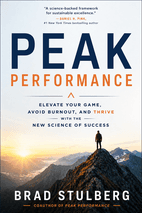
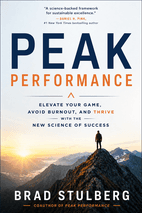
Peak Performance
by Brad Stulberg
What is the book Peak Performance about?
Brad Stulberg's Peak Performance reveals that sustainable excellence comes not from relentless hustle but from mastering the rhythm between stress and rest, offering a science-backed framework for athletes, professionals, and creatives seeking to achieve more without burning out.
Feature
Insta.Page
Blinkist
Shortform
Summary Depth
Full Chapter-by-Chapter
15-min overview
Section-by-section guides
Audio Narration
✓
✓
✓
Visual Mindmaps
✓
✕
✕
AI Q&A
✓
✕
✕
Quizzes
✓
✕
✕
PDF Downloads
✓
✕
✓
Price
$89.99/yr
$146/yr (PRO)
$199/yr
*Competitor data last verified July 2026.
1 Page Summary
This book argues that sustainable, high-level performance—in sports, work, or creative pursuits—is not about relentless hustle, but about finding a deliberate rhythm between two opposing forces: stress and rest. The central thesis is captured in a simple equation: stress + rest = growth. This principle, validated by modern science, applies universally. The authors explain that stress itself is not an enemy but a biological signal for adaptation; when properly dosed, it triggers our growth. However, this growth can only occur when followed by deliberate recovery. Without rest, the pressure to perform leads not to innovation but to widespread burnout, as seen in the stories of a young track prodigy and a White House consultant whose early success came at a hidden personal cost.
The book distinguishes itself by grounding its approach in rigorous science and the habits of elite performers across diverse fields, from Olympic athletes and Nobel-winning scientists to Google engineers and concert drummers. It reveals that top performers don’t simply practice more—they practice differently, engaging in intense, focused "deliberate practice" on just-manageable challenges. Crucially, they also prioritize rest as the hidden engine of performance, using tools like mindfulness meditation, walking breaks in nature, social recovery, and adequate sleep. The authors also explore how optimizing daily routines—by automating trivial decisions, knowing one’s chronotype, and creating pre-performance rituals—can conserve mental energy and reliably summon a state of “flow.”
The intended audience is anyone feeling the pressure to perform in a world where the bar for "good enough" is constantly rising. Readers will gain a concrete framework for achieving excellence without sacrificing their health or happiness. The book provides practical, actionable steps to build a personalized system: identifying one's core values to develop a self-transcending purpose that overrides fear, alternating focused work blocks with strategic breaks, and prioritizing recovery as a non-negotiable component of growth. Ultimately, it teaches that the secret to lasting success is not in pushing harder, but in losing oneself in a sustainable process of growth, where the journey of self-improvement becomes its own reward.
Foreword: Is Healthy, Sustainable Peak Performance Possible?
Overview
The foreword opens with the gripping story of an 18-year-old track prodigy who finds himself at the 2003 Prefontaine Classic, a premier professional meet, nervously playing his Game Boy to calm down. Despite his anxiety, he runs a 4:01 mile, becoming the sixth-fastest high school miler in U.S. history and finishing ahead of Olympians. Then it reveals the dark underbelly of his success: an obsessive, joyless existence. His days were a rigid grind of double runs, strict diet, and early bedtimes, at the expense of relationships, fun, and even basic health. He cut off a girlfriend because his racing suffered, and he chose 10 p.m. bedtimes over parties. His "rage to master" was paying off in results, but at a hidden cost.
The chapter then introduces a second story: a young consultant who lands a prestigious job at the White House National Economic Council after building an influential economic model for healthcare reform. His path was similarly fueled by relentless efficiency—condensing his morning routine into 12 minutes, working 70+ hour weeks, and skipping sleep due to anxiety. He was praised as a rising star, on track to perhaps run the country one day.
But here's the twist: neither of them continued their ascent. The runner never ran faster than that day. The consultant left the White House and hasn't been promoted since. Both saw their performance plateau, their health suffer, and their satisfaction evaporate. The authors reveal themselves as that runner (Steve) and that consultant (Brad). Meeting years later after burning out, they shared their stories over beers and realized a shared question: Could peak performance be achieved in a healthy, sustainable way? This curiosity launched their investigation into the science of performance, interviewing great performers across domains to find principles that anyone can adopt. The book is the result of that quest. They don't promise Olympic gold, but they do promise to help readers nurture their natural potential—without repeating the same destructive patterns.
Key Takeaways
Early, extreme success often masks unsustainable habits that lead to burnout.
Obsessive focus on peak performance can sacrifice health, relationships, and long-term satisfaction.
The authors' personal failures drove them to investigate whether healthy, sustainable peak performance is possible.
The book's core promise: not to guarantee greatness, but to offer principles that help maximize potential in a way that doesn't destroy you.
Key concepts: Foreword: Is Healthy, Sustainable Peak Performance Possible?
1. Foreword: Is Healthy, Sustainable Peak Performance Possible?
The Cost of Early Success
Runner's obsessive grind led to joyless existence
Consultant's 70-hour weeks sacrificed health and sleep
Both plateaued and burned out after initial triumphs
Hidden Patterns of Unsustainable Performance
Rigid routines and strict diets replaced relationships
Anxiety and sleep deprivation fueled short-term gains
Success masked long-term damage to well-being
The Authors' Shared Journey
Steve (runner) and Brad (consultant) met after burnout
They realized their stories mirrored each other
Shared question: Can peak performance be sustainable?
The Investigation into Healthy Performance
Interviewed great performers across diverse domains
Sought principles for sustainable peak performance
Aimed to avoid destructive patterns of early success
The Book's Core Promise
Not to guarantee greatness or Olympic gold
Offer principles to nurture natural potential
Help readers maximize without destroying themselves
💡 Try clicking the AI chat button to ask questions about this book!
Introduction: Great Expectations
Overview
The pressure to perform has become the new normal, with the bar for "good enough" rising everywhere. A global talent pool and artificial intelligence threaten jobs—from Amazon’s drone delivery to entire industries becoming obsolete. Sports tell the same story: the four-minute mile was once considered deadly, now hundreds run it yearly, and high school athletes shatter decades-old records. This competition drives desperate measures. The supplement industry makes over $100 billion annually despite most users having no real deficiency, while cognitive enhancers like Adderall are used illicitly by students and professionals, sometimes at the cost of insomnia, anxiety, and ethical erosion. The obsession with performance has created a culture of suspicion—when someone does something extraordinary, doping is the first thought—and widespread burnout. Americans work long hours, check phones constantly, and skip breaks, with over half reporting exhaustion. The consequences can be fatal, as seen in the case of an intern who died after a 72-hour shift. Yet nonstop work isn’t even productive; it leads to diminishing returns.
But there is a better way. Across fields like Olympic athletics, mathematics, and art, the same principles enable sustainable, high-level performance—safe, ethical, and legal practices that modern science now validates. The key insight is that cross-pollination between disciplines unlocks new possibilities: an artist can learn from an athlete’s discipline, an intellectual from an artist’s creativity, and an athlete from an analyst’s rigor. Cognitive problem-solving and physical strength training follow similar cycles of stress, recovery, and adaptation. Routine and environment matter greatly—the pregame warmups of elite performers share striking similarities—and even fashion can conserve mental energy, which is why geniuses like Einstein paid little attention to what they wore. Another pattern among high achievers is gratitude and a sense of purpose: many attribute their success to family, God, or a transcendent force, revealing a deep psychological need for meaning as a performance enhancer. Throughout the book, readers will find Performance Practices—actionable exercises to apply these insights. Acknowledging the reality of doping, the authors argue that the general upward trend in athletic achievement cannot be explained by drugs alone, setting the stage for a deeper exploration of genuine human potential. The journey begins with The Growth Equation, a framework that bridges separate fields to uncover powerful insights about how we grow, perform, and transcend our limits.
Key Takeaways
True growth often comes from looking outside your own field and borrowing wisdom from others.
Cognitive and physical development follow similar processes of stress, recovery, and adaptation.
Small environmental factors—like what you wear—can have a big impact on mental resources and focus.
Top performers frequently attribute their success to something larger than themselves; purpose is a powerful performance enhancer.
The book provides actionable “Performance Practices” to help you apply these insights to your own pursuits.
Key concepts: Introduction: Great Expectations
2. Introduction: Great Expectations
The Pressure to Perform
Global talent pool and AI threaten jobs
Four-minute mile now run by hundreds yearly
Supplement industry makes over $100 billion
Cognitive enhancers used illicitly by students
Consequences of Overwork
Culture of suspicion around extraordinary achievements
Widespread burnout from nonstop work
Americans work long hours and skip breaks
Nonstop work leads to diminishing returns
A Better Way: Sustainable Performance
Cross-pollination between disciplines unlocks potential
Cognitive and physical growth follow similar cycles
Routine and environment conserve mental energy
Gratitude and purpose enhance performance
Patterns Among High Achievers
Elite performers share similar pregame warmups
Geniuses like Einstein minimized fashion choices
Many attribute success to family or God
Purpose is a powerful performance enhancer
The Growth Equation Framework
Bridges separate fields for powerful insights
Explores genuine human potential beyond drugs
Provides actionable Performance Practices
Focuses on stress, recovery, and adaptation cycles
1: The Secret to Sustainable Success
Overview
The central insight of this chapter is deceptively simple: sustainable success in any domain—physical, mental, or creative—boils down to a single equation: stress + rest = growth. Just as you can't build biceps by lifting too heavy or too light, you can't build lasting excellence without finding the right rhythm between pushing yourself and allowing recovery. This isn't just about the gym; it's a universal principle that governs how elite athletes, Nobel-winning scientists, and world-champion chess players alike achieve and sustain peak performance over decades.
Periodization in Practice
Exercise scientists call this cycle periodization: isolate a capability, stress it close to failure, let it adapt during rest, then repeat with slightly more challenge. World-class athletes like marathoner Deena Kastor embody this. Kastor didn't just rack up 110–140 miles per week at altitude; she also prioritized 10–12 hours of sleep, weekly massages, and meticulous recovery. As she put it, "The leaps and bounds I've made have come from outside the training environment." Stephen Seiler's research confirms the pattern across sports: elite skiers, runners, and cyclists systematically alternate between brutally hard days and absurdly easy ones, even walking up hills when needed. The best don't live by "no pain, no gain" but by intelligent oscillation.
The Mind Works the Same Way
Roy Baumeister's classic cookie-and-radish experiments revealed that our mental energy acts like a muscle. Participants who resisted fresh cookies gave up far sooner on a subsequent puzzle than those who indulged. Follow-up fMRI studies show that when the brain is tired, emotional regions overpower the rational prefrontal cortex—explaining why we reach for junk food or snap at loved ones after a hard day. The good news: this muscle can be strengthened. Each act of self-control or deep focus builds capacity, but only when paired with adequate recovery. Fatigue from unrelated tasks spills over, so taking on too many challenges at once depletes the same reservoir.
A Story of Two Masters
Josh Waitzkin's journey from chess prodigy to world champion in tai chi push hands illustrates the principle in action. During marathon chess matches, he would sprint stairs or run fifty yards to jolt his system, then return completely renewed. His training in both domains revolved around cycles of intense stress followed by deliberate recovery. The same formula that built his mind also built his body—proof that the equation transcends any single pursuit.
Key Takeaways
Identify your most important pursuits and deliberately alternate between intense, focused effort and genuine rest.
Insert short breaks throughout your day, and schedule off-days or vacations right after heavy stress periods.
Recognize that mental and physical fatigue are intertwined; exhaustion from one area impairs performance in another.
Limit the number of major challenges you take on simultaneously to avoid depleting your shared reservoir of energy.
Design your environment to support you when you're fatigued—our surroundings powerfully shape our behavior, especially when we're drained.
Key concepts: 1: The Secret to Sustainable Success
3. 1: The Secret to Sustainable Success
The Core Equation
Sustainable success = stress + rest = growth
Universal principle across physical, mental, creative domains
Intelligent oscillation beats 'no pain, no gain'
Periodization in Practice
Isolate capability, stress near failure, rest, then repeat
Deena Kastor: 110-140 miles/week plus 10-12 hours sleep
Elite athletes alternate brutally hard and absurdly easy days
Mental Energy as a Muscle
Self-control and focus deplete a shared energy reservoir
Each act of focus builds capacity when paired with recovery
A Story of Two Masters
Josh Waitzkin: chess prodigy to tai chi world champion
Sprinted stairs during chess matches to jolt and renew
Same stress + rest formula built mind and body
Practical Key Takeaways
Alternate intense focus with genuine rest deliberately
Schedule short breaks and off-days after heavy stress
Limit simultaneous major challenges to avoid depletion
Design environment to support you when fatigued
2: Rethinking Stress
Overview
In 1934, a dejected Hans Selye sat brooding in his McGill University lab after discovering that his supposed "new hormone" was nothing more than a reaction to the trauma of injection itself. What felt like a shattered dream turned into one of the most important scientific accidents of the modern era: the discovery of the stress response. Selye went on to systematically traumatize rats—shocking, injecting, operating on them—and observed the same pattern every time: their adrenal glands and immune systems kicked into gear. The rats weren't preparing for reproduction; they were bracing for a fight. That single insight laid the groundwork for understanding stress not as an enemy, but as a deeply embedded biological signal for adaptation.
What Selye and later researchers discovered is that stress is far more nuanced than we usually give it credit for. It can tear us down or build us up, depending entirely on the dose. And when harnessed correctly, stress becomes the engine behind our most profound growth—physically, mentally, and emotionally.
The Dose Makes the Poison
When stress hits, your body releases inflammatory proteins and cortisol—chemical messengers that essentially announce, "We're not strong enough for this!" That message triggers a cascade of repair and reinforcement. Think of what happens when you lift a weight heavy enough to cause micro-tears in your muscle fibers. Once you stop, your body enters an anabolic state, rebuilding the tissue stronger than before. This same process applies whether you're running, rowing, or tackling a challenging CrossFit workout.
But there's a catch. If the stress is too intense or lasts too long, the body flips into a catabolic state. Inflammation and cortisol linger at toxic levels. The adrenal system becomes exhausted. You move from adaptation to deterioration—what Selye called the "exhaustion stage," and what we now call chronic stress. The line between beneficial and harmful stress is razor thin, and it varies from person to person.
Skills Come from Struggle
Josh Waitzkin, who mastered chess as a child and then became a world champion in tai chi as an adult, offered a deceptively simple insight: Growth comes at the point of resistance. He learned this long before the science caught up. In his chess training, he pushed his mind to the point of complete exhaustion, systematically stressing his cognitive capacities. Decades later, research confirms that the most effective learning happens when students are allowed to struggle before receiving help.
A series of studies on middle and high school math students found that those who wrestled with complex problems before getting assistance outperformed those who were helped immediately. Another study on physics tutoring discovered that learning was rare unless students first reached an impasse. The best tutors delayed instruction until the student had already failed.
Big-wave surfer Nic Lamb lives by the same rule. He seeks out waves that genuinely scare him. "It's only when you step outside your comfort zone that you grow," he says. For Lamb, failure isn't a setback—it's a diagnostic tool that reveals both physical and psychological weak spots. This is what researchers call "productive failure." When you fail and then analyze why, you engage the deep structure of a problem rather than memorizing a superficial answer.
System 2 Learning
Nobel laureate Daniel Kahneman divided thinking into two systems. System 1 is fast, automatic, and intuitive—the mental equivalent of autopilot. System 2 is slow, analytical, and effortful. True learning requires System 2, because that's when we critically engage with new information rather than defaulting to old mental models.
Inside your brain, learning happens through connections between neurons, linked by axons wrapped in a substance called myelin. Think of myelin as insulation on an electrical wire. The more you struggle with a new skill—whether it's dribbling with your non-dominant hand or mastering a new grammatical rule—the more myelin accumulates, and the faster and more fluidly those neural signals travel. What starts as a laborious System 2 task gradually becomes an effortless System 1 reflex. The key is enduring the struggle long enough for the myelin to build.
Just-Manageable Challenges
Psychologist Mihaly Csikszentmihalyi, famous for studying "flow," created a simple diagram that maps challenge against skill level. The sweet spot—the zone where stress promotes growth without overwhelming you—lies in the upper right corner. Brad and Steve call this the just-manageable challenge: a task that feels slightly beyond your current abilities, but not so far beyond that you tip into anxiety.
When Steve coaches elite runners like Sara Hall, he designs workouts that push them just past their known limits. Before the 2016 World Half Marathon Championships, Hall completed a 15-mile tempo run at 5:30 per mile—slightly faster than she'd ever run before. Steve notes that a little doubt and uncertainty is actually a good sign. That inner voice whispering "I can't possibly do this" is your mind trying to pull you back to safety. The growth lies in ignoring it.
External factors like weather, deadlines, or audience size can shift how challenging a task feels on any given day, as can internal factors like stress levels, motivation, and health. The goal isn't to live permanently in this zone—you need recovery between bouts of stress—but to regularly seek out challenges that stretch your current capacity for the skills you truly want to grow.
Key Takeaways
Stress is a double-edged sword: In the right dose, it triggers growth and adaptation; in excess, it causes breakdown. The key is managing the dose.
Growth comes at the point of resistance: Whether in chess, surfing, or math, pushing to the edge of your ability—and sometimes failing—is how deep learning happens.
System 2 effort builds lasting skills: Struggling through a challenge strengthens neural connections via myelin, turning hard tasks into effortless ones over time.
Design just-manageable challenges: Seek activities that are slightly beyond your current skill level, but not so far that you become anxious. Use internal and external factors to calibrate the difficulty.
Resist the urge for early help: Let yourself fail productively before seeking support. That's where the real learning lives.
Key concepts: 2: Rethinking Stress
4. 2: Rethinking Stress
The Discovery of Stress
Hans Selye accidentally discovered the stress response
Stress is a biological signal for adaptation
Not an enemy but a tool for growth
The Dose Makes the Poison
Stress triggers repair and reinforcement
Too much stress leads to chronic deterioration
Line between beneficial and harmful is thin
Growth at the Point of Resistance
Josh Waitzkin: growth comes from struggle
Productive failure reveals weak spots
Struggling before help boosts learning
System 2 Learning
System 2 is slow, analytical, effortful
Struggle builds myelin for neural speed
Endure struggle to turn effort into reflex
Just-Manageable Challenges
Flow zone: challenge slightly exceeds skill
Doubt signals growth opportunity
Seek challenges that stretch current capacity
Recovery Between Stress
Need recovery between stress bouts
External and internal factors affect challenge
Regularly push skills you want to grow
The Growth-Stress Paradox
Stress triggers growth in the right dose
Excess stress causes breakdown
Managing the dose is the key skill
You've reached the end of the free chapters
Next chapter: “Stress Yourself” is locked
Keep reading Peak Performance — and unlock all 700+ book summaries with audio, mindmaps and AI Q&A.
$0.00 due today · 7 days free, then $89.99/year ($7.49/mo) · Cancel anytime before day 7
Brad Stulberg is an author and coach who writes about sustainable excellence and well-being, drawing from his background in performance science and his own athletic experiences. He is best known for co-authoring the books "The Practice of Groundedness" and "Peak Performance," which explore the intersection of resilience, health, and achievement. His work is regularly featured in outlets like The New York Times and Outside Magazine.
Frequently Asked Questions about Peak Performance
What is Peak Performance about?
The book explores the principles behind sustainable high performance in any domain, drawing from science and elite performers. It challenges the culture of burnout and nonstop work, advocating for a balanced cycle of stress and rest. The core equation 'stress + rest = growth' is central, along with the importance of purpose, routines, and deliberate recovery.
Who is the author of Peak Performance?
Brad Stulberg is an author and journalist who writes about science and human performance. He co-founded The Growth Equation and his work has appeared in major outlets like The New York Times and The Wall Street Journal, focusing on sustainable excellence.
Is Peak Performance worth reading?
Yes, it offers evidence-based strategies that are immediately applicable. The book reframes stress as a tool for growth and provides practical routines for achieving peak states without sacrificing health. It's a compelling guide for anyone seeking long-term excellence and well-being.
What are the key lessons from Peak Performance?
The key lesson is the equation stress + rest = growth, emphasizing that sustainable progress requires alternating intense effort with deliberate recovery. Another is the power of deliberate practice with deep focus, not just more hours. Finally, developing a transcendent purpose helps override fear and sustain motivation, while optimizing routines and minimizing trivial decisions conserves mental energy.
📚 Explore Our Book Summary Library
Discover more insightful book summaries from our collection