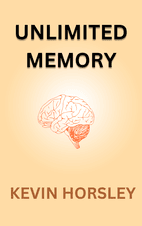
Kevin Horsley's Unlimited Memory teaches proven techniques like the Peg and Loci systems to enhance recall and learning efficiency. It's a practical guide for students, professionals, and anyone seeking to improve focus and retain information more effectively.
Feature
Insta.Page
Blinkist
Shortform
Summary Depth
Full Chapter-by-Chapter
15-min overview
Section-by-section guides
Audio Narration
✓
✓
✓
Visual Mindmaps
✓
✕
✕
AI Q&A
✓
✕
✕
Quizzes
✓
✕
✕
PDF Downloads
✓
✕
✓
Price
$89.99/yr
$146/yr (PRO)
$199/yr
*Competitor data last verified July 2026.
1 Page Summary
Unlimited Memory by Kevin Horsley is a practical guide to improving memory and cognitive performance through proven techniques and strategies. The book emphasizes the importance of understanding how memory works and provides actionable methods to enhance recall, focus, and learning efficiency. Horsley introduces concepts such as the Peg System, Loci Method, and Association Techniques, which leverage visualization, imagination, and organization to store and retrieve information effectively. These methods are rooted in ancient memory practices, such as those used by Greek and Roman orators, but are adapted for modern applications, making them accessible to anyone seeking to improve their memory.
Horsley also highlights the role of mindset and habits in memory improvement. He stresses the need for consistent practice, focus, and a positive attitude toward learning. By breaking down complex information into manageable chunks and creating vivid mental images, readers can overcome common memory challenges, such as forgetting names, numbers, or important details. The book is filled with real-world examples and exercises, making it a hands-on resource for students, professionals, and lifelong learners.
The lasting impact of Unlimited Memory lies in its ability to empower individuals to take control of their cognitive abilities. By mastering the techniques outlined in the book, readers can unlock their potential to learn faster, retain information longer, and perform better in both personal and professional settings. Horsley’s approach is not only practical but also transformative, offering a roadmap to achieving mental clarity and confidence in an increasingly information-driven world.
Chapter 1 Excuse Me
Overview
The chapter opens with a provocative challenge: “You cannot fly with the eagles if you continue to scratch with the turkeys.” It sets the tone by confronting readers with the excuses they’ll likely use to avoid finishing the book or applying its lessons. Framing excuses as “thought viruses,” the author argues they sap focus, energy, and personal power. The core message? Success and excuses are mutually exclusive—choosing one means abandoning the other.
The Three Faces of Self-Sabotage
The chapter identifies three common excuse archetypes that hold people back:
“I Am Helpless”
Examples: “I’m not smart enough,” “I don’t have time,” “I’m too old.”
These excuses frame limitations as unchangeable truths. The author counters: “Time is always there; you just need to schedule it” and humorously dismisses age-related excuses with “It’s a good thing you’re not a dog!”
“Someone Else Is to Blame”
Blaming parents, books, or circumstances for personal stagnation.
The chapter asserts: “You can’t have a negative emotion without blaming someone.” Freedom comes from choosing to learn instead of assigning fault.
“Too Much Stress”
Overwhelm-driven excuses like “There’s too much to learn” or “It’s too difficult.”
The response? Excuses weaken resolve and block progress. “Every excuse you accept makes you weaker.”
From Excuses to Empowerment
The text shifts to solutions, urging readers to reclaim agency:
Question Validity: “Are your excuses 100% true? Do they empower you?”
Own Responsibility: “The person most involved in what happens to you is YOU.”
Reframe Limits: Quoting Richard Bach: “Argue for your limitations, and sure enough, they’re yours.”
Memory and concentration improvement, the author stresses, isn’t just about effort—it’s about shedding mental baggage like complaints and self-judgment.
Taking Responsibility Through Action
Five actionable steps anchor the chapter:
Envision the Future: What will your life look like in five years if excuses persist?
Identity Shift: “Who would you be without your excuses?”
Truth Over Myth: Recognize excuses as false narratives.
Prioritize Potential: Choose growth over complacency.
Clarify Your ‘Why’: Darren Hardy’s “why power” trumps willpower—list reasons learning matters to you.
Key Takeaways
Excuses are self-imposed limitations that drain focus and energy.
The three excuse archetypes—helplessness, blame, and stress—keep people stuck in mediocrity.
Accountability is freedom: Progress begins when you stop outsourcing responsibility.
Action cures excuses: Define your “why,” challenge false narratives, and prioritize growth.
“Where your attention goes, your energy flows.” Redirect both toward learning, not justifying stagnation.
Key concepts: Chapter 1 Excuse Me
1. Chapter 1 Excuse Me
The Challenge of Excuses
Excuses are 'thought viruses' that drain focus and energy.
Success and excuses are mutually exclusive—choosing one means abandoning the other.
The chapter confronts readers with common excuses to avoid applying its lessons.
The Three Faces of Self-Sabotage
'I Am Helpless': Excuses framing limitations as unchangeable (e.g., 'I’m not smart enough').
'Someone Else Is to Blame': Outsourcing responsibility (e.g., blaming parents or circumstances).
'Too Much Stress': Overwhelm-driven excuses (e.g., 'It’s too difficult').
Each archetype weakens resolve and blocks progress.
Shifting from Excuses to Empowerment
Question the validity of excuses: 'Are they 100% true? Do they empower you?'
Own responsibility: 'The person most involved in what happens to you is YOU.'
Reframe limits using Richard Bach’s quote: 'Argue for your limitations, and sure enough, they’re yours.'
Actionable Steps to Overcome Excuses
Envision the future cost of persistent excuses.
Adopt an identity shift: 'Who would you be without your excuses?'
Replace excuse myths with truth.
Prioritize growth over complacency.
Clarify your 'why'—reasons learning matters to you.
Key Takeaways
Excuses are self-imposed limitations that drain energy.
Three archetypes (helplessness, blame, stress) trap people in mediocrity.
Accountability equals freedom—progress starts with owning responsibility.
Action cures excuses: Define your 'why' and challenge false narratives.
'Where your attention goes, your energy flows.' Redirect focus to growth.
💡 Try clicking the AI chat button to ask questions about this book!
Chapter 2 Never Believe a Lie
Overview
Chapter 2, Never Believe a Lie, challenges readers to examine how self-limiting beliefs about memory and concentration act as invisible barriers to unlocking their full potential. Using vivid analogies and contrasting characters, the chapter argues that beliefs shape reality—whether empowering or sabotaging. It emphasizes that shifting these mental frameworks can transform cognitive abilities and open doors to growth.
The Parable of the Pond and the Sea
A pond fish dismisses the existence of the ocean after a sea fish describes its vastness. This story illustrates how rigid beliefs—like the pond fish’s refusal to accept a reality beyond its experience—constrain understanding. The lesson? Limiting beliefs about memory or focus are often self-imposed “ponds” that prevent exploration of deeper capabilities.
The Power of Belief: Mr. A vs. Mr. B
Two identical individuals, Mr. A and Mr. B, embody opposing belief systems:
Mr. A believes his memory is flawed, reinforcing this with negative self-talk (“My mind is like a sieve”). He avoids learning, convinced he’ll fail.
Mr. B views his memory as limitless and trains it eagerly, using affirmations like “My memory grows stronger every day.”
The outcome? Mr. B’s empowering beliefs fuel success, while Mr. A’s negativity becomes a self-fulfilling prophecy. The chapter stresses that beliefs are choices, not truths, and shape behavior more than inherent ability.
Rewiring Limiting Beliefs
To break free from mental constraints, the chapter outlines a four-step process:
Clarify Your Why: 80% of change stems from having a compelling reason to shift.
Question Old Beliefs: Challenge past judgments (e.g., a teacher’s criticism) and ask, “How much will this belief cost me?”
Craft New Beliefs: Replace negativity with evidence-backed affirmations (e.g., “I’ve remembered countless details before”).
Embody the New Identity: Repeatedly act on the new belief until it becomes instinctive.
The text warns that clinging to negative beliefs traps individuals in a loop of self-sabotage, where doubt overrides progress.
Five Core Beliefs to Embrace
“I Was Born with Exceptional Concentration and Memory”: Reject the myth of innate talent; focus on method and discipline.
“Memory Improvement Is Important”: Recognize memory as foundational to every action and decision.
“My Memory Is Unlimited”: Reflect on the vast data already stored (names, experiences, skills) as proof of capacity.
“There’s No Failure, Only Feedback”: Celebrate small wins and adjust strategies instead of fixating on mistakes.
“I Don’t Know It All”: Stay open to learning—certainty stifles growth.
Key Takeaways
Beliefs are self-fulbing prophecies: What you affirm, you become.
Change beliefs by identifying, questioning, replacing, and acting on new narratives
Audit self-limiting beliefs and ask if they're true or just familiar
Memorize Jim Rohn's quote: 'If you don’t like how things are, change it! You’re not a tree.'
Chapter 3 Be Here Now
Overview
Chapter 3, Be Here Now, challenges the myth that concentration is an innate gift, reframing it as a skill built through deliberate practice. Drawing parallels between training physical muscles and honing mental focus, the chapter critiques modern habits—like constant multitasking and environmental distractions—that fragment attention. It introduces a blueprint for reclaiming focus by addressing four core areas: mastering self-talk, abandoning multitasking, clarifying goals, and eliminating worry. The message is clear: concentration isn’t about luck but about intentional, disciplined choices that anchor you in the present moment.
Mastering Your Inner Voice
Your inner dialogue shapes your focus. While this voice can spiral into self-criticism, the chapter emphasizes that you control its narrative. Replace destructive thoughts (“I messed up”) with constructive ones (“How did I concentrate well today?”). By consciously redirecting self-talk toward acknowledgment of progress, you reduce mental conflict and create space for clarity. As the author notes, “If you give yourself bad commands, bad things will happen.” The key is to audit your internal script and rewrite it to empower, not undermine.
The Myth of Multitasking
Multitasking isn’t efficiency—it’s a trap. Using vivid metaphors (a lioness targeting one prey, a lion tamer’s chair), the chapter debunks the illusion of divided attention. Neuroscience reveals that task-switching slashes productivity by 50% while increasing errors. For example, distracted drivers brake 0.5 seconds slower, risking accidents. The solution? Embrace “consecutive tasking”: fully immerse in one activity before moving to the next. This sharpens focus and elevates work quality, as “nothing excellent ever comes from a scattered effort.”
Clarity Through Purpose, Interest, and Curiosity
To concentrate, you must want something. The PIC framework—Purpose, Interest, Curiosity—anchors attention:
Purpose: Define specific goals (“I’ll learn three memory techniques”) to filter relevant information.
Interest: Link material to personal passions. Ask, How does this connect to my goals?
Curiosity: Fuel engagement with questions like, How can this improve my work?
As Tony Robbins advises, curiosity transforms boredom into joy, making even dry content compelling.
Quieting the Storm of Worry
Worry hijacks focus by fixating on uncontrollable “what-ifs.” The chapter urges reframing anxiety into actionable plans: instead of “What if I lose my job?” ask “What steps would I take if I did?” This shifts mental energy from fear to problem-solving. Byron Katie’s “three kinds of business” philosophy—focus on your business, not others’ or “God’s”—reinforces emotional boundaries. Peace, the chapter argues, isn’t passive; it’s a deliberate choice to stay centered amid chaos.
Your Mind as a Laser Beam
The final metaphor likens focus to a flashlight: scattered light is weak, but a steady beam cuts through darkness. Training your mind to “shine brightly” in the present—whether at work, home, or in conversation—requires rejecting distractions and committing to single-tasking. Concentration, the chapter concludes, is an “inside job” demanding daily practice. As Pythagoras advised, “Let your quiet mind listen and absorb.”
Key Takeaways
Concentration is a skill, not a genetic trait—cultivate it through consistent practice.
Silence multitasking: Prioritize depth over breadth; one task at a time yields excellence.
Harness PIC: Define your purpose, spark interest, and fuel curiosity to lock in focus.
Reframe worry: Replace paralyzing “what-ifs” with actionable plans.
Anchor in the present: Peace and productivity thrive when your mind is fully “here,” not scattered across past regrets or future anxieties.
Key concepts: Chapter 3 Be Here Now
3. Chapter 3 Be Here Now
Mastering Your Inner Voice
Control your inner dialogue to shape focus
Replace destructive self-talk with constructive reflection
Audit and rewrite your internal script to empower yourself
The Myth of Multitasking
Multitasking reduces productivity by 50% and increases errors
Task-switching leads to slower reaction times (e.g., distracted driving)
Embrace 'consecutive tasking'—immerse fully in one task at a time
Clarity Through Purpose, Interest, and Curiosity (PIC Framework)
Purpose: Define specific goals to filter relevant information
Interest: Link material to personal passions for deeper engagement
Curiosity: Use questions to transform boredom into engagement
Quieting the Storm of Worry
Reframe anxiety into actionable problem-solving steps
Focus on what you can control (your 'business')
Shift mental energy from fear to constructive planning
Your Mind as a Laser Beam
Concentration is like a focused beam—scattered light is weak
Reject distractions and commit to single-tasking
Daily practice is required to train focus as an 'inside job'
Key Takeaways
Concentration is a skill built through practice, not innate talent
Prioritize depth over breadth—avoid multitasking
Use the PIC framework (Purpose, Interest, Curiosity) to anchor attention
Replace worry with actionable plans
Stay present—avoid past regrets or future anxieties
Chapter 4 Bring Information to Life
Overview
This chapter shatters the myth of “photographic memory,” arguing that true memory mastery is a creative, intentional process—not a passive snapshot. It emphasizes that anyone can unlock their natural memory power by transforming lifeless information into vivid mental imagery. The brain thrives on pictures, not rote repetition, and the key lies in engaging the imagination. Readers are introduced to practical techniques like the SEE Principle (Senses, Exaggeration, Energize) and strategies to convert abstract words into memorable visuals, proving that learning can be both effective and playful.
The SEE Principle: A Framework for Memory
Senses: Memory thrives when multiple senses are engaged. Imagine not just seeing a horse but hearing its neigh, smelling its coat, and feeling its mane. Multisensory immersion makes mental images stick. Exaggeration: Absurdity beats realism. A strawberry the size of a house or an elephant in a pink bikini is far more memorable than mundane details. Humor and illogical twists “tickle” the brain into retaining information. Energize: Action amplifies recall. A galloping horse, a dancing book, or a talking hydrant creates dynamic mental movies. Static images fade; motion and color keep the mind engaged.
Transforming Abstract Concepts into Mental Pictures
Abstract terms (like foreign words or scientific terms) become memorable when broken into sound-alike fragments or visual metaphors. For example:
Washington → A person washing a tin can.
Hydrogen → A fire hydrant drinking gin.
The chapter demonstrates this with playful examples across languages:
Kevin Horsley is a globally recognized expert in the field of memory and accelerated learning. As a published author, his acclaimed book, "Unlimited Memory," has become an international bestseller, teaching readers powerful techniques to improve their learning, focus, and recall. His work is celebrated for making complex cognitive strategies accessible and practical for personal and professional development. A sought-after speaker, Horsley has shared his insights with audiences worldwide, helping thousands unlock their mental potential. His books, available on Amazon, continue to inspire individuals to achieve greater success through the mastery of their mind.
📚 Explore Our Book Summary Library
Discover more insightful book summaries from our collection