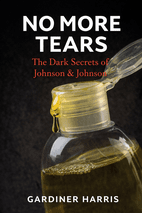
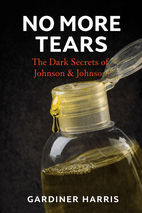
Gardiner Harris's No More Tears is a blistering exposé of Johnson & Johnson, blending investigative reporting with personal narrative to trace how a chance airport conversation with a drug sales rep led the New York Times journalist to uncover decades of corporate malfeasance—from cancer-linked baby powder and dangerous Tylenol to deceptive marketing of fentanyl that fueled the opioid crisis—for readers of investigative journalism and corporate accountability.
Feature
Insta.Page
Blinkist
Shortform
Summary Depth
Full Chapter-by-Chapter
15-min overview
Section-by-section guides
Audio Narration
✓
✓
✓
Visual Mindmaps
✓
✕
✕
AI Q&A
✓
✕
✕
Quizzes
✓
✕
✕
PDF Downloads
✓
✕
✓
Price
$89.99/yr
$146/yr (PRO)
$199/yr
*Competitor data last verified July 2026.
1 Page Summary
No More Tears by Gardiner Harris is a blistering exposé of Johnson & Johnson, one of America’s oldest and most trusted pharmaceutical companies, from an award-winning investigative journalist. The book traces how a chance encounter at an airport bar in 2004—a conversation with a drug sales rep who described unethical sales practices and their devastating impact on her family—fundamentally altered Harris’s approach to covering the company for The New York Times and ultimately led to this landmark work of investigative journalism.
Harris’s central argument is that Johnson & Johnson, long cherished for its image as the child-friendly “baby company,” has engaged in decades of deceitful and dangerous corporate practices that have threatened the lives of millions. Through meticulous reporting, he uncovers a pattern of lies and cover-ups spanning multiple disasters: the link between Johnson’s Baby Powder and cancer, the surprising dangers of Tylenol, a criminal campaign to sell antipsychotics that has cost countless lives, a popular drug used to support cancer patients that actually increases the risk that tumors will grow, and deceptive marketing of the fentanyl patch Duragesic that accelerated opioid addictions in ways rivaling the actions of the Sacklers and Purdue Pharma.
The book distinguishes itself through Harris’s dual perspective as both a seasoned journalist and a witness to the pharmaceutical industry’s inner workings. His investigative rigor, combined with the deeply personal origin of his inquiry, allows him to frame the corporate malfeasance within a broader indictment of a system that prioritized profit over patient safety. The result is a narrative that is both a damning portrait of a single corporation and a revealing case study of the pharmaceutical industry at large.
The intended audience is readers interested in investigative journalism, corporate malfeasance, medical ethics, and the opioid crisis. Those who have followed Johnson & Johnson’s legal troubles or who seek a deeper understanding of how corporate corruption can persist beneath a trusted brand will find particularly rich material. Readers will gain a profound and infuriating education in how one of the world’s largest healthcare conglomerates systematically betrayed public trust—and what that betrayal has cost.
Chapter 1: An Emotional Bond
Overview
Johnson & Johnson has a profound emotional connection with consumers, built through its iconic products, Johnson's Baby Powder and Tylenol. These items are powerful tools that build deep trust by tapping into basic human emotions and memories, especially the bond between mother and child. This trust acts as a strategic shield for the company and shapes how it sees itself.
The Iconic Products and Their Emotional Halo
Johnson's Baby Powder and Tylenol are more than products; they are familiar parts of American life that define the company. Even though Baby Powder brings in little money now, the company calls it a "crown jewel." Its real value is in branding. Surveys show it has the most recognized scent in the world—a smell that brings back good memories for many American adults. This link is what the company called its "Golden Egg": connecting the Johnson & Johnson name directly to the bond between a mother and her baby.
Crafting Trust Through Scent
The unique smell of Baby Powder was no accident. The company spent years testing over two hundred natural oils and extracts to create it. The final scent mixes vanilla, jasmine, lilac, rose, musk, and citrus. This was a smart move because smell goes straight to the brain's center for emotion and memory. Company documents noted that babies learn smells even before birth, which helps them bond. This means generations of people have been taught to link Johnson & Johnson with feelings of love, comfort, and safety.
Emotional Trust as a Business Asset
Johnson & Johnson worked to build what it called "emotional trust," which it saw as different from the more practical trust people had in competitors. The company believed this emotional trust led directly to business benefits. Internal presentations said it made customers more forgiving during a crisis and protected the brand's reputation. The company pictured the mother-baby bond as a piggy bank, constantly saving up goodwill. They claimed "Johnson's baby is 50% heart and 50% mind," meaning trust was their real product.
The Sustaining Power of Company Lore
This outside trust fuels belief inside the company. The story of how J&J handled the 1982 Tylenol poisonings is a founding legend, taught to every new hire as proof of the company's high ethics. Retelling this story builds a strong belief among employees that J&J is a special force for good. Ironically, this powerful faith may have sometimes made it harder for people inside to question mistakes, because the overall story of the company's goodness stayed so strong.
Key Takeaways
Johnson & Johnson's Baby Powder and Tylenol are iconic brands whose main value is building deep emotional trust, not just making money.
The engineered scent of Baby Powder uses the link between smell, memory, and emotion to create lifelong positive feelings tied to the bond between mother and child.
The company focused on building "emotional trust" as a unique business advantage that drives customer loyalty and forgiveness.
The famous response to the Tylenol crisis is a core part of the company's identity, strengthening employee belief in J&J's ethics and shaping its culture.
Key concepts: Chapter 1: An Emotional Bond
1. Chapter 1: An Emotional Bond
Iconic Products as Emotional Anchors
Baby Powder and Tylenol define the company's identity
Products build trust through mother-child bond associations
Brand recognition is more valuable than direct revenue
Strategic Use of Scent and Memory
Baby Powder scent engineered to trigger emotion and memory
Scent links directly to brain's emotional center
Creates lifelong association with comfort and safety
Emotional Trust as Business Asset
Emotional trust differs from practical competitor trust
Builds customer forgiveness during crises
Viewed as a strategic shield for brand reputation
Internal Company Lore and Identity
Tylenol crisis response is a foundational company legend
Story reinforces employee belief in company ethics
Strong internal faith can inhibit critical questioning
The Mother-Baby Bond as Core Metaphor
Company calls this connection its 'Golden Egg'
Pictured as a piggy bank storing goodwill
Trust is framed as the company's real product
💡 Try clicking the AI chat button to ask questions about this book!
Chapter 2: Three Brothers Go to New Brunswick, 1860–1968
Overview
The founding and early growth of Johnson & Johnson began after the Civil War and continued through 1968. It is the story of the three Johnson brothers—Robert, James, and Edward—who moved from making medicinal plasters to building a global healthcare company. The account covers the company's early innovations in antiseptic wound care and consumer products, its important role in national crises, and the difficult leadership handoff to the second generation under Robert Wood Johnson II.
The Founding Brothers and a Breakthrough Product
Robert Wood Johnson started with an apprenticeship in an apothecary shop, where he learned to make medicinal plasters. After starting a brokerage firm, he partnered with George Seabury in 1873 to form Seabury & Johnson. A transformative moment came at the 1876 Centennial Exhibition, where Robert saw Joseph Lister’s antiseptic techniques and the surgical dressings of the German firm Paul Hartmann. He soon began experimenting with antiseptic dressings himself.
Robert later brought his two younger brothers, Edward Mead Johnson and James Wood Johnson, into the business. James, an inventive tinkerer, dedicated himself to solving the central problem of plaster-making: creating a product that would both adhere well and remain preserved. His breakthrough came by incorporating rubber, using machines he built to process it into thin, medicated sheets that could be mass-produced on spools. This innovation caused sales to surge but also strained the partnership with Seabury.
The Split and a New Beginning
Tensions culminated in 1885 when Robert resigned, selling his shares to Seabury for $250,000 and signing a ten-year noncompete agreement. His brothers resigned the same day. Freed earlier when Seabury missed payments, Robert soon rejoined his brothers after James had discovered an abandoned wallpaper factory in New Brunswick, New Jersey. They rented the space, poached employees, and incorporated as Johnson & Johnson in 1887, with Robert holding 40% ownership.
Building the Brand: Kilmer, Marketing, and Mass Appeal
Two figures were instrumental in the company's early success. The first was advertiser James Walter Thompson. The second was Dr. Fred B. Kilmer, a respected pharmacist and engaging writer. Kilmer authored an influential hybrid catalog-textbook that featured J&J products, creating a powerful marketing model. He soon joined the company as its director of scientific affairs, a role he held for 45 years.
While supplying sterile cotton, gauze, and bandages to medical professionals formed the company's core business, a knack for consumer spin-offs emerged. A response to a customer complaint about skin irritation led to the inclusion of talcum powder with plaster orders. Its popularity, especially for diaper rash, prompted the 1894 launch of Johnson’s Baby Powder. Other early consumer products included toothpaste and, in 1920, the iconic Band-Aid adhesive bandage.
A Company in Crisis and a National Profile
J&J rapidly established itself as a reliable national responder. It supplied huge quantities of surgical dressings and designed a new stretcher for the Spanish-American War in 1898. It provided aid after the 1900 Galveston hurricane and the 1906 San Francisco earthquake. Kilmer’s 1901 Johnson’s First Aid Manual became a standard text. By 1911, the company claimed to produce 90% of the world’s sterile cotton dressings.
The Heir Apparent: Robert Wood Johnson II
Robert Wood Johnson II, son of the founder, was groomed for leadership from childhood. His father’s death in 1910, when Robert was 16, was a profound blow. He joined the company after high school but struggled with drinking and recklessness. A pivotal incident saw him passed out drunk outside a board meeting. His uncle and company president, James Johnson, threatened to sell the business, prompting an immediate and lasting reform.
Leadership and an Imperious Style
After his transformation, Robert Wood Johnson II rapidly gained responsibility, especially during the WWI boom. He pushed for a greater focus on stable consumer products, leading to the massive 1918 ad campaign for Baby Powder that cemented J&J as “the baby company.” He believed in decentralized management, creating the “Family of Companies” model.
His personal fastidiousness became company policy. He launched the “Factories Can Be Beautiful” campaign, building a model factory village in Georgia. He demanded immaculate, white-painted plants and perfectly aligned blinds, once smashing a dirty window to make a point. “A disorderly plant is a symptom of confused management,” he asserted.
The Pharmaceutical Leap and a Family Fracture
For decades, Johnson resisted entering the pharmaceutical business due to its shady reputation. He finally relented in the 1950s. In 1959, J&J acquired McNeil Laboratories, which held the prescription painkiller Tylenol. Shortly after, it purchased Janssen Pharmaceutica in Belgium, led by the brilliant chemist Paul Janssen, who had recently developed the synthetic opioid fentanyl. These acquisitions were spectacularly successful, making pharmaceuticals J&J’s fastest-growing division.
Johnson’s relationship with his son, Bobby, was strained. Despite Bobby’s efforts to prove himself, Johnson disapproved of his style and health. In 1963, Johnson bypassed Bobby for the CEO role, appointing Philip B. Hoffmann instead. After a bitter exchange, Bobby resigned in 1964, ending the family’s operational leadership. Robert Wood Johnson II died in 1968, leaving much of his fortune to what became the Robert Wood Johnson Foundation.
Key Takeaways
The company was founded on a technical innovation (James Johnson’s rubber-based plaster) and a marketing innovation (the educational advertorials pioneered by Fred Kilmer).
Its identity was shaped by early and consistent service during national crises, from wars to natural disasters, building a reputation for reliability.
A strategic shift from professional medical supplies to mass-market consumer products (Baby Powder, Band-Aids) provided stable, long-term growth.
The leadership of Robert Wood Johnson II was defined by a cult of cleanliness and order, a decentralized corporate structure, and a late but transformative move into pharmaceuticals.
The transition from first-generation founders to the second generation was fraught, resulting in the Johnson family’s permanent exit from company management.
Key concepts: Chapter 2: Three Brothers Go to New Brunswick, 1860–1968
2. Chapter 2: Three Brothers Go to New Brunswick, 1860–1968
Founding Innovation & Breakthrough
Robert Johnson inspired by Lister's antiseptic techniques
James Johnson's rubber plaster innovation enabled mass production
Breakthrough caused sales surge and partnership strain
Establishing Johnson & Johnson
Brothers split from Seabury & Johnson in 1885
Founded J&J in New Brunswick, NJ in 1887
Robert Johnson held 40% ownership in new company
Early Brand Building & Marketing
Dr. Fred Kilmer created influential catalog-textbook marketing
Consumer spin-offs led to Johnson's Baby Powder (1894)
Band-Aid adhesive bandage launched in 1920
Crisis Response & National Profile
Supplied medical materials for Spanish-American War
Provided aid after major disasters like 1906 earthquake
Produced 90% of world's sterile dressings by 1911
Robert Wood Johnson II's Leadership
Transformed after early recklessness and drinking
Pushed consumer focus with massive Baby Powder campaign
Implemented decentralized 'Family of Companies' model
Management Philosophy & Standards
Believed in 'Factories Can Be Beautiful' campaign
Demanded immaculate plants and perfect order
Saw disorder as symptom of confused management
Pharmaceutical Expansion & Succession
Acquired McNeil Labs (Tylenol) and Janssen (fentanyl)
Pharmaceuticals became fastest-growing division
Bypassed son Bobby for CEO, ending family leadership
Chapter 3: Mineral Twins
Overview
The chapter opens by exploring the seemingly innocuous mineral talc—its ancient use in cosmetics, its modern applications, and its unique, silky texture derived from weakly bonded microscopic platelets. This very characteristic allows it to hang in the air, leading to the first identified dangers: fatal infant inhalation during diaper changes. The story then widens to examine the historical context of deadly industrial dusts, culminating in the horrific Hawk's Nest tragedy, which demonstrated that intense exposure to mineral dusts like silica could kill rapidly. This sets the stage for the central, intertwined story of talc and its mineral twin, asbestos.
The Deadly Virtues of Asbestos
Asbestos is presented as a marvel of nature—flexible, fireproof, and incredibly useful, leading to its ubiquity in 20th-century industry and homes. However, its microscopic, needle-like fibers are its fatal flaw, capable of spearing DNA and causing devastating diseases like asbestosis, lung cancer, and mesothelioma. Critically, research in the 1960s, particularly the seminal South African study, revealed a terrifying new truth: these diseases could strike from minimal, non-occupational exposure. Autopsy studies from around the world began finding asbestos fibers in the lungs of a quarter to half of the general urban population, signaling a pervasive environmental contaminant.
Connecting the Dots: Talc, Asbestos, and Cancer
The geological and chemical kinship between talc and asbestos becomes the chapter's crucial pivot. Because they form in similar conditions, talc deposits are frequently contaminated with asbestos fibers. Researchers, including Dr. Irving Selikoff’s team at Mount Sinai, began investigating why homemakers showed signs of asbestos-related disease. Dr. Arthur Langer, noting that many affected women used talcum powder, tested popular brands, including Johnson’s Baby Powder, and found asbestos in all of them. Concurrent studies warned that cosmetic talc was an effective vehicle for inhaling dangerous fibers.
Johnson & Johnson’s Internal Knowledge
The chapter reveals that Johnson & Johnson was aware of asbestos in its talc supply long before public health advocates sounded the alarm. Internal documents from the 1950s and 60s show the company received reports identifying asbestos as an impurity. Memos from 1967-69 explicitly discuss the medical and legal risks of tremolite asbestos in their talc, with one executive warning that the company should prepare for litigation. Despite this, the company publicly declared its powder asbestos-free. Its 1971 meeting with the FDA presented a stark contradiction: while publicly denying the presence of asbestos, scientists privately admitted to "less than 1%, if any, asbestos particles."
The Ovarian Cancer Link and a Campaign of Doubt
The stakes grew exponentially when a 1971 study from the Tenovus Institute found talc particles at the core of ovarian tumors. Facing an existential threat to its iconic product, Johnson & Johnson hired Selikoff to scrutinize the study. Langer, examining the tissue samples, confirmed the presence of talc and asbestos. He also again found asbestos in J&J’s Baby Powder. The company discouraged publication of these findings. When New York’s environmental chief publicly warned about asbestos in cosmetic talc, J&J issued a firm, unambiguous denial that contradicted its own internal knowledge.
Key Takeaways
Talc and asbestos are mineral twins, often found together in nature, making complete separation during mining virtually impossible.
The danger of asbestos was understood to extend far beyond industrial workers by the 1960s, with evidence showing trace environmental exposure could cause fatal cancers decades later.
Johnson & Johnson possessed extensive, early internal knowledge that its talc was contaminated with asbestos and discussed the potential health and legal ramifications years before the issue became public.
The company maintained a stark duality in its communications, reassuring the public and regulators of its powder’s purity while its own scientists privately acknowledged the presence of asbestos fibers.
The emerging link between talc, asbestos, and ovarian cancer in the early 1970s presented a direct threat to J&J’s flagship product, leading to efforts to manage the science and public perception rather than address the contamination directly.
Key concepts: Chapter 3: Mineral Twins
3. Chapter 3: Mineral Twins
Talc and Asbestos: Mineral Kinship
Talc and asbestos form in similar geological conditions
Talc deposits are frequently contaminated with asbestos fibers
Complete separation during mining is virtually impossible
Asbestos Dangers Beyond Industry
1960s research showed minimal exposure causes disease
Fibers found in general urban population's lungs
Environmental contamination became widespread
Johnson & Johnson's Internal Knowledge
Company aware of asbestos contamination since 1950s
Internal memos discussed medical and legal risks
Public denials contradicted private acknowledgments
Talc-Asbestos-Ovarian Cancer Link
1971 study found talc particles in ovarian tumors
Research confirmed presence of both talc and asbestos
Direct threat to Johnson's Baby Powder emerged
Corporate Response and Public Denial
Company discouraged publication of damaging findings
Maintained duality between internal and external communications
Focused on managing perception rather than contamination
Chapter 5: Birth of the Modern Fda
Overview
The FDA transformed from a powerless bureau into a modern regulatory agency, setting the stage for its fraught and ultimately inadequate confrontation with the talc industry. Its hard-won authority over drugs created a stark contrast with its negligible power over cosmetics—a loophole that companies like Johnson & Johnson would expertly navigate.
The agency's origins were humble, beginning in 1906 as a small lab with limited power to act against fraudulent patent medicines. Its transformative moment came in 1937 with the Elixir Sulfanilamide tragedy, where over 73 people died from a toxic solvent in a medicine. Public outrage, fueled by the heartbreaking photo of a six-year-old victim, led to the 1938 Food, Drug, and Cosmetic Act. This law finally required drugmakers to prove a product's safety before sale, though not its effectiveness.
The next major leap forward was driven by Dr. Frances Kelsey in the early 1960s. Her stubborn refusal to approve the sedative thalidomide, despite intense pressure from its manufacturer, prevented a catastrophic birth defect epidemic in the United States. Her heroism led directly to the 1962 Kefauver-Harris Amendments, which mandated that drugmakers prove both safety and efficacy. This empowered the FDA to purge thousands of ineffective "quack cures" from the market, cementing its reputation as a respected public health protector.
The Cosmetics Blind Spot
However, this formidable regulatory framework had a glaring exception: cosmetics. The 1938 act devoted only two pages to them, requiring no pre-market approval. The prevailing attitude within the FDA was summed up by a former top lawyer: "Drugs can kill, food can kill, and medical devices can kill. Nobody dies from cosmetics." The agency's cosmetics office was small, under-resourced, and operated with almost no legal authority. This created a perfect environment for a product like talcum powder to escape serious scrutiny, despite growing internal concerns about asbestos.
Crafting a Worthless Standard
Faced with mounting pressure from its own drug division—which had real power and was considering a talc ban—the cosmetics office revived efforts to set a strict asbestos testing standard. The industry, led by its trade group (CTFA) and J&J, needed to head this off. Their solution was to devise a testing method that sounded rigorous but was deliberately ineffective. They created the "J4-1" method, which used such tiny talc samples that it was like "using a bathroom scale to weigh a pin." In a trial, most labs using J4-1 failed to detect asbestos even in deliberately contaminated samples. Despite an executive noting the method's objectives "have not yet been achieved," the CTFA adopted it unchanged. The FDA, satisfied the industry had addressed the problem and lacking the resources or authority to do its own policing, largely ended its oversight. In a stark admission decades later, a J&J executive revealed the company had not sent the FDA a single talc test result since 1973.
Key Takeaways
The FDA's modern regulatory power was forged in tragedy (Elixir Sulfanilamide) and heroism (Frances Kelsey), leading to strong laws requiring proof of drug safety and efficacy.
A major loophole existed: cosmetics, including talcum powder, required no pre-market approval and were a low priority, governed by a minuscule, powerless office.
The talc industry, led by J&J and its trade group, actively engineered a sham testing standard (J4-1) designed to be insensitive and fail to detect asbestos contamination.
The FDA, constrained by limited authority and resources, accepted the industry's flawed standard and ceased meaningful oversight, effectively allowing companies to self-regulate without accountability.
Gardiner Harris is a veteran American journalist who has served as a Washington correspondent for The New York Times, covering health policy and the Food and Drug Administration. He previously reported from South Asia and is known for his in-depth coverage of the pharmaceutical industry and public health issues.
📚 Explore Our Book Summary Library
Discover more insightful book summaries from our collection