Atomic Habits — Interactive Mindmaps

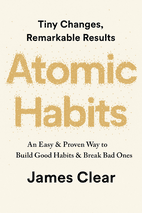
Atomic Habits by James Clear Book Cover

by James Clear

James Clear's Atomic Habits provides a four-step framework for building good habits and breaking bad ones through small, incremental changes. It offers practical strategies like habit stacking for anyone seeking sustainable personal or professional improvement.

On Insta.page you also get an Apply This Book tool that lets you combine insights from up to 3 books to solve your specific situation.

Chapter mindmaps

Free preview: chapters 1–4 are fully interactive. Click any node to expand or collapse. Subscribe to unlock the rest.

Chapter 1: Introduction: My Story

Key concepts: Introduction: My Story

1. Introduction: My Story

The Life-Altering Accident

  • Freak baseball bat injury causes severe brain trauma
  • Clear collapses after misidentifying basic facts (year, president)
  • Emergency airlift, coma, and parallels to sister's leukemia crisis

Physical and Emotional Recovery

  • Wakes with anosmia, double vision, and facial deformities
  • Cut from varsity baseball team—a devastating setback
  • Slow progress through physical therapy and seizure management

Habit Transformation in College

  • Prioritizes sleep, cleanliness, and weightlifting as foundational habits
  • Earns straight A’s and becomes All-American baseball pitcher
  • Small wins compound into academic and athletic leadership roles

From Personal System to Global Framework

  • Blog (2012) shares habit insights, attracting millions of readers
  • Develops 'atomic habits' philosophy blending psychology and neuroscience
  • Scales work through Habits Academy, speaking, and this book

Core Philosophy of Atomic Habits

  • Identity > Goals: Habits shape who you become, not just outcomes
  • 1% improvements compound into transformative change over time
  • Systems (e.g., environment, cues) matter more than motivation

Chapter 2: THE FUNDAMENTALS: Why Tiny Changes Make a Big Difference

Key concepts: THE FUNDAMENTALS: Why Tiny Changes Make a Big Difference

2. THE FUNDAMENTALS: Why Tiny Changes Make a Big Difference

The Power of Marginal Gains

  • Small 1% improvements in multiple areas can lead to significant overall success.
  • The British cycling team's dominance was built on optimizing trivial details like sleep and bike maintenance.
  • Aggregation of marginal gains creates a ripple effect that reshapes outcomes.

The 1% Rule: How Habits Compound

  • Habits compound like financial interest, gaining exponential value over time.
  • Consistent small actions (e.g., reading 10 pages daily) lead to substantial long-term results.
  • Negative habits also compound, silently eroding progress if left unchecked.

Breaking the Myth of Monumental Effort

  • Dramatic overhauls (e.g., crash diets) often fail because they rely on fleeting motivation.
  • Tiny habits are frictionless and easier to maintain than intense efforts.
  • Starting absurdly small (e.g., two minutes of stretching) builds sustainable rituals that grow naturally.

Key Takeaways

  • Small, consistent habits outperform sporadic grand gestures.
  • Compounding works for both positive and negative habits.
  • Systems and processes matter more than distant goals.
  • Reducing friction makes habits effortless and long-lasting.

Chapter 3: 1: The Surprising Power of Atomic Habits

Key concepts: 1: The Surprising Power of Atomic Habits

3. 1: The Surprising Power of Atomic Habits

The British Cycling Revolution

  • Dave Brailsford's 'aggregation of marginal gains' philosophy
  • 1% improvements in every aspect (e.g., bike ergonomics, sleep optimization)
  • Transformed team from mediocrity to dominance (60% Olympic golds, Tour de France wins)
  • Proof that tiny, consistent changes rewrite outcomes

The Math of Marginal Gains

  • 1% daily improvement compounds to 37x growth over a year
  • Positive compounding (knowledge, habits) vs. negative compounding (stress, procrastination)
  • Habits act like flight path adjustments—small shifts steer long-term trajectories

The Ice Cube Effect

  • Progress isn't linear; breakthroughs follow a 'plateau of latent potential'
  • Effort feels wasted until critical threshold (e.g., ice melting at 32°F)
  • Examples: San Antonio Spurs' practice, bamboo's delayed visible growth

Systems Over Goals

  • Goals focus on outcomes; systems focus on processes (e.g., daily routines over gold medals)
  • Flaws of goals: temporary, happiness-delaying, short-term focused
  • Systems create sustainable momentum (e.g., writing daily vs. 'finish a book')

Atomic Habits in Action

  • Micro-habits (1% better choices) compound into identity change
  • Examples: daily reading, automating tasks, 1% healthier meals
  • Success is a cascade of tiny steps, not leaps

The Compound Effect of Tiny Changes

  • Habits compound like financial interest—small, consistent improvements multiply over time.
  • A 1% daily improvement leads to a 37x gain over a year, while a 1% daily decline erodes progress equally.
  • Success depends on persistent patterns, not isolated actions (e.g., one missed workout won’t ruin progress, but the habit of skipping will).
  • Focus on systems (daily processes) over goals (end results) for sustainable growth.
  • The '1% Rule' emphasizes that tiny, consistent adjustments outperform sporadic large efforts.

The Power of Small Habits

  • Atomic habits are small but foundational—they build the identity of who you become.
  • Minor changes seem insignificant at first but create a 'tipping point' for transformation.
  • Habits are votes for the type of person you wish to be—each repetition reinforces identity.
  • Focus on 'being the kind of person who...' rather than just achieving outcomes.

The Plateau of Latent Potential

  • Progress often feels delayed—habits accumulate silently before reaching a breakthrough.
  • Like an ice cube melting at 32°F, change requires patience until the 'critical threshold' is hit.
  • Frustration arises when efforts don’t yield immediate results, but persistence is key.
  • The 'Valley of Disappointment' is the gap between expectations and reality—trust the process.

The Role of Identity in Habits

  • Lasting change requires shifting identity (beliefs about yourself), not just behavior.
  • Habits are effective when they align with self-image (e.g., 'I am a runner' vs. 'I’m trying to run').
  • Every action is a vote for the type of person you want to become.
  • Outcome-based habits focus on results; identity-based habits focus on transformation.

Chapter 4: 2: How Your Habits Shape Your Identity (and Vice Versa)

Key concepts: 2: How Your Habits Shape Your Identity (and Vice Versa)

4. 2: How Your Habits Shape Your Identity (and Vice Versa)

The Three Layers of Behavior Change

  • Outcomes: Focus on what you want to achieve (e.g., losing weight)
  • Processes: Focus on systems and habits (e.g., dieting)
  • Identity: Deepest layer - focus on who you believe you are
  • True transformation happens when habits align with identity
  • Identity and habits form a reinforcing feedback loop

Why Outcome-Focused Change Fails

  • Goals alone are fleeting without identity change
  • Statements like 'I'm trying to quit smoking' reinforce old identity
  • Lasting change requires shifting self-perception (e.g., 'I'm not a smoker')
  • Goals must be tied to new identities (e.g., 'I am a runner')

Habits as Identity Evidence

  • Your habits are proof of your current beliefs
  • Small actions accumulate evidence for new identities
  • Example: Getting manicures helped someone stop biting nails by changing self-image
  • Sustainable habits are expressions of identity, not just tasks

The Identity Shift Process

  • Step 1: Decide who you want to be (ask identity-based questions)
  • Step 2: Prove it with small wins (each habit is a 'vote' for new identity)
  • No need for perfection - majority of aligned choices rewrites self-image
  • Example: 'What would a healthy person choose?' guides decisions

The Dangers of Fixed Identities

  • Self-limiting labels become self-fulfilling prophecies
  • Phrases like 'I'm not a morning person' cement limiting beliefs
  • Growth requires unlearning old identities
  • Example: Manager who identifies as 'not a leader' struggles with leadership habits

Key Principles of Identity-Based Change

  • Identity change precedes lasting behavioral change
  • Every action is a vote for or against your desired identity
  • Consistency (not intensity) builds identity
  • Beware of self-limiting identity statements
  • Habits and identity form a powerful feedback loop

Continue exploring Atomic Habits