Atomic Habits Key Takeaways

by James Clear
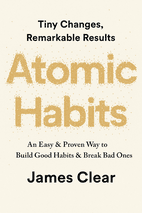
Atomic Habits by James Clear Book Cover

5 Main Takeaways from Atomic Habits

Small habits compound into extraordinary outcomes

Clear shows that tiny, consistent changes—like improving by just 1% each day—can lead to massive transformations over time. For example, a daily five-minute journaling habit can yield a completed book in a year, while neglecting small negative habits (e.g., eating an extra cookie) silently erodes progress.

Focus on systems, not goals

Goals are distant targets that provide temporary motivation, but systems—your daily routines and processes—drive sustainable results. Clear argues that winners and losers share the same goals; what separates them is the design of habits that make success automatic, like scheduling a workout rather than aiming to lose 20 pounds.

Build identity-based habits, not outcome-based ones

Sustainable change starts with believing you are the kind of person who takes that action—e.g., “I am a runner” instead of “I want to run.” Each small habit is a vote for your desired identity, and over time, consistency (not intensity) reshapes who you become.

Apply the Four Laws of Behavior Change

Clear’s framework—make it obvious, attractive, easy, and satisfying—provides a step-by-step method to build good habits and break bad ones. For instance, to start reading more, place a book on your pillow (obvious), choose a genre you love (attractive), read for two minutes (easy), and track your streak (satisfying).

Design your environment to make good habits effortless

Motivation is overrated; your surroundings silently shape your actions. By placing healthy snacks at eye level and hiding your phone in another room, you reduce friction for good habits and increase it for bad ones. Clear’s key insight: the secret to self-control isn’t inner strength—it’s outer design.

Executive Analysis

These five takeaways form a cohesive system that redefines habit formation from a willpower struggle into an engineering problem. Clear argues that the secret to lasting change lies not in dramatic resolutions but in redesigning small daily actions, environments, and self-perceptions. The Four Laws provide a practical cycle, while identity and systems create the momentum that turns ephemeral effort into automatic behavior. Together, they replace the myth of overnight success with a patient, repeatable process of continuous improvement.

This book matters because it bridges behavioral science and everyday application, offering readers a clear, actionable blueprint for transformation. Unlike generic self-help, Atomic Habits grounds its advice in research on habit loops, dopamine, and neuroplasticity, making it both credible and memorable. It has become a foundational text in the productivity and personal development genre, widely adopted by individuals, coaches, and organizations seeking to replace guesswork with a reliable habit-building method. Its practical impact lies in its ability to turn abstract goals into concrete, repeatable steps that anyone can follow.

Chapter-by-Chapter Key Takeaways

My Story (Introduction)

  • Small habits compound: Incremental changes, sustained over time, lead to extraordinary outcomes.

  • Identity shapes behavior: Building habits isn’t just about actions but becoming the type of person who embodies those habits.

  • Resilience is iterative: Setbacks are inevitable, but systems (not goals) drive long-term success.

  • External + internal: Effective habit formation balances environmental cues and emotional states.

  • You are your experiments: Clear’s framework emerged from personal trial and error—proof that anyone can redesign their habits.

Try this: Start one absurdly small habit today—like folding the corner of a page after reading—to prove to yourself that small changes compound over time.

THE FUNDAMENTALS: Why Tiny Changes Make a Big Difference (Chapter 1)

  • Small habits > grand gestures: Consistency in minor actions outperforms sporadic bursts of effort.

  • Compounding works both ways: Tiny positive habits build exponential growth, while negative ones silently undermine progress.

  • Systems trump goals: Focus on sustainable processes (e.g., daily routines) rather than fixating on distant outcomes.

  • Start absurdly small: Reduce friction to make habits effortless, ensuring they stick long-term.

Try this: Identify a habit you've been trying to start and reduce its friction so it takes less than two minutes to begin, making consistency effortless.

The Surprising Power of Atomic Habits (Chapter 2)

  • Systems > Goals: Focus on improving daily processes, not just end results.

  • 1% Rule: Tiny, consistent adjustments outperform occasional grand efforts.

  • Compounding Habits: Small choices, repeated, reshape your trajectory—for better or worse.

Try this: Write down one process you can improve today by 1%—for example, drinking one extra glass of water or doing one push-up—to start the compounding cycle.

How Your Habits Shape Your Identity (and Vice Versa) (Chapter 3)

  • Identity > outcomes: Sustainable change starts with believing, “This is who I am,” not “This is what I want.”

  • Habits are votes: Every action either reinforces or undermines your self-image.

  • Small wins matter: Consistency—not intensity—builds identity. Writing one page daily makes you a writer; exercising regularly makes you an athlete.

  • Beware self-limiting labels: Phrases like “I’m bad at math” become self-fulfilling prophecies.

  • Feedback loops: Habits shape identity, and identity shapes habits—a cycle that can work for or against you.

  • In the end, habits aren’t just about doing—they’re about becoming.

Try this: Ask yourself 'Who is the type of person who would do this habit?' and then act accordingly; even a single small action is a vote for that identity.

How to Build Better Habits in 4 Simple Steps (Chapter 4)

  • Habits are automated solutions to repeated problems, conserving mental energy.

  • The habit loop (cue → craving → response → reward) drives all behavior.

  • Freedom emerges from habits: Automating basics allows focus on higher goals.

  • Use the Four Laws of Behavior Change to build or break habits by manipulating cues, cravings, responses, and rewards.

  • Every habit serves a purpose—identify the underlying need it addresses to redesign it effectively.

Try this: Map out one habit loop (cue → craving → response → reward) for a current behavior, then use the Four Laws to tweak each step to make the desired habit easier.

THE 1ST LAW: Make It Obvious (Chapter 5)

  • Cues drive habits: Make desired behavior triggers unmissable.

  • Stack habits: Anchor new routines to existing ones for seamless integration.

  • Design your environment: Visibility is the gateway to action.

  • Invert for bad habits: Eliminate cues to disrupt unwanted behaviors.

Try this: Place the item you need for a new habit in a visible, unavoidable spot (e.g., running shoes by the door) so the cue triggers action automatically.

The Man Who Didn’t Look Right (Chapter 6)

  • Subconscious expertise: Repeated experiences train the brain to detect critical patterns instinctively, even if we can’t explain them.

  • Habits run deep: Automatic behaviors save mental effort but can trap us in counterproductive routines.

  • Interrupt autopilot: Techniques like Pointing-and-Calling force conscious engagement, reducing errors and mindless actions.

  • Awareness precedes change: The Habits Scorecard helps surface unconscious habits, providing a roadmap for intentional behavior shifts.

  • Identity-driven habits: Evaluate routines based on whether they “vote” for or against the person you aim to become.

  • The chapter’s core message: To master habits, start by seeing them.

Try this: Use a Habits Scorecard to list your current routines and mark each as a vote for or against the person you want to become; then target one unconscious habit to change.

The Best Way to Start a New Habit (Chapter 7)

  • Implementation intentions (e.g., “I will meditate at 7 a.m. in the kitchen”) make habits actionable by tying them to time and location.

  • Habit stacking links new habits to existing ones (e.g., “After I brew coffee, I’ll write my to-do list”).

  • Specificity is critical: Ambiguous plans fail; clear triggers automate behavior.

  • Leverage the Diderot Effect: Use the natural momentum of one habit to fuel the next.

  • Test and refine: Adjust cues based on frequency, environment, and consistency.

  • By designing obvious cues and stacking habits intentionally, you transform effortful goals into automatic routines.

Try this: Write an implementation intention for tomorrow: 'I will [habit] at [time] in [location]' and stack it after an existing routine, like brushing your teeth.

Motivation Is Overrated; Environment Often Matters More (Chapter 8)

  • Environment trumps motivation: Small changes to surroundings (e.g., water placement, meter visibility) yield outsized behavioral shifts.

  • Visibility is key: Make desired habits obvious and accessible; hide or disrupt triggers for unwanted ones.

  • Context dictates action: Habits cling to environments. Redesign spaces to serve specific purposes, or seek new contexts to forge fresh routines.

  • Design, don’t default: Proactively shape your world—don’t just react to it. Every object’s placement is a silent nudge toward or away from a habit.

Try this: Rearrange one area of your home or office to make a desired habit more visible and a bad habit less accessible—e.g., put fruit on the counter and junk food in a cupboard.

The Secret to Self-Control (Chapter 9)

  • Environment shapes behavior: Stable, cue-free environments make good habits automatic and bad habits fade.

  • Self-control is a design problem: Avoid temptation rather than resist it.

  • Habits are sticky, not permanent: They can be dormant but resurface with old cues.

  • Invisibility is power: Remove bad-habit cues entirely instead of relying on willpower.

  • Small changes, big impact: Simple environmental tweaks (like moving a TV) can disrupt entrenched patterns.

  • The secret to self-control isn’t inner strength—it’s outer design.

Try this: Remove one cue for a bad habit from your environment entirely (e.g., uninstall a distracting app) instead of relying on willpower to resist it.

THE 2ND LAW: Make It Attractive (Chapter 10)

  • Anticipation fuels action: Design habits that trigger dopamine before the behavior.

  • Leverage social influence: Align habits with the norms of groups you admire.

  • Bundle temptations: Attach “want-to” activities to “have-to” tasks.

  • Reframe your narrative: Shift how you describe habits to align with your desired identity.

  • By making habits attractive, we tap into primal drivers of human behavior—craving, belonging, and identity—to turn effortful routines into magnetic rituals.

Try this: Reframe a 'have-to' task by linking it to something you already enjoy—like listening to your favorite podcast only while folding laundry—to make it more attractive.

How to Make a Habit Irresistible (Chapter 11)

  • The 2nd Law of Behavior Change: Make habits attractive by linking them to heightened rewards.

  • Supernormal stimuli exploit evolutionary instincts, making modern temptations (junk food, social media) hard to resist.

  • Dopamine drives action through anticipation, not just pleasure. Cravings emerge from expected rewards, not actual outcomes.

  • Temptation bundling combines desired and required behaviors, leveraging Premack’s Principle to reinforce habits.

  • To build lasting habits, focus on amplifying the anticipation of reward—not just the reward itself.

Try this: Create a temptation bundle: pair a habit you need (e.g., emailing) with a treat you want (e.g., a latte) to boost anticipation and dopamine before you start.

The Role of Family and Friends in Shaping Your Habits (Chapter 12)

  • Culture shapes habits: Behaviors praised by your social circle become desirable.

  • Proximity matters: Close relationships heavily influence your habits, for better or worse.

  • Conformity is powerful: Group norms often override logic, making it easier to adopt habits aligned with the majority.

  • Status drives behavior: Habits associated with prestige or approval are more likely to stick.

  • Join aligned tribes: To sustain a habit, immerse yourself in communities where it’s already normalized and shares your values.

  • Identity reinforcement: Shared group identities (e.g., “We are cyclists”) make habits feel natural and enduring.

  • By understanding these forces, you can intentionally design a social environment that pulls you toward better habits rather than leaving change to chance.

Try this: Join a community or find a friend who already embodies the habit you want—their norms and approval will pull you toward consistent practice.

How to Find and Fix the Causes of Your Bad Habits (Chapter 13)

  • Reframe cues: Alter how you perceive a habit’s rewards (e.g., “Smoking does nothing for me”).

  • Dig deeper: Identify the core motive (security, connection, etc.) behind a habit and find healthier ways to fulfill it.

  • Predictions drive actions: Change your mental associations with a habit to shift cravings.

  • Mindset shifts: Replace “have to” with “get to” to transform burdens into opportunities.

  • Rituals matter: Pair habits with enjoyable cues to build positive reinforcement.

  • By reprogramming your predictions and associations, you can dismantle destructive patterns and make constructive habits feel instinctive.

Try this: Identify the core motive behind a bad habit (e.g., stress relief) and replace it with a healthier alternative, such as a quick walk instead of smoking.

THE 3RD LAW: Make It Easy (Chapter 14)

  • Effort shapes behavior: Design habits to require minimal effort through environmental tweaks.

  • Environment is invisible architecture: Optimize spaces to make good habits obvious and easy.

  • Anchor new habits to existing routines: Habit stacking reduces resistance to change.

  • Start small, then scale: The Two-Minute Rule bypasses inertia by focusing on the gateway action.

  • Automate decisions: Remove friction by pre-committing to choices in advance.

Try this: For a new habit, focus on the 'gateway' two-minute version: meditate for 60 seconds, write one sentence, or organize one drawer to bypass inertia.

Walk Slowly, but Never Backward (Chapter 15)

  • Prioritize action over motion: Stop planning; start practicing.

  • Repetition > perfection: Habits form through frequency, not flawless execution.

  • Automaticity is a numbers game: Focus on “how many” reps, not “how long” it takes.

  • Embrace imperfection: Progress begins when you accept “good enough” and iterate.

  • Brain plasticity is your ally: Every repetition physically rewires your brain to make habits stick.

  • The chapter closes with a pivot to the 3rd Law of Behavior Change: Make it easy. By simplifying repetition, you bypass the paralysis of perfection and let practice do the work.

Try this: Commit to doing the two-minute starter version of your habit every day for one week—no more, no less—to build repetition without perfection pressure.

The Law of Least Effort (Chapter 16)

  • Friction shapes behavior: Reduce effort for good habits; increase it for bad ones.

  • Environment is destiny: Design spaces to make the right actions effortless (e.g., gym on your commute).

  • Small adjustments compound: Priming your environment—like resetting a room or prepping meals—saves future effort.

  • Laziness is strategic: Energy conservation isn’t a flaw—it’s a survival mechanism. Harness it by making hard habits easy.

  • By aligning habits with the Law of Least Effort, we tap into our natural wiring, turning aspiration into automatic action.

Try this: Prime your environment tonight for tomorrow’s good habit: lay out gym clothes, prep coffee, or place a notebook on your keyboard to reduce future effort.

How to Stop Procrastinating by Using the Two-Minute Rule (Chapter 17)

  • Start absurdly small: Break habits into actions that take ≤2 minutes to begin.

  • Ritualize the start: Master the gateway habit (e.g., hailing a cab, opening notes) to trigger momentum.

  • Leverage decisive moments: Recognize daily forks in the road—like choosing between yoga or Netflix—and opt for the path that aligns with long-term goals.

  • Build identity through consistency: Focus on becoming the type of person who shows up, not just achieving an end result.

  • Scale gradually: Use habit shaping to expand from two-minute actions to larger routines over time.

  • By designing habits around ease and identity, procrastination loses its grip, and progress becomes inevitable.

Try this: Identify a decisive moment in your day (e.g., after dinner) and design a two-minute gateway habit that nudges you toward the better choice—like putting on sneakers to walk.

How to Make Good Habits Inevitable and Bad Habits Impossible (Chapter 18)

  • Commitment devices bind you to good habits by making bad ones inconvenient (e.g., locking away distractions).

  • Automation through technology or onetime actions (e.g., automatic bill pay) ensures consistency without ongoing effort.

  • Increase friction for bad habits and eliminate steps for good ones to create a self-sustaining system.

  • The 3rd Law inversion—make it difficult—transforms your environment into a catalyst for inevitable success.

Try this: Use a commitment device today: set a timer on a distracting app or leave your wallet at home to make a bad habit impossible while making a good one inevitable.

THE 4TH LAW: Make It Satisfying (Chapter 19)

  • Instant > Delayed: Immediate rewards trump distant payoffs—design habits to feel good now.

  • Identity Reinforcement: Satisfaction isn’t just about pleasure; it’s proof of who you’re becoming.

  • Track Progress: Visual cues (streaks, checklists) turn effort into tangible, motivating wins.

  • Bundle Rewards: Link habits to cravings you already have to make them irresistible.

  • Flip the Script: Turn avoidance of pain (e.g., losing money) into a satisfying win through accountability.

  • By making satisfaction non-negotiable, habits shift from chores to rituals you want to repeat.

Try this: Track one habit immediately after performing it—put a paperclip in a jar or check a calendar—so you get a small, satisfying reward that reinforces the action.

The Cardinal Rule of Behavior Change (Chapter 20)

  • The 4th Law: Habits endure when they’re immediately satisfying, not just beneficial long-term.

  • Cardinal Rule: What’s instantly rewarded gets repeated; what’s punished (or unrewarded) gets avoided.

  • Immediate > Delayed: Human brains prioritize present rewards—work with this tendency, not against it.

  • Reinforce Early: Use small, identity-aligned rewards to stay motivated until intrinsic benefits (e.g., better health) kick in.

  • Success Signal: Even minor wins (e.g., soap that lathers nicely) train the brain to crave repetition.

  • In short, make good habits feel good now, and the long-term rewards will follow.

Try this: Choose one habit and plan a small, immediate reward (like a cup of tea) that you receive right after completing it, even if the long-term payoff is months away.

How to Stick with Good Habits Every Day (Chapter 21)

  • Visualize progress: Use trackers (calendars, jars) to make habits tangible and satisfying.

  • Leverage streaks: “Don’t break the chain” to build momentum.

  • Automate and simplify: Pair tracking with existing routines to reduce friction.

  • Rebound fast: Miss once? Never miss twice.

  • Measure wisely: Avoid optimizing for the wrong metrics; prioritize quality over quantity.

  • Embrace imperfection: Consistency > perfection. Even small efforts sustain identity and compounding gains.

  • The chapter closes with a reminder: Tracking is a tool, not the goal. Focus on systems that align with your values, not just numbers.

Try this: Start a habit tracker for one behavior and commit to 'never missing twice'—if you miss a day, get back on track the next day to maintain momentum.

How an Accountability Partner Can Change Everything (Chapter 22)

  • Immediate consequences > delayed costs: Painful penalties speed up behavior change.

  • Habit contracts formalize commitment: Written agreements with accountability partners make failure socially and personally costly.

  • Social pressure is a catalyst: Knowing others are watching (or judging) motivates action.

  • Automate accountability: Use technology or public pledges to enforce consistency.

  • Match punishment to behavior: Penalties must outweigh the short-term reward of the bad habit.

  • By anchoring habits to real-world consequences, we tap into our innate desire to avoid pain and preserve social standing—turning accountability into a superpower for transformation.

Try this: Set up a habit contract with a friend where you agree to pay a penalty or publicly announce your failure if you skip a specific habit this week.

ADVANCED TACTICS: How to Go from Being Merely Good to Being Truly Great (Chapter 23)

  • Deliberate practice > passive repetition: Target weaknesses with structured, uncomfortable exercises.

  • Seek discomfort strategically: Growth accelerates when leaning into challenges, not avoiding them.

  • Build systems, not just goals: Sustainable excellence comes from daily habits, not endpoint obsessions.

  • Feedback is non-negotiable: Regularly integrate external perspectives to avoid blind spots.

  • Mastery is iterative: Small, consistent improvements compound into transformative results.

Try this: Identify one skill or routine you do passively and add a deliberate-practice element—like repeating a weak area with focused attention—to accelerate growth.

The Truth About Talent (When Genes Matter and When They Don’t) (Chapter 24)

  • Align habits with innate strengths: Choose behaviors that feel satisfying and sustainable for your personality.

  • Context dictates genetic value: Seek environments where your traits become assets.

  • Specialize to dominate: Combine skills or carve niches to bypass saturated fields.

  • Effort clarifies genetics: Natural advantages only shine when paired with deliberate practice.

  • Redefine the game: If you can’t win by the rules, rewrite them.

Try this: Audit your natural strengths and choose one habit that aligns with them; for example, if you're a morning person, schedule your hardest task first thing.

The Goldilocks Rule: How to Stay Motivated in Life and Work (Chapter 25)

  • Goldilocks Rule: Peak motivation comes from tasks that are just beyond current abilities.

  • Boredom > Failure: Stagnation, not setbacks, derails progress. Refresh habits with minor challenges.

  • Embrace Repetition: Professionals thrive by sticking to routines even when mundane.

  • Variable Rewards: Introduce unpredictability to sustain interest in long-term goals.

  • 4% Rule: Aim for incremental improvements (~4% harder) to enter a flow state.

  • The path to excellence isn’t glamorous—it’s about finding fascination in repetition and pushing boundaries, one manageable step at a time.

Try this: Adjust one of your current habits to be just 4% harder or more challenging this week—for instance, increase your run distance by a block—to stay in the flow zone.

The Downside of Creating Good Habits (Chapter 26)

  • Habits automate excellence but demand vigilance to avoid complacency.

  • Mastery is a cycle of habit formation and deliberate practice.

  • Reflection systems (e.g., CBE, annual reviews) turn feedback into progress.

  • Identity should be fluid—rooted in values, not rigid roles.

  • Adaptability trumps rigidity in a changing world.

Try this: Schedule a 15-minute weekly reflection to review what’s become automatic and ask: 'Is this habit still serving my core values?' Then tweak accordingly.

The Secret to Results That Last (Conclusion)

  • Small actions compound: A single habit may seem trivial, but hundreds of tiny changes create transformative results.

  • Systems > goals: Focus on refining processes, not chasing outcomes.

  • The Four Laws are cyclical: Continuously apply “obvious, attractive, easy, satisfying” to habits and revisit them as challenges arise.

  • There’s no endpoint: Improvement is infinite—keep iterating.

  • Consistency is the catalyst: What matters isn’t intensity today, but showing up tomorrow, and the day after.

Try this: Pick one small habit you've been neglecting and restart it tomorrow—just one repetition—to remind yourself that consistency, not perfection, drives lasting results.

Appendix (Chapter 27)

  • Resource Hub: The appendix is a curated toolkit, not an afterthought, designed to complement the book’s core content.

  • Depth on Demand: It offers layered insights—casual readers can skim, while detail-oriented audiences can delve into data and references.

  • Actionable Extensions: Interactive elements transform passive reading into active learning, reinforcing the book’s themes through practice.

Try this: Skim the appendix for one template or checklist that applies to a habit you're working on, and print it out to make the principles actionable today.

Continue Exploring