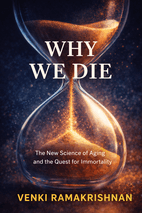
Venki Ramakrishnan's Why We Die explores the biological mechanisms of aging, from cellular damage to telomere shortening, separating scientific hope from hype for readers curious about mortality and the realistic limits of longevity science.
Feature
Insta.Page
Blinkist
Shortform
Summary Depth
Full Chapter-by-Chapter
15-min overview
Section-by-section guides
Audio Narration
✓
✓
✓
Visual Mindmaps
✓
✕
✕
AI Q&A
✓
✕
✕
Quizzes
✓
✕
✕
PDF Downloads
✓
✕
✓
Price
$89.99/yr
$146/yr (PRO)
$199/yr
*Competitor data last verified July 2026.
1 Page Summary
In Why We Die, Nobel Prize-winning biologist Venki Ramakrishnan provides a lucid and authoritative exploration of the science of aging and death. He moves beyond philosophical questions to dissect the biological mechanisms—from cellular damage and telomere shortening to protein misfolding and metabolic trade-offs—that ultimately lead to the decline and failure of our bodies. Ramakrishnan meticulously explains that aging is not a single programmed process but a complex, multifaceted phenomenon arising from accumulated molecular and cellular wear and tear, which evolution has had little reason to select against beyond our reproductive prime.
The book is grounded in a rich historical and contemporary context, tracing the scientific journey from early misconceptions to today's cutting-edge research. Ramakrishnan chronicles key discoveries, such as the identification of telomeres and the role of senescent cells, while also surveying the current landscape of ambitious (and often hyped) anti-aging interventions, from caloric restriction and senolytics to genetic manipulation and epigenetic reprogramming. He acts as a careful guide, separating realistic hope from Silicon Valley-fueled fantasy and highlighting the immense challenges in translating lab findings into human therapies that truly extend healthspan.
Ramakrishnan's lasting contribution is his balanced, skeptical, and humanistic perspective. While celebrating the scientific quest to mitigate the diseases of aging, he compellingly argues that the pursuit of extreme longevity may be misguided, potentially exacerbating inequality and diverting resources from more pressing health issues. Ultimately, he suggests that accepting our mortality can give meaning to our finite lives, framing death not as a failure of biology but as an integral part of life's cycle, a concept that gives the book its profound and poignant resonance.
Introduction
Overview
The chapter opens not in a laboratory, but in the Valley of the Kings in 1922, with Howard Carter’s discovery of Tutankhamun’s intact tomb. This elaborate attempt to conquer death through mummification, treasures, and guides for the afterlife serves as a powerful entry point into humanity’s oldest and most universal preoccupation: our mortality. The author uses this historical lens to explore how the awareness of death—a uniquely human trait born of advanced cognition—has shaped civilizations, religions, and now, modern science. The narrative traces our psychological and cultural coping mechanisms before pivoting to today’s pivotal moment, where a revolution in biology shifts the quest for immortality from ritual and faith to the realms of genetics and cellular science.
Humanity’s Coping Strategies for Mortality
Across cultures and millennia, humans have devised elaborate strategies to deny the finality of death. Philosopher Stephen Cave’s framework is introduced, outlining four core “plans”: Plan A (striving to live forever), Plan B (physical resurrection), Plan C (an immortal soul), and Plan D (a legacy through works or offspring). Ancient Egyptians and China’s first emperor, Qin Shi Huang, famously hedged their bets by pursuing multiple plans simultaneously, combining elixirs, elaborate tombs, and beliefs in an enduring soul. These historical examples underscore a deep, persistent yearning to transcend our biological limits.
The Enlightenment and a Shift to Plan A
With the rise of science and rational thought, the solidity of Plans B and C began to waver for many. While legacy (Plan D) remains appealing—whether through art, philanthropy, or children—it is ultimately an imperfect substitute for continued existence. This cultural shift has refocused immense energy on Plan A: the direct extension of life. For centuries, this meant fighting disease and accident; the last 150 years saw life expectancy double due to public health and medicine. But now, the goal is changing from merely increasing average lifespan to attacking the aging process itself to extend the maximum human lifespan.
The New Scientific Frontier of Aging
We are now at a crossroads, the author argues. An explosion in biological knowledge, driven by the study of genes and proteins, has transformed aging research (gerontology) from a backwater into a booming frontier. Demographics are a key driver: aging populations worldwide create an urgent need to extend “healthspan,” the period of life spent in good health. This has unleashed a flood of investment, with hundreds of thousands of research papers and hundreds of start-up companies pursuing anti-aging interventions. The scientific pursuit of longevity is no longer fringe; it is a major, well-funded enterprise.
Navigating the Hype and Ethical Quandaries
This gold rush, however, comes with significant alarm bells. The author positions himself as a guide for this moment—a molecular biologist with “no skin in the game,” offering a dispassionate look at a field rife with hype, dubious commercial remedies, and profound ethical questions. He warns of “immortality merchants,” modern prophets often funded by wealthy individuals desperate to extend their own “party.” The book promises to cut through the noise, examining the fundamental biological principles of aging that will stand the test of time, while also confronting critical societal questions: Who would access such treatments? What would a society of vastly extended lifespans look like? And fundamentally, should we pursue this path at all?
Key Takeaways
The human awareness of mortality has spawned universal cultural and religious strategies to deny death’s finality, historically encapsulated in the four “plans” for immortality.
The Enlightenment and modern science have gradually shifted primary focus onto Plan A: directly extending healthy life through scientific means, moving beyond mere disease prevention to target the aging process itself.
Aging research is experiencing a revolutionary boom, driven by advances in molecular biology and the demographic pressure of aging populations, attracting massive scientific and commercial investment.
This boom requires careful scrutiny due to widespread hype, questionable marketing, and deep ethical dilemmas about equity, societal impact, and the very goal of radical life extension.
The author aims to provide an objective tour of the core science of aging, separating durable principles from fleeting trends, and forcing a necessary conversation about the future we are building.
Key concepts: Introduction
1. Introduction
Humanity's Historical Confrontation with Mortality
The discovery of Tutankhamun's tomb illustrates humanity's ancient preoccupation with overcoming death
Advanced human cognition creates unique awareness of mortality that has shaped civilizations and religions
Stephen Cave's framework outlines four core 'plans' for immortality: living forever, resurrection, immortal soul, and legacy
Ancient civilizations like Egypt and China pursued multiple immortality strategies simultaneously
The Scientific Shift Toward Life Extension
The Enlightenment and rise of science weakened traditional beliefs in resurrection and souls
Cultural focus shifted to Plan A: directly extending life through scientific means
Modern medicine doubled life expectancy over 150 years through disease prevention
Current goal is shifting from increasing average lifespan to extending maximum lifespan by attacking aging itself
The Revolution in Aging Research
Explosion in biological knowledge has transformed gerontology from backwater to booming frontier
Aging populations worldwide create urgent need to extend 'healthspan' (period of good health)
Massive investment fuels hundreds of thousands of research papers and startup companies
Scientific pursuit of longevity has become a major, well-funded mainstream enterprise
Critical Examination of the Longevity Movement
Field is rife with hype, dubious commercial remedies, and 'immortality merchants'
Profound ethical questions about access, societal impact, and fundamental goals
Author positions as objective guide to separate durable science from fleeting trends
Need to confront who would access treatments and what extended-lifespan societies would look like
💡 Try clicking the AI chat button to ask questions about this book!
1. The Immortal Gene and the Disposable Body
Overview
Imagine the human body not as a single entity, but as a vast, coordinated metropolis of cells, each performing specialized tasks to keep the whole system running. Death, then, is like the collapse of that city's government and infrastructure—a system-wide failure that occurs gradually from accumulated damage, then suddenly. This raises a profound question: if the complex system of "you" is destined to fail, what part of life actually continues? The answer lies in an immortal thread of information: our genes. While our physical bodies—the soma—are disposable, the genetic blueprint within germ-line cells is passed on, protected by the Weismann barrier that prevents the experiences of the body from altering the immortal germ line.
But why must the body age and die at all? Evolutionary biology provides the compelling explanation. Natural selection cares about reproduction, so its force weakens after an organism has passed its genes to the next generation. Harmful mutations that only cause problems late in life, or genes that offer an early benefit at a late cost (a concept called antagonistic pleiotropy), accumulate. This is formalized in the disposable soma theory, which frames aging as a strategic trade-off. An organism has limited energy; investing heavily in perfect, eternal bodily repair would divert resources from growth and reproduction. Evolution favors allocating resources to maximize reproductive success, leaving the body as a ultimately disposable vessel.
The curious case of human menopause puts these theories to the test. Why do women live for decades after losing reproductive capacity? One adaptive view is the grandmother hypothesis, where ceasing reproduction allows older women to invest in ensuring the survival of their grandchildren, thereby promoting their own genetic legacy. Alternatively, menopause might not be an adaptation at all, but a simple mismatch—our lifespans have recently lengthened faster than our reproductive systems could evolutionarily adjust. Whether an adaptation or a byproduct, menopause underscores the central evolutionary puzzle: our genes have crafted us for propagation, not for perpetual existence. By comparing lifespans and aging strategies across the tree of life, from fruit flies to killer whales, we begin to see the universal principles that make mortality the price of life's incredible, gene-driven continuity.
Cellular Cities and the Nature of Death
The author opens by drawing a powerful analogy between a bustling, coordinated city and the intricate inner world of a cell. Just as a city relies on complex infrastructure and cooperation to function, a cell operates through thousands of synchronized processes—transporting cargo, importing nutrients, exporting waste, and communicating with neighbors. A key distinction, however, is that while cities may grow unchecked, a cell must know precisely when to grow, divide, and stop.
This comparison extends to mortality. We perceive cities as permanent, yet civilizations, like cells, have lifecycles. Defining death for an individual is surprisingly complex. At the moment of death, most of our cells are still alive, and our microbiome thrives. Conversely, losing a limb doesn’t mean we die. True death occurs when the collection of cells that forms us ceases to function as a coherent, sentient whole—a system-wide failure resulting from the accumulated chemical damage of aging. This process mirrors a quote from Hemingway: it happens "gradually, then suddenly."
The boundaries of life are inherently fuzzy, both at the beginning and the end. Legal and biological definitions of death (heart stoppage vs. brain death) can conflict with real-world consequences. Similarly, pinpointing the exact start of life—whether at conception, implantation, or the development of sentience—remains a socio-cultural debate as much as a scientific one. This blurriness applies to all scales, from molecules to nations; death occurs when component parts can no longer sustain the functional whole.
At each level of organization, from molecules to human societies, there is a principle of safety in numbers and redundancy. The loss of a single cell, employee, or tree doesn’t cripple the system, but the loss of key components does. Longevity also tends to increase with the size and complexity of the entity, with cells dying and being replaced many times over within a single human lifespan.
The Immortal Thread: Genes and the Weismann Barrier
Despite the death of individuals, life continues unbroken. Every living creature is a direct descendant of an ancestral cell from billions of years ago, meaning a continuous thread of life—an "essence"—has survived through eons. This immortal element is not the physical body but the information required to build a new one: our genes, stored in DNA.
The mechanism that allows genes to outlive the body was clarified by August Weismann in 1892. He distinguished between two cell types: somatic cells (the soma, or body), which make up our tissues and die with us, and germ-line cells (sperm and eggs), which are sequestered in the gonads. Weismann proposed the Weismann barrier: germ-line cells can produce the somatic cells of the next generation, but somatic cells cannot influence the germ-line. This definitively refuted Lamarck's idea of inheritance of acquired characteristics (like a giraffe stretching its neck). Our bodies are thus disposable vessels, crafted by genes to ensure their own propagation. Sexual reproduction resets the aging clock for the germ line, granting it a form of immortality.
Why We Die: Evolutionary Theories of Aging
If the evolutionary goal is gene propagation, why do we age and die at all? A naive idea is that death clears the way for new generations, but this "group selection" argument fails due to "cheater" mutations that would benefit longer-living individuals at the group's expense.
The evolutionary explanation for aging emerged from the work of J.B.S. Haldane, Ronald Fisher, and later Peter Medawar. They realized natural selection's force weakens with age. A harmful mutation that strikes early in life is strongly selected against because it hinders reproduction. However, a mutation whose detrimental effects appear only after an organism has likely already reproduced can persist in the gene pool. Historically, humans rarely lived long enough to experience these late-acting harms.
Peter Medawar's mutation accumulation theory states that aging results from the late-life combination of many such slightly deleterious mutations that escaped early natural selection. George Williams added the concept of antagonistic pleiotropy, where a gene variant is selected because it provides an early-life benefit (like better growth or fertility) even if it causes harm later (increasing cancer or dementia risk).
These ideas are unified by the disposable soma theory (proposed by Thomas Kirkwood), which frames aging as an evolutionary trade-off. An organism has limited energetic resources; investing heavily in bodily maintenance and repair for a long life means diverting resources away from early growth and reproduction. Evolution favors allocating resources to maximize reproductive success, leaving the soma (body) as ultimately disposable. Experiments in short-lived organisms like fruit flies and worms support this, showing that mutations or conditions (like caloric restriction) that increase lifespan typically reduce fecundity.
The Human Puzzle of Menopause
The remarkable increase in human lifespan over the last century highlights a curious human feature: female menopause. Unlike most animals, women lose reproductive capacity decades before the end of their lives. The question may be inverted: rather than asking why menopause occurs "early," we might ask why women live so long afterward. Our closest ape relatives also stop reproducing in their late thirties but die soon after. For most of human history, women also died relatively soon after ceasing reproduction.
Menopause may have evolved as an adaptive strategy. Human children have an exceptionally long period of dependency. By stopping reproduction, women avoid the high risks of late-life childbirth, thereby increasing their chances of surviving to raise their existing children and even grandchildren to self-sufficiency. This "grandmother hypothesis" suggests that post-reproductive survival itself has evolutionary value for ensuring the success of one's genes in subsequent generations.
Evolutionary Explanations for Menopause
Building on the idea that aging relates to gene propagation, menopause presents a fascinating puzzle. The "good mother hypothesis" suggests that ceasing reproduction earlier in life allows women to focus on caring for existing children, increasing their survival and thus the transmission of her genes. This might explain why men, who don't face the same risks, remain reproductive longer. Unlike humans, species like elephants show a gradual fertility decline, and chimpanzees experience menopause near the end of their lives, highlighting human uniqueness.
The "grandmother hypothesis" takes this further, proposing that post-reproductive women enhance their genetic legacy by helping grandchildren survive. However, some question this, as grandchildren carry only a quarter of her genes compared to half for her own children. Insights from killer whales—one of the few menopausal species living in groups—suggest menopause might reduce intergenerational conflict. Here, older females stop breeding to assist younger relatives like daughters-in-law, strategically investing in grandchildren who share their genes.
Questioning Menopause as an Adaptation
Not all scientists see menopause as an adaptive trait. Steven Austad points out that human longevity increased relatively recently—around forty thousand years ago—compared to Neanderthals and chimpanzees. He argues that perhaps human ovaries simply haven't had enough evolutionary time to catch up with our extended lifespans, making menopause a non-adaptive byproduct rather than a selected advantage for caregiving.
Aging, Sex, and the Disposable Body
These debates tie into the core theory of the disposable body, where organisms age and die after passing on genes, resetting the clock each generation. This applies to species with clear parent-offspring distinctions, particularly those reproducing sexually. Sex evolved to generate genetic variation, adapting offspring to changing environments—ironically, making death a potential price for sex. Yet, aging isn't limited to sexual species; even single-celled organisms like yeast and bacteria age when there's a mother-daughter cell distinction, showing universal evolutionary principles.
Evolution, driven by fitness, has crafted an astonishing diversity of life spans across species, from hours to over a century. For humans curious about longevity, studying this variety offers profound lessons. By examining how different organisms manage aging, we can glimpse the potential limits and possibilities for our own lives.
Key Takeaways
Menopause may have evolved through adaptive strategies like the "good mother" or "grandmother" hypotheses, or to minimize intergenerational conflict in social groups, as seen in killer whales.
An alternative view suggests menopause is not adaptive but a result of humans' recent lifespan increase without corresponding evolutionary adjustments in reproduction.
The disposable body theory connects aging to gene propagation, with sexual reproduction playing a key role in resetting aging across generations, though aging occurs even in asexual organisms.
Evolutionary principles underlie all life, and comparing lifespans across species provides valuable insights into human aging and the potential for extending longevity.
Key concepts: 1. The Immortal Gene and the Disposable Body
2. 1. The Immortal Gene and the Disposable Body
The Analogy of Life and Death
The human body is compared to a vast, coordinated metropolis of cells, where death is a system-wide failure from accumulated damage.
Defining death is complex: most cells remain alive at death, but the coherent, sentient whole ceases to function.
Death occurs 'gradually, then suddenly,' mirroring the collapse of infrastructure in a city or civilization.
The boundaries of life and death are fuzzy, with legal, biological, and socio-cultural definitions often in conflict.
The Immortal Gene and the Disposable Soma
The continuous thread of life is not the physical body but the genetic information (genes) passed through generations.
August Weismann distinguished between somatic cells (disposable body) and germ-line cells (immortal reproductive cells).
The Weismann barrier prevents somatic experiences from altering the germ line, refuting Lamarckian inheritance.
The body is a disposable vessel crafted by genes to ensure their own propagation and continuity.
Evolutionary Theories of Aging
Aging results from natural selection's weakening force after reproductive age, allowing harmful late-life mutations to accumulate.
Antagonistic pleiotropy explains genes that offer early benefits at a late cost, contributing to aging.
The disposable soma theory frames aging as a strategic trade-off: limited energy is allocated to reproduction over perfect bodily repair.
Death is not for group benefit; 'cheater' mutations would favor longer-lived individuals, making group selection unlikely.
The Puzzle of Menopause
Menopause presents an evolutionary puzzle: why do women live decades after losing reproductive capacity?
The grandmother hypothesis suggests menopause is adaptive, allowing investment in grandchildren's survival.
An alternative view is that menopause is a mismatch—lifespans lengthened faster than reproductive systems could evolve.
Menopause underscores that genes prioritize propagation over perpetual existence, whether adaptive or a byproduct.
Principles of Longevity and Redundancy
At every level of organization, from molecules to societies, systems rely on safety in numbers and redundancy.
Loss of single components (cells, individuals) doesn't cripple the system, but loss of key components does.
Longevity tends to increase with the size and complexity of the entity, with cells replaced many times in a lifespan.
Comparing lifespans across species reveals universal principles of mortality as the price of gene-driven continuity.
Evolutionary Theories of Aging
Natural selection weakens with age, allowing late-acting harmful mutations to persist in the gene pool.
Mutation accumulation theory: aging results from the late-life combination of deleterious mutations that escaped early natural selection.
Antagonistic pleiotropy: genes providing early-life benefits (e.g., growth, fertility) are selected even if they cause harm later in life.
Disposable soma theory: aging is an evolutionary trade-off where limited resources are allocated to reproduction over long-term bodily maintenance.
The Evolutionary Puzzle of Human Menopause
Human females lose reproductive capacity decades before the end of life, unlike most animals.
The question may be inverted: why do women live so long after ceasing reproduction, rather than why menopause occurs early?
For most of human history, women died relatively soon after ceasing reproduction, similar to our closest ape relatives.
Menopause may have evolved as an adaptive strategy to avoid late-life childbirth risks and ensure offspring survival.
Adaptive Explanations for Menopause
Good mother hypothesis: ceasing reproduction allows women to focus resources on existing children, increasing their survival and gene transmission.
Grandmother hypothesis: post-reproductive women enhance their genetic legacy by helping grandchildren survive, though they share fewer genes with grandchildren.
Intergenerational conflict reduction: in social species like killer whales, menopause may help older females assist younger relatives without competing with them.
Human uniqueness: unlike gradual fertility decline in elephants or late menopause in chimpanzees, human menopause is distinct and potentially adaptive.
Critique of Menopause as an Adaptation
Some scientists argue menopause may be a non-adaptive byproduct of recent human lifespan increases.
Human longevity increased relatively recently (~40,000 years ago) compared to Neanderthals and chimpanzees.
Ovaries may not have had enough evolutionary time to adapt to extended lifespans, making menopause an accidental trait.
This view challenges the idea that menopause evolved specifically for caregiving advantages.
Aging, Reproduction, and Evolutionary Universals
The disposable body theory connects aging to gene propagation, with death resetting the clock each generation.
Sexual reproduction generates genetic variation but may make death a 'price' for adaptation to changing environments.
Aging is not limited to sexual species; it occurs even in single-celled organisms with mother-daughter cell distinctions.
Evolution has produced diverse lifespans across species, offering insights into human aging and longevity potential.
2. Live Fast and Die Young
Overview
From the fleeting beauty of a butterfly to the ancient stillness of a sequoia, the natural world presents a stunning spectrum of lifespans. This diversity is partly explained by scaling laws, which link an animal's size and metabolic rate to its potential longevity—smaller creatures with faster metabolisms generally live shorter lives. Yet fascinating exceptions abound. Species like bats and the naked mole rat defy these rules, achieving remarkable longevity for their size, often due to evolutionary advantages like flight or reduced predation. Some even exhibit negligible senescence, where their risk of death doesn’t skyrocket with age as it does in humans, governed by Gompertz's law of mortality.
The human story of longevity is intertwined with both tragedy and progress. Historical figures like Fritz Haber, whose scientific work prolonged both life (via fertilizers) and war (via explosives), embody the dual-edged sword of human intervention. While public health advances have dramatically increased average life expectancy, a fierce debate rages over whether there is a fixed upper limit to the human lifespan. Demographers and biologists are divided, with some pointing to the unchanging record of Jeanne Calment, who died at 122, as evidence of a ceiling, while others see potential in the plateauing mortality rates of the oldest centenarians.
Studying these centenarians reveals they are not a uniform group; they are survivors, delayers, or escapers of major age-related diseases, typically compressing disability into a very short period at life's end. This research underscores that while lifestyle is crucial for reaching average old age, genetics become paramount at the extremes. The high-stakes, long-term bet between a skeptic and an optimist over whether a 150-year-old is already alive captures the central question: will future breakthroughs allow us to treat aging itself? This shifts the inquiry from evolutionary why to biological how, introducing the concept of hallmarks of aging—the specific cellular breakdowns that may hold the key to intervention.
Contrasting Lifespans in Nature
The chapter opens with a poignant moment in Hardwick Wood, where a memorial to a young man quotes Tagore: “The butterfly counts not months but moments and has time enough." This serves as a springboard to explore the vast disparity in lifespans across the natural world. Butterflies live mere weeks, while giant sequoias can thrive for over a millennium, and ancient yews in Britain are estimated at 3,000 years. This divergence is partly explained by fundamental biological differences; trees and some animals like starfish, hydra, and the "immortal jellyfish" (Turritopsis dohrnii) possess remarkable regenerative abilities, allowing them to repair or even revert to earlier life stages. However, while these "biologically immortal" species fascinate gerontologists, their relevance to human aging remains uncertain due to the vast evolutionary distance between us.
Scaling Laws: Size, Metabolism, and Lifespan
Turning to mammals, a more predictable pattern emerges through the lens of scaling laws. Physicist Geoffrey West's work reveals that an animal's size is intricately linked to its metabolic rate—the speed at which it burns energy. Kleiber's law describes how metabolic rate scales with body mass, leading to a general rule: larger mammals tend to live longer. This is because smaller animals, with a higher surface-area-to-volume ratio, lose heat faster and must maintain a faster metabolism, which may contribute to more rapid wear and tear. Intriguingly, across a wide range from hamsters to whales, mammals typically experience about 1.5 billion heartbeats in a lifetime. West suggests this is akin to a car's engine having a finite number of revolutions, hinting at natural limits imposed by physics and biology. He notes that while human life expectancy has doubled, our maximum lifespan of about 120 years remains unchanged, framed as a battle against entropy and inevitable decay.
The Exceptions That Prove the Rule
Biologists, however, are drawn to outliers—species that defy these scaling laws. Researcher Steven Austad developed the "longevity quotient" (LQ) to measure how much a species' lifespan exceeds or falls short of predictions based on its size. Humans, with an LQ of about 5, are outperformed by several species. Eighteen species of bat and the naked mole rat boast higher LQs. These exceptions provide crucial clues, as their extended lifespans likely evolved due to reduced predation risk (e.g., flight in birds and bats) or other survival advantages.
Negligible Senescence and Gompertz's Law
A key concept for understanding aging is the Gompertz law of mortality, which states that after our late twenties, the risk of dying doubles roughly every seven years. Some species, however, exhibit "negligible senescence," where mortality risk does not increase exponentially with age. It's important to clarify that this doesn't mean immortality; it means a constant, albeit low, annual probability of death from non-age-related causes. Species like certain turtles and the naked mole rat appear to challenge Gompertz's law, but they still show physical signs of aging over time.
Portraits of Exceptional Longevity
Giant Tortoises and Cold-Blooded Endurance: Galapagos tortoises can live for two centuries, benefiting from a slow, cold-blooded metabolism. Their hearts beat only once every ten seconds, and they take decades to reach sexual maturity. While they age slowly, they are not ageless; they develop cataracts and organ failure like elderly humans.
Aquatic Giants: Sharks and Whales: The Greenland shark, a slow-moving scavenger, may live nearly 400 years. The bowhead whale presents a particular puzzle: it's a warm-blooded mammal with a relatively high metabolic rate, yet it survives for about 250 years in Arctic waters, a mystery that defies simple metabolic explanations.
The Avian Anomaly: Major Mitchell's cockatoo, a bird smaller than many dogs, can live over 80 years. Its longevity starkly contradicts the size-metabolism relationship, highlighting the role of evolutionary adaptations like flight for predator avoidance.
Champion Mammals: Bats and the Naked Mole Rat: Bats, especially cave-dwelling and hibernating species like Brandt's bat (LQ ~10), live exceptionally long for their size. The naked mole rat, a small, eusocial rodent, can live over 30 years (LQ 6.7). It exhibits extraordinary cancer resistance, tolerates low oxygen, and shows a mortality rate that flattens with age. However, it still ages, developing thin skin, muscle loss, and cataracts. Its biology offers promising, but not magical, insights into slowing mammalian aging.
Fritz Haber: A Tragic Legacy
The narrative returns to Fritz Haber, whose nitrogen-fixing process not only revolutionized agriculture but also prolonged World War I by enabling Germany to produce its own explosives after Allied blockades cut off Chilean nitrate imports. His legacy is marred by his pioneering of chemical warfare, which led Allies to label him a war criminal. Despite his fervent patriotism, his Jewish heritage forced him to flee Nazi Germany in 1933. He died in exile in 1934, a world-famous scientist turned refugee.
The Plateau of Human Longevity
While public health advances have drastically reduced infant mortality and extended life expectancy, a pressing question remains: is there a fixed upper limit to the human lifespan? This question divides scientists into two camps. Jay Olshansky represents the view that a biological limit exists, arguing statistically that even eliminating major diseases like cancer would only add a few years to average life expectancy, with a natural ceiling likely around 85-100 years. In opposition, the late James Vaupel believed the lifespan is elastic, pointing to species where mortality rates plateau with age as evidence that senescence is not inevitable. Their professional disagreement became intensely personal, highlighting the core tension between statistical demography and biological constraints.
Jeanne Calment and the Search for a Maximum
The discussion moves from averages to maximums, focusing on verified record-holders. The biblical Methuselah and claims like "Old Tom" Parr are dismissed as myth or fraud. The undisputed record belongs to Jeanne Calment, who died at 122 in 1997. Her sharp wit and surprisingly unhealthy habits (smoking, copious chocolate) make her an enigmatic icon of longevity, though she still suffered the debilities of extreme age, such as blindness and deafness. Her record stands as a challenge: with modern medicine, shouldn't we be breaking it?
Statistical Battles Over a Limit
Research led by Jan Vijg analyzed demographic trends and concluded that while the fastest-growing age cohort keeps getting older, improvements in survival decline sharply after age 100. He proposes a natural limit of about 115 years, with the odds of anyone reaching 125 being vanishingly small. A subsequent Italian study challenged this, suggesting mortality rates plateau after 105, implying "a limit, if any, has not been reached." Critics argued this plateau is based on tiny data subsets and that the statistical improbability of surpassing Calment’s age remains astronomical—like flipping heads on a coin 17 times in a row.
Centenarians: Survivors, Delayers, and Escapers
To understand extreme longevity, scientists like Thomas Perls study centenarians. His research categorizes them into three groups: Survivors (38%), who overcome age-related diseases before 80; Delayers (43%), who develop them after 80; and Escapers (19%), who reach 100 without any major age-related disease. Crucially, centenarians typically maintain independence into their mid-90s, compressing the period of illness toward the very end of life—a model of "squaring the mortality curve." Perls notes an increase in people reaching 100-103, but not beyond, suggesting genetics become the dominant factor at the most extreme ages.
A Billion-Dollar Bet on the Future
The theoretical debate materialized in a famous wager between skeptic Jay Olshansky and optimist Steven Austad. In 2001, Austad bet that the first 150-year-old human was already alive. They each invested $150 in a trust for 150 years, a pot that could grow to $1 billion for the winner's descendants. Austad’s confidence stems not from incremental medical progress but from the belief that fundamental biomedical breakthroughs in aging research will radically extend the human lifespan. The bet symbolizes the central question: will we soon treat aging itself as a malleable biological process?
From "Why We Age" to "How We Age"
The section concludes by pivoting from evolutionary reasons for aging to the biological mechanisms. It introduces the concept of hallmarks of aging—specific, interconnected cellular and molecular dysfunctions that meet three criteria: they appear with age, accelerate aging when aggravated, and slow aging when mitigated. Understanding these hallmarks, which exist at every level of biological complexity, is the next step in the quest to comprehend and potentially intervene in the aging process.
Key Takeaways
The verified maximum human lifespan is currently 122 years (Jeanne Calment), a record that has stood for over 25 years despite medical advances.
Scientists are fiercely divided on whether a hard biological limit exists, with debates centering on statistical trends versus biological constraints.
Centenarians often achieve extreme age by compressing disability into a very short period at the end of life, with genetics playing a crucial role for those over 105.
Lifestyle factors (diet, exercise, social connection) significantly influence the chance of reaching average life expectancy, but their power may wane at the extremes of age.
The future of human longevity may depend less on curing individual diseases and more on fundamental biomedical breakthroughs that target the underlying hallmarks of aging.
Key concepts: 2. Live Fast and Die Young
3. 2. Live Fast and Die Young
The Spectrum of Natural Lifespans
Vast disparity exists from short-lived butterflies to millennia-old trees
Scaling laws link size and metabolic rate to longevity: smaller, faster-metabolizing animals generally live shorter
Exceptions like bats and naked mole rats defy scaling laws through evolutionary advantages
Some species exhibit negligible senescence, where mortality risk doesn't increase exponentially with age
Human longevity debate centers on whether there's a fixed upper limit to lifespan
Scaling Laws and Biological Limits
Geoffrey West's work connects animal size to metabolic rate via Kleiber's law
Larger mammals generally live longer due to slower metabolism and reduced wear-and-tear
Mammals experience approximately 1.5 billion heartbeats per lifetime regardless of size
Human maximum lifespan (~120 years) remains unchanged despite doubled life expectancy
Physics and biology impose natural limits through entropy and decay
Exceptional Species and Longevity Quotient
Steven Austad's longevity quotient (LQ) measures lifespan deviation from size-based predictions
Humans have LQ of ~5, but bats and naked mole rats achieve higher LQs
Extended lifespans evolve due to reduced predation risk (flight, underground living)
Outliers provide crucial clues about aging mechanisms and potential interventions
Mortality Patterns: Gompertz vs. Negligible Senescence
Gompertz's law: human mortality risk doubles every ~7 years after late twenties
Negligible senescence describes constant mortality risk without exponential increase
Species like certain turtles and naked mole rat challenge Gompertz's law
Negligible senescence doesn't mean immortality—death still occurs from non-age-related causes
Case Studies in Extreme Longevity
Giant tortoises live centuries with slow, cold-blooded metabolism
Tortoise hearts beat once every ten seconds, with decades to reach sexual maturity
They develop age-related conditions (cataracts, organ failure) despite slow aging
Centenarians represent different aging patterns: survivors, delayers, or escapers of disease
Human Longevity: Progress and Debate
Public health advances dramatically increased average life expectancy
Genetics become paramount for extreme longevity despite lifestyle's role in average aging
Demographers divided on fixed upper limit vs. potential for extension
Research shifting from evolutionary 'why' to biological 'how' of aging
Hallmarks of aging framework identifies cellular breakdowns as potential intervention targets
The Puzzle of Animal Longevity
Greenland sharks and bowhead whales defy metabolic rate expectations, living for centuries.
Major Mitchell's cockatoo shows that flight and predator avoidance can drive longevity independent of size.
Bats and naked mole rats exhibit extreme longevity quotients (LQ) for small mammals.
Naked mole rats offer insights into cancer resistance and flattened mortality, but still experience aging.
Fritz Haber's Dual Legacy
His nitrogen-fixing process prolonged WWI by enabling German explosives production.
He pioneered chemical warfare, leading to his designation as a war criminal.
Despite his patriotism, he was forced to flee Nazi Germany due to his Jewish heritage.
He died in exile, a world-famous scientist turned refugee.
The Debate on Human Lifespan Limits
Jay Olshansky argues for a biological ceiling around 85-100 years based on statistical demography.
James Vaupel believed lifespan is elastic, citing species with plateauing mortality rates.
Their disagreement highlights the tension between statistical trends and biological constraints.
Jeanne Calment and Maximum Lifespan
Jeanne Calment holds the verified record at 122 years, dying in 1997.
Her unhealthy habits (smoking, chocolate) make her an enigmatic longevity icon.
Her record stands as a challenge to modern medicine's ability to extend maximum lifespan.
Statistical Battles Over a Lifespan Limit
Jan Vijg's research suggests a natural limit around 115 years, with survival odds plummeting after 100.
An Italian study challenged this, proposing mortality plateaus after 105, implying no fixed limit.
Critics argue the plateau is based on tiny data sets and statistical improbability remains extreme.
Centenarians: Patterns of Extreme Longevity
Thomas Perls categorizes centenarians as Survivors (38%), Delayers (43%), or Escapers (19%).
Centenarians typically compress illness toward the very end of life, 'squaring the mortality curve.'
Genetics become the dominant factor at the most extreme ages (100+).
The Billion-Dollar Bet on Lifespan Extension
A 2001 wager between Jay Olshansky (skeptic) and Steven Austad (optimist) symbolizes the debate.
Austad bet a 150-year-old is already alive, banking on fundamental biomedical breakthroughs.
The bet centers on whether aging itself can be treated as a malleable biological process.
Pivoting to the Mechanisms of Aging
The focus shifts from evolutionary 'why we age' to biological 'how we age.'
Hallmarks of aging are specific, interconnected cellular and molecular dysfunctions.
These hallmarks must appear with age, accelerate aging when aggravated, and slow aging when mitigated.
The Record and the Plateau
Jeanne Calment's verified lifespan of 122 years remains the absolute human record, unchallenged for over a quarter-century.
This enduring record suggests a potential plateau or limit to maximum human lifespan, despite significant medical and public health advances.
The stagnation at the extreme upper bound contrasts with steady increases in average life expectancy globally.
The Scientific Debate on Limits
A major schism exists between demographers/statisticians, who see a soft limit in mortality plateaus, and biologists, who argue for hard-wired cellular constraints.
One camp interprets data as showing no fixed ceiling, only diminishing returns from fighting disease, while the other points to fundamental processes like cellular senescence and telomere shortening.
The debate is central to determining whether future interventions can extend maximum lifespan or merely increase healthspan.
Trajectories of Centenarian Health
The 'compression of morbidity' is a hallmark of many who reach 100+, meaning they live well until a rapid, final decline.
For supercentenarians (110+), survival becomes increasingly dependent on rare genetic fortitude rather than lifestyle choices.
Extreme longevity often involves a resilience to age-related diseases, not necessarily the complete avoidance of them.
Influences on Longevity: Lifestyle vs. Genetics
Lifestyle factors (diet, exercise, social ties) are powerful determinants for reaching the average life expectancy (70s-80s).
Their influence appears to diminish for achieving ages beyond 105, where genetic factors become overwhelmingly dominant.
This creates a hierarchy of influence: lifestyle gets you to the starting line of old age, genetics determines the final sprint.
The Future of Extending Lifespan
Incremental progress against specific diseases (cancer, heart disease) may continue to raise average life expectancy but likely won't break the maximum ceiling.
A paradigm shift is required, moving from disease-specific treatment to targeting the unified biological hallmarks of aging itself.
Fundamental biomedical breakthroughs in areas like cellular reprogramming or senolytics are seen as the most promising path to significantly extend the human lifespan limit.
3. Destroying the Master Controller
Overview
Imagine staring at the ruins of a lost empire and finding it impossible to picture its former glory. Our own biological systems are just as vulnerable to a similar failure of imagination; we struggle to conceive of their collapse. This chapter explores that fundamental collapse, where the very blueprint of life—our genetic code—loses its integrity and control.
At the heart of every cell is DNA, the molecular instruction manual for building proteins that run the entire cellular show. This elegant system of transcribing and translating genetic information is exquisitely precise. But this blueprint is not immortal. It is under constant assault, both from within and without. Mutations—changes to the DNA sequence—corrupt these instructions, and this loss of genetic control is a primary driver of aging and diseases like cancer. Early research by pioneers like Hermann Muller and Charlotte Auerbach revealed that our genes are vulnerable to corruption from external agents like radiation and chemicals.
The race to understand how this damage happens led scientists like Dick and Jane Setlow to discover that ultraviolet light, for example, physically warps DNA by fusing bases together. But life is not defenseless. In a brilliant countermove, cells were found to possess DNA repair systems. The Setlows and others uncovered a process called excision repair, where cells can recognize these warped sections, snip them out, and rebuild the strand correctly.
The threat isn't just external. From within, DNA faces a constant, silent barrage. Tomas Lindahl revealed that simply sitting in water causes DNA bases to decay spontaneously, with each human cell enduring tens of thousands of such insults every single day. For these internal errors, cells use a different toolkit called base excision repair. More catastrophic damage, like a complete break in both strands of the DNA helix, requires even more sophisticated mending to prevent genomic chaos and cancer.
Even the careful process of copying DNA during cell division isn't perfect. Paul Modrich uncovered how cells proofread and correct these replication errors, maintaining fidelity. These repair mechanisms are so vital they evolved billions of years ago and are conserved across all life. When they fail—due to inherited mutations in genes like BRCA1—the risk of cancer skyrockets.
Detecting damage triggers a grand cellular alarm system known as the DNA damage response. Orchestrating this response is a crucial protein called p53, the "Guardian of the Genome." p53 decides a cell's fate: repair the damage, put the cell into a permanent retirement called senescence, or command it to self-destruct. This sacrifice of damaged cells is a critical anti-cancer mechanism, but the accumulation of these retired or lost cells is also a key contributor to aging.
This creates a fascinating biological puzzle. Why don't large animals like elephants, with far more cells, get cancer more often? Peto's Paradox finds an answer in enhanced DNA repair; elephants have twenty copies of the p53 gene, making their cells exquisitely sensitive to damage and prone to self-elimination. This robust repair capacity is a hallmark of long-lived species. Paradoxically, modern cancer therapies often exploit repair weaknesses, inhibiting a cancer cell's remaining repair pathways to overwhelm it with fatal damage—a strategy that underscores the delicate balance between repair, cancer, and aging.
Ultimately, the relentless work of maintaining our genetic blueprint is fundamental to health. The efficiency of these DNA repair pathways shapes our lifespan, while their failure shapes our disease risk. The genome is a dynamic, damage-prone landscape, and its careful upkeep is the invisible, ongoing work that stands between vitality and collapse.
The Fragility of Genetic Blueprints
The chapter opens by contrasting the enduring vibrancy of modern London with the ruins of Hampi, a once-great South Indian empire, to illustrate a universal failure of imagination: we struggle to conceive of systemic collapse, whether in civilizations or in our own biology. This biological collapse, akin to a society's breakdown of law and order, often stems from a loss of control at the most fundamental level—our genetic code.
From Genes to Proteins: The Cellular Program
Genes are units of information stored in DNA, a molecule whose famous double-helix structure, deduced by Watson and Crick, revealed how genetic data is copied and passed on. This information is primarily a recipe book for proteins—the versatile molecules that build structures, catalyze reactions, and regulate nearly every cellular process. To make a protein, the instructions in a gene's DNA are first transcribed into a messenger RNA (mRNA) copy. This mRNA is then translated by the ribosome, a complex molecular machine that reads the mRNA's four-letter code in triplets (codons) to assemble a chain of amino acids, which folds into a functional protein. This precise, orchestrated network of thousands of genes executing their programs is what sustains life.
The Corrosion of the Code: Mutations and Their Origins
If DNA is the stable blueprint, why don't we run forever? The program degrades because the DNA itself changes. Mutations—alterations in the sequence of DNA bases—occur constantly. Some are harmless or beneficial, providing the raw material for evolution. However, harmful mutations can corrupt proteins, leading to cellular dysfunction. This loss of genetic control is a root cause of both aging and diseases like cancer, where mutated cells proliferate uncontrollably.
The link between environmental damage and genetic change has a long history. In the 1920s, Hermann Muller proved that X-rays caused rampant mutations in fruit flies. Later, in the volatile political climate of pre-war Edinburgh, Charlotte Auerbach demonstrated that chemical weapons like mustard gas were also potent mutagens. Their work established that our genetic blueprint is vulnerable to corruption from external agents like radiation and chemicals.
Unlocking the Mechanism of Damage
Following Watson and Crick's discovery, the pressing question became how these agents physically corrupt DNA. This research was accelerated after World War II, with government-funded labs like Oak Ridge National Laboratory taking the lead. There, radiation biologists Dick and Jane Setlow began pioneering work to uncover the exact molecular damage caused by ultraviolet (UV) light. Their investigations revealed that UV radiation has a particular propensity for linking together adjacent thymine bases in the DNA strand, a physical distortion that could lead to mutations and unravel the careful instructions of the genetic code.
The Discovery of Excision Repair
The chapter details how Dick Setlow and his colleagues uncovered that ultraviolet (UV) light links adjacent thymine bases in DNA, forming thymine dimers that halt DNA replication. Remarkably, they found that cells can recognize and remove these dimers through a process called excision repair, where the damaged section is cut out and replaced using the opposite strand as a template. This discovery was simultaneously confirmed by other research groups in 1964, highlighting a fundamental cellular safeguard. Later, Aziz Sancar elucidated a separate light-driven repair mechanism, underscoring that evolution has equipped life with multiple strategies to fix this common type of damage.
Spontaneous DNA Damage and Base Excision Repair
Beyond external threats like UV, DNA faces constant assault from within. Tomas Lindahl's work revealed that even under normal conditions, DNA bases undergo spontaneous changes—most commonly, cytosine converting to uracil through simple exposure to water. He estimated that each human cell endures up to a hundred thousand such lesions daily, threatening genomic integrity. Lindahl and others deciphered the repair pathways for these errors, known as base excision repair, which corrects individual base changes before they corrupt genetic instructions.
Repairing Double-Strand Breaks
More severe damage occurs when both strands of the DNA helix break, potentially scrambling genomes like paragraphs cut and pasted at random. Cells employ proteins to quickly join broken ends, but this process can sometimes link incorrect fragments, leading to mutations or cancer. A more accurate method uses an undamaged sister chromosome as a template to guide repair, ensuring genomic stability. However, when errors occur, they can disrupt gene function or control, contributing to diseases like cancer.
Correcting Replication Errors
Each cell division requires copying billions of DNA letters, and despite the high accuracy of polymerase enzymes, mistakes happen—about one per million bases. Paul Modrich unraveled how bacterial cells detect and correct these mismatches, excising errors from the newly synthesized strand. While similar mechanisms exist in humans, the exact processes in higher organisms are still being explored, emphasizing the cell's relentless drive for fidelity.
The Evolution and Importance of DNA Repair
DNA repair is so vital that it evolved billions of years ago, with enzymes conserved from bacteria to humans. The field gained recognition through Nobel Prizes, though key contributors like Dick Setlow were unfortunately not honored due to timing. Defects in repair machinery, such as mutations in the BRCA1 gene, predispose individuals to cancer and accelerate aging, as seen in conditions like Cockayne syndrome. Repair enzymes act as genomic sentinels, constantly surveilling and mending damage to maintain life's instructions.
The DNA Damage Response and p53
When damage is detected, cells activate a comprehensive DNA damage response. This can lead to beneficial outcomes like repair, but also to senescence or programmed cell death—sacrificing individual cells to prevent cancer. Central to this response is p53, the "Guardian of the Genome," which is mutated in about half of all cancers. p53 coordinates gene expression to repair DNA, halt division, or induce apoptosis when damage is irreparable, balancing the risks of cancer and aging.
Peto's Paradox and Longevity
Large animals like elephants, with vastly more cells, show surprisingly low cancer rates. This paradox, identified by Richard Peto, may be explained by enhanced DNA repair mechanisms; elephants, for instance, have twenty copies of the p53 gene, making their cells highly sensitive to damage and prone to self-destruction. Studies in fruit flies and comparisons among species suggest a strong correlation between robust DNA repair and longevity, hinting that efficient repair pathways are a hallmark of long-lived organisms.
Cancer Therapies and DNA Repair
Paradoxically, some cancer treatments inhibit DNA repair, exploiting the fact that cancer cells often have compromised repair pathways. By blocking remaining repair options, these therapies force cancer cells to accumulate fatal damage. However, this approach is a double-edged sword, as long-term inhibition could increase cancer risk and accelerate aging, illustrating the delicate interplay between repair mechanisms and disease.
Broader Implications for Aging
Understanding DNA repair underpins insights into aging, but directly harnessing it for longevity is complex due to its tight link with cancer. Damage and repair influence gene expression, immune function, and cellular communication, all integral to aging. The genome is not static; it can be modified by environmental factors, affecting how genes are used. Thus, DNA repair is a cornerstone of biological stability, with its failures and responses shaping our health span and life span.
Key Takeaways
Cells employ multiple, evolutionarily conserved mechanisms to repair DNA damage from sources like UV light, spontaneous decay, and replication errors.
Tomas Lindahl revealed that spontaneous damage, such as cytosine to uracil changes, occurs constantly, with each human cell facing about 100,000 lesions daily.
Severe damage like double-strand breaks can lead to cancer if repaired incorrectly, highlighting the importance of accurate repair pathways.
The DNA damage response, orchestrated by p53, balances repair, senescence, and cell death to prevent cancer but can contribute to aging.
Enhanced DNA repair correlates with longevity in species like elephants and naked mole rats, suggesting a key role in aging resistance.
Cancer therapies that inhibit DNA repair exploit vulnerabilities in cancer cells, though long-term effects may increase aging risks.
DNA repair is fundamental to genomic stability, influencing aging, disease, and the dynamic regulation of our genetic information.
Key concepts: 3. Destroying the Master Controller
4. 3. Destroying the Master Controller
The Fragility of Genetic Blueprints
DNA serves as the fundamental blueprint for life, encoding instructions for protein synthesis
The transcription (DNA to mRNA) and translation (mRNA to protein) process is precise but vulnerable
Mutations—changes to DNA sequence—corrupt cellular instructions and drive aging and disease
Early research revealed DNA's vulnerability to external agents like radiation and chemicals
Sources of DNA Damage
External assaults: Radiation and chemicals physically warp DNA structure (e.g., UV light fusing bases)
Internal decay: Spontaneous chemical decay occurs constantly (e.g., water-induced base damage)
Replication errors: Imperfect copying during cell division introduces mutations
Each human cell endures tens of thousands of DNA insults daily
DNA Repair Systems
Excision repair: Removes and replaces warped DNA sections (e.g., UV damage repair)
Base excision repair: Fixes spontaneous internal damage like decaying bases
Double-strand break repair: Mends catastrophic breaks to prevent genomic chaos
Replication proofreading: Corrects copying errors during cell division
These systems evolved billions of years ago and are conserved across all life
The DNA Damage Response
p53 protein acts as 'Guardian of the Genome', orchestrating cellular response to damage
Cellular fate decisions: Repair damage, induce senescence (retirement), or trigger cell death
Sacrifice of damaged cells is a critical anti-cancer mechanism
Accumulation of senescent or lost cells contributes to aging processes
Repair, Cancer, and Longevity Paradoxes
Peto's Paradox: Large animals (like elephants) don't get more cancer despite more cells
Enhanced repair capacity (e.g., 20 p53 copies in elephants) enables damage sensitivity and cell elimination
Robust DNA repair is a hallmark of long-lived species
Cancer therapies exploit repair weaknesses to overwhelm cancer cells with damage
DNA repair efficiency shapes lifespan while its failure shapes disease risk
Historical Foundations of Mutagenesis
Hermann Muller demonstrated in the 1920s that X-rays cause rampant mutations in fruit flies.
Charlotte Auerbach later proved chemical weapons like mustard gas are potent mutagens.
This established that external agents like radiation and chemicals can corrupt the genetic blueprint.
Molecular Mechanisms of DNA Damage
Post-WWII research at labs like Oak Ridge National Laboratory accelerated understanding of DNA damage.
Dick and Jane Setlow discovered UV radiation links adjacent thymine bases, forming thymine dimers.
These physical distortions halt DNA replication and can lead to mutations.
Excision Repair: Correcting UV Damage
Cells recognize and remove thymine dimers through excision repair.
The damaged section is cut out and replaced using the opposite DNA strand as a template.
This discovery was confirmed by multiple groups in 1964, revealing a fundamental cellular safeguard.
Aziz Sancar later elucidated a separate, light-driven repair mechanism for such damage.
Spontaneous Damage and Base Excision Repair
Tomas Lindahl revealed DNA faces constant internal assault, even under normal conditions.
Cytosine spontaneously converts to uracil through simple exposure to water.
Each human cell endures up to 100,000 such lesions daily.
Base excision repair pathways correct these individual base changes to maintain genomic integrity.
Repairing Severe Double-Strand Breaks
Double-strand breaks can scramble genomes by linking incorrect fragments.
Cells employ quick but error-prone end-joining proteins, which can cause mutations or cancer.
A more accurate method uses an undamaged sister chromosome as a template for precise repair.
Errors in this process can disrupt gene function and contribute to diseases like cancer.
Correcting Replication Errors
During cell division, polymerase enzymes make about one mistake per million bases copied.
Paul Modrich unraveled how bacterial cells detect and correct these mismatches.
The process involves excising errors from the newly synthesized DNA strand.
Similar mechanisms exist in humans, though the exact processes are still being explored.
Evolutionary Significance of DNA Repair
DNA repair is ancient, with enzymes conserved from bacteria to humans.
Defects in repair machinery (e.g., BRCA1 mutations) predispose individuals to cancer and accelerate aging.
Repair enzymes act as genomic sentinels, constantly surveilling and mending damage.
The DNA Damage Response and p53
Cells activate a comprehensive response to damage, leading to repair, senescence, or cell death.
Central to this is p53, the 'Guardian of the Genome,' mutated in about half of all cancers.
p53 coordinates gene expression to repair DNA, halt division, or induce apoptosis.
It balances the risks of cancer and aging by sacrificing damaged cells.
Peto's Paradox and the Link to Longevity
Large animals like elephants have many cells but surprisingly low cancer rates.
Elephants have twenty copies of the p53 gene, making cells highly sensitive to damage and prone to self-destruction.
Studies suggest a strong correlation between robust DNA repair mechanisms and longevity across species.
Therapeutic Exploitation and Risks
Some cancer therapies inhibit DNA repair, exploiting cancer cells' compromised repair pathways.
Blocking remaining repair options forces cancer cells to accumulate fatal damage.
This approach is a double-edged sword, as long-term inhibition could increase cancer risk and accelerate aging.
The Dual Role of DNA Repair in Aging and Cancer
DNA repair mechanisms are tightly linked to both cancer prevention and the aging process, creating a biological trade-off.
The DNA damage response, orchestrated by proteins like p53, balances repair, cellular senescence, and programmed cell death to maintain genomic stability.
Incorrect repair of severe damage, such as double-strand breaks, is a direct pathway to cancer development.
While effective repair prevents cancer, the cellular responses to damage (like senescence) can themselves contribute to tissue aging and decline.
Sources and Scale of Constant Genomic Assault
DNA damage occurs constantly from both external sources (e.g., UV light) and internal, spontaneous processes.
Tomas Lindahl's work revealed that spontaneous decay, like the deamination of cytosine to uracil, is a major ongoing threat.
Each human cell must contend with an estimated 100,000 lesions to its DNA every single day, highlighting the immense workload of repair systems.
DNA Repair as a Determinant of Species Longevity
Enhanced or more efficient DNA repair capabilities are strongly correlated with increased lifespan across different species.
Long-lived species like elephants and naked mole rats exhibit superior DNA repair mechanisms, contributing to their aging resistance.
This comparative biology suggests that the quality of genomic maintenance is a key factor in shaping an organism's health span and life span.
Therapeutic Exploitation and Unintended Consequences
Cancer therapies often target DNA repair pathways to exploit the heightened genomic instability of cancer cells.
While effective against tumors, inhibiting repair in healthy tissues can have long-term detrimental effects.
These treatments may accelerate aging-like phenotypes by increasing the burden of unrepaired damage in surviving cells.
The Dynamic Genome and Broader Physiological Impact
The genome is not a static blueprint but is dynamically modified by environmental factors and damage, affecting gene expression.
Beyond preventing mutations, DNA repair influences critical aging-related processes like immune function and cellular communication.
Failures in repair systems thus undermine overall biological stability, influencing disease susceptibility and the rate of functional decline.
You've reached the end of the free chapters
Next chapter: “The Problem with Ends” is locked
Keep reading Why We Die — and unlock all 600+ book summaries with audio, mindmaps and AI Q&A.
$0.00 due today · 7 days free, then $89.99/year ($7.49/mo) · Cancel anytime before day 7