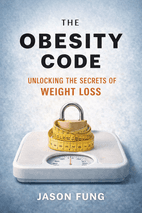
Dr. Jason Fung's The Obesity Code reframes obesity as a hormonal disorder driven by insulin, not just overeating. It provides a practical plan focusing on diet changes and intermittent fasting for sustainable weight loss, targeting those frustrated by conventional calorie-counting methods.
Feature
Insta.Page
Blinkist
Shortform
Summary Depth
Full Chapter-by-Chapter
15-min overview
Section-by-section guides
Audio Narration
✓
✓
✓
Visual Mindmaps
✓
✕
✕
AI Q&A
✓
✕
✕
Quizzes
✓
✕
✕
PDF Downloads
✓
✕
✓
Price
$89.99/yr
$146/yr (PRO)
$199/yr
*Competitor data last verified July 2026.
1 Page Summary
Dr. Jason Fung's The Obesity Code challenges the conventional calorie-centric model of weight management, arguing that obesity is primarily a hormonal disorder rather than a result of simple overeating. The book's central thesis is that the hormone insulin is the key regulator of fat storage, and chronic hyperinsulinemia—consistently high insulin levels—is the fundamental driver of weight gain and metabolic dysfunction. Fung systematically deconstructs the failed "calories in, calories out" paradigm, explaining how the body's hormonal responses to different foods and eating patterns can override strict calorie counting, leading to frustrating weight-loss plateaus and rebound weight gain.
The historical context Fung provides is crucial, tracing how dietary guidelines since the 1970s that promoted low-fat, high-carbohydrate diets inadvertently triggered an insulin-driven obesity epidemic. He examines the limitations of traditional advice to "eat less and move more," noting its poor long-term success rate, and critiques the standard medical approach of treating obesity as a chronic, progressive disease requiring lifelong medication. Instead, he reframes it as a reversible condition of hormonal imbalance, influenced heavily by the timing and composition of meals, not just their caloric content.
The book's lasting impact lies in its practical synthesis of dietary strategies aimed at lowering insulin levels. Fung advocates for reducing refined carbohydrates and added sugars, incorporating healthy fats and proteins, and, most notably, promoting various forms of intermittent fasting as a powerful tool to increase insulin sensitivity. By shifting the focus from calorie quantity to hormonal quality and meal timing, The Obesity Code has empowered many readers to achieve sustainable weight loss and has significantly influenced the popular understanding of obesity, fasting, and metabolic health.
Introduction
Overview
The introduction presents Dr. Jason Fung's primary motivation for writing the book: a fundamental dissatisfaction with the medical establishment's failed approach to treating obesity and type 2 diabetes. He argues that the prevailing calorie-centric model is not only ineffective but has directly contributed to a worsening global epidemic. The chapter establishes his credibility by outlining his clinical experience as a nephrologist, where he repeatedly witnessed the limitations of treating symptoms rather than root causes, and sets the stage for the hormonal theory of obesity that the book will explore.
The Failure of Conventional Wisdom
Dr. Fung opens with a stark critique of mainstream obesity treatment, comparing the decades-long prescription of low-fat, calorie-reduced diets to historical medical missteps like bloodletting with leeches. Despite universal adoption, this approach has coincided with skyrocketing obesity rates, proving it to be "completely and utterly ineffective." He notes the professional dissonance he faced when prescribing insulin for diabetes—a treatment known to cause weight gain—while simultaneously advising patients to lose weight, highlighting a critical flaw in the conventional understanding.
A Physician's Awakening
The narrative shifts to Dr. Fung's personal journey. As a kidney specialist, he observed that type 2 diabetes was the most common cause of kidney failure, yet treatment focused on end-stage symptoms rather than prevention. This led to an uncomfortable realization that medicine was ignoring the root cause—obesity itself. He admits that, like most doctors, his nutritional knowledge was minimal, and the field was ceded to commercial diet programs. The medical profession's focus on prescribing pills for the consequences of obesity (diabetes, hypertension) while ignoring the central problem struck him as illogical, especially when he saw that significant weight loss could reverse type 2 diabetes.
Navigating a Sea of Contradictions
Determined to understand obesity's true cause, Dr. Fung found the existing nutritional landscape hopelessly contradictory. He lists the common, conflicting advice on fat, carbs, meal frequency, and calories, noting that most arguments are based on authority (e.g., "Dr. X says...") rather than solid evidence. He identifies two core problems in obesity research: the lack of a coherent theoretical framework (often reducing a complex disease to a single factor like "excess calories") and a reliance on short-term studies that cannot capture a condition developing over decades.
Principles for a New Understanding
The author then outlines the evidence-based principles that will guide the book's exploration. He commits to relying on human studies only, famously illustrated by the "Parable of the Cow," which warns against applying animal research directly to humans. He prioritizes high-quality, peer-reviewed human studies and seeks causal factors over mere associations, acknowledging the limitations of nutritional science while striving for a more robust analytical framework.
A Roadmap to The Obesity Code
Finally, the introduction provides a clear guide to the book’s structure, mapping the journey ahead. It will:
Examine the timeline and familial patterns of the epidemic.
Deconstruct the prevailing but flawed calorie deception.
Introduce a new hormonal model of obesity, with insulin as the key regulator.
Use this model to explain obesity as a social phenomenon linked to poverty and childhood.
Analyze what’s specifically wrong with the modern diet, including fructose and artificial sweeteners.
Conclude with practical solutions focused on lowering insulin through dietary changes and intermittent fasting.
Key Takeaways
The standard "eat less, move more" calorie model for treating obesity has failed completely, despite being the medical orthodoxy for over 50 years.
Medicine often treats the diseases caused by obesity (like type 2 diabetes) while neglecting the root cause itself, creating a therapeutic contradiction.
Understanding obesity requires moving beyond simplistic, single-cause theories and short-term studies to develop a multifactorial framework based on long-term human evidence.
Dr. Fung proposes that obesity is primarily a hormonal disorder, with the hormone insulin playing the central role in driving fat storage and weight gain.
The book promises to deconstruct old myths and provide a new, actionable model focused on the hormonal causes of weight gain rather than calorie counting.
Key concepts: Introduction
1. Introduction
The Failure of Conventional Wisdom
The calorie-centric, low-fat dietary model has been completely ineffective despite decades of universal adoption.
Mainstream obesity treatment is compared to historical medical missteps like bloodletting.
A critical flaw exists in simultaneously prescribing weight-gain-causing treatments (like insulin) while advising weight loss.
A Physician's Awakening
Clinical experience revealed medicine treats the consequences of obesity (diabetes, hypertension) while ignoring the root cause.
Significant weight loss can reverse type 2 diabetes, highlighting the central problem of obesity itself.
The medical profession ceded nutritional knowledge to commercial diets, leaving doctors with minimal training in the field.
Navigating a Sea of Contradictions
Existing nutritional advice is hopelessly contradictory, based on authority rather than solid evidence.
Obesity research lacks a coherent theoretical framework, often reducing a complex disease to a single factor like 'excess calories'.
Reliance on short-term studies fails to capture a condition that develops over decades.
Principles for a New Understanding
Relies exclusively on human studies, avoiding misapplication of animal research (Parable of the Cow).
Prioritizes high-quality, peer-reviewed human evidence over associations.
Seeks causal factors within the acknowledged limitations of nutritional science.
Roadmap to The Obesity Code
Deconstruct the prevailing calorie deception and examine the obesity epidemic's patterns.
Introduce a new hormonal model of obesity with insulin as the key regulator.
Explain obesity as a social phenomenon and analyze specific flaws in the modern diet.
Provide practical solutions focused on lowering insulin through diet and intermittent fasting.
💡 Try clicking the AI chat button to ask questions about this book!
Chapter 1: How Obesity Became an Epidemic
Overview
The chapter begins with a powerful critique of modern medicine's approach to type 2 diabetes, arguing it treats the symptom—high blood sugar—while worsening the root disease. The real issue is insulin resistance driven by chronically high levels of insulin itself, making the standard treatment of prescribing more insulin fundamentally illogical. The biological solution lies in reducing dietary carbohydrates, the primary driver of insulin. This revelation leads directly to a historical mystery: if this understanding was once clear, how did we lose our way?
For over a century, common sense held that refined carbohydrates like sugar and starch were the primary drivers of weight gain. This changed in the mid-20th century when dietary fat was mistakenly cast as the villain behind heart disease. Official policy, exemplified by the 1977 U.S. Dietary Goals, mandated a shift to low-fat diets, which necessitated replacing fat calories with carbohydrates. To resolve the cognitive dissonance between carbs being both "fattening" and now "healthy," the foundational model of obesity was rewritten. The old "fattening carbohydrates" model was replaced by the Calories-In/Calories-Out model, reducing a complex biological process to a simple equation of personal responsibility.
This shift represents a critical philosophical error: confusing the proximate cause (calorie surplus) with the ultimate cause (why the surplus occurs). By framing obesity as a failure of willpower, medicine ignored the hormonal drivers of fat storage, particularly insulin. The "Eat Less, Move More" mantra became entrenched policy, leading to a massive, unintended public health experiment. As the population consciously ate less fat, food manufacturers flooded the market with low-fat, high-sugar products. The result was not better health, but the precise ignition of the twin epidemics of obesity and diabetes. The timeline is damning; the steep, sustained rise in obesity began almost exactly in 1977, charting a parallel course with the adoption of low-fat, high-carbohydrate eating. This stark correlation challenges us to reconsider everything we thought we knew about why we get fat.
The Flawed Logic of Diabetes Treatment
The chapter opens by challenging the conventional understanding of type 2 diabetes. It presents Dr. Fung's core argument that the standard medical approach is fundamentally backward. Type 2 diabetes is not primarily a disease of high blood sugar; it is a disease of insulin resistance and excessive insulin. Therefore, treating it by injecting more insulin—the very hormone that is already too high—is illogical and counterproductive, akin to treating alcoholism with more alcohol.
Modern medicine, he argues, mistakenly focuses on lowering the symptom (high blood glucose) instead of addressing the root cause (insulin resistance). The biological solution to insulin resistance is to reduce the dietary driver of insulin: carbohydrates. This revelation suggests the disease could be reversible, a possibility negated by current treatment protocols that allow continued high carbohydrate intake.
Dr. Fung's journey to this conclusion began with his discovery of research on low-carbohydrate, high-fat diets. Contrary to his medical training, which warned that such diets were dangerous, the evidence showed they produced superior metabolic outcomes, especially for those with insulin resistance and obesity.
A Historical Shift in Dietary Dogma
To understand how we arrived at the current ineffective strategy for obesity, the narrative looks back. For most of history, obesity was rare, and the link between refined carbohydrates (sugars and starches) and weight gain was widely recognized. Figures like Jean Anthelme Brillat-Savarin in the 1820s and William Banting in the 1860s identified starchy and sugary foods as the primary drivers of corpulence. This "fattening carbohydrates" model was common sense for over a century.
The shift began in the mid-20th century amidst fears of a heart disease "epidemic"—largely a perception fueled by people living longer and dying less from infectious diseases. Dietary fat, and its supposed link to cholesterol, was cast as the new villain. This created a nutritional dilemma: if you cut fat from the diet, you must replace those calories with something else, which inevitably meant more carbohydrates, typically refined ones.
A cognitive dissonance emerged: how could carbohydrates be both "fattening" (the old model) and "healthy" (as low-fat alternatives)? The solution, enforced not by robust science but by governmental decree like the 1977 U.S. Senate Dietary Goals, was to simply redefine the rules. Calories, not specific foods, were declared fattening. The "Calories-In/Calories-Out" model officially displaced the "fattening carbohydrates" model.
The Calorie-Counting Fallacy and the Real Cause
This leads to the core philosophical error in our understanding of obesity: confusing the proximate cause with the ultimate cause. The proximate cause of weight gain is indeed an excess of calories consumed over calories expended. But this is as useful as saying the cause of a sinking ship is "gravity exceeding buoyancy" or the cause of alcoholism is "drinking too much." It describes the mechanism, not the origin.
By focusing solely on the calorie balance, we implicitly assign the ultimate cause of obesity to personal failure—gluttony and sloth. This transforms a complex biological disease into a moral failing. Yet this explanation crumbles under scrutiny. It cannot explain why women naturally carry more fat than men after puberty, or why pregnancy causes weight gain. Hormones, not just personal choice, are clearly powerful ultimate causes.
Despite this flawed logic, the "Eat Less, Move More" mantra became entrenched as official policy from all major health institutions. The result of this grand dietary experiment was a nation consciously eating less fat and red meat, but more carbohydrates and sugar. Food manufacturers happily complied, creating low-fat, sugar-loaded products. The outcome was not improved health, but the dawn of the obesity and diabetes epidemics. The chapter sets the stage by revealing that our foundational understanding of why we get fat is wrong, and that the official dietary advice of the last 40 years is likely the engine of the crisis.
The American Heart Association's dismissal of low-carbohydrate diets as dangerous fads persisted until at least the year 2000, a stance that overlooked their documented use since 1863. This policy did not yield the expected decline in heart disease, but it inadvertently coincided with another dramatic shift in public health. Rates of obesity, defined by a BMI greater than 30, began a steep and sustained increase starting almost exactly in 1977.
This timing is visually stark in Figure 1.2, which charts the rapid ascent in the percentage of obese U.S. adults from that point forward. The curve upward aligns precisely with the national pivot toward officially recommended low-fat, high-carbohydrate dietary patterns. The correlation is so pronounced it begs a deeper inquiry: was this parallel occurrence simply accidental, or did the nutritional guidance itself plant the seeds of the epidemic? The text leaves us weighing this against the alternative explanation of genetic factors, setting the stage for a critical examination of cause and effect in the chapters to follow.
Key Takeaways
The abrupt rise in obesity beginning in 1977 directly coincided with the official promotion of low-fat, high-carbohydrate diets.
The longstanding institutional resistance to low-carbohydrate diets, despite their historical use, may have had significant unintended consequences for population health.
The lack of improvement in heart disease rates alongside exploding obesity figures suggests a fundamental flaw in the nutritional axioms of the late 20th century.
Key concepts: Chapter 1: How Obesity Became an Epidemic
2. Chapter 1: How Obesity Became an Epidemic
The Flawed Logic of Diabetes Treatment
Standard treatment focuses on lowering blood sugar (symptom) instead of addressing insulin resistance (root cause)
Prescribing more insulin for a disease of excessive insulin is illogical and counterproductive
The biological solution is reducing dietary carbohydrates, the primary driver of insulin
Low-carbohydrate, high-fat diets show superior metabolic outcomes despite conventional medical warnings
Historical Understanding of Obesity
For over a century, refined carbohydrates were widely recognized as primary drivers of weight gain
Historical figures like Brillat-Savarin and Banting identified starchy/sugary foods as causing corpulence
The 'fattening carbohydrates' model was common sense before the mid-20th century shift
The Dietary Dogma Shift
Mid-20th century fears about heart disease led to dietary fat being cast as the villain
Low-fat dietary policies (like 1977 U.S. Dietary Goals) required replacing fat calories with carbohydrates
To resolve cognitive dissonance, the 'fattening carbohydrates' model was replaced by Calories-In/Calories-Out
This shift was driven by policy rather than robust scientific evidence
The Calorie-Counting Fallacy
Confuses proximate cause (calorie surplus) with ultimate cause (why surplus occurs)
Reduces complex biological disease to simple equation of personal responsibility
Implicitly assigns obesity to personal failure (gluttony and sloth) rather than biological drivers
Fails to explain hormonal influences on fat storage, particularly insulin's role
Consequences of the Dietary Shift
'Eat Less, Move More' became entrenched policy despite biological complexity
Food manufacturers flooded market with low-fat, high-sugar products
Steep rise in obesity began almost exactly in 1977, paralleling low-fat diet adoption
Created twin epidemics of obesity and type 2 diabetes through unintended public health experiment
The Failed Dietary Experiment
The 'Eat Less, Move More' mantra became entrenched as official policy despite flawed logic.
The public consciously ate less fat and red meat but increased consumption of carbohydrates and sugar.
Food manufacturers created low-fat, sugar-loaded products to comply with guidelines.
The outcome was not improved health but the dawn of the obesity and diabetes epidemics.
Institutional Resistance to Alternative Diets
The American Heart Association dismissed low-carbohydrate diets as dangerous fads until at least 2000.
This stance overlooked documented use of low-carb diets since 1863.
The policy did not yield the expected decline in heart disease rates.
The Correlation Between Policy and Epidemic
Rates of obesity (BMI >30) began a steep, sustained increase starting almost exactly in 1977.
This timing aligns precisely with the national pivot toward low-fat, high-carbohydrate dietary patterns.
The correlation is so pronounced it suggests the nutritional guidance itself may have planted the seeds of the epidemic.
This sets the stage for examining cause and effect versus alternative explanations like genetic factors.
Chapter 2: Inheriting Obesity
Overview
The chapter confronts the undeniable fact that obesity runs in families, launching an investigation into whether this is due to shared genetics or a shared environment. It systematically dismantles the simplistic "calories in, calories out" environmental argument by examining powerful evidence from adoption and twin studies. These studies reveal that genetics, not the household environment, is the dominant factor in determining an individual's susceptibility to obesity. The chapter then critiques the once-popular "thrifty-gene" hypothesis, ultimately setting the stage for a new hormonal model of obesity that can reconcile strong genetic inheritance with a rapid population-wide epidemic.
The Shocking Power of Inheritance
Research on adoptive families provides a clear natural experiment. When scientists compared adult adoptees to both their biological and adoptive parents, they found no correlation between the adoptee's weight and that of their adoptive parents. The home environment—diet, lifestyle, attitudes—provided by the adoptive family showed no significant influence. In stark contrast, a strong correlation existed between the adoptees and their biological parents, whom they had never lived with. This suggests the tendency toward obesity is carried in our biology, not learned at the dinner table.
This genetic influence is quantified even more precisely by studies of twins. Research comparing identical twins (who share 100% of their genes) and fraternal twins (who share about 50%) raised together and apart led to a stunning conclusion: approximately 70 percent of an individual's susceptibility to obesity is determined by genetic factors. This inheritance is not about a single "fat gene," but a complex predisposition.
The Flawed "Thrifty-Gene" Explanation
Faced with the evidence for genetic inheritance, the chapter examines and rejects the thrifty-gene hypothesis, which proposed that humans evolved to store fat efficiently to survive famines. This idea fails on several fronts. First, in nature, excessive fat is a liability, making animals slower and more vulnerable. Second, humans have strong hormonal signals to stop eating (satiety), contradicting the idea of a genetic drive to endlessly overeat. Third, many traditional societies with abundant food did not experience obesity until their diets modernized. Finally, in animal populations, abundance leads to more offspring, not more obese individuals. The thrifty-gene hypothesis cannot explain why obesity, a state of detrimental fatness, has become a modern epidemic.
Bridging Genetics and the Epidemic
The chapter acknowledges the apparent contradiction: if 70% of obesity risk is genetic, how could obesity rates have skyrocketed in a single generation where our genes haven't changed? The answer previewed here is that genes set the susceptibility, but the modern environment provides the trigger. The explanation lies not in a simple caloric calculus, but in a hormonal imbalance, with elevated insulin playing a central role. This hormonal model can explain the genetic data, as a baby's hormonal environment in the womb can be influenced by the mother's condition, creating an inherited tendency for high insulin and weight gain. While 70% of the risk is not under our direct control, the chapter concludes by pointing toward the 30% we can influence, questioning whether conventional diet and exercise advice is the right tool for the job.
Key Takeaways
Obesity is strongly inherited: Adoption and twin studies demonstrate that approximately 70% of an individual's risk for obesity is linked to genetic factors, far outweighing the influence of the shared family environment.
The environment triggers, but genetics loads the gun: The rapid rise in obesity since the 1970s cannot be due to genetic change, indicating that modern environmental factors are activating a widespread genetic susceptibility.
The "thrifty-gene" hypothesis is inadequate: The evolutionary idea that humans are genetically programmed to overeat and store fat fails to align with observed biology, animal behavior, or historical human patterns.
A new model is needed: The chapter argues that the root cause must be a hormonal imbalance (highlighting insulin) that effectively explains both the strong genetic predisposition and the modern epidemic, moving beyond the simplistic focus on voluntary calorie intake and exercise.
Key concepts: Chapter 2: Inheriting Obesity
3. Chapter 2: Inheriting Obesity
The Genetic Basis of Obesity
Adoption studies show no correlation between adoptee weight and adoptive parents, but strong correlation with biological parents
Twin studies quantify genetic influence at approximately 70% of obesity susceptibility
Inheritance involves complex genetic predisposition rather than a single 'fat gene'
Family environment (diet, lifestyle) shows minimal influence compared to biological inheritance
Critique of the Thrifty-Gene Hypothesis
Hypothesis fails because excessive fat is a liability in nature, making animals vulnerable
Humans have strong satiety signals contradicting genetic drive for endless overeating
Traditional societies with abundant food didn't experience obesity until dietary modernization
Animal populations respond to abundance with more offspring, not more obese individuals
Reconciling Genetics with the Obesity Epidemic
Genes set susceptibility while modern environment provides the trigger
Hormonal imbalance (particularly elevated insulin) explains both genetic predisposition and rapid epidemic
Maternal hormonal environment can influence fetal development, creating inherited tendency
While 70% of risk is genetic, 30% is potentially influenceable through environmental factors
The Need for a New Model
Must move beyond simplistic 'calories in, calories out' framework
Hormonal model can explain both strong inheritance and population-wide epidemic
Conventional diet and exercise advice may not address the fundamental hormonal causes
Focus shifts from voluntary behavior to biological regulation of weight
Chapter 4: The Exercise Myth
Overview
Let's get one thing straight: the most common advice for weight loss is built on a broken model. The entire idea of "calories in, calories out" rests on a series of false assumptions. It mistakenly treats our calorie intake and expenditure as independent variables, when in reality they’re deeply connected. It wrongly assumes our metabolism is stable, ignores the powerful hormonal control we have over hunger and fat storage, and commits the critical error of believing all calories are created equal. A calorie of sugar and a calorie of broccoli do wildly different things inside your body.
When you try to outsmart this system by simply eating less, your body fights back with a sophisticated survival strategy. Historic experiments, like the Minnesota Starvation Experiment, proved that slashing calories doesn’t lead to efficient fat loss. Instead, it triggers a drastic slowdown in metabolism and an overwhelming surge in hunger—a hormonal storm designed to make you regain the weight. This explains the inevitable plateau and rebound that frustrate every dieter, proving the failure is biological, not a lack of willpower.
This biological reality was confirmed on a massive scale. Definitive studies like the Women’s Health Initiative showed that even when people successfully ate less and moved more for years, they didn’t achieve lasting weight loss. The body’s compensatory mechanisms—slowing metabolism and ramping up hunger—create a vicious cycle that ends in fatigue, food obsession, and ultimate regain.
So what about the “move more” part of the equation? While critical for health, exercise is a surprisingly poor tool for fat loss. Data shows no correlation between a nation’s exercise levels and its obesity rates. This is because the body compensates for workouts in two key ways: by making you hungrier and encouraging you to eat more, and by reducing energy expenditure elsewhere, like through less fidgeting or a lower resting metabolic rate. The vast majority of the calories we burn each day are for basic bodily functions, not exercise. In the battle of the bulge, diet is Batman, and exercise is Robin.
Society has largely missed this point, directing enormous resources toward fighting obesity with gym memberships and school sports programs while underplaying the role of diet. It’s like studying hard for the wrong subject on a final exam. The path to lasting change, as illustrated by personal journeys from doctors and researchers, requires a fundamental shift in focus: away from counting calories and toward understanding how the hormonal regulation of fat storage actually works, starting with the food we choose to eat every day.
The Flawed Foundation of "Calories In, Calories Out"
The chapter begins by dismantling the foundational equation of traditional weight-loss thinking: Calories In – Calories Out = Body Fat. This model, while simple and intuitive, is built upon a series of critical false assumptions.
Assumption 1: Caloric Intake and Expenditure Are Independent
This is a crucial error. In reality, these are deeply dependent variables. Reducing "Calories In" does not lead to a stable "Calories Out." Instead, the body responds by lowering its total energy expenditure. A 30% reduction in caloric intake can lead to a nearly 30% reduction in calories burned, resulting in minimal weight loss.
Assumption 2: Basal Metabolic Rate is Stable
We tend to fixate on measuring caloric intake while assuming energy output (except for exercise) is constant. This is completely false. Total energy expenditure—comprising basal metabolic rate, the thermic effect of food, non-exercise activity, and more—is dynamic and can fluctuate by up to 50% based on caloric intake and other factors.
Assumption 3: We Exert Conscious Control Over "Calories In"
While eating is a deliberate act, the decision to start and stop is powerfully driven by hormones, not just willpower. Hunger and satiety are hormonally mediated signals. The body's fat-regulation system operates under automatic, homeostatic control, much like breathing or heartbeat, making obesity a hormonal disorder, not simply a behavioral one.
Assumption 4: Fat Storage is Unregulated
Every system in the body is hormonally regulated, and fat storage is no exception. The idea that excess calories are passively "dumped" into fat cells like objects in a sack is incorrect. Hormones like leptin, adiponectin, and others actively regulate fat growth, again pointing to a hormonal root for obesity.
Assumption 5: A Calorie is a Calorie
This is the most dangerous assumption. While a calorie is a unit of energy, different calorie sources provoke vastly different metabolic and hormonal responses. A calorie of sugar triggers a sharp insulin spike, while a calorie of olive oil does not. Therefore, not all calories are equally likely to cause fat gain; the type of calorie matters profoundly.
The Body's Smart Response to Caloric Restriction
The chapter then explores what happens when the "eat less" doctrine is put into practice, drawing from historic experiments. The body does not passively surrender fat stores when calories are reduced. Instead, it implements a coordinated survival response.
The Minnesota Starvation Experiment: This landmark study placed volunteers on a semi-starvation diet. Their bodies responded not with efficient fat loss, but with an across-the-board 40% reduction in resting metabolic rate. Participants suffered constant cold, slowed heart rates, low blood pressure, physical weakness, hair loss, and intense psychological obsession with food.
The Mechanism: The body smartly balances its energy budget. When "Calories In" drop, it immediately reduces "Calories Out" by dialing down all non-essential functions—heat production, heart function, brain cognition, physical activity—to match the new, lower intake. This prevents rapid depletion of reserves and ensures survival.
The Long-Term Adaptation: This metabolic slowdown is not temporary. Studies show that reduced energy expenditure persists indefinitely, for at least a year and likely longer. This explains the classic dieting plateau and the rapid weight regain that occurs when normal eating resumes, as the body is now burning far fewer calories at its new weight.
The failing, therefore, is not a lack of willpower but a flawed model. The portion-control, caloric-reduction diet is biologically destined to make you tired, hungry, and ultimately heavier, as the body fights to preserve its energy balance through hormonal regulation.
The Colossal Failure of "Eat Less, Move More"
The narrative turns to the early 2000s, where the definitive test of the "Eat Less, Move More" doctrine was conducted: the Women’s Health Initiative Dietary Modification Trial. This massive, 7.5-year study placed post-menopausal women on a precisely monitored low-fat, high-carbohydrate diet and encouraged increased exercise. The intervention group successfully reduced their daily calories by over 300 and increased physical activity. Yet, the results were a damning indictment of the theory. After an initial modest weight loss, the weight was steadily regained. By the study's end, there was no meaningful difference in weight between the dieting group and the control group, and body-fat measurements indicated the dieters had actually become fatter. This wasn't an anomaly but a confirmation of a consistent, decades-long failure of calorie-restriction diets.
The Hormonal Storm of Weight Loss
When calorie intake is reduced, the body fights back with powerful hormonal adaptations designed for survival. Two key changes occur:
Metabolism Slows: Total energy expenditure drops dramatically to conserve energy.
Hunger Skyrockets: Levels of the hunger hormone ghrelin increase, while satiety hormones (like peptide YY and cholecystokinin) decrease. This creates a persistent state of increased hunger and decreased fullness.
This hormonal shift is not a lack of willpower but a normal, biologically programmed response. Brain imaging shows that after weight loss, the brain's reward centers become more activated by food, while areas responsible for restraint become less active. The body is evolutionarily compelled to regain lost weight, making sustained calorie restriction a battle against our own physiology.
The Vicious Cycle and the Cruel Hoax
This leads to a predictable and discouraging cycle: a person eats less and loses some weight. In response, their metabolism slows and hunger intensifies. Weight regain begins, prompting them to eat even less, which only perpetuates the cycle of slowing metabolism and rising hunger. Eventually, the effort becomes intolerable—characterized by constant cold, fatigue, and food obsession—and the person resumes their previous eating habits. With a now-slowed metabolism, they often regain all the weight plus more.
The chapter argues that promoting this failed strategy is a "cruel hoax." When it inevitably fails, the blame is placed on the individual's character—being labeled a glutton or sloth—rather than on the flawed paradigm itself. Even pharmaceutical attempts to enforce caloric reduction, like the fat-blocker orlistat (Alli), resulted in minimal weight loss and significant, unpleasant side effects, further underscoring the strategy's futility.
Re-examining the Role of Exercise
The discussion then pivots to the second half of the "Move More" equation. While exercise is undeniably beneficial for overall health, its role in weight loss has been vastly overstated. Data reveals a stark reality: as exercise rates increased in populations like the U.S. and U.K., obesity rates continued to climb in parallel. International comparisons show no correlation between a nation's exercise frequency and its obesity levels.
Research challenges the assumption that modern sedentary lifestyles are the cause of obesity. Studies of hunter-gatherer societies like the Hadza, who are extremely active, show they burn the same number of daily calories as sedentary Western office workers. Furthermore, analysis indicates physical activity has not decreased since the 1980s, while obesity has soared. This strongly suggests that a lack of exercise did not cause the obesity epidemic.
Why Exercise Fails for Weight Loss
The ineffectiveness of exercise for significant weight loss stems from two compensation mechanisms:
Increased Caloric Intake: People tend to eat more after exercise, often unconsciously, negating the calories burned.
Metabolic Adaptation: The body can compensate by reducing energy expenditure elsewhere, such as lowering basal metabolic rate (the calories burned at rest for basic bodily functions) or reducing non-exercise activity (e.g., fidgeting).
Basal metabolic rate constitutes the vast majority (roughly 95%) of our total daily energy expenditure. Exercise, while important, is a minor component. Long-term studies consistently show that exercise produces only a fraction of the expected weight loss, and often none at all, especially in women. The chapter concludes that in the battle against obesity, diet is "Batman" and exercise is "Robin." Exercise is critical for health but is a poor tool for fat loss. The focus, it argues, must shift entirely to what we eat.
Compensation and Societal Misdirection
The text introduces two key biological mechanisms that explain why increased exercise fails to produce expected weight loss. First, it triggers a proportional increase in caloric intake—a homeostatic response where the body strives to maintain energy balance. The cited study of children found that for every extra hour of exercise, they consumed an extra 292 calories. This illustrates the fundamental principle: increasing Calories Out drives an increase in Calories In.
Second, compensation occurs through a reduction in non-exercise activity thermogenesis (NEAT). When structured exercise increases, spontaneous daily movement tends to decrease. This is demonstrated by the behavior of the physically active Hadza, who rest when possible, and by the study of schoolchildren where those with mandated phys ed became less active at home, resulting in no net gain in total weekly activity compared to their less-structured peers.
The chapter then argues that the benefits of exercise have a natural upper limit and can even become detrimental in excess, as it is a stressor on the body. The core conclusion is stated plainly: Exercise is simply not all that effective in the treatment of obesity.
This leads to a critique of societal strategy. Enormous resources—from school programs to public health initiatives—are devoted to promoting exercise based on the flawed idea that it is a primary weapon against obesity. The chapter uses the powerful analogy of a final exam: if obesity is caused 95% by diet and 5% by exercise, but we devote 50% of our effort to studying exercise, our failing grade is inevitable. The call is to redirect focus and resources toward the actual cause: diet.
The Postscript provides a tangible resolution to the chapter's argument. Dr. Peter Attia's personal journey mirrors the scientific conclusion. Only by ignoring conventional advice and focusing his investigation squarely on dietary overhaul was he able to achieve lasting fat loss, an experience that redirected his entire career toward obesity research.
Key Takeaways
The body compensates for increased exercise by boosting calorie intake and reducing non-exercise movement, nullifying the expected energy deficit.
Exercise has diminishing returns and is a relatively ineffective primary tool for weight loss compared to dietary modification.
Society's overwhelming focus on exercise to combat obesity misallocates resources and attention away from the primary driver of the disease: diet.
Lasting success requires a fundamental shift in focus from "Calories Out" to the quality and nature of "Calories In."
Key concepts: Chapter 4: The Exercise Myth
4. Chapter 4: The Exercise Myth
The Flawed Foundation of Calories In, Calories Out
Intake and expenditure are dependent, not independent variables
Basal metabolic rate is dynamic, not stable
Hunger and satiety are hormonally controlled, not purely conscious choices
Fat storage is actively regulated by hormones, not a passive process
A calorie is not a calorie; different foods provoke different hormonal responses
The Body's Survival Response to Caloric Restriction
Reducing calories triggers a proportional slowdown in metabolism
It causes a powerful hormonal surge in hunger to drive weight regain
This creates a biological plateau and rebound, not a willpower failure
Historic experiments (e.g., Minnesota Starvation) prove this adaptive response
The Limited Role of Exercise in Fat Loss
Exercise is a poor primary tool for weight loss despite being critical for health
The body compensates for exercise by increasing hunger and reducing non-exercise activity
Most daily calories are burned for basic bodily functions, not through exercise
No correlation exists between a nation's exercise levels and its obesity rates
The Hormonal Model of Obesity
Obesity is a hormonal disorder, not a caloric imbalance
Lasting change requires understanding the hormonal regulation of fat storage
The focus must shift from calorie counting to food choice and its hormonal impact
Societal Misconceptions and the Path Forward
Society overemphasizes exercise and underplays diet in fighting obesity
Large-scale studies (e.g., Women's Health Initiative) show the failure of 'eat less, move more'
The correct analogy: Diet is Batman (primary), exercise is Robin (supporting)
The Minnesota Starvation Experiment: Proof of Metabolic Adaptation
Semi-starvation diets triggered a 40% reduction in resting metabolic rate, not efficient fat loss.
Participants experienced severe physical symptoms (constant cold, weakness, hair loss) and psychological food obsession.
The body's survival response is to reduce all non-essential energy expenditure to match lower calorie intake.
This metabolic slowdown is long-term, persisting for at least a year, explaining diet plateaus and rapid weight regain.
The Women's Health Initiative: The Definitive Failure of Calorie Restriction
A massive 7.5-year study tested 'Eat Less, Move More' with precise monitoring.
Participants reduced daily calories by 300+ and increased exercise but saw no meaningful long-term weight loss.
By the study's end, the dieting group had no weight advantage and showed increased body fat compared to controls.
This confirmed decades of evidence that calorie-restriction diets are biologically destined to fail.
The Hormonal Response to Caloric Reduction
Weight loss triggers a survival-oriented hormonal storm: slowed metabolism and skyrocketing hunger.