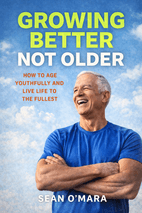
Sean O'Mara's Growing Better Not Older targets visceral fat as the key to slowing biological aging, providing a protocol of intermittent fasting and high-intensity exercise for adults seeking to improve vitality and longevity.
Feature
Insta.Page
Blinkist
Shortform
Growing Better Not Older
✓
✕
✕
Summary Depth
Full Chapter-by-Chapter
15-min overview
Section-by-section guides
Audio Narration
✓
✓
✓
Visual Mindmaps
✓
✕
✕
AI Q&A
✓
✕
✕
Quizzes
✓
✕
✕
PDF Downloads
✓
✕
✓
Price
$89.99/yr
$146/yr (PRO)
$199/yr
*Competitor data last verified July 2026.
1 Page Summary
Growing Better Not Older by Dr. Sean O'Mara presents a paradigm shift in health optimization, moving beyond conventional weight-loss advice to target a specific biological threat: visceral fat. This deep abdominal fat, stored around organs, is not inert padding but a metabolically active "rogue endocrine organ" that secretes inflammatory cytokines and hormones, disrupting the body's systems. Dr. O'Mara, drawing on his expertise in medicine and human performance, argues that reducing this fat is the master key to combating accelerated aging, chronic disease, and low energy. The book's core premise is that by strategically depleting visceral fat stores, one can biologically "hack" their physiology to improve appearance, cognitive function, and physical performance simultaneously.
The work is grounded in an evolutionary and historical context, contrasting our modern sedentary, high-carbohydrate lifestyles with the active, intermittently fasting conditions under which human metabolism evolved. Dr. O'Mara synthesizes contemporary research on metabolism, nutrition, and exercise physiology to build his protocol. He emphasizes that the solution is not chronic calorie restriction but strategic "metabolic stress" through a combination of time-restricted eating (intermittent fasting), a diet low in processed carbohydrates and sugars, and high-intensity resistance training. This trio of interventions is designed to force the body to tap into visceral fat for fuel, thereby reducing its harmful inflammatory output and restoring hormonal sensitivity.
The lasting impact of the book lies in its actionable, systems-based approach to health. It provides readers with a clear physiological target and a practical framework to achieve it, empowering them to take control of their biological aging process. By framing visceral fat reduction as the central lever for overall vitality, Growing Better Not Older offers a cohesive strategy that transcends aesthetic goals, aiming instead for profound improvements in longevity, disease resistance, and daily energy. It stands as a direct challenge to passive aging, advocating for proactive management of one's internal environment to build a more resilient and capable body at any age.
Foreword
Overview
The foreword, written by Dr. Ana Claudia Rosa, serves as a powerful and personal testimonial. It frames the book not as a simple health guide, but as an invitation to a life-altering journey. Ana shares her own story of professional expertise yet personal ignorance regarding visceral fat, and how Dr. Sean O'Mara's intervention led to her profound physical and mental transformation. She positions the reader at the beginning of their own path, offering encouragement and a compelling preview of the transformative results that come from commitment to the strategies within.
A Radiologist's Blind Spot and an Awakening
Dr. Ana Claudia Rosa, an accomplished radiologist with decades of experience, recounts her first, humbling conversation with Dr. Sean O'Mara about visceral fat. Despite seeing it in over 95% of the scans she read, she had never been taught to report on it or understand its deadly significance. This encounter shattered her professional certainty and marked the beginning of her awakening. Sean’s patient, enthusiastic explanation of his research revealed a "silent killer" that medical education had entirely overlooked, setting Ana on a new path.
The Heart and Science of the Mission
In their follow-up meetings, Dr. O'Mara shared MRI evidence, client results, and the core strategies for reversing visceral fat. Ana emphasizes that his mission is driven by genuine compassion and a passion for service. She describes him as a mentor who "walks the talk," blending profound scientific knowledge with a heartfelt desire to help others. The strategies themselves are portrayed not as a temporary fix, but as a comprehensive, adaptable system for lifelong transformation that comes from years of dedicated research and testing.
Confronting the Internal Enemy
The foreword personifies visceral fat as a destructive, internal enemy that erodes health, vitality, and dreams, leading to a future dominated by chronic disease and decline. Dr. O'Mara’s work is presented as the means to "seize back the wheel" of one’s life. Central to this is a shift in perspective: recognizing the human body as our most valuable and irreplaceable asset. The journey is framed as an act of honoring and respecting the body we have been given.
A Testimonial of Transformation Through Commitment
Ana admits her own initial attempt at the strategies was half-hearted and yielded no results. Her transformation began only after hitting a mental health "rock bottom" and re-engaging with Dr. O'Mara and his Alpha Group community with full commitment. She stresses that the process is not a "magical pill" but a new way of living that requires saying "yes" to discomfort and "no" to a passive existence. The rewards for this commitment are described as exponential and limitless improvements in energy, mental clarity, strength, and overall joy.
An Invitation to Join the Journey
The foreword concludes with a direct and warm invitation to the reader. Ana assures them that by reading the book, they are effectively sitting alongside Dr. Sean and the Alpha Group family. She lists the tangible, life-elevating results they can expect and expresses her hope that the reader will feel Dr. Sean’s supportive guidance through the pages. The ultimate call is to learn, transform, and then join the mission of spreading awareness about reversing visceral fat for optimal health.
Key Takeaways
Personal Testimony Over Promises: The foreword’s credibility is built on the profound personal and professional transformation of its author, a skeptical medical doctor.
Visceral Fat as the Overlooked Enemy: It identifies visceral fat as a critical, yet commonly ignored, root cause of chronic disease and declining vitality that conventional medicine often misses.
More Than a Diet Book: Dr. O'Mara's work is presented as a holistic, lifelong system for transformation of body and mind, driven by compassion and rigorous science.
Commitment is Non-Negotiable: Partial effort yields no results; true change requires a full-hearted, daily commitment to stepping out of one's comfort zone.
Community and Guidance: The journey is framed as one best taken with the support of a guide (Dr. Sean) and a community (the Alpha Group), which provide accountability and partnership.
Reclaiming Agency: The core message is about seizing control of your health to honor your body, thereby transforming your future from one of managed decline to one of abundant vitality and purpose.
Key concepts: Foreword
1. Foreword
A Radiologist's Blind Spot and Awakening
Professional expertise contrasted with personal ignorance about visceral fat
Medical education's failure to address visceral fat as a 'silent killer'
Humbling encounter with Dr. O'Mara shatters professional certainty
Realization that visceral fat was present in over 95% of scans she read
The Heart and Science of the Mission
Dr. O'Mara's approach blends scientific rigor with genuine compassion
Strategies based on years of dedicated research and MRI evidence
System presented as adaptable framework for lifelong transformation
Mentorship characterized as 'walking the talk' with passion for service
Confronting the Internal Enemy
Visceral fat personified as destructive force eroding health and vitality
Shift in perspective: body as most valuable and irreplaceable asset
Journey framed as act of honoring and respecting the body
Process described as 'seizing back the wheel' of one's life
Transformation Through Commitment
Initial half-hearted attempt yielded no results
True change began after hitting mental health 'rock bottom'
Process requires saying 'yes' to discomfort and 'no' to passive existence
Full commitment leads to exponential improvements in energy and clarity
Invitation to Join the Journey
Reader positioned as joining Dr. Sean and Alpha Group family
Tangible, life-elevating results promised through implementation
Call to learn, transform, and spread awareness about visceral fat
Supportive guidance offered through the book's pages
Core Philosophy and Approach
Not a temporary fix but comprehensive system for transformation
Community support (Alpha Group) provides accountability and partnership
Strategies require stepping out of comfort zone consistently
Focus on reclaiming agency over health and future vitality
💡 Try clicking the AI chat button to ask questions about this book!
1. Introduction: An Open Letter to Health Seekers
Overview
This opening chapter serves as a direct and personal address to the reader, framing the entire book as a revolutionary guide to health. It introduces Dr. Sean O’Mara’s mission: to challenge conventional health wisdom and demonstrate that reversing biological age and reclaiming vitality is not only possible but within reach. The letter empathizes with the common frustrations of modern health seekers—fatigue, fear of decline, and ineffective symptom-chasing—before pivoting to a powerful promise of transformation through proactive, biology-based optimization.
A New Promise for Your Health
Dr. O’Mara begins by asking if you’ve ever felt older than your years, then immediately counters that feeling with a bold proposition: you can reverse the biomarkers of aging. He positions the book as a challenge to everything you think you know about wellness, promising that the true path to preventing disease and optimizing health is often the opposite of mainstream advice. The goal is a personal health revolution that leads to more energy, control, and a vibrant future.
The Doctor's Mission and Your Potential
Introducing himself as a physician-researcher, Dr. O’Mara shares that his passion is the biological optimization of human health. His work focuses on improving quality of life, performance, and even attractiveness by revitalizing the body from the inside out. He acknowledges the common feeling of taking "two steps forward and three steps back" when only treating symptoms, and contrasts that with his strategy of pursuing foundational, optimal health for lasting change.
Defining "Winning at Life"
Here, the concept is made tangible. Winning at life is framed as achieving stable, internal health that allows you to enjoy all life’s stages, especially retirement, with the freedom and vitality of youth. It’s compared to accumulating financial wealth—both are assets that provide security and happiness in later years, and both are attainable through consistent, correct strategies.
Confronting the Real Fears and Pressures
The letter delves into the real-world anxieties that hinder health progress: the fear of a debilitating heart attack or stroke, the worry that retirement will be stolen by sickness or cognitive decline, and the daily pressure of juggling work, family, and life's demands. It critiques the "grindset" mentality that pushes health to the bottom of the priority list, leading to perpetual tiredness, brain fog, and a sense of inevitable decline. This section validates the reader’s experience, describing the all-too-common dread of annual physicals and the cycle of disappointing news and ineffective advice.
The Invitation to Take the Wheel
The narrative shifts from problem to possibility. It asks you to imagine inverting your health indicators and walking into a doctor’s appointment excited to see confirmed improvements. The core message is about reclaiming control from genetics and corporate interests to steer your own health destiny. The chapter closes with a direct call to action, asking if you’re ready to do something different, lose the old limitations, and begin the journey using the blueprint for success provided in the book.
Key Takeaways
Biological age can be reversed: You are not bound by your chronological age; the function and vitality of youth can be renewed.
Conventional wisdom is challenged: Optimal health strategies may fundamentally contradict what you’ve been told.
Health is the ultimate asset: Like financial wealth, stable, optimized health is the foundation for enjoying and winning at life.
Symptom treatment is a trap: Lasting change requires moving beyond managing symptoms to address root causes and optimize biology from the inside out.
Reclaim control: Your health journey requires you to take the wheel, steering away from passive fear and toward proactive, strategic action.
Key concepts: 1. Introduction: An Open Letter to Health Seekers
2. 1. Introduction: An Open Letter to Health Seekers
A New Promise for Your Health
Challenges conventional health wisdom with bold, often opposite strategies
Promises reversal of aging biomarkers and prevention of disease
Frames the book as a guide to personal health revolution for more energy and control
The Doctor's Mission and Your Potential
Focuses on biological optimization for quality of life, performance, and attractiveness
Critiques symptom-chasing as ineffective (two steps forward, three steps back)
Advocates for foundational, optimal health for lasting change
Defining 'Winning at Life'
Achieving stable internal health to enjoy all life stages with youthful vitality
Compares health to financial wealth as a critical asset for security and happiness
Attainable through consistent, correct strategies
Confronting the Real Fears and Pressures
Addresses anxieties: debilitating heart attack/stroke, sickness in retirement, cognitive decline
Critiques 'grindset' mentality that deprioritizes health, leading to fatigue and brain fog
Validates reader's dread of disappointing medical check-ups and ineffective advice
The Invitation to Take the Wheel
Shifts from problem to possibility: imagining inverted health indicators and excited doctor visits
Core message: reclaim control from genetics and corporate interests
Direct call to action: begin the journey using the book's blueprint for success
2. The Ticking Time Bomb Inside
Overview
The chapter begins by introducing a pervasive but often overlooked health threat discovered not through formal medical training, but through a casual conversation. This enemy, visceral fat, is described as an insidious parasite that weakens organs, inflames the body, and operates undetected within most people. The author's journey to understand and visualize this "ticking time bomb" marks a pivotal turn in both his personal health and medical practice.
An Unexpected Discovery in Chronic Pain
The author recounts a transformative discussion with a Minneapolis colleague researching chronic back pain using MRI technology. As an ER physician, the author rarely used MRIs for prevention, focusing instead on acute crises. Through this colleague's work, he learned that the severity of a patient's back pain directly correlated with the amount of visceral fat in their abdomen. This was a revelation—a hidden factor mainstream medicine was largely ignoring.
Visualizing the Unseen Enemy
Visceral fat, visible as white in an MRI or black in a CT scan, surrounds vital organs, infiltrates muscles, and disrupts brain-gut communication. The author emphasizes that it is present in everyone to some degree, grows unchecked, and is notoriously difficult to treat. He realized that an MRI could serve as a powerful tool to make this invisible danger visible, providing patients with a shocking but motivating "mug shot" of the fat lurking inside them, regardless of their outward appearance.
A Personal Experiment and Revelation
Driven by curiosity, the author underwent his own MRI after years of dedicated lifestyle optimization. Despite feeling energetic and youthful, he felt anxiety awaiting the results. The scan revealed he was "obscenely healthy," with visceral fat effectively under control. This personal victory validated his methods and transformed his triumph into a life mission. The stark contrast between his results and the "alarming levels" he saw in most patients, including seemingly thin individuals, was a wake-up call.
The Crusade Begins
The epiphany that visceral fat is a major, unnoticed contributor to chronic disease launched the author into a new role as a health advocate. He describes learning to spot biomarkers of visceral fat in people's faces and bodies, realizing the enemy is ubiquitous. The chapter closes with a sense of urgency: combating this threat starts with making it visible. The personal story evolves into a crusade to share this knowledge, framing the fight against visceral fat as a critical, time-sensitive pursuit for optimal health.
Key Takeaways
Visceral fat is a critical hidden health threat: It's not regular body fat; it surrounds organs, causes inflammation, and is a key factor in chronic pain and disease, often going undiagnosed.
Appearance is deceptive: A person can have a normal BMI or look fit while harboring dangerous levels of visceral fat internally.
Imaging technology is a transformative tool: MRI scans can visually expose visceral fat, providing powerful motivation for change that blood tests or scales cannot match.
This discovery reshaped a medical practice: The author's personal health journey and professional observations led to a mission focused on prevention, awareness, and combating this widespread, under-recognized hazard.
Key concepts: 2. The Ticking Time Bomb Inside
3. 2. The Ticking Time Bomb Inside
The Hidden Enemy: Visceral Fat
Described as an insidious parasite that weakens organs and causes inflammation
Operates undetected within most people regardless of outward appearance
A pervasive health threat discovered outside formal medical training
Revelation Through Chronic Pain Research
MRI research revealed direct correlation between back pain severity and visceral fat
Discovery came from colleague studying chronic pain, not standard medical practice
Revealed a hidden factor mainstream medicine was largely ignoring
Making the Invisible Visible
Visceral fat appears white in MRI or black in CT scans surrounding vital organs
MRI serves as powerful tool to provide shocking visual evidence of internal fat
Disrupts brain-gut communication and infiltrates muscles despite outward appearance
Personal Validation Through Self-Experiment
Author's own MRI after lifestyle optimization showed 'obscenely healthy' results
Personal anxiety before results despite feeling energetic and youthful
Contrast with most patients' alarming levels validated his methods and mission
Launching a Health Crusade
Epiphany that visceral fat is major unnoticed contributor to chronic disease
Author learned to spot biomarkers of visceral fat in faces and bodies
Mission evolved to share knowledge and make this invisible threat visible
Core Insights and Implications
Appearance is deceptive - normal BMI can hide dangerous visceral fat levels
Imaging technology provides motivation blood tests and scales cannot match
Discovery reshaped medical practice toward prevention and awareness
3. Mug Shot MRIs
Overview
The chapter establishes the MRI scan as a crucial, revealing tool in the fight for optimal health. It argues that seeing your own visceral fat—the deep, dangerous fat surrounding your internal organs—on an MRI is akin to getting a "mug shot" of your primary biological enemy. This visual evidence is presented as the foundational step for motivation and targeted action, transforming an abstract health concern into a concrete, visible adversary that can be tracked and defeated.
The MRI as a Diagnostic Game-Changer
The author, drawing on personal elation and extensive research funded by the National Science Foundation, positions the MRI as the only accurate method to visualize and quantify visceral fat. Traditional medicine often overlooks this fat, treating specific disease symptoms (like high cholesterol) while missing the root cause. The MRI provides an undeniable baseline and a way to chart progress, creating a "shrink chart" for visceral fat as lifestyle strategies are implemented. This scan reveals not just abdominal fat, but also correlated pericardial (heart) fat and fatty infiltrates within muscles.
The Deadly Reach of Visceral Fat
Visceral fat is framed as far more dangerous than subcutaneous fat or high cholesterol. It is described as a toxic, 24/7 chemical factory adjacent to vital organs, producing inflammation that is a precursor to heart disease, stroke, diabetes, neurodegenerative conditions, and cancer. The chapter uses compelling imagery, comparing it to a "ten-pound parasite" and a slow IV drip of poison. Its presence is directly linked to sarcopenia (age-related muscle wasting), as fatty streaks invade and degrade muscle tissue, and to reduced blood flow in critical areas like the brain.
Diet as the Primary Lever for Change
A central and provocative claim is made: dietary intervention, specifically the elimination of processed and ultra-processed foods, has the most significant impact on reducing visceral fat. This is supported with a case study of a 68-year-old male client who achieved a dramatic transformation in abdominal and pericardial fat in just 13 weeks through diet alone—without any exercise. The author bluntly states that exercising while continuing to eat processed foods is largely a waste of time in this specific battle.
Visual Evidence and Species-Appropriate Eating
The summary is built around a series of compelling image comparisons. These include before-and-after MRIs showing drastic visceral fat reduction, scans contrasting healthy muscle with fat-infiltrated tissue, and even images of beef, demonstrating how grain-fed cows develop fatty infiltrates just as humans do on processed diets. The ideal is exemplified by a scan of a 22-year-old Olympic sprinter, showing minimal visceral fat and optimal muscle mass—a "Wanted" poster for optimal health achieved through a species-appropriate diet.
A Call to Move Beyond Average Care
The chapter criticizes traditional healthcare for ignoring visceral fat as "background noise" and defaulting to pharmaceutical management of symptoms, which often creates collateral damage. It encourages readers to take personal responsibility, obtain their own scan images if possible, and aim for "optimized health" rather than average lab values. The author invites highly motivated individuals to work directly with his team but emphasizes that everyone can start applying the principles in the book immediately to begin reclaiming their health.
Key Takeaways
Visualization is Power: Seeing your visceral fat via an MRI is a transformative, motivational tool that makes the invisible enemy visible and trackable.
Visceral Fat is the Root Enemy: This deep abdominal fat is a primary driver of systemic inflammation and chronic disease, more dangerous than cholesterol or subcutaneous fat.
Diet is the Most Powerful Tool: Eliminating processed and ultra-processed foods is the single most effective strategy for rapidly reducing visceral fat, sometimes yielding dramatic results without exercise.
The Damage is Systemic: Visceral fat correlates with harmful fat around the heart (pericardial fat), within muscles (causing weakness and sarcopenia), and in the vascular system.
Traditional Medicine Often Misses It: Standard care frequently overlooks visceral fat, focusing on treating downstream symptoms rather than this root cause.
Optimization is the Goal: The objective is not merely to be "average" or disease-free, but to achieve biologically optimized health characterized by minimal visceral fat and high-quality muscle mass.
Key concepts: 3. Mug Shot MRIs
4. 3. Mug Shot MRIs
The MRI as a Diagnostic Game-Changer
MRI is the only accurate method to visualize and quantify visceral fat
Provides an undeniable baseline and 'shrink chart' for tracking progress
Reveals not just abdominal fat but also pericardial fat and muscle fat infiltrates
Transforms abstract health concerns into concrete, visible adversaries
The Deadly Nature of Visceral Fat
Functions as a toxic, 24/7 chemical factory producing systemic inflammation
More dangerous than subcutaneous fat or high cholesterol as a disease driver
Directly linked to sarcopenia through muscle tissue invasion and degradation
Correlates with reduced blood flow in critical areas like the brain
Diet as the Primary Intervention
Elimination of processed/ultra-processed foods has the most significant impact
Case study shows dramatic transformation in 13 weeks through diet alone
Exercising while eating processed foods is largely ineffective for visceral fat reduction
Dietary change can yield results without exercise in this specific battle
Sean O'Mara is an Irish historian and academic specializing in early modern European history, with a particular focus on military and social conflict in the seventeenth century. He is best known for his critically acclaimed work *The Cromwellian Storm: Ireland 1649–1653*, which offers a detailed analysis of the parliamentary conquest of Ireland. O'Mara lectures at University College Dublin and is a frequent contributor to historical documentaries and journals.
📚 Explore Our Book Summary Library
Discover more insightful book summaries from our collection