The Practice of Groundedness Key Takeaways
by Stulberg, Brad
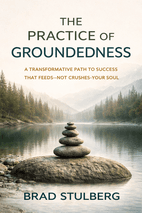
5 Main Takeaways from The Practice of Groundedness
Build a foundation of groundedness for sustainable success and fulfillment.
The book argues that true happiness and enduring performance come from cultivating six core principles—acceptance, presence, patience, vulnerability, deep community, and movement—rather than chasing external outcomes. This requires daily practice to close the knowing-doing gap and often means countering societal norms of relentless achievement.
Accept your current reality with self-compassion to unlock peak performance.
Using techniques like the RAIN method, you can acknowledge your situation without judgment, which reduces fear and shame. This acceptance allows you to act from values-aligned action, leading to better results, flow states, and relaxation as a competitive advantage.
Cultivate presence to own your attention and achieve meaningful productivity.
Through mindfulness and structuring your environment—like scheduling focus blocks and removing distractions—you can shift from busyness to productive activity that shapes your character. This involves surfing urges without succumbing and eliminating unnecessary tasks.
Embrace patience and a process mindset to achieve goals without burnout.
By breaking large goals into small, controllable steps and practicing disciplined restraint—like stopping one rep short—you foster ease and sustainable progress. Creating tech-free zones and pausing with breathwork counter impulsive action and defense mechanisms like speed.
Practice vulnerability and foster deep community for genuine strength and confidence.
Sharing struggles builds psychological safety in teams and personal relationships, leading to trust and resilience. Combined with regular movement, which grounds the mind and teaches other principles, this creates a supportive ecosystem for growth and high performance.
Executive Analysis
The five key takeaways collectively articulate the book's thesis that sustainable fulfillment and high performance are not achieved through relentless striving, but by cultivating a grounded foundation. This foundation is built on six interwoven principles—acceptance, presence, patience, vulnerability, deep community, and movement—which work together to close the knowing-doing gap and shift focus from outcomes to process-oriented living.
'The Practice of Groundedness' matters because it provides a practical, evidence-based antidote to the burnout and anxiety prevalent in today's achievement culture. Stulberg bridges personal development with organizational psychology, offering actionable tools for individuals to thrive and for teams to build psychological safety, positioning it as a vital contribution to mindfulness and performance science.
Chapter-by-Chapter Key Takeaways
1. Grounded to Soar (Chapter 1)
Sustainable fulfillment arises from a foundation of groundedness, not from the relentless pursuit of external outcomes.
Six core principles form this foundation: Acceptance, Presence, Patience, Vulnerability, Deep Community, and Movement.
There is a critical difference between knowing a principle and living it. Closing the knowing-doing gap through deliberate practice is essential for real change.
Cultivating groundedness is a daily practice that often requires countering societal norms, but it is the path to deeper happiness and enduring performance.
Try this: Start by committing to daily practice of one groundedness principle, such as presence, to bridge the knowing-doing gap and build sustainable fulfillment.
2. Accept Where You Are to Get You Where You Want to Go (Chapter 2)
Acceptance enables peak performance. Performing from acceptance and love is more effective than performing from fear and avoidance.
Create space to see clearly. Techniques like the "wise observer" and RAIN method help you accept reality without being overwhelmed.
Self-compassion is a strength. It is the essential bridge between acceptance and productive action, preventing you from getting stuck in shame.
Action drives change. You don't need to feel good to get started. Act in alignment with your values—your mood will often follow.
Relaxation is a competitive advantage. Letting go of the struggle to control and accepting "what is" opens the door to flow states and high-level performance.
Try this: Use the RAIN method to accept a current challenge without judgment, then take one small action aligned with your values to move forward.
3. Be Present So You Can Own Your Attention and Energy (Chapter 3)
Productive activity, not mere productivity, is the goal: a state of unified, intentional action that shapes who you become.
Attention determines importance. What you consistently focus on grows, shaping your character and life.
Structure your environment for presence. Use upstream strategies like scheduling focus blocks and physically removing digital distractions.
Surf urges without succumbing. Observe waves of distraction without acting, and savor the fulfillment of presence.
Mindfulness trains attention. Regular practice builds the muscle to notice distractions and return your focus.
Eliminate the unnecessary. Create a not-to-do list to cut shallow tasks, freeing your attention for what truly matters.
Try this: Schedule a 25-minute focus block in a distraction-free environment and observe urges to multitask without acting, training your attention.
4. Be Patient and You’ll Get There Faster (Chapter 4)
Ease is expansive and arises from patience and presence, while excitement contracts focus onto future outcomes.
Adopt a "good enough" mindset for big projects: create a safe container for progress instead of compulsively controlling every detail.
Cultivate a process mindset. Break large goals into small, controllable steps and focus on executing them.
Practice disciplined restraint. "Stopping one rep short" promotes sustainability and prevents burnout.
Train patience by creating tech-free zones in your routine to experience stillness.
Build the skill of pausing through a simple daily breathing exercise to counteract impulsive action.
Understand that speed is often a defense mechanism against deeper fears. Lasting progress is achieved through gentle, persistent, and patient effort.
Try this: Break a large project into the next tiny step and practice stopping one task early today to cultivate patience and prevent burnout.
Next chapter: “5. Embrace Vulnerability to Develop Genuine Strength and Confidence” is locked
Keep learning from The Practice of Groundedness — and unlock all 600+ book summaries with audio, mindmaps and AI Q&A.
$0.00 due today · 7 days free, then $89.99/year ($7.49/mo) · Cancel anytime before day 7
plus sales tax where applicable