MONEY Master the Game: 7 Simple Steps to Financial Freedom Key Takeaways
by Tony Robbins
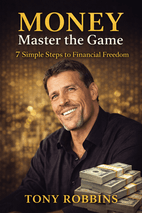
5 Main Takeaways from MONEY Master the Game: 7 Simple Steps to Financial Freedom
Pay Yourself First and Automate Savings to Build Wealth
Start by automatically setting aside a committed percentage of every dollar you earn before spending, as emphasized in the 'Save More Tomorrow' plan. This removes reliance on willpower and ensures consistent investment, allowing compounding to work over time and transforming you from a consumer to an investor.
Slash High Fees to Prevent Erosion of Your Lifetime Returns
Investment fees, even as low as 1-2%, can consume over 50% of your nest egg due to compounding, as shown in analysis of mutual funds charging 3.17%. Switch to low-cost index funds and aim for total fees under 1.25% to keep hundreds of thousands more of your money, accelerating your path to freedom.
Seek Asymmetric Risk/Reward: Protect Capital While Growing Wealth
Instead of taking huge risks, look for opportunities where potential gains vastly outweigh potential losses, such as structured notes or the All Seasons portfolio. This insider strategy, advocated by masters like Ray Dalio and Paul Tudor Jones, focuses on 'risking a little to make a lot' for growth without sleepless nights.
Secure Retirement with Guaranteed Lifetime Income You Can't Outlive
Convert your nest egg into a predictable paycheck using income annuities or hybrid products like ARIA Retire One to eliminate longevity and sequence-of-returns risk. This ensures you never outlive your money, providing financial freedom and peace of mind in retirement, as detailed in the lifetime income plan chapters.
Align Money with Meaning: Grow, Contribute, and Practice Gratitude
True wealth comes from meeting core human needs for growth and contribution, not just accumulation. Cultivate daily gratitude to break scarcity cycles, use money as a tool to live passionately, and give back—as highlighted in the final chapters, where generosity is integral to fulfillment and legacy.
Executive Analysis
Tony Robbins' 'MONEY Master the Game' constructs a comprehensive blueprint for financial freedom by integrating behavioral psychology with proven investment principles. The five key takeaways form a sequential strategy: begin by automating savings to harness compounding, then ruthlessly minimize fees to preserve returns, seek asymmetric opportunities for protected growth, secure lifetime income for retirement, and finally align wealth with personal purpose through gratitude and contribution. This progression mirrors the book's 7-step roadmap, transitioning from accumulation to decumulation while debunking industry myths and leveraging insights from billionaires.
This book matters because it democratizes elite financial strategies, translating complex concepts into actionable steps for everyday investors. It empowers readers to take control by exposing hidden fees, providing free tools like PortfolioCheckUp.com, and emphasizing that true wealth is about freedom and fulfillment. Its practical impact lies in a clear, implementable plan that can accelerate financial independence and transform one's relationship with money, setting it apart in the personal finance genre as a guide rooted in both tactical wisdom and holistic well-being.
Chapter-by-Chapter Key Takeaways
Chapter 1.1 It’s Your Money! It’s Your Life! Take Control (Chapter 1)
Money is a powerful emotional trigger and a tool; you must master it, or it will master you.
Adopting a strategic "game" mindset is key to winning financially.
Financial freedom is the ability to work from joy, not necessity.
The modern financial system is complex and often rigged (e.g., High-Frequency Trading), designed to confuse the average person.
True wisdom comes only from proven masters, not self-proclaimed experts.
The book provides a clear blueprint, translating the timeless principles of the world's top investors into actionable steps for anyone.
A powerful, free tool (PortfolioCheckUp.com) is available to audit investment fees and performance, democratizing access to financial insights.
Generosity is integral to true wealth; giving back is a responsibility that should begin immediately, regardless of one's financial starting point.
By purchasing the book, the reader has already contributed to fighting hunger, and is encouraged to continue.
The reader is challenged to commit fully to the process, with the promise of achieving financial freedom and a stress-free relationship with money.
The coming sections will provide a concrete roadmap: the 7 Simple Steps to Financial Freedom.
Try this: Commit to the financial freedom process and immediately audit your investments using free tools like PortfolioCheckUp.com.
Chapter 1.2 The 7 Simple Steps to Financial Freedom: Create an Income for Life (Chapter 2)
True financial freedom requires mastery, not just information. Mastery progresses from cognitive understanding to emotional engagement and finally to physical action through consistent repetition.
This book is designed as an interactive blueprint to engineer automatic, positive financial behaviors, not just to convey information.
The 7 Simple Steps provide a complete path: from the psychological decision to start, through learning the insider rules, planning your dreams, allocating assets, creating protected income, learning from the ultra-wealthy, and finally living and sharing a rich life.
The journey is personalized and self-paced, but requires a commitment to move beyond reading and into consistent action and implementation.
Try this: Adopt the 7-step blueprint as your personal financial roadmap and move from reading to consistent implementation.
Chapter 1.3 Tap the Power: Make the Most Important Financial Decision of Your Life (Chapter 3)
Invest When Others Are Fearful: The greatest financial opportunities are born in times of crisis and pessimism, as demonstrated by historical figures like John Templeton.
Pay Yourself First: The fundamental shift from consumer to investor begins by automatically setting aside a committed percentage of every dollar you earn before anything else.
Automation is Non-Negotiable: Willpower fails; systems succeed. Automating your savings removes the emotional burden and guarantees consistency.
Trick Your Brain: Use behavioral strategies like the Save More Tomorrow plan to save more painlessly by allocating future raises, overcoming our innate present bias and loss aversion.
Start Now, Start Anywhere: The exact percentage matters less than the act of beginning. Commit, automate, and let the power of compounding begin its work.
Try this: Set up automatic transfers to savings or investment accounts today, starting with any percentage you can afford.
Chapter 1.4 Money Mastery: It’s Time to Break Through (Chapter 4)
Money magnifies your existing character; it does not change who you are.
Lasting fulfillment comes not from money itself, but from meeting the core human needs of Growth and Contribution.
Understanding why you want money—what needs you are trying to fulfill—is more important than the pursuit itself.
Gratitude is the cornerstone of true wealth. It allows you to appreciate what you have and breaks the cycles of fear and scarcity.
Financial mastery requires self-mastery first. When you know what you truly value, money becomes a tool, not a target.
Try this: Practice daily gratitude and clarify your core values to ensure money serves your true needs for growth and contribution.
Chapter 2.0 Break Free: Shattering the 9 Financial Myths (Chapter 5)
Ignorance is extremely expensive in finance. Unseen fees can consume the majority of your lifetime investment returns.
The conventional system is not designed for your success. The shift from pensions to self-directed retirement plans has placed a complex, risky burden on individuals.
"The house" usually wins. Many standard financial products are structured to ensure profitability for the institution, regardless of your outcome.
New rules and tools exist. Becoming an "insider" by learning these rules provides access to strategies that can protect principal and capture growth in ways previously unavailable to the average person.
The journey has two phases: Accumulation (climbing to critical mass) and Decumulation (creating sustainable, lifelong income). Mastering both is essential.
Try this: Educate yourself on the hidden costs and conflicts in the financial system to make informed, insider decisions.
Chapter 2.2 Myth 2: “Our Fees? They’re a Small Price to Pay!” (Chapter 6)
Investment fees are devastatingly powerful due to the long-term effect of compounding; a small percentage fee can consume an amount greater than your initial investment over time.
Low-cost index funds provide a structurally superior solution by minimizing these fee drags, allowing investors to keep more of their market returns.
The combination of high fees and poor performance makes actively managed mutual funds a losing proposition for the vast majority of investors.
The average mutual fund charges 3.17% in total annual fees, a cost often 30 times higher than a low-cost index fund.
Over a lifetime, these "small" fees can cost the average worker over $150,000, eroding 50-70% of a potential nest egg.
During the flat "Lost Decade," fees alone could have turned a break-even investment into a 40% loss.
The escape route is to relentlessly drive down total costs. The target is 1.25% or less for all advisory and fund fees combined.
Achieving this requires moving from expensive, actively managed funds to low-cost index funds and seeking conflict-free, fee-only advisory guidance. This single act can reclaim hundreds of thousands of dollars and shave years off the journey to financial freedom.
Try this: Calculate your total investment fees using online tools and switch to low-cost index funds to save hundreds of thousands over time.
Chapter 2.3 Myth 3: “Our Returns? What You See Is What You Get” (Chapter 7)
Average returns are misleading: They don't account for the compounding effects of volatility, often masking significant losses.
Advertised returns aren't investor returns: Mutual funds use time weighted returns for marketing, but dollar weighted returns reflect what you actually earn, typically lagging by about 3% annually.
You can calculate your true return: Use online calculators to determine your dollar weighted return based on your personal investment flow.
Knowledge is power: Understanding these distinctions helps you make informed decisions and seek out advisors who prioritize your financial well being.
Try this: Use dollar-weighted return calculators to assess your actual investment performance, not just advertised average returns.
Chapter 2.4 Myth 4: “I’m Your Broker, and I’m Here to Help” (Chapter 8)
Leverage Free Tools: Tools like Portfolio CheckUp provide professional investment analysis at no cost, democratizing access to fiduciary-level insights.
Vet Advisors Carefully: When choosing a fiduciary, prioritize independence, fee transparency, third-party custodians, and credible credentials to avoid conflicts.
Beware of Conflicted Advice: Historical cases like Enron demonstrate how broker incentives can lead to disastrous recommendations, underscoring the need for fiduciaries.
Navigate Industry Barriers: Despite lobbying against fiduciary standards, investors must advocate for their interests by seeking advisors bound to client-first principles.
Take Proactive Steps: Use available resources to analyze your portfolio, understand fees and risks, and consider fiduciary advisors for comprehensive planning.
Try this: Research and choose a fee-only fiduciary advisor using resources like Portfolio CheckUp, verifying their independence and credentials.
Chapter 2.5 Myth 5: “Your Retirement Is Just a 401(k) Away” (Chapter 9)
Automate savings increases with the "Save More Tomorrow" approach to build wealth painlessly.
Ruthlessly minimize 401(k) fees using tools like Fee Checker and hold employers accountable for cost-efficient plans.
Prioritize Roth options (401(k) or IRA) when possible to hedge against rising taxes.
Consolidate old 401(k)s into IRAs for better control and investment flexibility.
Explore cash-balance plans if you're a business owner seeking higher tax-advantaged contributions.
Embrace the principle that tolerating poor financial products undermines your retirement; proactive management is key.
Try this: Review your 401(k) for high fees, automate savings increases with future raises, and prioritize Roth options for tax-free growth.
Chapter 2.6 Myth 6: Target-Date Funds: “Just Set It and Forget It” (Chapter 10)
Your 401(k) menu is a paid advertisement: The investment options are often selected for their profitability to plan providers, not their merit for you.
"Set and forget it" is a marketing myth: TDFs involve active management decisions (the glide path) and carry significant risk, especially from bond exposure in a rising-rate environment.
Investor understanding is dangerously low: Widespread misconceptions about safety and guarantees could lead to devastating surprises.
The system was pre-wired: TDFs were propelled to default status by an industry-funded study and supportive legislation, not necessarily by unbiased analysis of what's best for retirees.
They are a compromise, not a solution: While better than the most disastrous investor behaviors, low-cost TDFs are a baseline option. Superior, low-volatility asset allocation strategies exist for those willing to learn and implement them.
Try this: Scrutinize your target-date fund's glide path and fees, and consider building a custom asset allocation if possible.
Chapter 2.7 Myth 7: “I Hate Annuities, and You Should Too” (Chapter 11)
Annuities should not be universally hated or loved; they must be evaluated on a case-by-case basis.
Variable annuities are generally poor investments due to their extraordinarily high, layered fee structure that can consume all potential growth.
Guaranteed income annuities have a legitimate, millennia-old history and can form a cornerstone of a secure retirement income plan, as demonstrated by experts.
Due diligence is non-negotiable. Always understand the specific type, all associated fees, and guarantees of any annuity product.
A fiduciary advisor can provide an objective review of an existing annuity, and a 1035 exchange may be an option to move to a better product.
Try this: Evaluate any annuity offer by understanding its type, fees, and guarantees, and consult a fiduciary for an objective review.
Chapter 2.8 Myth 8: “You Gotta Take Huge Risks to Get Big Rewards!” (Chapter 12)
The core myth is false: Monumental success does not require monumental risk. The wealthy prioritize protecting their capital above all else.
Seek asymmetric risk/reward: The insider's goal is to find opportunities where you can "risk a little to make a lot." Your strategy should be to minimize potential losses while maximizing potential gains.
"Upside without the downside" is possible: Financial instruments like structured notes, market-linked CDs, and certain annuities can provide participation in market gains with principal protection, especially valuable as you near or enter retirement.
Access matters: These optimal strategies are often available through expert fiduciaries, not traditional salespeople. Avoiding embedded commissions and fees is essential to maximizing their benefit.
Reject learned helplessness: Tolerating volatile, high-risk strategies as the "only way" is a choice. By raising your financial standards and seeking smarter, safer structures, you can build wealth without sleepless nights.
Try this: Look for investments where potential upside is multiples of potential downside, such as structured notes with principal protection.
Chapter 2.9 Myth 9: “The Lies We Tell Ourselves” (Chapter 13)
Your financial reality is often shaped by unconscious, inherited stories. Identifying and challenging these limiting beliefs is the first step toward change.
Your mental and emotional state dictates your perception. You cannot adopt an empowering story from a disempowered state.
You can change your state by changing your body. Your physiology (posture, movement, breathing) directly influences your biochemistry and psychology. "Power posing" is a scientifically validated tool for building confidence.
Breakthroughs require the alignment of State, Story, and Strategy. A powerful state fosters an empowering story, which then unlocks and fuels the execution of winning strategies.
Stop tolerating limitations. Use your body to snap into a state of determination, face challenges head-on, and let failures become lessons that drive you toward inevitable success.
Try this: Identify and rewrite your limiting money stories, and use power poses or movement to shift into a confident state before decisions.
Chapter 3.1 What’s the Price of Your Dreams?: Make the Game Winnable (Chapter 14)
Focused Attention Fuels Awareness: When a goal becomes a true “must,” your reticular activating system highlights relevant information and opportunities you previously overlooked.
Action Must Be Paired with Strategy: Massive, relentless effort is essential, but it only leads to success when combined with effective execution and a willingness to adapt your plan.
Grace Amplifies Your Efforts: Acknowledging and being grateful for the role of serendipity or a higher power creates a positive, open mindset that often attracts unexpected support and opportunities.
Try this: Define a financial 'must' goal to activate your focus, and combine relentless effort with adaptable strategies for success.
Chapter 3.2 What’s Your Plan? (Chapter 15)
Your financial plan must be personal. Comparing your journey to others’ is a deceptive illusion that hinders progress; focus only on your own path and goals.
Honest self-assessment of your current finances is the non-negotiable foundation for any effective plan.
The wealth calculator tool provides a flexible, conservative blueprint by using after-tax return estimates and excluding home equity, forcing you to build a resilient plan.
The Save More Tomorrow strategy is a critical lever for painlessly accelerating your savings rate over time by automating savings from future income increases.
Your first plan is a starting point for discovery. Many people are pleasantly shocked to find they are much closer to their goals than they imagined, often by properly valuing assets (like a business) they already own.
Incorporate All Income Streams: Always include future assets like Social Security in your planning, as they can dramatically shorten your timeline.
Momentum is Motivational: Achieving a shorter-term goal (Financial Security) can provide the excitement and confidence to pursue a larger one (Financial Independence).
Strategic Investments Can Bridge Gaps: Targeted investments, like those in demographic-driven sectors, can efficiently provide the additional passive income needed to reach your target.
Use Discomfort as Fuel: Feeling behind or inadequate can be a powerful motivator for growth if you choose to be inspired rather than defeated.
Think in Decades, Not Years: Consistent, smart actions compounded over time make the seemingly impossible possible. Your initial plan is merely a draft to be optimized.
Try this: Use a wealth calculator to draft your personal financial plan based on honest asset assessment and conservative return estimates.
Chapter 3.3 Speed It Up: 1. Save More and Invest the Difference (Chapter 16)
Small Savings Compound Enormously: Trivial daily expenses, when invested, can grow into hundreds of thousands of dollars over decades, fundamentally altering your financial future.
Prepay Mortgage Principal: This simple, cost-free tactic can halve your mortgage term and interest, freeing vast sums for investment.
Align Spending with Evolving Values: Regularly evaluate large expenses like cars to ensure they still bring joy and support your long-term goals, not just short-term status.
Leverage Behavioral Strategies: Adopt "Save More Tomorrow" to increase savings painlessly through future income growth, bypassing willpower struggles.
Practice Mindful Spending: Use the six-step exercise to identify and cut low-joy expenses, creating a personalized spending plan that accelerates freedom without sacrificing happiness.
Try this: Audit daily spending for low-joy expenses, redirect those funds to investments, and consider extra mortgage payments to free future cash.
Chapter 3.4 Speed It Up: 2. Earn More and Invest the Difference (Chapter 17)
Solve Your Own Problems: Billion-dollar ideas often begin by personally experiencing a need or frustration, as both GoPro and Spanx exemplify.
Redefine Failure: Adopt Sara Blakely’s mindset: the only real failure is a failure to try. Embrace setbacks as necessary steps on the path to success.
Trends Are Opportunities: Aligning a solution with a rising cultural or technological wave, like the social sharing boom for GoPro, can amplify success.
Start Where You Are: You don’t need to disrupt an industry. Focus on adding value in a way that allows you to earn even a modest additional income.
The Math is Unarguable: Small, consistent increases in earned income, when invested, compound into extraordinary sums over time, creating genuine financial freedom.
Try this: Identify a personal need or frustration you can solve for others, start a side hustle, and view setbacks as learning steps.
Chapter 3.5 Speed It Up: 3. Reduce Fees and Taxes (and Invest the Difference) (Chapter 18)
Fees are fatal to compounding: A difference of 1-2% in annual fees can cost you hundreds of thousands of dollars and decades of time. Prioritize low-cost index funds.
Taxes are your single biggest expense: Proactively managing for tax efficiency is a legal right and a critical skill to accelerate wealth building.
Understand investor tax categories: Always aim for long-term capital gains rates (20%) by holding investments over a year, and maximize the use of tax-deferred or tax-free accounts (e.g., 401(k), IRA, Roth).
Avoid taxable mutual funds: Their internal trading can trigger annual tax bills at high ordinary income rates, crippling your compound growth. Use them only within tax-advantaged accounts.
Invest the difference: Every dollar saved from lower fees and taxes should be systematically reinvested. This is the engine that speeds you toward financial freedom.
Try this: Prioritize low-cost index funds in tax-advantaged accounts, and hold investments over a year to benefit from lower capital gains taxes.
Chapter 3.6 Speed It Up: 4. Get Better Returns and Speed Your Way to Victory (Chapter 19)
Superior Returns Don't Require High Risk: The goal is to find asymmetric opportunities where the potential reward is 3 to 5 times (or more) greater than the risk.
Speed is a Function of Return: Small improvements in your rate of return, thanks to compounding, drastically shorten the time needed to double your money and achieve financial goals.
Look for Opportunity in Trends and Needs: Great investments often align with long-term demographic trends (like an aging population) and can address real human needs, combining profit with purpose.
Expert Guidance is Key: A great fiduciary advisor is invaluable not only for guidance but for helping source and evaluate asymmetric risk/reward opportunities that are often not widely advertised.
Diversification is Your Foundation: While seeking specific opportunities, never forget that strategic asset allocation is the fundamental tool for managing overall portfolio risk while positioning for growth.
Try this: Work with a fiduciary to find investments with high reward-to-risk ratios, while maintaining a diversified asset allocation.
Chapter 3.7 Speed It Up: 5. Change Your Life—and Lifestyle—for the Better (Chapter 20)
Location is a Financial Strategy: Where you live is one of your biggest financial decisions. Optimizing for lower taxes and cost of living can act as an instant, substantial pay raise.
The Trade-Off Can Be Positive: Relocation doesn't have to mean compromise. It can be a "win-win" that simultaneously accelerates your path to financial freedom and enhances your daily quality of life.
Think Beyond Borders: Consider both domestic and international moves. The most dramatic improvements in lifestyle affordability may lie outside your home country.
You Don't Have to Wait: This strategy isn't just for retirees. Making a strategic move earlier in life compounds the financial benefits and allows you and your family to enjoy the rewards for longer.
Research is Key: Use available resources to compare costs, taxes, job markets, and lifestyle amenities in potential new locations before making a decision.
Try this: Research locations with lower taxes and cost of living that align with your lifestyle goals, both domestically and internationally.
Chapter 4.1 The Ultimate Bucket List: Asset Allocation (Chapter 21)
Investing in junk bonds demands extensive research or guidance from a fiduciary advisor; high-yield bond index funds offer a diversified, lower-effort alternative.
Municipal bonds provide tax advantages but come with risks like issuer bankruptcy and call features; thorough education and expert advice are essential to capitalize on opportunities.
Low-cost bond index funds, as advocated by Jack Bogle, simplify bond investing by spreading risk across the market, a strategy echoed in advanced portfolio management.
Try this: For bond investing, consider low-cost index funds or ETFs to spread risk, and educate yourself on municipal bonds for tax advantages.
Chapter 4.2 Playing to Win: The Risk/Growth Bucket (Chapter 22)
True risk tolerance is often revealed only through real loss experiences, not self-assessment quizzes.
Psychological biases like overconfidence and the Lake Wobegon Effect can lead to dangerous investment decisions, with men particularly susceptible.
Concentrating all capital in the Risk/Growth Bucket is a common cause of catastrophic financial losses, as seen in historical market crashes.
Professional fiduciary advisors can provide essential guidance to maintain discipline and avoid emotional investing.
Asset allocation should be personalized based on individual financial needs and emotional comfort, not generic rules.
After setting your Security/Risk-Growth ratio, commit to it and rebalance regularly to stay on track.
The journey continues with strategies for growth-like returns with security and the exciting addition of a Dream Bucket for present-day fulfillment.
Try this: Set a Security/Risk-Growth bucket ratio that matches your emotional comfort and financial needs, and commit to regular rebalancing.
Chapter 4.3 The Dream Bucket (Chapter 23)
The Dream Bucket is for present-day enjoyment and motivation, creating a balanced, rewarding life as you build wealth.
Strategic splurges from this bucket enhance your quality of life and can strengthen relationships.
The most fulfilling dreams often involve giving to others, creating legacies of joy and empowerment.
Fund your dreams through windfall allocation, fixed percentage savings, or efficiency gains, always keeping it separate from your essential Freedom Fund.
Write down your specific dreams and their "why" to transform abstract saving into passionate pursuit.
Avoid the "cheese and crackers" mentality—remember to enjoy the journey and appreciate the abundant non-financial wealth you already possess.
Try this: Allocate a portion of windfalls or savings to a separate Dream Bucket for fulfilling present joys, and write down specific goals.
Chapter 4.4 Timing Is Everything? (Chapter 24)
Rebalancing is an Action Plan: It requires you to systematically sell overweighted assets and buy underweighted ones to maintain your target asset allocation, a emotionally challenging but critically important discipline.
Frequency is Flexible: You can rebalance on a set schedule (e.g., annually) or whenever your portfolio deviates significantly from your plan, but be mindful of tax implications in non-retirement accounts.
Harvest Losses to Offset Taxes: Tax-loss harvesting is a legal strategy to use investment losses to reduce your capital gains tax burden, effectively increasing your net returns.
The Windfall Dilemma: For a lump sum, historical data favors immediate investment, but dollar-cost averaging provides psychological comfort and protection against immediate market downturns. The choice is personal.
Automation is Your Friend: Tools and fiduciary advisors exist to execute rebalancing and tax-loss harvesting efficiently, allowing you to benefit from sophisticated strategies without being an expert.
Try this: Schedule annual portfolio rebalancing to maintain target allocations, and use tax-loss harvesting to offset capital gains.
Chapter 5.1 Invincible, Unsinkable, Unconquerable: The All Seasons Strategy (Chapter 25)
Conventional balanced portfolios (e.g., 50/50 stocks and bonds) are inherently risky because stocks dominate the risk profile.
True diversification requires allocating based on risk, not just equal dollar amounts across assets.
Asset correlations are often unpredictable, making reliance on them for protection flawed.
Economic environments can be categorized into four "seasons": inflation, deflation, rising growth, and declining growth.
The All Seasons portfolio allocates 30% to stocks, 55% to bonds (split between intermediate and long-term Treasuries), and 15% to gold and commodities, balancing risk across all economic scenarios.
Regular rebalancing is essential to maintain the portfolio's intended risk balance and optimize returns.
Ray Dalio's insights offer a strategic, low-risk approach for individual investors to thrive in any market condition.
Try this: Implement the All Seasons portfolio by allocating 30% to stocks, 55% to bonds, and 15% to commodities/gold for all-weather diversification.
Chapter 5.2 It’s Time to Thrive: Storm-Proof Returns and Unrivaled Results (Chapter 26)
A free online Portfolio CheckUp tool is available to instantly analyze your current portfolio’s fees, risk, and true performance through past market crises.
The All Seasons strategy can be implemented within most 401(k) plans using appropriate fund choices, with resources available to assist.
The strategy’s purpose is to provide a smooth path to accumulating wealth, which must eventually be converted into a guaranteed lifetime income stream to achieve real financial freedom.
The historical returns presented are based on realistic, attainable data from low-cost index funds, factoring in fees, to show what was genuinely accessible to everyday investors.
Ray Dalio’s success stems from viewing the economy as a predictable machine, a concept he explains in a highly recommended free video.
Try this: Run your portfolio through the free Portfolio CheckUp tool, and adapt the All Seasons strategy using available funds in your 401(k).
Chapter 5.3 Freedom: Creating Your Lifetime Income Plan (Chapter 27)
Income is the ultimate goal. Freedom in retirement is defined by predictable, lifelong cash flow, not the fluctuating value of a portfolio.
You are now your own pension manager. With the decline of traditional pensions, the responsibility for creating a fail-safe income plan rests solely with you.
Longevity is a double-edged sword. Living longer is a blessing but a major financial risk if your income plan has an expiration date.
Sequence of returns is your greatest threat. Poor market performance early in retirement can permanently destroy a portfolio, regardless of long-term average returns.
Guaranteed lifetime income is achievable. Modern annuities, when understood as "income insurance," are a powerful tool to eliminate longevity and market risk, providing a paycheck you cannot outlive.
Try this: Calculate how much guaranteed income you need in retirement and explore annuities to cover essential expenses against sequence risk.
Chapter 5.4 Time to Win: Your Income Is the Outcome (Chapter 28)
Hybrid Annuities Offer a "Reserve Tank": Products like ARIA Retire One allow you to stay invested in the market while purchasing a guarantee that provides lifetime income if your portfolio is depleted by a bad sequence of returns.
Annuity Criticism Requires Context: Blanket condemnations of annuities often come from parties with alternative products to sell; evaluating the specific guarantee versus the historical performance and fees of the alternative is crucial.
Expert Guidance is Available: Specialized firms like Advisors Excel work behind the scenes to provide financial advisors with access to high-quality annuity products, and consumer resources exist to help with education and calculations.
FIAs Have Practical Nuances: Fixed Indexed Annuities are flexible tools with specific rules regarding death benefits, access, fees, and taxation that must be fully understood before purchase.
A Combined Strategy is Powerful: Integrating a resilient, all-weather investment portfolio with a guaranteed lifetime income stream from an annuity can create a robust strategy for both wealth growth and retirement security.
Try this: Research hybrid annuities like ARIA Retire One that offer lifetime income guarantees while keeping market exposure, and consult experts.
Chapter 5.5 Secrets of the Ultrawealthy (That You Can Use Too!) (Chapter 29)
The Ultimate Tax Shelter: The ultrawealthy use specialized life insurance not for death benefits, but as a powerful vehicle for tax-free growth, access, and wealth transfer.
Accelerate Your Timeline: By eliminating taxes on investment gains and withdrawals, strategies like PPLI can help you reach financial independence 30-50% faster or significantly increase your lifetime spendable income.
It's Not Your Typical Insurance: The effective version is a low-cost, institutional "wrapper" for your investments, distinct from expensive, commission-based retail policies.
Accessibility for All: While traditional PPLI has high minimums, the non-profit TIAA-CREF offers a similar tax-advantaged structure accessible to almost any investor.
Protect What You Build: Complement any wealth-building strategy with basic estate planning, like a living trust, to ensure your assets pass smoothly to your heirs without legal hassle.
Try this: Investigate low-cost, institutional life insurance policies like those from TIAA-CREF for tax-free growth and access, especially for high earners.
Chapter 6.0 Meet the Masters (Chapter 30)
The wisdom of the world's top investors can be distilled into a practical blueprint for individual success.
Capital preservation is the foundation; avoiding losses trumps the pursuit of high returns.
Seek asymmetric opportunities where the potential reward dramatically outweighs the risk.
Make informed decisions with incomplete data, and always protect yourself through diversification.
Lasting fulfillment comes from continuous growth and a commitment to giving back.
Try this: Study the principles of top investors—capital preservation, asymmetric risk/reward, and diversification—and apply them to your strategy.
Chapter 6.1 Carl Icahn: Master of the Universe (Chapter 31)
Shareholder Activism as a Value Engine: Carl Icahn redefines the "corporate raider" as an activist investor whose primary goal is to unlock value by correcting poor management and governance, ultimately benefiting all shareholders and the broader economy.
The Power of Conviction and Leverage: His success stems from a unique combination of deep fundamental analysis, a mathematical assessment of risk/reward, and the sheer tenacity to wage and win protracted battles against entrenched corporate boards.
Systemic Critique: A core tenet of his philosophy is that the current structure of public companies (with staggered boards, poison pills, etc.) systematically disempowers shareholders and protects underperforming managers.
Evolving Legacy: Beyond wealth accumulation, Icahn seeks a legacy as a reformer of American corporate governance and a philanthropist focused on accountability, as seen in his support for charter schools. His approach has inspired a new generation of activist investors.
Try this: Apply shareholder activism principles by questioning management decisions in companies you invest in and advocating for value creation.
Chapter 6.2 David Swensen: A $23.9 Billion Labor of Love (Chapter 32)
Asset allocation is the most critical determinant of investment returns, overshadowing market timing and security selection.
Individual investors should prioritize low-cost, passively managed index funds from fiduciary-focused organizations like Vanguard and TIAA-CREF.
Diversification across asset classes such as US stocks, international equities, REITs, and Treasury bonds reduces risk and enhances long-term returns.
Avoid high-fee mutual funds and the behavioral trap of chasing returns, which typically lead to underperformance.
A sample portfolio might include 70% equities (diversified globally) and 30% fixed income (with inflation protection), held for the long term.
Continuous education and a commitment to tax-advantaged savings are essential for financial security, especially in retirement.
Try this: Build a diversified portfolio with global equities and bonds using low-cost index funds, and avoid chasing performance.
Chapter 6.3 John C. Bogle: The Vanguard of Investing (Chapter 33)
Costs Are Everything: High fees catastrophically erode wealth over decades due to compounding. The pursuit of "beating the market" is often a costly distraction.
Embrace the Market Return: For most investors, the most reliable path to wealth is owning the entire market through low-cost index funds.
Structure Matters: Vanguard's client-owned structure resolves the inherent conflict between investor returns and corporate profits prevalent in publicly traded fund companies.
Simplicity and Discipline Win: Set a diversified asset allocation, use low-cost funds, minimize trading, and ignore short-term market noise and media hype.
Define "Enough": View money as a means to an end, not the end itself, and cultivate a personal sense of what is sufficient for a fulfilling life.
Try this: Invest in broad-market index funds from a client-owned firm like Vanguard, and define 'enough' for a fulfilling life.
Chapter 6.4 Warren Buffett: The Oracle of Omaha (Chapter 34)
Simplicity Wins: The ultimate advice from one of history’s greatest investors is not complex stock-picking, but investing in a low-cost, broad-market index fund.
Costs Are Critical: Buffett explicitly champions very low-cost funds (like Vanguard’s) and warns against the performance drag of high fees from active managers or hedge funds.
Long-Term Patience is the Strategy: The recommended approach is not about trading, but about buying and holding indefinitely.
Evidence Over Hype: Buffett’s own bet against hedge funds provides concrete evidence supporting his index fund recommendation for the vast majority of investors.
Try this: For most investors, buy a low-cost S&P 500 index fund and hold it indefinitely, as recommended by Warren Buffett.
Chapter 6.5 Paul Tudor Jones: A Modern-Day Robin Hood (Chapter 35)
Prioritize risk management: Defense is paramount; always focus on protecting capital to ensure longevity in investing.
Diversify relentlessly: A diversified portfolio is essential for navigating market volatility and avoiding overvaluation traps.
Follow the trend: Use the 200-day moving average as a clear signal for entry and exit, avoiding contrarian impulses.
Seek asymmetric rewards: Aim for a 5-to-1 risk/reward ratio to prosper even with a low success rate, provided risk control is strict.
Integrate giving into your legacy: Philanthropy can amplify purpose, turning financial success into meaningful social impact.
Embrace stress as motivation: Financial concerns evolve but persist; channel them into passions that extend beyond personal gain.
Try this: Use the 200-day moving average as a trend-following signal, and always prioritize protecting your capital over seeking high returns.
Chapter 6.6 Ray Dalio: A Man for All Seasons (Chapter 36)
Democratized Wisdom: Ray Dalio's most prized investment strategy, the "All Seasons" portfolio, is presented as no longer confined to the ultra-wealthy but as a actionable blueprint available to any individual investor.
The Ultimate Goal: The strategy's paramount purpose is to provide growth and protection ("storm-proof returns") in every economic season, fundamentally aligning with the core objective of preserving and growing a nest egg safely.
Context is Critical: The chapter powerfully emphasizes that the portfolio's components are not a standalone checklist; their transformative power is only unlocked through understanding the foundational principles and reasoning explained in the preceding chapters of the book.
A Journey's End: The author frames this moment as the direct answer to the quest that initiated the entire book, positioning Dalio's contribution as the pivotal, sought-after solution.
Try this: Understand the economic seasons and allocate assets based on risk parity, as in the All Seasons portfolio, for steady growth.
Chapter 6.7 Mary Callahan Erdoes: The Trillion-Dollar Woman (Chapter 37)
Performance Over Prejudice: In finance, consistent results can transcend gender barriers, creating a merit-based path to success.
Leadership as Service: True leadership involves empowering others, seeing their potential, and working alongside them with humility.
Active Management's Value: For investors seeking tailored strategies, skilled active management can deliver superior long-term returns through rigorous research and insight.
Long-Term Discipline: Building wealth requires diversification, avoiding market timing, and committing to a plan that adapts to individual life changes.
Holistic Balance: Financial stress is universal, but it can be managed by maintaining perspective, focusing on controllables, and integrating work with personal life for sustained well-being.
Try this: Maintain long-term discipline in your investment plan, diversify across asset classes, and integrate work-life balance for well-being.
Chapter 6.8 T. Boone Pickens: Made to Be Rich, Made to Give (Chapter 38)
Decisiveness is Leadership: True leaders make decisions and act, avoiding the paralysis of perpetual analysis.
Values Shape Fortune: Foundational principles like honesty, courage, and a strong work ethic are more critical to long-term success than any specific investment tactic.
Embrace Calculated Risk: Extraordinary rewards often require taking substantial, well-researched risks, with an acceptance of occasional failures.
Wealth is a Tool for Impact: Financial success finds its highest purpose in generosity and solving large-scale problems.
Passion Fuels Longevity: A genuine love for your work and a sense of mission can sustain drive and optimism across an entire lifetime.
Try this: Make timely financial decisions based on research, uphold core values like honesty, and use wealth for impactful giving.
Chapter 6.9 Kyle Bass: The Master of Risk (Chapter 39)
Asymmetric Risk/Reward is the Core: The essence of Bass’s strategy is to seek out opportunities where you can risk a small, predefined amount to earn a multiple of that risk. He constantly looks for market failures where potential catastrophe is priced as an impossibility.
Independent Analysis Over Consensus: Success came from asking fundamental questions everyone else ignored and doing the gritty, original research (like reconstructing national balance sheets) that others deemed unnecessary.
Discipline and Mindset Are Foundational: A background dealing with failure and a hunger born from pain provide the psychological stamina to act against the crowd and wait for a thesis to play out, sometimes for years.
Tail Risk Insurance Has Value: Prudent investing involves spending small amounts on protecting against low-probability, high-impact events—whether in financial markets or in life.
Location as an Advantage: Being physically distant from Wall Street (in Dallas) helped Bass avoid groupthink and “the noise,” allowing for clearer, independent thought.
Try this: Look for market inefficiencies where risks are mispriced, and conduct thorough original analysis before investing in asymmetric bets.
Chapter 6.10 Marc Faber: The Billionaire They Call Dr. Doom (Chapter 40)
True investment success often comes from going against the crowd and purchasing assets when they are deeply undervalued and unpopular.
Central bank policies, particularly money printing, are a significant source of long-term economic instability and market bubbles.
Asia remains a fertile ground for growth-oriented investors, offering opportunities often missed by those focused solely on the West.
The single most critical factor in investing is the price paid; discipline to wait for bargains can define a lifetime of returns.
Maintaining cash reserves provides the flexibility to act during rare, high-conviction opportunities that arise during market panics.
Gold serves as a useful, though imperfect, hedge within a diversified portfolio, especially during periods of asset deflation.
Investors should cultivate skepticism toward financial salesmanship and prioritize transparency and skill when seeking advisory help.
Try this: Maintain cash reserves to buy undervalued assets during market panics, and consider international markets like Asia for growth.
Chapter 6.11 Charles Schwab: Talking to Chuck, the People’s Broker (Chapter 41)
The Client is King: Schwab’s revolutionary and sustained success stemmed from inverting Wall Street’s priority, always asking what benefits the client first.
Index Funds for the “98%”: For nearly all individual investors, the wisest path is low-cost, diversified index funds or ETFs, which provide market-level returns without the high fees and low odds of success associated with stock-picking or actively managed funds.
Costs are Crippling: Investors must vigilantly minimize fees, as even a 1% difference compounds to consume a massive percentage of their potential wealth over decades.
Embrace Your Constraints: Schwab’s dyslexia shaped his leadership, teaching him to rely on complementary talents and build strong teams.
Legacy of Empowerment: He measures his legacy not just by assets managed, but by fundamentally changing the brokerage industry to be more fair and client-centric.
Try this: Choose brokerage services that prioritize low costs and client interests, and invest in index funds for the long term.
Chapter 6.12 Sir John Templeton: The Greatest Investor of the 20th Century? (Chapter 42)
Invest Contrarily: Seek opportunity where others see despair; buy at the point of maximum pessimism and sell during periods of euphoric optimism.
Save Relentlessly: Wealth building is impossible without the foundational discipline of saving a significant portion of your income.
Sell Based on Value, Not Price: Replace an investment only when you find a new opportunity that is a demonstrably better bargain (his 50% better rule).
Diversify Globally: Expanding your investment universe across nations increases opportunity and manages risk by avoiding single-market downturns.
Integrate Character with Strategy: The qualities of trust, generosity, and a desire to give more than you take are not just spiritual virtues but drivers of lasting professional success and personal fulfillment.
Cultivate Gratitude: A conscious practice of thankfulness is a powerful antidote to fear and a catalyst for a positive, impactful life.
Try this: Buy investments when they are unpopular and deeply undervaled, and cultivate a habit of gratitude for lasting fulfillment.
Chapter 7.1 The Future Is Brighter Than You Think (Chapter 43)
3D printing represents a shift to decentralized, on-demand manufacturing that will disrupt global industries.
Technological progress is exponential, not linear, making future advances faster and more dramatic than our intuition expects.
Exponential technology is being directed at solving core human challenges: water, food, health, and aging.
The future points toward the merging of human and machine intelligence (the Singularity), enhancing our capabilities.
The greatest long-term challenge may not be scarcity, but defining human purpose and fulfillment in a world of abundant technology and automated labor.
Abundance Creates a New Challenge: A world without scarcity forces us to confront the essential human need for purpose and meaning, which can be lost when all desires are easily satisfied.
Possibility Over Luxury: True abundance is best understood as expanding life's possibilities for all people, not merely providing material luxuries.
Meaning is the Foundational Wealth: Lasting fulfillment comes from an internal source—passion and purpose—that provides resilience and joy regardless of external economic conditions.
Try this: Stay informed about exponential technological trends like 3D printing, and reflect on your personal purpose beyond material wealth.
Chapter 7.2 The Wealth of Passion (Chapter 44)
A consistent daily practice of gratitude and positive visualization ("priming") is a powerful tool to reprogram the mind, crowd out negative emotions, and cultivate a sense of being blessed.
Lasting fulfillment is found not in getting, but in growing and contributing to something beyond oneself. This engagement with spiritual needs is the antidote to the mind's default negativity.
The ultimate wealth of passion is unlocked when you discover a mission you care about so deeply that you would give your all for it. This focus transcends personal fear and limitation, as exemplified by figures like Martin Luther King Jr. and Malala Yousafzai.
Anyone can choose to live fearlessly and passionately by focusing on what matters, committing to a meaningful cause, and anchoring themselves in gratitude.
Try this: Start a daily 'priming' routine of gratitude and visualization to foster a positive mindset and align actions with meaningful goals.
Chapter 7.3 The Final Secret (Chapter 45)
Execution is Everything: Financial freedom is achieved not by knowledge alone, but by systematically implementing a plan. The detailed checklist is a tool to bridge the gap between understanding and action.
Income Security is Paramount: The highest priority is establishing a guaranteed lifetime income plan to ensure you never outlive your money.
Stand on the Shoulders of Giants: You have direct access to the proven strategies of history's greatest investors; your task is to learn their core principles and adapt them to your personal plan.
Wealth is a Means to an End: The ultimate goal of financial mastery is to live with passion, contribute to something larger than yourself, and leave a meaningful legacy.
Service as Fulfillment: The ultimate "secret" or conclusion transcends financial tactics, centering on the belief that true fulfillment comes from sincere and selfless contribution to others.
Integrated Mission: Robbins's philosophy is not separate from his business empire; it is the driving force behind it. Each company, from financial advising to resort management, is presented as a vehicle for improving quality of life.
Scale of Impact: The section demonstrates how personal passion for giving, starting with feeding two families, can scale into a multifaceted global foundation and a multi-billion dollar network of "impact-focused" businesses.
Actionable Pathways: Readers are not just inspired to give back; they are provided with direct avenues—through the Foundation's programs or the specialized financial and business services—to take action, whether philanthropically or in managing their own financial lives more effectively.
Try this: Use the provided checklist to implement your financial plan step-by-step, and find ways to contribute to others for true wealth.
Continue Exploring
- Read the full chapter-by-chapter summary →
- Best quotes from MONEY Master the Game: 7 Simple Steps to Financial Freedom → (coming soon)
- Explore more book summaries →