Zero to One Summary by Peter Thiel (Free)

Title Page

Chapter 1 of 4
0:000:00
EN
1x
Voice
PDF

Zero to One

by Peter Thiel

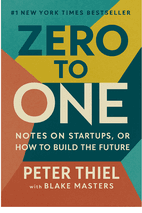
Zero to One book cover

What is the book Zero to One about?

Peter Thiel's Zero to One advocates for creating monopolies through breakthrough innovation, arguing that true progress comes from building something entirely new. It provides a contrarian philosophy for founders and entrepreneurs seeking to build valuable, transformative companies.

FeatureInsta.PageBlinkist
Summary DepthFull Chapter-by-Chapter15-min overview
Audio Narration
Visual Mindmaps
AI Q&A
Quizzes
PDF Downloads
Price$89.99/yr$146/yr (PRO)
*Competitor data last verified July 2026.

1 Page Summary

In Zero to One, Peter Thiel argues that true innovation comes from creating something entirely new—going from "zero to one"—rather than iterating on existing ideas ("one to n"). He critiques the competitive mindset that dominates business and education, advocating instead for monopolies that avoid competition and generate unique value. Thiel emphasizes the importance of bold, contrarian thinking and building proprietary technology that offers a significant improvement over alternatives, often by a factor of ten.

The book emerged from a popular Stanford course Thiel taught in 2012, reflecting Silicon Valley’s post-2008 focus on transformative startups amid economic stagnation. Thiel challenges conventional wisdom about globalization, technology, and progress, urging entrepreneurs to pursue secrets—valuable truths overlooked by society—and to build durable businesses with strong foundations, clear plans, and a compelling vision for the future.

Zero to One has had a lasting impact on startup culture and entrepreneurial philosophy, popularizing concepts like "definite optimism," "last mover advantage," and the value of monopoly-like market dominance. Its emphasis on breakthrough innovation over incremental improvement continues to influence founders and investors, reinforcing the idea that the most valuable companies create new markets rather than competing in old ones.

Title Page

Overview

The title page immediately establishes the book's practical, forward-looking nature. It presents the work as "NOTES ON STARTUPS, OR HOW TO BUILD THE FUTURE," positioning itself not as abstract theory but as actionable insights from the front lines of innovation. The dual authorship—Peter Thiel with Blake Masters—signals a collaboration between an iconic Silicon Valley founder and a protégé, suggesting the content will blend proven experience with fresh perspective.

Key Takeaways
  • The book positions itself as a practical guide, not an academic text, focused on the tangible process of creating new ventures.
  • The collaboration between Thiel and Masters implies the content is filtered through both established expertise and contemporary application.
  • The ultimate subject is framed as building the future itself, setting a ambitious and transformative tone for the entire work.

Key concepts: Title Page

1. Title Page

Book Positioning and Purpose

  • Presents as practical guide rather than abstract theory
  • Focuses on actionable insights from innovation front lines
  • Frames subject as building the future with ambitious tone

Author Collaboration Significance

  • Dual authorship combines iconic founder and protégé perspective
  • Blends proven experience with fresh contemporary application
  • Signals content filtered through both expertise levels

Content Approach and Style

  • Structured as notes rather than formal academic text
  • Emphasizes tangible process of venture creation
  • Sets transformative tone for the entire work
💡 Try clicking the AI chat button to ask questions about this book!
Copyright

Overview

This section presents the formal copyright information and publication details for Peter Thiel's book Zero to One. It establishes the legal framework protecting the work while providing essential bibliographic data that situates the book within the publishing ecosystem.

Publication Details

The copyright is held by Peter Thiel since 2014, with the book published by Currency, an imprint of the Crown Publishing Group (a division of Penguin Random House LLC). The notice includes both the print and ebook ISBN numbers, acknowledging the dual publication format. The section credits the various contributors involved in the book's production, including book designer Ralph Fowler, graphics by Rodrigo Corral Design, illustrations by Matt Buck, and cover design by Michael Nagin.

Legal Framework

The copyright notice serves as a formal declaration of intellectual property protection under United States law. It includes the Library of Congress Cataloging-in-Publication Data, which provides standardized classification information (HD62.5.7525 2014) and subject headings including "New business enterprises," "New products," "Entrepreneurship," and "Diffusion of innovations." This legal framework protects the original content while making the work discoverable through library systems.

Key Takeaways

• Copyright protection formally establishes the book as Peter Thiel's intellectual property • The publication details reveal the ecosystem of professionals involved in book production • Legal cataloging information makes the work discoverable through library systems • The notice covers both print and digital editions, reflecting modern publishing practices

Key concepts: Copyright

2. Copyright

Copyright Ownership and Publication

  • Copyright held by Peter Thiel since 2014
  • Published by Currency (Crown Publishing Group/Penguin Random House)
  • Dual publication format with both print and ebook ISBNs
  • Multiple contributors involved in production and design

Legal Protection Framework

  • Protected under United States intellectual property law
  • Includes Library of Congress cataloging data (HD62.5.7525 2014)
  • Standardized subject classifications for library discoverability
  • Covers original content across all publication formats

Bibliographic Classification

  • Subject headings include New Business Enterprises and Entrepreneurship
  • Classification covers New Products and Diffusion of Innovations
  • Formal cataloging enables systematic library organization
  • Supports academic and research accessibility

Contents

Overview

This table of contents maps the intellectual journey of Peter Thiel's "Zero to One," outlining a provocative argument for building a better future through bold, contrarian innovation. It moves from diagnosing the failures of past technological optimism to prescribing a philosophy for creating valuable monopolies through unique solutions.

Thematic Groupings

The chapters are organized into a logical progression that builds Thiel's core thesis:

  • The Setup (Chapters 1-4): Establishes the fundamental question—"What important truth do very few people agree with you on?"—and critiques the prevailing mindsets of globalization and competition.
  • The Blueprint for Value (Chapters 5-9): Shifts to the positive case, detailing the principles of building a durable monopoly business, including the importance of last mover advantage, definite optimism, network effects, and a strong founding culture.
  • Execution and Pitfalls (Chapters 10-14): Covers the practicalities of building a team, distributing a product, and navigating specific industries like cleantech, while also exploring the complex psychology of founders.
  • The Stakes (Conclusion): Ends by framing the entire argument within the monumental choice between a future of technological stagnation or a transformative singularity.
Narrative Arc

The structure reveals a clear story: first, unlearn the destructive lessons of the past. Second, embrace a new philosophy focused on creating something new and dominating a small market. Finally, execute on this vision with a dedicated team to avoid the pitfalls that doom most startups, ultimately aiming to push humanity forward.

Key Takeaways
  • The book is a structured argument, moving from critique to prescription.
  • Its core concern is the difference between horizontal (globalizing) and vertical (innovating) progress.
  • Success is framed as building a "monopoly" by solving a unique problem, not by competing in an existing market.
  • Practical advice on company culture, sales, and distribution is grounded in this larger philosophical framework.
  • The ultimate goal is not just business success, but driving humanity toward a transformative future.

Key concepts: Contents

3. Contents

The Setup: Questioning Conventional Wisdom

  • Establishes the fundamental contrarian question framework
  • Critiques prevailing mindsets of globalization and competition
  • Sets foundation for distinguishing horizontal vs vertical progress

The Blueprint for Value Creation

  • Details principles for building durable monopoly businesses
  • Emphasizes last mover advantage and definite optimism
  • Highlights importance of network effects and strong founding culture

Execution and Practical Implementation

  • Covers team building and product distribution strategies
  • Addresses navigating specific industry challenges like cleantech
  • Explores founder psychology and avoiding common startup pitfalls

The Ultimate Stakes and Future Vision

  • Frames innovation as choice between stagnation or transformation
  • Posits business success as driver of human progress
  • Connects individual ventures to broader societal advancement

Preface: Zero to One

Overview

This opening section sets the stage for a radical rethinking of business and innovation. It challenges the conventional wisdom of imitation and optimization, arguing that true progress comes not from competing in existing markets but from creating entirely new ones. The text establishes a foundational dichotomy between going from "1 to n" (copying what works) and going from "0 to 1" (creating something novel).

The Core Choice: Imitation vs. Creation

The chapter posits that every meaningful moment in business is unique and non-repeatable. Copying the successes of giants like Gates, Page, or Zuckerberg is not learning from them; it is merely participating in a crowded race of imitation. This path, moving from "1 to n," involves adding more of something familiar and is ultimately a dead end. The only path to a valuable future is through the singular act of creation—the "0 to 1" moment that brings something fresh and strange into the world. The author issues a stark warning: a reliance on today's "best practices" and fine-tuning old models will lead to a crisis far worse than 2008.

Technology as a Human Miracle

In the face of this daunting challenge, the text offers a source of hope: humanity's unique capacity for miracles, which we call technology. Technology is defined not just as software, but as any new and better way of doing things that allows us to do more with less. This ability to rewrite the plan of the world is what fundamentally distinguishes humans from other species. The book's purpose is to explore how to build companies that perform this miracle of creation.

The Book's Origin and Philosophy

Zero to One is born from the author's direct experience as a founder of PayPal and Palantir and an investor in groundbreaking companies. It is explicitly not a formula or a step-by-step guide. The central paradox it embraces is that a formula for innovation cannot exist because true innovation is, by definition, new and unique. Instead, the book aims to provide patterns and a mindset. It champions thinking from "first principles"—questioning fundamental assumptions—as the way to find value in unexpected places. The content originated from a Stanford University course designed to help students look beyond academic specialization to see the future they could create themselves.

Key Takeaways
  • The Path to the Future: Progress can be horizontal (1 to n) or vertical (0 to 1). Copying what already exists only creates more of the same; the real rewards and the only sustainable future lie in creating something new.
  • Embrace the Singular: Every great business is built on a secret or a unique insight about the world. Don't compete in established markets; create a new market where you can be the sole dominant player.
  • There is No Formula: Innovation cannot be prescribed. Success comes from thinking for yourself, reasoning from first principles, and being bold enough to believe you can create a miracle.
  • Technology is Hope: The ability to create new technology is humanity's defining trait. It is the tool that allows us to build a radically better future, and business is the vehicle for doing so.

Key concepts: Preface: Zero to One

4. Preface: Zero to One

The Fundamental Dichotomy of Progress

  • Horizontal progress (1 to n): copying existing successes and scaling what works
  • Vertical progress (0 to 1): creating something entirely new and unprecedented
  • True innovation comes from creating new markets rather than competing in existing ones

The Futility of Imitation

  • Copying successful entrepreneurs is not learning but participating in crowded imitation
  • Moving from 1 to n involves adding more of something familiar but leads to dead ends
  • Reliance on today's best practices and fine-tuning old models will lead to future crises

Technology as Humanity's Creative Miracle

  • Technology defined as any new and better way of doing things with less resources
  • Humanity's unique capacity to rewrite the world's plan distinguishes us from other species
  • Technology represents our ability to perform miracles of creation and build better futures

The Philosophy of Innovation

  • No formula exists for innovation because true innovation is by definition unique and new
  • Thinking from first principles means questioning fundamental assumptions to find value
  • Success requires bold belief in one's ability to create miracles rather than following formulas

The Book's Purpose and Approach

  • Provides patterns and mindset rather than step-by-step formulas for innovation
  • Based on author's direct experience as founder of PayPal/Palantir and investor
  • Originated from Stanford course to help students see beyond specialization to create their future
You've reached the end of the free chapters

Next chapter: “The Challenge of the Future” is locked

Keep reading Zero to One — and unlock all 500+ book summaries with audio, mindmaps and AI Q&A.

$0.00 due today · 7 days free, then $89.99/year ($7.49/mo) · Cancel anytime before day 7

About the Author

Peter Thiel

Peter Thiel is a renowned entrepreneur, investor, and author known for his profound influence on technology and business. As the co-founder of PayPal and the first outside investor in Facebook, he has been a pivotal figure in shaping the modern tech landscape. His bestselling book, *Zero to One: Notes on Startups, or How to Build the Future*, distills his unique insights on innovation and monopoly, becoming essential reading for entrepreneurs worldwide. A thought leader in venture capital through his firm Founders Fund, Thiel continues to champion transformative technologies. His published works, available on Amazon, offer a critical perspective on progress and competition in the 21st century.

0