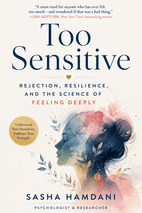
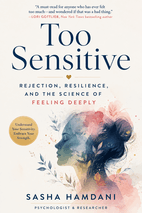
Sasha Hamdani MD's Too Sensitive provides a practical guide to Rejection Sensitive Dysphoria, explaining the neuroscience behind intense emotional reactions and offering the twelve-part CALM YOUR MIND toolkit. Written for anyone called "too sensitive," their loved ones, and clinicians seeking validation and concrete strategies for managing triggers and building emotional resilience.
Feature
Insta.Page
Blinkist
Shortform
Too Sensitive
✓
✕
✕
Summary Depth
Full Chapter-by-Chapter
15-min overview
Section-by-section guides
Audio Narration
✓
✓
✓
Visual Mindmaps
✓
✕
✕
AI Q&A
✓
✕
✕
Quizzes
✓
✕
✕
PDF Downloads
✓
✕
✓
Price
$89.99/yr
$146/yr (PRO)
$199/yr
*Competitor data last verified July 2026.
1 Page Summary
Summary
In Too Sensitive: Rejection, Resilience, and the Science of Feeling Deeply, psychiatrist and ADHD educator Dr. Sasha Hamdani provides a comprehensive guide to Rejection Sensitive Dysphoria (RSD)—the intense emotional pain triggered by perceived or actual rejection, criticism, or failure. The book opens with a foreword by Dr. William Dodson, who frames RSD as an overdriven alarm system: the intensity of feeling reflects how much a situation matters, not a personal flaw, and the cycle of rejection followed by masking exacts a hidden cost. Hamdani argues that RSD is not a character defect but an adaptive nervous-system response rooted in evolutionary survival—tribal belonging once meant life or death—and that the same hyperreactivity that causes pain also enables deep connection, vigilance, and empathy. Though RSD is not yet a standalone DSM diagnosis, it is widely recognized in psychiatric practice, particularly in relation to ADHD, and Hamdani emphasizes that readers are not at fault for their sensitivity.
The book's distinctive approach blends plain-language neuroscience with a structured self-help framework. Hamdani identifies five biological factors that amplify emotional responses—dopamine dysregulation, norepinephrine sensitivity, an overactive amygdala paired with an underactive prefrontal cortex, an overactive limbic system, and fluctuating hormones such as estrogen and cortisol. She illustrates these concepts through clinical vignettes: a patient whose "devastating" boss texts arrived monthly in sync with her cycle, a graphic designer repeatedly hospitalized for chest pain after a presentation lacking validation, and a marketing manager spiraling over a vague Slack reply. The centerpiece is the CALM YOUR MIND toolkit, a twelve-part set of practices drawn from CBT, DBT, ACT, and interpersonal therapy, including challenging cognitive distortions, labeling emotions, grounding in the present moment, setting healthy boundaries, delaying reactions, and using "I" statements. Each tool is matched to a specific scenario—from romantic relationships and friendships to family gatherings, career pressures, and self-worth—with recurring "1-2-3 CALM" exercises that guide readers through recalling a trigger, naming the emotion, and reframing without requiring belief in the reframe.
The intended audience is anyone who has been called "too sensitive" or dismissed as overreacting, whether or not they have an ADHD diagnosis, as well as partners, family members, and clinicians seeking validation and practical strategies. The book is deliberately designed for accessibility—clean fonts, short sections, and permission to skip around—reflecting the author's own experience as a psychiatrist with over two million followers. The conclusion, framed as a letter to her younger self, reinforces a central message: self-kindness is not indulgence but necessity, and the harsh inner critic that promises safety only produces exhaustion. Readers will leave with a validated vocabulary for their experience, a biological explanation that separates their worth from their reactivity, and a concrete set of tools to interrupt spirals, build emotional self-trust, and navigate relationships without self-abandonment.
Foreword by Dr. William Dodson
Overview
When your inner emotional life is overwhelming, the people around you often respond with criticism and distance, not comfort. The harder you try to manage it, the more you hide who you are. That hiding has a cost no one can sustain.
Dodson opens with a career-long wait for a book naming Rejection Sensitive Dysphoria. Emotions reveal what matters and how deeply; for dysregulated people they overwhelm, drawing accusations of being too sensitive. That vulnerability invites more rejection, leaving masking as the only option. Dr. Sasha Hamdani's guide offers a self-assessment, plain neuroscience, and strategies. Her standing as a psychiatrist and ADHD educator with over two million followers backs it: no fault lies with the reader.
How to Read This Book
The design itself is care: clean fonts, short sections, white space, one idea per section. Each section moves from reflection to explanation to application. Pausing, skipping, and out-of-order reading are allowed.
Key Takeaways
For Dodson, rejection-sensitive dysphoria is an overdriven alarm: the intensity of the feeling registers how much the situation matters to you, not how flawed you are.
Each episode of rejection sensitivity invites fresh ostracism, and that loop eventually makes masking the only survivable strategy, so the smoothed-over version of yourself is a scar, not a choice.
The book's construction is part of the intervention: short sections, clean fonts, ample whitespace, and one idea per unit are all engineered for a brain that floods under too much input.
A linear cover-to-cover reading is optional; the sections invite entry at any point, permit pauses, and tolerate abandonment, because respecting the reader's available attention matters more than preserving sequence.
The book pairs a self-assessment with plain-language neuroscience so that your struggles become a describable pattern to work with, and it is written so that nothing you find will ever confirm a verdict against you.
Key concepts: Foreword by Dr. William Dodson
Foreword by Dr. William Dodson
The Reality of Emotional Overwhelm
Overwhelming emotions invite criticism and distance, not comfort
Hiding true self becomes costly and unsustainable
Emotional intensity reflects importance, not personal flaw
Understanding Rejection Sensitive Dysphoria
Dodson waited decades for a book naming RSD
Vulnerability triggers more rejection, creating a painful loop
Masking becomes the only survivable strategy, a scar not choice
The Book's Design as Care
Clean fonts, short sections, and whitespace reduce overload
One idea per section respects a flooding brain
Reading out of order, pausing, and skipping are encouraged
Practical Tools Offered
Self-assessment helps describe struggles as a pattern
Plain-language neuroscience explains the condition
Strategies empower readers to work with their brain
A Message of No Fault
Dr. Hamdani's expertise backs the reader's experience
Nothing found will confirm a verdict against you
The book is written with compassion and validation
💡 Try clicking the AI chat button to ask questions about this book!
Introduction
Overview
Being told you are too sensitive means your most painful moments are dismissed as overreactions. You are left wondering whether the criticism is accurate or whether you have simply failed at being resilient. Either way, the hurt does not subside, and no amount of self-criticism or resolve has ever switched it off.
Panic on stage
After her TED Talk on ADHD and focus, a panic attack hit: racing heart, shallow breath, a voice insisting she had sounded like an idiot. Her husband's reassurance, offered while he sweated, confirmed the failure. She cannot watch the talk.
Career by rejection
She entered medicine to emulate her mother, a pediatrician. An attending physician refused to recommend her for pediatric intensive care: someone who cried constantly would burn out in a month. She chose psychiatry by asking which specialty would let her cry.
What RSD is
Rejection sensitive dysphoria is extreme emotional pain triggered by perceived rejection or criticism; dysphoria means "difficult to bear" in Greek. It is absent from the DSM, leaving patients without tools or validation. Intense reactions reflect a nervous system working as designed. A self-assessment in chapter 3 gauges sensitivity.
The toolkit
Three years across psychiatry, psychology, and neuroscience produced the CALM YOUR MIND toolkit: twelve emotional regulation strategies for sensitive people. The therapies tested included:
CBT
DBT
somatic tracking
narrative exposure
mindfulness-based stress reduction
Sensitivity as strength
Sensitivity is feeling deeply and perceiving subtle shifts; emotional intelligence is the learned skill of responding deliberately. Without boundaries and coping tools, sensitivity feels like vulnerability. With them, it becomes an asset.
Key Takeaways
The author's own panic on stage is not proof of failure but the signature of RSD: a nervous system doing its job, left unnamed by the DSM and therefore in need of your own validation and tools.
Rejection can be repurposed as a compass: the refused recommendation for pediatric intensive care did not end a medical career, it rerouted it toward psychiatry, so treat a painful "no" as a directional signal rather than a verdict.
Sensitivity is only vulnerability when boundaries and coping tools are missing; add emotional intelligence, the learned art of deliberate response, and the same sensitivity becomes an asset.
The CALM YOUR MIND toolkit is a twelve-strategy arsenal, not a single remedy: draw on CBT, DBT, somatic tracking, narrative exposure, and mindfulness-based stress reduction selectively, depending on the trigger.
Key concepts: Introduction
Introduction
What RSD Is
Extreme emotional pain from perceived rejection or criticism
Dysphoria means 'difficult to bear' in Greek
Absent from DSM, leaving patients without validation
Reactions reflect a nervous system working as designed
Personal Stories
Panic attack after TED Talk on ADHD
Husband's sweaty reassurance confirmed her failure
Career rerouted from pediatrics to psychiatry
Chose psychiatry by asking which specialty allows crying
The CALM YOUR MIND Toolkit
Twelve emotional regulation strategies for sensitive people
Built from psychiatry, psychology, and neuroscience
Includes CBT, DBT, and somatic tracking
Also narrative exposure and mindfulness-based stress reduction
Sensitivity as Strength
Sensitivity means feeling deeply and perceiving subtle shifts
Emotional intelligence is the learned skill of deliberate response
Without boundaries, sensitivity feels like vulnerability
With tools, sensitivity becomes an asset
Key Takeaways
Panic on stage is RSD, not failure—needs self-validation
Treat painful 'no' as a directional signal, not verdict
Sensitivity plus emotional intelligence equals strength
Use toolkit strategies selectively based on trigger
1. What Is RSD?
Overview
Why does a passing comment trigger pain so intense it feels physical, while others barely notice? The difference is not personality or sensitivity, and it deserves an explanation rather than dismissal.
Sensitive since childhood, the author once hid under a table when called cute. In her psychiatry residency, a sleep-deprived attending's flat questions made her freeze. When the attending explained that interruptions meant wanting the full picture, the author realized her brain did not distinguish feedback from failure.
The Condition and Its Origins
Rejection sensitive dysphoria is intense emotional pain from perceived or actual rejection, criticism, or failure. Not yet a standalone DSM diagnosis, it is widely accepted in psychiatry, especially in relation to ADHD. Episodes are sudden and disproportionate, involving shame, rage, or physical pain, and the condition links to anxiety, depression, and suicidal ideation.
Brain imaging shows social exclusion activates the anterior cingulate cortex, the same region processing physical injury. The brain evolved this way because tribal belonging meant survival: rejection could mean starvation or death. The same hyperreactivity gave ancestors adaptive advantages: mending relationships, detecting danger, forming deep bonds. RSD is thus an adaptive response, not a character flaw.
Other Paths and Amplifiers
Heightened sensitivity also appears in highly sensitive people, trauma survivors, people with social anxiety, borderline personality disorder, and OCD. In each case, an overactive amygdala and a struggling prefrontal cortex turn perceived rejection into a threat.
Social and cultural forces amplify RSD: perfectionist environments equate mistakes with worthlessness, families that shame emotions teach suppression, discrimination creates rejection trauma, and gender norms punish women both for seeking approval and for expressing distress. How these forces shaped the concept of RSD is a clinical history worth telling.
The History
British pediatrician Sir George Frederic Still, in the early 1900s, described children who would today be diagnosed with ADHD as having a "defect of moral control," placing emotional and behavioral impulsivity at the disorder's core. In the 1960s, psychiatrist Paul Wender observed patients with extreme emotional distress in response to perceived rejection, a pattern he called "atypical depression." The DSM's second edition, released in 1968, removed emotional dysregulation in favor of measurable symptoms like inattention and hyperactivity, sidelining the subjective side of ADHD for decades. Interest revived in the 1990s, when Dr. William Dodson coined the term rejection sensitive dysphoria. Russell Barkley's research now treats deficient emotional self-regulation as central to ADHD's neurobiology.
Diagnostic Failures
According to the book, nearly 100 percent of people with ADHD have some RSD component, yet official criteria still ignore emotion. The DSM-5's narrow focus on observable behavior means countless people, especially women, are diagnosed with anxiety or mood disorders instead. Treating those symptoms without addressing ADHD resembles prescribing glasses for vision loss caused by untreated diabetes. In 2019, Europe formally recognized emotional dysregulation as a core ADHD feature; the United States has not.
Wiring
In the ADHD brain, a hyperreactive amygdala produces strong emotion, while a smaller, less active prefrontal cortex cannot override it. Low dopamine levels, another hallmark, impair mood and reward regulation, amplifying the pain of rejection. Understanding RSD gives people language for their experience, and the next task is rewiring the neural systems that drive the sensitivity.
Key Takeaways
Rejection hurts like physical injury because the brain's pain machinery evolved for tribal survival, so RSD's intensity is an inherited adaptation, not a character flaw.
The same threat response runs through highly sensitive individuals, survivors of trauma, and people with social anxiety, borderline personality disorder, or OCD, with perfectionism, emotion shaming, discrimination, and gender norms amplifying it.
Emotional dysregulation was central to ADHD's original clinical description a century ago, yet the 1968 DSM removed it; Europe has now restored it while the US classification still lags.
RSD collapses feedback and failure into one event, so neutral or constructive input can be experienced as rejection.
When RSD is misread as anxiety or depression rather than as part of ADHD, treatment misses the underlying cause and merely patches the symptoms.
Key concepts: 1. What Is RSD?
What Is RSD?
Defining RSD
Intense emotional pain from perceived rejection, criticism, or failure
Not a standalone DSM diagnosis, but widely accepted in psychiatry
Episodes are sudden, disproportionate, involving shame, rage, or physical pain
Linked to anxiety, depression, and suicidal ideation
Evolutionary and Neural Basis
Social exclusion activates brain regions for physical pain
Tribal belonging meant survival; rejection threatened life
Hyperreactivity was adaptive for ancestors, aiding bonding and danger detection
RSD is an adaptive response, not a character flaw
Related Conditions and Amplifiers
Also seen in highly sensitive people, trauma survivors, and social anxiety
Overactive amygdala and struggling prefrontal cortex turn rejection into threat
Perfectionism, emotion shaming, discrimination, and gender norms amplify RSD
Clinical History
Still (1900s) described ADHD as 'defect of moral control'
Wender (1960s) observed 'atypical depression' with rejection sensitivity
1968 DSM removed emotional dysregulation, sidelining it for decades
Dodson coined 'rejection sensitive dysphoria' in the 1990s
Diagnostic Failures and ADHD Connection
Nearly 100% of ADHD cases have RSD, yet official criteria ignore emotion
DSM-5's narrow focus leads to misdiagnosis as anxiety or mood disorders
Treating symptoms without ADHD is like glasses for diabetes-caused vision loss
Europe recognized emotional dysregulation as core ADHD; US has not
2. The Five Factors
Overview
Emotional sensitivity can feel like a character flaw: every perceived slight lands like a wound, and explaining it as mere overreaction never leads to change. What remains hidden is the biological machinery turning ordinary social cues into overwhelming surges, and without that map, the feeling stays both intense and alien.
The five factors
Naming RSD separates a nervous-system reaction from a character flaw, and that shift grants control. A patient's letter recounts how understanding her overactive brain regions and tracking hormonal cycles turned spiraling into preparation. Five biological factors turn up the volume on emotion:
dopamine dysregulation
increased norepinephrine sensitivity
an overactive amygdala and underactive prefrontal cortex
an overactive limbic system
fluctuating hormones
Dopamine
Dopamine is less a reward chemical than a motivator. According to the book, irregular dopamine regulation, from lower baseline levels and overactive transporters, produces emotional whiplash: quick to react, slow to recover. The brain then hunts validation through scrolling.
Norepinephrine
Norepinephrine, commanded by the locus coeruleus, triggers fight-flight-freeze and physical overwhelm: racing heart, shallow breath. The vagus nerve restores calm, so a slow exhale, sensory grounding, or movement retrains the alarm system.
Amygdala and prefrontal cortex
The amygdala treats perceived rejection as danger while the prefrontal cortex, which should dampen it, engages too late. Delaying responses, breathing, and labeling the emotion let logic catch up.
Limbic system
The limbic system's amygdala, hippocampus, hypothalamus, and anterior cingulate cortex encode rejection so vividly that slights wound deeply. Hormones act as the volume knob on all these systems.
Hormones as the volume knob
Hormones do not act on a single region. They act as a volume knob, turning emotional sensitivity up or down across the entire brain and body. Because that influence is so widespread and so powerful, hormones cannot be reduced to a brief explanation alongside the other factors. They deserve focused attention, and the book treats them as a subject in their own right, dedicated entirely to how they shape emotional regulation.
Key Takeaways
RSD is a label for a physiological alarm reaction, not a verdict on character, and adopting that label is itself the first act of regulation.
Dopamine governs motivation rather than pleasure, so erratic regulation explains why a perceived rejection triggers quick emotional swings, slow recovery, and a pull toward validation-seeking behavior.
Norepinephrine-driven overwhelm and a late-reacting prefrontal cortex make emotional crashes a timing problem as much as an intensity problem, which is why pausing and labeling the feeling can restore balance.
The limbic system stores rejection with the vividness of physical danger, while hormones act as a master volume control over the entire circuit, making hormonal mood shifts genuine, widespread, and impossible to reduce to a single brain chemical.
Key concepts: 2. The Five Factors
The Five Factors
The Five Factors
Naming RSD separates nervous-system reaction from character flaw
Five biological factors turn up emotional volume
Understanding factors turns spiraling into preparation
Dopamine Dysregulation
Dopamine is a motivator, not a reward chemical
Irregular regulation causes emotional whiplash
Lower baseline and overactive transporters drive validation-seeking
Norepinephrine and Overwhelm
Locus coeruleus triggers fight-flight-freeze response
Physical symptoms include racing heart and shallow breath
Vagus nerve restores calm via slow exhale or movement
Amygdala and Prefrontal Cortex
Amygdala treats rejection as danger
Prefrontal cortex engages too late to dampen response
Pausing, breathing, and labeling let logic catch up
Limbic System and Hormones
Limbic system encodes rejection with vividness of danger
Hormones act as master volume knob across brain and body
Hormonal influence is widespread and deserves dedicated focus
You've reached the end of the free chapters
Next chapter: “The Hormonal Roller Coaster” is locked
Keep reading Too Sensitive — and unlock all 600+ book summaries with audio, mindmaps and AI Q&A.
$0.00 due today · 7 days free, then $89.99/year ($7.49/mo) · Cancel anytime before day 7
Sasha Hamdani MD is a board-certified psychiatrist and the founder of the Focus System, a digital health platform designed to support individuals with ADHD. She is the author of the bestselling book "Self-Care for People with ADHD" and is a sought-after expert on adult ADHD, mental health, and women's health. Her work combines clinical practice with accessible, practical guidance for managing neurodivergence in everyday life.
Frequently Asked Questions about Too Sensitive
What is Too Sensitive about?
This book explores Rejection Sensitive Dysphoria (RSD), the intense emotional pain triggered by perceived rejection or criticism, and explains why it can feel physical and overwhelming. It covers the neuroscience behind RSD, including five biological factors such as dopamine dysregulation and an overactive amygdala, as well as the role of hormones. The author shares personal stories and patient examples, then introduces a practical CALM YOUR MIND toolkit of twelve evidence-based techniques. It also applies these strategies to self-worth, romantic relationships, friendships, family, and career settings.
Who is the author of Too Sensitive?
Sasha Hamdani MD is a psychiatrist and ADHD educator with a large online following of over two million people. She writes from both professional and personal experience, having faced panic attacks and career criticism that led her to specialize in psychiatry. Her authority comes from her medical training, her work as an educator, and her own journey with RSD.
Is Too Sensitive worth reading?
This book is worth reading because it validates experiences that are often dismissed as being 'too sensitive' and provides a clear, science-based understanding of why these reactions happen. It offers a practical toolkit of strategies that can be applied immediately to real-life situations, from relationships to the workplace. The combination of expert knowledge and compassionate storytelling makes it a valuable resource for anyone who struggles with emotional overwhelm.
What are the key lessons from Too Sensitive?
A central lesson is that RSD is an adaptive nervous-system response, not a character flaw, and understanding its biological basis grants a sense of control. The book teaches that emotional intensity can be managed through grounding, reframing negative thoughts, and building self-compassion. It emphasizes that self-worth does not have to depend on others' approval, and that setting boundaries and using 'I' statements can stabilize relationships. Ultimately, self-kindness is necessary for resilience, not a luxury.
📚 Explore Our Book Summary Library
Discover more insightful book summaries from our collection


![The Explosive Child [Sixth Edition] by Ross W. Greene PhD - Book Summary](/_next/image?url=https%3A%2F%2Fapi.insta.page%2Fstorage%2Fv1%2Fobject%2Fpublic%2Fsmall_bookcovers2%2FB08NP52GTW.png&w=3840&q=75)