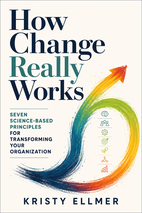
Julia Dhar's How Change Really Works reveals why 70% of organizational transformations fail and offers a seven-principle framework—drawn from behavioral science—for closing the hidden "change distance" between leaders and employees. Written for senior executives, it treats change as a product and employees as customers, providing a structured playbook from deciding to end a transformation.
Feature
Insta.Page
Blinkist
Shortform
How Change Really Works
✓
✕
✕
Summary Depth
Full Chapter-by-Chapter
15-min overview
Section-by-section guides
Audio Narration
✓
✓
✓
Visual Mindmaps
✓
✕
✕
AI Q&A
✓
✕
✕
Quizzes
✓
✕
✕
PDF Downloads
✓
✕
✓
Price
$89.99/yr
$146/yr (PRO)
$199/yr
*Competitor data last verified July 2026.
1 Page Summary
In How Change Really Works, Julia Dhar addresses the persistent failure of most organizational transformations—roughly 70 percent of which don't deliver—by identifying the core problem as a hidden "change distance" between leaders and employees. The book's central thesis is that leaders must fundamentally reframe their role: rather than designing change and pushing it onto employees, they should treat change as a product and employees as the customers. The seven principles—get true agreement, not false alignment; increase agency; earn take-up; understand emotions through feedback; use rituals; share stories and symbols; and create momentum—are drawn from behavioral science and psychology, offering a systematic alternative to common pitfalls like the false consensus effect, the IKEA effect, and fundamental attribution error.
What makes this book distinctive is its integration of rigorous research with concrete, practical guidance. Each chapter opens with a vivid organizational case—from Pandora's hidden 46 priorities to Etsy's blameless postmortems and Brunello Cucinelli's humanistic capitalism—that illustrates the principle in action. The book then provides specific frameworks and diagnostics, such as the COM-B model for diagnosing take-up failures, the seven conditions needed for behavior change, and a detailed five-phase playbook (from deciding to change through ending the change). The author avoids generic advice by showing exactly how executives can move from vague aspirations to specific, shared commitments, and by emphasizing that the messy middle—six months to two years in—is where transformations either succeed or collapse.
The intended audience is senior leaders and executives responsible for driving significant organizational change, though the principles are equally applicable to smaller programs. Readers will gain both a diagnostic lens for understanding why past changes failed and a structured playbook for executing future ones. The book's value lies in its insistence that change isn't about overcoming resistance through force of will, but about deliberately designing the conditions—rituals, agency, psychological safety, and earned trust—that make new behaviors feel natural rather than imposed. By the end, readers understand that the choice to change is real, but success depends on treating the human dimension as the primary infrastructure of transformation.
Introduction: The Distance between Us (and Them)
Overview
The opening of this chapter reveals a startling divide: when asked about an unspecified change, 68 percent of executives felt positive compared to 45 percent of employees, and the gap only widened on questions of likelihood of success and who matters most. This invisible separation—the change distance—is like a crackling phone line where leaders speak clearly but employees hear static, and both sides assume the connection is better than it is. Executives tend to be more positive because they’ve often benefited from past changes, their identities are tied to leading change, and they’re financially incentivized. Many also fall victim to the false consensus effect, assuming their excitement is universal, which leads to risky shortcuts that widen the gap—what the authors call the mathematics of misalignment.
A powerful reframing flips the usual perspective: change is the product, and employees are the customers. Leaders must work harder to make change natural rather than pushing resistance. The book was written because most change programs fail—a pattern confirmed from the 1948 Harwood experiments, where imposed changes caused productivity to plummet and workers to quit, through decades of research showing that about 70 percent of initiatives still don’t deliver. The legendary psychologist Paul Fitts discovered a similar phenomenon in aviation: experienced pilots were crashing not because they were incompetent, but because cockpits were poorly designed. The same is true for organizational change—the real problem isn’t what to do, but how to do it. When the system blocks desired behaviors, it’s a design gap, not a knowledge gap.
To close the distance, the chapter introduces seven principles that address common leadership mistakes: getting true agreement instead of false alignment, increasing agency for everyone involved, earning take-up by lowering barriers, understanding emotions through feedback rather than instinct, using process with rituals to combat decision fatigue, sharing stories and symbols to create meaning, and building momentum throughout the journey. These principles come to life in a practical five-phase playbook covering deciding, planning, starting, persisting, and ending transformations—each phase packed with concrete tactics for the messy middle. The goal is always the same: close the distance between what leaders intend and what employees actually experience.
The Change Game: A Gap in Perception
When thousands of people across fifteen countries were asked how they felt about an unspecified change, the results revealed a striking divide. 45 percent of employees felt positive, compared to 68 percent of executives. On likelihood of success, 49 percent of employees believed it would succeed, versus 72 percent of executives. When asked who matters most, employees picked themselves; executives picked themselves at double the rate. This invisible divide—same company, same change, entirely different experiences—is change distance. It’s like a crackling phone line: leaders speak clearly, but employees hear static. Each side assumes the connection is better than it is, and the distortion is a key reason change efforts fail.
Why Executives Are More Positive
Three theories explain this. First, executives have often benefited from past changes. Second, their identities are tied to leading change. Third, they’re financially incentivized, while most employees aren’t. Many executives also fall victim to the false consensus effect—they assume their excitement is universal. This leads to risky shortcuts: disclosing changes late, underinvesting in retraining, or ignoring what actually matters to employees. Each small miscalibration widens the initial change distance. This is the mathematics of misalignment: small gaps multiply into resistance, disengagement, and failure.
Who Is the Customer of Change?
Here’s a useful reframing. Leaders often see themselves as the customer and employees as the deliverers. But that’s upside down. Change is the product. The customers are the employees. During change, you’re asking for people’s attention, then adoption, then advocacy. The most successful leaders don’t push through resistance; they reverse the burden of adaptation. Instead of asking people to work harder at change, they work harder at making change more natural.
The Harwood Experiments and a History of Failure
Most change programs fail. In 1948, Harwood Manufacturing textile factory showed that when changes were imposed, productivity dropped 35 percent and 17 percent of workers quit. When workers helped design the new procedures, performance rebounded in days, exceeded previous levels by 14 percent, and no one quit. From the 1950s onward, research confirmed this pattern. By the 1970s, only about half of initiatives produced significant improvement. In the 1980s, reengineering failed 50 to 70 percent of the time. John Kotter noted over 70 percent of substantial change efforts fail. A 2013 global survey put the failure rate at 75 percent. Our own research of two thousand transformations over twenty years found no improvement: more than 70 percent of companies still fail to outperform their peers after a downturn. The consequences are enormous—wasted potential, exhaustion, turnover, and scar tissue. Yet 25 percent of transformations succeed. The secret is knowable, repeatable, and rooted in the science of how human beings change.
When the Cockpit Fights Back
During World War II, psychologist Paul Fitts investigated why experienced pilots were making catastrophic errors. He found that pilots were crashing because of poor cockpit design—controls looked alike, instruments were placed counterintuitively. His recommendations transformed aviation safety. The lesson for organizational change: most transformations fail not because the strategy is wrong, but because the cockpit is. The issue isn’t what to do, but how to do it.
The Real Problem: What to Do vs. How to Do It
When employees know what needs to happen but feel the system is working against them, the problem is a design gap, not a knowledge gap. Executives set goals without understanding complexity. Organizational structures block timely decisions. Metrics and incentives contradict each other. This is the lesson of Paul Fitts: technology evolves, but human behavior remains the stubborn center of every change effort. Successful change doesn’t force new behaviors onto people; it builds environments where those behaviors emerge naturally through design, incentives, and nudges.
The Seven Principles That Close the Distance
First, get true agreement, not false alignment. Second, increase agency, not just involvement. Third, expect take up to be earned, not automatic. Fourth, understand emotions through feedback, not instinct. Fifth, use a process with rituals, not reactions. Sixth, share stories and symbols, not just dollars. Seventh, create momentum throughout, not just at the start.
A Practical Roadmap for the Messy Middle
Part Two turns these principles into concrete practices across five phases: deciding, planning, starting, persisting, and ending. Each phase details what effective leaders actually do—how they select initiative owners, sequence wins, structure rituals, and measure emotions. The focus is relentlessly pragmatic, showing how a small gap can send an entire effort off course, and how those missteps can be prevented or recovered from. Whether you’re launching a major transformation or stuck in the middle, every principle and tactic is designed to close the distance between what leaders intend and what employees experience.
Key Takeaways
Change fails not because people don't know what to do, but because the environment isn't designed to support new behaviors.
Seven principles address common leadership mistakes: true agreement, agency, earning take-up, emotional feedback, ritualized processes, stories and symbols, and sustained momentum.
Success comes from understanding real human behavior—our capabilities, emotions, and decision-making limits—and building systems around them.
The book offers a practical five-phase playbook for planning, executing, and persisting through change, with tactics for every stage of the journey.
Key concepts: Introduction: The Distance between Us (and Them)
1. Introduction: The Distance between Us (and Them)
💡 Try clicking the AI chat button to ask questions about this book!
1 Get True Agreement, Not False Alignment
Overview
The Pandora story opens the chapter not as a simple success tale, but as a warning. When Alexander Lacik took over as CEO, he discovered that a transformation program everyone believed was on track actually hid forty-six separate priorities beneath its tidy surface. The executive team thought they were aligned. They were anything but. This reveals the core problem: false alignment—the dangerous gap between appearing to agree and truly being on the same page. In one memorable exercise, thirteen executives at an energy company each wrote a completely different answer about how their organization would change after a sale, and every single one was genuinely shocked to discover the others didn't share their vision.
When leaders lack a shared, specific understanding, the teams below suffer three predictable fates: paralysis (endless talk, no action), hyperactivity (motion without progress as teams try to satisfy every executive at once), and tunnel vision (charging full speed in the wrong direction). There's also the peculiar Abilene paradox, where everyone agrees to a transformation nobody actually wants, simply because each person assumes everyone else desires it.
Why does false alignment happen so persistently? Three root causes emerge. First, the false consensus effect makes leaders overestimate how much others share their views—two executives both say "margin improvement," but one means raising prices while the other means lowering costs. Until they get specific, they assume harmony. Second, affective forecasting error leads people to overestimate how unpleasant disagreement will be, so they pretend to agree to avoid imagined conflict. Third, leaders know they disagree but defer resolution, believing "we'll sort out details later"—a debt that compounds into wasted effort and confusion.
Reaching true agreement requires a deliberate five-step process. Start by setting clear parameters: define the question precisely and decide how decisions will be made (will the CEO decide alone, or must everyone consent?). Next, provoke an early exchange by making the case for change in writing—specific enough that colleagues have something real to disagree with—and invite dissent explicitly, asking "What could go wrong?" rather than "What do you think?" Then create space for quality debate, ideally in one-on-ones where executives can absorb the proposal at their own pace, ask honest questions, and name disagreement when it exists. When the moment is right, move to a formal verdict: ask for each individual's agreement, not the group's, and document the decision in simple terms with a physical ritual to underscore unity. Finally, send a unified message so that every team across the organization hears the exact same story.
Even after this process, some disagreement may remain. You have four options: disagree again with persistence (a single minor concession can unlock agreement); subtract and defer controversial parts to start with a smaller change; offer an attractive exit for those who genuinely cannot support the plan; or, as a last resort, proceed with a plan despite disagreement—only when external forces compel action, and while making resolution the top priority.
The chapter closes with Pandora's successful turnaround under Lacik, who focused on just three foundational agreements: clear priorities reduced to three major themes, a single success metric (like-for-like revenue growth), and brand clarity (jewelry that gives a voice to people's loves). The lesson is clear: a few sharp, specific, genuinely agreed-upon commitments beat a dozen workstreams on paper every time.
Key Takeaways
False alignment (behaving as if agreed when not) leads to paralysis, hyperactivity, or tunnel vision.
The five-step process to reach true agreement: set clear parameters, provoke early exchange, have quality debate, come to formal verdict, send unified message.
If disagreement remains, try again, subtract/defer, offer an exit, or (as last resort) proceed with a plan to win over dissenters.
Pandora’s success shows that focusing on a few clear, agreed priorities, a single metric, and a shared purpose can turn a turnaround from paper to reality.
Key concepts: 1 Get True Agreement, Not False Alignment
2. 1 Get True Agreement, Not False Alignment
The Problem of False Alignment
Forty-six hidden priorities at Pandora
Executives shocked by differing visions
Three fates: paralysis, hyperactivity, tunnel vision
Set clear parameters: define question and decision method
Provoke early exchange: make case in writing, invite dissent
Create space for quality debate in one-on-ones
Formal verdict: ask each individual, document with ritual
Handling Remaining Disagreement
Disagree again with persistence and minor concessions
Subtract and defer controversial parts
Offer an attractive exit for dissenters
Proceed despite disagreement as last resort
Pandora's Turnaround: Three Key Agreements
Clear priorities reduced to three major themes
Single success metric: like-for-like revenue growth
Brand clarity: jewelry for people's loves
2 Increase Agency, Not Just Involvement
Overview
When Ericsson set out to transform for the 5G era, Senior Vice President Moti Gyamlani and digital leader Igor Maurell faced a challenge that had nothing to do with technology. The real obstacle was skepticism from 40,000 employees who naturally protect their legacy. Maurell realized people don't resist change itself—they resist change imposed on them. His solution was to generate agency, the capacity to make choices and act on them. In any large transformation, ambiguity is inevitable, and when employees face those gray areas, leaders need them to decide and act in the spirit of the change, not wait for instructions. That is a high-agency mindset in action. As grocery executive Megan Shaffer put it, employees must own their behaviors and their role in the transformation.
The typical alternatives fail. Designing changes in isolation and handing them down triggers the same brain regions as physical pain. The opposite approach—surveys, focus groups, town halls—often feels like a box-ticking exercise. Harvard’s Michael Norton warned that labor which is undervalued is worse than never having been involved at all. Behavioral science offers a better way through the IKEA effect: people place significantly higher value on things they’ve built themselves. In one study, students who assembled an IKEA box were willing to pay 63% more for it. Laura Kohler of Kohler Company observed that when people help create the future they’ll be responsible for, they invest far more in its success.
Maurell put this into practice with a bold strategy. He gave handpicked employees genuine co-ownership of a new digital business platform, assigning them full-time from Sales, Operations, Finance, and Delivery. He gathered thirty to forty respected employees from different regions for workshops, treating these sessions as the start of a long-term relationship. The twist was financial: he charged a small, symbolic fee for the platform’s development and maintenance, creating a business-led, co-ownership model. As he explained, if something is free, there’s no incentive to make it work. The payoff was dramatic—teams across Asia, the United States, and Europe reported 30 to 50 percent improvements in processes, with lead times dropping from nineteen days to just one or two.
Since not every employee can weigh in on every design decision, leaders need a scalable approach. The solution is offering three distinct experiences: experiences of decision-making for those most exposed to the change, giving them real authority within clear boundaries; experiences of influence for a broader group, where leaders ask for ideas and then demonstrate how that input shaped decisions; and experiences of representation for everyone else, ensuring employees see that someone they trust has a seat at the table. Insurance executive Katerina Guerraz recalled receiving 250 emails from employees volunteering to help with a turnaround—enthusiasm is a resource, not a burden. What matters is not getting people involved in change, but giving them the real capacity to make choices and act on them. Asking for ideas backfires if you don’t demonstrate that you’re listening, and true high-agency mindsets emerge when people make genuine contributions and invest effort, making them value the outcome even more.
Key Takeaways
Genuine agency means giving people real decision power and ownership, not just a voice.
Financial co-ownership, even symbolic, creates powerful incentives for adoption and commitment.
The IKEA effect applies to organizational change: effort invested increases perceived value.
Scalable agency requires offering different experiences: decision-making for a few, influence for many, and representation for everyone.
Key concepts: 2 Increase Agency, Not Just Involvement
3. 2 Increase Agency, Not Just Involvement
The Core Problem: Resistance to Imposed Change
People resist change imposed on them, not change itself
Imposed changes trigger same brain regions as physical pain
Skepticism from employees protecting legacy is a major obstacle
Surveys and town halls often feel like box-ticking exercises
The Solution: Building Agency Through Ownership
Agency is the capacity to make choices and act on them
High-agency mindset means deciding in spirit of change
IKEA effect: people value what they build themselves by 63%
Co-ownership creates investment in success
Practical Implementation: Ericsson's Co-Ownership Model
Handpicked employees given genuine co-ownership of platform
Full-time team from Sales, Operations, Finance, Delivery
Symbolic fee charged for development and maintenance
Resulted in 30-50% process improvements and faster lead times
Scalable Agency: Three Distinct Experiences
Decision-making experience for those most exposed to change
Influence experience for broader group with real input
Representation experience for everyone via trusted delegates
Asking for ideas backfires if you don't demonstrate listening
Key Principles for Leaders
Give real decision power and ownership, not just a voice
Financial co-ownership, even symbolic, drives commitment
Effort invested increases perceived value (IKEA effect)
Enthusiasm is a resource, not a burden to manage
3 Expect Take Up to Be Earned, Not Automatic
Overview
In 2010, Etsy faced a crisis: a massive surge in sales was causing outages that hurt both the company and the millions of small businesses it served. New VP John Allspaw knew he couldn’t just fire the engineers responsible—that would create a culture of fear where mistakes were hidden, not learned from. The real challenge was getting people to voluntarily share their errors and insights, a problem he recognized as one of take up. Take up is the behavioral gap between what leaders want and what people actually do. When transformations fail, leaders often blame employee resistance, but that’s a classic fundamental attribution error—overestimating personal flaws and underestimating situational barriers. Even when change is clearly beneficial, take up is surprisingly low. Successful leaders, like good product managers, earn take up by removing obstacles rather than assuming compliance.
To understand why people don’t adopt a new behavior, you can use the COM-B model, which breaks behavior down into three elements: Capability (can I do it?), Opportunity (does my environment allow it?), and Motivation (am I inclined to do it?). From that, seven specific conditions must all be met for someone to change: they need knowledge and skills (capability), they need enough time, resources, and permission (opportunity), and they must believe there’s something to gain and little to lose (motivation). For a single employee, all seven must be present; for an organization, the majority must follow suit. The leader’s job is to systematically diagnose which barriers are blocking take up.
That diagnosis follows a five-step iterative process. First, define whose behavior needs to change—be specific, even naming people. Second, specify exactly what the new behavior should be—what to start or stop doing. Third, identify barriers by working through the seven conditions, ideally using employee feedback. Fourth, act to minimize each barrier with concrete actions, weighing cost and effectiveness. Fifth, measure take up and collect feedback continuously, repeating steps three through five at least monthly, since new habits take about 66 days to stick.
Etsy’s solution for its infrastructure problem was a classic example. Allspaw identified the key barrier: engineers had something to lose—fear of blame. To lower that motivation barrier, he introduced blameless postmortems. The focus shifted from “who caused the outage?” to “how did it happen?” Engineers were encouraged to self-report mistakes, triggering a formal debrief, and the most surprising error even won an annual award. This didn’t let anyone off the hook; rather, it held them accountable for preventing recurrence instead of assigning blame. The result was genuine buy-in: engineers voluntarily helped make the platform safer, and Etsy’s reliability improved, supporting its growth to $12.6 billion in sales by 2024. The lesson is that you cannot assume people will automatically adopt a change—you have to prove it’s worth their effort by systematically removing barriers. When take up is low, don’t blame character flaws; look for knowledge gaps, skills gaps, time constraints, resource shortages, permission confusion, lack of incentive, or fear of loss. Then use the five-step process to earn that take up—because it’s never automatic.
Etsy's Infrastructure Challenge
In 2010, Etsy faced a 74% surge in gross merchandise sales, straining its digital platform. Outages disrupted not only the company but also the millions of small businesses relying on its marketplace. John Allspaw, newly recruited as VP of Technical Operations, was tasked with making the platform more robust. He rejected the traditional "bad apple" approach of firing engineers for errors. Instead, he recognized that a culture of fear would be counterproductive—it would discourage engineers from admitting mistakes, preventing the root-cause analysis needed to avoid future failures. The real puzzle was how to get engineers to voluntarily share their errors and insights, a problem of take up.
The Take Up Problem
Take up is the behavioral challenge of getting people to do what you want them to do—whether it's customers buying a product or employees adopting new processes. In failed transformations, low take up is a consistent culprit. Leaders often blame employee resistance or culture, but this is a classic fundamental attribution error: overestimating personal factors and underestimating situational ones. Employees are not deliberately obstructive; they are human. Even when change is objectively beneficial (e.g., claiming tax credits or improving health after a heart attack), take up rates are surprisingly low. Successful leaders, like good product managers, earn take up by anticipating and removing obstacles—just as Netflix removes friction from signing up.
The COM-B Framework
Behavioral scientists Susan Michie and colleagues developed the COM-B model, which explains behavior as the interaction of three elements:
Capability – Psychological and physical capacity (knowledge and skills). "Can I do it?"
Opportunity – External factors that enable or prompt behavior (time, resources, permission). "Is my environment letting me do it?"
Motivation – Brain processes that energize and direct behavior (inclination, gains, losses). "Am I inclined to do it?"
Seven Conditions for Take Up
The broad COM-B concepts are broken into seven specific conditions—and corresponding barriers—that must all be met for employees to change:
| Category | Conditions for Take Up | Barriers to Take Up |
|----------|------------------------|----------------------|
| Capability | People have knowledge they need | Knowledge gaps |
| | People have skills they need | Skills gaps |
| Opportunity | People have enough time | Time constraints |
| | People have enough resources (money, people, tools) | Resource constraints |
| | People have permission they need | Permission gaps |
| Motivation | People believe there is something to gain | Little to gain |
| | People believe there is little to lose | Something to lose |
For a single employee to change, all seven conditions must be present. For an organization to change, the majority must follow suit. Leaders must systematically diagnose which barriers are present.
Five Steps for Earning Take Up
The process is iterative:
Define whose behavior needs to change. List specific names and roles.
Specify the expected behavior change. Exactly what should they start or stop doing?
Identify barriers to new behaviors. Work through the seven barriers, ideally informed by employee feedback.
Act to minimize barriers. For each barrier, take concrete actions. Estimate cost and effectiveness; implement those with acceptable ROI.
Measure take up and collect feedback. Use surveys, data (e.g., log-ins), and establish a feedback loop. Repeat steps 3–5 at least every month, as new behaviors typically take 66 days to become automatic.
Etsy's Solution: Blameless Postmortems
Allspaw identified the key barrier: engineers had something to lose—fear of blame and reprisal. To lower this motivation barrier, he introduced the practice of blameless postmortems. The focus shifted from "who caused the outage?" to "how did it happen?" The process assumed that everyone comes to work to do a good job. Engineers were encouraged to self-initiate a "PSA" when they made a mistake, triggering a formal debrief. Allspaw even gave an annual award (a three-armed knitted sweater) to the engineer with the most surprising error. The result: engineers became enthusiastic about helping the company avoid future errors, and the platform's reliability improved. As Allspaw argued, blameless postmortems didn't let engineers off the hook—they held them accountable in a way that actually prevented recurrence.
Etsy’s journey demonstrated that a culture of blameless postmortems didn't just happen because leaders announced it. Engineers were still held accountable—not for assigning blame, but for actively making the platform safer. This distinction was crucial. By earning trust through a process that focused on learning rather than finger-pointing, Etsy cultivated genuine buy-in. The company’s subsequent growth, reaching $12.6 billion in annual gross merchandise sales by 2024, wasn’t solely due to this practice, but it reflected a workforce aligned around shared goals. The lesson was clear: you cannot assume people will automatically adopt a change—you have to prove it’s worth their effort.
Take up, then, is the measure of whether employees actually do what you’ve asked. When it’s low, the instinct is often to blame individuals—their personality, their resistance, their lack of commitment. That’s the fundamental attribution error at work, and it’s a trap. Earning take up means recognizing that failure to adopt change is typically rooted in barriers, not character flaws. Those barriers fall into seven categories: knowledge gaps (don’t understand what’s needed), skills gaps (don’t know how to do it), time constraints (too busy), resource constraints (lack tools or support), permission gaps (unsure if they’re allowed), the perception of little to gain (no incentive), and the perception of something to lose (fear of negative consequences).
To systematically remove these obstacles, a five-step process works. First, define whose behavior needs to change—be specific about the group. Second, specify exactly what new behavior you expect. Third, identify the barriers preventing that behavior. Fourth, act to minimize those barriers, which might mean providing training, freeing up time, offering resources, clarifying authority, or adjusting rewards. Finally, measure take up and collect feedback, because you can’t improve what you don’t track. This isn’t a one-off exercise; it’s an ongoing calibration to ensure the change sticks.
Key Takeaways
Take up isn't automatic—leaders must actively remove barriers rather than blame individuals.
Seven common barriers block adoption: knowledge, skills, time, resources, permission, perceived lack of gain, and perceived risk of loss.
A five-step removal process transforms intentions into action: define who, specify behavior, identify barriers, act, measure.
Key concepts: 3 Expect Take Up to Be Earned, Not Automatic
4. 3 Expect Take Up to Be Earned, Not Automatic
The Take Up Problem
Behavioral gap between leader intent and employee action
Leaders commit fundamental attribution error blaming resistance
Even beneficial changes have surprisingly low take up
Successful leaders earn take up by removing obstacles
COM-B Model for Behavior Change
Capability: psychological and physical capacity to act
Opportunity: external environment enabling the behavior
Motivation: inclination driven by gains and losses
Seven Conditions for Take Up
Knowledge and skills required for capability
Time, resources, and permission for opportunity
Belief in gains and minimal losses for motivation
All seven must be met for individual change
Five-Step Diagnostic Process
Define whose behavior needs to change specifically
Specify exact new behavior to start or stop
Identify barriers using seven conditions and feedback
Act to minimize barriers and measure take up monthly
Julia Dhar is a behavioral economist and managing director at the professional services firm BCG, where she leads the firm's behavioral economics practice. She is best known as the author of *The Decision Maker: The Power of Choice in a World of Overwhelm*, which draws on her expertise in applying behavioral science to improve personal and organizational decision-making. Dhar also gained recognition as a global TED speaker and a former World Champion debater, frequently advising leaders on strategy, innovation, and communication.
Frequently Asked Questions about How Change Really Works
What is How Change Really Works about?
The book reveals why most change efforts fail and provides a behavioral science-based framework for making transformation succeed. It introduces the concept of 'change distance'—the invisible gap between leaders and employees—and offers seven principles to bridge it, such as getting true agreement, increasing agency, and creating momentum. The second half of the book delivers a practical five-phase playbook covering everything from deciding to change to ending it well, emphasizing that leaders must treat employees as customers and earn their buy-in.
Who is the author of How Change Really Works?
Julia Dhar is a behavioral scientist and managing director at BCG, where she leads the firm's behavioral science practice. She draws on decades of research and real-world case studies from companies like Etsy, Heineken, and Delta to illustrate how applying psychological insights can dramatically improve change outcomes. Her expertise lies in translating academic findings into practical, actionable strategies for leaders.
Is How Change Really Works worth reading?
Absolutely—it offers a rigorous, evidence-based alternative to the vague advice that plagues most change management literature. The book doesn't just diagnose why transformations fail (false alignment, low agency, emotional gaps) but provides concrete tools like the COM-B model, ritual-based processes, and the IKEA effect that leaders can apply immediately. Any executive tired of seeing 70% of change initiatives underdeliver will find the insights both refreshing and immediately useful.
What are the key lessons from How Change Really Works?
Three critical lessons stand out: First, 'false alignment' is deadly—leaders must secure genuine, specific agreement rather than assuming consensus, or teams will suffer paralysis, hyperactivity, or tunnel vision. Second, employees don't resist change itself but change imposed on them; increasing their agency through the IKEA effect and bottom-up planning dramatically boosts ownership. Third, momentum must be actively sustained using the progress principle—celebrating tiny wins—and leaders must earn take-up by removing situational barriers rather than blaming resistance.
📚 Explore Our Book Summary Library
Discover more insightful book summaries from our collection






![The Explosive Child [Sixth Edition] by Ross W. Greene PhD - Book Summary](/_next/image?url=https%3A%2F%2Fapi.insta.page%2Fstorage%2Fv1%2Fobject%2Fpublic%2Fsmall_bookcovers2%2FB08NP52GTW.png&w=3840&q=75)