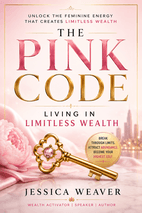
Jessica Weaver's The Pink Code presents a holistic framework for achieving "limitless wealth" through mindset shifts, community building, strategic tax planning, and intentional health practices, specifically designed for women seeking to overcome internal blocks and build multi-faceted lives of purpose.
Feature
Insta.Page
Blinkist
Shortform
Summary Depth
Full Chapter-by-Chapter
15-min overview
Section-by-section guides
Audio Narration
✓
✓
✓
Visual Mindmaps
✓
✕
✕
AI Q&A
✓
✕
✕
Quizzes
✓
✕
✕
PDF Downloads
✓
✕
✓
Price
$89.99/yr
$146/yr (PRO)
$199/yr
*Competitor data last verified July 2026.
1 Page Summary
This book, part of the #pinkfix Powerbooks series, presents a holistic framework for achieving "limitless wealth" that extends far beyond money. Author Jessica Weaver argues that true abundance begins in the mind, treating thoughts as the raw material for a bigger life. The central thesis is that women must stop playing small by addressing internal blocks like fear, guilt, and limiting beliefs, while simultaneously building practical external structures. The book weaves together mindset shifts, community building, strategic tax and estate planning, and intentional health practices, all framed through a lens of feminine empowerment that encourages boldness, authenticity, and healing.
The author’s distinctive approach blends personal vulnerability with actionable, professional advice drawn from her financial practice. She uses vivid metaphors—like the terror of jumping off a ferry for an open-water swim, or the psychological wreckage of lottery winners—to illustrate the gap between what is safe and what is possible. Each chapter addresses a different facet of a woman’s life as an asset, from leveraging thought leadership and storytelling to building a support team that includes healers and creative directors. A core technique is the "Daily Money Practice," a morning ritual of gratitude, mindset resetting, and visualization designed to catch limiting beliefs before they take root.
Intended for women at every age and stage, the book offers readers a blend of mindset transformation and concrete financial strategies. It directly addresses the massive upcoming wealth transfer to women, providing tactics to avoid pitfalls like the "widow tax" and common emotional blocks to accepting more income. Ultimately, readers will gain a practical and spiritual toolkit for moving beyond internal ceilings, healing their relationship with money and power, and designing a multi-faceted life of purpose, from building a "grand vision" to navigating the seasonal rhythms of investing, nurturing, harvesting, and creating.
Chapter 1: The Wealth of Your Thoughts
Overview
The chapter opens with a powerful invitation: to stop playing small and start dreaming bigger. Drawing from Morgan Housel’s insight that “wealth is what you don’t see,” the author challenges the idea that we have to pick one passion or settle for a “reasonable” life. Instead, we’re encouraged to treat our thoughts like the raw material of abundance—and to realize that the biggest wealth we can cultivate is the one we carry in our minds.
Two key influences shape the chapter: Jen DeBuhr’s mentor who constantly said “Go bigger,” and Sara Blakely’s father who celebrated failure as a sign of risk-taking. Both stories illustrate a mindset that reframes limitation as an invitation to expand. The author shares how she applied this “go bigger” challenge to her own scholarship fund, turning a single idea into a multi-event, live-streamed gala that raised $15,000 and counting. The lesson is clear: the only ceiling is the one we place on our own imagination.
The Power of Going Bigger
The chapter’s core technique is a visualization exercise. You’re guided to close your eyes and envision your biggest desires, then asked to notice how often you “undersell yourself” even in that private space. The author calls this a “gut punch” moment—realizing that even when we try to dream, we scale back to what feels practical. The antidote is to visualize again, this time with a body scan: feel the emotions attached to each desire, notice tightness, and consciously release it. This isn’t just daydreaming; it’s programming the subconscious mind to seek out opportunities that align with those feelings.
Harnessing the Reticular Activating System
Here the chapter gets concrete about how the brain works. The reticular activating system (RAS) is a neural filter that decides what sensory information reaches your conscious awareness. Most people let negative thought patterns—“Bad things always happen to me”—run on autopilot, and the RAS dutifully confirms those beliefs. But once you understand this mechanism, you can hijack it. By consciously feeding your RAS with positive, expansive thoughts (like Nora’s mantra “I love when life surprises me and delights me”), you train your brain to notice evidence that supports that reality. Caroline Tanis’s rapid success—getting a radio show in NYC, booking speaking gigs—is offered as proof that this isn’t woo-woo; it’s practical neuropsychology.
The Energy Vibration and the Hawkins Scale
The author introduces David R. Hawkins’s Map of Consciousness to explain why some people feel magnetic and others draining. The scale runs from shame (20) up to enlightenment (700–1,000). Successful people tend to operate at higher frequencies like courage (200) or joy (540), which naturally draws others in. The chapter warns about “psychic vampires” who lower your vibration just by being around them, and encourages setting boundaries around your energy. This isn’t about judging others—it’s about protecting the mental space you need to stay expansive.
A Four-Step Process to Shift Your Energy
To help readers move from low-energy states (fear, guilt, apathy) to higher ones, the author offers a simple practice:
Name the current limiting belief you’re acting on.
Identify the feeling attached to it (fear, shame, unsafety).
Rewrite the belief into something more expansive.
Anchor the new feeling (joy, relief, lightness).
She provides a personal example: the belief that she couldn’t run two companies simultaneously. By shifting it to “I can bring new energy and perspectives to both,” the feelings changed from fear to excitement. The chapter ends with permission to feel negative emotions fully—crying, tension, dread—without suppressing them. Suppression only makes them leak out later, often as physical symptoms. Instead, the practice is to remind yourself: “I am safe. It is safe to feel this good.”
Key Takeaways
Your thoughts are the raw material of your reality; the RAS confirms whatever you feed it, so feed it intentionally.
“Going bigger” isn’t reckless—it’s a discipline of asking “How can I expand this?” at every opportunity.
Energy has a measurable frequency; protecting your vibration is essential to staying in a state of growth.
The four-step process can be used daily to dismantle limiting beliefs and rewire your emotional baseline.
It’s okay to feel low emotions—but don’t suppress them. Name them, feel them, then choose a new thought.
Key concepts: Chapter 1: The Wealth of Your Thoughts
1. Chapter 1: The Wealth of Your Thoughts
The Power of Going Bigger
Stop playing small and start dreaming bigger
Visualize desires without underselling yourself
Use body scan to release limiting emotions
Program subconscious to seek aligned opportunities
Map of Consciousness ranges from shame to enlightenment
Higher frequencies like courage attract success
Protect energy from psychic vampires
Set boundaries to stay expansive
Four-Step Process to Shift Energy
Name the current limiting belief
Identify the attached feeling
Rewrite belief into expansive version
Anchor new feeling like joy or relief
Key Takeaways
Thoughts are raw material; feed RAS intentionally
Going bigger is a discipline of expansion
Protect vibration for growth state
Feel low emotions fully, then choose new thought
💡 Try clicking the AI chat button to ask questions about this book!
Chapter 2: The Wealth of Your Community
Overview
Community is an untapped asset in your personal and professional portfolio, and you need to take deliberate leaps into visibility and connection. A visceral triathlon story—jumping off a ferry into rough, fish-filled waters—shows the panic and self-doubt that arise when you commit to something scary, and how counting strokes, one small step at a time, gets you to shore. That risk-taking is the foundation for building a brand that’s bold, authentic, and magnetic to the right people.
Why Taking the Leap Matters
Without the willingness to jump, you can’t embrace the boldness that defines a memorable brand. Be bold with color, statement, or even controversy—like rebranding finance with pink, or telling clients to “buy the latte.” Boldness attracts attention and signals that you’re not playing it safe. But it’s not just about being loud: it’s about showing struggle and overcoming it, so people see you as both human and aspirational. Ilissa’s advice to “speak from a place of healing” underscores that you need to own your story from a position of strength, not victimhood, to avoid letting critics reopen old wounds.
Storytelling as Your Emotional Anchor
Facts and statistics rarely move women (or anyone) to action—emotions do. When you share your “why” story or a pivotal rock-bottom moment, you plant an emotional anchor in your audience’s subconscious. That anchor influences decisions long after they’ve heard from you, because people decide based on feelings, then justify with logic. The more you repeat your story across platforms, the more anchored you become in their minds, replacing doubt with trust. The goal is to motivate positive action, not scare people with data.
Your Community: An Asset Worth Investing In
Community isn’t just a networking group—it’s a form of wealth that boosts your confidence, reduces isolation, and fuels your brand. Whether you’re a formal connector, an informal host, or a one-on-one relationship builder, your tribe gives you energy that translates into better performance at work. The author shares how her first event (mimosas and chocolate tastings) led to yoga events, martini recipes, and eventually the creation of The Wealth Boutique—a formal community that makes her a stronger advisor, not a distracted one. Your community style should align with who you naturally are, not a forced persona.
Four Pillars to Build Your Community Online
To turn your audience into a thriving community, share consistently in these four areas:
You and your work – your expertise, who you serve, and how you solve problems.
Sneak peeks – behind-the-scenes of your process, conferences, book writing, or podcast prep.
Your personal side – family, hobbies, morning routines (the author’s 5 a.m. treadmill runs inspired others to start running).
Your community itself – show what membership looks like and invite others to join.
From Brand to Iconic Legacy: Media and Ambassadors
Legacy requires two things: long-lasting content (books, podcasts, TV) and the ability to teach your process to others. Ambassadors are leaders who can carry your mission forward while keeping the personal touch. The chapter lays out a Media Roadmap to Thought Leadership:
Stage 1: Become the expert – build your business, showcase on social media, speak.
Stage 2: Spread the word – identify strategic partners and target audiences, appear on podcasts and TV.
Stage 3: Declare – write a book, keynote, launch a bestseller campaign.
Stage 4: Leverage – host a TV show or podcast, open a merch store, write a second book, run your own conferences or retreats.
At each stage, you plant, nurture, and harvest the seeds of your influence.
Reverse-Engineer Your Future Community
Close your eyes and envision your community five or ten years from now. Feel it. Then write down the final step that gets you there, and work backward until you have a clear, step-by-step path. This method works for any goal—not just community building. The chapter closes by inviting you to take that next deliberate leap.
Key Takeaways
Taking a small, scary leap (like jumping into open water) builds the resilience needed to be bold in your brand.
Tell your story from a place of healing, not pain, to avoid losing power to critics.
Community is an asset that increases your energy, confidence, and performance—invest in it intentionally.
Build your online presence around four pillars: your expertise, behind-the-scenes work, personal life, and community invitations.
Legacy requires scalable content (books, media) and trainable ambassadors who can extend your mission.
Use reverse-engineering to turn your vision for your community into concrete action steps.
Key concepts: Chapter 2: The Wealth of Your Community
2. Chapter 2: The Wealth of Your Community
Taking the Leap into Boldness
Risk-taking builds resilience for a memorable brand
Boldness attracts attention and signals authenticity
Share struggle from a place of healing, not victimhood
Storytelling as Emotional Anchor
Emotions drive action more than facts or statistics
Share your 'why' story to plant trust in minds
Repeat your story across platforms to deepen connection
Community as an Asset
Community boosts confidence, reduces isolation, fuels brand
Align your community style with your natural personality
Investing in community improves work performance
Four Pillars for Online Community
Share your expertise and how you solve problems
Offer sneak peeks behind your process and work
Show your personal side like hobbies and routines
Demonstrate community life and invite others to join
Building Legacy Through Media and Ambassadors
Create long-lasting content like books and podcasts
Train ambassadors to carry your mission forward
Follow the media roadmap: expert, spread, declare, leverage
Chapter 3: Thought Leadership for Limitless Impact
Overview
The world’s most impactful leaders weren’t born into greatness—they were forged through struggle, and that underdog archetype is the foundation of true thought leadership. Figures like Sara Blakely, Oprah Winfrey, and Melanie Perkins prove that background, education, or ethnicity don’t determine your ceiling; courage and authenticity do. These women turned years of rejection and self-doubt into billion-dollar platforms used to fund scholarships, empower female entrepreneurs, and donate millions—proof that limitless impact begins when you stop waiting for permission to lead.
What separates dreamers from doers is a distinct psychological makeup. Thought Leaders operate with self-awareness that avoids ego, emotional intelligence that navigates anger and fear strategically, adaptability that sees every obstacle as an innovation opportunity, a vision that draws people in with palpable energy, and resilience that transforms personal pain into a gift for others. These hallmarks—along with deep expertise, transparency, authenticity, presence, and influence—are the traits that allow someone to reshape the world around them rather than accept a conventional role.
But ideas alone aren’t enough; the real work is turning them into movements. That means uniting people under a common mission, using your voice on every platform, finding strategic partners whose values align with yours, and not being afraid to ruffle feathers. The Financial Trendsetters movement was born from a rebellion against an industry that silences women, sparking scholarships, internships, and a platform that gives female advisors visibility. This same principle comes alive in the story of Danette Galvis, a former addict who now flips houses and converted one property into a sober living house for women on the same path she walked. Her impact ripples outward through grants, beds, education, a TV show segment that collects toilet paper and feminine products, and books on finance donated to build foundations for lives marked by poverty—all chronicled in her book, Kingdom RehabHER.
To help readers uncover their own potential, the chapter closes with journal prompts designed to unearth buried strengths: What skills are you shying away from? What traits can you lean into more? Where has pain built your resilience? Where has healing raised your emotional intelligence? What problems tend to excite you? After writing down your vision, the next step is simple—tell one person about it. And remember Jen DeBuhr’s earlier challenge: now that you have a vision, ask how you can go bigger, and who can support you in achieving it. Your most painful experiences can become the foundation for a legacy that heals others, and thought leadership isn’t about playing small—it’s about using your platform to meet real needs, whether through scholarships, grants, sober living houses, or donated books.
The Underdog Archetype
The world’s most impactful leaders weren’t born into greatness—they were forged through struggle. When we admire someone like Sara Blakely, Oprah Winfrey, or Melanie Perkins, we’re seeing the polished version of years of grit, rejection, and self-belief. Their secret? They chose limitless impact over a conventional role. They didn’t wait for permission to lead; they carved out a space that allowed them to reshape the world around them.
Blakely’s journey from selling SPANX out of her apartment to a $1.2 billion exit is the classic underdog story. She wrote down a $20 million goal and wildly overshot it, then used her platform to fund scholarships and female entrepreneurs. Oprah rose from an abusive, poverty-stricken childhood to become a global icon worth $3 billion, pouring millions into education and empowerment. Melanie Perkins knocked on 100 doors before finding investors for Canva, even learning to kitesurf just to network with venture capitalists in Australia. Within 18 months of launch, she and her husband donated $39 million through the Canva Foundation.
These women are proof that background, education, or ethnicity don’t determine your ceiling—courage and authenticity do.
The Traits That Separate Dreamers from Doers
Thought Leaders share a distinct psychological makeup. They’re not just passionate—they’re wired differently:
Self-awareness: They know how others perceive them, but they don’t feed their ego. They operate from quiet confidence, not cockiness. As Mike Donehey writes, be wary of the “second applause”—celebrate your work, then move on.
Emotional intelligence: They don’t suppress anger or fear; they assess it, take a bird’s-eye view, and navigate strategically. They give others space to be heard without defensiveness.
Adaptability: Problems excite them because every obstacle is a chance to innovate. My own teams meet weekly to discuss risks and create protocols, stripping emotions from decision-making.
Vision: They don’t just see the future—they articulate it with energy that draws people in. When you share your vision, trust who comes and who leaves; God is clearing your path.
Resilience: They embrace struggle and turn it into a gift for others. Veronica Rodgers transformed deep grief over multiple losses into a book on legacy planning, helping clients prepare for death with grace.
Other hallmarks include deep expertise, transparency, authenticity, presence, and influence.
Turning Ideas into Movements
Most people stop at the idea phase. Thought Leaders don’t. They unite people under a common mission and aren’t afraid to ruffle feathers. The Financial Trendsetters movement was born this way—a rebellion against an industry that silences women. We created a scholarship fund, opened internships, and gave female advisors a platform to be seen and valued. That mission fuels me daily.
If you’re ready to step into Thought Leadership, you must:
Turn your idea into a mission that challenges, rebels against, or improves the current environment.
Use your voice on every platform—don’t hide your light.
Unite people around that mission.
Find strategic partners whose values align with yours.
These four steps are your launchpad. The rest of the chapter will show you exactly how to take them.
Turning pain into purpose is where thought leadership truly comes alive. The story of Danette Galvis, a Financial Trendsetter who overcame addiction and now flips houses, demonstrates this transformation in action. She didn't just build a real estate business—she converted one property into a sober living house, with more on the way, specifically designed to help women walking the same path she once walked. By offering grants, providing beds, and educating these women for their next steps, Danette turned her struggle into a structured lifeline for others. The ripple effect extends even further: her TV show, SHE Nailed It!, dedicates a segment to collecting everyday necessities like toilet paper and feminine products for these women, while books on finance are donated to build a foundation for lives once marked by poverty. Her book, Kingdom RehabHER, chronicles the full arc of this journey.
This example crystallizes what it means to be a Thought Leader: your impact becomes limitless when you plant your flag in service of something larger than yourself. To help readers tap into their own potential, the chapter closes with a series of journal prompts designed to unearth buried strengths and clarify purpose:
What skills are you shying away from that make you a Thought Leader?
What traits can you lean into more?
Where has pain built your resilience?
Where has healing raised your emotional intelligence?
What problems tend to excite you?
After writing down your vision, the next step is simple: tell one person about it and see where the conversation leads. And remember Jen DeBuhr’s earlier challenge—now that you have a vision, ask yourself how you can go bigger with it, and who can support you in achieving it.
Key Takeaways
Your most painful experiences can become the foundation for a legacy that heals others.
Thought leadership isn't about playing small; it's about using your platform to meet real needs—whether through scholarships, grants, sober living houses, or donated books.
Journaling through specific prompts can unlock the clarity and courage needed to step fully into your role as a Thought Leader.
Once you have a vision, share it with one person and actively seek supporters who can help you scale your impact.
Key concepts: Chapter 3: Thought Leadership for Limitless Impact
3. Chapter 3: Thought Leadership for Limitless Impact
The Underdog Archetype
Leaders forged through struggle, not born into greatness
Background doesn't determine your ceiling
Courage and authenticity are the true drivers
Examples: Blakely, Winfrey, Perkins
Traits of Thought Leaders
Self-awareness without ego
Emotional intelligence for strategic navigation
Adaptability sees obstacles as innovation
Resilience transforms pain into gift for others
Vision and Influence
Articulate vision with palpable energy
Trust who comes and leaves when sharing vision
Deep expertise, transparency, and authenticity
Presence and influence reshape the world
Turning Ideas into Movements
Unite people under a common mission
Use your voice on every platform
Find strategic partners with aligned values
Don't be afraid to ruffle feathers
Real-World Impact Examples
Financial Trendsetters: scholarships and internships
Danette Galvis: sober living houses from addiction
Impact ripples through grants, education, books
Veronica Rodgers: legacy planning from grief
Journal Prompts for Self-Discovery
What skills are you shying away from?
Where has pain built your resilience?
What problems tend to excite you?
How can you go bigger with support?
From Vision to Action
Write down your vision, then tell one person
Stop waiting for permission to lead
Use platform to meet real needs
Painful experiences can become healing legacy
Chapter 4: Limitless Legacy
Overview
Chapter 4 tackles the massive wealth transfer on the horizon: $124 trillion moving to surviving spouses over the next two decades, with women representing 95% of that group. The chapter’s core message isn’t just about financial preparation—it’s about getting your entire being ready for life-changing money. Because let’s be honest, the moment millions hit your account, it’s not all champagne and freedom. There’s guilt, overwhelm, fear of blowing it, and that sneaky self-sabotage that manifests as overspending or giving it away. The author draws on the sobering statistic of lottery winners ending up in bankruptcy to drive home that your mindset is the number one risk to your wealth. The other major risks? Taxes, long-term care expenses, and legalities.
The Real Cost of Doing Nothing on Taxes
A tax report from the author’s practice shows a couple on track to pay nearly $1.9 million in taxes over their lifetime and at death. With a strategic shift, that number drops to $461,000. That’s a $1.4 million difference—money you’re choosing to hand over to Uncle Sam by not taking action. The chapter introduces the concept of the “widow tax,” where a woman filing as single after her spouse’s death lands in a tax bracket 30–40% higher than their joint rate. To avoid this, the author recommends reallocating pre-tax retirement money into Roth IRAs and life insurance policies.
The case study of Amy and Tom illustrates the process: consolidate accounts, then annually convert a portion of traditional IRA to Roth IRA, all while managing three tax brackets simultaneously—ordinary income, Social Security taxation, and Medicare premium surcharges. The key is intentional annual planning.
The Inherited IRA Trap
The single most tax-inefficient asset to leave heirs? An inherited IRA. Thanks to the 10-year rule, the entire account must be liquidated within a decade, forcing beneficiaries to pay taxes at potentially high rates. The chapter shares a client who inherited a $500,000 IRA from her father. By transferring that money into a life insurance policy over seven years, the family achieved three goals: tax-free retirement income via policy loans, a $5 million tax-free death benefit for their son, and a massive reduction in overall taxes. The strategy works because contributions are after-tax (like a Roth), grow tax-deferred, and can be accessed as loans.
Long-Term Care: The Silent Wealth Erosion
Long-term care is a risk that hits almost every family. The chapter uses the story of Elaine, who inherited everything and assumed she didn’t need to plan because her family “dies right away.” But her own lifestyle depends entirely on that inheritance. Investing just 10% of her nest egg into a leveraged long-term care vehicle could protect the other 30% from being consumed by care costs. The emotional exchange between a widow and her son—where she felt guilty “spending” $150,000 that could instead give her access to $800,000 in care benefits—highlights why involving adult children in these conversations is so powerful. It reframes the expense as protection, not a loss.
Getting Your Legal House in Order
The chapter warns that 70% of families lose their wealth by the second generation, often due to avoidable taxes, nursing home bills, and family legal battles. A vivid example: a woman on her deathbed created a new will, but her life insurance beneficiary designations overrode it, leaving named family members empty-handed. Attorney fees then ate up much of the estate. The author stresses the need for a proper document checklist: revocable living trust, last will, financial power of attorney, and medical power of attorney. Review every 3–5 years or after major life changes—divorce, births, deaths, special needs diagnoses.
Bringing the Family into the Conversation
The most heartbreaking story is Denise, whose husband made a panicked decision during COVID to sell stocks and move to cash, costing them hundreds of thousands in missed gains. Now she has to live with that choice, having been left out of financial decisions for 30 years. The chapter emphasizes that women are most impacted by these decisions yet often leave them to their spouses. The solution? Involve adult children in planning, create a Money Manifesto to communicate your values about wealth, and ensure your family knows who your advisors are and where your plan lives. The author encourages readers to think bigger: if money weren’t an issue, who would you donate to? What experiences would you gift your family? A limitless legacy isn’t just about preserving money—it’s about using it to impact your community and the world.
Key Takeaways
Your mindset is the #1 risk to inheriting wealth; guilt and overwhelm lead to self-sabotage. Prepare mentally, emotionally, and spiritually before the money arrives.
Proactive tax strategies can save you millions. Get a tax report to see your “optional tax bill”—the amount you’re choosing to pay by doing nothing.
Inherited IRAs are tax bombs for heirs due to the 10-year rule. Consider converting to Roth IRAs or life insurance policies to pass wealth tax-free.
Long-term care costs can devour your estate. Leverage a small portion of assets (e.g., 10%) into a policy that multiplies coverage for care, protecting the rest.
Legal documents must be in place and properly funded. Review every 3–5 years or after major life events. Beneficiary designations trump wills—make sure they align.
Involve your family in estate planning conversations. Use a Money Manifesto to share your values and prevent costly misunderstandings and legal battles.
Key concepts: Chapter 4: Limitless Legacy
4. Chapter 4: Limitless Legacy
Mindset & Emotional Preparation
Wealth transfer: $124 trillion to spouses, 95% women
Guilt, overwhelm, and fear cause self-sabotage
Lottery winners often go bankrupt—mindset is key risk
Prepare mentally, emotionally, and spiritually for money
Proactive Tax Strategies
Strategic shifts can save $1.4 million in taxes
Avoid 'widow tax'—30-40% higher bracket for singles
Convert pre-tax money to Roth IRAs and life insurance
Manage three tax brackets: income, Social Security, Medicare
Inherited IRA & Life Insurance
Inherited IRAs are tax bombs due to 10-year rule
Transfer IRA to life insurance for tax-free growth
Access money via policy loans, avoid high taxes
Example: $500K IRA became $5M tax-free death benefit
Long-Term Care Protection
Long-term care silently erodes estates
Invest 10% of assets to protect remaining 30%
Leverage $150K into $800K in care benefits
Involve adult children to reframe expense as protection
Legal Documents & Family Communication
70% of families lose wealth by second generation
Beneficiary designations override wills—align them
Essential docs: trust, will, power of attorney
Create a Money Manifesto to share values with family
You've reached the end of the free chapters
Next chapter: “Limitless Growth” is locked
Keep reading The Pink Code — and unlock all 600+ book summaries with audio, mindmaps and AI Q&A.
$0.00 due today · 7 days free, then $89.99/year ($7.49/mo) · Cancel anytime before day 7
Jessica Weaver is a historian specializing in early American material culture and the decorative arts. She is the author of "An Archaeology of the English Atlantic World, 1600-1700" and has contributed to scholarly journals on topics like colonial craftsmanship and consumption. Weaver holds a PhD from the University of Delaware and frequently advises museums on period artifacts.
Frequently Asked Questions about The Pink Code
What is The Pink Code about?
The Pink Code challenges women to stop playing small and embrace a mindset of abundance across all areas of life—finances, career, relationships, and personal growth. Drawing on personal stories and examples from leaders like Sara Blakely, the book guides readers through shifting from limitation to 'limitlessness' by cultivating wealth through thoughts, community, thought leadership, and deliberate planning. It also addresses practical topics like building multiple income streams, preparing for the coming wealth transfer, and healing the emotional blocks that keep women from claiming their full power. Ultimately, the book is a blueprint for designing a life of bold vision, resilience, and authentic legacy.
Who is the author of The Pink Code?
Jessica Weaver is a financial advisor and author who helps women break free from limiting beliefs to build wealth and live limitless lives. She shares personal experiences—like launching a scholarship fund that raised $15,000 and training for an Ironman—to illustrate the principles in the book. Her expertise comes from years of working with clients on tax strategy, income diversification, and the mindset shifts needed to handle life-changing money.
Is The Pink Code worth reading?
Absolutely—this book goes beyond typical financial advice to address the emotional and psychological blocks that keep women from reaching their full potential. With relatable stories and actionable exercises, it offers a practical roadmap for transforming your relationship with money, community, and self-worth. Whether you're a high achiever feeling stuck or just beginning your journey, The Pink Code provides the inspiration and tools to stop playing small and start building a life of true abundance.
What are the key lessons from The Pink Code?
One of the core lessons is that wealth begins in the mind: by 'going bigger' in your thinking and visualizing abundance without self-censorship, you unlock possibilities you previously dismissed. Another key takeaway is the importance of community—taking bold leaps into visibility and building a supportive network of people who share your vision. The book also emphasizes diversifying income streams, healing your money stories (especially those inherited from childhood), and treating your health with the same strategic planning as your finances. Finally, it teaches that limitlessness is a daily practice, requiring forgiveness, self-awareness, and a willingness to show up for the inner work even on the hard days.
📚 Explore Our Book Summary Library
Discover more insightful book summaries from our collection