Chapter 1: The Truth about Relativity: Why Everything Is Relative—Even When It Shouldn’t Be
Chapter 1 of 4
0:000:00
EN
1x
Voice
PDF
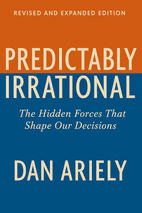
Predictably Irrational, Revised and Expanded Edition
by Dan Ariely
What is the book Predictably Irrational, Revised and Expanded Edition about?
Dan Ariely's Predictably Irrational, Revised and Expanded Edition reveals the systematic irrational biases driving our decisions through clever experiments, exploring concepts like the power of free and anchoring. It's essential for anyone in business or policy seeking to understand real human behavior.
Feature
Insta.Page
Blinkist
Shortform
Summary Depth
Full Chapter-by-Chapter
15-min overview
Section-by-section guides
Audio Narration
✓
✓
✓
Visual Mindmaps
✓
✕
✕
AI Q&A
✓
✕
✕
Quizzes
✓
✕
✕
PDF Downloads
✓
✕
✓
Price
$89.99/yr
$146/yr (PRO)
$199/yr
*Competitor data last verified July 2026.
1 Page Summary
In Predictably Irrational, Dan Ariely challenges the classical economic assumption that humans are fundamentally rational decision-makers. Through a series of clever and often humorous experiments, he demonstrates that our choices are systematically and predictably influenced by a host of irrational biases. Key concepts explored include the power of "free" (how $0.00 can cause us to make terrible decisions), the effect of social and market norms on our behavior, and the influence of arbitrary anchors on our perception of value.
The book builds upon the foundation of behavioral economics, a field that gained prominence in the late 20th century through the work of psychologists like Daniel Kahneman and Amos Tversky. Ariely's work, however, brought these ideas to a wider public by grounding them in relatable, everyday scenarios—from the pain of paying with cash versus credit to the irrational escalation of commitment in our personal and professional lives. He shows that these mental shortcuts are not random flaws but are consistent patterns that can be understood and even anticipated.
The lasting impact of Predictably Irrational is its profound influence on how we understand human behavior in economics, business, and public policy. It has empowered marketers, product designers, and policymakers to design systems that account for—and sometimes counteract—our innate irrationalities. By revealing the hidden forces that shape our decisions, the book provides readers with a more accurate lens for viewing their own behavior and the world around them, ultimately arguing that understanding our irrationality is the first step toward making better choices.
Chapter 1: The Truth about Relativity: Why Everything Is Relative—Even When It Shouldn’t Be
Overview
Humans often struggle to assess value in absolute terms, instead relying on relativity to make decisions, as Dan Ariely discovered with the Economist's subscription offer. The inclusion of a print-only option priced identically to a combined print-and-Internet package made the latter seem irresistibly superior, even though no one chose the decoy. This illustrates how we lack an internal value meter and depend on comparisons to determine worth, whether evaluating cars, speakers, or life goals. Context shapes our judgments profoundly; we frequently don't know what we want until we see it alongside alternatives, much like a pilot using runway lights for guidance.
Experiments at MIT revealed that removing the decoy shifted choices dramatically, with more students opting for the Internet-only subscription instead of the combined package, highlighting how even unselected options can irrationally steer decisions. A simple visual of a circle appearing smaller or larger based on surrounding circles mirrors this effect, showing how our minds instinctively evaluate everything from objects to experiences through relative comparisons. This principle extends to real estate, where a colonial home needing a new roof makes a similar but flawless one stand out, and to romance, where adding a decoy like "Rome without free breakfast" simplifies choosing between destinations.
In dating scenarios, MIT students overwhelmingly selected a "regular" person when a slightly distorted version served as a decoy, making the undistorted option appear more desirable. Similarly, Williams-Sonoma's introduction of a pricier bread maker boosted sales of the cheaper model, and in social settings, bringing a less attractive friend can enhance one's appeal through contrast, though this risks ethical pitfalls. However, relativity has downsides, such as fueling envy in executive salaries, where public disclosure led pay to skyrocket as CEOs compared themselves to peers, fostering discontent even when the link between salary and happiness is weak.
To mitigate these effects, we can consciously choose reference points, like avoiding open houses beyond our budget or recognizing that saving $7 on a pen feels more significant than on a suit, despite the identical savings. In spending decisions, we often make irrational choices based on narrow comparisons, such as upgrading a car's leather seats while hesitating on a sofa, instead of considering broader uses for money. James Hong's shift from a Porsche to a Prius demonstrates how breaking the cycle of wanting requires moving away from relative judgments.
Reflections on dating caution that while leveraging relativity can be effective, discretion is vital to avoid damaging relationships, as seen when a student's confession undermined a friendship. Travel experiences also show how bonds formed in foreign settings feel intense due to the relative scarcity of options but often fade in familiar environments, reminding us to view such connections with realism. Ultimately, relativity heavily influences financial and social decisions, leading to irrational outcomes when we focus on local comparisons rather than broader perspectives, but by recognizing this bias, we can make more satisfying choices.
The Economist's Pricing Puzzle
While browsing online, Dan Ariely encountered a subscription offer from the Economist that presented three choices: an Internet-only subscription for $59, a print-only subscription for $125, and a combined print-and-Internet subscription for $125. He immediately noticed the oddity—why would anyone choose the print-only option when the combined package was priced identically? This wasn't a mistake; Ariely suspected the magazine's marketers were leveraging a key insight into human psychology. By including the seemingly inferior print-only option, they made the combined deal appear irresistibly superior, guiding customers toward the more profitable choice without them even realizing it.
How Relativity Guides Our Choices
Ariely explains that humans lack an internal "value meter" to assess options in absolute terms. Instead, we rely on relative comparisons to determine what something is worth. For instance, we might not know the exact value of a six-cylinder car, but we recognize it as pricier than a four-cylinder model. In the Economist example, the print-only subscription served as a decoy, making the print-and-Internet bundle look like a steal by contrast. This relative advantage bypasses complex decision-making, as our brains prefer easy comparisons over arduous calculations.
The Role of Context in Decision-Making
Our judgments are deeply influenced by the context in which options are presented. Ariely illustrates that we often don't know what we want until we see it alongside alternatives. Whether it's choosing a racing bike after watching the Tour de France, picking speakers based on comparative sound quality, or even shaping life goals by observing peers, we depend on external reference points. Like a pilot using runway lights to land in the dark, we need these relative markers to navigate decisions comfortably. The Economist's offer cleverly provided such a context, simplifying the choice and nudging readers toward a predetermined outcome.
The MIT Experiment Revealed
When the print-only subscription was removed from the options, the choices of MIT Sloan students shifted dramatically. Without the decoy, 68 students opted for the Internet-only subscription at $59, while only 32 chose the print-and-Internet combo at $125. This change occurred even though no one had selected the print-only option initially, highlighting how the mere presence of a decoy can irrationally steer decisions by making certain alternatives appear more attractive through easy comparisons.
A Visual Metaphor for Relativity
The chapter illustrates this concept with a simple visual: a circle appears smaller when surrounded by larger circles and larger when next to smaller ones, even though its size remains constant. This mirrors how our minds instinctively evaluate options in relation to others, whether it's physical objects, experiences, or abstract ideas. We're wired to compare, and this tendency shapes everything from consumer choices to personal judgments.
Real Estate and Romance Decisions
In a house-hunting scenario, you're presented with three similarly priced homes: one contemporary and two colonials, with one colonial needing a new roof. Most people bypass the contemporary and the flawed colonial, opting for the perfect colonial instead. Why? Because the decoy (the roof-needing colonial) creates an easy comparison, making the similar but superior option stand out. This same logic applies to choosing a honeymoon destination: adding a decoy like "Rome without free breakfast" makes "Rome with free breakfast" seem clearly better than Paris, simplifying a tough decision.
The Dating Experiment at MIT
A fascinating experiment involved MIT students rating photos for potential dates. When presented with a regular photo, a slightly distorted (less attractive) version of it, and another regular photo, participants overwhelmingly chose the "regular" person similar to the decoy 75% of the time. This decoy effect made the undistorted version appear more desirable by providing a direct, unfavorable comparison, much like the colonial house example.
Bread Makers and Social Strategies
The decoy effect isn't limited to big decisions. When Williams-Sonoma introduced a larger, more expensive bread maker alongside their original model, sales of the cheaper machine soared. Consumers, unsure about bread makers, used the decoy to justify choosing the smaller, affordable option. Similarly, in social settings like a singles event, bringing a slightly less attractive or less witty friend can make you appear more appealing by comparison, though this strategy comes with ethical considerations.
The Downside of Relativity: Envy and Salaries
Relativity can lead to dissatisfaction, as seen in executive compensation. When CEO salaries became public, envy drove pay to skyrocket, with CEOs now earning 369 times the average worker. This "keeping up with the Joneses" mentality extends to personal lives, like a doctor abandoning research for Wall Street after comparing his income to peers. The link between salary and happiness is weak, but social comparisons often override rational assessment, fueling unnecessary discontent.
Taking Control of Comparisons
We can mitigate relativity's negative effects by consciously choosing our reference points. For instance, avoiding open houses beyond our budget or focusing on affordable car models prevents unfavorable comparisons. Research by Tversky and Kahneman shows how we irrationally weigh savings: people will drive 15 minutes to save $7 on a $25 pen but not on a $455 suit, even though the $7 saving is identical. By broadening our perspective and recognizing the folly of local comparisons, we can make more rational, satisfying decisions.
Spending Decisions and the Cycle of Wanting
We often make financial choices based on relative comparisons rather than absolute value. For instance, saving $7 on a $495 suit feels insignificant compared to the total cost, leading us to spend it without much thought. Similarly, adding $200 to a $5,000 catering bill seems trivial, yet we might meticulously clip coupons to save 25 cents on a $1 soup can. This relativity extends to larger purchases, like opting for a $3,000 upgrade on leather seats in a $25,000 car while hesitating to spend the same on a leather sofa, even though we'd use the sofa more. The core issue is our tendency to think narrowly in relative terms rather than broadly considering alternative uses for our money, such as books, clothes, or vacations.
James Hong's experience illustrates how to combat this cycle. As a successful entrepreneur, he consciously downsized from a Porsche Boxster to a Toyota Prius, recognizing that chasing ever-more-expensive cars only fuels dissatisfaction. His insight—that wanting escalates with possession—highlights the importance of breaking free from relative comparisons to find contentment.
Reflections on Dating and Relativity
The chapter's dating advice, which suggests bringing a slightly less attractive friend to enhance one's own appeal through contrast, comes with a cautionary tale. A student named Susan successfully used this strategy but later confessed it to her friend while intoxicated, damaging their relationship. The lesson here is to never reveal the rationale behind such invitations, as it can undermine trust and lead to unintended consequences. This underscores how relativity shapes social perceptions and the need for discretion in applying these insights.
Reflections on Traveling and Relativity
A personal anecdote from a book tour in Barcelona reveals how relativity affects human connections. Meeting Jon, a fellow American in a foreign country, created an intense bond due to their shared outsider status. However, upon reuniting in their home environment, the magic faded because the relative context had changed—their companionship was no longer the best alternative amidst familiar faces. This teaches us to recognize that seemingly profound connections in unusual settings might be fleeting, influenced by the relative scarcity of options. Acknowledging this can help manage expectations and avoid disappointment.
Key Takeaways
Relativity heavily influences our financial and social decisions, often leading to irrational choices when we focus on narrow comparisons rather than broader perspectives.
Breaking the cycle of wanting more requires conscious effort to shift away from relative judgments, as demonstrated by James Hong's approach to downsizing.
In social contexts like dating, leveraging relativity can be effective, but it demands discretion to maintain relationships.
Travel-induced bonds may feel intense due to relative circumstances, but they often don't translate to everyday life, reminding us to view such connections through a realistic lens.
Key concepts: Chapter 1: The Truth about Relativity: Why Everything Is Relative—Even When It Shouldn’t Be
1. Chapter 1: The Truth about Relativity: Why Everything Is Relative—Even When It Shouldn’t Be
The Economist's Pricing Puzzle
Three subscription options created a strategic pricing structure
Print-only option priced identically to print-and-Internet package served as a decoy
The decoy made the combined package appear irresistibly superior
Marketers intentionally leveraged human psychology to guide choices
How Relativity Guides Our Choices
Humans lack an internal 'value meter' for absolute assessments
We rely on relative comparisons to determine worth
Decoy options create easy comparisons that bypass complex decision-making
Our brains prefer simple relative judgments over difficult calculations
The Role of Context in Decision-Making
We often don't know what we want until we see alternatives
External reference points shape our judgments and preferences
Context provides relative markers like runway lights for navigation
Comparisons influence choices from products to life goals
Experimental Evidence of Relativity Effects
MIT experiment showed dramatic choice shifts when decoy was removed
Without print-only option, more students chose Internet-only subscription
Unselected options still powerfully influence decision patterns
Visual illusions demonstrate how context affects perception of size and value
Real-World Applications of Relativity
Real estate: flawed homes make similar flawless ones stand out
Dating: decoy profiles make 'regular' options appear more desirable
Retail: high-priced items boost sales of cheaper alternatives
Social settings: contrast effects can enhance personal appeal
Downsides and Ethical Considerations
Relativity fuels envy in executive salary comparisons
Public disclosure of peer salaries can drive compensation inflation
Using relativity in dating risks damaging relationships
Ethical pitfalls exist when manipulating comparisons for advantage
Strategies to Counteract Relativity Bias
Consciously choose reference points and avoid tempting comparisons
Recognize that identical savings feel different in different contexts
Consider broader uses for money rather than narrow comparisons
Break the cycle of relative judgments by shifting perspective
The Psychology of Visual Relativity
Identical circles appear different sizes based on surrounding context
Our minds instinctively evaluate options through comparison rather than absolute assessment
This comparative tendency applies to physical objects, experiences, and abstract concepts
Relativity shapes consumer choices and personal judgments automatically
Decoy Effect in Major Life Decisions
Real estate choices are influenced by decoy options that make similar alternatives stand out
Honeymoon decisions can be swayed by adding inferior versions of attractive destinations
The flawed colonial house serves as decoy that highlights the perfect colonial's superiority
Decoys simplify complex decisions by creating clear comparative advantages
Experimental Evidence of Relativity in Dating
MIT students preferred undistorted photos when presented with distorted decoy versions
The decoy effect increased selection of similar undistorted photos by 75%
Direct unfavorable comparisons make similar options appear more desirable
Physical attraction judgments are heavily influenced by relative context
Consumer Psychology and Social Strategies
Williams-Sonoma used expensive bread maker as decoy to boost cheaper model sales
Consumers use decoys to justify choices when uncertain about product categories
Social settings allow strategic use of less attractive friends to enhance personal appeal
These strategies raise ethical considerations about manipulating comparisons
Negative Consequences of Relativity
Public CEO salary disclosure fueled envy-driven compensation inflation
Executives now earn 369 times average worker due to comparative pressures
Doctors abandon research for Wall Street when comparing incomes to peers
Social comparisons often override rational assessment of personal satisfaction
Strategies for Managing Relativity
Consciously choose reference points to avoid unfavorable comparisons
Avoid exposure to options beyond realistic budget constraints
Recognize irrational weighing of savings across different price contexts
Broaden perspective beyond local comparisons to make more rational decisions
Financial Decision-Making and Relative Value
People evaluate savings relatively rather than considering absolute dollar amounts
Same $7 saving feels significant on $25 pen but trivial on $455 suit
Upgrade decisions vary based on percentage of total cost rather than utility
Narrow relative thinking prevents consideration of alternative uses for money
Breaking the Cycle of Escalating Want
James Hong downsized from Porsche to Prius to escape comparative dissatisfaction
Wanting escalates with possession in relative comparison cycles
Contentment requires conscious rejection of relative comparison traps
Breaking free from social comparison enables more authentic satisfaction
Social Applications and Ethical Considerations
Dating strategy using less attractive friends can damage relationships if revealed
Susan's confession while intoxicated undermined friendship trust
Relativity-based social strategies require discretion to maintain relationships
Social perceptions are shaped by contrast effects that can be ethically problematic
Context-Dependent Human Connections
Intense bonds form in foreign environments due to relative scarcity of connections
Barcelona friendship lost magic when context changed to familiar environment
Profound connections in unusual settings may be fleeting due to relative context
Managing expectations requires recognizing how environment shapes relationship value
The Psychology of Relative Comparison
Our brains are wired to make relative comparisons rather than absolute assessments
This cognitive tendency leads us to focus on narrow comparisons that often distort reality
Relative thinking creates a perpetual cycle of wanting more by constantly shifting our reference points
Breaking the Cycle of Relative Wanting
James Hong's downsizing demonstrates conscious effort required to escape relative thinking traps
Shifting from relative to absolute judgments requires deliberate cognitive reframing
Escaping the 'more' mentality involves recognizing when relative comparisons serve no real purpose
Strategic Use of Relativity in Social Contexts
Dating scenarios show how relativity can be leveraged strategically for advantage
Social relationships require discretion when employing relative positioning tactics
The effectiveness of relative positioning depends on context and relationship dynamics
The Illusion of Travel-Induced Bonds
Intense connections formed during travel are products of relative circumstances
These bonds often fail to translate to everyday life contexts
Travel experiences create artificial comparison frames that magnify emotional intensity
Practical Applications and Limitations
Understanding relativity helps identify when comparisons lead to irrational decisions
The challenge lies in recognizing relative thinking in real-time decision making
Some contexts benefit from relative thinking while others require absolute assessment
💡 Try clicking the AI chat button to ask questions about this book!
Chapter 2: The Fallacy of Supply and Demand: Why the Price of Pearls—and Everything Else—Is Up in the Air
Overview
Imagine a world where the price of pearls isn't dictated by traditional supply and demand but by a masterful marketing strategy. Salvador Assael transformed Tahitian black pearls from unwanted curiosities into luxury must-haves by partnering with high-end jewelers and slapping on exorbitant price tags, proving that human desire often flares up when something seems scarce and exclusive. This idea mirrors how goslings, as Konrad Lorenz discovered, imprint on the first moving object they see, a behavior that parallels human anchoring—where our initial exposure to a price or value shapes all future decisions. For instance, in an MIT experiment, students' social security numbers arbitrarily influenced their bidding on items, with higher digits leading to bids over 300% more than those with lower digits, showcasing how random starting points can dictate perceived worth.
This phenomenon, known as arbitrary coherence, means that while initial anchors might be arbitrary, they create a logical framework for related choices, like consistently valuing a premium wine over a cheaper one once a reference is set. In everyday life, this plays out in housing markets, where people moving from low-cost to high-cost areas often stick to their previous spending habits unless they consciously recalibrate, such as by renting first. The power of first anchors is enduring; experiments with annoying sounds revealed that initial price exposures lingered, affecting later demands even when new anchors were introduced.
Beyond following others in herding behaviors, like joining a crowded restaurant line, people engage in self-herding by repeating their own past decisions. Take Starbucks: that first expensive coffee purchase sets an anchor, and each subsequent visit reinforces it, building a habit where you might upgrade sizes or try new items without questioning costs. Starbucks' strategic design—think European ambiance and unique drink names—shifts anchors away from cheaper alternatives, embedding new price expectations. Similarly, in a poetry reading experiment, students' willingness to pay or be paid was heavily swayed by their initial hypothetical anchors, much like Tom Sawyer convincing friends to pay for the "privilege" of whitewashing a fence.
Economically, this challenges the classic view of supply and demand as independent forces. Instead, suppliers' suggested prices can manipulate demand, reversing causality—market prices themselves shape what consumers are willing to pay. Memory plays a crucial role here; price sensitivity hinges on recalling past costs, not inherent preferences. If people forgot previous prices, tax hikes on essentials like milk would barely affect consumption, as short-term reactions give way to long-term adjustments. This irrationality undermines free market efficiency, where trades might not maximize real utility due to misleading anchors, highlighting a need for regulation in critical sectors like healthcare and education.
Even in personal decisions, such as buying a car, people often rationalize emotional choices after the fact, using tools to justify gut feelings rather than uncovering true preferences. Ultimately, the chapter emphasizes that questioning repeated behaviors and initial anchors can foster more deliberate choices, revealing how deeply anchoring and self-herding influence everything from daily habits to global markets.
The Pearl King's Marketing Strategy
Salvador Assael, son of Italian diamond dealer James Assael, built a fortune by bartering Swiss watches for Japanese pearls after World War II. His pivotal moment came in 1973 when he partnered with Frenchman Jean-Claude Brouillet to market Tahitian black pearls, which initially had no demand. After early failures with unattractive pearls, Assael waited for better specimens and collaborated with Harry Winston to display them in his Fifth Avenue store with exorbitant price tags. He complemented this with glossy advertisements featuring the pearls alongside diamonds and rubies, transforming them into coveted luxury items for New York's elite. This strategy echoed Mark Twain's insight on human desire: making something difficult to attain fuels covetousness.
The Gosling Effect and Human Imprinting
The chapter draws a parallel between goslings' imprinting behavior, discovered by naturalist Konrad Lorenz, and human decision-making. Lorenz found that goslings fixate on the first moving object they see, influencing their long-term attachments. Similarly, humans form "anchors" based on initial exposures, such as the first price we encounter for a product. These anchors shape our future willingness to pay, demonstrating that our brains, like goslings', latch onto early impressions and stick with them.
The MIT Social Security Experiment
To test anchoring, researchers at MIT conducted an auction with MBA students using products like wine and electronics. Students first wrote down the last two digits of their social security numbers and indicated if they'd pay that amount, then placed real bids. Analysis revealed a strong correlation: those with higher-ending digits (e.g., 80-99) bid significantly more—up to 346% higher—than those with lower digits (e.g., 1-20). For instance, the top group bid an average of $56 for a cordless keyboard, while the bottom group bid $16. This showed that arbitrary numbers, like social security digits, can serve as powerful anchors, influencing perceived value without rational basis.
Arbitrary Coherence in Pricing
The experiment highlighted "arbitrary coherence": initial prices are arbitrary (influenced by random anchors), but once set, they create a coherent framework for related decisions. For example, participants consistently bid more for premium items like a 1996 Hermitage wine over a 1998 Côtes du Rhône, showing that anchors establish a logical relative value. Importantly, anchors only take effect when we actively consider a purchase, imprinting that price as a reference point for future choices, much like a bungee cord pulling us back to the original anchor.
Anchoring in Real-Life Decisions
Anchoring extends beyond experiments to everyday life, such as housing markets. Studies found that people moving from inexpensive to moderate cities, like Lubbock to Pittsburgh, don't adjust spending to local prices, instead anchoring to their previous housing costs. Conversely, those from expensive cities like Los Angeles maintain high spending in cheaper areas. Renting for a year helps recalibrate to new markets, showing how persistent anchors are without conscious intervention.
The Enduring Power of First Anchors
Further experiments with annoying sounds tested if anchors persist over time. Participants exposed to low (10-cent) or high (90-cent) anchors for listening to sounds maintained those anchors in subsequent phases, even when new anchors were introduced. For instance, the 10-cent group demanded around 33 cents later, while the 90-cent group demanded 73 cents, proving that first anchors have a lasting impact on future decisions, much like goslings remaining loyal to their first imprint.
From Herding to Self-Herding
The chapter introduces "herding," where we follow others' actions (e.g., joining a restaurant line), and "self-herding," where we base decisions on our own past behavior. Using Starbucks as an example, the first expensive coffee purchase sets an anchor; subsequent visits reinforce this, creating a habit. This self-herding explains how initial, often arbitrary, choices evolve into long-term patterns, influencing everything from daily routines to financial decisions.
The Starbucks Habit Formation
As you repeatedly choose Starbucks over time, each visit reinforces the initial decision, creating a self-perpetuating cycle. You begin to see this behavior as a reflection of your genuine preferences, even though it started with an arbitrary anchor. This "self-herding" leads you to upgrade to larger sizes or explore other menu items without questioning the underlying costs. Starbucks strategically designed its stores to feel distinct from competitors like Dunkin' Donuts, using European-inspired ambience, unique drink names, and high-quality aromas to shift your anchor away from lower-priced alternatives. By making the experience feel novel and premium, Starbucks ensured that customers wouldn't rely on past price references, allowing new anchors to take root and drive long-term loyalty.
The Poetry Reading Experiment
In a classroom setting, students were divided into two groups and given different hypothetical anchors: one was asked if they would pay to attend a poetry reading, while the other was asked if they would require payment to listen. When bidding for actual spots, the initial anchor heavily influenced their responses. Those anchored to paying offered money for the privilege, while those anchored to being paid demanded compensation, despite the ambiguous quality of the poetry. This mirrors Tom Sawyer's manipulation of his friends into paying for the "privilege" of whitewashing a fence. The experiment shows how arbitrary initial impressions can shape subsequent decisions, creating a coherent pattern of behavior based on that first anchor, rather than objective value.
Economic Implications of Anchoring
Anchoring challenges traditional economic models that treat supply and demand as independent forces. Instead, prices suggested by suppliers (like MSRPs or promotional offers) can manipulate consumers' willingness to pay, reversing the assumed causality. For instance, market prices themselves influence demand, as seen in how Starbucks' pricing strategy reshaped consumer habits. This interdependence means that demand isn't a pure reflection of preferences but is often distorted by external anchors set by the supply side.
Memory's Role in Price Sensitivity
Price changes affect demand primarily through memory of past prices, not inherent preferences. If people forgot previous costs, tax-induced price hikes on items like milk or gasoline would have minimal impact on consumption. In the short term, consumers react to price changes by comparing them to anchors, but over time, they adjust to new prices, and consumption may revert to near-original levels. This highlights that demand sensitivity is more about coherence with past decisions than true utility maximization.
Free Market Limitations
The free market's efficiency relies on rational trades that maximize utility, but if decisions are swayed by arbitrary anchors, trades may not reflect real pleasure or value. For example, you might trade something you truly enjoy for a less satisfying item due to a misleading initial anchor. This undermines the idea that free trade always leads to optimal outcomes, suggesting a need for government regulation in essential markets like healthcare and education to protect against irrational behaviors.
Personal Anecdote: Car Buying Decision
When using an online tool to find a car, the rational process recommended a Ford Taurus, which didn't align with emotional desires for a fun, motorcycle-like vehicle. By backtracking and altering responses, the tool eventually suggested a Mazda Miata, justifying the gut feeling with a "rational" veneer. This illustrates how we often rationalize decisions after the fact, using tools to confirm pre-existing inclinations rather than discovering true preferences.
Key Takeaways
Anchors Shape Behavior: Initial decisions, even arbitrary ones, create lasting patterns through self-herding and coherence.
Market Prices Influence Demand: Supply-side factors like advertising can set anchors that dictate consumer willingness to pay, challenging the independence of supply and demand.
Memory Drives Price Reactions: Demand sensitivity is tied to recalling past prices, not inherent preferences, leading to potential inefficiencies in how we respond to changes.
Rationalization Over Rationality: We often use tools and processes to justify emotional decisions, masking true preferences.
Need for Self-Awareness: Questioning repeated behaviors and first decisions can help mitigate irrational influences, encouraging more deliberate choices in personal and economic contexts.
Key concepts: Chapter 2: The Fallacy of Supply and Demand: Why the Price of Pearls—and Everything Else—Is Up in the Air
2. Chapter 2: The Fallacy of Supply and Demand: Why the Price of Pearls—and Everything Else—Is Up in the Air
The Fallacy of Traditional Supply and Demand
Market prices can shape consumer demand rather than just respond to it
Supplier-suggested prices manipulate consumer willingness to pay
Memory of past prices creates price sensitivity, not inherent preferences
Classic economic models fail to account for psychological anchoring effects
The Pearl King's Marketing Strategy
Salvador Assael transformed unwanted Tahitian black pearls into luxury items
Strategic partnership with high-end jewelers like Harry Winston
Exorbitant pricing and glossy advertising created artificial scarcity
Proved that desire flares when items seem exclusive and difficult to obtain
Anchoring and the Gosling Effect
Human decision-making parallels gosling imprinting behavior
Initial price exposures create lasting anchors for future decisions
First impressions shape long-term value perceptions
Anchors persist even when new reference points are introduced
The MIT Social Security Experiment
Arbitrary numbers (social security digits) influenced real bidding behavior
Higher-ending digits led to bids 300%+ more than lower digits
Demonstrated irrational anchoring in economic decision-making
Showed perceived value can be completely detached from rational assessment
Arbitrary Coherence Principle
Initial anchors may be arbitrary but create logical frameworks
Related choices become coherent within the anchored system
Starbucks deliberately designed stores to feel distinct from competitors to shift price anchors
European-inspired ambience and unique branding helped establish new premium price references
Customers begin to see expensive coffee habits as genuine preferences rather than anchored behaviors
Poetry Reading Experiment Insights
Initial hypothetical anchors (paying vs being paid) heavily influenced actual bidding behavior
Arbitrary initial impressions shape subsequent decisions regardless of objective value
Mirrors Tom Sawyer's manipulation, showing how framing creates coherent behavioral patterns
Decisions reflect initial anchors rather than independent assessment of value
Economic Implications of Anchoring
Challenges traditional supply-demand models by showing interdependence between price and demand
Supplier-suggested prices manipulate consumer willingness to pay, reversing assumed causality
Market prices themselves influence demand rather than demand determining prices
Demand reflects distorted preferences shaped by external anchors rather than pure utility
Memory's Role in Price Sensitivity
Price changes affect demand primarily through memory of past prices, not inherent preferences
Consumers react to price changes by comparing them to established anchors
Over time, consumers adjust to new prices and consumption may revert to near-original levels
Demand sensitivity reflects coherence with past decisions rather than true utility maximization
Limitations of Free Market Efficiency
Arbitrary anchors undermine the assumption that trades maximize utility and pleasure
Decisions swayed by misleading anchors may lead to suboptimal trade outcomes
Suggests need for regulation in essential markets to protect against irrational behaviors
Free trade doesn't always lead to optimal outcomes when decisions are anchor-driven
Rationalization in Decision Making
People often rationalize decisions after the fact rather than discovering true preferences
Tools and processes are used to confirm pre-existing inclinations with rational veneers
Illustrated by car buying example where emotional desires were justified through manipulated rational processes
Gut feelings often drive decisions that are later supported by seemingly rational justifications
The Psychology of Anchoring
Initial decisions create cognitive anchors that influence subsequent choices through self-herding behavior
Arbitrary starting points can establish lasting patterns that persist even when circumstances change
Anchors create coherence in decision-making, making us repeat behaviors that align with initial choices
Market Price as Behavioral Driver
Supply-side factors like marketing and presentation can establish price anchors that dictate consumer demand
Traditional supply-demand independence is challenged when prices themselves influence perceived value
Advertising and positioning create reference points that shape willingness to pay
Memory-Based Price Sensitivity
Consumer reactions to price changes depend more on memory of past prices than inherent preferences
Price sensitivity is constructed through recall rather than being an objective measure of value
This memory-driven approach can lead to market inefficiencies and irrational responses to price fluctuations
The Rationalization Process
People use analytical tools and processes to justify decisions that are fundamentally emotional
Post-hoc reasoning masks true preferences and the emotional drivers behind choices
We create narratives that make our decisions appear more rational than they actually are
Overcoming Behavioral Biases
Questioning repeated behaviors and examining first decisions can reveal anchoring effects
Self-awareness helps mitigate irrational influences in both personal and economic contexts
Deliberate examination of decision patterns encourages more conscious and rational choices
Chapter 3: The Cost of Zero Cost: Why We Often Pay Too Much When We Pay Nothing
Overview
This chapter explores the surprising psychological grip that FREE! has on our decision-making, revealing how the allure of zero cost often leads us to make irrational choices that defy logic and value. It begins by illustrating how FREE! acts as an emotional trigger, eliminating the perceived risk of loss and causing us to overlook whether we actually need an item. A classic chocolate experiment demonstrates this effect: when prices shifted to make Hershey's Kisses free, most people chose them over higher-quality Lindt truffles, even though the value difference remained unchanged. This phenomenon isn't confined to money; in a Halloween candy exchange, children overwhelmingly picked a free, smaller Snickers bar over a better deal, showing how FREE! can override clear value calculations.
Businesses have harnessed this power with remarkable success, such as Amazon's free shipping boosting sales and AOL's shift to flat-rate pricing doubling usage, highlighting that the psychological leap from almost-free to completely free is enormous. However, this attraction carries real costs, leading to poor financial decisions like choosing "free" checking accounts with hidden fees or mortgages with higher interest rates, and even influencing major purchases based on insignificant free offers. Beyond money, the zero effect impacts time and health, as people wait excessively for free items or are swayed by "zero calorie" labels despite minimal actual benefits.
Strategically, understanding this allows for positive applications, like making health screenings free to increase participation or eliminating fees to encourage electric vehicle adoption. The discussion extends to social settings, where the pain of paying—a psychological discomfort from spending money—plays a key role. With diminishing sensitivity, each additional dollar causes less pain, making it better for one person to cover a group bill and rotate payments, reducing overall discomfort and strengthening relationships, even if it's not perfectly fair. Contrasting this with rational economic theory, the chapter notes that while standard models assume pure cost-benefit decisions, real behavior often prioritizes free options, underscoring that zero cost operates in a unique psychological category that disrupts logic. Ultimately, the key insights emphasize how the irrational appeal of FREE! and the nuances of the pain of paying shape our choices in ways that transcend simple economics.
The Emotional Power of Zero
Zero isn't just another number—it's an emotional trigger that creates irrational excitement. We've all experienced the pull of FREE! items, whether it's grabbing promotional items we don't need, waiting in long lines for free ice cream, or buying products we wouldn't normally choose just to get something free. This phenomenon occurs because zero cost eliminates the perceived risk of loss—when something is free, we can't lose money, so we often overlook whether we actually want or need the item.
The Chocolate Experiment
Researchers tested this effect using a simple chocolate experiment. When Lindt truffles were priced at 15 cents and Hershey's Kisses at 1 cent, about 73% of customers chose the higher-quality truffle while 27% opted for the Kiss. But when prices shifted to 14 cents for the truffle and FREE! for the Kiss, the results flipped dramatically: 69% now chose the free Kiss, despite the truffle representing better value. This occurred even though the relative price difference between the two chocolates remained exactly the same—only the presence of FREE! changed consumer behavior.
Beyond Monetary Transactions
The allure of FREE! extends beyond money. In a Halloween experiment, children were offered choices between candy exchanges. When presented with a rational choice—trading two Hershey's Kisses for a large Snickers bar versus one Kiss for a small Snickers—nearly all children made the logical decision to get more chocolate. But when the small Snickers was offered for FREE! (with no Kisses required), about 70% of children chose this inferior option, demonstrating how FREE! can override even clear value calculations.
Real-World Business Applications
Companies have leveraged this effect with remarkable results. Amazon discovered that offering free shipping on orders over a certain amount dramatically increased sales, while charging just one franc (about 20 cents) for shipping in France had virtually no impact. Similarly, when AOL switched from pay-per-hour to a fixed monthly fee, usage doubled overnight as customers behaved like they were getting unlimited access for free. These examples show that the difference between almost-free and completely free is psychologically enormous.
Personal and Financial Consequences
This irrational attraction to FREE! can lead to poor decisions in important areas:
Choosing a "free" checking account that ultimately costs more in hidden fees
Opting for mortgages with no closing costs but higher interest rates
Selecting products based on free gifts rather than actual needs
Even major purchases like cars can be swayed by relatively insignificant free offers
Time and Health Implications
The zero effect applies to non-monetary contexts as well. People will spend 45 minutes waiting in line for free ice cream or fight crowds on free museum days, despite the time cost exceeding the value gained. Similarly, food labels boasting "zero calories" or "zero trans fats" create stronger psychological appeal than virtually identical low-number alternatives, potentially influencing health decisions.
Strategic Use of FREE!
Understanding the power of zero allows for strategic applications in business and social policy. Making critical health screenings free could dramatically increase participation rates. Eliminating (rather than just reducing) fees for electric vehicle registration could boost adoption. The key insight is that zero operates in a different psychological category than other discounts—it's not just cheaper, it's fundamentally different.
The Pain of Paying in Social Settings
When dining with friends, the optimal way to handle the bill isn't splitting it evenly but having one person pay the full amount, with the understanding that roles will rotate over time. This approach stems from the "pain of paying"—a psychological discomfort we experience when parting with money. Interestingly, this pain has two key traits: it vanishes when we pay nothing (like when someone else covers the cost), and it exhibits "diminishing sensitivity," meaning each additional dollar paid causes less discomfort than the one before. Think of it like adding weight to a backpack; the first pound feels heavy, but adding another to a full pack barely registers.
In a group scenario, if four people split a $100 bill equally, each paying $25, everyone feels a significant pain of paying—say, 10 units of pain per person, totaling 40 units for the table. But if one person pays the entire bill, the pain isn't linear: they might feel 10 units for the first $25, 7 for the next, 5 for the next, and 4 for the last, summing to just 26 units. This reduces the group's overall pain by 14 units, making everyone happier in the long run, especially since we all relish "free" meals and can alternate who pays.
Of course, this method isn't perfectly fair—like when one person orders modestly while another indulges in steak and wine, or when group dynamics shift. Yet, the author argues that the emotional benefits of minimizing the pain of paying outweigh the occasional financial imbalance. Sacrificing a few dollars here and there can strengthen friendships and reduce collective discomfort.
Appendix: The Chocolate Experiment and Rational Choice
In the appendix, the chapter contrasts this behavioral insight with standard economic theory using a chocolate selection example. Rational theory suggests we choose based on net benefit: expected pleasure minus the displeasure of cost. For instance, if a Lindt truffle (50 pleasure units) costs 15 cents (15 displeasure units), its net benefit is 35. A Hershey's Kiss (5 pleasure units) at 1 cent (1 displeasure unit) has a net of 4. The truffle wins by 31 points.
When prices drop equally—say, the truffle to 14 cents and the Kiss to free—rational theory predicts no change in preference. The truffle's net becomes 36 (50 - 14), and the Kiss's is 5 (5 - 0), still a 31-point lead. But real-world experiments show people often choose the free Kiss, revealing that "zero cost" has a magnetic pull that disrupts pure cost-benefit analysis. This highlights how our decisions are swayed by the uniqueness of free offerings, something rational models fail to capture.
Key Takeaways
The "pain of paying" decreases with each additional dollar due to diminishing sensitivity, making it better for one person to cover group expenses and rotate who pays.
While not always economically fair, this approach reduces overall psychological discomfort and can enhance social bonds.
Standard economic theory assumes rational cost-benefit decisions, but real behavior often prioritizes "free" options, showing that zero cost has an irrational appeal.
Key concepts: Chapter 3: The Cost of Zero Cost: Why We Often Pay Too Much When We Pay Nothing
3. Chapter 3: The Cost of Zero Cost: Why We Often Pay Too Much When We Pay Nothing
The Psychological Power of Zero Cost
FREE! acts as an emotional trigger that eliminates perceived risk of loss
Zero cost causes irrational choices that defy logic and value calculations
The psychological leap from almost-free to completely free is enormous
FREE! operates in a unique psychological category that disrupts rational decision-making
Halloween candy exchange: 70% of children chose free small Snickers over better deal
Behavior changes dramatically when FREE! is introduced, even when value differences remain constant
FREE! overrides clear value calculations in both adults and children
Business Applications and Market Impact
Amazon's free shipping dramatically increased sales while small charges had no impact
AOL's shift to flat-rate pricing doubled usage as customers behaved like it was free
Companies leverage the psychological difference between almost-free and completely free
FREE! serves as powerful marketing tool that drives consumer behavior
Negative Consequences of Zero Cost Attraction
Choosing 'free' checking accounts with hidden fees that ultimately cost more
Opting for mortgages with no closing costs but higher interest rates
Making major purchases based on insignificant free offers rather than actual needs
Overlooking true costs and value in favor of immediate free benefits
Non-Monetary Applications of Zero Effect
People wait excessively for free items despite time cost exceeding value gained
'Zero calorie' and 'zero trans fat' labels create stronger appeal than low-number alternatives
FREE! influences health decisions through psychological labeling effects
Zero effect extends beyond money to time, health, and other non-monetary contexts
The Pain of Paying and Diminishing Sensitivity
Psychological discomfort from spending money affects decision-making
Each additional dollar causes less pain (diminishing sensitivity)
Group payment strategies can reduce overall discomfort and strengthen relationships
Real behavior often prioritizes free options over rational cost-benefit calculations
Strategic Positive Applications
Making health screenings free increases participation rates
Eliminating fees encourages adoption of beneficial technologies like electric vehicles
Understanding zero cost psychology allows for beneficial behavioral interventions
FREE! can be strategically used to promote positive social and health outcomes
Strategic Applications of Zero Cost
Making health screenings free dramatically increases participation rates
Eliminating electric vehicle registration fees boosts adoption more than price reductions
Zero operates in a different psychological category than other discounts
Free offerings are perceived as fundamentally different, not just cheaper
The Pain of Paying in Social Settings
Pain of paying diminishes with each additional dollar due to diminishing sensitivity
Single person paying full bill creates less total pain than equal splitting among group
Pain disappears completely when someone else pays (zero cost scenario)
Rotating who pays maximizes emotional benefits despite occasional financial imbalances
This approach strengthens friendships by reducing collective psychological discomfort
Zero Cost vs Rational Economic Theory
Rational theory assumes choices based on net benefit (pleasure minus cost displeasure)
When prices drop equally, rational theory predicts no change in preference
Real behavior shows people often choose free options even when superior alternatives exist
Zero cost has a magnetic pull that disrupts pure cost-benefit analysis
Standard economic models fail to capture the irrational appeal of free offerings
Chapter 4: The Cost of Social Norms: Why We Are Happy to Do Things, but Not When We Are Paid to Do Them
Overview
Imagine offering to pay your mother-in-law for Thanksgiving dinner and watching the warm family atmosphere shatter into awkward silence and hurt feelings. This stark example shows how social norms—those unwritten rules of friendly, reciprocal care—can be instantly undermined when market norms, with their focus on money and transactions, intrude. We live in two worlds: one where helping a neighbor or sharing a meal builds community, and another where wages and prices dictate exchanges. Blending them often backfires, as seen in dating or family gatherings where mentioning costs can imply a transactional view of relationships.
Experiments reveal this dynamic in action. When people were asked to drag circles on a screen, those doing it as a favor outworked others paid small amounts. Why? Because even tiny payments trigger market norms, reducing the intrinsic motivation that social norms inspire. Gifts, however, can bridge this gap—unless their price is highlighted, turning them into mere transactions. Similarly, just thinking about money makes people more self-reliant and less helpful, as shown in puzzles where money-primed participants waited longer to seek aid.
Real-world cases drive this home. A day care center's fine for late pickups backfired; parents saw it as a payable service rather than a social obligation, and lateness increased even after the fine was removed. In corporations, shifting from benefits like pensions to cost-cutting measures erodes employee loyalty, transforming relationships into purely transactional ones. Yet, symbolic gestures—like a company-funded vacation or free lunches—can reinforce social norms, fostering dedication and flexibility that cash bonuses often miss.
Education faces similar pitfalls when standardized testing and performance pay overshadow purpose and pride. Instead, linking learning to broader societal goals can ignite intrinsic motivation. Communities like Burning Man showcase a gift-based economy where social norms thrive, enhancing creativity and connection without money. Gifts, from a bottle of wine to a thoughtful gesture, act as social lubricants, building long-term bonds that cash can't replicate.
Romance suffers when market norms clash with intimacy, as pop culture and real-life ads reveal—framing love in financial terms often leads to dysfunction. Ultimately, emphasizing social norms in workplaces, schools, and personal life cultivates loyalty, satisfaction, and resilience, while overrelying on market norms can leave relationships fractured and motivation diminished.
The Thanksgiving Dinner Fiasco
The chapter opens with a vivid scenario where offering to pay your mother-in-law for Thanksgiving dinner causes a social catastrophe. This immediate clash illustrates how introducing money into a social exchange can shatter the warm, fuzzy dynamics of relationships built on mutual care and community. The silence, red faces, and tears that follow the cash offer highlight the visceral reaction people have when market norms invade social spaces.
Understanding Social vs. Market Norms
We navigate two distinct worlds in our daily lives. Social norms govern friendly, community-oriented interactions where reciprocity isn't immediate—like helping a neighbor move a couch or holding a door open. These exchanges are rooted in our need for connection and often bring pleasure without demanding instant payback. In contrast, market norms are transactional, involving wages, prices, and clear cost-benefit calculations. They emphasize self-reliance and prompt payments, lacking the emotional warmth of social exchanges. Keeping these norms separate allows life to flow smoothly; confusing them leads to trouble, as seen in dating scenarios where mentioning expenses can imply a transactional view of romance, damaging the relationship.
The Circle-Dragging Experiments
To test how social and market norms influence behavior, researchers conducted experiments where participants dragged circles on a computer screen. Those paid $5 worked hard, dragging 159 circles on average, while those paid 50 cents dragged only 101 circles. Surprisingly, participants asked to do the task as a favor—with no payment—dragged 168 circles, outperforming both paid groups. This shows that social norms can motivate people more effectively than small monetary rewards. Once money enters the picture, even a small amount, it triggers market norms, reducing effort and diminishing the intrinsic motivation found in social exchanges.
The Power of Gifts Over Cash
When rewards were switched from cash to gifts of equivalent value—like a Snickers bar instead of 50 cents or Godiva chocolates instead of $5—participants worked just as hard as those receiving nothing. However, explicitly stating the gift's cost (e.g., "a 50-cent Snickers bar") caused effort to drop to the same level as the low cash payment. This reveals that gifts maintain social norms unless their market value is highlighted, at which point they become transactional. Similar results occurred in real-world tasks, like helping unload a sofa, where small payments deterred assistance, but gifts encouraged it.
How Money Changes Our Behavior
Simply thinking about money can shift people into market-norm mode. In experiments where participants unscrambled sentences related to money (e.g., "high-paying salary"), they became more self-reliant, waited longer to ask for help with puzzles, and were less likely to assist others. They also preferred solo tasks and distanced themselves from collaborators. This demonstrates that even subtle reminders of money foster individualism and reduce prosocial behaviors, aligning with economic assumptions rather than our social nature.
The Day Care Center Lesson
A study at a day care center showed that imposing a fine for late pickups backfired. Initially, parents felt guilty under social norms, but after the fine was introduced, they saw tardiness as a payable service, increasing late arrivals. When the fine was removed, lateness persisted because the social norm had been eroded. This highlights the long-term damage of mixing norms: once market norms replace social ones, rebuilding the relationship is incredibly difficult, and the social contract may never fully recover.
The Corporate Shift to Market Norms
Companies are increasingly prioritizing short-term profits and cost-cutting measures, such as reducing employee benefits like child care, pensions, and medical coverage. This shift from social norms to market norms erodes the unspoken social contract where employees feel cared for and supported, leading to a decline in loyalty and productivity. When medical benefits are scaled back with high deductibles, it transforms the employer-employee relationship into a transactional one, making workers more likely to leave for better offers. Corporate loyalty becomes an oxymoron as social exchanges are replaced by market-driven interactions.
Gifts vs. Cash in Employee Motivation
While employees might prefer cash over gifts for bonuses, symbolic gestures like personalized gifts or experiences can strengthen social bonds and foster long-term commitment. For instance, a $1,000 vacation to the Bahamas may boost morale and dedication more effectively than the same amount in cash, as it reinforces the social relationship. Companies like Google exemplify this by offering perks like free gourmet lunches, which build goodwill and motivate employees through social norms rather than purely financial incentives. Emphasizing social norms encourages flexibility, concern, and a willingness to go above and beyond.
Social Norms in Education
In education, an overreliance on market norms—such as standardized testing and performance-based pay—can undermine the social aspects of learning. Instead of improving outcomes through more money or testing, fostering a sense of purpose, mission, and pride in education is key. By linking curricula to societal goals like poverty reduction or medical advancements, students and teachers can find deeper motivation. The challenge is to make education intrinsically rewarding, much like how passion drives interests in sports or hobbies, rather than treating it as a transactional exchange.
A Moneyless Society: Burning Man
The Burning Man festival offers a vivid example of a society operating on social norms rather than market norms. In this gift-based economy, participants exchange services and items without money, fostering a community built on generosity, trust, and shared experiences. This environment highlights how reducing market norms can enhance satisfaction, creativity, and social connections. While not a permanent solution, it underscores the value of integrating more social norms into daily life to restore civility and fulfillment.
The Power of Gifts in Social Exchanges
Gifts, though economically inefficient, serve as crucial social lubricants that build and maintain relationships. For example, giving a bottle of wine to a host strengthens bonds in a way that cash cannot, as it conveys thoughtfulness and care. In contrast, offering money can shift interactions into market norms, making future favors feel transactional. This principle applies broadly: gifts foster reciprocity and long-term connections, proving that sometimes "wasting" money on symbolic gestures yields significant social returns.
Market Norms Clashing with Romance
Introducing market norms into romantic relationships can lead to dysfunction, as illustrated by examples from pop culture and real life. In Seinfeld, Jerry's attempt to mix a professional (maid) and personal (girlfriend) relationship fails because market and social norms conflict. Similarly, a Craigslist ad seeking a high-earning husband framed the relationship in transactional terms, likely leading to its breakdown. Romantic thrive on social exchanges of trust and mutual care, not explicit financial deals, highlighting the incompatibility of market norms in intimate contexts.
Key Takeaways
Social norms foster loyalty, motivation, and long-term relationships in workplaces, while market norms can undermine these qualities.
Symbolic gifts and experiences often have greater emotional impact than cash, reinforcing social bonds.
In education and other sectors, emphasizing purpose and pride over financial incentives can drive better outcomes.
Reducing reliance on market norms, as seen in communities like Burning Man, can enhance personal satisfaction and social cohesion.
Mixing market and social norms in personal relationships, such as romance, often leads to conflict and dissatisfaction.
Key concepts: Chapter 4: The Cost of Social Norms: Why We Are Happy to Do Things, but Not When We Are Paid to Do Them
4. Chapter 4: The Cost of Social Norms: Why We Are Happy to Do Things, but Not When We Are Paid to Do Them
The Social-Market Norms Distinction
Social norms govern friendly, reciprocal interactions without immediate payback expectations
Market norms involve transactional exchanges with clear cost-benefit calculations
Blending these norms often backfires, damaging relationship dynamics
We navigate both worlds daily but must keep them separate for smooth functioning
Dan Ariely is a renowned behavioral economist and bestselling author whose research explores the irrational forces that shape our decisions. He is the James B. Duke Professor of Psychology and Behavioral Economics at Duke University and a founding member of the Center for Advanced Hindsight. Ariely is celebrated for his accessible and insightful books, including the influential titles *Predictably Irrational*, *The Upside of Irrationality*, and *The Honest Truth About Dishonesty*. His work has profoundly impacted how we understand motivation, dishonesty, and human behavior in both personal and professional contexts. As a published author, his acclaimed books are available for purchase on Amazon, offering readers a deeper look into the fascinating mechanics of the human mind.
📚 Explore Our Book Summary Library
Discover more insightful book summaries from our collection




![The Explosive Child [Sixth Edition] by Ross W. Greene PhD - Book Summary](/_next/image?url=https%3A%2F%2Fapi.insta.page%2Fstorage%2Fv1%2Fobject%2Fpublic%2Fsmall_bookcovers2%2FB08NP52GTW.png&w=3840&q=75)