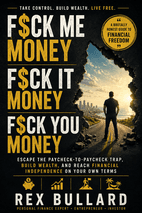
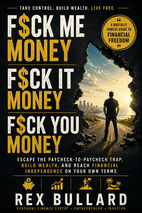
What is the book F$ck Me Money, F$ck It Money, F$ck You Money about?
Rex Bullard's F$ck Me Money, F$ck It Money, F$ck You Money reframes financial independence as a three-rung Wealth Ladder, from paycheck-to-paycheck survival to untouchable wealth, and provides a four-lever framework—Earn, Keep, Grow, Free—to climb it. Written for the 82% of households trapped by income, regardless of earnings, it offers a number-driven path to freedom.
Feature
Insta.Page
Blinkist
Shortform
F$ck Me Money, F$ck It Money,…
✓
✕
✕
Summary Depth
Full Chapter-by-Chapter
15-min overview
Section-by-section guides
Audio Narration
✓
✓
✓
Visual Mindmaps
✓
✕
✕
AI Q&A
✓
✕
✕
Quizzes
✓
✕
✕
PDF Downloads
✓
✕
✓
Price
$89.99/yr
$146/yr (PRO)
$199/yr
*Competitor data last verified July 2026.
1 Page Summary
In F$ck Me Money, F$ck It Money, F$ck You Money, Rex Bullard reframes financial independence not as a single destination but as a three-rung "Wealth Ladder," each rung defined by what it buys you. F*ck Me Money describes the trap of living paycheck-to-paycheck—even with a high income—where net worth is under roughly a million dollars and lifestyle inflation keeps you one missed paycheck from collapse. F*ck It Money is the first real escape velocity, defined by a concrete number (roughly three to six million in invested assets, or twenty-five times your annual spending per the 4% rule), where your investments cover your life and work becomes optional. F*ck You Money begins near $25 million, making you truly untouchable by crashes, medical disasters, or career reversals—a level achieved less through saving than through ownership and other unconventional paths.
The book’s core methodology is built around four levers—Earn, Keep, Grow, Free—and stresses that most people pull only one. Bullard emphasizes that the primary lever for progress is your savings rate, not your income, and advocates for small, automated "Skims" (fractional share investing) rather than willpower. He details ten legitimate paths to wealth, ranging from quiet index-fund investing and high-value career skills to sales, entrepreneurship, personal branding, and the startup lottery. A recurring theme is that "boring" strategies (like patient investing in the whole market) reliably beat flashier, riskier attempts, and that the biggest enemy is often your own psychology—manifested in "One More Year Syndrome," the "BURN" lifestyle (Buy Unnecessarily, Retire Never), and the tendency to move the finish line. A distinctive "fourth kind of money," F*ck Off Money, is revealed as a gear (not a rung) that uses real estate and bank leverage to supercharge the Grow lever.
This book is written for the broad majority—roughly 82% of American households—who feel trapped by their income, regardless of how much they earn. Bullard’s voice is blunt and conversational, using memorable anecdotes (like "Carol's corner cubicle" or "Uncle Ray's rusted truck") to illustrate common financial follies. What readers will ultimately gain is a practical, number-driven framework: how to calculate your personal "FU Number," how to use the four levers to reach it, and how to assemble a "Crew" of supportive peers to sustain the climb. The final chapters shift from building wealth to staying rich, emphasizing that the temperament for accumulating money (boldness) is almost the opposite of the one required to keep it (humility and "room for error"), and ultimately guiding the reader to create a dated, specific "map" to cross from fear to freedom.
Welcome to the Wealth Ladder
Overview
Most people measure wealth by what they can spend, and the measuring itself is what keeps them broke. The ladder has only three rungs, yet almost everyone is standing on the wrong one without knowing it.
Three buoys
Broke is sitting in a car the bank will take. The writer has been broke twice. Dave bought a boat for a promotion he was about to lose; the bank took it back. Dave is not an idiot, just most of us spending money to look rich.
Three levels of money act as buoys, with rude names on purpose.
F*ck Me Money looks richer than you are and is one bad week from collapse. Carol's corner cubicle and mountain place vanished a month after her division was cut. Many people buy the look of being rich on a payment plan.
F*ck It Money is Uncle Ray, whose rusted truck hid ownership of half the block, free and clear. Here money earns enough on its own; it buys freedom, not stupidity. Not buying the boat is why he had the block.
F*ck You Money is rare, quiet, untouchable. Crashes, medical disasters, bad decades cannot reach it; you never need a good situation again. Patient saving alone almost never gets here.
Four levers
Movement between buoys is a system: pull all four levers and you rise.
Earn: income is trainable, not fixed.
Keep: holding matters, because lifestyle creep has killed more fortunes than any crash.
Grow: idle money dies; working money compounds.
Free: the point is room in your actual life, not a high score.
Finding your buoy
One surprise bill means F*ck Me. Quitting and holding two or three years is F*ck It. Never needing to work again is F*ck You. Cancel one subscription today. Climbs are not made alone. "Rich isn't a number. It's a permission slip."
Key Takeaways
Buy nothing that advertises wealth; the boat Dave financed for a doomed promotion carried him straight to the repossessor, and financing the look of prosperity is precisely what keeps most people from ever owning anything.
Distinguish the three buoys by what they survive, not by how they look: one surprise bill ends Fck Me, two or three years without work ends Fck It, and no disaster that markets or bodies can throw reaches F*ck You.
Pull all four levers together, because extra income vanishes without the habit of holding it, idle cash decays without a plan to compound it, and none of it matters until it buys room in your actual life.
Test your own rung honestly before choosing moves: if a single unexpected invoice would topple you, you are at the first buoy, no matter what your paycheck says.
Drop a single recurring charge today and enlist someone else; the climb starts with one concrete step, is made with company, and pays out as permission to live as you want, not as a number.
Key concepts: Welcome to the Wealth Ladder
Welcome to the Wealth Ladder
The Three Buoys
F*ck Me Money: looks rich, one bad week from collapse
F*ck It Money: owns assets free and clear, buys freedom
F*ck You Money: untouchable by crashes or disasters
Financing the look of prosperity prevents ownership
Dave's boat: bought for a doomed promotion, repossessed
Buy nothing that advertises wealth
Starting the Climb
Cancel one recurring subscription today
Climbs are made with company, not alone
Rich is a permission slip, not a number
Pull all four levers together to rise
💡 Try clicking the AI chat button to ask questions about this book!
F*ck Me Money: Comfortable-ish, Still on the Hamster Wheel
Overview
A comfortable income can vanish into the cost of maintaining the life it appears to buy, leaving even well-paid earners one missed paycheck from collapse. The rung feels like success until the money stops, and the usual fixes only tighten the trap.
Carol's Performance
The year he crossed into real money, the author went broke. The car, the watch angled into view, the house with a room nobody sat in: all props. Carol worked down the hall, corner cubicle, expensive handbag, a mountain place she announced as fact. When her division was cut, she unraveled within a week, doing cereal-aisle arithmetic and swapping name brands for the cartoon bag while keeping her face blank. She was performing rich for an audience that fired her. "The most expensive thing you can buy is the appearance of being rich."
The Rung, Defined
F*ck Me Money means a net worth under roughly a million dollars where the next paycheck, not anything owned, funds the lifestyle. The direction of money matters: income arrives and leaves at nearly the same speed, and the gap between those events holds your sense of safety. About 82 percent of American households, around 108 million, stand here; median net worth is about $192,700. Living paycheck to paycheck describes:
over half of Americans,
a third of households earning $100,000 to $150,000,
one in five households above $150,000.
The problem is not missing money but missing freedom.
The Runway
Runway is the honest number: if income stopped today, how many months could you keep your exact current life running on what you already hold? The financial-independence crowd calls the first milestone FU money: two to three years of expenses, enough slack to walk away from a bad boss. Most people on this rung, including successful-looking ones, carry under two months of runway. That is the entire distance between them and Carol's sleepless version. Measure it, because runway converts this rung from a ceiling into a floor.
The Ratchet
The trap is rarely one big purchase; it is the ratchet of lifestyle inflation. The raise becomes the nicer apartment, the bonus the better car, the promotion a standard of living that now requires the promotion forever. The ratchet turns only one way, so out-earning the problem fails: each upgrade raises the cost of being you, shortens your runway, and welds you into a paycheck you cannot escape. His own dollars arrived preassigned to maintaining the picture. When income hiccuped, the performance collapsed in a season, and his wife Sam said one right sentence across the kitchen table.
The Starting Line
F*ck Me Money is the starting line, not a shameful place. Nearly 8 in 10 American millionaires are self-made; only 3 percent inherited a million or more. The boring millionaire and Carol differed not in income, brains, or luck but in whether they understood their rung. The job at this level comes down to three moves:
Stop paying monthly installments for the appearance of wealth you don't yet have.
Measure runway instead of reflection.
Point the next raise at freedom, not image.
The rung that holds most people for life becomes the first step of a staircase. Next door is the level where you stop performing wealth and start owning it.
Key Takeaways
Count the price of appearing rich as a monthly payment, not a one-time splurge; that appearance is the first line item to delete.
Calculate your runway by dividing what you already own by your exact current monthly spending, then work to stretch it past the two-year mark that makes a bad boss survivable.
Treat every raise or bonus as pre-committed to either lengthening your runway or buying a higher standard of living, because the ratchet only moves upward.
Use the gap between what you earn and what you spend as your real lever; the moment you stop performing wealth is the moment you can start building it.
Key concepts: F*ck Me Money: Comfortable-ish, Still on the Hamster Wheel
F*ck Me Money: Comfortable-ish, Still on the Hamster Wheel
The Trap of Performing Wealth
Carol's expensive lifestyle collapsed when her division was cut
Props like cars, watches, and houses are just appearances
Most expensive thing you can buy is looking rich
Income stops, but the performance cost remains
Defining F*ck Me Money
Net worth under ~$1 million, funded by next paycheck
82% of American households live on this rung
Over half of Americans live paycheck to paycheck
Problem is missing freedom, not missing money
Runway as the Real Measure
Runway = months you can survive if income stops
Most people have under two months of runway
FU money milestone: two to three years of expenses
Measuring runway turns ceiling into a floor
The Ratchet of Lifestyle Inflation
Each raise upgrades lifestyle, not freedom
Ratchet only moves upward, trapping you in paycheck
Out-earning the problem fails because costs rise
Income arrives preassigned to maintaining the image
The Starting Line to Wealth
Nearly 8 in 10 millionaires are self-made
Boring millionaire vs. Carol: understanding the rung
Stop paying installments for appearance of wealth
Point next raise at freedom, not image
F*ck It Money: The First Real Escape Velocity
Overview
Most people never learn the exact number that would make work optional, so "enough" stays a feeling they chase indefinitely. Without that figure, every raise just raises the bar. The tension is not effort or income, but the absence of a number.
F*ck It Money means three to six million in invested assets, enough that the income covers your life. The FI crowd's median at walk-away is $3.1 million: a dentist who skipped the boat, not a billionaire. The number is yearly spending times twenty-five, the four percent rule. Savings rate, not income, is the big lever; saving 30 percent roughly halves your working years. The catch: keep the principal intact and live only on its yield. Freedom and the boat don't coexist. The unseen demand is purpose, guarded by "work optional, not work forbidden." Uncle Ray kept working by choice; that choice is the prize.
Key Takeaways
Aim for twenty-five times your annual spending in invested assets, because the income from that principal, not the principal itself, is what should cover your life.
Treat your savings rate, not your income, as the primary lever: saving 30% of what you earn can roughly halve the time you need to work.
Preserve the principal as a hard boundary: spending the capital to buy a boat or other indulgence destroys the very freedom the money was meant to secure.
Redefine the goal as being work-optional rather than work-forbidden, since the real prize is the ability to choose to work, as Uncle Ray did.
Plan for the demand of purpose: the money buys the freedom to discover what to do next, but that question will come due.
Key concepts: F*ck It Money: The First Real Escape Velocity
F*ck It Money: The First Real Escape Velocity
The Number That Sets You Free
F*ck It Money: $3–6 million invested assets
Median walk-away: $3.1 million, not billionaire
Formula: annual spending × 25 (4% rule)
Without a number, raises just raise the bar
The Real Levers
Savings rate, not income, is the big lever
Saving 30% roughly halves working years
Preserve principal; live only on yield
Freedom and the boat don't coexist
The Hidden Cost
Goal is work-optional, not work-forbidden
Uncle Ray's choice to work is the prize
Purpose question comes due after freedom
Money buys time to discover what's next
F*ck You Money: Untouchable
Overview
Money that makes you untouchable sounds like a bigger version of money that makes you free, but it is not. The usual path of saving and investing runs out far below that level, and the real barrier is something else entirely.
The hot dog man
The richest man the author ever met worked a backyard grill in a faded, paint-stained shirt and asked whether the good mustard was wanted. He had sold a chain of roughly forty hardware stores years earlier. That is F*ck You Money: not a yacht with a helicopter, but a day nobody can touch. People who actually have it rarely bother with the trappings, and the reason is this chapter's point.
The number and the difference
F*ck You Money starts near $25 million, the top 0.1%: about 133,000 households holding close to 14% of American wealth. The top 1% begins at $13.7 million, around 1.3 million households. F*ck It Money makes you free from one bad job; F*ck You Money makes you unreachable. No crash, medical catastrophe, lawsuit, divorce, or recession drags you back. The opposite of fear is indifference, and only abundance buys it.
A different climb
Saving and index funds carry a disciplined person to three, four, or six million, but never to twenty-five; a salary has a ceiling. According to IRS data, the top 1%'s largest income source is owning boring regional businesses: auto dealerships, beverage distributors, dental, HVAC, and plumbing-supply operations. The top built something that grew while they slept, then sold it. You climb to Fck It; you build to Fck You.
The dark side
When money stops being a problem, it stops organizing your days. The hot dog man called the year after the sale the worst of his adult life: no alarm, no fire, no reason to be anyone. He named the opportunists the mosquitoes. Money buys the room but does not decorate it, and you can climb every rung and still feel broke, because the real game happens in your head.
Key Takeaways
Measure F*ck You Money by the catastrophes it survives, not by the yacht and helicopter it could buy: the threshold is tens of millions, a number no crash or lawsuit can drag you back from.
Learn the difference between Fck It and Fck You: the first lets you quit one bad job, the second makes you unreachable, and only the second buys indifference.
To get from six to eight figures, stop trying to save or index-fund your way there; build an unglamorous local business that runs itself and then sell it.
Expect the money to bring a strange emptiness: once no alarm dictates your day, the year after selling everything can feel like the worst of your life, and the hangers-on are just mosquitoes.
The scoreboard lives in your head: climb every rung and you can still feel broke, because the real game is psychological, not numerical.
Key concepts: F*ck You Money: Untouchable
F*ck You Money: Untouchable
The Hot Dog Man
Richest man met worked backyard grill
Sold 40 hardware stores years earlier
F*ck You Money means untouchable, not flashy
People with it rarely show trappings
The Number and Difference
F*ck You Money starts near $25 million
Top 0.1%: 133,000 households, 14% of wealth
F*ck It Money frees from one bad job
F*ck You Money survives any catastrophe
A Different Climb
Saving and index funds cap at six million
Salary has a ceiling; building has none
Top 1% own boring regional businesses
Climb to Fck It, build to Fck You
The Dark Side
Money stops organizing your days
Hot dog man's worst year after sale
No alarm, no fire, no reason to be anyone
Opportunists are just mosquitoes
Key Takeaways
Measure by catastrophes survived, not luxuries
Only F*ck You Money buys indifference
Build unglamorous business, then sell it
Expect emptiness; scoreboard lives in your head
You've reached the end of the free chapters
Next chapter: “The Head Game” is locked
Keep reading F$ck Me Money, F$ck It Money, F$ck You Money — and unlock all 600+ book summaries with audio, mindmaps and AI Q&A.
$0.00 due today · 7 days free, then $89.99/year ($7.49/mo) · Cancel anytime before day 7
plus sales tax where applicable
More ways to explore F$ck Me Money, F$ck It Money, F$ck You Money
Rex Bullard is a former U.S. Navy pilot and aviation safety expert whose career spans over three decades of flight operations and accident investigation. He is the author of the acclaimed technical guide "Fly-by-Wire: A Pilot's Guide to Modern Flight Control Systems," which is regarded as a standard reference in the aerospace industry. His expertise in human factors and advanced avionics has made him a sought-after consultant and lecturer for both military and commercial aviation programs.
Frequently Asked Questions about F$ck Me Money, F$ck It Money, F$ck You Money
What is F$ck Me Money, F$ck It Money, F$ck You Money about?
This book lays out a three-rung wealth ladder defined by three deliberately crude terms: living paycheck to paycheck while performing wealth, having enough invested assets to make work optional, and being financially untouchable. It blends concrete formulas, such as twenty-five times your annual spending, with psychological traps like the moving finish line and one-more-year syndrome. The author also covers practical levers—earning, keeping, growing, and buying back time—and walks through the ten real paths to wealth, from high-value skills to entrepreneurship and investing. It's a mindset-and-math guide to knowing exactly what number makes you free and how to reach it.
Who is the author of F$ck Me Money, F$ck It Money, F$ck You Money?
Rex Bullard is a financial writer who draws heavily on his own struggles, including twice going broke and spending a decade chasing fake get-rich schemes. He eventually reached the point where passive income covered his living expenses, and he shares that journey along with lessons from people he met, like a plumber-supply counter worker with a million in index funds and the hot dog man who'd sold a chain of hardware stores. His voice is blunt and personal, built around real numbers and hard-earned experience rather than theory.
Is F$ck Me Money, F$ck It Money, F$ck You Money worth reading?
Yes, because it gives you a clear financial target instead of vague advice: the actual dollar amounts for each rung, the formula for your own number, and the four levers you can pull to get there. It's also refreshingly honest about the psychological side—why people quit, why they keep moving the finish line, and why the boldness that builds wealth often destroys it. The rude language makes the concepts stick, but the underlying guidance is disciplined, practical, and grounded in things like the 4 percent rule and index-fund investing.
What are the key lessons from F$ck Me Money, F$ck It Money, F$ck You Money?
The single most important takeaway is to calculate your freedom number as twenty-five times your annual spending, since income from that principal—not the principal itself—should cover your life. Your savings rate matters far more than your income; saving 30 percent can roughly halve your working years, while lifestyle creep silently swallows every raise. Build multiple income streams that move independently, avoid panic-selling index funds because calm investors profit from panicked sellers, and know when to stop: once your number matches the 4 percent rule, cross instead of playing one more year. Ultimately, staying rich requires the opposite temperament from getting rich: humility, slack, and the ability to let 'enough' be enough.
📚 Explore Our Book Summary Library
Discover more insightful book summaries from our collection