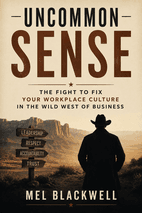
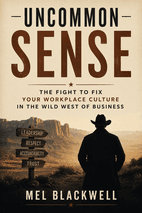
Mel Blackwell's Uncommon Sense provides a field-tested framework for leaders to diagnose and fix workplace dysfunction, using practical tools like POCIT™ and the Best Pledge to build resilient cultures. Written for owners, executives, and anyone responsible for a team navigating today's chaotic business landscape.
Feature
Insta.Page
Blinkist
Shortform
Summary Depth
Full Chapter-by-Chapter
15-min overview
Section-by-section guides
Audio Narration
✓
✓
✓
Visual Mindmaps
✓
✕
✕
AI Q&A
✓
✕
✕
Quizzes
✓
✕
✕
PDF Downloads
✓
✕
✓
Price
$89.99/yr
$146/yr (PRO)
$199/yr
*Competitor data last verified July 2026.
1 Page Summary
In Uncommon Sense: The Fight to Fix Your Workplace Culture in the Wild West of Business, Mel Blackwell presents a no-nonsense, field-tested guide for leaders navigating the chaotic, unpredictable landscape of modern business. The book’s central thesis is that while external threats—shifting markets, evolving workforce expectations, technological disruption—are unavoidable, leaders can build an internal culture strong enough to withstand any storm. Blackwell rejects trendy quick fixes and academic theory, instead championing "uncommon sense": the practical, often overlooked wisdom that most leaders are too busy or distracted to use. The metaphor of the Wild West runs throughout, positioning the leader as a sheriff who must protect the town (the business) not through slick talk, but through clear rules, decisive action, and an unshakeable commitment to culture, structure, and problem-solving.
The book is distinctive for its raw, anecdote-driven approach, drawing directly from Blackwell’s 35 years in the trenches—including his time as an Integrator within the Entrepreneurial Operating System (EOS) and his experience turning around failing operations like a store in a drug-ridden Montgomery neighborhood with a burned-out sign reading “USA Mob.” Rather than presenting a sterile system, he shares real scars and real stories, from firing a toxic CTO who tried to hold the company’s code hostage to learning negotiation tactics from a mysterious red-haired stranger. Key concepts include the "Comanche Moon" warning against instinct-led navigation, the "square-wheeled wagon" metaphor exposing broken systems rather than broken people, the corrosive nature of "drive-by meetings," and the disciplined practice of "ponying up" from the front. The book culminates in "The Best Pledge," a living commitment to showing up as one’s best self, modeled from the top down.
The intended audience is anyone carrying responsibility inside a business: owners, executives, department heads, family-business successors, nonprofit leaders, or the unofficial leader who knows it’s time to step up. Readers will gain a practical framework for diagnosing and fixing workplace dysfunction, including tools like POCIT™ (Priorities, Obstacles, Control, Influence, Tasks) and the "Feel-Hear-See" ladder for spotting culture bandits early. More than tactics, they will walk away with a leadership philosophy grounded in courage, integrity, and the willingness to "wreck" in pursuit of growth. As Blackwell warns, "If you’re not wrecking, you’re not riding"—and this book equips leaders to ride hard, stay steady, and never put down their gun when protecting the culture.
Foreword
Overview
Kenneth C. DeWitt opens the foreword by sharing his personal experience with Mel Blackwell over more than a decade, describing Mel as someone who instantly puts others at ease through his grounded, attentive presence. This isn't just a personality trait—DeWitt frames it as a leadership superpower, especially Mel's ability to listen deeply and make people feel like the only person in the room. He then connects this to Mel's former role as an Integrator within the Entrepreneurial Operating System (EOS), citing Gino Wickman's observation that the Integrator has the toughest job in the business. DeWitt explains why: Integrators are caught in the middle, taking fire from the visionary above and managing accountability with the leadership team below. It's a pressure-cooker role, one that Mel not only withstood but thrived in. He earned trust through calm consistency, made difficult decisions with courage, and always stayed anchored to what was best for the business. Tough issues, tough love, integrity, and honoring people—DeWitt saw it all from his front-row seat. He emphasizes that Mel's insights come from real scars and real stories, not textbook theory. The foreword ends with a promise: anyone who hears Mel speak will leave a little clearer, a little more confident, and a lot more empowered.
Key Takeaways
Deep listening and a calm, grounded presence are foundational to Mel's leadership style, creating an environment of trust and safety.
The Integrator role in EOS is uniquely demanding, requiring someone to absorb pressure from both the visionary and the operational team—Mel excelled here by staying consistent and courageous.
Hard-earned experience, including making tough calls and delivering honest feedback, gives Mel's guidance practical weight and credibility.
Kenneth C. DeWitt's personal endorsement underscores that Mel's teachings are transformative, leaving audiences more clear, confident, and empowered.
Key concepts: Foreword
1. Foreword
Mel's Leadership Superpower
Deep listening makes others feel valued
Calm, grounded presence builds trust
Creates an environment of safety and ease
The Demands of the Integrator Role
Toughest job in EOS, caught in the middle
Absorbs pressure from visionary and team
Requires calm consistency and courage
Mel thrived through tough decisions and integrity
Credibility from Real Experience
Insights come from real scars and stories
Tough love and honest feedback build trust
Mel's teachings leave audiences clearer and empowered
💡 Try clicking the AI chat button to ask questions about this book!
Introduction
Overview
The chapter opens with a vivid Western showdown: a struggling business is a dusty frontier town, and the leader is the sheriff stepping into the street to face the bandit. This metaphor sets the stage for the entire book. Business, the author argues, truly is the Wild West—chaotic, unpredictable, and full of external threats that can ambush you without warning. Markets shift on a dime, Washington changes the rules, competitors circle like vultures, customers bolt at the first hiccup, workforce expectations evolve overnight, and technology makes your systems obsolete before lunch. You can’t stop any of these threats from riding into town. But you can build an internal culture strong enough to take a hit, survive the storm, and keep moving forward.
The good news? The good guy can win. Not through slick talk or backroom deals, but by using "uncommon sense"—the practical, no-fluff wisdom that’s so obvious most leaders are too busy, scared, or distracted to actually use it. This book is for anyone carrying responsibility inside a business: owners, executives, department heads, family-business successors, nonprofit leaders, even the unofficial leader who knows it’s time to step up. If people follow you, you’re on the hook for culture.
Here’s where the author introduces a critical gap in most leadership systems: every organization needs two visions. The main vision is the destination—unique to each business. But there's a second one, the subvision, which is the journey. It’s the same for every organization: get your people to believe you can reach the main vision, and excite them enough to show up as their best every single day. Without a subvision, teams falter when the road gets rough. This book is the roadmap for building that subvision and turning a culture of complainers into a culture of problem-solvers.
The chapter then previews the four parts of the book: understanding the Wild West rules and fixing the square-wheeled wagon, creating a problem-solving culture, building a pony-up culture of accountability, and embedding excellence and integrity into the company’s DNA. Interspersed are raw stories from decades in the trenches—startups, turnarounds, billion-dollar companies, even a smoke-filled trailer park collection room—along with practical strategies you can use today, not after some retreat. The author’s philosophy is grounded in service, strength, and getting the hard stuff right.
Key Takeaways
External threats (markets, regulation, competition, customers, culture, technology) are constant and unavoidable. Build internal strength rather than chasing shadows.
The “uncommon sense” approach is simple, practical, and often ignored—it’s common sense that leaders are too distracted to use.
Every business needs a subvision: the journey that gets people excited to execute the main vision. Without it, progress stalls.
This book is for anyone with responsibility—not just CEOs—and offers actionable wisdom from 35+ years of real business battles, not theory.
Key concepts: Introduction
2. Introduction
The Wild West Business Reality
Business is chaotic and unpredictable like the Wild West
External threats are constant and unavoidable
Build internal culture to survive and move forward
Uncommon Sense Leadership
Practical wisdom leaders are too distracted to use
Good guys can win without slick talk or deals
For anyone with responsibility, not just CEOs
The Two Visions Framework
Main vision is the unique destination
Subvision is the journey to excite and unite teams
Subvision turns complainers into problem-solvers
Book Structure Preview
Understand Wild West rules and fix the wagon
Create a problem-solving culture
Build accountability and embed excellence
Real-World Wisdom Source
Raw stories from 35+ years in the trenches
Practical strategies usable today, not after retreats
Grounded in service, strength, and hard truths
Chapter 1: The Rules of Survival
Overview
Chapter 1 opens with a vivid image: Comanche warriors riding full speed under a full moon, guided by instinct and grit alone. It's a powerful metaphor, but the author quickly pivots to a stark warning—this isn't how you build a sustainable business. Riding blind in the dark might work for a while, but eventually you'll hit something that knocks you out of the saddle. The chapter lays out what "survival mode" really means for a business: not crisis, but a state of functioning that's unsustainable, exhausting, and broken beneath the surface. The solution isn't another quick fix or trendy system. It's getting back to three non-negotiable rules: culture, structure, and problem-solving.
The Comanche Moon Analogy
The opening story does more than grab attention—it sets up a core tension. Many leaders believe they can navigate their businesses on instinct alone, especially when things seem to be working. But the author argues that you're not a Comanche warrior, and your business isn't designed to gallop through the dark. Sustainable success requires daylight—clear maps, shared rules, and alignment. Without those basics, you're flying blind, and it's only a matter of time before you crash.
Identifying Survival Mode in Your Business
The chapter reframes "survival mode" as something more insidious than outright crisis. It's the business that's technically running but deeply broken. The author lists common signs, many of which will feel painfully familiar: you've tried every system and book but nothing sticks; you're hitting numbers but at a personal cost; every problem lands on your desk; your culture is fractured with cliques or rogue players; your leadership team pulls in different directions; your structure is messy and role-based; the competition is outpacing you; you've lowered standards just to get by; and burnout is everywhere—including your own. Recognizing these signs is the first step.
The Three Rules of Survival
The core of the chapter is a simple but challenging framework. These rules aren't about clever hacks—they're about getting the basics right.
Rule 1: Culture Comes First
Culture is the ecosystem of your business, like the water in an aquarium. It determines what behaviors thrive and what gets suffocated. Strategy doesn't matter if your culture is toxic. The author emphasizes that culture isn't just about perks—it's about what gets rewarded and who holds influence. A healthy culture sustains itself with care; a neglected one rots from within.
Rule 2: Build the Right Structure
If culture is the water, structure is the tank. The critical insight is to build around roles, not people. When you organize based on who's been there longest rather than who fits the seat, you end up with a dysfunctional org chart. Proper structure ensures clear communication and decision-making flows like blood through arteries. Without it, everyone feels lost.
Rule 3: Solve Problems Effectively
The author shares a personal story from running a 600-person company: he banned problems without proposed solutions. This forced people to own their work and think like leaders. The key is to solve problems as close to where they happen as possible. When every issue escalates to the top, leaders get buried and growth stalls.
The Path from Surviving to Thriving
The chapter closes with a realistic promise. Getting these three rules right won't turn your business into a gold mine overnight. They're not the finish line—they're the starting point. They provide the daylight, map, and compass you need to stop riding in circles. Once culture is healthy, structure is sound, and people solve problems instead of handing them off, you've laid a foundation for thriving. The next chapter promises to explore what thriving actually looks like.
Key Takeaways
Survival mode is not crisis—it's a business that functions but is unsustainable and broken beneath the surface.
Common signs include failed initiatives, personal burnout, problems flowing upward, fractured culture, misaligned leadership, and lowered standards.
Culture is the ecosystem; get it right first, or strategy won't matter.
Build structure around roles, not people, to ensure clear communication and decision-making.
Empower people to solve problems at the lowest level possible; require proposed solutions with every issue.
These three rules are non-negotiable basics—they won't fix everything overnight, but they'll stop you from riding blind in the dark.
Key concepts: Chapter 1: The Rules of Survival
3. Chapter 1: The Rules of Survival
The Comanche Moon Analogy
Leading by instinct alone is unsustainable
Business needs clear maps and shared rules
Flying blind leads to inevitable crashes
Sustainable success requires daylight and alignment
Identifying Survival Mode
Survival mode is functioning but deeply broken
Signs: failed systems, burnout, problems on your desk
Culture is the ecosystem like water in an aquarium
It determines what behaviors thrive or suffocate
Strategy doesn't matter if culture is toxic
Healthy culture sustains; neglected one rots
Rule 2: Build the Right Structure
Structure is the tank that holds the culture
Build around roles, not people or tenure
Proper structure ensures clear communication
Without it, everyone feels lost
Rule 3: Solve Problems Effectively
Ban problems without proposed solutions
Solve issues as close to where they happen
Forces ownership and leadership thinking
Prevents leaders from getting buried
Chapter 2: Thriving in the Wild West
Overview
The journey begins not in a corner office but in a smoke-filled trailer park office, where a young collector armed with a worst-in-class portfolio and a mentor named Tina turned a dead-end gig into a meteoric rise. That mentor taught a proven process, and by following it to the letter—working harder than anyone else—the rookie became the top collector in the region. That early success led to college degrees in business leadership and, at age 25, a greenfield market launch in Knoxville, where a boss’s boss delivered a career-defining directive: “Download the DNA of this company and make it walk around on two legs.” By internalizing every system, hiring mature leaders over flashy salespeople, and installing that organizational DNA into a new location, the launch became the most successful in company history—every team member later went on to lead their own business. But not every story is a smooth ride. Sent to a failing store in Montgomery, Alabama—complete with a burned-out sign reading “USA Mob” and a drug-ridden neighborhood—the turnaround required tough calls. Holding onto underperformers slowed progress, but once the “rattlesnakes” were removed and a strong culture was built, the store never missed a quota again. The lesson: culture isn’t a side effect; it’s the whole game. A truly thriving business doesn’t mean unicorns and rainbows—it means a team pulling in the same direction with clarity, people in the right seats playing to strengths, and culture bandits dealt with swiftly so that everyone can take guilt-free, real vacations. Five best practices lock that thriving state in place: get the bad guys out fast, serve the good guys well (flipping the leadership pyramid upside down), do a little bit more—winning by a 1% edge that compounds over time, embrace the Hedgehog Effect by becoming world-class at exactly one thing, and create vision and shared language so that the team points in the same direction and bad actors expose themselves. All of this rests on leverage—boss leverage, staff leverage, system leverage, self-leverage, and above all, culture leverage. When the culture is healthy, everything gets easier. But even with all that in place, the frontier is unpredictable. The Wild West teaches that survival depends on the art of the pivot—reading a crisis, separating what you can control from what you can’t, and adapting swiftly without losing momentum. Maintaining composure under pressure is a practiced skill: role-playing worst-case scenarios and running drills so that panic doesn’t spread. And the pioneers who made it built redundancy into everything—spare knives, multiple alliances, backup escape routes—knowing that when things go sideways, you need more than one way forward. The chapter closes with a promise: after you’ve scouted, packed, and forged alliances, the real test is how you handle the chaos—and that’s exactly where we’re headed next.
From Trailer Park to Top Collector
My professional career started in a trailer park. Right out of high school, I took a job as a collector at a mobile home financing company. The office was thick with cigarette smoke, and everyone just sat around. They handed me the worst portfolio in the place, the one nobody else wanted, and wished me luck. I probably wouldn’t have lasted a week without Tina. She was my mentor, tough as nails. She taught me exactly what to do, when to do it, and how. I listened to everything she said and followed her playbook to the letter. I worked my tail off, and right out of the gate I hit my quotas. Before long, I was the top collector in the region. I wasn’t smarter or more charming than anyone else—I just had a mentor, a proven process, and a willingness to work harder than most.
A Mentor and a Model
That first job lit a fire in me. I went to college to study business leadership, took every leadership role I could, and graduated with two degrees. Then came one of the biggest opportunities of my career: a greenfield market launch for USA Mobile in Knoxville, Tennessee. At 25, I became the sales manager for East Tennessee. My boss’s boss, Mark Roth, told me something I’ve never forgotten: “Your job is to download the DNA of this company and make it walk around on two legs inside other locations.” I took that as gospel. I internalized everything about USA Mobile—all the systems and processes—and then installed them into a brand-new location. I didn’t hire flashy salespeople. I hired mature people who already knew how to lead, even without industry experience. The result? That location became the most successful launch in company history. My team never missed a single quota, and every person on that team eventually went on to lead their own business.
Turning Around a Failing Store
Leadership wasn’t always so smooth. After Knoxville, I was sent to Montgomery, Alabama to take over a failing USA Mobile location. The place was a mess: low morale, bad habits, and even the sign on the building read “USA Mob” because the “-ile” was burned out. It was in a drug-ridden area. I inherited nothing but underperformers. At first, I held onto a few people I shouldn’t have, giving too many second chances. That slowed the turnaround. But eventually I made the tough calls. Within a month, we never missed a quota again. Within a quarter, that store was performing as well as any in the company. The lesson? Culture isn’t a side effect—it’s the whole game. Build a strong culture, and your team pulls together. Get it wrong, and no strategy will save you.
Signs of a Thriving Business
A thriving business doesn’t mean everyone’s riding unicorns to work. It’s about having a team pulling in the same direction with balance and clarity. The culture feels genuinely good, supportive, not toxic. People know their jobs and are in the right seats, playing to their strengths. Culture bandits—those who poison morale—are dealt with quickly. One of the biggest tells that a business is thriving? People actually take real vacations, guilt-free, because systems and coverage are solid.
Five Best Practices to Thrive
Get the Bad Guys Out – Some people don’t belong in your business. Culture bandits might look good on the outside, but they’re rattlesnakes sowing distrust. Remove them fast, early, and don’t apologize. Protect the mission, team, and culture.
Serve the Good Guys Well – Identify the good team members and lift them up. Leadership is an inverted triangle—your name is at the bottom, holding up the team. Serve the ones who show up and do the work.
Do a Little Bit More – You don’t have to blow the doors off the competition. Win by a thread. A little more clarity in the morning huddle, a little more follow-through, a little more discipline. That 1% edge compounds over time.
The Hedgehog Effect – Focus on one thing you want to be world-class at. Become the best at that one thing, and filter every decision through it. Distraction is everywhere; chasing everything is how you lose.
Creating Vision and Shared Language – Vision unifies the team. Shared language is how you carry that vision out—meetings, dashboards, conversations. When everyone’s pointing in the same direction, bad guys out themselves because they can’t fake it.
Leverage Is Power
Hard work alone won’t get you there. You need leverage. In Knoxville, I used boss leverage (clear vision and a proven playbook), staff leverage (right people, trained well), system leverage (daily meetings, fixing square wheels), self-leverage (leading myself first), and culture leverage (clear expectations so the team held the line even without me). That’s how we never missed a single quota. The greatest leverage you’ll ever have is your business’s culture. If it’s broken, nothing works. If it’s healthy, everything gets easier.
Even when you've done everything right—scouted the terrain, packed your supplies, and forged alliances—things go sideways on the frontier. The Wild West was a master class in unpredictable chaos. A sudden prairie fire, a broken wagon wheel, or a band of outlaws appearing over the ridge could upend months of planning. The pioneers who survived weren't the ones who avoided trouble entirely—they were the ones who had a system for when trouble found them.
The Art of the Pivot
When plans collapse, the instinct is to double down or freeze. Frontier survivors learned to read the situation quickly, separate what they could control from what they couldn't, and pivot without losing momentum. The key was speed: hesitation in a crisis invited disaster, while swift adaptation turned a setback into a tactical retreat—or even an opportunity.
Maintaining Composure Under Pressure
Panic spreads faster than wildfire through a wagon train. The best frontier leaders cultivated a stoic calm that kept their group functional when everything unraveled. They focused on immediate, concrete actions—securing water, checking for injuries, reinforcing defenses—rather than cataloging what went wrong. This mental discipline was often practiced beforehand by role-playing worst-case scenarios or running drills. Preparedness wasn't about predicting every disaster; it was about training your nervous system to stay steady when things fell apart.
The Power of Redundancy
Every seasoned frontiersman carried backup basics: an extra knife, spare
Key concepts: Chapter 2: Thriving in the Wild West
4. Chapter 2: Thriving in the Wild West
The Foundation: Mentorship & Process
Started as collector in trailer park office
Mentor Tina taught proven playbook
Followed process exactly, worked hardest
Became top collector in region
Downloading Company DNA
Greenfield launch in Knoxville at age 25
Internalize all systems and processes
Hire mature leaders, not flashy salespeople
Most successful launch in company history
Culture Is the Whole Game
Turned around failing Montgomery store
Removed underperformers ('rattlesnakes')
Strong culture made store never miss quota
Culture isn't side effect—it's everything
Five Best Practices for Thriving
Get bad guys out fast
Serve good guys well (flip pyramid)
Do 1% more—compounding edge
Hedgehog Effect: world-class at one thing
Leverage as the Engine
Five types: boss, staff, system, self, culture
Culture leverage makes everything easier
Healthy culture enables guilt-free vacations
Team pulls in same direction with clarity
Art of the Pivot
Read crises, separate control from chaos
Adapt swiftly without losing momentum
Role-play worst-case scenarios as drills
Maintain composure to prevent panic spread
Redundancy for Survival
Build backup plans for everything
Spare knives, multiple alliances, escape routes
Need more than one way forward in chaos
Real test is handling unpredictability
You've reached the end of the free chapters
Next chapter: “Getting the Culture Right” is locked
Keep reading Uncommon Sense — and unlock all 600+ book summaries with audio, mindmaps and AI Q&A.
$0.00 due today · 7 days free, then $89.99/year ($7.49/mo) · Cancel anytime before day 7
Mel Blackwell is a prolific author and content developer known for creating engaging educational and reference works, particularly for children and young adults. With a background in instructional design, he has contributed to notable series such as the "Everything Kids' Series" and various puzzle and activity books. Blackwell’s expertise lies in crafting accessible, interactive learning materials that combine fun with factual content, making complex topics easy to understand.
Frequently Asked Questions about Uncommon Sense
What is Uncommon Sense about?
The book is a practical leadership guide that uses the metaphor of the Wild West to explore building a strong business culture amidst chaos and external threats. It emphasizes that sustainable success comes from focusing on three non-negotiable rules: culture, structure, and problem-solving, rather than relying on instinct alone. The author shares hard-earned lessons from 35 years in business, covering how to identify and fix broken systems, deal with 'culture bandits,' and lead with integrity. It's a no-fluff, field-tested manual for anyone responsible for leading a team or business.
Who is the author of Uncommon Sense?
Mel Blackwell is an experienced business leader and former Integrator within the Entrepreneurial Operating System (EOS), known for his ability to listen deeply and make tough decisions with courage. He has over 35 years of practical experience, including turning around failing stores and launching successful market expansions. His insights come from real scars and real stories, not textbook theory, as emphasized in the foreword by Kenneth C. DeWitt.
Is Uncommon Sense worth reading?
Absolutely. This book offers uncommon sense—practical, field-tested wisdom that most leaders are too busy or scared to use. It's filled with vivid metaphors and real-world examples, from the 'square-wheeled wagon' to 'culture bandits,' that make complex leadership lessons immediately accessible. Whether you're a CEO, department head, or aspiring leader, you'll find actionable tools like the Best Pledge and the gunslinger mindset that can transform your organization from the top down.
What are the key lessons from Uncommon Sense?
The three non-negotiable rules for sustainable business are culture, structure, and problem-solving—culture eats strategy for breakfast. Leaders must build systems first (structure) before placing people, and stop 'worshiping problems' by requiring solutions with every issue. 'Culture bandits' who undermine the mission must be removed swiftly, not debated. Finally, the Best Pledge—a commitment to be your best self daily, modeled from the top—is the foundation of lasting momentum, along with embracing failure as part of growth ('if you're not wrecking, you're not riding').
📚 Explore Our Book Summary Library
Discover more insightful book summaries from our collection