Foreword: Patient & Persistent Ambition By Charlie Chase
Chapter 1 of 4
0:000:00
EN
1x
Voice
PDF
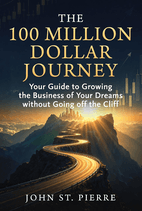
The 100 Million Dollar Journey
by John St. Pierre
What is the book The 100 Million Dollar Journey about?
John St. Pierre's The 100 Million Dollar Journey delivers a raw, real-world account of building a business from scratch, surviving catastrophic failures, and achieving sustained high performance through a seven-principle framework. Written for entrepreneurs stuck in the "Messy Middle"—those who've crossed $1M in revenue but still feel trapped working in their business rather than on it.
Feature
Insta.Page
Blinkist
Shortform
The 100 Million Dollar Journey
✓
✕
✕
Summary Depth
Full Chapter-by-Chapter
15-min overview
Section-by-section guides
Audio Narration
✓
✓
✓
Visual Mindmaps
✓
✕
✕
AI Q&A
✓
✕
✕
Quizzes
✓
✕
✕
PDF Downloads
✓
✕
✓
Price
$89.99/yr
$146/yr (PRO)
$199/yr
*Competitor data last verified July 2026.
1 Page Summary
Based strictly on the provided chapter summaries, The 100 Million Dollar Journey by John St. Pierre is a raw, real-world account of building a business from the ground up, surviving catastrophic failures, and ultimately achieving sustained high performance. The book is framed as a blunt, no-nonsense alternative to theoretical business advice, centered on the hard-won lessons from the author's own entrepreneurial path. Its central thesis is that most entrepreneurs get stuck in the "Messy Middle" of growth—crossing $1M in revenue but still feeling trapped—and fail because they chase vanity metrics like revenue without mastering the fundamentals of equity, cash, and purpose. The author’s personal story is the backbone of the book, beginning with a gut-wrenching scene of being fired from the company he spent 15 years building and tracing back to his first sales lessons selling chocolate bars as a child. This journey is used to illustrate a framework for escaping the "growth paradox" where increasing revenue actually threatens the business.
The author’s approach is distinctive for its memoir-style storytelling combined with a strict, principle-based framework. Drawing on experiences ranging from running a painting franchise and surviving the dot-com bust to scaling a sports company to $50M and losing it, the book presents a seven-principle system. These principles include protecting and growing your equity, building your own capital through net operating cash flow, reinvesting smartly rather than for growth’s sake, and building a culture of "intrapreneurship." The book explicitly contrasts two archetypes: "Hyde," who ignores these principles and chases growth without a plan, and "Jekyll," who uses them to build a patient, disciplined, and high-performance enterprise. A key tool promoted is the "One-Page Strategic Plan," adapted from Verne Harnish’s Scaling Up, which provides clarity and alignment for the entire team.
The intended audience is explicitly not beginners or those who have already cashed out, but entrepreneurs who are stuck in the "Messy Middle"—those who have crossed $1M in revenue but still feel like they are running in place, working in their business rather than on it. Readers will gain a grounded, actionable roadmap for navigating the treacherous middle ground of growth, learning how to protect their equity, master cash flow, avoid the trap of reckless reinvestment, and build a team of intrapreneurs. The ultimate goal is to transform the business from an operational grind into a high-performance asset that provides genuine wealth and freedom, allowing the founder to eventually move from CEO to chairperson. The book serves as both a jolting wake-up call and a gritty, practical guide from a mentor who has been through the worst of it and found a way back.
Foreword: Patient & Persistent Ambition By Charlie Chase
Overview
Charlie Chase, CEO of California Closets, opens by framing John’s entrepreneurial path as one of “hard-won” success rather than luck. Having watched John evolve for over twenty years—from a college student with lofty dreams to a seasoned entrepreneur—Charlie emphasizes that the real engine behind that growth was a blend of relentless persistence and a deliberate hunger to learn. He distinguishes between two types of success: the lucky kind where you stumble into opportunity, and the earned kind where you fight for every inch. John’s story falls squarely into the latter. Charlie also hints at a pivotal, painful moment—John being fired from the company he’d built for fifteen years—and notes that even in that low point, John’s instinct wasn’t to blame but to ask, Where did I fail? How do I recover?
Charlie praises the practical, no-nonsense spirit of The 100 Million Dollar Journey. He calls it “not another business book” but a raw, real-life account that skips theoretical MBA jargon and investment-banker fluff. Instead, it offers a grounded roadmap built from actual stumbles and recoveries.
A Wake-Up Call for Entrepreneurs
The chapter then shifts into a direct, almost confrontational letter from John himself—addressed to “Dear Entrepreneur.” It’s a blunt intervention: You wanted freedom and wealth, but you’re stressed, underpaid, and overworked. You’re running a business that runs you. The letter challenges the reader to stop pretending they have it all figured out, because overconfidence is a trap. John admits he thought he knew everything once—until he got “punched in the gut.”
The tone is urgent and motivational. It’s an invitation to stop being a “business operator” and become a true business owner. The letter ends with a signature from “Your future self,” reinforcing the idea that the person you want to become is already waiting—if you’re willing to make the shift now.
Key Takeaways
Hard-won success requires patience and persistence, not just ambition. Being fired or hitting a wall is not the end—it’s a lesson.
True entrepreneurs are students of leadership: goal-setting, coaching, conflict resolution, and core values are the real tools for scaling.
Reading theory isn’t enough. The real value comes from applying hard-learned, practical strategies to your own business—and being honest about your gaps.
If you feel overwhelmed and underpaid as a business owner, it’s a sign you’re still operating in the business, not leading it. That’s the first thing to fix.
Key concepts: Foreword: Patient & Persistent Ambition By Charlie Chase
1. Foreword: Patient & Persistent Ambition By Charlie Chase
Hard-Won Success vs. Luck
Success is earned through persistence, not stumbled into
John’s path was relentless effort and deliberate learning
Even being fired was a lesson, not an ending
Instinct was to ask 'Where did I fail?'
A Practical, No-Nonsense Book
Not another business book with MBA jargon
Raw, real-life account of stumbles and recoveries
Grounded roadmap from actual experience
Wake-Up Call for Entrepreneurs
You wanted freedom but are stressed and overworked
Stop pretending you have it all figured out
Overconfidence is a trap—John learned this painfully
Shift from business operator to true business owner
True Entrepreneurs Are Students of Leadership
Master goal-setting, coaching, and conflict resolution
Core values are real tools for scaling
Apply hard-learned strategies, not just theory
Be honest about your gaps
Fix the Operator Mindset First
Feeling overwhelmed means you're in the business
You must lead the business, not run it
Underpaid owners need to stop operating
Your future self is waiting for this shift
💡 Try clicking the AI chat button to ask questions about this book!
Introduction: Start With “Why”
Overview
This introduction doesn’t mince words. It’s a blunt, bracing invitation to examine what it really takes to build a business that lasts—and a warning that most entrepreneurs are already on a path toward failure without realizing it. The author opens with a sobering statistic: the vast majority of ventures crash in the early years, often because founders cling to outdated strategies or blind optimism. The book isn’t meant to comfort you; it’s meant to jolt you awake. It frames entrepreneurship as a battleground where resilience isn’t optional, and where the difference between success and collapse often comes down to the clarity of your “why.”
The author’s personal story sets the stage. After a massive business failure, he took a sabbatical to figure out his deeper purpose—a search inspired by Simon Sinek’s “Start with Why.” That reflective process became the foundation for everything that follows. The chapter makes clear that this book is written for entrepreneurs who are stuck in the “Messy Middle,” those who have crossed $1M in revenue but still feel like they’re running in place, working in the business rather than on it. It’s not for beginners or for those who’ve already cashed out; it’s for the ones ready to break through to a higher level.
The Entrepreneurial Reality
The author pulls no punches about the odds. Only 4% of businesses ever reach a “High Performance” stage, where they generate real wealth and freedom for their owners. Most get trapped in what’s called the “Messy Middle”—a dangerous phase between a stable Lifestyle business and a scalable High Performance enterprise. This is where entrepreneurs lose their way, exhaust themselves, and often watch their companies stall or implode. The author uses a graph from Dent Global to illustrate the journey, showing a steep drop-off after the startup phase. The key insight: there’s no widely known roadmap for making the transition. That’s the gap this book aims to fill.
The Author’s ‘Why’ and Self-Reflection
The turning point for the author came when he realized he’d never applied the same strategic thinking to his own life that he demanded of his business. He had spent years reading business books, attending mentorships, and advising teams to start with purpose—yet he had never done that for himself. That contradiction led to his own “aha moment.” His professional purpose became clear: use his hard-earned lessons (and especially his failures) to help other entrepreneurs avoid the same catastrophic mistakes. He describes self-reflection as “the most underrated process of one’s life,” and emphasizes that without knowing your True North, any path will lead to chaos.
Understanding the Entrepreneurial Journey
This section breaks down the typical trajectory of a business owner. It references Scott Belsky’s The Messy Middle to explain why the middle stage is the most challenging part of any venture. The journey has distinct phases: startup, running the business, and finally thinking like an owner. Many entrepreneurs never make it to that third rung—they get stuck replaying the same day over and over. The author’s goal is to provide a clear compass (the 7 Principles) that helps entrepreneurs cross the chasm from Lifestyle to High Performance without falling off the cliff. He promises practical theory and actionable steps, not just motivational fluff.
How This Book Is Structured
The book is divided into four sections. Section I shares the author’s personal entrepreneurial journey, including the failures that shaped him. Section II helps readers identify their own “True North” (their deeper why) and build a Strategic Business Plan aligned with it. Section III introduces the 7 Principles of Entrepreneurial Success, each split into theory and practice, with actionable exercises at the end. Section IV offers two contrasting short stories about entrepreneurs “Jekyll” and “Hyde” to illustrate the principles in action. The epilogue challenges readers to stop dreaming and start executing. The author also directs readers to an online workbook for additional support.
Key Takeaways
Most entrepreneurs fail not from lack of effort, but from lack of a clear “why” and a structured plan to transition from Lifestyle to High Performance.
The “Messy Middle” is the most dangerous phase of business growth; escaping it requires deliberate strategy, not just hard work.
Self-reflection is underrated but essential—understanding your personal True North must come before you can build a sustainable business.
This book is specifically for entrepreneurs who’ve reached $1M+ in revenue but still feel stuck; it provides a roadmap (the 7 Principles) to break through.
The author’s own failures taught him the hard way that protecting equity, building internal capital, and reinvesting smartly are non-negotiable.
Key concepts: Introduction: Start With “Why”
2. Introduction: Start With “Why”
The Entrepreneurial Reality
Only 4% of businesses reach High Performance
Most get trapped in the dangerous Messy Middle
No widely known roadmap for the transition
Book fills the gap between Lifestyle and High Performance
The Author's 'Why' and Self-Reflection
Author failed to apply strategic thinking to his own life
Self-reflection is the most underrated process
Professional purpose: help others avoid his mistakes
Knowing your True North prevents chaos
Understanding the Entrepreneurial Journey
Three phases: startup, running, thinking like an owner
Many never reach the third rung
Messy Middle is the most challenging stage
7 Principles provide a compass to cross the chasm
How This Book Is Structured
Section I: Author's personal journey and failures
Section II: Identify True North and Strategic Business Plan
Section III: 7 Principles with theory and practice
Section IV: Jekyll and Hyde stories illustrate principles
Self-reflection essential before building sustainable business
Book targets $1M+ revenue entrepreneurs feeling stuck
Prologue: Death in the Boardroom
Overview
The chapter opens with a gut-wrenching scene: John is asked to stay behind in the boardroom after a meeting, and he knows exactly what’s coming. The other directors exit quickly, avoiding his eyes, building a thick tension. John had brought in an executive to help raise capital for his 15-year-old company, which had grown from a hobby to over $50 million in global revenue with 400% growth in two years. A private equity firm came on board, and despite feeling a target on his back, John convinced his wife to invest their savings alongside the new partners. He was fully committed—until the boardroom turned into a firing squad.
Instead of the expected conversation about transitioning to a new role, his longtime partner Ron delivers the real blow: the private equity firm wants to terminate him immediately. John’s initial composure shatters. He had prepared to step aside, but being fired is a different kind of betrayal. He tries to distract himself by studying a painting of a golf course on the wall, a small act of mental escape. The PE partners return, one holding a legal envelope with termination papers, and the new CEO is revealed to be the very executive John had hired to help raise capital—the person who had quietly orchestrated his downfall.
The shock deepens as John realizes how blind he was. The drive home is filled with a dreaded call to his wife, who had warned him about losing control to investors. She was, as he admits, always right. He walks into his home to find his wife and two young sons waiting, and he apologizes for messing up, accepting a hug that holds more comfort than any boardroom ever could.
Key Takeaways
Founders can be vulnerable after taking on outside capital, especially when they hand over control of investor relationships to a new executive.
Termination often arrives as a surprise, even when you sense something is wrong—being prepared to step aside is not the same as being prepared to be fired.
The emotional weight of losing a company you built from scratch is profound, and the immediate support of family can be the only grounding force.
Trusting the wrong person with key strategic relationships can backfire spectacularly, turning a partner into an adversary.
Key concepts: Prologue: Death in the Boardroom
3. Prologue: Death in the Boardroom
The Boardroom Betrayal
John is asked to stay behind after a meeting
He knows termination is coming
Ron delivers the firing blow from private equity
The new CEO is the executive John hired
Founder's Vulnerability with Investors
Company grew from hobby to $50M global revenue
400% growth over two years attracted private equity
John convinced wife to invest savings with partners
Handing control to new executive backfired
Emotional Fallout of Termination
John prepared to step aside, not be fired
He mentally escapes by studying a golf painting
The drive home is filled with dread
He apologizes to his wife for messing up
Family as Grounding Force
Wife had warned about losing control to investors
She was always right, John admits
Home offers comfort no boardroom could
Hug from wife and sons is the only support
Key Lessons for Founders
Outside capital can make founders vulnerable
Surprise termination often comes despite warnings
Trusting wrong person turns partner into adversary
Emotional weight of losing a company is profound
Chapter 1: The American Dream
Overview
The author’s family moved from Nova Scotia to a small trailer park in Quebec when he was just three months old. His French-speaking father taught at the Royal Military College, while his English-speaking mother stayed home. Growing up in a province where language laws required English-speaking children to attend French school unless a parent’s first language was English, the author became bilingual—a skill that later opened doors for summer jobs and communication. Still, being called “téte carrée” (square head) for his English accent wasn’t easy. Yet the media he consumed on U.S. television channels—shows like Three’s Company and Knight Rider—painted a vivid picture of American capitalism as the land of opportunity.
In sixth grade, a school fundraiser launched his entrepreneurial instincts. He and his best friend Stefano went door-to-door selling chocolate bars, but sales plateaued until they discovered a goldmine: the dorm rooms of cadets at his father’s military college. The cadets had no access to junk food and would buy multiple bars at a time. Within minutes they sold out, and after repeating the trick, they shot to the top of the sales leaderboard. This taught him the concept of supply and demand firsthand—and lit a fire to find other ways to make money (not just for school fundraisers, but for himself). They spent their teenage years cutting lawns, doing chores, and painting houses (badly), always scheming about the next opportunity.
As high school ended, the author’s father encouraged him to apply to U.S. colleges. But there was tension: the author wanted to major in business and become an entrepreneur, while his father insisted on accounting as a more focused, practical foundation. The author resisted, but eventually relented. That decision proved wise—understanding the numbers behind a business became an essential part of his later success. His father’s mentorship, though unwelcome at the time, was a gift.
After his first year of college in New England, the author returned to Canada for a brutal summer job planting trees in northern Ontario with Stefano. Freezing temperatures, black flies, and full-body suits made it miserable. They left early, hitchhiked 20 hours home, and arrived looking like hillbillies. The experience cemented his resolve: never again. The next summer, determined to stay in the U.S., he faced a problem—his international student visa didn’t allow paid work. His two options: an unpaid internship at an accounting firm or starting his own business. He chose the latter.
Walking through his dorm, he spotted a poster for College Pro Painters, a franchise opportunity for college students to run their own painting businesses over the summer. Despite his terrible painting experience with Stefano, the model appealed to him: he could hire other students to do the work while he managed operations. After a rigorous interview, he was awarded a franchise territory, registered an LLC, and became a business owner. That summer gave him what he calls “an MBA of hard knocks,” learning the real-world challenges of entrepreneurship—from sales and marketing to managing a crew and dealing with customers. It was the beginning of his journey toward the American Dream.
Key Takeaways
First-hand experience with supply and demand—the chocolate bar sales taught the power of finding an underserved market (cadets with no junk food access).
The value of mentorship, even when it’s hard to accept—his father’s insistence on accounting gave him essential financial literacy.
Risk-taking and resilience—from hitchhiking home after a terrible tree-planting job to starting a business on a student visa, the author learned that traditional paths aren’t the only way.
The American Dream is about opportunity, not just geography—media painted a picture, but the real work happened through grit, creativity, and willingness to start small.
Key concepts: Chapter 1: The American Dream
4. Chapter 1: The American Dream
Early Life and Bilingualism
Family moved from Nova Scotia to Quebec
Bilingualism opened doors for jobs and communication
Faced discrimination for English accent
U.S. media portrayed capitalism as opportunity
First Entrepreneurial Lessons
Chocolate bar sales taught supply and demand
Cadet dorm rooms were an underserved market
Sold out quickly by targeting the right customers
Sparked lifelong drive to find money-making opportunities
Father's Mentorship and Education
Father pushed for accounting over business major
Author resisted but eventually relented
Accounting became essential for later success
Mentorship was a gift despite initial tension
Hardship and Resilience
Brutal tree-planting job in northern Ontario
Freezing temperatures and black flies made it miserable
Hitchhiked 20 hours home in defeat
Experience cemented resolve to never return
Starting a Business on a Visa
Student visa prohibited paid work
Chose to start own business over unpaid internship
College Pro Painters franchise offered a model
Learned real-world entrepreneurship through hard knocks
You've reached the end of the free chapters
Next chapter: “MBA of Hard Knocks” is locked
Keep reading The 100 Million Dollar Journey — and unlock all 600+ book summaries with audio, mindmaps and AI Q&A.
$0.00 due today · 7 days free, then $89.99/year ($7.49/mo) · Cancel anytime before day 7
plus sales tax where applicable
More ways to explore The 100 Million Dollar Journey
John St. Pierre is an expert in alternative healing and energy medicine, drawing from over two decades of clinical experience. He is the author of "The Spiritual Art of Healing" and founded the Bio-Energetic Medicine Academy, which trains practitioners worldwide. His work integrates traditional energy therapy with modern bioenergetic principles to promote holistic wellness.
Frequently Asked Questions about The 100 Million Dollar Journey
What is The 100 Million Dollar Journey about?
This book chronicles the author's entrepreneurial journey from selling chocolate bars in a Canadian trailer park to building a $50 million company, being fired from it, and then rebounding to co-found a $100 million project management firm. It presents a raw, practical roadmap of seven principles for protecting equity, building capital, reinvesting wisely, fostering intrapreneurship, managing risk, accessing liquidity, and transitioning from CEO to chairperson. The book is specifically written for entrepreneurs stuck in the 'Messy Middle' who want to achieve sustainable growth and wealth without losing control of their business.
Who is the author of The 100 Million Dollar Journey?
John St. Pierre is an entrepreneur who spent over two decades building companies, including a sports business that grew to $50 million before he was fired by a private equity partner. He later co-founded a project management company that reached $100 million in revenue by applying the hard-won lessons from his earlier failures. The foreword is written by Charlie Chase, CEO of California Closets, who describes John's path as one of 'hard-won' success rather than luck.
Is The 100 Million Dollar Journey worth reading?
Yes, this book is worth reading because it avoids theoretical MBA jargon and instead offers a blunt, real-life account of entrepreneurial stumbles and recoveries. It provides immediately actionable tools like the One-Page Strategic Plan and the Cash Flow Ladder, grounded in the author's personal experience of losing everything and rebuilding. Entrepreneurs who feel stuck in the growth paradox will find both a wake-up call and a practical framework for breaking through to high performance.
What are the key lessons from The 100 Million Dollar Journey?
The core framework consists of seven principles: Protect and Grow Your Equity, Build Your Own Capital, Reinvest Smartly, Build a Culture of Intrapreneurship, Protect the House, Access Owner's Liquidity, and Move from CEO to Chairperson. A critical early lesson is defining your 'True North'—your personal purpose—before scaling the business, as chasing growth without clarity leads to costly mistakes. The book also emphasizes that cash is king and queen: revenue and profit mean nothing without strong net operating cash flow, and entrepreneurs must master cash management to avoid being a victim of their own growth.
📚 Explore Our Book Summary Library
Discover more insightful book summaries from our collection