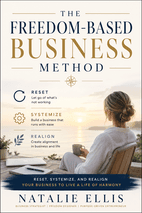
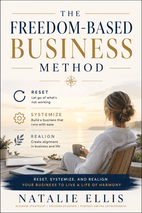
What is the book The Freedom-Based Business Method about?
Natalie Ellis's The Freedom-Based Business Method provides a systematic roadmap for high-achieving entrepreneurs trapped in burnout, replacing hustle culture with sustainable frameworks like the Four D's Framework, 4C marketing funnel, and 80 percent delegation rule to build a business that supports life rather than drains it.
Feature
Insta.Page
Blinkist
Shortform
The Freedom-Based Business Me…
✓
✕
✕
Summary Depth
Full Chapter-by-Chapter
15-min overview
Section-by-section guides
Audio Narration
✓
✓
✓
Visual Mindmaps
✓
✕
✕
AI Q&A
✓
✕
✕
Quizzes
✓
✕
✕
PDF Downloads
✓
✕
✓
Price
$89.99/yr
$146/yr (PRO)
$199/yr
*Competitor data last verified July 2026.
1 Page Summary
This book offers a roadmap for entrepreneurs trapped in the cycle of burnout, presenting a fundamental shift from a hustle-driven mindset to one centered on personal freedom and harmony. Author Natalie Ellis argues that chronic overwork is not a badge of honor, but a symptom of a dysregulated nervous system and an "upper limit problem"—a subconscious ceiling on how much ease and success one can tolerate. The solution begins not with more productivity hacks, but with radical self-honesty, starting with a "brain dump" of all commitments, an "Alignment Audit" to strip away "shoulds," and the "Four D's Framework" (Do, Defer, Delegate, Delete) for ruthlessly evaluating obligations drawn from someone else’s life blueprint.
The book’s distinctive approach lies in its systematic frameworks for building a business that runs on autopilot, freeing the founder from constant decision-making and chaos. Key systems include the "4C marketing funnel" (Qualifier, Conversion Event, Core Offer, Compact/Chief Offer) for predictable revenue, a "Content GPS" strategy that focuses on mastering one social platform and one owned channel (like a podcast), and the "Results Rhythm" for establishing flexible workflows that reduce decision fatigue and build momentum. A central tenet is the "80 percent rule" for delegation, which challenges the entrepreneur’s need for control by arguing that if someone can do a task 80 percent as well, it is worth handing over.
Intended for high-achieving entrepreneurs and business owners who feel trapped by their own success, the book replaces the myth of work-life balance with a more sustainable concept of "harmony"—a fluid integration of life and business that adapts to different seasons. Readers will learn to identify which season they are in (Sprint, Growth, Maintenance, or Recovery) and how to align their energy accordingly. Ultimately, the book guides the reader from a state of burnout, obligation, and resentment toward a life where the business supports their life, rather than the other way around, by prioritizing truthful conversations, setting clear boundaries, and trusting systems and teams.
CHAPTER 1 Free from Burnout
Overview
Anya built a PR agency she loved, only to find herself trapped in a cycle of exhaustion, physical pain, and guilt. Her body was screaming what she couldn’t yet admit: she had traded freedom for a prison of her own making. Her story illustrates how burnout isn’t a one-time crash but a recurring loop—excitement, overcommitment, overwhelm, resentment, collapse, then brief recovery before the cycle starts again. Most high achievers can rattle off the stories they tell themselves: “I’m a perfectionist,” “Everything is a priority,” “I just need to build more resilience.” Those reasons aren’t wrong, but they only scratch the surface. The real driver is a dysregulated nervous system that has learned to prefer chaos. Your window of tolerance—the zone where you can handle stress without falling apart—can be so narrow that even a calm day feels threatening. This is what Gay Hendricks calls the upper limit problem: a subconscious ceiling on how good you’re allowed to feel. When ease or success feels unfamiliar, your body flags it as dangerous, so you sabotage by piling on more work.
The cycle follows a predictable pattern: Trigger → Story → Reaction → Burnout → Temporary Relief → Repeat. The sweet spot to interrupt it is right after the trigger, when you feel that initial discomfort in your body—racing heart, unsettled stomach. At that moment, you can choose intention, ease, or spaciousness instead of engaging excessively. It will feel foreign at first, but widening your window is a muscle you build by making that choice repeatedly. Healing doesn’t come from mindset work alone; affirmation won’t expand your window, but nervous system regulation will. A powerful check-in of five questions helps you catch yourself before spiraling: when you notice a yes, ask what you’re trading; is the impulse coming from grounded safety or from scarcity and fear; what feeling are you avoiding by staying busy; does this need to happen right now; and is this aligned with the kind of business you’re building? These questions are tools for creating a body that feels safe inside your business.
Anya almost burned her entire business down, but instead she paused and asked those questions. That led her to create a program that gave clients access to media coverage without her being solely responsible for their results—a small pivot that revealed a love for teaching and a new compass: freedom over revenue. Healing your nervous system is the bedrock of sustainable success, and it starts with predictable rhythms (a ten-minute walk at the same time each day tells your body it can trust you), professional support (therapy or somatic coaching), shaping your environment for less chaos, and letting your body set the pace—slowing down not from laziness, but from wisdom. A visualization exercise invites you to actually feel your wildest dream life as if it’s already real, noticing how peace and joy are available to you right now. And finally, you are the momentum. You can let go of FOMO and ask yourself: How good am I willing to let things get? If you stop pressing the easy button out of discomfort and recalibrate for peace, things are about to get really good—but you have to let them.
Key Takeaways
Burnout is a recurring cycle, not a one-time event. The real driver is a dysregulated nervous system that feels safer in chaos than in calm.
Common self-stories (“I’m a perfectionist,” “Everything is a priority”) are surface symptoms. The root is a narrow window of tolerance.
The cycle follows: Trigger → Story → Reaction → Burnout → Temporary Relief → Repeat.
You can break the cycle at the initial sensation of discomfort—before you react. Choose differently, even if it feels unfamiliar.
Expanding your window of tolerance requires nervous system regulation, not just mindset work.
Interrupt cycle at initial body discomfort before reacting
Root Cause: Dysregulated Nervous System
Nervous system prefers chaos over calm
Narrow window of tolerance makes calm feel threatening
Upper limit problem: subconscious ceiling on feeling good
Surface Stories vs. Real Driver
Common stories: perfectionism, everything priority, need resilience
These are symptoms, not root causes
Healing requires nervous system regulation, not just mindset
Five Check-In Questions to Break the Cycle
What am I trading for this yes?
Is impulse from safety or scarcity/fear?
What feeling am I avoiding by staying busy?
Does this need to happen right now?
Path to Sustainable Success
Predictable rhythms build body trust
Professional support: therapy or somatic coaching
Shape environment for less chaos
Let body set pace—slow down from wisdom, not laziness
💡 Try clicking the AI chat button to ask questions about this book!
CHAPTER 2 Free from Expectation
Overview
The author had everything she thought she wanted—financial freedom, a successful business, a beautiful home, a new baby—but she felt hollow. That emptiness forced her to confront a painful truth: she had been running on autopilot, chasing someone else’s life blueprint. The shame she carried from childhood humiliations had convinced her that worth came from achievement, yet no amount of success filled the void. This is where real change begins: not with more hustle, but with the honest question, What do I actually want?
Every client she meets shares the same symptoms—chronic exhaustion, forgotten goals, the feeling of being a hamster on a wheel. Burnout isn’t cured by a spa day; it requires bone-deep awareness of where your energy is actually going. The first step is Closing the Tabs: getting every half-finished task, obligation, and secret desire out of your head and onto paper. A twenty-minute brain dump, organized into Being Pillars (who you are—parenting, health, relationships) and Doing Pillars (what you build—business, projects, deadlines). It feels tedious, but that’s the point. Only once you see the full mess can you start clearing it.
Then comes the Alignment Audit, which strips away the layers of “should” you’ve accumulated. Like the New Zealand sheep that hid for six years under sixty pounds of wool, the weight of expectations is dangerous—it smothers your true self. Every open tab gets sorted: genuine desires you keep, optional tasks that energize you, shoulds you can shed, and non-optional shoulds you question. The hardest part is admitting you’ve been doing things to feel important or to avoid disappointing others. A client named Samantha realized her fancy group program was draining her joy and profits, so she scaled back to one-on-one work she loved. Another closed a seven-figure business to open a bookshop in Portugal. You don’t have to burn it all down, but you must be radically honest about what lights you up versus what you’re only doing because you think you should.
Simplicity becomes the path to peace. The goal isn’t to do more—it’s to do less, with mastery, and to let your identity guide your actions. Three principles anchor this shift: you are not your expectations (they were absorbed, not chosen), energy follows attention (your calendar reveals your real priorities), and design your “To-Be” list first (let who you want to become shape what you do). A weekly review with journal prompts helps cement this awareness: Why do you take on things you don’t enjoy? Where did those expectations come from? What would your days look like free of them? Because every guilt-driven yes is a quiet no to something that actually matters.
From Success to Emptiness
Sitting in her beautiful home with her newborn daughter, the author felt completely hollow. She had everything—financial freedom, a successful business, a loving marriage—yet she was miserable. The blueprint she'd followed so diligently had led her to someone else's life. For nearly two decades, success had felt like a life-or-death proposition. She traced it back to childhood humiliations: classmates passing notes about her dirty clothes, being teased for her accent at university. All she wanted was to feel worthy, and she believed money was the path to that worth. But no amount of achievement could fill the void. She'd been running on autopilot, chasing more without ever asking enough for what? The painful answer emerged: she was living according to what she should do, not what she truly wanted.
Change Starts with Awareness
The author hears the same complaints from clients: chronic exhaustion, constant busyness without progress, an inability to switch off, forgotten goals. She recognizes herself in every one. She was a hamster on a wheel, running toward a destination she couldn't remember choosing. The burnout was suffocating, but she felt trapped. Any transformation begins with awareness. She realized her energy was being spent on tasks she didn't want to do, while the things that truly excited her—her zone of genius—had been delegated away because she felt too busy. To build a freedom-based business, you need to channel your energy into what lights you up and actually moves the needle. First, though, you must clear the cobwebs to remember what those desires even are.
Closing the Tabs
You can't rest your way out of deep exhaustion. No spa days, no vacation quick fixes. You need bone-deep cellular change—and that means proactively stopping to assess your whole life. This is the "Closing the Tabs" process. Right now, dozens of tabs are open in your mind, just like a browser. Half-finished tasks, reminders, obligations, things you've been meaning to do. They're all draining your energy, and many aren't even necessary. The goal is to get everything out of your brain and onto paper—actual paper, because handwriting cements thoughts differently.
EXERCISE: Being Pillars and Doing Pillars
Take a piece of paper and set a timer for twenty minutes. Write down every single project or category in your life as headings. Suspend judgment; this is a messy brain dump. Then split everything into two categories:
Being Pillars – who you are: parenting, health, marriage, friendships, spiritual growth, creating a peaceful home.
Doing Pillars – what you're building: business projects, launches, deadlines, content, team management, all the output.
Under each pillar, list every task—big or small, including the things you do on autopilot. Check your calendar for the last month. Write down client calls, emails, grocery shopping, doctors' appointments, working out, team meetings, cleaning, posting on social media. Don't forget the things you want to do but haven't gotten to—those open tabs are also draining you. This part feels tedious, but it brings awareness to everything vying for your attention.
Shed the “Shoulds”
Now comes the Alignment Audit—and it might get uncomfortable. We start life as innocent beings with no expectations, but we pile on "shoulds" until we lose sight of what we actually want. The author shares the story of a New Zealand sheep that hid for six years, accumulating sixty pounds of wool. Beneath all that fleece was a much smaller, lighter version of the animal that had been there all along. The weight wasn't just uncomfortable; it was dangerous—risking overheating, infection, limited mobility, and isolation. That's what expectations do to us. They collect until we forget who we were underneath. This self-discovery work isn't about becoming something new; it's about remembering who you always were and laying down the weight you were never meant to carry.
EXERCISE: Alignment Audit
Look at all your open tabs and categorize them:
Desire, Non-optional – tasks you genuinely want to do, that light you up and are aligned. Keep these.
Desire, Optional – things you want to do but aren't required. These are energizing but not essential.
Should, Optional – tasks you do because you feel you should, but they're not required. These are energy drains you can likely shed.
Should, Non-optional – things that must be done but you don't want to do. Examine if they truly need to be done by you, or at all.
Be honest about the sunk-cost fallacy—keeping something just because you've invested time or because it makes you feel important. The author found that speaking at conferences and networking made her feel like she'd "made it," but those activities never added to her bottom line as much as social media, which she enjoyed more.
Embracing Simplicity and Radical Honesty
One mastermind client, Samantha, had expanded her one-on-one coaching practice into a group program with consultants because she thought it was the "next step." But the expansion created stress and shrinking margins. When she did this exercise, she admitted she was happiest and most profitable doing one-on-one work. She scaled back and simplified. The fancier you make things, the less profitable you often become. Building a freedom-based business is about mastery and simplicity—stripping away what doesn't work and focusing on what does. It might mean disappointing someone else to stop disappointing yourself. It might mean unconventional decisions, like the author's client Melyssa Griffin, who shut down a seven-figure business to open a bookshop in Portugal. You don't have to burn it all down. But you do have to be radically honest about what you want—and what you're only doing because you think you should.
The goal shifts here from simply identifying the expectations that weigh you down to actively imagining a life without them. Allow yourself to dream—what if you actually stopped giving your energy to things that drain you? That finite energy is precious, and the way out of burnout isn’t to do more but to do less, with mastery of one area instead of mediocrity in many. Simplicity becomes the path to regulation and peace.
Key Principles
Three foundational ideas crystallize from this shift:
You are not your expectations – Most “shoulds” were absorbed from others, not chosen by you. They can be released.
Energy follows attention – Where you actually spend your time reveals your real priorities, no matter what you claim they are.
Design your “To-Be” list first – Let who you want to become guide what you choose to do, not
Key concepts: CHAPTER 2 Free from Expectation
2. CHAPTER 2 Free from Expectation
The Emptiness of Achievement
Author had everything but felt hollow
Success was chasing someone else's blueprint
Childhood shame tied worth to achievement
No amount of success filled the void
Burnout Requires Deep Awareness
Clients share chronic exhaustion and forgotten goals
Burnout isn't cured by spa days
Energy leaks into tasks you don't want
Zone of genius gets delegated away
Closing the Tabs Process
Get all open tasks out of your head
Handwrite a 20-minute brain dump
List every obligation and secret desire
Check calendar for autopilot activities
Being Pillars vs Doing Pillars
Being Pillars: who you are (parenting, health)
Doing Pillars: what you build (business, projects)
Include tasks big, small, and unfinished
Awareness reveals everything vying for attention
Shed the Shoulds
Strip away layers of accumulated expectations
Sort desires: keep, energize, shed, question
Admit doing things to feel important
Radically honest about what lights you up
Simplicity as the Path to Peace
Goal is to do less with mastery
Let identity guide your actions
Design your To-Be list before doing
Weekly review with journal prompts
Three Anchoring Principles
You are not your expectations (absorbed, not chosen)
Energy follows attention (calendar reveals priorities)
Guilt-driven yes is a no to what matters
Question where expectations came from
CHAPTER 3 Free from Obligation
Overview
You've been carrying a heavy load of obligations—commitments born from expectations that don't actually serve you. The distinction matters: expectations are the internal pressures and "shoulds" that weigh on your mind, while obligations are the concrete actions and roles you take on because of those pressures. The author illustrates this through her own experience living in Los Angeles as a young entrepreneur, attending endless networking events and parties because she believed that's what success looked like. It took a global pandemic and a wiped-clean calendar for her to realize she'd been living according to someone else's script, showing up to events she didn't enjoy because she felt obligated. That realization led to a complete reorientation around how she spends her time.
The Four D's Framework
You need a system to evaluate everything competing for your attention. The Four D's Framework—Do, Defer, Delegate, Delete—gives you a clear way to sort through your task list and make intentional decisions about what deserves your time. This productivity method has roots in the Eisenhower Matrix, but the real power comes from applying it with brutal honesty.
Do: These are tasks you feel aligned with. They fall into two categories: things you enjoy and things that are essential for you personally to handle. Ideally, those overlap. The key is to let go of preconceived notions about what a CEO "should" do and focus on what actually lights you up and moves your business forward.
Defer: Good ideas at the wrong time. Write them down, set a future date, and mentally release them. This clears mental clutter and guilt, acknowledging that you aren't going to do them right now.
Delegate: Tasks that must be done but don't require you personally. This could mean hiring help, asking your partner to take something on, or bringing in a cleaner. Delegation doesn't require a whole team—just a willingness to free yourself from jobs that don't need your specific touch.
Delete: Tasks that drain your energy without adding value. Let them go forever. This is often the hardest category because it means admitting certain projects or platforms aren't serving your vision. It might not feel good at first, but it opens up space for what matters.
Your To-Be List Becomes Your Compass
Most productivity systems miss something fundamental: you aren't just trying to get things done—you're trying to become someone. The most successful entrepreneurs don't just have better task lists; they have clarity about who they want to be. Your To-Be List becomes the filter for your To-Do List. When someone asks you to take on something new, the question shifts from "Do I have time?" to "Does this help me become who I want to be?"
Draw a line down the middle of a page. On one side, write who you want to be—how you want to feel and show up in the world. Words like calm, focused, energized, creative, present. On the other side, list one or two micro-actions that would help you embody each quality. This isn't about creating more tasks but about consciously aligning your actions with your desired state of being.
The real power comes when you use your To-Be List to evaluate everything in your Four D's framework. If you want to be creative but your task list is all administrative work, something needs to shift. This practice transforms a chaotic day into a purposeful one because you're approaching tasks from the perspective of your best self.
Key Takeaways
Every yes is a no to something else—make this trade-off consciously, not by default
Use the Four D's Framework deliberately for every task: Do, Defer, Delegate, or Delete
Let your "To-Be" list guide your "To-Do" list—who you want to become filters what you choose to do
Freedom isn't about having fewer obligations; it's about choosing your obligations consciously
Key concepts: CHAPTER 3 Free from Obligation
3. CHAPTER 3 Free from Obligation
The Burden of Obligation
Obligations stem from internal expectations and 'shoulds'
Living according to someone else's script drains energy
A wiped-clean calendar revealed misaligned commitments
The Four D's Framework
Do: Tasks aligned with your enjoyment or necessity
Defer: Good ideas saved for a better time
Delegate: Tasks others can handle instead of you
Delete: Draining tasks that add no value
Your To-Be List as a Compass
Focus on who you want to become, not just tasks
Your To-Be List filters your To-Do List
Align micro-actions with desired qualities like calm or creative
Conscious Choice Over Default
Every yes is a no to something else
Freedom means choosing obligations deliberately
Use the Four D's with brutal honesty
CHAPTER 4 Free from Distraction
Overview
When Natalie juggled four jobs and saw her husband single-focus on one, the lesson was clear: focus beats frantic effort every time. That realization is the backbone of this chapter. Bossbabe hit its first million with a single $29 product, and the philosophy is simple—master one thing obsessively rather than scraping by on ten. That single product becomes the engine for everything else.
From that foundation, the chapter builds a marketing funnel that works on autopilot. The 4C funnel maps the customer journey: a qualifier that gets their attention, a conversion event that earns their trust, a core offer that delivers the transformation, and optionally a compact or chief offer for upsells or downsells. Each stage has one job, and each needs to work before you move to the next. That prevents the chaos of creating twenty products at once.
The qualifier is the entry point—a free lead magnet that must pass three tests: does it provide a quick win, does it connect to your main offer, and does it make people want more? Understanding your audience's real pain points, not just demographics, is what makes a qualifier work. The conversion event—like a webinar or challenge—takes those leads and builds trust through storytelling, interactivity, and smart follow-up. Even seasoned entrepreneurs can get it wrong, so listening and adjusting is non-negotiable.
Then there are the three kinds of offers: your core offer (the signature dish that drives 80% of revenue), a compact offer (a lower-priced entry for budget-conscious leads), and a chief offer (a high-touch premium experience). But the rule is to start with just one core offer—it can take you to a million dollars. Position it around the transformation it creates, not the features. Track attendance and conversion rates to notice patterns, but don't drown in data. Simplicity wins every time. A focused funnel, one product, one system—that's how you build a business that actually frees you up.
Focus on One Single Product
When Natalie first moved to the States, she was juggling four jobs: a full-time media company role, running social media for Bossbabe’s original founder, her supplement company Oh My Glow, and building her personal brand. She was spinning her wheels across all of them, making little meaningful progress. Watching her husband Stephen—a former top gamer turned Facebook exec—laser-focus on one job each day made her realize the power of concentrated effort. Eventually, a green card waiting period forced her to let go of the media company and the supplement company, giving her the space to decide: go all-in on Bossbabe.
The key insight? You don’t need a complex product suite. Bossbabe hit its first million dollars in revenue with a single $29 product—the Société membership. That’s still their primary offer today. The secret isn’t a magic bullet; it’s focus. Master one product obsessively, and that beats scattered progress across ten directions. Natalie cites Cal Newport’s Deep Work and the example of Basecamp (formerly 37signals), which dropped its entire suite of products to focus exclusively on project management and became a multimillion-dollar company. More is not better—mastery is better.
Building a Marketing Funnel
A sales engine is the system that powers your revenue on autopilot. It has three core components: your offer (what you sell), your funnel (how people buy it), and your traffic (how they find it). Most entrepreneurs try to fix traffic when their funnel is broken. The funnel itself is just the customer journey from awareness to purchase. Natalie uses the 4C funnel, which stands for:
Client Qualifier – They discover you and raise their hand.
Conversion Event – They learn from you and begin to trust you.
Core Offer – They buy your main product.
Chief/Compact Offer – They either upgrade (chief) or try something smaller (compact).
Each stage has one job. Master each before moving to the next. This framework prevents you from creating twenty products and getting stuck in sales chaos.
The Qualifier
The qualifier (often called a lead magnet or freebie) is the entry point. It must provide real, tangible value and qualify people who are genuinely interested in your core offer. To create one, you need deep understanding of your audience—not just demographics but their pain points, desires, and what's blocking their progress. Natalie shares a client example: Amanda, a nutritionist, created a free guide “5 Exercises to Do in 10 Minutes at Home” that spoke directly to busy moms who felt they had no time. Amanda discovered her audience was overwhelmed by choice, not unmotivated.
Seven ways to identify pain points: start with demographics and psychographics, listen to your audience (even 200 followers count), conduct surveys, analyze customer feedback, do interviews, use tools like Google Trends and AnswerThePublic, and study competitors’ messaging. A great qualifier can be repurposed from existing popular content—like a well-performing blog post or podcast episode.
A qualifier must pass three tests:
Value Test: Can someone get a quick win from this?
Alignment Test: Does it connect directly to your core offer?
Desire Test: Does it make them want more of what you teach?
If it fails any, fix it before worrying about traffic.
The Conversion Event
Once leads are qualified, you invite them to a conversion event—a webinar, challenge, live Q&A, workshop, or video series. The goal is to provide value, build trust, and then present your offer. Natalie uses webinars heavily at Bossbabe. She shares a personal failure: she created a webinar titled “How to Get 1 Million Followers on Instagram” and got almost no sign-ups. When she asked her community, they told her that number felt unattainable—they just wanted their first 10,000. She renamed it and it performed far better. The lesson: even after eight years, you can get it wrong. Listen, adjust, and keep testing.
Making Your Conversion Events Work
A conversion event only works if it actually converts. That means refining your approach beyond just showing up. Focus on storytelling to build emotional connection—share success stories, case studies, or your own journey so your audience can see themselves in the transformation. If you're on video, don't lecture; create interactivity through questions, Q&A, or calling out names. That keeps people engaged and less likely to zone out.
Follow-up is just as important as the live event. Even if someone doesn't buy during the event, a thoughtful email sequence can nurture them toward a yes. And track your numbers: attendance rate tells you whether your qualifier and emails are aligned, while conversion rate reveals if your offer and presentation are hitting the mark. Don't get lost in data too early—just start noticing patterns so you can tweak as you go.
The Three Kinds of Offers
Once your funnel is running, you need a clear offer structure. But hear this: you only need one offer to start. A single core offer can take you to a million dollars. Think of your offers like a restaurant menu: your core offer is the signature dish, your compact offer is the appetizer, and your chief offer is the chef’s table. Master your signature dish before adding anything else.
Your core offer should make up 80% or more of your revenue. Position it around the transformation it provides, not just features. For example, Freedom Fast Track isn't a funnel course—it's a way to make a full-time income online. Make it specific, unique, sticky, and price-accessible. Outline deliverables clearly so customers know exactly what they're getting.
A compact offer is a streamlined, lower-priced version of your core offer. Amanda, the health coach we worked with, created a $50 e-book with recipes and workouts for people who didn't buy her $5,000 coaching package. She didn't add this until over a year into her funnel. A compact offer can test the market or serve budget-conscious leads who still want a taste of your work.
On the high end, a chief offer is a premium, high-touch experience—VIP days, one-on-one coaching, or an exclusive mastermind. It's not necessarily a bigger version of your core offer; it can be a different experience entirely. My CEO Mama Mastermind is a chief offer for seven-figure moms, separate from the Société. Price reflects the level of customization and support.
To see it all in action, here's the funnel that's generated millions for Freedom Fast Track: the qualifier is a “7-Figure Funnel Roadmap” guide, followed by a webinar (our conversion event) where we teach valuable content and present the core offer. For those ready to go deeper, we offer a VIP day as a chief offer. Simple, focused, and effective.
Distractions are the enemy of progress. Master one funnel, one product, one system before expanding. That's how you build a freedom-based business.
Key Takeaways
A conversion event needs storytelling, interactivity, and a thoughtful follow-up to actually convert.
Start with one core offer; add compact and chief offers only after your funnel runs smoothly.
Position offers around transformation and outcomes, not features.
Simplicity wins: a functional, focused funnel beats a complex, half-broken one every time.
Track attendance and conversion rates to refine your funnel, but don't overcomplicate early on.
Key concepts: CHAPTER 4 Free from Distraction
4. CHAPTER 4 Free from Distraction
Focus on One Single Product
Master one product obsessively, not ten
Bossbabe hit first million with single $29 product
More is not better; mastery is better
Concentrated effort beats scattered progress
Building a Marketing Funnel
Sales engine has offer, funnel, and traffic
Fix broken funnel before fixing traffic
4C funnel maps customer journey
Master each stage before moving to next
The Qualifier (Lead Magnet)
Entry point providing real, tangible value
Must pass value, alignment, and desire tests
Understand audience pain points, not just demographics
Repurpose popular content for qualifier
The Conversion Event
Builds trust through storytelling and interactivity
Includes smart follow-up and listening
Even seasoned entrepreneurs can get it wrong
Adjust based on audience feedback
Three Kinds of Offers
Core offer drives 80% of revenue
Compact offer is lower-priced entry
Chief offer is high-touch premium experience
Start with just one core offer
Position Around Transformation
Focus on transformation, not features
Track attendance and conversion rates
Don't drown in data; simplicity wins
One product, one system frees you up
Identify Audience Pain Points
Use surveys, interviews, and feedback
Analyze competitors' messaging
Tools like Google Trends and AnswerThePublic
Even 200 followers count for listening
You've reached the end of the free chapters
Next chapter: “CHAPTER 6 Free from Uncertainty” is locked
Keep reading The Freedom-Based Business Method — and unlock all 600+ book summaries with audio, mindmaps and AI Q&A.
$0.00 due today · 7 days free, then $89.99/year ($7.49/mo) · Cancel anytime before day 7
plus sales tax where applicable
More ways to explore The Freedom-Based Business Method
Natalie Ellis is a bestselling author and the co-founder of the media company BossBabe, recognized for her expertise in entrepreneurship and online business growth. She is best known for her book *The Big Glow: The Ultimate Guide to Manifesting an Abundant Life*, which draws on her experience building a multimillion-dollar brand. Her work focuses on empowering women to achieve financial freedom and personal fulfillment through strategic goal-setting and mindset shifts.
Frequently Asked Questions about The Freedom-Based Business Method
What is The Freedom-Based Business Method about?
This book shows entrepreneurs how to escape the cycle of burnout, obligation, and chaos by building a business that truly supports their freedom. It combines mindset shifts with actionable frameworks like the Four D's (Do, Defer, Delegate, Delete) and the 4C marketing funnel to replace hustle with intentional, sustainable systems. Through real stories and practical tools, it guides readers to align their work with their values, delegate effectively, and create rhythms that adapt to life's seasons.
Who is the author of The Freedom-Based Business Method?
Natalie Ellis is the co-founder of Bossbabe, a multimillion-dollar brand that empowers women in business. She built her first million with a single $29 product and now teaches entrepreneurs how to achieve financial freedom without sacrificing their well-being. Her approach blends hard-won personal experience with proven frameworks for scaling a business while protecting your peace.
Is The Freedom-Based Business Method worth reading?
Absolutely—this book offers a rare combination of deep mindset work and step-by-step business systems that actually prevent burnout instead of just treating it. It’s for any entrepreneur who feels trapped in the grind and wants a clear, repeatable method to build a business that runs on its own. The practical frameworks, like the Content GPS and Results Rhythm, give you immediate actions to reclaim your time and energy.
What are the key lessons from The Freedom-Based Business Method?
The book teaches that burnout stems from a dysregulated nervous system and a narrow window of tolerance, not just overwork. Key frameworks include the Four D's (Do, Defer, Delegate, Delete) to prioritize tasks, the 4C marketing funnel to automate customer acquisition, and the Content GPS to focus on one platform and two content types. It also emphasizes the 80 percent rule for delegation, identifying your season (sprint, growth, maintenance, or recovery), and using resentment as a signal for neglected boundaries.
📚 Explore Our Book Summary Library
Discover more insightful book summaries from our collection