Get Paid to Teach Summary by Jonathan Milligan (Free)

1. The Thriving Paid Teacher

Chapter 1 of 4
0:000:00
EN
1x
Voice
PDF

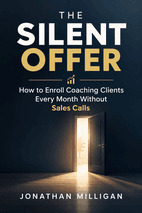
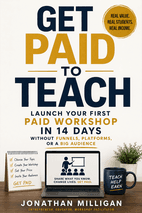
Get Paid to Teach

by Jonathan Milligan

Get Paid to Teach book cover

What is the book Get Paid to Teach about?

Jonathan Milligan's Get Paid to Teach presents a low-risk, two-week system for creating and selling a paid workshop without needing a large audience or technical skills, flipping the traditional build-first model by validating demand through a Proof Offer™. Designed for aspiring teachers, coaches, and creators who feel overwhelmed by complex course creation.

FeatureInsta.PageBlinkist
Get Paid to Teach
Summary DepthFull Chapter-by-Chapter15-min overview
Audio Narration
Visual Mindmaps
AI Q&A
Quizzes
PDF Downloads
Price$89.99/yr$146/yr (PRO)
*Competitor data last verified July 2026.

1 Page Summary

This book presents a direct, low-risk system for creating and selling a paid workshop within two weeks, specifically designed for those who lack a large audience, technical skills, or complex marketing funnels. The core thesis flips the traditional "build first, sell later" model on its head. Instead of months of preparation, the author advocates for a Proof Offer™, where you first gauge genuine demand by floating an idea and seeing who is willing to pay, thereby validating the market before investing significant time or resources. The book argues that a paid workshop is not just a product but a lower-effort, higher-income strategy that can be repeated on demand, generating income and building a relationship with an audience through teaching.

Jonathan Milligan’s approach is distinctive for its ruthless emphasis on simplicity and validation. He provides a step-by-step framework that begins with uncovering specific audience frustrations and flipping them into desired outcomes, which directly become the marketing copy. The methodology includes crafting a single, powerful "one belief" sentence that promises a new result through a unique mechanism, and then testing this idea with a "hand-raiser post" on social media to gauge real interest (categorized as cold, warm, or hot). The book then guides the reader through assembling a tiny toolbox of just four essentials—a compelling title, a single-page checkout, a payment method, and Zoom—and introduces a "Lazy Launch Calendar" that builds curiosity without aggressive selling. A key differentiator is an early focus on validating the workshop idea, preventing wasted effort on unproven concepts.

The intended audience is aspiring teachers, coaches, and creators who feel overwhelmed by the complexity of traditional course creation and marketing. Readers will gain a concrete, repeatable system to design, launch, and deliver their first paid workshop in just 14 days. The book teaches core skills such as identifying a market-validated workshop topic, writing persuasive copy derived from audience pain points, building a simple registration page using AI, and delivering an engaging workshop that naturally leads to an invitation for deeper work. Ultimately, readers are equipped with a scalable, low-tech process that prioritizes testing and iterative refinement over reinvention, moving them from theory to a paid teaching reality.

1. The Thriving Paid Teacher

Overview

Most teachers work harder than they need to. They pour months into building a course, recording modules, designing sales pages—only to launch and discover nobody wants to buy. That’s the default approach, and it’s exhausting. The thriving paid teacher takes a different path: lower effort, higher income, and a system that can be deployed on command. You run a workshop, bring in a couple thousand dollars, send a handful of people to a next step, and you can breathe. You hold a strategy you can use whenever you want, monthly or quarterly. Lower effort doesn’t mean lazy. It means you’ve stopped building blind and started validating first.

The Proof Offer: Selling Before You Build

The mistake most teachers make is building first and selling second. The paid workshop flips that order. You float the idea, let your audience vote with their wallets, and only construct what they’ve already paid for. That’s a Proof Offer™—it proves demand is real before you risk your time. More quietly, it changes the relationship between teaching and selling. When people pay to learn, you teach in a way that naturally helps them want the next step. Charging also raises the quality of everyone in the room. A small list of buyers outperforms a big crowd of freebie-seekers every time.

The Four Quadrants of a Teacher’s Journey

The Insider Impact Model™ maps nine key systems for building a full-time writer or coaching business. The focus of this book is the Proof Offer™, but understanding where you stand is crucial. Every teacher is in one of four places, and the goal is the fourth quadrant: the thriving paid teacher who earns well with less effort. Getting there starts with a single decision—and it’s the one most teachers get wrong. They chase the obvious topic instead of the one people will actually pay to solve.

Key Takeaways
  • You’re standing in one of four places as a teacher, and the goal is the fourth: the thriving paid teacher with lower effort and higher income.
  • A paid workshop is a proof offer. It validates demand and gets you paid before you build anything.
  • Teaching and selling aren’t separate steps. When people pay to learn, you teach in a way that helps them want the next step.
  • Charging raises the quality of everyone in the room. A small list of buyers beats a big crowd of freebie-seekers.
  • The fourth quadrant is the destination. The path there starts with one decision, and it’s choosing the topic people will actually pay to solve.

Key concepts: 1. The Thriving Paid Teacher

1. The Thriving Paid Teacher

The Flawed Default Approach

  • Most teachers build courses before validating demand
  • Months of effort often lead to zero sales
  • Thriving teachers use lower effort, higher income systems

The Proof Offer: Sell Before You Build

  • Float the idea and let wallets vote first
  • Only construct what people have already paid for
  • Proves demand is real before risking your time

Benefits of Paid Workshops

  • Charging raises quality of everyone in the room
  • Small paying audience outperforms big freebie crowd
  • Teaching naturally helps students want the next step

The Four Quadrants of a Teacher’s Journey

  • Insider Impact Model maps nine key systems
  • Goal is quadrant four: thriving paid teacher
  • Earns well with less effort and on-demand system

The Critical First Decision

  • Most teachers chase obvious topics, not paid ones
  • Choose the topic people will actually pay to solve
  • This single decision starts the path to quadrant four
💡 Try clicking the AI chat button to ask questions about this book!

2. Digging for the Vein

Overview

Frustration turns into gold through a simple mechanism: the flip. You’ve spent time digging in the frustration zone, and now it’s time to see what those frustrations really point toward. Every pain has an opposite—a desire that’s almost begging to be spoken. Name the frustration honestly, and the want appears like a gift. That want isn’t just a feel‑good discovery; it’s the raw material for everything you’ll sell later.

From Pain to Payoff

Three common frustrations—too much effort, tech overwhelm, no audience—each flip into a concrete want: a quick payday, simple tools, real audience growth. This isn’t wishful thinking. It’s a deliberate reframe. When you stay with the frustration long enough, the opposite emerges naturally, “like coins from a torn pocket.” Your job isn’t to invent wants; it’s to uncover them.

The Hidden Copy Mine

Those wants aren’t just nice to know. They’re the bullet points that will sell your workshop. When you later write your checkout page, you won’t have to brainstorm benefits from scratch. You’ll copy them straight from this column. A quick payday, simple tools, audience growth—your future marketing copy is being written right now, one flip at a time.

Step 4: Name the Future Aspiration

The final flip is the big one: the aspiration. It’s the opposite of the fear your audience carries. While the wants are immediate and practical, the aspiration is the larger dream—the future they’re reaching for. This step completes the map, giving you both the tactical bullets and the emotional north star.

Key Takeaways
  • Frustrations and wants are two sides of the same coin; name the frustration well, and the want comes for free.
  • These flipped wants become the direct selling points for your workshop—no extra brainstorming needed.
  • The aspiration is the opposite of the audience’s fear, and it anchors the whole journey.

Key concepts: 2. Digging for the Vein

2. Digging for the Vein

The Frustration Flip

  • Every frustration has an opposite desire
  • Name the frustration honestly to reveal the want
  • The want is raw material for selling later
  • Frustrations like effort, tech, and audience flip into wants

Hidden Copy Mine

  • Flipped wants become direct selling points
  • No extra brainstorming needed for marketing copy
  • Quick payday, simple tools, audience growth are examples
  • Future checkout page benefits are written now

The Aspiration Anchor

  • The final flip is the larger dream
  • Aspiration is opposite of the audience's fear
  • Completes the map with tactical and emotional elements
  • Anchors the whole customer journey

3. Craft the One Belief

Overview

The heart of this chapter is a tiny, three-part formula that packs more persuasive power than most people’s entire sales pages. You have one job: write a single sentence that makes your audience believe something new is possible. The formula is deceptively simple—a new opportunity is the key to a desired result, and it’s attainable only through a new mechanism—but each piece earns its place.

The new opportunity is the fresh approach you’re offering. The desired result is the outcome your audience already craves, the aspiration you identified in the previous step. The new mechanism is the specific path that gets them there—the thing only you teach. Take my own example: “Clients on autopilot” (new opportunity) “is the key to a thriving coaching business” (desired result) “attainable only through the Invisible Lead System” (new mechanism). Each slot is filled, and together they read like a promise worth paying for.

Why the Little Formula Works So Well

People don’t buy information; they buy a new belief about what’s possible for them. That one sentence installs the belief. The word “only” is doing heavy lifting here—it signals that this result isn’t available through the tired methods they’ve already tried and abandoned. There’s a new way, and you have it. That whisper of exclusivity is what makes a skeptical prospect lean in instead of scroll past.

Key Takeaways
  • People don’t buy information, they buy a new belief about what’s possible for them. One sentence can install that belief.
  • The formula is fixed: a new opportunity is the key to a desired result, attainable only through a new mechanism.
  • The same sentence names two things. The front becomes your workshop title, the end becomes your framework name, and both create curiosity.
  • The ten questions answer every objection in advance, and the foundation doc turns that work into copy you’ll reuse all month.

Key concepts: 3. Craft the One Belief

3. Craft the One Belief

The Three-Part Formula

  • New opportunity is the fresh approach offered
  • Desired result is the outcome audience craves
  • New mechanism is the specific path only you teach
  • Formula: new opportunity → desired result → new mechanism

Why the Formula Works

  • People buy a new belief, not information
  • One sentence installs that belief
  • The word 'only' signals exclusivity and scarcity
  • Creates curiosity and makes prospects lean in

Practical Applications

  • Front of sentence becomes workshop title
  • End of sentence becomes framework name
  • Ten questions answer objections in advance
  • Foundation doc turns work into reusable copy

4. The Hand-Raiser Post

Overview

The hand-raiser post is only the beginning. Its real power emerges not from the initial post but from how you handle the aftermath—the moments after comments start rolling in. This chapter treats engagement as fuel, not vanity. Every reply you make to a comment pushes the post to new eyes, extending the test’s lifespan. But the real prize lies in what happens next: the shift from public conversation to private follow-up, where a simple “interested” becomes a lead, and eventually a sale.

Engagement Drives Reach

Don’t post and vanish. If four or five people comment, reply to each one. The algorithm notices activity, and your post gets shown to others who haven’t seen it yet. Your replies are the engine that keeps the test alive. Let the post breathe for a few days—let those interactions accumulate. The more you engage, the more data you gather about who actually wants what you’re offering.

Turning Interest into Sales

Once your workshop is built and your landing page is live, go back to that post. Message every single person who commented “interested.” They already raised their hand—you’re just following up. The message is simple: “Thanks for commenting. I decided to do it. Here’s the link.” No pitch, no pressure. You’re delivering exactly what they asked for. This closes the loop. The sale happens because these people were already leaning in. The DM is just the final nudge.

Extend to Email List

Don’t forget your email list. Your social audience and your email list are not the same people, and the list is often more serious. Mirror the same hand-raiser tactic there: send a short email with “Interested?” as the subject line. The same principle applies—give them a clear, low-friction way to say yes, then follow up directly.

Key Takeaways
  • Engagement on a hand-raiser post extends its reach; reply to every comment.
  • Turn public “interested” comments into private DMs once your offer is ready.
  • The DM follow-up is a natural next step, not a pushy pitch.
  • Your email list is a separate, often more committed audience—send them the same opportunity.

Key concepts: 4. The Hand-Raiser Post

4. The Hand-Raiser Post

Engagement Drives Reach

  • Reply to every comment to boost algorithm visibility
  • Your replies keep the post alive and extend its lifespan
  • Let interactions accumulate over a few days
  • More engagement yields more data on interested buyers

Turning Interest into Sales

  • Message every 'interested' commenter after offer is ready
  • Simple follow-up: 'Thanks, here's the link'
  • No pitch or pressure—deliver what they asked for
  • The DM is the final nudge to close the sale

Extend to Email List

  • Email list is separate from social audience
  • Mirror hand-raiser tactic with short 'Interested?' email
  • Provide low-friction way to say yes
  • Follow up directly with committed subscribers

Post-Comment Strategy

  • Hand-raiser post is just the beginning
  • Engagement is fuel, not vanity
  • Private follow-up shifts public interest to leads
  • Simple 'interested' becomes a sale
You've reached the end of the free chapters

Next chapter: “Cold, Warm, or Hot” is locked

Keep reading Get Paid to Teach — and unlock all 500+ book summaries with audio, mindmaps and AI Q&A.

$0.00 due today · 7 days free, then $89.99/year ($7.49/mo) · Cancel anytime before day 7

About the Author

Jonathan Milligan

Jonathan Milligan is an author and productivity expert known for his work in helping individuals design intentional lives. He wrote *Your Message Matters* and *The 4 Disciplines of Execution* for creatives, drawing on his background as a coach and blogger. Milligan's expertise centers on goal-setting, time management, and overcoming overwhelm to achieve meaningful work.

Frequently Asked Questions about Get Paid to Teach

What is Get Paid to Teach about?
This book presents a low-effort, high-income system for paid teaching that flips the traditional build-first, sell-later approach. Instead, it guides you to validate demand with a 'Proof Offer' workshop before investing time in creating content. You'll learn a step-by-step method to find a profitable topic, craft a compelling belief statement, and launch a paid workshop quickly using simple tools like hand-raiser posts, a one-page checkout, and Zoom. The emphasis is on selling first, then building—so you only create what people have already paid for.
Who is the author of Get Paid to Teach?
Jonathan Milligan is an expert in helping entrepreneurs monetize their knowledge through paid workshops. He runs the 'Get Paid to Teach Bootcamp' and provides additional resources at MarketYourMessage.com. His approach is practical and battle-tested, focused on helping teachers achieve quick, repeatable income without complicated funnels or large audiences.
Is Get Paid to Teach worth reading?
Absolutely—because it offers a refreshingly practical system that saves months of wasted effort by validating demand first. You'll get a repeatable five-phase launch process that can be executed in days, not months, using minimal tech. The book includes ready-to-use tools like the Registration Page GPT and a Lazy Launch Calendar, making it actionable from page one.
What are the key lessons from Get Paid to Teach?
The most critical lesson is to validate demand with a Proof Offer before building anything—flip your audience's frustrations into specific wants that become your marketing copy. You'll learn to craft a single belief sentence that makes your audience see a new possibility, and test interest with a simple hand-raiser post. The workshop itself should focus on five non-negotiable principles, and the invitation to your next offer is the single most important sentence that can double your income. Ultimately, simplicity scales: run the same proven workshop repeatedly rather than constantly reinventing.
0