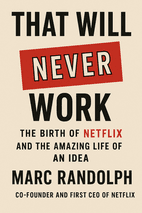
Marc Randolph's That Will Never Work chronicles the chaotic early days of Netflix, detailing the iterative process from a vague online idea to the disruptive DVD-by-mail model. It's for entrepreneurs and innovators seeking a real-world case study in building through experimentation, rapid failure, and customer feedback.
Feature
Insta.Page
Blinkist
Shortform
Summary Depth
Full Chapter-by-Chapter
15-min overview
Section-by-section guides
Audio Narration
✓
✓
✓
Visual Mindmaps
✓
✕
✕
AI Q&A
✓
✕
✕
Quizzes
✓
✕
✕
PDF Downloads
✓
✕
✓
Price
$89.99/yr
$146/yr (PRO)
$199/yr
*Competitor data last verified July 2026.
1 Page Summary
In That Will Never Work, Netflix co-founder Marc Randolph chronicles the chaotic and improbable early days of the company, dismantling the myth of a flawless, preordained path to success. The narrative focuses on the period from 1997 to 2000, detailing the iterative process of moving from a vague idea—selling or renting something online—to the specific, disruptive model of DVD-by-mail. Randolph vividly portrays the scrappy, experimental culture of the startup, where success was built on a foundation of constant testing, rapid failure, and learning from direct customer feedback, from the first mailed DVD (Beetlejuice) to the critical decision to adopt a subscription model.
The book is deeply rooted in the historical context of the late 1990s dot-com boom, capturing a moment of both immense opportunity and skepticism. Randolph recounts navigating the nascent e-commerce landscape, the technological limitations of dial-up internet, and the pivotal bet on the then-new DVD format over VHS. A central theme is his complex partnership with Reed Hastings, highlighting how their complementary skills—Randolph's focus on brainstorming, branding, and early product-market fit, and Hastings' operational and financial rigor—were essential to navigating existential threats and investor pressures.
The lasting impact of this origin story is its testament to entrepreneurial perseverance and customer-centric innovation. Randolph argues that Netflix's ultimate triumph in streaming was made possible only by the hard-won lessons, brand trust, and mailing infrastructure built during these foundational years. The book serves as a compelling case study in how to build a culture that embraces uncertainty, demonstrating that transformative ideas often begin not with grand visions, but with simple, testable questions aimed at solving a real customer problem.
1. Against Epiphanies
Overview
The story kicks off on a rain-slicked commute, where Marc Randolph’s frantic pitching of business ideas meets Reed Hastings’s cool, logical dissection. Their dynamic is the beating heart of a search for something new, set against a backdrop of impending corporate mergers and personal restlessness. This daily ritual underscores a foundational theme from the very beginning: the need to distrust epiphanies. The moment that feels like a breakthrough—personalized shampoo—is revealed as just one of countless ideas, highlighting that real innovation is a messy, gradual process, not a sudden stroke of genius.
Marc’s drive stems from a unique heritage. His father instilled the meticulous joy of building and the imperative to own a business, while his family’s connection to Edward Bernays and Sigmund Freud gifted him a deep understanding of marketing and human desire. This combination fuels him during a period of professional limbo, where he, alongside colleagues Christina Kish and Te Smith, has time but no real mission. Filling notebooks with ideas, Marc is determined to build something from scratch.
The real work happens not in isolation, but through collaborative rigor. Christina’s analytical prowess and Te’s narrative savvy form a brain trust that subjects every concept, from personalized surfboards to custom pet food, to ruthless scrutiny. It’s during this process that Reed Hastings provides a pivotal filter: scalability. He argues that a viable service must allow geometric growth, where serving a thousand customers isn’t a thousand times harder than serving one. This principle immediately disqualifies many personalized goods and shifts the search toward recurring services with efficient unit economics.
This new framework leads to the spark of an alternative: VHS tapes by mail. For a glorious moment, it seems perfect—solving the inconvenience of video stores. But the idea is swiftly dismantled by reality. Grounded skepticism from Marc’s wife is followed by Christina’s crushing financial analysis, revealing impossible costs and slow postal turnaround times that can’t compete with Blockbuster’s instant access. The team confronts the hard truth that convenience must drastically outweigh cost, and they erase another failed idea from the whiteboard. The chapter closes not with a eureka moment, but with the understanding that the path to a viable business is paved with discarded concepts, forged in the friction of partnership and guided by immutable principles.
The Morning Commute & The Idea Machine
The narrative opens in the chaotic reality of a rainy January morning in 1997. Marc Randolph, perpetually late, scrambles to meet Reed Hastings for their carpool over the Santa Cruz Mountains to Sunnyvale. Their driving styles are a study in contrasts: Reed prefers a meticulous, coffee-cup-safe pace, while Marc drives his beat-up Volvo with "impatient" aggression. On this day, it's Marc's turn, and he uses the commute to pitch his latest business idea: customized, personalized baseball bats sold online.
Reed's response is a familiar, blank-faced, thirty-second analysis followed by a definitive verdict: "That will never work." This begins a passionate but productive argument, a daily ritual where Marc pitches ideas and Reed, with Spock-like logic, dissects their flaws. Reed had recently acquired Marc's startup, and with a larger merger pending that would leave them both jobless, Marc is determined to start something new and hopes to recruit Reed as an investor.
Debunking the "Aha!" Moment
During this particular traffic jam, frustrated by a slow sand truck, Marc has a sudden epiphany: "Personalized shampoo by mail." The moment feels cinematic—the sun breaks through, traffic moves—aligning with the Silicon Valley love for a perfect origin story. The author immediately counters this, arguing that such tales, like the apocryphal Blockbuster late-fee story for Netflix, are oversimplified "emotional truths."
The truth, he asserts, is far messier. For every good idea, there are countless bad ones, and it's often impossible to distinguish them in the moment. The path from "personalized shampoo" to Netflix was not straight, and real ideas don't arrive fully formed in flashes of lightning. They emerge slowly, over weeks and months of discussion and research. The first hard-won truth is introduced: distrust epiphanies.
A Foundation of Building & Marketing
To understand Marc's drive, the story flashes back to his childhood. His father, a nuclear engineer turned financial advisor, spent nights in his basement building exquisite, fully functional miniature steam trains by hand. For him, the joy was in the years of meticulous labor, not the finished product. He imparted a crucial lesson: to build an estate and control your life, you should own your own business.
This instinct to build was paired with a family legacy in marketing. Marc's middle name, Bernays, comes from his relation to Edward Bernays, the father of modern public relations, and Sigmund Freud was a great-grand-uncle. This heritage cemented in Marc a fascination with connecting products to people, a skill he honed through years in direct marketing and as a co-founder of MacUser and early mail-order computer companies.
Professional Limbo and the Search for Purpose
By 1997, Marc found himself in a strange professional purgatory. The pending merger meant he, and the team he'd recently hired (the detail-oriented Christina Kish and the savvy Te Smith), had nothing to do but collect paychecks in a boring, cubicle-filled office. Reed, feeling burned out, was planning to pursue education reform at Stanford.
Filling time with hockey and futile golf practice, Marc felt a deep need for purposeful engagement. He carried a notebook everywhere, constantly generating ideas (#114 was personalized surfboards), driven by a responsibility to his team and a personal desire to finally build something entirely his own from the ground up. The daily carpool pitches to Reed were his sounding board, a free consulting session in a dirty Volvo, pushing toward an unknown future.
The narrative shifts into the tangible, collaborative process of idea generation, moving away from solitary inspiration and into the rigorous workshop of reality. The author's partnership with Christina and Te becomes the central engine, transforming vague notions into researched, stress-tested business concepts.
The Collaborative Brain Trust
Christina and Te are portrayed as essential, complementary forces. Christina, the intense and detail-oriented strategist, analyzes numbers and business models with a relentless focus on feasibility. Te, the eccentric PR virtuoso, brings an understanding of marketing, media, and public perception, viewing every idea through the lens of its story. Their dynamic with the author is one of constructive skepticism—no middle-of-the-night idea is sacred, and each is subjected to the harsh light of research and whiteboard math. This process, while often leading to dead ends, is described as pleasurable and generative, akin to the author's father designing in the basement; the act of building and designing something together is its own reward.
The Dog Food Debacle and the Scalability Principle
A specific rejected idea—custom-blended pet food—serves as a critical teaching moment during a car ride with investor Reed Hastings. Reed dismisses the concept not just on cost, but on a fundamental principle: it lacks scalability. He articulates the core challenge of a service business, advising the author to seek a product where the effort to serve a dozen customers is the same as serving one, and where customer relationships are recurring, not one-time transactions. This advice immediately disqualifies many of the author's previous ideas for personalized, infrequently purchased goods.
The Spark of an Alternative: VHS by Mail
Pondering Reed's criteria, the author suggests "videotapes." While initially a joke referencing a late fee, it sparks a new line of thinking. The team seizes on it, exploring the possibility of an online VHS rental service that could bypass the inconvenience of video stores. The initial enthusiasm is palpable—they envision solving a real customer pain point (the dreaded trip to Blockbuster with kids).
The Harsh Reality Check
The idea quickly collides with practical and financial realities, examined from multiple angles:
At Home: The author's wife, Lorraine, provides a grounded, skeptical perspective, immediately pointing out the messiness and impracticality, declaring "That will never work."
In the Office: Christina's research delivers the fatal blows. She reveals the exorbitant cost of VHS tapes (up to $80 for new releases), the slow turnaround time due to postal shipping, and the brutal math: a mailed tape might be rented only 4 times a month versus a brick-and-mortar store's 25. The economics are impossible; by the time a mailed tape could be rented enough to break even, it would no longer be a new release.
The Competition: Te and Christina emphasize the omnipresence and convenience of Blockbuster, which could offer immediate gratification. The proposed model asks customers to trade instant access for delayed convenience, a poor bargain.
Faced with this wall of data and logic, the author concedes defeat. The VHS-by-mail idea, like the dozens before it, is erased from the whiteboard. The search must continue, now guided by the strict, unforgiving parameters of scalability, repeat customer value, and unit economics.
Key Takeaways
Innovation is a Team Sport: Breakthrough ideas are rarely born in isolation; they are forged in collaboration with diverse thinkers who challenge assumptions and stress-test feasibility.
Scalability is Non-Negotiable: A viable business idea must have a model where serving more customers does not require linearly increasing effort or cost. The goal is geometric, not arithmetic, growth.
Convenience Must Outweigh Cost: A new service must offer a compelling advantage over existing alternatives. For VHS rentals, the proposed model added cost, delay, and uncertainty without a sufficient upside to displace the instant, if annoying, local video store.
Passion is Not a Business Model: Enthusiasm for an idea's potential must be immediately tempered by ruthless financial analysis and market reality. The "perfect" idea on paper can be shattered by simple unit economics.
Key concepts: 1. Against Epiphanies
1. Against Epiphanies
The Collaborative Idea Generation Process
Daily commute pitches between Marc Randolph and Reed Hastings establish a ritual of idea testing
Reed Hastings provides logical, Spock-like dissection of each business concept
Christina Kish's analytical prowess and Te Smith's narrative savvy form a critical brain trust
Every concept undergoes ruthless scrutiny before being accepted or discarded
The process emphasizes gradual development over sudden inspiration
Rejecting the Epiphany Narrative
Personalized shampoo moment illustrates the deceptive nature of 'aha' moments
Silicon Valley's love for perfect origin stories oversimplifies complex innovation
Real ideas emerge slowly through weeks of discussion and research
Good and bad ideas are often indistinguishable in the moment
Foundational principle: distrust epiphanies as reliable indicators of viability
Marc Randolph's Formative Influences
Father's meticulous craftsmanship taught the joy of building process over finished product
Family imperative to own a business for control and estate building
Edward Bernays and Sigmund Freud family connection provided marketing psychology foundation
Direct marketing experience honed ability to connect products to human desires
Combination of building instinct and marketing savvy fuels entrepreneurial drive
Scalability as the Critical Filter
Reed Hastings introduces geometric growth as essential principle
Viable service must allow serving thousands without proportional increase in difficulty
Personalized physical goods fail scalability test due to manufacturing constraints
Search shifts toward recurring services with efficient unit economics
Scalability immediately disqualifies many initially appealing concepts
The Reality Testing of Ideas
VHS tapes by mail concept initially seems perfect solution to video store inconvenience
Grounded skepticism from Marc's wife provides initial reality check
Christina's financial analysis reveals impossible costs and slow postal turnaround
Convenience must drastically outweigh cost to compete with existing solutions
Whiteboard erasure symbolizes necessary process of discarding failed concepts
Professional Context and Motivation
Impending corporate merger creates professional limbo and job insecurity
Marc's team has time but no mission, collecting paychecks in boring office environment
Reed Hastings' burnout leads him toward education reform interests
Notebooks filled with ideas reflect determination to build something from scratch
Search for new venture emerges from restlessness rather than clear opportunity
The Collaborative Brain Trust
Christina and Te serve as essential, complementary forces in the idea generation process.
Christina provides intense, detail-oriented analysis of numbers and business model feasibility.
Te brings marketing, media, and storytelling expertise, viewing ideas through a PR lens.
Their dynamic with the author is one of constructive skepticism, subjecting every idea to research and whiteboard math.
The collaborative process is described as pleasurable and generative, akin to the author's father's design work.
The Dog Food Debacle and the Scalability Principle
Reed Hastings dismisses the custom-blended pet food idea based on a lack of scalability.
He articulates the core challenge of service businesses versus scalable product businesses.
The ideal model requires serving many customers with the same effort as serving one.
Customer relationships should be recurring, not one-time transactions.
This principle immediately disqualifies many personalized, infrequently purchased goods ideas.
The Spark of an Alternative: VHS by Mail
The author jokingly suggests 'videotapes' as a response to Reed's scalability criteria.
The team seizes on the idea, exploring an online VHS rental service to bypass video store inconvenience.
Initial enthusiasm focuses on solving the customer pain point of trips to Blockbuster with kids.
The concept represents a shift toward addressing a known market need with a new delivery model.
The Harsh Reality Check
The author's wife, Lorraine, provides immediate grounded skepticism about practicality and messiness.
Christina's research reveals fatal flaws: high VHS tape costs ($80 for new releases) and slow postal turnaround.
Unit economics show a mailed tape might rent only 4 times monthly versus a store's 25, making breakeven impossible.
The model asks customers to trade instant Blockbuster access for delayed convenience—a poor bargain.
The VHS-by-mail idea is ultimately erased from consideration after confronting market and financial realities.
Key Takeaways
Innovation is a team sport, forged through collaboration with diverse thinkers who challenge assumptions.
Scalability is non-negotiable—viable ideas must allow geometric, not arithmetic, growth.
A new service must offer compelling advantages that outweigh costs compared to existing alternatives.
Passion is not a business model; ideas must survive ruthless financial analysis and market reality.
The search must continue under strict parameters of scalability, repeat value, and unit economics.
💡 Try clicking the AI chat button to ask questions about this book!
3. Please, Mr. Postman
Overview
The chapter opens not with a eureka moment, but with the grinding frustration of dead-end ideas. The breakthrough for what would become Netflix came from a simple observation about an emerging technology: the DVD. Its small, lightweight physical form meant it could be mailed cheaply in a standard envelope, a revolutionary contrast to bulky VHS tapes. Paired with the insight that studios planned to sell DVDs affordably like CDs, a path emerged to finally crack the massive video rental market through a mail-order rental service.
Testing this postal fantasy became a whimsical yet crucial experiment. Mailing a CD in a greeting card envelope locally seemed to confirm the idea’s feasibility, though pure luck played a role—they’d unknowingly avoided the destructive automated sorting machines that would have shredded their test. Despite this false positive, the successful test made the core economics feel plausible. The team then confronted the major hurdle of extremely limited DVD titles, but cleverly reframed this weakness as a strategic advantage. By getting in early, they could build a library and own the DVD-by-mail category before traditional stores even noticed the format.
Turning the idea into reality required funding in an era before lean startups. The founders valued their nascent company at a bold $3 million, and Reed Hastings became the angel investor, putting in $2 million for operations. This investment caused dilution, shifting the ownership split but providing the essential capital to build a website and hire engineers. With funding secured, the early team began rapidly assembling pieces—sketching website layouts by hand and recruiting talent—all against the backdrop of the exploding internet.
This frenzied activity was part of a much larger phenomenon. The chapter argues the late-1990s internet boom wasn't a period of irrational exuberance, but a rational response to a genuine frontier. It felt less like a speculative bubble and more like the historic expeditions of Lewis and Clark—a shared, pioneering adventure into a vast, unplowed green field where the sense of abundant opportunity made it feel like there was enough land for everyone. This atmosphere of expansive possibility fueled their momentum from a simple idea into a launched venture.
The Seed of an Idea
Frustration had set in as earlier ideas fizzled out during commutes. The spark for what would become Netflix came from an emerging technology: the DVD. While its origins were hazy—possibly from Reed’s tech journals or a friend’s mention—the key realization was its physical form. A DVD was the size of a compact disc, meaning it could be small and light enough to mail in a standard envelope with a single stamp. This was a revolutionary contrast to the bulky, expensive-to-ship VHS tapes.
Christina's research revealed another critical advantage: movie studios, learning from the VHS rental wars, planned to price DVDs as affordable collectibles ($15-$25), hoping consumers would buy them like CDs. This created a potential opportunity. If DVDs became popular, a mail-order rental service could leverage cheaper inventory and postage to finally crack the $8 billion video rental market, potentially owning the new "DVD-by-mail" category before anyone else.
A Postal Fantasy and a Crucial Test
The narrator often fantasized with his wife, Lorraine, about leaving Silicon Valley's pressures for a simpler life, perhaps as a small-town mail carrier. Ironically, this whimsical daydream intersected with the new business idea. At Lulu Carpenter's cafe in Santa Cruz, across from the grand post office, he pitched the "DVDs by mail" concept to an intensely caffeinated Reed Hastings. To test the feasibility, they conducted a rough experiment: they bought a used Patsy Cline CD, placed it in a greeting card envelope, and mailed it locally from the Santa Cruz post office to Reed's Santa Cruz address for 32 cents.
The test was a success—the CD arrived intact the next day. Only later did they learn they benefited from a "false positive." Their local mail was handled gently by hand; had they mailed it to a non-local address, it would have gone through an automated sorting facility in San Jose and likely been destroyed. Their luck held.
Validating the Model
The successful test was a turning point. While logistical challenges like turnaround time remained, the core economics now seemed plausible. Christina and Te pointed out the glaring hurdle of limited content: by mid-1997, only about 125 DVD titles existed versus tens of thousands on VHS. The team reframed this weakness as a strategic advantage. They could get in early, building a DVD library before traditional video stores even started carrying the format, making their service the only option for early adopters.
The Mechanics of Starting Up
With an idea in hand, the focus shifted to execution and funding. In 1997, unlike today, you couldn't validate an online business in a weekend; you needed capital to build a website, process payments, and hire engineers. This meant selling the idea to investors with little more than a pitch. Reed and the narrator valued their nascent company (the idea and their involvement) at $3 million.
Reed became the angel investor, putting in $2 million for operational cash. This investment caused "dilution." Initially splitting ownership 50/50, the narrator chose not to invest his own money, dedicating his time instead. Reed's cash bought new shares, shifting the ownership to 70% (Reed) and 30% (the narrator). This was a standard and acceptable trade-off to fund the venture.
Assembling Pieces Amidst a Frenzy
Reed used his network to recruit early talent, like future CTO Eric Meyer. Meanwhile, the narrator and Christina began visualizing the service, sketching website layouts by hand and scouting for cheap office space (a Best Western conference room was a contender). This rapid progression from idea to early planning was characteristic of Silicon Valley in the late 1990s. The internet was exploding—growing from 25,000 websites in 1995 to over 300,000 by March 1997—creating a palpable sense of urgency and possibility that fueled their momentum.
The Entrepreneurial Gold Rush
The author sharply refutes the common characterization of the late-nineties internet boom as a period of "irrational exuberance." While acknowledging the sheer exuberance felt by thousands of entrepreneurs and engineers scrambling to monetize the web, they argue the excitement was utterly rational. It wasn't a bubble fueled by delusion, but a logical response to a genuine, unprecedented opportunity. The internet represented a vast, uncharted territory—an "open green field" that was "unplowed, unplanted." This frontier metaphor becomes central, with the era compared to the historic expeditions of Lewis and Clark. There was a pervasive, shared sense among those involved that they were pioneers at the beginning of a monumental adventure. Crucially, the feeling was not one of cutthroat competition for a single prize, but of expansive possibility: there was enough land for everyone.
Key Takeaways
The intense excitement of the late-90s internet boom was a rational response to a genuinely revolutionary technological frontier, not mere irrational speculation.
The era is best understood through the metaphor of exploration and pioneering, with the internet seen as a vast, unclaimed territory full of potential.
A defining sentiment was one of abundant opportunity, where the scale of the new "land" meant there was room for countless ventures to succeed.
Key concepts: 3. Please, Mr. Postman
2. 3. Please, Mr. Postman
The DVD as a Catalytic Technology
Physical form enabled cheap mailing in standard envelopes
Affordable pricing model by studios ($15-$25) like CDs
Contrast to bulky, expensive-to-ship VHS tapes
Potential to crack the $8 billion video rental market
The Feasibility Test and False Positive
Mailed a CD in a greeting card envelope locally for 32 cents
Successful arrival created false confidence in postal viability
Later learned local hand-sorting avoided destructive automation
Whimsical experiment intersecting with business concept
Strategic Reframing of Limitations
Only 125 DVD titles existed versus thousands on VHS
Reframed limited content as early-mover advantage
Opportunity to build library before traditional stores adopted format
Position as only option for early DVD adopters
Funding and Ownership Structure
Company valued at $3 million for initial funding
Reed Hastings invested $2 million as angel investor
Dilution shifted ownership from 50/50 to 70/30 split
Capital needed for website, engineers, and operations in pre-lean startup era
The Internet Boom as Frontier Opportunity
Late-1990s seen as rational response to genuine frontier
Compared to Lewis and Clark expeditions into unplowed territory
Atmosphere of abundant opportunity rather than irrational exuberance
Reed Hastings leveraged his network to recruit early talent like future CTO Eric Meyer
The narrator and Christina began visualizing the service through hand-sketched website layouts and scouting for cheap office space
Rapid progression from idea to planning was characteristic of Silicon Valley's late-1990s environment
Internet growth from 25,000 websites (1995) to 300,000+ (March 1997) created palpable urgency and momentum
The Entrepreneurial Gold Rush: Rational Exuberance
Rejects characterization of late-90s boom as 'irrational exuberance'—argues excitement was rational response to genuine opportunity
Internet represented an 'open green field'—unplowed, unplanted territory comparable to historic frontier exploration
Era compared to Lewis and Clark expeditions with shared sense of pioneering at beginning of monumental adventure
Defining sentiment: abundant opportunity where 'there was enough land for everyone' rather than cutthroat competition
4. Getting the Band Together
Overview
The chapter captures a pivotal, scrappy phase in Netflix's creation: the deliberate assembly of its founding team and the search for a company culture. Set in July 1997, nine months before launch, it details the practical challenges of building a company before securing funding, painting a picture of a group of believers hashing out a future empire in diner booths and hotel conference rooms.
We were a company in theory, holding our crucial planning sessions at a central, no-frills Hobee's in Cupertino. The location was a logistical compromise between team members' homes, and the setting reflected our bootstrap reality: we had no office and no money for one. Around those laminated tables, our core team—Christina, Te, Eric Meyer (the provisional CTO), and the Ukrainian coding duo Boris and Vita Droutman—divided the work. Christina and Te presented market research from visits to countless video stores alongside early site designs, while Eric, Boris, and Vita descended into technical jargon. The author, constantly multitasking, worked on recruiting, naming, and funding problems even as he sat there.
Filling two key roles presented contrasting challenges. For a CFO, the author targeted Duane Mensinger, a meticulous and risk-averse former Price Waterhouse accountant. Duane repeatedly said no but agreed to act as a "rent-a-CFO," helping build financial models. The opposite problem was Jim Cook, a friend of Christina's from Intuit, who was eager, optimistic, and desperately wanted the CFO title. The author saw him as perfect for the gritty work of building operations—figuring out how to buy, store, and ship DVDs—but Jim negotiated relentlessly with a persistent, unnerving grin. The compromise came with a lesson on titles: to avoid cascading title inflation, the author decreed everyone would start as directors. For Jim, however, he made an exception, bringing him on in October as "director of finance and operations" with the understanding that operations was the immediate need, and the CFO title might follow.
Parallel to team-building was the search for a physical home and a philosophical identity. The author was adamant about basing the company in Santa Cruz, not a standard Silicon Valley office park. He wanted the town's laid-back, anti-"growth at all costs" ethos to attract freethinkers and prioritize life balance, envisioning a workplace where his kids could visit and commutes weren't soul-crushing. Until funding arrived, however, our first "office" was a conference room at the Scotts Valley Best Western—a space later found, cruelly, converted into a sad hotel gym.
A significant subplot involved the relentless courtship of Mitch Lowe, a video store savant first met at the hallucinogenic Video Software Dealers Association (VSDA) trade show in Las Vegas. Posing as a small video store owner, the author was initially fooled by Mitch's unassuming presence in the "pipe-and-drape" section, only to later discover he was the VSDA Chairman. Mitch possessed a deep, generous knowledge of both movies and customer habits, acting as a "movie sommelier." The author began wooing him with lunches at Buck's in Woodside, a Silicon Valley institution where venture deals were sketched on napkins beneath a hanging motorless race car. Over many Reubens, the author absorbed Mitch's industry knowledge and floated ideas just to hear them shot down. Mitch, a non-Valley guy with a surprising past (involving clothing smuggling and a mother with a "porn Oscar"), was intrigued but hesitant to leave his family business. The pursuit continued, calorie by calorie, hoping his unique blend of content and logistics expertise would eventually join the team.
Key Takeaways
Ideas improve through sharing: Contrary to instincts for secrecy, openly discussing the idea provided valuable feedback, attracted talent, and uncovered historical failures.
Compromise on titles, not on roles: Job titles have hidden costs in expectations and promotions. Defining roles clearly is more important than inflating titles, though strategic exceptions are sometimes necessary to secure key people.
Culture is a deliberate choice: The fight to base the company in Santa Cruz was an early, conscious decision to build a different kind of company culture—one valuing life balance and attracting people outside the Silicon Valley mainstream.
Expertise can come from unexpected places: Vital industry insight and future leadership were found not in tech circles, but in the traditional video rental business, emphasizing the value of deep, practical domain knowledge.
Persistence is a founding currency: The early days were defined by relentless pursuit—of team members like Jim Cook and Mitch Lowe, of funding, and of a physical space—often conducted over endless meals in mundane locations.
Key concepts: 4. Getting the Band Together
3. 4. Getting the Band Together
The Bootstrap Planning Phase
Core team meetings held at a Hobee's diner in Cupertino due to no office and no funding
Division of labor: market research and design vs. technical development
Founder multitasked on recruiting, naming, and funding during sessions
Assembling the Core Team: Contrasting Challenges
CFO role: pursued Duane Mensinger (risk-averse, said no, became 'rent-a-CFO')
Operations role: pursued Jim Cook (eager, negotiated relentlessly for CFO title)
Title strategy: implemented 'director' titles for all to avoid inflation, with a strategic exception for Jim Cook
Defining Company Culture and Physical Space
Deliberate choice to base company in Santa Cruz for its laid-back, anti-'growth at all costs' ethos
Aimed to attract freethinkers, prioritize life balance, and enable family-friendly workplace
Initial 'office' was a Best Western conference room, highlighting bootstrap reality
The Courtship of Industry Expertise: Mitch Lowe
Mitch Lowe was a video store savant and VSDA Chairman with deep movie and customer knowledge
Pursued through persistent lunches at Buck's in Woodside to absorb his industry insight
Represented the value of domain knowledge from outside traditional tech circles
Founding Principles and Strategies
Openly sharing ideas to gain feedback, attract talent, and learn from past failures
Prioritizing clear role definition over inflated job titles
Relentless persistence as a key resource in pursuing team, funding, and space
5. Show Me the Money
Overview
Early funding for a startup is less about slick presentations and more about facing the profound discomfort of asking. This chapter confronts that reality head-on, tracing a journey to secure the final $100,000 for Netflix’s seed round. It builds on a core entrepreneurial principle: OPM (Other People's Money). The logic is that risking your own capital isn’t just financially dangerous; it’s a missed opportunity for external validation. If you can’t convince others to believe, maybe the idea isn’t ready.
The author’s own training for this task came not from a business school, but from a blindfolded panhandling exercise in his youth. That raw experience of shame and vulnerability on a city street taught him that asking an investor for thousands paled in comparison to asking a stranger for spare change. That lesson in humility was tested immediately in the first formal pitch, which ended not with polite feedback but with a blunt dismissal—the investor called the entire DVD-by-mail concept “sheet,” predicting its instant obsolescence by digital streaming. While his technological vision was correct in the long run, he failed to grasp the practical and commercial barriers that would give the Netflix model a decade to thrive.
Faced with external skepticism, the fundraising effort turned inward, to the far more emotionally complex arena of personal relationships. Asking a mentor to invest $25,000 to join the board felt like a bait-and-switch, imposing a financial burden on a friendship. The mentor agreed, seeing it more as a supportive gift than a sound investment, highlighting how early capital often flows from belief in the person, not the spreadsheet.
This emotional tension peaks in the decision to ask family. The choice of which parent to approach was dictated by a deep parental divide in financial philosophy—a risk-averse father shaped by the Great Depression versus an entrepreneurial mother who understood investment. The actual request became a sort of Kabuki theater, a scripted performance where both parties played their familiar roles, devoid of genuine business analysis. In a moment of profound grace, the mother performed a delicate emotional alchemy, joking that her returns would buy her a future apartment. This transformed a familial gift into the dignified fiction of a “real investment,” preserving her son’s pride while simultaneously cementing his burden to succeed. The chapter reveals that seed funding is forged in these deeply human moments of vulnerability, relationship, and resilient hope.
The Uncomfortable Art of the Ask
This section explores the fundamental startup principle of using Other People's Money (OPM) and the profound discomfort of asking for it. The narrative centers on the early efforts to secure the final $100,000 of seed funding for Netflix, contrasting high-stakes Silicon Valley pitches with a deeply personal lesson in humility.
The OPM Principle
The chapter establishes OPM—Other People’s Money—as a cardinal rule for savvy entrepreneurs. The rationale is that starting a company is risky enough with your time and effort; you shouldn’t also risk your personal capital. Using OPM forces validation from the outside world. If you can convince someone to part with their cash, it’s a stronger signal of a viable idea than supportive words from friends. This philosophy led co-founder Reed Hastings to reduce his personal seed investment from $2 million to $1.9 million, tasking the team with raising the remaining $100,000 from external sources.
A Lesson in Humility: Panhandling in Hartford
Before delving into investor meetings, the author recounts a formative experience from his youth working for the Wilderness School. As part of a training exercise to build empathy for underprivileged city kids, he was blindfolded, dropped in downtown Hartford with no money, and told to survive for three days. The most difficult challenge he faced was panhandling.
He describes the sheer terror of asking strangers for spare change, highlighting it as the purest, most naked form of sales: an ask with absolutely nothing offered in return. The experience taught him about shame, invisibility, and the power of a simple, honest request (“Can you spare some change? I’m really hungry.”). He concludes that this lesson made asking an investor for $25,000 seem trivial by comparison.
The First Pitch: "This is Sheet"
The first potential investor approached was Alexandre Balkanski of C-Cube Microsystems, a leader in digital video compression. Confident he would understand the DVD-by-mail vision, the founders pitched him in Milpitas. Instead of engagement, Balkanski dismissed the entire concept, bluntly calling it “sheet.”
His argument was that DVDs were a transient technology; the future was in downloading or streaming movies directly. While his technological prediction was ultimately correct, he severely underestimated the timeline and the real-world barriers. He failed to account for Hollywood’s vested interest in the DVD format, consumer internet limitations (the "last-mile" problem), and the lack of convenient ways to watch downloaded movies on a television. The rejection was jarring not for its content, but for its blunt, unequivocal delivery—a stark contrast to the typical polite Silicon Valley brush-off.
The Harder Ask: A Friend and Mentor
With external skepticism confirmed, the focus turned to a more personal and awkward request: asking Steve Kahn, a former boss and mentor, for a $25,000 investment to join the board. The author had already secured Kahn’s agreement to join the board as a favor, but Reed Hastings insisted board members have "skin in the game."
The author dreaded this ask, feeling it was a bait-and-switch. Over lunch, he witnessed the painful dilemma he created for his friend. A "no" would seem like a lack of belief, while a "yes" would essentially be a $25,000 gift born of personal loyalty, not conviction in the business. Kahn agreed, later confessing he viewed it as money he would never see again. This transaction underscored that sometimes early funding is secured not on the merit of the idea, but on the strength of a relationship and the visible hunger of the founder.
The author’s journey to secure initial funding confronts the deeply personal hurdle of asking family for money. While common in startup culture, the request felt infantilizing, reducing him to a child begging for spare change. This emotional complexity sets the stage for a fraught, yet inevitable, conversation.
The Parental Divide: Two Financial Philosophies
The decision of which parent to approach was clear-cut, dictated by opposing worldviews. The author’s father, scarred by his family’s losses in the Great Depression and his career on Wall Street, maintained a rigid, risk-averse philosophy. His meticulous ledgers and focus on solid, immediate profits represented everything the speculative, loss-leading Netflix model was not. Pitching him would have been an exercise in futility. In contrast, the author’s mother, while financially prudent, possessed an entrepreneurial spirit from running her own successful real estate firm. She understood risk and investment, had her own capital, and had a history of supporting her children’s ambitions, making her the only viable candidate.
The Kabuki Theater of the Ask
The actual phone call is described as a painful, scripted performance. Both parties understood their roles: the somewhat indulged son and the skeptical but ultimately generous mother. The author acknowledges using clumsy sales clichés, cringing at the memory. The transaction was stripped of any pretense of objective analysis; the investment was a function of their relationship, not the business plan. This shared understanding made the interaction both awkward and a foregone conclusion.
A Graceful Fiction and a Heavy Burden
The most memorable moment came not from the pitch, but from the mother’s gracious response. By joking that the returns would fund a future apartment, she performed a delicate act of emotional alchemy. She transformed what they both knew was a familial gift into the fiction of a “real investment,” preserving her son’s dignity and reframing her support as confidence in his long-term success. This grace, however, only intensified the author’s sense of pressure. Her willing “yes” cemented the obligation to succeed, making the stakes profoundly personal.
Key Takeaways
Seed funding is often deeply emotional, involving personal relationships and dynamics that transcend pure financial calculus.
Family history shapes financial psychology; a parent’s personal experiences with money can create an unbridgeable gap for certain types of risky ventures.
The "ask" itself is a performative ritual, especially within families, where pre-existing roles dictate the interaction as much as the business details.
A supportive investor’s grace can be a double-edged sword; transforming a gift into an “investment” preserves pride but can also magnify the emotional weight of responsibility.
Key concepts: 5. Show Me the Money
4. 5. Show Me the Money
The OPM Principle and Seed Funding Philosophy
Using Other People's Money (OPM) forces external validation of the business idea
Entrepreneurs should avoid risking personal capital beyond a necessary minimum
Early funding often flows from belief in the person rather than financial projections
Seed funding is forged in human moments of vulnerability and resilient hope
The Panhandling Lesson in Humility
Blindfolded panhandling exercise taught the purest form of asking with nothing in return
Experience revealed the terror of shame and invisibility when asking strangers
Learning to make simple, honest requests made investor asks seem trivial by comparison
Formative training in empathy and vulnerability that preceded business fundraising
External Investor Rejection and Technological Skepticism
First pitch to Alexandre Balkanski resulted in blunt dismissal: "This is sheet"
Investor correctly predicted digital streaming future but underestimated timeline
Rejection highlighted failure to account for practical barriers: Hollywood interests, internet limitations, and viewing technology
Contrast between technological vision and commercial reality gave Netflix model a decade to thrive
The Emotional Complexity of Asking Personal Connections
Asking mentor Steve Kahn for $25,000 felt like imposing financial burden on friendship
Mentor agreed as supportive gift rather than sound investment, highlighting personal belief over business analysis
Reed Hastings insisted board members have "skin in the game" through financial investment
Transition from external pitches to personal relationships marked shift in fundraising strategy
Family Funding and Parental Financial Philosophies
Choice of which parent to approach dictated by deep parental divide in risk tolerance
Request became Kabuki theater with scripted performance of familiar roles
Mother performed emotional alchemy by joking returns would buy future apartment
Transformed familial gift into dignified fiction of "real investment" to preserve pride while cementing obligation to succeed
The Painful Reality of Early Funding
Early funding is often secured based on personal relationships and founder hunger, not business merit
Investors may view early contributions as gifts rather than true investments
The 'ask' creates a dilemma where refusal implies lack of belief while agreement stems from loyalty
The Emotional Hurdle of Family Funding
Asking family for money can feel infantilizing, reducing the founder to a child begging
Startup culture normalizes family funding despite its emotional complexity
The process sets the stage for fraught conversations with deep personal stakes
Parental Financial Philosophies
Family history with money creates vastly different risk tolerances
The father's Great Depression experience led to rigid, risk-averse financial views
The mother's entrepreneurial background made her the only viable funding source
Parental worldviews determine viability for startup investment pitches
The Ritualistic Nature of Family Investment
Family funding conversations follow scripted, performative roles
Both parties understand the transaction lacks objective business analysis
The interaction becomes awkward yet predetermined by relationship dynamics
Founders often resort to clumsy sales tactics in these personal settings
The Emotional Alchemy of Support
Supportive investors transform gifts into 'investments' to preserve dignity
This graceful fiction reframes personal support as confidence in long-term success
The transformation intensifies the founder's pressure and sense of obligation
Family investment makes success a profoundly personal imperative
You've reached the end of the free chapters
Next chapter: “How It Feels to Deposit a Check for Almost $2 Million” is locked
Keep reading That Will Never Work — and unlock all 600+ book summaries with audio, mindmaps and AI Q&A.
$0.00 due today · 7 days free, then $89.99/year ($7.49/mo) · Cancel anytime before day 7
Marc Randolph is an American entrepreneur, author, and startup mentor best known as the co-founder and first CEO of Netflix. Working alongside Reed Hastings, he helped shape Netflix’s original idea, early product iterations, and customer-centric culture. After leaving Netflix, Randolph became a prominent advisor to startups, investing in and mentoring dozens of early-stage companies. He is also the author of That Will Never Work, a candid account of Netflix’s founding and the lessons learned about innovation, resilience, and entrepreneurship.
📚 Explore Our Book Summary Library
Discover more insightful book summaries from our collection