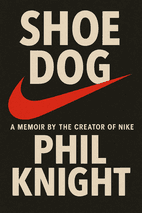
Phil Knight's Shoe Dog chronicles the tumultuous founding of Nike, detailing the relentless hustle, financial peril, and partnerships that built a global empire from a trunkful of shoes. This raw memoir is for entrepreneurs and anyone inspired by the gritty reality behind a visionary brand.
Feature
Insta.Page
Blinkist
Shortform
Summary Depth
Full Chapter-by-Chapter
15-min overview
Section-by-section guides
Audio Narration
✓
✓
✓
Visual Mindmaps
✓
✕
✕
AI Q&A
✓
✕
✕
Quizzes
✓
✕
✕
PDF Downloads
✓
✕
✓
Price
$89.99/yr
$146/yr (PRO)
$199/yr
*Competitor data last verified July 2026.
1 Page Summary
Phil Knight's memoir chronicles the tumultuous early years of Nike, from its 1964 inception as Blue Ribbon Sports—a shoe importer operating from his car's trunk—to its evolution into a global athletic empire. The narrative is a raw, personal account of the relentless hustle, financial peril, and sheer grit required to build the company. Key concepts include the "Crazy Idea" that launched the journey, the profound importance of partnership (embodied by his first employee and eventual co-founder, Bill Bowerman), and the constant battle against cash flow crises, skeptical bankers, and larger competitors like Adidas.
Set against the backdrop of the 1960s and 1970s, the book provides historical context for the birth of the modern running craze and the transformation of athletic gear into a cultural symbol. Knight details pivotal moments: the creation of the iconic waffle sole, the fraught relationship with Japanese suppliers, the naming of the brand after the Greek goddess of victory, and the legal battles that threatened its existence. The story is as much about the eclectic group of misfits and believers—the original "Buttfaces"—who formed the company's soul as it is about business strategy.
The lasting impact of Knight's journey is the testament to a philosophy that prioritized mission over pure profit, innovation over convention, and the visceral power of sport. Shoe Dog transcends a typical business biography to become a universal story about the emotional rollercoaster of pursuing a passion. It reveals how a company built on a handshake, a shared obsession with perfecting the athletic shoe, and a willingness to risk everything ultimately created not just a product, but one of the world's most recognizable and influential brands.
1. 1962
Overview
In 1962, the narrator pitches his Crazy Idea to his father in their TV room, proposing to import Japanese running shoes to the U.S. market, inspired by how Japanese cameras had disrupted industries. To his surprise, his father agrees and offers financial help, expressing regret for not traveling more himself. Family reactions reveal historical baggage, especially from his grandmother, whose World War II fears about Japan contrast with the narrator’s desire to break free from his father’s obsession with respectability. He prepares meticulously and convinces his friend Carter to join a global backpacking trip, but their journey takes a detour in Hawaii, where they abandon plans for a surfer lifestyle, working odd jobs until the Cuban Missile Crisis stirs restlessness. When Carter stays for a romance, the narrator flies alone to Tokyo, grappling with anxiety over the war’s legacy.
Arriving in a city of contrasts, he sees both vibrant lights and war-scarred neighborhoods, immersing himself in Zen philosophy while learning from American contacts about the indirect nature of Japanese business. Following their advice, he travels to Kobe for a meeting with Onitsuka Co., where, on the spot, he invents the company name Blue Ribbon Sports and secures a deal to represent Tiger shoes in the United States. Elated but driven by wanderlust, he embarks on a solo pilgrimage through Asia, from Hong Kong’s poverty to India’s spiritual intensity, often unconsciously analyzing footwear amidst moments of loneliness and curiosity.
His European travels become an immersive education in art and history, as he explores empty museums in Rome, contemplates Michelangelo’s anger in Florence, and studies Leonardo da Vinci’s reverence for the human foot in Milan. Moving north, he confronts twentieth-century trauma in Germany, visiting the Munich beer hall and a chilling Checkpoint Charlie in East Berlin, where the Cold War’s ideology is symbolized by a girl’s cardboard shoes. In Vienna, he walks paths once shared by conflicting giants like Freud and Hitler, while London inspires thoughts of Churchill. The journey peaks in Greece at the Acropolis, where the Temple of Athena Nike offers a transcendent sense of homecoming, subtly tying together themes of victory, negotiation, and shoes.
Returning to Oregon on his twenty-fifth birthday, he’s greeted by a surprised family but, after a brief rest, his first urgent question is whether the prototype shoes he commissioned have arrived. This global odyssey, rich with cultural insights and personal reflection, circles back to its entrepreneurial heart, highlighting how the search for meaning abroad fuels the practical ambition to build something meaningful at home.
The Morning Run and a Father's Blessing
The narrator begins with an early morning run, describing the physical stiffness and mental resistance that accompanies starting. This leads into a flashback to 1962, where he carefully chooses a relaxed moment to pitch his "Crazy Idea" to his father in the TV room. He outlines his Stanford business paper proposing that Japanese running shoes could disrupt the market like Japanese cameras had, an idea that captivated him despite his classmates' boredom.
He explains his dual desire: a global backpacking trip to see sacred sites and experience a spiritual connection, and a side venture to Japan to pitch his shoe company idea. He needs his father's approval and financial help to cover a $1,000 shortfall. Expecting immediate rejection due to the cost, risk, and his father's conventional, respectability-focused nature, he is stunned when his father agrees, expressing regret for not traveling more in his own youth.
Family Reactions and Historical Baggage
The narrator’s grandmother, Mom Hatfield, reacts with fear and vivid warnings about Japan, her perspective shaped by World War II radio reports and the pervasive anti-Japanese sentiment of that era. His mother’s silent pride and his sisters' indifference round out the family response. The narrator reflects that a secret motive for his trip is to differentiate himself from his father’s obsession with respectability.
Preparation and Partnership
He prepares meticulously and convinces his Stanford friend Carter to join the global adventure. Carter enthusiastically agrees to the ambitious itinerary. They pack lightly, with the narrator including a good suit specifically for potential business meetings in Japan.
Hawaiian Interlude
Their journey begins with a flight to Honolulu. Enchanted by Waikiki, they abandon their immediate travel plans, get an apartment, and take jobs selling encyclopedias door-to-door. The narrator is terrible at sales, a rejection that stings due to his innate shyness, and he quits. He then lands a job selling securities in a boiler-room operation for Bernard Cornfeld’s firm, where his honesty and knowledge bring modest success.
Their hedonistic surfer lifestyle is punctuated by the Cuban Missile Crisis, which they fatalistically observe from beachside bars. Once the crisis passes, a restlessness sets in. When the narrator decides it’s time to resume their world tour, Carter chooses to stay for a girl. Faced with traveling alone or going home, the narrator decides to press on, buying a one-year open airline ticket.
Departure for Japan
On Thanksgiving Day, 1962, he leaves Carter and boards a flight to Tokyo. Anxiety surfaces mid-flight as he contemplates the recent war with Japan. Reading The Catcher in the Rye, he identifies with Holden Caulfield’s search for place. Upon arrival, the bright lights of the Ginza contrast with vast, dark areas still devastated by American firebombing, a stark reminder of the war’s destruction that his grandmother had feared.
Tokyo: A City of Contrasts
Awakening in a desolate, industrial part of Tokyo, the narrator is struck by the lingering scars of war. He connects with American contacts at United Press International, who help him find better lodgings and, upon hearing his "Crazy Idea" to import shoes, direct him to two ex-GIs running a magazine called Importer. Before seeking their advice, he explores the city, immersing himself in the serene aesthetics of Zen gardens and the philosophy of kensho (enlightenment), which challenges linear thinking and the very concept of the self. As a counterpoint, he visits the chaotic Tokyo Stock Exchange, repulsed by the singular focus on money, and finds peace again in the sacred Meiji Garden.
The ex-GIs at Importer provide a crucial tutorial on Japanese business culture, warning against American-style hard sells and explaining the indirect, circular nature of negotiation where "yes" and "no" are never clearly stated. Feeling a sense of urgency, the narrator immediately calls Onitsuka Co. in Kobe and boards a crowded, surprisingly filthy train south, mentally rehearsing the advice all the way.
The Onitsuka Meeting
After a restless night, a frantic mix-up with the showroom address, and a rushed taxi ride, he arrives late at the Onitsuka factory. He is greeted with formal respect (kei) by a group of executives, including Mr. Ken Miyazaki, who give him a tour. The rhythmic CLING-clong of metal shoe lasts creates an almost musical atmosphere. Seated at the head of the conference table—the seat of honor—he feels the weight of the moment and the unspoken presence of World War II history between them.
When asked what company he represents, he impulsively invents a name inspired by the blue ribbons on his childhood wall: Blue Ribbon Sports. Launching into his rehearsed pitch about the vast, untapped American market, he impresses the executives. After a brief, puzzling silence where they all leave the room, they return with shoe sketches and samples, revealing they have already been considering the U.S. market. They show him three models: the Limber Up (training shoe), Spring Up (high-jump), and the comically named Throw Up (discus).
To his astonishment, they ask if Blue Ribbon would be interested in representing Tiger shoes in the United States. He agrees, selects the Limber Up as his first sample, and arranges for a $50 payment. The meeting ends with mutual bows and handshakes—a new partnership forged, the historical tensions momentarily erased.
Asia: A Journey of Self-Discovery
Elated but torn, the narrator chooses to continue his global wanderlust before returning home. His travels become a poignant, often difficult, pilgrimage:
Hong Kong & the Philippines: He is horrified by poverty and beggary in Hong Kong and feels a profound sadness at being so close yet barred from China. In Manila, he reflects on the warrior spirit of General MacArthur.
Bangkok & Vietnam: He experiences sensory overload in Bangkok’s markets and temples, standing before a giant jade Buddha and questioning his purpose. In pre-war Vietnam, he senses the gathering storm of conflict.
India & Nepal: In Calcutta, he falls severely ill in a coffin-like room. Recovering, he witnesses the surreal coexistence of bathing, drinking, and funeral pyres in the Ganges at Varanasi. In Kathmandu and the Himalayas, he begins unconsciously analyzing everyone’s footwear.
Africa & the Middle East: A bus ride through the Kenyan bush brings surreal encounters with wildlife. In Cairo, he contemplates impermanence before the Sphinx and pyramids. In Jerusalem, he muses on the nature of work and holiness.
Istanbul & Rome: Inspired by Persian poetry in Istanbul, he finally reaches Rome, admiring its beauty, women, and shoes—noting an ancient superstition about which shoe to put on first for good luck.
Throughout this arduous journey, he is driven equally by a crushing loneliness and an insatiable curiosity, his business idea simmering in the background as he searches for meaning in the world’s wonders and hardships.
Alone in the Halls of History
The narrator finds himself in an unexpectedly empty Rome during a cold snap, experiencing iconic sites like the Sistine Chapel in solitude. Under Michelangelo's ceiling, he contemplates the artist's reported misery while creating his masterpiece, leading to a moment of existential doubt about creative fulfillment. This theme of engaging directly, and often alone, with the artifacts of Western genius becomes the rhythm of his European journey.
An Italian Pilgrimage
His travels through Italy become a search for the human stories behind immortal works:
In Florence, he seeks Dante and confronts the palpable anger in Michelangelo's David.
In Milan, he ponders Leonardo da Vinci's obsessive studies, particularly his reverence for the human foot as a masterpiece of engineering.
His Italian journey culminates at La Scala opera house, where hearing "Nessun dorma" stirs a powerful emotional response, a moment of pure, victorious feeling.
From Paris to the Iron Curtain
Moving north, his reflections deepen and darken against 20th-century history:
In Paris, he touches the crypts of Enlightenment thinkers, frequents iconic literary haunts, and contemplates Patton's philosophies on leadership and footwear.
In Germany, the shadow of war is immediate—from the Munich beer hall where Hitler began his rise to a chilling visit to East Berlin. There, at Checkpoint Charlie, the ideological poverty of the Cold War becomes tangible, symbolized hauntingly by the cardboard shoes of a young girl he photographs.
Crossroads in Vienna, Farewell in London
Vienna presents itself as a historical nexus, where he walks paths once trod by conflicting ideological giants from Freud to Hitler, all inhabiting the same city at once. In London, he seeks inspiration from Churchill's defiant oratory but regrets missing Shakespeare's Stratford, noting a whimsical detail about Elizabethan shoe fashion.
The Epiphany of Greece
In retrospect, Greece stands as the unequivocal highlight of his global tour. Revisiting the memory, he recalls a profound sense of recognition upon seeing the Acropolis, feeling he had "been here before." At the Temple of Athena Nike—goddess of victory—he absorbs its power, later connecting its imagery to an Aristophanes play (Knights) where a warrior gifts shoes to a king, and to the famous carving of Athena adjusting her sandal. The place subliminally marries the core themes of his journey: victory, negotiation, art, and shoes.
Homecoming and an Urgent Question
Returning to Oregon on his 25th birthday, he is greeted by a surprised family. Despite their eagerness to hear his stories, his exhaustion is overwhelming. After a brief rest, his first question to his father is not about his travels, but a pointed and urgent inquiry about the prototype shoes he had commissioned before leaving: "Did my shoes come?" The monumental journey circles back to its practical, entrepreneurial genesis.
Key Takeaways
The solo journey through Europe’s cultural capitals serves as an immersive education in art, history, and the often-arduous human effort behind enduring genius.
Historical reflection is punctuated by visceral encounters with 20th-century political trauma, particularly in Germany, where ideological conflict manifests in stark, human detail.
The Acropolis in Athens delivers a transcendent sense of homecoming and connection, implicitly tying the classical ideals of victory, persuasion, and art to the narrator’s nascent business ambitions.
Despite the profound experiences abroad, the narrative’s urgency immediately refocuses on the unfinished project at home, highlighting the trip’s ultimate purpose: to return and build something.
Key concepts: 1. 1962
1. 1962
The Crazy Idea Pitch
Narrator proposes importing Japanese running shoes to U.S., inspired by Japanese camera industry disruption
Seeks father's approval and $1,000 financial help for global trip and business venture
Father surprisingly agrees, expressing regret for not traveling more in his youth
Pitch represents desire to break from father's obsession with respectability
Family Reactions and Historical Context
Grandmother's fearful warnings about Japan rooted in WWII experiences and anti-Japanese sentiment
Mother's silent pride and sisters' indifference contrast with grandmother's anxiety
Family reactions reveal generational divide and wartime psychological baggage
Narrator's motivation includes differentiating himself from family expectations
Hawaiian Detour and Partnership Shift
Initial plan derailed in Honolulu as they adopt surfer lifestyle and take odd jobs
Narrator fails at encyclopedia sales but finds modest success selling securities
Cuban Missile Crisis creates restlessness and prompts decision to resume travels
Carter stays for romance, forcing narrator to continue global journey alone
Arrival in Japan and Cultural Immersion
Thanksgiving 1962 departure to Tokyo with anxiety about war legacy
Contrast between Ginza's bright lights and firebombed neighborhoods
Immersion in Zen philosophy and learning indirect Japanese business practices
American contacts advise traveling to Kobe for Onitsuka meeting
Business Breakthrough: Blue Ribbon Sports
On-the-spot invention of company name 'Blue Ribbon Sports' during Onitsuka meeting
Secures deal to represent Tiger shoes in United States
Business success achieved through improvisation and following local advice
Deal secured despite initial anxiety about Japanese business culture
Asian Pilgrimage and Footwear Observations
Solo travels through Hong Kong and India after business deal
Unconscious analysis of footwear amidst poverty and spiritual intensity
Journey combines wanderlust with entrepreneurial curiosity
Experiences loneliness and cultural immersion in equal measure
European Education in Art and History
Rome's empty museums and Florence's Michelangelo reveal artistic passion
Leonardo da Vinci's reverence for human foot in Milan connects to shoe business
Germany confronts 20th century trauma through Munich beer hall and Checkpoint Charlie
East Berlin's cardboard shoes symbolize Cold War deprivation and ideology
Philosophical Reflections and Homecoming
Vienna's paths shared by Freud and Hitler highlight conflicting human potentials
Acropolis visit provides transcendent sense of homecoming at Temple of Athena Nike
Themes of victory (Nike) subtly tie to entrepreneurial journey and shoe business
Global odyssey fuels practical ambition to build something meaningful at home
Return to Oregon and Entrepreneurial Focus
Returns on 25th birthday to surprised family after year-long journey
Immediate focus shifts to prototype shoes commissioned from Onitsuka
Cultural insights and personal reflection circle back to business venture
Search for meaning abroad translates to practical ambition at home
Tokyo: Cultural Immersion and Business Preparation
Awakens in a scarred, post-war Tokyo and connects with American contacts at United Press International.
Explores contrasting facets of the city: the serene philosophy of Zen gardens and kensho versus the chaotic materialism of the Tokyo Stock Exchange.
Receives a crucial tutorial from ex-GIs on Japanese business culture, emphasizing indirect negotiation and the avoidance of direct 'yes' or 'no'.
Feels a sudden urgency and departs for Kobe to meet Onitsuka, mentally rehearsing the cultural advice on the train.
The Onitsuka Meeting: Forging Blue Ribbon Sports
Arrives late at the Onitsuka factory after a frantic mix-up, greeted with formal respect (kei) by executives including Mr. Ken Miyazaki.
Impulsively invents the company name 'Blue Ribbon Sports' when asked for his affiliation.
Pitches the untapped American market; executives reveal they are already considering U.S. expansion with models like the Limber Up, Spring Up, and Throw Up.
To his astonishment, is offered the chance to represent Tiger shoes in the United States, selects the Limber Up as his first sample, and seals the deal with a $50 payment.
The meeting ends with mutual bows, forging a new partnership that momentarily erases the historical tension of World War II.
Asia: A Pilgrimage of Poverty, Spirit, and Gathering Storms
Horrified by poverty in Hong Kong and feels sadness at being barred from China; reflects on warrior spirit in the Philippines.
Experiences sensory overload in Bangkok's temples and markets, questioning his purpose before a jade Buddha.
Senses the gathering storm of conflict in pre-war Vietnam.
Falls severely ill in Calcutta, then witnesses the surreal coexistence of life and death rituals on the Ganges at Varanasi.
Begins unconsciously analyzing everyone's footwear in Nepal, a sign of his simmering business idea.
Africa to the Middle East: Contemplating Impermanence and Holiness
Encounters surreal wildlife in the Kenyan bush.
Contemplates impermanence and history before the Sphinx and pyramids in Cairo.
In Jerusalem, muses on the nature of work, holiness, and human striving.
In Istanbul, finds inspiration in Persian poetry, continuing his search for meaning.
European Solitude: Engaging with Genius and History
Experiences Rome's iconic sites in unexpected solitude during a cold snap.
Under Michelangelo's Sistine Chapel ceiling, confronts existential doubt about creative fulfillment and misery in masterpiece creation.
In Florence, seeks Dante and confronts the palpable anger in Michelangelo's David.
In Milan, ponders Leonardo da Vinci's reverence for the human foot as an engineering masterpiece.
Finds a moment of pure, victorious emotion hearing 'Nessun dorma' at La Scala opera house.
Northern Europe: Confronting the Shadows of the 20th Century
In Paris, touches the crypts of Enlightenment thinkers and contemplates Patton's philosophies on leadership and footwear.
Confronts the immediate shadow of war in Germany, visiting the Munich beer hall where Hitler began his rise.
At Checkpoint Charlie in East Berlin, the ideological poverty of the Cold War becomes tangible.
The division is hauntingly symbolized by the cardboard shoes of a young girl he photographs.
Crossroads in Vienna, Farewell in London
Vienna serves as a historical nexus where conflicting ideological figures like Freud and Hitler once coexisted in the same city.
In London, the narrator seeks inspiration from Churchill's defiant oratory but misses visiting Shakespeare's Stratford.
A whimsical observation about Elizabethan shoe fashion provides a lighthearted connection to his core interest.
The Epiphany of Greece
Greece stands as the unequivocal highlight of the global tour, marked by a profound sense of recognition at the Acropolis.
At the Temple of Athena Nike, he absorbs the power of the goddess of victory, connecting it to his journey's themes.
Classical references—from Aristophanes' 'Knights' to the carving of Athena adjusting her sandal—subliminally marry victory, negotiation, art, and shoes.
Homecoming and an Urgent Question
Returning to Oregon on his 25th birthday, he is greeted by a surprised but eager family, though overwhelmed by exhaustion.
His first question to his father is not about his travels but a pointed inquiry about the prototype shoes he commissioned before leaving.
The monumental journey circles back to its practical, entrepreneurial genesis, refocusing on the unfinished project at home.
Key Takeaways
The European tour serves as an immersive education in art, history, and the human effort behind enduring genius.
Visceral encounters with 20th-century political trauma, especially in Germany, highlight ideological conflict in human detail.
The Acropolis delivers a transcendent sense of homecoming, tying classical ideals to the narrator's nascent business ambitions.
Despite profound experiences abroad, the narrative's urgency refocuses on building something, underscoring the trip's ultimate purpose.
💡 Try clicking the AI chat button to ask questions about this book!
2. 1963
Overview
The chapter opens in 1963 with the narrator, recently returned from his global travels, physically present but mentally adrift. He is caught between the mundane reality of home and the vivid memories of his journey, a tension that defines his entire year as he navigates a disappointing corporate job, anxious anticipation for a business opportunity, and a profound sense that his life has irrevocably changed.
The Waiting Game
Stuck in his parents' basement, the narrator projects slides of his travels for neighbors, but his mind is elsewhere—both at the ancient sites in the photos and fixated on the unanswered business promise from his meeting with Onitsuka in Japan. Months have passed with no sample shoes, prompting a follow-up letter. The vague, grammatically flawed reply (“Shoes coming… In just a little more days”) does not inspire confidence, and his father dismissively writes off the fifty-dollar investment.
A Changed Man
His disheveled traveler’s appearance becomes a point of family tension, leading him to shave and declare himself “back.” However, he internally knows a fundamental shift has occurred. His mother identifies it as him seeming more "worldly," a label he accepts with a sense of wonder, acknowledging a new depth of experience that separates him from his old self.
Practical Advice and a New Path
Needing income, he considers returning to a potential finance job at Dean Witter. His father steers him instead to Don Frisbee, the CEO of Pacific Power & Light and a Harvard Business School graduate. Frisbee offers decisive career counsel, advising against jumping into a specific company. Instead, he recommends getting a CPA license to create a permanent "floor" for his earnings, a practical strategy for an inevitable future of job changes. The narrator, persuaded, enrolls in accounting classes at Portland State, disappointing his academically snobbish father.
The Grind of Accountancy
After qualifying, he takes a job at the Portland branch of a major accounting firm, Lybrand, Ross Bros. & Montgomery. The reality is a brutal workload of twelve-hour days, six days a week during busy season, with every minute meticulously tracked. The job’s soul-crushing nature is epitomized when his request for time off to mourn President Kennedy’s assassination is denied. His only consolations are a steady paycheck—which buys an unattractive but new Plymouth Valiant—and his daily lunch ritual.
Escaping Through Memory
Each noon, he escapes by visiting a travel agency window, staring at posters of far-off places while eating a peanut butter sandwich. This daily pilgrimage highlights his deep dissatisfaction, as he nostalgically reminisces about surfing in Waikiki or hiking in the Himalayas. He is haunted by the fear that his global adventure was the peak of his life, leaving him to quiz unresponsive pigeons and polish his ugly car while waiting for a sign—any sign—that his future holds more than ledgers and counted minutes. The chapter closes on a note of bleak humor, expressed in a fictional letter to a travel companion: “I’m an accountant now and giving some thought to blowing my brains out.”
Key Takeaways
The narrator struggles with reintegration, feeling permanently altered (“worldly”) by his travels and emotionally disconnected from his former life.
He is trapped in a cycle of waiting—for the promised shoes from Onitsuka and for a sense of purpose—while being pressured into conventional, practical career choices.
His accounting job represents a surrender to this practicality, but it comes at a high cost of personal freedom and joy, leading to profound disillusionment.
A deep nostalgia for his travels and a fear that his best days are behind him create a powerful tension between responsibility and passion, setting the stage for his future entrepreneurial journey.
Key concepts: 2. 1963
2. 1963
The Waiting Game
Narrator projects travel slides but is mentally fixated on the unfulfilled promise from Onitsuka
Follow-up letter to Onitsuka yields a vague, grammatically flawed reply about sample shoes
Father dismisses the fifty-dollar investment as a loss, highlighting lack of support
A Changed Man
Family tension over disheveled appearance leads to shaving and declaring himself 'back'
Mother identifies him as more 'worldly,' which he accepts with a sense of wonder
Internal acknowledgment of a fundamental shift that separates him from his old self
Practical Advice and a New Path
Father steers him to Don Frisbee, CEO of Pacific Power & Light, for career advice
Frisbee recommends getting a CPA license to create a permanent 'floor' for earnings
Narrator enrolls in accounting classes at Portland State, disappointing his father
The Grind of Accountancy
Takes job at Lybrand, Ross Bros. & Montgomery with brutal twelve-hour days, six days a week
Request for time off to mourn President Kennedy's assassination is denied
Steady paycheck buys a new Plymouth Valiant, but job is soul-crushing
Escaping Through Memory
Daily lunch ritual involves visiting a travel agency window to stare at posters of far-off places
Haunted by fear that his global adventure was the peak of his life
Closes with bleak humor in a fictional letter about being an accountant and contemplating suicide
Key Takeaways
Struggles with reintegration and feeling permanently altered ('worldly') by travels
Trapped in waiting for Onitsuka's promise and pressured into conventional career choices
Accounting job represents surrender to practicality at high cost to personal freedom and joy
Nostalgia for travels creates tension between responsibility and passion, setting stage for entrepreneurship
3. 1964
Overview
Fueled by a passion for running, a young man’s impulsive decision to share a pair of Japanese shoes with his intimidating former coach, Bill Bowerman, sparks an unlikely business partnership. This bond, forged from a mix of fear, respect, and shared obsession, formally creates Blue Ribbon Sports. To launch their venture, the narrator must navigate his father’s disapproval to secure funding, before quitting his job to become a grassroots salesman, selling shoes from his car trunk at track meets. He discovers that genuine belief, not salesmanship, is the key to his success.
The business rapidly grows through word-of-mouth, but a sudden legal threat from a rival distributor claiming exclusive rights to the Onitsuka Tiger brand throws everything into jeopardy. In a desperate move, the narrator flies to Japan for a direct confrontation. After a nerve-wracking meeting, the founder, seeing a reflection of his younger self, grants him exclusive regional rights, resolving the crisis. On a celebratory detour, the narrator climbs Mount Fuji and meets Sarah, a free-spirited woman with whom he feels an instant, profound connection.
Back home, their budding romance is tested when Sarah visits for Christmas, her arrival marred by her family’s disapproval. Soon after, she ends the relationship, leaving the narrator heartbroken and adrift. He retreats into depression, neglecting his business until his sister, Jeanne, finds him and offers blunt comfort. In his despair, he asks her to help with the overwhelmed company, and she becomes Blue Ribbon’s first official employee, marking a turning point where family support rescues both the man and his nascent enterprise from collapse.
A Fateful Delivery and a Shared Obsession
The narrator receives a long-awaited shipment of Tiger running shoes from Japan. Overwhelmed by their beauty and craftsmanship, he immediately sends two pairs to his former University of Oregon track coach, Bill Bowerman. This instinctive act stems from Bowerman’s legendary obsession with footwear innovation, where he constantly experimented with designs and materials—from kangaroo skin to cod—in a relentless pursuit of lightness and speed. The narrator, who had been one of Bowerman’s “podiatry guinea pigs,” believed these promising, inexpensive Japanese shoes would capture the coach’s interest.
The Formative Influence of Bill Bowerman
The narrative delves into the complex, awe-inspiring figure of Bowerman. He is portrayed as a brilliant, intimidating, and frugal “Professor of Competitive Responses”—a war hero, a stubborn individualist, and a demanding mentor who valued resilience above all. The narrator’s relationship with him is defined by a potent mix of love, fear, and a deep craving for his sparing approval, mirroring his dynamic with his own father. A pivotal story illustrates Bowerman’s tough-love approach: forcing the narrator to practice while sick, resulting in a breakthrough performance that solidified the runner’s place as one of Bowerman’s “Men of Oregon.”
Sealing the Partnership
At a lunch in Portland, Bowerman surprises the narrator by proposing not just to buy shoes, but to become his business partner. After a moment of stunned hesitation, the narrator agrees to a fifty-fifty split. This leads to a meeting at the home of Bowerman’s lawyer and best friend, John Jaqua. In a scene set by a roaring fireplace, the straightforward Jaqua suggests a slight adjustment to the deal: a 51-49 split in the narrator’s favor, granting him operating control to avoid future stalemates. The papers are signed, formally creating Blue Ribbon Sports, the partnership between the narrator and his former coach.
Family Dynamics and Early Financing
To fund the first major order of 300 pairs of Tigers, the narrator must again ask his father for a loan. His father is disapproving, dismissing the venture as “jackassing around.” His mother, however, offers quiet, subversive support, literally buying a pair of shoes herself. This act highlights the family’s contrasting personalities: the father’s driven pursuit of respectability and the mother’s fierce, unconventional inner strength, previously demonstrated through everything from food-throwing fits to impromptu high-jump exhibitions. The father ultimately relents, providing the $1,000.
From Basement to Trunk: The Birth of a Salesman
With the shoes secured and exclusive western U.S. distribution rights obtained from Onitsuka, the narrator quits his accounting job. His initial sales strategy is grassroots: he travels to track meets across the Pacific Northwest, selling shoes from the trunk of his Plymouth Valiant. Rejecting traditional retail stores, he connects directly with coaches and runners. The venture is an immediate success, which leads him to a crucial epiphany. His previous sales jobs felt hollow, but selling running shoes felt different because it wasn’t selling—it was sharing a genuine belief in running and in the product. This conviction, he realizes, is what makes his pitch irresistible.
A Business Takes Off—And Hits a Wall
The narrator's shoe business grows organically, fueled by word-of-mouth and the irresistible appeal of the Tiger shoes. He begins a makeshift mail-order operation from his parents' house, with runners showing up at the door like "a junky looking to score." A simple, self-printed flyer amplifies demand, and by July 4, 1964, he sells out his first shipment.
This success requires capital. After "The Bank of Dad" closes, his father's reputation secures a bank loan, giving the venture legitimacy. Emboldened, the narrator expands his sales efforts, using his Army Reserve uniform to hitch free military transport flights to California. During one trip to a track meet, he reconnects with Jeff Johnson, a former Stanford runner now selling Adidas, and unsuccessfully tries to recruit him.
Just as life feels grand, a threatening letter arrives from a high school wrestling coach on Long Island—a former Marlboro Man—who claims to be Onitsuka's exclusive American distributor and orders the narrator to stop selling Tigers. Panicked, he enlists his lawyer cousin and sends frantic letters to Japan, which go unanswered. The confrontation plunges him into a deep funk, straining his personal life and causing him to doubt the integrity of his Japanese partners.
The Showdown in Japan
Refusing to give up, the narrator decides to fly back to Japan for a direct confrontation, a trip his parents support. On the flight, he steels himself by recalling lessons from his running career: the art of competing is the art of forgetting doubts and limits. He arrives in Kobe armed with a new suit, a bowler hat, and a book on Japanese business etiquette.
The meeting is arranged not at Onitsuka headquarters, but for tea with a new executive, Mr. Morimoto, in the narrator's hotel's revolving restaurant. Nervous and emotional, the narrator delivers an impassioned, poorly controlled pitch, mixing personal hurt with professional promises. Morimoto is noncommittal, leaving the narrator to a night of dread.
The next day, however, he is summoned to meet Mr. Onitsuka himself. In a tense conference room filled with executives, the narrator repeats his case. When the formidable founder enters, he delivers a visionary monologue about a future where everyone wears athletic shoes, then stunningly tells the narrator, "You remind me of myself when I am young." He resolves the dispute on the spot, granting the narrator exclusive rights to the thirteen western states for track shoes for one year, confining the Marlboro Man to wrestling shoes nationally and track shoes only on the East Coast. Elated, the narrator places a large new order.
A Fateful Detour and a New Beginning
Celebrating his victory, the narrator takes a boat ride and then decides to climb Mount Fuji. During the night climb, he meets Sarah, a spirited, philosophically-minded young woman from a wealthy candy bar family, who is traveling with a male companion. They connect deeply during the ascent, sharing stories of rejection and rebellion. At the summit, watching the sunrise, a bond forms.
After the descent, Sarah unexpectedly decides to join him at his inn. They spend two idyllic days together before parting as free spirits, making no firm plans. Smitten, the narrator leaves a note for her at the American Express office in Tokyo, inviting her to visit Portland.
Weeks later, she surprises him by showing up at his family's home. His sister retrieves her from the airport, and Sarah moves into the guest room. As they walk in a Portland park, with Mount Hood evoking memories of Fuji, it becomes clear their connection is the beginning of something significant.
Key Takeaways
Entrepreneurial success often starts organically through passion and word-of-mouth, but scaling requires navigating formal financial and legal challenges.
Direct, courageous confrontation is sometimes necessary to resolve business conflicts, requiring personal resilience and a willingness to face failure.
Cultural understanding and personal rapport can be decisive in international business, but ultimately, decisions may hinge on a founder's intuition and personal identification.
Life's most important personal and professional turning points often occur unexpectedly, born from moments of both crisis and serendipity.
A Christmas Visit and a Chilling Rejection
The narrator’s hope is rekindled when Sarah returns for Christmas in 1964. However, her arrival is shadowed by conflict; she reveals her parents forbade the trip, with her father shouting that one cannot “meet a guy on Mount Fuji who's going to amount to anything.” The visit itself is a bittersweet replay of the first—she bonds with his mother, they ski Mount Hood, and their connection seems deep. Yet, when she leaves, a perceptible coolness enters her letters. A phone call confirms his fear: Sarah ends the relationship, stating she is unsure he is “sophisticated enough” for her. His pleading letter is met with a firm, final refusal.
Retreat and an Unexpected Ally
Devastated, the narrator plunges into a depressive fog, neglecting the new shipment of shoes from Onitsuka and hiding from his family in the basement and servants’ quarters. His sister Jeanne, perceptive and concerned, discovers Sarah’s letters, including the rejection. She finds him, offers the blunt comfort that he’s “better off without her,” and, in a moment of awkward gratitude, he offers her a part-time secretarial job with Blue Ribbon to help with his neglected work. She accepts with a chuckle, formally becoming the company’s first employee.
Key Takeaways
The relationship with Sarah ends decisively, with her citing a lack of “sophistication” as the reason, a rejection that deeply wounds the narrator and momentarily eclipses his passion for the fledgling shoe business.
Familial support proves crucial in the aftermath of heartbreak. Jeanne’s direct compassion leads directly to her hiring, marking a pivotal shift from a solitary venture to a true family business.
Personal setback and professional necessity converge, forcing the narrator to accept help and formally expand his team, even in a state of despair.
Key concepts: 3. 1964
3. 1964
The Genesis of Blue Ribbon Sports
Impulsive gift of Tiger shoes to Bill Bowerman sparks partnership
Formal 51-49 partnership agreement gives narrator operating control
Business founded on shared obsession with running and footwear innovation
The Formidable Influence of Bill Bowerman
Bowerman as intimidating mentor, war hero, and footwear innovator
Relationship defined by mix of fear, respect, and craving for approval
Father's initial disapproval contrasts with mother's subversive support
$1,000 loan from father after dismissing venture as 'jackassing around'
Family tension between father's respectability and mother's unconventional strength
Grassroots Sales Philosophy
Quits accounting job to sell shoes from car trunk at track meets
Epiphany: success comes from genuine belief, not traditional salesmanship
Direct connection with coaches and runners bypasses traditional retail
Early Business Growth and Challenges
Word-of-mouth demand leads to makeshift mail-order operation
Bank loan secured through father's reputation provides legitimacy
Expansion to California using military transport flights
Crisis and Resolution with Onitsuka
Legal threat from rival distributor claiming exclusive rights
Direct confrontation in Japan leads to securing exclusive regional rights
Founder sees reflection of his younger self in narrator
Personal Relationships and Turning Points
Meeting Sarah on Mount Fuji creates instant profound connection
Heartbreak from failed relationship leads to business neglect and depression
Sister Jeanne becomes first official employee, rescuing business from collapse
The Threat from the Marlboro Man
A threatening letter arrives from a former Marlboro Man claiming to be Onitsuka's exclusive U.S. distributor, demanding the narrator stop selling Tigers.
The narrator panics, enlists his lawyer cousin, and sends frantic, unanswered letters to Japan.
The confrontation causes a deep personal and professional funk, straining his personal life and sowing doubt about his Japanese partners' integrity.
Confrontation in Japan: The Meeting with Morimoto
The narrator flies to Japan for a direct confrontation, steeling himself with lessons from his running career about forgetting doubts.
He meets a new executive, Mr. Morimoto, in a hotel's revolving restaurant, not at Onitsuka headquarters.
Nervous and emotional, he delivers an impassioned but poorly controlled pitch, mixing personal hurt with professional promises, leaving him in dread after Morimoto's noncommittal response.
Victory with Mr. Onitsuka
Summoned to meet the founder, the narrator repeats his case in a tense conference room filled with executives.
Mr. Onitsuka delivers a visionary monologue about a future where everyone wears athletic shoes.
Onitsuka resolves the dispute on the spot, granting the narrator exclusive rights to thirteen western states for track shoes for one year, confining the Marlboro Man to wrestling shoes nationally and East Coast track shoes.
Serendipity on Mount Fuji: Meeting Sarah
Celebrating his victory, the narrator climbs Mount Fuji, where he meets Sarah, a spirited woman from a wealthy candy bar family.
They connect deeply during the night ascent, sharing stories of rejection and rebellion.
A bond forms at the summit watching the sunrise, leading to idyllic days together and a free-spirited parting with an open invitation to Portland.
The Bittersweet Christmas Visit and Rejection
Sarah's Christmas visit is shadowed by conflict; her parents forbade the trip, with her father dismissing the narrator's potential.
The visit is a bittersweet replay of their initial connection, but a perceptible coolness enters her letters afterward.
Sarah ends the relationship via phone call, stating she is unsure the narrator is 'sophisticated enough' for her, a rejection he pleads against but cannot reverse.
Descent into Despair and Familial Rescue
Devastated by the rejection, the narrator plunges into a depressive fog, neglecting his new shoe shipment and hiding from his family.
His sister Jeanne discovers Sarah's rejection letters, offers blunt comfort ('better off without her'), and confronts him.
In a moment of awkward gratitude, he offers her a part-time secretarial job with Blue Ribbon, which she accepts, formally becoming the company's first employee and marking the shift to a family business.
4. 1965
Overview
The chapter kicks off with Jeff Johnson, an enthusiastic convert to Blue Ribbon's shoes, bombarding Phil Knight with letters full of sales ideas and unwavering dedication. Despite Knight's initial reluctance and the company's shaky finances, Johnson's persistence pays off, and he becomes the first full-time employee. This relentless drive is mirrored in Knight's own battles, as he clashes with his bankers at First National Bank of Oregon over equity and growth. They see his doubling sales as a risk, but Knight pushes forward, strategically managing orders with Onitsuka while feeling trapped by their financial constraints.
To stabilize things, Knight takes a job at Price Waterhouse, using part of his salary to prop up Blue Ribbon. There, he learns from Delbert Hayes, a charismatic accountant who teaches him to see numbers as an art form. Hayes's skepticism about Blue Ribbon's numbers is balanced by his intrigue in Knight's partnership with the legendary coach Bill Bowerman. Bowerman's value becomes undeniable when he visits Onitsuka in Japan, strengthening the crucial supplier relationship through his charm and shared history with the founder.
Back in Oregon, Bowerman's persistence in innovation shines through his constant correspondence with Onitsuka, sending sketches and ideas for shoe improvements. His belief that American runners needed different gear leads to prototypes with features like a heel wedge, which his team uses to dominate races. Not stopping at shoes, Bowerman experiments with sports drinks and even tries to invent a new track surface, suffering physical effects from his grueling tests. His broader vision includes writing a book on jogging, grounded in the idea that "if you have a body, you're an athlete," aiming to democratize fitness.
Throughout, the chapter highlights how persistence—from Johnson's sales fervor to Bowerman's tinkering—fuels Blue Ribbon's growth. Knight navigates financial stress, a double life, and relies on key relationships to keep the dream alive. The relentless pursuit of innovation, whether in products or philosophies, sets the stage for the company's evolving identity.
The Relentless Jeff Johnson
The chapter opens with a flurry of correspondence from Jeff Johnson, the enthusiast Phil Knight met at Occidental College. After receiving a gift pair of Tigers, Johnson writes constantly, detailing sales, ideas for expansion, and pleas for communication. Knight, overwhelmed by the volume and intensity, often finds himself unable to reply, eventually passing the "Johnson File" to his assistant Jeanne, who also gives up in exasperation. Despite Knight's attempts to dampen his spirits by revealing the company's precarious finances, Johnson only becomes more determined, eventually quitting his job as a social worker to devote himself fully to selling Tigers. Knight, with mixed feelings, hires him as Blue Ribbon's first full-time employee for $400 a month.
Banking Battles and "Equity"
Knight's growth strategy puts him in direct conflict with his banker at First National Bank of Oregon. While Knight sees doubling sales as a triumph, Vice President Harry White, pressured by his superior Bob Wallace, sees it as dangerous growth without sufficient equity. Wallace views Knight as a significant credit risk. Knight navigates this by strategically ignoring their warnings, consistently placing larger orders with Onitsuka and then negotiating for the necessary letters of credit. He feels trapped, as First National is effectively the only bank in town willing to work with him, and the constant pressure around cash flow and equity becomes a relentless source of stress.
A Double Life: Price Waterhouse and Delbert Hayes
With Blue Ribbon's future uncertain, Knight secures a "real job" as an accountant at Price Waterhouse. He uses part of his salary to bolster Blue Ribbon's cash balance at the bank. At the firm, he works under Delbert J. Hayes, a brilliant, flamboyant, and heavy-drinking accountant who teaches Knight to see numbers as a beautiful, predictive art form. Knight becomes a willing participant in Hayes's late-night drinking sessions, which, combined with his one-night-a-week Army Reserve commitment, leaves him perpetually exhausted. During a boozy road trip, Knight confesses about Blue Ribbon to Hayes, who is skeptical of the numbers but intrigued by Knight's partnership with the legendary coach Bowerman.
Bowerman’s Rising Value
The asset of Bowerman proves its worth when the coach visits Japan for the 1964 Olympics. Wearing his Blue Ribbon ambassador hat, Bowerman and his wife are given a royal reception at Onitsuka, charming the staff and even meeting Mr. Onitsuka himself. The two former soldiers—the American coach and the Japanese founder—find common ground, strengthening the crucial relationship between the small Oregon distributor and its Japanese supplier.
Correspondence and Innovation
Bowerman maintained a lively correspondence with Mr. Onitsuka and his factory team, sending a flood of ideas, sketches, and design modifications based on his belief that American runners, with their larger frames, needed a different shoe than their Japanese counterparts. He dissected Tigers and used his Oregon runners as test subjects, meticulously noting how the shoes performed in every race. Despite his letters often going unanswered or receiving cryptic dismissals, Bowerman persisted with relentless enthusiasm, underlining words and adding exclamation marks. His perseverance eventually paid off when Onitsuka sent prototypes featuring his requested innovations: a softer inner sole, enhanced arch support, and a heel wedge to protect the Achilles tendon. Bowerman distributed these experimental shoes to his team, who proceeded to dominate the competition.
The Relentless Experimenter
Success only fueled Bowerman’s inventive drive. Alongside his shoe tinkering, he was obsessed with creating a perfect sports elixir, constantly refining a vile concoction of bananas, lemonade, tea, and honey aimed at replenishing electrolytes—a crude, early attempt at inventing something like Gatorade. In his so-called free time, he turned his perfectionism to the track surface at Hayward Field. Frustrated by how rain turned the cinder lanes to mud, he sought a rubbery alternative. He experimented by mixing shredded tires and chemicals in a cement mixer, often making himself violently ill from the fumes and suffering lasting physical effects like headaches and vision loss. This grueling process was, in fact, his attempt to invent an early form of polyurethane track surface.
A Coach's Broader Vision
Bowerman’s ambitions extended beyond the track team. When asked how he managed his packed schedule of coaching, experimenting, and family life, he casually revealed he was also writing a book. The subject was jogging, born from his firm belief that “if you have a body, you’re an athlete.” He wanted to challenge the idea that only elites were athletes and share this philosophy with the general public—a concept that initially struck the narrator as odd, if not slightly unhinged.
Key Takeaways
Persistence in innovation, even in the face of silence or rejection, can eventually lead to breakthrough results.
True inspiration for problem-solving often comes from observing everyday objects and experiences, from an octopus leg to a rain-soaked track.
Bowerman’s work was driven by a holistic, perfectionist obsession with enhancing athletic performance, encompassing equipment, nutrition, and environment.
His foundational belief that everyone is an athlete fueled projects, like his jogging book, that aimed to democratize fitness far beyond competitive running.
Key concepts: 4. 1965
4. 1965
Jeff Johnson's Relentless Drive
Bombards Knight with letters full of sales ideas and unwavering dedication
Becomes Blue Ribbon's first full-time employee despite the company's shaky finances
Quits his job as a social worker to devote himself fully to selling Tigers
Financial Struggles and Banking Conflict
Knight clashes with First National Bank over equity and perceived risky growth
Strategically manages larger orders with Onitsuka while navigating cash flow constraints
Feels trapped as the bank is the only one willing to work with him
Knight's Double Life at Price Waterhouse
Takes an accounting job to financially prop up Blue Ribbon
Learns from Delbert Hayes to see numbers as an art form
Confesses about Blue Ribbon to Hayes, who is skeptical but intrigued by Bowerman
Bill Bowerman as Key Ambassador and Innovator
Strengthens the supplier relationship during a visit to Onitsuka in Japan
Maintains persistent correspondence with Onitsuka, sending sketches and design ideas
His belief in American runners' needs leads to prototypes with innovations like a heel wedge
Persistence and Innovation as Core Themes
Highlights how relentless drive from Johnson and Bowerman fuels growth
Bowerman's experimental shoes help his team dominate races
Knight navigates financial stress and a double life to keep the dream alive
The Relentless Experimenter
Success fueled Bowerman's drive to experiment beyond shoes, including creating a sports drink from bananas, lemonade, tea, and honey.
He aimed to invent a better track surface, mixing shredded tires and chemicals to create an early polyurethane alternative to cinder.
His experimentation came at a personal cost, causing violent illness, headaches, and vision loss from toxic fumes.
Bowerman's perfectionism extended to all aspects of athletic performance: equipment, nutrition, and environment.
A Coach's Broader Vision
Bowerman was writing a book on jogging, driven by his philosophy that 'if you have a body, you're an athlete.'
He sought to challenge the notion that athletics were only for elites and democratize fitness for the general public.
This broader vision initially struck others as odd, highlighting how ahead of its time his thinking was.
His work schedule included coaching, experimenting, family life, and writing, showing immense dedication.
Philosophical and Practical Insights
Persistence in innovation can lead to breakthroughs, even after initial silence or rejection.
Inspiration for problem-solving often comes from everyday observations, like an octopus leg or a wet track.
Bowerman's work was holistic, driven by a perfectionist obsession with enhancing all facets of athletic performance.
His belief that everyone is an athlete fueled projects aimed at making fitness accessible beyond competitive running.
You've reached the end of the free chapters
Next chapter: “1966” is locked
Keep reading Shoe Dog — and unlock all 600+ book summaries with audio, mindmaps and AI Q&A.
$0.00 due today · 7 days free, then $89.99/year ($7.49/mo) · Cancel anytime before day 7
Phil Knight is an American entrepreneur, author, and co-founder of Nike, one of the world’s most iconic sports brands. Born in 1938 in Portland, Oregon, he founded the company in 1964 (originally called Blue Ribbon Sports) with his former track coach Bill Bowerman. Knight played a central role in transforming Nike from a small distributor of Japanese running shoes into a global leader in athletic footwear, apparel, and innovation. Known for his quiet leadership style and long-term vision, he chronicled the highs and lows of his entrepreneurial journey in his bestselling memoir Shoe Dog.
📚 Explore Our Book Summary Library
Discover more insightful book summaries from our collection