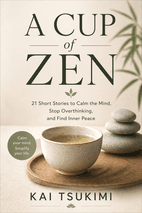
A Cup of Zen: 21 Short Stories to Calm the Mind, Stop Overthinking, and Find Inner Peace - Includes Reflections for Beginners
by Kai Tsukimi
What is the book A Cup of Zen: 21 Short Stories to Calm the Mind, Stop Overthinking, and Find Inner Peace - Includes Reflections for Beginners about?
Kai Tsukimi's A Cup of Zen presents 21 parable-like stories that teach Zen philosophy through lived experience rather than abstract concepts, with each tale followed by a brief reflection and an embodied practice. Written for beginners to mindfulness who are caught in overthinking or anxiety, it offers simple, repeatable practices for finding stillness in everyday moments.
Feature
Insta.Page
Blinkist
Shortform
Summary Depth
Full Chapter-by-Chapter
15-min overview
Section-by-section guides
Audio Narration
✓
✓
✓
Visual Mindmaps
✓
✕
✕
AI Q&A
✓
✕
✕
Quizzes
✓
✕
✕
PDF Downloads
✓
✕
✓
Price
$89.99/yr
$146/yr (PRO)
$199/yr
*Competitor data last verified July 2026.
1 Page Summary
In a world that demands constant doing, A Cup of Zen offers an invitation to simply be. Through 21 short, parable-like stories, author Kai Tsukimi presents Zen philosophy not as a set of abstract concepts to be studied, but as a series of lived moments to be experienced. The book's central thesis is that inner peace is not found by acquiring more knowledge or reaching a distant destination, but by releasing the burdens of expectation, certainty, and ego. Each tale functions as a gentle mirror, reflecting back the reader’s own tendencies toward overthinking, clinging to grievances, or mistaking motion for progress. The stories are deceptively simple—a monk carrying an absurdly heavy bundle, a scholar whose overflowing teacup is a lesson in itself, a painter who lets the rain dissolve her work—but they are designed to create a small crack in the reader’s habitual thinking, allowing a sliver of stillness to enter.
What makes the book distinctive is its structure and its insistence on experience over explanation. Each story is followed by a brief "Reflection" and a "Moment of Zen"—a short, embodied practice the reader can try immediately, such as pressing a hand against a wall as if for the first time, or walking without direction. The author explicitly positions these exercises not as supplementary material, but as the core of the teaching: the insight of a parable is only fully realized when it is lived. The book is also divided into thematic sections (like "Beginner’s Mind" and "The Habit of Habit") that build on each other, moving from the initial shock of letting go to the subtle work of noticing how habit itself can become a cage. The author’s voice is warm and humble, directly addressing the reader in the closing message as a fellow traveler, not a guru.
This book is for anyone caught in the relentless cycle of overthinking, anxiety, or the feeling that peace is something distant that must be earned. It is particularly suited for beginners to Zen or mindfulness, as it avoids jargon and meets the reader exactly where they are—whether that is at a desk, in a kitchen, or on a crowded commute. The reader will not finish the book with a new set of doctrines, but with a handful of simple, repeatable practices and a shifted perspective: that the heaviness they carry may be an empty bundle, that the door they seek is the one they are already standing at, and that a single story, truly sat with, can be a stepping stone to stillness.
1
Overview
A traveler staggers under an absurdly large bundle of belongings—blankets, pots, books, trinkets from forgotten places. He’s headed to a monastery at the peak, seeking wisdom. At the foot of the mountain, an old man under a cypress tree asks a deceptively simple question: “Why carry all this?” The traveler insists these are things he may need. The old man just smiles and gestures ahead. That moment sets the stage for a lesson that unfolds not through lectures, but through the traveler’s own exhaustion.
The Burden of “Maybes”
The path grows steeper. Each step becomes a negotiation with pain. Eventually, the traveler starts dropping things—a pot, a book, a blanket. Not all at once, but one by one, as the weight becomes unbearable. The prose here mirrors the release: the sentences get lighter, the wind crisper. By the halfway point, he’s shed nearly everything. And then something unexpected happens: his body moves with ease, and the sky feels wider. The wisdom he was seeking begins to reveal itself not at the peak, but in the act of letting go.
The Twist at the Peak
When he finally reaches the monastery at the top, the old man is already there, sitting beneath another cypress tree. The traveler gasps in disbelief. The old man just smiles, stands up, and walks toward a path leading further upward—one the traveler hadn’t noticed before. The chapter closes with the traveler collapsing to rest, then looking down to see another figure struggling up the mountain, back bent beneath an enormous bundle. The cycle continues.
Reflection and a Zen Practice
The chapter ends with direct questions: What are you carrying that no longer serves you? If you dropped one story, expectation, or fear, how would your step change? Then it offers a simple practice: hold a stone, drop it. Feel the difference. Think of a past event. Choose to let it go. Did it leave, or was it never there? Go for a walk in silence. Notice what falls away and what remains.
Key Takeaways
Wisdom isn’t at the peak—it’s in the shedding. The traveler’s real discovery came when he lightened his load, not when he arrived.
The things we “may need” often keep us from moving freely. Most of what we carry is security theater, not genuine necessity.
The mountain doesn’t confirm your journey—you do. The old man was already there because he never carried the weight in the first place.
Letting go is an active choice, not a passive release. The stone-dropping exercise makes it tactile: you have to choose to open your hand.
Key concepts: 1
1
The Burden of Maybes
Traveler carries absurdly large bundle up mountain
Old man asks: 'Why carry all this?'
Weight becomes unbearable, items dropped one by one
Letting go reveals wisdom, not reaching the peak
The Twist at the Peak
Old man already at monastery, traveler shocked
Old man walks toward a hidden higher path
Traveler sees another figure struggling below
Cycle of carrying and shedding continues
Reflection and Practice
Ask: What are you carrying that no longer serves?
Hold a stone, drop it—feel the difference
Let go of a past event; was it ever there?
Walk in silence; notice what falls away
Key Takeaways
Wisdom is in the shedding, not the destination
Maybes are security theater, not necessity
Mountain doesn't confirm journey—you do
Letting go is an active choice, not passive
💡 Try clicking the AI chat button to ask questions about this book!
2
Overview
A traveling scholar, soaked from the storm, arrives at a teahouse seeking more than shelter. He’s studied the sutras, debated with monks, memorized verses—yet feels a persistent emptiness, a gap between knowledge and understanding. The tea master listens without interrupting, then begins to pour tea. When the cup is full, he keeps pouring. Tea spills across the table, over the scholar’s precious scrolls. The scholar’s reaction is immediate: frustration, confusion, outrage. But the tea master’s point is made without a single word of explanation. The chapter uses this simple, startling moment to ask us what we carry that is already full to overflowing—and what we might discover if we stopped adding more.
The Encounter
The scene is intimate: rain against paper windows, two cups, the scent of tea. The scholar arrives burdened not just by scrolls but by the weight of his own seeking. He asks for the essence of Zen, expecting a teaching, a phrase, maybe a koan. Instead, he gets an action that seems like carelessness or rudeness. The tea master’s silence during the overflow is key. He doesn’t explain. He lets the mess happen, lets the scholar sit in the discomfort of spoiled paper and wasted tea. Only when the scholar finally sits back down, gripping his robe, does the story slow. He drinks slowly. The cup empties. The storm continues outside.
The Spill We Ignore
The reflection invites a personal inventory: Where in your life are you still pouring? Not just into a literal cup, but into the mind that is already crammed with plans, worries, and untested knowledge. The chapter suggests that wisdom isn’t about accumulation—it’s about recognizing when the vessel is full. The overflow isn’t a sign of abundance; it’s a signal that you’ve missed the moment to stop and drink. The scholar’s soaked scrolls are a metaphor for all the learning we cling to even when it no longer serves us. The real lesson arrives not in the pouring, but in the quiet after the spill.
The Stillness Between Drops
The “Moment of Zen” at the end is not a lecture but an invitation to experience directly. Pour water into a cup and watch it until it spills. Hold your breath, release it. Which moment was full? Which was empty? These small experiments bypass the analytical mind. They create a tiny gap in the usual stream of thoughts—a chance to feel the difference between having a full cup and an overflowing one, between holding on and letting go. Standing in the rain, eyes closed, you might feel how separate drops become a single whole. That sensation is the essence the scholar was missing.
Key Takeaways
Fullness is not the same as readiness. A cup must be emptied before it can receive anything new. The scholar’s cup of knowledge was already full, leaving no room for insight.
The tea master’s silence teaches louder than words. The best lessons often bypass explanation and land directly in experience.
Pay attention to the spill. Overflow in your life—whether in anxiety, busyness, or information-gathering—is a sign that you have stopped drinking what you already have.
Wisdom comes from pausing, not adding. The empty cup is not a lack; it is a space for something real to arrive.
Key concepts: 2
2
The Overflowing Cup
Scholar arrives full of knowledge but empty of understanding
Tea master pours until tea spills over scrolls
Silence teaches louder than words or explanations
Fullness prevents receiving anything new
The Spill We Ignore
Overflow signals missed moment to stop and drink
Clinging to learning that no longer serves us
Wisdom is recognizing when vessel is full
Real lesson comes in quiet after the spill
The Stillness Between Drops
Direct experience bypasses analytical mind
Pour water until it spills to feel fullness
Hold breath then release to feel emptiness
Separate drops become a single whole in rain
Empty Cup as Space for Wisdom
Empty cup is not lack but space for insight
Pausing matters more than adding more
Wisdom comes from stopping accumulation
Letting go creates room for real understanding
Key Takeaways
Fullness is not the same as readiness
Silence teaches louder than explanation
Overflow signals need to drink what you have
Empty cup is space for something real to arrive
3
Overview
The chapter opens with a deceptively simple scene: a young boy watching an old fisherman cast his net into a dark sea. The boy’s questions come fast and anxious—how do you know where the fish will be? What if you catch nothing? Is there a better way? Each question is met with silence. The fisherman doesn’t answer. He simply throws the net, waits, and pulls it back. Only when the boy finally stops asking does the net come up full. The fisherman casts again, wordlessly, into the shifting tide.
This is not really a story about fishing. It’s a parable about the gap between knowing and doing, between the frantic need for certainty and the quiet patience of trusting the process. The boy wants guarantees before he acts. The fisherman shows that action itself carries its own wisdom—one that doesn’t need to be explained.
The Weight of Not Knowing
The boy’s anxiety feels familiar. He asks because he fears failure: What if there’s nothing there? The fisherman’s silence forces the boy—and us—to sit in that discomfort. The reflection that follows the tale asks which is heavier: the weight of not knowing, or the weight of needing to know? The second one, usually. The need for answers before the net is even cast can paralyze us, while not knowing is simply the natural state of things. The fisherman doesn’t know where the fish are, either. He trusts the water, the net, the moment.
What You Pull Back
When you cast your net into the unknown, what comes up? The reflection offers three possibilities: truth, illusion, or only the movement of the water. The last option is the most subtle. Sometimes what you get back is not a clear catch, but just the evidence that you tried—the ripples of your own participation. That alone is enough.
The Pebble, the Question, the Wind
The “Moment of Zen” section turns the parable into a small, personal practice. Drop a pebble. Watch ripples fade. What remains? Write a question in sand, then let the wind erase it. Read what is left. Stand in the wind and try to catch it. These are invitations to let go of the need to hold onto answers. The wind can’t be caught, but you can feel it. The net can’t guarantee fish, but you can throw it. The boy’s real lesson—and ours—is that the act itself is the point.
Key Takeaways
Certainty is not a prerequisite for action; you can act without knowing the outcome.
The heavy weight is often the need to know, not the not-knowing itself.
What you pull back from an attempt may not be a clear answer—but the attempt still matters.
Practice letting go: drop a stone, write in sand, stand in the wind. The doing teaches more than the waiting.
Key concepts: 3
3
The Parable of the Fisherman
Boy's anxious questions met with silence
Fisherman trusts the process, not guarantees
Action carries wisdom beyond explanation
The Weight of Not Knowing
Fear of failure drives need for certainty
Needing to know is heavier than not knowing
Not knowing is the natural state of things
What You Pull Back
Three possibilities: truth, illusion, or movement
Movement shows evidence of participation
The attempt itself is enough
Practice of Letting Go
Drop a pebble and watch ripples fade
Write a question in sand, let wind erase it
Stand in the wind and try to catch it
Key Takeaways
Certainty is not a prerequisite for action
The doing teaches more than the waiting
What you pull back may not be a clear answer
4
Overview
A governor, eager to learn Zen, invites two renowned masters—Renji and Kaito—to his courtyard. He bows respectfully, ready to absorb wisdom. Renji flatters him, calling him intelligent and perceptive. The governor feels pleased, validated. Then Kaito scoffs. He tells the governor he wouldn't recognize Zen if it smacked him in the face. The insult lands hard. Pride flares. But instead of reacting with anger, the governor takes a slow breath, calms himself, and smiles. He thanks Kaito. The next day, he builds a temple not for the flattering Renji, but for the man who insulted him. He studies Zen under Kaito.
Key Takeaways
Truth often arrives wrapped in discomfort. Flattery feels good but teaches little.
The governor's pause—his choice to breathe before reacting—was the moment he actually began learning Zen.
Challenge yourself to welcome the people who make you uncomfortable; they may be your best teachers.
A Moment of Zen: When someone pushes your buttons, pause. Ask yourself: Am I resisting growth or protecting my ego?
Key concepts: 4
4
The Encounter
Governor invites two Zen masters
Renji flatters; Kaito insults
Governor feels pleased then stung
The Pivotal Response
Governor pauses and breathes instead of reacting
He thanks Kaito for the harsh truth
This choice marks the start of real learning
The Lesson Learned
Truth often arrives wrapped in discomfort
Flattery feels good but teaches little
Uncomfortable people may be your best teachers
You've reached the end of the free chapters
Next chapter: “5” is locked
Keep reading A Cup of Zen: 21 Short Stories to Calm the Mind, Stop Overthinking, and Find Inner Peace - Includes Reflections for Beginners — and unlock all 700+ book summaries with audio, mindmaps and AI Q&A.
$0.00 due today · 7 days free, then $89.99/year ($7.49/mo) · Cancel anytime before day 7
plus sales tax where applicable
If you like this summary, you probably also like these summaries...
Kai Tsukimi is an award-winning Japanese science fiction and fantasy author, best known for her acclaimed novel *The Harmony of Mechanical Stars* and the *Tsuki Chronicles* series. She draws on her background in astrophysics and robotics to craft intricate, thought-provoking worlds that explore the intersection of technology and human emotion. Before becoming a full-time writer, Tsukimi worked as a software engineer in Tokyo.
Frequently Asked Questions about A Cup of Zen: 21 Short Stories to Calm the Mind, Stop Overthinking, and Find Inner Peace - Includes Reflections for Beginners
What is A Cup of Zen: 21 Short Stories to Calm the Mind, Stop Overthinking, and Find Inner Peace - Includes Reflections for Beginners about?
This collection of 21 short stories uses Zen parables to address common mental struggles like overthinking and anxiety. Each tale is followed by reflective questions and simple practices designed to help readers apply the wisdom to their own lives. The book gently guides beginners toward inner peace by exploring themes of letting go, embracing uncertainty, and finding stillness in the ordinary.
Who is the author of A Cup of Zen: 21 Short Stories to Calm the Mind, Stop Overthinking, and Find Inner Peace - Includes Reflections for Beginners?
Kai Tsukimi is the author of this Zen-inspired collection, writing with a warm and accessible tone that makes ancient wisdom relatable to modern readers. While personal biographical details are not provided, the author's closing message reveals a genuine desire to offer portable anchors of calm in a chaotic world. Tsukimi's approach is humble and inviting, encouraging readers to use these stories as stepping stones to greater clarity.
Is A Cup of Zen: 21 Short Stories to Calm the Mind, Stop Overthinking, and Find Inner Peace - Includes Reflections for Beginners worth reading?
Absolutely—it transforms complex Zen concepts into simple, memorable stories that anyone can understand and apply. The included reflections and mini-practices make it easy for beginners to stop overthinking and start experiencing moments of peace. Whether you're new to mindfulness or a longtime practitioner, these tales offer fresh perspectives that can subtly shift how you see your daily challenges.
What are the key lessons from A Cup of Zen: 21 Short Stories to Calm the Mind, Stop Overthinking, and Find Inner Peace - Includes Reflections for Beginners?
One central lesson is that the heaviness we carry often comes from our attachment to expectations and past burdens, not from actual weight. Another is the power of beginner's mind—seeing familiar things as if for the first time to unlock new possibilities. The stories also teach that true wisdom lies not in reaching some distant goal, but in returning to ordinary life with a changed perspective, and that incompleteness can be more meaningful than perfection.
📚 Explore Our Book Summary Library
Discover more insightful book summaries from our collection