RULE 1 / Stand up straight with your shoulders back
Chapter 1 of 3
0:000:00
EN
1x
Voice
PDF
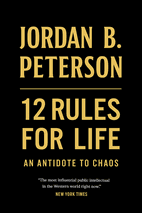
12 Rules for Life
by Jordan B. Peterson
What is the book 12 Rules for Life about?
Jordan B. Peterson's 12 Rules for Life blends psychology, philosophy, and personal anecdotes to offer practical principles for personal responsibility and meaning, guiding readers seeking structure through life's inherent chaos and suffering.
Feature
Insta.Page
Blinkist
Shortform
Summary Depth
Full Chapter-by-Chapter
15-min overview
Section-by-section guides
Audio Narration
✓
✓
✓
Visual Mindmaps
✓
✕
✕
AI Q&A
✓
✕
✕
Quizzes
✓
✕
✕
PDF Downloads
✓
✕
✓
Price
$89.99/yr
$146/yr (PRO)
$199/yr
*Competitor data last verified July 2026.
1 Page Summary
12 Rules for Life: An Antidote to Chaos by Jordan B. Peterson is a self-help book that blends psychology, philosophy, and personal anecdotes to offer practical advice for navigating life’s complexities. Drawing from evolutionary biology, religious traditions, and clinical psychology, Peterson presents 12 foundational rules—such as "Stand up straight with your shoulders back" and "Tell the truth—or, at least, don’t lie"—as guiding principles for personal responsibility and meaning. The book critiques modern individualism and moral relativism, advocating instead for order, discipline, and the embrace of suffering as a path to growth.
Peterson’s work is rooted in historical and mythological contexts, frequently referencing biblical stories, Jungian archetypes, and classical philosophy to underscore timeless human struggles. His rules emphasize the balance between chaos and order, arguing that individuals must confront life’s inherent suffering to achieve resilience and purpose. The book also addresses contemporary societal issues, such as identity politics and victimhood culture, positioning itself as a counterpoint to what Peterson sees as destructive cultural trends.
Since its 2018 publication, 12 Rules for Life has had a profound cultural impact, resonating with readers seeking structure in an increasingly fragmented world. While praised for its pragmatic wisdom and psychological insights, it has also sparked controversy for its conservative leanings and critiques of progressive ideologies. Regardless, the book remains a influential work in the self-help genre, encouraging readers to take ownership of their lives and strive for meaningful existence.
RULE 1 / Stand up straight with your shoulders back
Overview
Life’s oldest battle begins on the ocean floor, where lobsters clash over territory, their fights escalating from chemical warnings to brutal combat. Losers emerge neurologically rewired for defeat, their posture collapsing as serotonin plummets and octopamine surges—a biological echo in humans where low status fuels chronic stress and disease. This isn’t unique to crustaceans; dominance hierarchies shape wrens, chickens, and humans alike, enforcing a brutal truth: resources cluster unevenly. Price’s Law and the Pareto Principle reveal how a sliver of "alphas" hoard wealth, mates, and influence, while the marginalized face shorter lives. These structures aren’t modern inventions—they predate dinosaurs, etched into our shared biology across 350 million years.
Reality itself dances between order and chaos, a dynamic balance symbolized by Taoist yin-yang. Nature isn’t a static paradise but a shifting battleground of plagues and droughts, demanding constant adaptation. Within this flux, your brain quietly ranks your social standing (1–10), where low status drains serotonin, trapping you in stress loops that invite bullies—whether you’re too weak to fight or too compassionate to try. Yet suppression isn’t salvation; righteous anger is essential armor against oppression. Discovering your capacity for aggression, though unsettling, builds resilience. Here, posture becomes revolutionary: standing tall chemically boosts confidence, signaling competence to others and initiating cascading rewards—better opportunities, relationships, and health. Ultimately, this stance is existential: "shouldering the burden of Being" means confronting chaos voluntarily, defending your territory, and igniting courage that reshapes destiny. By embodying this ancient imperative, you transform passivity into agency, turning life’s heaviest burdens into meaning.
Lobster Behavior and Dominance
Lobsters exhibit complex territorial behaviors driven by their simple yet effective nervous systems. They establish home bases for shelter and hunting, leading to inevitable conflicts over prime ocean-floor real estate. When encountering rivals, lobsters engage in escalating displays:
Level 1: Chemical signaling (via liquid sprays) to assess size, health, and intent.
Level 2: Ritualized advances and retreats.
Level 3: Physical grappling to overturn opponents.
Level 4: Brutal combat risking severe injury or death.
Chickens enforce "pecking orders," where low-status birds face starvation and stress-related diseases.
Humans reflect these patterns: stressed, low-status individuals die sooner during pandemics and suffer higher rates of chronic illness.
The Principle of Unequal Distribution
"Winner-take-all" dynamics dominate natural and social systems:
Price’s Law: A tiny minority (e.g., top scientists, musicians) generates most valued output.
Pareto Principle: Wealth, resources, and influence cluster disproportionately (e.g., 85 richest humans = wealth of 3.5 billion poorest).
This "Matthew Effect" ("to those who have, more will be given") applies even to lobster hierarchies.
Reproductive Advantages of Dominance
Alpha male lobsters secure critical benefits:
Prime shelter and food access.
Exclusive mating rights—females chemically seduce winners, mirroring human attraction to high-status partners.
Dominance is self-reinforcing: victories boost serotonin, improving future winning odds.
Evolutionary Roots
Dominance hierarchies predate dinosaurs (350+ million years), proving central to survival. Evolution conservatively builds on existing systems—lobster neurochemistry and human stress responses share ancient biological blueprints.
The Nature of Reality
Environments aren’t static but dynamic interplays of:
Order (stability, predictability).
Chaos (disruption, uncertainty).
Taoist yin-yang symbolism captures this duality: chaos contains order’s seed, and order holds chaos’s potential. Misjudging nature as purely static invites catastrophic errors.
Nature's Dynamic Dance
Contrary to static Victorian ideals, evolution isn’t linear progress toward a fixed pinnacle. Nature constantly shifts—like a musical score—demanding perpetual adaptation. Fitness isn’t matching an unchanging template; it’s surviving a deadly dance where stagnation guarantees failure (as the Red Queen warns: "Run as fast as you can just to stay in place"). Change occurs in nested layers: leaves shift faster than trees, weather faster than climate. This chaos-within-order means the most enduring structures—like dominance hierarchies—are the "truest," even if invisible.
The Brutal Reality of Nature
Romanticizing nature ignores its horrors: elephantiasis, malaria, droughts, and plagues are as inherent as idyllic landscapes. This harshness drives humanity to build cities, grow food, and seek control—harmony with nature is impossible when it’s "hell-bent on our destruction." Crucially, culture isn’t separate from nature; social structures like dominance hierarchies are ancient biological phenomena, not modern constructs like capitalism or patriarchy. They predate trees by half a billion years.
The Neurochemistry of Status
An ancient brain system tracks your social rank (1–10), profoundly shaping your biology:
High Status (1s): Ample serotonin fosters confidence, health, and longevity. Top-ranked individuals access prime resources, social favors, and mating opportunities.
Low Status (10s): Scant serotonin triggers chronic stress—physically depleting, weakening immunity, and shortening lifespans. Survival demands hyper-alertness ("sitting with both pedals floored"), burning energy needed for future health. Impulsivity dominates, as pleasure is scarce and fleeting.
When the System Spirals
The status calculator can malfunction:
Circadian Chaos: Erratic sleep/eating disrupts serotonin, amplifying anxiety/depression. Fixing routines—consistent wake times and protein-rich breakfasts—often resets stability.
Positive Feedback Loops:
Addiction: Alcohol "cures" hangovers but deepens dependency.
Agoraphobia: Panic → avoidance → amplified fear → paralysis.
Trauma: Past bullying entrenches submissive postures, attracting present-day bullies.
Why Bullies Prevail
Victims are targeted for two reasons:
Can’t Fight Back: Physical disparity (common in children vs. older bullies).
Won’t Fight Back: Overly compassionate or morally opposed to aggression. These individuals—often sensitive or scarred by angry role models—suppress anger, inadvertently inviting predation.
Next section will cover strategies to interrupt these cycles and reclaim agency.
The Dual Nature of Aggression
Anger and aggression aren't inherently destructive—they're vital tools for resisting oppression and defending personal boundaries. Suppressing these forces leaves individuals vulnerable to exploitation, as naivety ("people are basically good") invites malevolence. Recognizing and channeling righteous anger is essential: setting clear, early boundaries ("saying no") prevents tyranny from expanding. Clinical examples show that repressed resentment festers, while honest confrontation protects both individuals and society from petty authoritarians.
Awakening to Inner Strength
Discovering one's capacity for aggression can be transformative yet unsettling. Sheltered individuals—like soldiers confronting battlefield brutality or abuse victims—often experience shock when recognizing their own "monstrous" potential. This revelation isn't destructive; it builds self-respect and resilience. Embracing this duality (mayhem vs. strength) reduces fear, enabling people to resist oppression rather than feed resentment.
Posture as a Psychological Catalyst
Slumped posture reinforces defeat: it lowers perceived status, reduces serotonin, and increases anxiety, vulnerability to addiction, and disease. Conversely, altering body language initiates positive feedback loops:
Socially: Upright posture signals competence, reshaping others' reactions and improving interactions. This fosters opportunities for better resources, relationships, and environments.
Embracing Existential Responsibility
Standing straight transcends physicality—it’s a metaphysical commitment to "shouldering the burden of Being." This means:
Facing chaos voluntarily, transforming it into order.
Accepting vulnerability and mortality, ending childhood naivety.
Defending your "territory" (physical or conceptual) to create meaning.
Like lobsters in dominance hierarchies, this stance intertwines biological instinct with spiritual resolve, turning passivity into proactive courage.
The Ripple Effect of Courage
Embodying this rule sparks cascading benefits:
Self-empowerment: Speaking your mind and asserting rights boosts serotonin, easing anxiety.
Social impact: Confidence improves communication, attracts opportunities, and inspires others during adversity.
Existential resilience: By "letting your light shine," you forge a destiny strong enough to repel despair—finding joy amid life’s heaviest burdens.
Key Takeaways
Harness righteous anger: Set boundaries early to deter oppression.
Embrace your capacity for aggression: It fuels self-respect and resistance.
Posture alters reality: Standing tall rewires your brain and social dynamics.
Carry the burden of Being: Voluntarily facing chaos builds meaning and resilience.
Transform habitually: Replace defeatist habits with embodied courage to unlock cascading rewards.
Key concepts: RULE 1 / Stand up straight with your shoulders back
1. RULE 1 / Stand up straight with your shoulders back
Lobster Behavior and Dominance
Territorial conflicts escalate from chemical signals to brutal combat
Losers experience neurological rewiring for submissiveness
Four levels of conflict: chemical signaling, ritualized advances, physical grappling, deadly combat
Neurochemistry of Status
Serotonin correlates with confidence and dominance (winners)
Octopamine triggers defeat posture and stress (losers)
Human neurochemistry mirrors lobster systems (e.g., antidepressants)
Universal Dominance Hierarchies
Observed in lobsters, wrens, chickens, and humans
Low-status individuals face chronic stress and shorter lifespans
Hierarchies predate dinosaurs (350+ million years old)
The Principle of Unequal Distribution
Price's Law: Minority produces majority of valued output
Pareto Principle: 80/20 wealth/resource distribution
Self-reinforcing 'Matthew Effect' favors the dominant
Signals competence, triggering cascading social rewards
'Shouldering the burden of Being' transforms passivity into agency
The Brutal Reality of Nature
Nature is not just idyllic but also harsh, with diseases and disasters driving human innovation.
Dominance hierarchies are ancient biological phenomena, not modern social constructs.
Culture and nature are intertwined, with survival demanding control over chaos.
The Neurochemistry of Status
Social rank (1–10) is tracked by an ancient brain system, affecting serotonin levels.
High-status individuals enjoy confidence, health, and access to resources.
Low-status individuals suffer chronic stress, weakened immunity, and shorter lifespans.
When the System Spirals
Disrupted routines (sleep/eating) worsen anxiety and depression by altering serotonin.
Negative feedback loops (addiction, agoraphobia) trap individuals in self-reinforcing cycles.
Past trauma can perpetuate submissive behaviors, attracting further victimization.
Why Bullies Prevail
Bullies target those who can't or won't fight back due to physical or moral constraints.
Overly compassionate individuals suppress aggression, making them vulnerable to predation.
Sensitivity or past trauma often disarms self-defense mechanisms.
The Dual Nature of Aggression
Anger is a tool for resisting oppression and setting boundaries.
Suppressing aggression invites exploitation; early confrontation prevents tyranny.
Righteous anger protects both individuals and society from petty authoritarianism.
Awakening to Inner Strength
Discovering one's capacity for aggression builds self-respect and resilience.
Embracing this duality (strength vs. mayhem) reduces fear and resentment.
Sheltered individuals often experience shock when recognizing their own potential for aggression.
Posture as a Psychological Catalyst
Slumped posture reinforces defeat, lowering serotonin and increasing vulnerability.
Standing tall boosts confidence chemically and socially, reshaping interactions.
Body language initiates feedback loops that improve opportunities and relationships.
Embracing Existential Responsibility
Standing straight symbolizes accepting the burden of existence and facing chaos.
Defending personal 'territory' (physical or conceptual) creates meaning.
This stance merges biological instinct with spiritual resolve, transforming passivity into courage.
The Ripple Effect of Courage
Self-empowerment (e.g., asserting rights) eases anxiety by boosting serotonin.
Confidence improves social dynamics, attracting opportunities and inspiring others.
Proactive courage builds existential resilience, finding joy amid life's burdens.
Key Takeaways
Harness righteous anger to set boundaries and deter oppression.
Embrace aggression as a source of self-respect and resistance.
Posture alters brain chemistry and social perception—stand tall to rewrite reality.
Accept the burden of existence to build meaning and resilience.
Replace defeatist habits with embodied courage to unlock cascading rewards.
💡 Try clicking the AI chat button to ask questions about this book!
RULE 2 / Treat yourself like someone you are responsible for helping
Overview
People often neglect their own well-being while diligently caring for others—like pets. This baffling paradox, where one-third of humans skip life-saving medications yet prioritize animals’ health, hints at a deeper human struggle. Ancient stories, like Genesis’s dual creation tales, reveal how early societies saw reality not as cold facts but as a living drama of pain, joy, and meaning. At the heart of this drama lie three eternal forces: Chaos (the unknown, disaster, or freedom), Order (tradition, safety, and predictability), and Consciousness—the bridge between them.
Instinctively, humans personify these forces: Order as masculine (structure, rules, creation) and Chaos as feminine (fertility, destruction, rebirth). This duality echoes through religious symbols, brain biology, and even Eden’s serpent—an embodiment of chaos that awakens self-awareness in Adam and Eve. Their sudden shame over nakedness symbolizes humanity’s raw vulnerability; their blame-shifting mirrors our own defensiveness when confronting failure. God’s resulting curses—labor for Adam, pain for Eve, and the serpent’s eternal crawl—formalize the human burden: foresight, suffering, and the grind to survive.
Banished from Eden, humans face history’s horrors armed only with fragile self-worth. Knowing their own flaws intimately breeds self-contempt—why care for oneself when a pet seems more "innocent"? Yet chaos cannot be walled out; it dwells within, as the "snake in our souls." Balance becomes essential: one foot in order for stability, the other in chaos for growth. Humanity’s paradox deepens—capable of unspeakable evil yet bearing a "spark of the divine" that builds civilizations. This burden of consciousness fuels both guilt and everyday heroism: parents persevering, strangers cooperating, ordinary resilience that’s nothing short of miraculous.
Thus, treating yourself responsibly isn’t selfish—it’s sacred. Jung reimagines the Golden Rule: loving others as yourself means fierce self-advocacy, not martyrdom. Sacrificing to tyrants (internal or external) enables oppression. Instead, define your values, set meaningful goals, and trade instant gratification for long-term growth. Find your "why," as Nietzsche urged, to transform suffering into purpose. By nurturing body, mind, and direction, you honor the divine potential within—refusing to create hell while aiming for heaven.
The Medication Noncompliance Paradox
People frequently fail to take prescribed medication—one-third don’t fill prescriptions, and half of those who do misuse it. While professionals often blame patients, psychologists argue practitioners must offer actionable advice. This negligence reaches shocking levels with organ transplant recipients, who risk rejecting life-saving organs by skipping anti-rejection drugs. Surprisingly, people are far more diligent when medicating their pets, suggesting they prioritize their animals’ well-being over their own. This paradox raises profound questions: Why do humans show less self-compassion than they extend to pets?
Ancient Worldviews: Genesis and Subjective Reality
The answer emerges from the Book of Genesis, which blends two creation narratives. The "Priestly" account depicts God creating order from chaos through divine speech, while the older "Jawhist" story centers on human drama like Adam and Eve. Crucially, pre-scientific societies viewed reality not as objective "things" but as action—a lived drama of pain, joy, and survival. Subjective experiences (like a father’s death or a child’s success) were primal truths, irreducible to material explanations. This frames existence as a story where meaning outweighs mere facts.
Chaos and Order: Fundamental Elements of Experience
Human experience hinges on three core elements:
Chaos: The unknown—unexplored territory, betrayal, disaster, or freedom. It’s the "underworld" (e.g., post-9/11 uncertainty, a marriage crumbling from infidelity). Chaos emerges when plans collapse, leaving us reeling.
Order: The familiar—societal structures, routines, and safety (e.g., traditions, timely trains, stable careers). It provides predictability but can become tyrannical (e.g., forced conformity).
Consciousness: The mediator between both, enabling adaptation.
These forces manifest as psychological states: Order fosters calm competence; Chaos triggers visceral fear (an ancient survival reflex).
Personification and Symbolic Associations
Chaos and Order aren’t inert concepts—they’re instinctively perceived as personalities:
Order symbolizes masculinity: Hierarchy, creation, and structure (e.g., God the Father, engineers, rules). When imbalanced, it becomes oppression (goose-steps, concentration camps).
Chaos symbolizes femininity: The source of life and destruction (e.g., Mother Nature, birth, accidents). It drives evolution through female selectivity (e.g., dating rejections shaping human ingenuity).
Religious iconography reflects this duality:
The Star of David’s interlocked triangles.
Hinduism’s yoni (feminine) and lingam (masculine).
Christianity’s Virgin Mary and androgynous Christ.
Even brain morphology mirrors this divide, suggesting these symbols tap into evolutionary truths about how we navigate reality.
The Serpent and Human Consciousness
The text explores the serpent's role in Eden as a manifestation of chaos infiltrating order. This "subtil" creature represents both external threats (like predators) and humanity’s innate capacity for evil—symbolized by its identification with Satan. The serpent’s deception targets Eve, possibly due to evolutionary pressures where women prioritized vigilance against dangers (e.g., protecting infants). By convincing Eve that the forbidden fruit would grant godlike knowledge without death, it triggers self-awareness in both Adam and Eve.
The Birth of Shame and Vulnerability
Upon eating the fruit, Adam and Eve experience a jarring awakening:
Nakedness as Metaphor: Their sudden shame symbolizes human vulnerability—exposed physically, emotionally, and morally. Unlike animals, humans confront their fragility head-on, sparking a need to "cover" weaknesses (e.g., with clothing or defensiveness).
Divergent Blame: When God confronts them, Adam deflects responsibility—first blaming Eve, then God himself. This mirrors enduring human tendencies: resentment toward those who "awaken" us (like Eve’s role in making Adam self-conscious) and rage at life’s inherent injustice.
Divine Consequences and Human Burden
God’s response formalizes the human condition:
The Serpent’s Curse: Condemned to legless existence, embodying humanity’s eternal struggle against lurking chaos.
Eve’s Burden: Pain in childbirth and dependence on men reflect biological realities (e.g., evolutionary trade-offs like widened pelvises limiting mobility).
Adam’s Burden: Foresight forces sacrifice—laboring amid "thorns and thistles" (metaphor for life’s hardships) as humans trade present comfort for future security.
Banishment and Self-Loathing
Expelled from Eden and barred from the Tree of Life, humanity enters history’s "horrors." This exile underscores a core tension: immortality must be earned, not granted. The text links this to self-neglect:
Why We Despise Ourselves: Knowing our flaws intimately—cowardice, resentment, inadequacy—we deem ourselves unworthy of care. A dog’s "innocence" makes it more deserving, while we punish ourselves by withholding help.
The Ideal’s Weight: Exposure to beauty, strength, or brilliance (e.g., geniuses like von Neumann) heightens our shame, yet abandoning ideals guarantees perpetual unworthiness.
The Unavoidable Duality
Chaos and order remain inseparable:
No sanctuary (even Eden) is impervious to chaos’s encroachment.
Competence, not protection, is the antidote—parents must nurture strength, not just safety.
Balance is essential: one foot in order (stability), the other in chaos (growth), where meaning emerges.
Key Takeaways
Self-Consciousness as Burden: Awareness of vulnerability and moral failure fuels self-contempt, explaining why we neglect self-care while aiding others.
Chaos Is Inescapable: Evil arises internally ("the snake in our souls"), making walls against external threats futile.
Competence Over Protection: Shielding others (or ourselves) from challenge breeds infantilism; strength comes from navigating chaos.
Eden’s Banishment as Human Condition: Labor, foresight, and shame define existence—but self-worth must be actively claimed, not passively granted.
Human Frailty and Divine Potential
This section grapples with humanity's paradoxical nature—our capacity for both profound evil and divine purpose. Unlike animals, humans possess excruciating self-awareness: we intimately understand our vulnerability, mortality, and potential for cruelty. This knowledge of Good and Evil, born from the Fall, burdens us with guilt and self-contempt. Yet simultaneously, Genesis reveals we’re made in God’s image, endowed with a "spark of the divine" that allows us to create order from chaos.
The Burden of Consciousness
Our self-consciousness fuels both suffering and heroism:
Evil as a Human Trait: Only humans inflict suffering for its own sake (e.g., torture devices), transcending mere predation into moral corruption.
Existential Guilt: Awareness of our flaws breeds shame, making us question our worth and neglect self-care.
Everyday Miracles: Despite this, people routinely demonstrate astonishing resilience—caring for families, maintaining society, and compensating for each other’s limitations (e.g., disabled coworkers collaborating). This "ongoing miracle of fortitude" warrants profound respect.
Self-Care as Sacred Duty
Jung’s reinterpretation of the Golden Rule ("love your neighbor as yourself") reframes self-care:
It’s an Equation, Not Martyrdom: Sacrificing yourself to tyrants (external or internal) isn’t virtue—it enables oppression.
Bargain for Yourself: Advocate for your needs as fiercely as you would for others. Strong individuals build balanced relationships.
You Belong to Something Greater: Mistreating yourself harms others (e.g., suicide’s ripple effects) and squanders your divine capacity to shape the world.
Forging a Meaningful Path
Treating yourself responsibly means:
Rejecting Instant Gratification: "Good" ≠ "happy" (e.g., denying candy to save a child’s teeth). Prioritize long-term growth over fleeting desires.
Charting Your Course: Define who you are, set goals ("What career challenges me?"), and discipline yourself to keep promises to yourself.
Finding Your 'Why': Like Nietzsche’s insight—"He whose life has a why can bear almost any how"—direction transforms suffering into purpose. Aim toward "Heaven" (order/goodness) by refusing to create "Hell" (chaos/cruelty).
Key Takeaways
Embrace Dual Nature: Acknowledge your capacity for evil and your divine potential to create order.
Respect Your Resilience: The daily heroism of ordinary people (yourself included) merits profound gratitude.
Care Consciously: Self-care isn’t selfish—it’s a moral obligation. Nurture your body, mind, and goals as you would a loved one’s.
Choose Direction: Define your values, set meaningful objectives, and let purpose ("Why") empower you through adversity.
Reject Tyranny: Refuse to be victimized—by others or your self-contempt. Advocate for yourself with vigor.
Key concepts: RULE 2 / Treat yourself like someone you are responsible for helping
2. RULE 2 / Treat yourself like someone you are responsible for helping
The Self-Neglect Paradox
Humans often prioritize pets' health over their own (e.g., medication compliance)
One-third of people skip life-saving prescriptions, revealing a self-compassion deficit
Organ transplant recipients risk rejection by neglecting anti-rejection drugs
Paradox: Why do we care less for ourselves than for dependent animals?
Ancient Worldviews and Subjective Reality
Genesis blends two creation stories: 'Priestly' (order from chaos) and 'Jawhist' (human drama)
Pre-scientific societies saw reality as lived drama (pain, joy) rather than objective facts
Meaning and action were primal truths, irreducible to material explanations
Chaos, Order, and Consciousness
Chaos: The unknown (disaster, freedom) and 'underworld' of uncertainty
Order: Tradition, safety, and predictability—can become oppressive
Consciousness: The mediator between chaos and order, enabling adaptation
Imbalance: Too much order = tyranny; too much chaos = disintegration
Symbolic Duality: Masculine and Feminine Forces
Order personified as masculine (structure, rules, creation)
Chaos personified as feminine (fertility, destruction, rebirth)
Religious symbols reflect this duality (Star of David, yoni/lingam, Virgin Mary)
Brain biology mirrors the divide, suggesting evolutionary roots
The Serpent and Human Awakening
Serpent in Eden embodies chaos and humanity's capacity for evil
Targets Eve, possibly due to evolutionary female vigilance (e.g., infant protection)
Fruit of knowledge triggers self-awareness, shame, and blame-shifting
God's curses formalize human burdens: labor, suffering, and foresight
The Burden of Consciousness
Self-contempt arises from intimate knowledge of one's flaws
Human paradox: capable of evil yet bearing a 'divine spark' for creation
Everyday heroism (e.g., parental sacrifice, resilience) as a counterbalance
Chaos dwells within as the 'snake in our souls'—cannot be walled out
Sacred Self-Responsibility
Jung's Golden Rule revision: Love others as yourself—requires self-advocacy
Define values, set goals, and trade instant gratification for growth
Nietzsche's 'why': Transform suffering into purpose
Nurturing body/mind honors 'divine potential'—refusing to enable tyranny
The Birth of Shame and Vulnerability
Nakedness symbolizes human vulnerability—exposed physically, emotionally, and morally.
Humans deflect blame (like Adam blaming Eve) rather than confront their own flaws.
Resentment arises toward those who 'awaken' us to uncomfortable truths.
Divine Consequences and Human Burden
The serpent's curse embodies humanity's eternal struggle against lurking chaos.
Define who you are and set goals to keep promises to yourself.
Nietzsche's 'why' transforms suffering into purpose—aim toward 'Heaven' (order/goodness).
RULE 3 / Make friends with people who want the best for you
Overview
The Harsh Reality of Fairview
Growing up in Fairview, Alberta—a remote prairie town of 3,000—meant brutal winters with temperatures plunging to -40°F. Daily life was a battle against the elements: cars required block heaters to start, eyelashes froze shut, and house cats lost ear tips to frostbite. With no cable TV or internet, boredom drove teenagers to dangerous pastimes. Drunks froze in snowbanks, and the oppressive darkness (sunrise at 9:30 a.m. in December) amplified isolation. Friends became lifelines, but not all friendships were constructive.
Chris and Ed: Destructive Paths
The author’s friend "Chris" exemplified wasted potential. Despite intelligence and interests in engineering and sci-fi, Chris radiated anger and nihilism, symbolized by his battered 1972 Ford pickup—"the exoskeleton of a nihilist." His father enabled this behavior, fixing vehicles after each crash. Chris’s cousin "Ed" mirrored this decline: a charming, bright 12-year-old who later drifted into dropout culture. Both leaned on marijuana, which worsened their confusion without offering escape. Their friend group spent nights driving aimlessly on grid-like prairie roads or attending dismal house parties marked by drunken violence, oppressive boredom, and a collective sense of futility.
Escaping the Cycle
The author and peers bound for college knew by age 12 they’d leave Fairview. After high school, he roomed with ambitious friends from "Bear Canyon" at Grande Prairie Regional College. There, he joined intellectually curious peers who ran student unions, launched newspapers, and engaged deeply with professors. Moving severed ties to his past identity—a liberating reset. Yet when he invited old friends to Edmonton, they replicated Fairview’s patterns: seeking drugs in seedy neighborhoods or drinking in hotel rooms.
The Cost of Stagnant Friendships
Years later, Ed visited the author’s Edmonton apartment, now a "useless bastard" with red-rimmed eyes and a dead-end landscaping job. His stoned companion slurred, "My particles are scattered all over the ceiling." The encounter highlighted a grim pattern: Chris later committed suicide after a psychotic break, while Ed remained trapped. Chris once wrote, "I had friends... Anyone with enough self-contempt that they could forgive me mine." Freud’s "repetition compulsion" explained their choices—unconsciously seeking familiar dysfunction, believing they deserved no better.
The Rescue Fantasy Trap
Some cling to destructive friendships to "rescue" others, mistaking self-sacrifice for virtue. Dostoevsky’s Notes from Underground illustrates this vanity: the protagonist fantasizes about saving prostitute Liza but cruelly dismantles her hopes, revealing his own malevolence. Similarly, misguided rescuers often feed their ego while harming those they claim to help. True change requires mutual growth, not martyrdom.
Key Takeaways
Environment shapes vulnerability: Isolation and hardship amplify reliance on friends, making choice critical.
Potential ≠ destiny: Intelligence without supportive relationships can fuel self-destruction (e.g., Chris’s wasted talent).
Escaping past identities: Physical relocation enables personal reinvention among those "aiming upward."
Repetition compulsion: Unaddressed self-contempt drives people to recreate toxic dynamics.
Rescue ≠ virtue: Attempts to "save" others often mask narcissism, worsening their plight.
The Dangers of Misguided Altruism
Attempting to "rescue" others without discernment often backfires. Psychological studies confirm that inserting underperforming or troubled individuals into high-functioning groups (like a stellar work team or well-adjusted peers) typically corrupts the collective. The new member’s cynicism and irresponsibility spread, breeding resentment among those carrying the extra burden. This degeneration occurs because failure is contagious—downward trajectories require less effort than upward growth.
Hidden Motives Behind "Helping"
Beneath surface-level compassion, self-deception often lurks:
Performative Virtue: Using someone else’s struggles to showcase your own "generosity" or avoid confronting personal flaws.
Avoiding Hard Truths: Enabling dysfunction (e.g., tolerating a friend’s alcoholism) creates the illusion of progress while shielding both parties from accountability.
Mutual Indulgence: Implicit pacts among friends to prioritize short-term ease over long-term growth, binding everyone to collective stagnation.
The Agency Paradox
Assuming others are "noble victims" strips them of agency. Most chronic suffering stems from repeated choices to avoid responsibility, not external injustice. Default to this reality:
"Failure requires no explanation. It’s easier not to care, not to act, and to sacrifice the future for fleeting relief."
The Litmus Test: Would you recommend this friend to family? If not, their influence likely erodes your potential.
Upward vs. Downward Alliances: Friends aiming higher celebrate your growth and challenge destructive habits. Those stagnating will sabotage progress (e.g., offering alcohol to a recovering addict) to alleviate their own shame.
The Burden of Goodness: Surrounding yourself with virtuous people is harder—they expose inadequacies and demand courage to change.
Jordan B. Peterson is a renowned clinical psychologist and professor who has captivated global audiences with his profound explorations of mythology, psychology, and personal responsibility. He is the bestselling author of "12 Rules for Life: An Antidote to Chaos," a work that has provided a framework for millions seeking order and meaning, and its sequel, "Beyond Order: 12 More Rules for Life." His earlier work, "Maps of Meaning: The Architecture of Belief," outlines a comprehensive theory on how narratives shape human experience. A compelling and often controversial public intellectual, his lectures and writings have established him as a leading voice on topics ranging from individual purpose to cultural dynamics. His influential books are available for purchase on Amazon.
📚 Explore Our Book Summary Library
Discover more insightful book summaries from our collection