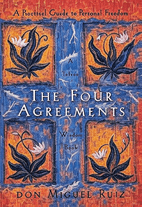
Don Miguel Ruiz's The Four Agreements distills ancient Toltec wisdom into a practical code for personal freedom, offering four simple principles to break self-limiting beliefs. This enduring guide is for anyone seeking greater authenticity and inner peace.
Feature
Insta.Page
Blinkist
Shortform
Summary Depth
Full Chapter-by-Chapter
15-min overview
Section-by-section guides
Audio Narration
✓
✓
✓
Visual Mindmaps
✓
✕
✕
AI Q&A
✓
✕
✕
Quizzes
✓
✕
✕
PDF Downloads
✓
✕
✓
Price
$89.99/yr
$146/yr (PRO)
$199/yr
*Competitor data last verified July 2026.
1 Page Summary
The Four Agreements by Don Miguel Ruiz is a transformative guide rooted in Toltec wisdom, offering a practical code of conduct for personal freedom and happiness. The book distills ancient Mesoamerican spiritual teachings into four simple yet profound agreements: Be impeccable with your word, Don’t take anything personally, Don’t make assumptions, and Always do your best. Ruiz explains how these principles help individuals break free from self-limiting beliefs and societal conditioning, fostering inner peace and authenticity. Drawing from Toltec traditions—a pre-Columbian civilization known for its spiritual and philosophical insights—the book bridges ancient wisdom with modern self-help.
Ruiz emphasizes how societal norms and internalized judgments create suffering, and he presents the four agreements as tools to dismantle these harmful patterns. For example, being impeccable with one’s word cultivates integrity, while not taking things personally liberates one from unnecessary emotional pain. The book’s teachings are universal, resonating with readers across cultures and spiritual backgrounds. Its simplicity and practicality have made it a cornerstone of contemporary personal development literature.
Since its publication in 1997, The Four Agreements has sold millions of copies worldwide, becoming a staple in mindfulness and self-improvement circles. Its enduring appeal lies in its ability to offer clarity and empowerment through concise, actionable advice. By applying these agreements, readers report profound shifts in their relationships, self-esteem, and overall well-being, cementing the book’s legacy as a timeless guide to living with purpose and joy.
1 Domestication and the Dream of the Planet
Overview
The chapter explores the concept of reality as a collective construct—a "dream" shaped by societal norms, beliefs, and systems. From birth, humans are conditioned into this shared hallucination, termed the "dream of the planet," which dictates how we perceive ourselves and the world. Through a process likened to domestication, individuals internalize rules and judgments enforced by family, culture, and institutions, ultimately losing touch with their authentic selves. This domestication creates an internalized system of punishment and reward, governed by a relentless "Judge" and a suffering "Victim," perpetuating cycles of fear, self-rejection, and emotional pain. The chapter argues that breaking free from these ingrained agreements is essential to reclaiming personal power and transforming life into a "pleasant dream" rather than a nightmare.
The Mechanics of Domestication
Society’s dream is transmitted through language, rituals, and social structures, beginning in childhood. Parents, teachers, and institutions use repetition and attention to implant beliefs about morality, identity, and worth. Children, eager for approval, learn to conform to external expectations, adopting a "Book of Law"—an internalized rulebook dictating right and wrong. This system operates on punishment and reward, conditioning individuals to fear rejection and crave validation. Over time, this domestication becomes self-enforced: people police their own behavior, striving to meet impossible standards of perfection.
The Tyranny of the Inner Judge
The "Judge" is a mental construct that evaluates every action, thought, and emotion against the Book of Law. Its counterpart, the "Victim," absorbs blame and shame, perpetuating feelings of inadequacy. This dynamic fuels self-abuse, as individuals replay past mistakes, guilt, and societal judgments endlessly. The Judge’s authority stems from unquestioned, inherited beliefs—95% of which the chapter claims are "lies." These false agreements create a fog of illusion (mitote), distorting self-perception and blinding people to their inherent worth.
The Nightmare of Collective Reality
The dream of the planet is depicted as a global nightmare ruled by fear, violence, and injustice. Personal dreams mirror this dysfunction, manifesting as anxiety, anger, and self-rejection. The chapter likens this state to religious depictions of hell, where emotional "fire" (anger, envy, hatred) burns incessantly. Humans cling to these toxic agreements because they provide illusory safety, even as they perpetuate suffering. The fear of authenticity—of being truly seen—keeps people trapped in roles and masks, striving to meet others’ expectations while abandoning their true selves.
Pathways to Liberation
Breaking free requires dismantling fear-based agreements and reclaiming personal power. The chapter hints at a forthcoming solution (the "Four Agreements") but emphasizes that transformation begins by recognizing the falseness of inherited beliefs. Self-love and acceptance are framed as antidotes to the Judge-Victim cycle. By challenging the Book of Law and refusing to pay "a thousand times for one mistake," individuals can dissolve the fog of mitote and awaken to a reality rooted in authenticity rather than fear.
Key Takeaways
Reality as a Construct: Human perception is shaped by a collective "dream" enforced through societal conditioning.
Domestication: From childhood, we’re trained via punishment and reward to adopt beliefs that dictate our self-worth and behavior.
Internalized Oppression: The "Judge" and "Victim" perpetuate self-abuse, guilt, and fear, rooted in unexamined societal lies.
Collective Suffering: The dream of the planet normalizes fear, injustice, and emotional pain, mirroring religious visions of hell.
Reclaiming Power: Liberation begins by rejecting toxic agreements, embracing self-love, and challenging the illusion of perfection.
Key concepts: 1 Domestication and the Dream of the Planet
1 Domestication and the Dream of the Planet
The Collective Dream of Reality
Reality is a shared construct shaped by societal norms and beliefs.
From birth, humans are conditioned into this 'dream of the planet.'
The dream dictates perceptions of self and the world, often distorting authenticity.
The Process of Domestication
Society implants beliefs through language, rituals, and institutions.
Children conform to external expectations to gain approval, creating an internal 'Book of Law.'
Domestication operates on punishment and reward, fostering fear of rejection and craving for validation.
Over time, individuals self-enforce these conditioned rules.
The Judge and the Victim
The 'Judge' evaluates actions against the internalized Book of Law.
The 'Victim' absorbs blame and shame, perpetuating feelings of inadequacy.
This dynamic fuels self-abuse, guilt, and endless replaying of past mistakes.
95% of these beliefs are inherited 'lies,' creating a fog of illusion (mitote).
The Nightmare of Societal Conditioning
The collective dream is a global nightmare ruled by fear, violence, and injustice.
Personal dreams mirror this dysfunction as anxiety, anger, and self-rejection.
Toxic agreements provide illusory safety while perpetuating suffering.
Fear of authenticity traps people in roles and masks.
Breaking Free from Domestication
Liberation requires dismantling fear-based agreements and reclaiming personal power.
Recognizing the falseness of inherited beliefs is the first step.
Self-love and acceptance counteract the Judge-Victim cycle.
Challenging the Book of Law dissolves the illusion of perfection.
💡 Try clicking the AI chat button to ask questions about this book!
2 The First Agreement: Be Impeccable with Your Word
Overview
This chapter explores the transformative power of language and the profound responsibility that comes with it. Words are framed not merely as tools of communication but as magical forces capable of shaping reality, relationships, and self-perception. At the heart of the discussion is the idea that how we use our word—whether to uplift or destroy—determines the quality of our lives. By committing to "impeccability," or using the word with integrity and self-respect, we can break free from toxic patterns and create a life rooted in truth and love.
The Power of the Word
Words are likened to seeds planted in the fertile soil of the human mind. They carry creative or destructive energy, capable of manifesting dreams or perpetuating fear. The chapter draws parallels between divine creation (referencing the Bible’s "In the beginning was the Word") and human agency, emphasizing that speech is a unique gift separating humans from other beings. Hitler’s manipulation of an entire nation through fear-based rhetoric serves as a stark example of words weaponized for mass harm.
The Double-Edged Sword
Every word has two potential outcomes: it can either build "heaven on earth" or fuel a "living hell." When misused—through gossip, self-criticism, or spreading emotional poison—words act as "black magic," reinforcing fear and division. Conversely, impeccability transforms language into "white magic," fostering connection and authenticity. The story of a mother who unknowingly shatters her daughter’s self-esteem with a careless remark illustrates how even well-intentioned people can inflict lasting harm through unexamined speech.
The Anatomy of Impeccability
To be impeccable means to refuse to use the word against oneself or others. Sin, in this context, is redefined as any action or thought that rejects self-love. Self-judgment (“I’m stupid”) or blame (“You’re ugly”) are framed as violations of this principle. Impeccability requires taking responsibility for one’s energy, directing it toward truth rather than perpetuating cycles of emotional poison.
Gossip as a Cultural Virus
Gossip is condemned as a pervasive form of "black magic," likened to a computer virus that corrupts minds and relationships. The chapter describes how ingesting others’ toxic opinions—such as believing a teacher is a "jerk" based on hearsay—distorts reality and breeds mistrust. This collective habit of spreading emotional poison keeps humanity trapped in fear, reinforcing the "dream of hell."
Breaking the Spell
The solution lies in conscious language: replacing self-critical narratives (“I’m unworthy”) with affirmations of self-love (“I am enough”). By refusing to internalize harmful agreements (e.g., believing one’s voice is "ugly"), individuals reclaim their power. The chapter stresses that forgiveness—for oneself and others—is essential, as many perpetuate harm unconsciously, having been conditioned by generations of misused language.
Key Takeaways
Words create worlds: Your speech shapes your reality, relationships, and self-image.
Impeccability = Self-love: Using the word without self-judgment or blame is the ultimate act of self-respect.
Gossip corrodes: Avoid spreading emotional poison; it perpetuates fear and disconnection.
Rewrite toxic agreements: Challenge inherited beliefs (e.g., "I’m stupid") by consciously choosing truth and affirmation.
Immunity through integrity: Being impeccable makes you resistant to others’ negativity, fostering inner peace.
By mastering this first agreement, the chapter argues, we unlock the door to personal freedom—transforming not only our lives but rippling that change into the world.
Key concepts: 2 The First Agreement: Be Impeccable with Your Word
2 The First Agreement: Be Impeccable with Your Word
The Power of the Word
Words are like seeds that shape reality, relationships, and self-perception.
Speech is a unique human gift with divine creative potential.
Words can be weaponized for harm (e.g., Hitler’s fear-based rhetoric).
The Double-Edged Sword of Language
Words can create 'heaven on earth' or fuel a 'living hell.'
Misused words (gossip, self-criticism) act as 'black magic.'
Impeccability transforms language into 'white magic' for connection.
The Meaning of Impeccability
Impeccability means never using the word against yourself or others.
Sin is redefined as rejecting self-love through judgment or blame.
Requires directing energy toward truth, not emotional poison.
Gossip as Emotional Poison
Gossip is a cultural virus that corrupts minds and relationships.
Spreading hearsay (e.g., 'the teacher is a jerk') distorts reality.
Perpetuates collective fear and the 'dream of hell.'
Practicing Impeccability
Replace self-criticism ('I’m unworthy') with affirmations ('I am enough').
Break toxic agreements (e.g., inherited beliefs like 'I’m stupid').
Forgiveness is key—many harm unconsciously due to conditioned language.
Key Takeaways
Words manifest reality—choose them consciously.
Impeccability = self-love through non-judgmental speech.
Avoid gossip to stop spreading emotional poison.
Rewrite toxic beliefs with truth and affirmation.
Impeccability builds immunity to negativity, fostering inner peace.
3 The Second Agreement: Don’t Take Anything Personally
Overview
This chapter explores the profound freedom that comes from refusing to take anything personally. Building on the first agreement (“Be Impeccable With Your Word”), it argues that others’ actions and words are projections of their inner world, not yours. By releasing the need to internalize others’ opinions, you immunize yourself against emotional poison and reclaim power over your own peace.
The Root of Taking Things Personally
The habit of taking things personally stems from “personal importance” — the ego-driven belief that everything revolves around us. During childhood domestication, we’re taught to see ourselves as the center of others’ actions, leading to unnecessary guilt or defensiveness. For example, if someone insults you, their words reflect their insecurities, beliefs, or biases, not your worth. Taking it personally means agreeing with their distorted reality, allowing their “poison” to infect your emotional state.
The Trap of Emotional Predators
When you internalize others’ judgments, you become easy prey for “black magicians” — those who project their pain onto others. Gossip, criticism, or even praise can hook you if you rely on external validation. The chapter warns that absorbing others’ “emotional garbage” fuels inner conflict and perpetuates suffering. True immunity comes from recognizing that no opinion — even your own self-doubt — is an absolute truth. Voices in your mind (like the Toltec concept of “Allies” or intrusive thoughts) are often echoes of external conditioning, not mandates to obey.
The Chaos of the Inner Mitote
The mind is compared to a chaotic marketplace (mitote), where conflicting agreements and voices compete. This internal noise creates self-doubt, as different “parts” of the mind vie for control (e.g., one voice craving approval, another rejecting it). Resolving this chaos requires auditing your beliefs and choosing which agreements to uphold. By refusing to take anything personally, you quiet the mitote and align with self-trust rather than external noise.
Practical Freedom Through Detachment
Detaching from others’ opinions isn’t indifference — it’s clarity. If someone treats you poorly, it’s a reflection of their fears, not your value. The chapter urges readers to “see others as they are” without distortion: a person lying is often lying to themselves first. Walking away from toxic relationships becomes an act of self-respect, even if it initially hurts. By focusing on your own truth, you dissolve anger, jealousy, and sadness, replacing them with inner stability.
Key Takeaways
Others’ actions are never about you: Their words and behaviors mirror their inner world, shaped by their unique “dream” (beliefs and conditioning).
Personal importance is a trap: Assuming everything is about “you” fuels suffering and selfishness.
Immunity is possible: By rejecting emotional poison, you become invulnerable to others’ negativity.
The mind’s chaos can be tamed: Audit conflicting beliefs and choose agreements that serve your peace.
Freedom requires practice: Write reminders, trust yourself, and prioritize inner truth over external validation.
By mastering this agreement, you unlock resilience: open-heartedness without fear, choices without guilt, and peace amidst life’s storms.
Key concepts: 3 The Second Agreement: Don’t Take Anything Personally
3 The Second Agreement: Don’t Take Anything Personally
The Root of Taking Things Personally
Stems from 'personal importance'—the ego-driven belief that everything revolves around us
Childhood domestication teaches us to see ourselves as the center of others' actions
Others' words reflect their insecurities, not your worth
Taking things personally means agreeing with their distorted reality
The Trap of Emotional Predators
Internalizing judgments makes you prey for 'black magicians' projecting their pain
Gossip, criticism, or praise can hook you if you rely on external validation
Don Miguel Ruiz is an internationally renowned spiritual teacher and nagual of the Toltec tradition. He is best known for his seminal work, "The Four Agreements," a modern classic that has sold millions of copies worldwide and has been translated into dozens of languages. Drawing upon ancient Toltec wisdom, his writings offer a powerful code of conduct for attaining personal freedom, happiness, and love. His other influential books include "The Mastery of Love" and "The Fifth Agreement," co-authored with his son, Don Jose Ruiz. As a published author, his transformative guides to spiritual growth are celebrated for their profound simplicity and are widely available on Amazon and other major retailers.
📚 Explore Our Book Summary Library
Discover more insightful book summaries from our collection