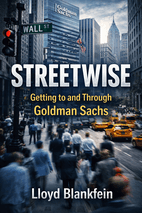
Lloyd Blankfein's Streetwise traces his journey from Brooklyn public housing to CEO of Goldman Sachs, detailing how his outsider upbringing forged a resilient leadership style. This candid memoir offers an insider's view of Wall Street culture, high-stakes crises, and the personal cost of ambition for readers interested in finance and corporate leadership.
Feature
Insta.Page
Blinkist
Shortform
Summary Depth
Full Chapter-by-Chapter
15-min overview
Section-by-section guides
Audio Narration
✓
✓
✓
Visual Mindmaps
✓
✕
✕
AI Q&A
✓
✕
✕
Quizzes
✓
✕
✕
PDF Downloads
✓
✕
✓
Price
$89.99/yr
$146/yr (PRO)
$199/yr
*Competitor data last verified July 2026.
1 Page Summary
Lloyd Blankfein's 'Streetwise' is a memoir that traces his remarkable journey from a childhood in Brooklyn's public housing to the pinnacle of Wall Street as CEO of Goldman Sachs. The central thesis is that his formative experiences—marked by frugality, hustle, and a persistent sense of being an outsider—forged a resilient, pragmatic, and ambitious mindset that defined his entire career. The book meticulously details how lessons from early jobs, the alienation felt at Harvard, and the grind of law school provided an unconventional but powerful foundation for navigating the high-stakes worlds of finance and leadership.
What makes this book distinctive is its raw, introspective approach. Blankfein does not offer a glorified tale of Wall Street triumph but a candid account of professional formation, internal doubt, and constant adaptation. The narrative is built on specific, often humbling episodes: failing to fit in at college, surviving a brutal initiation at the trading firm J. Aron, navigating severe financial crises, and earning a reputation for being a difficult manager. This granular focus on chapter-by-chapter challenges—from cultural clashes post-acquisition to the existential threat of the 2008 financial crisis—provides an authentic look at the mechanics of survival and success in a cutthroat industry.
The intended audience includes anyone interested in leadership, corporate culture, and the inner workings of high finance. Readers will gain a nuanced understanding of how Goldman Sachs's famed partnership culture operated, the immense pressures of steering a global firm through calamities, and the personal cost of such a career. Beyond finance, the book is a study in resilience, offering insights on managing risk, fostering innovation, and the continuous self-improvement required to lead at the highest levels, all filtered through the lens of a self-proclaimed streetwise outsider.
Chapter 1: Advantages
Overview
Lloyd Blankfein’s childhood in the Linden Houses, a public housing project in East New York, Brooklyn, was defined by frugality, familial tension, and a tightly regulated home life. His family, working-class Jewish immigrants, instilled a powerful respect for job security and pragmatic survival, a worldview sharpened by witnessing his father’s soul-crushing postal work. As his neighborhood rapidly declined into a dangerous environment of muggings and unrest, Blankfein navigated an overcrowded, resource-poor high school with a calculated focus on escape through academic effort. His formative years were also marked by early hustles—from trading comic books to the grueling work of hauling concessions at Yankee Stadium—which built resilience and an understanding of hard work’s raw value.
A summer job at a privileged boys’ camp in the Adirondacks served as a stark, eye-opening contrast, immersing him in a world of suburban ease and reinforcing his sense of being an outsider. This experience cemented a lasting, defensive pride in his roots, a trait later illustrated in a pointed exchange with a politician about their contrasting upbringings. Reflecting on this past, he holds a complex mix of memories but is clear that his environment fueled a powerful, restless ambition to see the world beyond his bubble—an ambition he would not wish to replicate for his own children, for whom he actively provided more opportunities.
Crucially, he resists overstating his early hardships, conscious of both his later fortune and the far graver deprivation he’s witnessed globally. Instead, he focuses on the unique advantages his background forged. It cultivated essential street smarts, an objective clarity in reading people and situations, and a drive that came from having more to prove. This history insulated him from the blind spots of privilege, ensuring he never equates a lack of polish with a lack of intelligence. This foundational identity remains his touchstone; he maintains deep connections with old neighborhood friends, attributes life’s different paths largely to luck, and internally still identifies with the waiter, not the customer—a permanent alignment with the kid from Brooklyn that continues to shape his perspective.
Roots in the Projects
Lloyd Blankfein’s identity is fundamentally shaped by his childhood in the Linden Houses, a public housing development in East New York, Brooklyn. Moving there in 1957, his family found a clean, safe, and orderly environment—a stark contrast to their previous tenement in the South Bronx. Life in their small, meticulously maintained apartment was defined by frugality and rules, from plastic slipcovers on the furniture to rotating spots on the floor to avoid wearing out the rug. The atmosphere was often tense, marked by financial anxiety, a lack of privacy, and the constant stress of a crowded household where his father worked nights as a postal clerk.
Family History and Dynamics
Blankfein comes from a lineage of Jewish immigrants. His paternal ancestors ran a garment business that failed during the Depression, leaving his branch as the "poor relations." His father, Seymour, valued the security of his civil service job above all after a period of unemployment, a fear that left a lasting impression. His mother, Blanche, was the outgoing, pragmatic decision-maker at home. Blankfein describes a family unit where no parent wore a suit to work or had attended college, and where political discussion was limited to cursing the mayor over the neighborhood's decline. A poignant memory involves visiting his father’s postal workplace and seeing the automated machine that would eventually render his father’s meticulous, soul-destroying job obsolete.
Navigating School and Neighborhood Decline
Blankfein was a class clown who began taking school more seriously around seventh grade, driven by a desire to escape his neighborhood. He attended Thomas Jefferson High School, an overcrowded, triple-session school with no electives or sports facilities. He made a calculated decision to stay there rather than commute to a prestigious magnet school, believing he could excel more easily and improve his chances for college. Meanwhile, the Linden Houses and East New York underwent a rapid racial and socioeconomic transformation in the mid-1960s, becoming increasingly dangerous. Blankfein navigated a environment of muggings, riots, and general unrest, staying indoors at night and being cautious even within his own school.
Early Hustles and Formative Jobs
From a young age, Blankfein displayed entrepreneurial and pragmatic instincts. He ran a secondary market for comic books and baseball cards. His numerous part-time jobs, which required him to contribute to household expenses, included lifeguarding and a memorable stint as a vendor at Yankee Stadium. There, he hauled heavy trays up steep stadium steps for a meager commission, a lesson in grit and the value of a nickel. These experiences, alongside street games and friendships formed in the projects, shaped his resilience and his ability to connect with diverse people.
An Eye-Opening Summer at Camp
The summer after eleventh grade provided an even starker view into a different world through a job at the upscale Raquette Lake Boys Camp in the Adirondacks. Working as a waterfront counselor for minimal pay, the author was immersed in an environment of privilege, surrounded by campers who were the children of professionals and arrived with their own high-end gear. This exposure to suburban kids with college-educated parents, years of formal sports coaching, and a comfortable competence in athletics made him feel like an alien, cementing a sense of being an outsider. This experience left him with a “chip on his shoulder,” a formative trait for a striver that still surfaces when others make assumptions about his background.
A Defensive Pride in Roots
This defensive pride is illustrated by a pointed exchange with former New York City Mayor Bill de Blasio. During a meeting where de Blasio lectured business leaders on being out of touch, the author challenged him by highlighting their contrasting upbringings—his own in East New York versus de Blasio’s more privileged background—even playfully betting he could name more Brooklyn subway stops. While it didn’t shift ideological perspectives, the moment humanized him and underscored a lifelong reflex to correct assumptions about his origins.
Mixed Memories and Clear Motivations
Reflecting on his childhood, the author describes his feelings as a complex mix of sad and happy memories. While he acknowledges the obstacles and things he missed, he focuses on how that environment fueled a restless ambition and a driven curiosity about the world beyond his bubble. This motivation became a powerful engine for his success. Yet, that same childhood was not what he desired for his own children, for whom he actively sought the coaching, lessons, travel, and diverse exposures he lacked.
The Reluctance to Claim Disadvantage
He expresses a distinct reluctance to overstate his early hardships for several reasons: he didn’t feel deprived at the time due to limited exposure to alternatives; his later global career showed him true, life-threatening deprivation; and he recognizes his subsequent decades of extreme good fortune. To complain from a position of later success feels like whining. More importantly, he believes the focus should be on the unique advantages his background provided.
Forged Advantages of an Outsider
His comparatively disadvantaged childhood cultivated significant strengths. It fostered street smarts—the ability to see himself and others with objective clarity and to quickly size people up. This skill allowed him to understand how to be useful to others and gain their help. Coming from a place he was eager to leave gave him more to escape, prove, and gain, making success matter more intensely. It also insulated him from the blind spots of privilege: he never equates a lack of education or polish with a lack of intelligence, and he remains consciously connected to the lives of working people.
Enduring Identity and Connection
This foundational identity remains intact. He maintains close ties with friends from kindergarten and the old neighborhood, people who lead regular, unpretentious lives. He attributes the different trajectories of their lives largely to luck rather than superior virtue or talent. Ultimately, he still identifies with the waiter more than the customer, a permanent internal alignment with the kid from Brooklyn that shapes his perspective on the world.
Key Takeaways
Experiencing a world of privilege as an outsider can fuel ambition but also instill a lasting defensive pride in one’s roots.
A disadvantaged background can forge critical advantages: street smarts, a heightened drive to succeed, and an immunity to common class-based blind spots.
Lasting success does not require erasing one’s origins; a grounded identity and connection to one’s starting point can provide enduring perspective and humility.
The trajectory of a life is often determined more by luck than inherent superiority, a understanding that fosters empathy and connection.
Key concepts: Chapter 1: Advantages
1. Chapter 1: Advantages
Foundational Identity from the Projects
Childhood defined by frugality and tightly regulated home life
Environment cultivated street smarts and objective clarity
Formed a permanent alignment with the kid from Brooklyn
Family Influence and Worldview
Working-class immigrant family valued job security above all
Father's soul-crushing postal work shaped pragmatic survival mindset
No parental college education or professional attire at home
Navigating a Declining Neighborhood
Witnessed rapid decline into dangerous environment of muggings
Attended overcrowded, resource-poor high school with no facilities
Made calculated choice to stay local to maximize college chances
Early Hustles Building Resilience
Ran secondary market for comic books and baseball cards
Grueling Yankee Stadium concessions work taught value of hard work
Part-time jobs required contributing to household expenses
Camp Experience as Cultural Contrast
Summer job exposed him to world of suburban privilege
Felt like an outsider among college-educated professional families
Cemented defensive pride and chip on his shoulder
Forged Advantages from Adversity
Drove ambition to escape and see world beyond his bubble
Insulated from blind spots of privilege and polish
Cultivated understanding that lack of polish ≠ lack of intelligence
Lasting Perspective and Humility
Maintains deep connections with old neighborhood friends
Attributes life paths largely to luck rather than just merit
Internally identifies with the waiter, not the customer
💡 Try clicking the AI chat button to ask questions about this book!
Chapter 2: Getting Out
Overview
The experience begins with the disorienting thrill of acceptance to Harvard, a moment of pure possibility immediately shadowed by doubt. This code-switching outsider visits the majestic campus and feels the first painful pangs of separation from his family and past. Upon arrival, alienation sets in quickly. Everything—from the opulent dorm room to the casual confidence of prep school roommates—marks him as a stranger in a strange land. His attempts to fit in, whether through sports or fashion, often end in humiliating failure, and he’s caught in a wrenching conflict between pride in his new life and shame about his origins in Brooklyn.
The unsustainable pressure of his first year leads to a sophomore collapse, where poor grades, a bad major fit, and loneliness leave him adrift. He finds a name for his condition in the sociological concept of anomie—the profound alienation of being suspended between unbridgeable social worlds. A lifeline appears when a new group of serious, grounded friends invites him into their roommate circle, providing the structure and positive peer influence he desperately needs to steady himself. From there, it’s a scramble to the finish line, nearly derailed by a forgotten language requirement and a neglected senior thesis, saved only by the last-minute help of loyal friends.
Looking back, he values the friendships, skills, and confidence gained, but harbors disappointment at the lack of a transformative intellectual mentorship. This fuels a firm defense of the liberal arts education as the process of becoming a "complete person," arguing its general value over narrow vocational training. His relationship with Harvard remains forever complex: profoundly grateful for the doors it opened, yet always feeling like an outsider who survived it more than he enjoyed it. Even decades later, as a successful alumnus, the old insecurities can resurface, a reminder that the journey out never fully erases the feeling of the boy in the alligator shirt, wondering if he truly belongs.
The Harvard Interview and Acceptance
The author recounts the surreal experience of his Harvard interview, arriving two hours early at the majestic Harvard Club—a world utterly foreign to him. He instinctively engaged in "code-switching," calibrating his presentation to fit the environment. The moment of acceptance, discovered on the living room table, was one of pure exhilaration, representing a definitive escape from the confines of his family's life in East New York. Yet, this joy was immediately tempered by anxiety about whether he belonged and the fear of failing.
A Preview of a New World
His sister Jacky accompanied him on a Greyhound bus trip to see Harvard for the first time. The visit to the iconic campus was overwhelming and isolating, underscoring the vast gulf between his past and his future. The melancholy return trip highlighted a painful new awareness: his pursuit of this opportunity underscored the dormant dreams and heavy burdens his sister carried, a reality his teenage self was only beginning to grasp.
Arrival and Alienation at Harvard
Moving into Weld Hall—a room once occupied by John F. Kennedy—amplified his feeling of being an outsider. His roommates, from prep school backgrounds, inhabited a "different Harvard," their casual cruelties and assumed knowledge deepening his insecurity. Everything from cafeteria food ("unbelievably great") to dorm size seemed luxurious compared to Brooklyn, marking him as a striver. His attempts to join activities like the elite swim team and crew ended in comic humiliation, providing stark "data points" on his unfamiliarity with the norms of privilege.
Academic Struggle and Social Awkwardness
Academically, he was paralyzed by self-doubt, laboring for a week on a simple 250-word paper. His efforts to assimilate through clothing backfired, like ruining a new sweater in the laundry. He felt a deep, cringing shame about his origins when college friends visited Brooklyn or when his high school friends came to campus. This internal conflict—pride in his new life versus embarrassment about his old one—created a painful distance from his family, even as they supported him with humble gifts like a budget wardrobe.
Sophomore Year Tailspin
The unsustainable anxiety of his first year gave way to a sophomore-year collapse. He chose an ill-fitting honors major, his grades plummeted (including a disastrous C in Constitutional Law), and he quit rowing. Living alone, influenced by new friends, he experienced loneliness and dabbled in drugs. He intellectually grasped the sociological concept of "anomie"—the alienation from unbridgeable social worlds—which perfectly described his daily reality. The era's anti-war protests and draft lottery provided a chaotic backdrop, but his most pressing burden remained financial scarcity, alleviated only by the straightforward generosity of the financial aid office.
A Transformative Summer and a Lifeline
The author's difficult second year was followed by a summer of work in the Catskills' Borscht Belt, a welcome chance to earn money. He recalls the surreal experience of being roped into a comic diving act by the hotel’s tummler (entertainer), a memory that underscores his enduring fear of heights more than any sense of fun.
Returning to Harvard, a critical turning point arrived when friends Dave Grizzle and another classmate, both serious, religious students, invited him to join their roommate group. This required a rare switch between Harvard houses, a move he wisely accepted. This new living situation provided the structure and positive peer influence he desperately needed. His roommates were impressive in their own right: Mark Campisano, who would clerk for the Supreme Court; Dave Grizzle, a future aviation executive; and Charlie Overfelt, a kind but tragically lost soul from a wealthy background who later died in prison. The author notes he managed to honor his childhood vow to never share a bedroom by avoiding the bunk bed in their suite.
Scrambling to the Finish Line
His academic path remained unspectacular. He nearly failed to graduate due to a neglected language requirement, hastily passing basic French. His senior thesis on 19th-century American professionalism suffered from a disengaged adviser, Abigail Thernstrom. He missed the honors deadline and faced not graduating at all. In a last-minute rescue, Dave Grizzle and his future wife Anne Fletcher typed his handwritten pages in an assembly-line effort, allowing him to graduate—not with honors in Social Studies, but in General Studies.
Reflections on an Imperfect Education
Looking back, the author acknowledges gaining immense value from college: lasting friendships, writing fluency, historical perspective, and confidence. Yet, he expresses deep disappointment at not having a transformative intellectual experience or forming a mentoring relationship with a professor. The closest was with teacher William Schneider, whose decency left a lasting impression.
This leads to a firm defense of the liberal arts education against critics like Peter Thiel. He argues college is where you become a "complete person," learn to engage with discomfort, and build a foundation of general knowledge that serves any career. Specialized training, he contends, can come later.
The Enduring Ambivalence of Belonging
His relationship with Harvard remains complex. He credits it for opening doors but states he "survived it more than I enjoyed it." He captures this duality in a telling aphorism: "Harvard may or may not be the best place to go, but for the doors it opens, it is always the best place to have gone."
This sense of being an outsider, even as a successful donor and alumnus, crystallized years later when his son, a member of the exclusive Fly Club, invited him to speak. He declined because the event was club-exclusive, opting instead for a talk open to all students in a dorm—a place he felt more comfortable. He concludes with a powerful image of enduring insecurity: despite his accomplishments, in certain rarefied spaces, he mentally reverts to the boy in the alligator shirt, wondering if he fits in.
Key Takeaways
Positive peer influence can be a lifeline, providing the structure and example needed to regain personal and academic momentum.
The value of a liberal arts education lies not just in specific knowledge, but in shaping a curious, well-rounded person capable of engaging with the world.
One can be deeply grateful for an institution's opportunities while still feeling fundamentally separate from its culture, a tension that can persist for a lifetime.
Personal history and insecurities, no matter how far one travels, can resurface in moments that trigger feelings of not belonging.
Key concepts: Chapter 2: Getting Out
2. Chapter 2: Getting Out
Acceptance and Initial Alienation
Harvard acceptance brings immediate joy and anxiety
Campus visit highlights vast gulf from past life
Code-switching begins during Harvard Club interview
Arrival as an Outsider
Luxurious dorm contrasts sharply with Brooklyn life
Preppie roommates represent a different social world
Summer work offers financial relief and perspective
Financial aid office provides crucial support
Enduring Complex Relationship with Harvard
Values friendships and skills gained
Misses transformative intellectual mentorship
Always feels like an outsider who survived
Chapter 3: Glimpses Beyond
Overview
The author recounts his journey through Harvard Law School and the early steps of his legal career, a pivotal period of professional formation and personal awakening. It explores the tension between his lingering sense of being an outsider from a disadvantaged background and his dawning realization that he was now entering the ranks of the "advantaged." The account moves from the intimidating halls of law school through formative personal relationships and culminates in the sometimes-absurd realities of the job market, all while examining the internal insecurities that persisted beneath a growing exterior success.
The Law School Grind
Starting law school at just twenty, the author found Harvard Law an intimidating place, amplified by the popular mythos of The Paper Chase and professors who employed the Socratic method as a tool of intimidation. Unlike the perceived "contentless" nature of MBA programs, he valued the substantive grind of law school, particularly the historical feast of first-year common law. He appreciated how doctrines like tort law evolved pragmatically over centuries to allow for societal progress. While he performed well (mostly A-minuses and B-pluses), he felt he never quite mastered the rhythm of the experience and, in retrospect, wishes he had engaged more with professors and opportunities outside of class.
Navigating New Social Worlds
His social life required active effort. An early relationship with Susie, a student from Wellesley College, offered a glimpse into a comfortable suburban lifestyle that felt exotic to him. A later relationship with Debbie from New York exposed a vast class divide. A humbling dinner at her family's Park Avenue duplex—where he mistook an artichoke for food and accidentally launched a champagne cork—reinforced his feeling of being an "urban hick." Despite their kindness, he sensed her parents' disapproval and his own discomfort in their world, a contrast to the grim, fear-ridden New York City of the 1977 "Son of Sam" summer.
The Practicalities of a Career
Approaching graduation, practical concerns dominated. He focused on tax law, seeing it as a complex but marketable skill that would ensure a good income to pay off loans. The on-campus interview process revealed lingering ethnic divisions among prestigious law firms. His offer from Paul, Weiss in their tax department was abruptly rescinded when they admitted to overhiring, ranking him "fifth on a list of four." With wounded pride, he quickly accepted a standing offer from Donovan, Leisure instead—a decision that became a humorous anecdote in later years.
The Lingering Impostor
Reflecting on this period, the author recognizes a pattern of holding himself back—not aiming for law review or clerkships, opting for the safer path of tax law. He attributes this to a deep-seated feeling of being an impostor, a sense of illegitimacy that persisted despite his accomplishments. He concludes with a metaphor of an overheating ice maker producing small, wet cubes, comparing it to his own state at the time: experiencing the "first flush of success" but generating anxious heat, simultaneously advancing and melting from the insecurity within.
Key Takeaways
Professional Transformation: The chapter marks the author's transition from seeing himself as "disadvantaged" to recognizing his placement within an "advantaged" professional elite, though his internal self-perception lagged behind.
Value of the Grind: Despite its brutal methods, he found genuine intellectual value in legal training, particularly in understanding the historical evolution and pragmatic compromises embedded in common law.
Class and Social Navigation: Personal relationships provided stark lessons in class difference, continuously reminding him of his outsider status even as he advanced institutionally.
The Impostor Syndrome: A recurring theme is how insecurity and a sense of illegitimacy can cause individuals to unconsciously limit their own ambitions and opportunities, even in the face of clear success.
The Role of Chance: Career paths can be altered by seemingly minor bureaucratic events (like being the fifth hire for four spots), requiring resilience and a willingness to pivot quickly.
Key concepts: Chapter 3: Glimpses Beyond
3. Chapter 3: Glimpses Beyond
The Law School Experience
Intimidating environment amplified by Socratic method
Valued substantive historical grind of common law
Performed well but felt he never mastered the rhythm
Navigating Class and Social Worlds
Relationships exposed vast class divides and lifestyles
Humbling experiences reinforced feeling of being an outsider
Contrast between his background and new social circles
Career Practicalities and Setbacks
Chose tax law for marketability and income security
Self-perception lagged behind professional advancement
Core Tensions and Realizations
Transition from disadvantaged to advantaged identity
Intellectual value found in legal training's pragmatism
Career paths altered by chance requiring resilience
Chapter 4: Lawyer, Briefly
Overview
A Young Lawyer's World
Fresh from law school and awaiting bar exam results, the author and his girlfriend Debbie take a budget trip to Europe—his first time abroad. This period of transition gives way to his first major assignment at the prestigious firm Donovan, Leisure: a high-stakes tax litigation case for major record companies. The core legal issue was whether the metallic "mother" discs used to stamp vinyl records constituted tangible property eligible for a 10% investment tax credit, and crucially, whether the massive royalty payments to artists could be included in the cost basis of those discs. The case was a labyrinth of reconstructing ancient financial data from the 1960s, making the author feel disconnected from the present.
For two years, he lived a bifurcated life, stationed primarily in Los Angeles with a rented Mustang and apartment, shuttling back to New York occasionally. The work was heady for a twenty-five-year-old but isolating, consisting of long hours with little social life beyond colleagues. His boss, the polished partner John Baity, became a mentor in both professional and sartorial matters, introducing him to a world of luxury and exclusive clubs that felt alien.
Personal Crossroads in New York
Returning to New York after winning the case, he settled into the firm's offices at 30 Rockefeller Plaza. His personal life took a decisive turn when a colleague, Emily Sherman, systematically set him up on a blind date with her law school roommate, Laura Jacobs. Their pragmatic, overworked associate romance blossomed into a lifelong partnership. Laura provided stability, shared interests, and a much-needed life outside the firm's walls.
Professionally, however, he reached an impasse. Forced to choose between specializing in pure tax law or general litigation, he opted for tax. He quickly realized he lacked the innate passion for the field that colleagues like Tim O'Neill possessed, dreading the arrival of new case law while they eagerly awaited it. A series of moments—a glimpse into the rarefied world of private-school society, the realization of his new financial position as a "giver," and a stultifying law firm party on Long Island—crystallized a deep-seated fear. He saw a future that was comfortable but felt meaningless, culminating in an existential dread mirrored by the final scene of the film The Heartbreak Kid: the hollow feeling of achieving a coveted goal only to find it pointless.
The Seeds of Discontent
The chapter contrasts the intellectual challenge and thrill of high-stakes litigation with the growing sense of the work's inherent futility. The tax case, while lucrative for the clients, was a backward-looking fight over obsolete technology (vinyl stampers) and a tax provision that would soon be repealed. This echoed his earlier observations about his father's postal work—technically important but potentially automatable and lacking enduring impact. The advent of word processing and legal databases began transforming legal drudgery, hinting at future, more seismic shifts from technology. His mentorship under John Baity, while valuable, highlighted class differences and ingrained a heightened empathy born from feeling like an outsider. Ultimately, his personal happiness with Laura underscored the growing professional void, setting the stage for a major life change.
Key Takeaways
A prestigious legal career can provide intellectual challenge and mentor relationships but may also lead to feelings of isolation and existential futility if the work lacks lasting impact.
Meaningful personal relationships often provide the stability and perspective needed to re-evaluate professional paths.
Feeling like an outsider in certain environments can foster a deeper sense of empathy and observational insight.
Professional success is not solely defined by mastery of a field; alignment with one's intrinsic interests is crucial for long-term fulfillment.
Technological change constantly reshapes professions, automating drudgery but also demanding adaptation.
Key concepts: Chapter 4: Lawyer, Briefly
4. Chapter 4: Lawyer, Briefly
First Major Legal Assignment
High-stakes tax litigation for record companies
Core issue: tax credit for vinyl 'mother' discs
Two-year project reconstructing 1960s financial data
Work was intellectually heady but isolating
Mentorship and Professional World
Partner John Baity as mentor in law and style
Exposure to luxury and exclusive social clubs
Highlighted class differences and outsider status
Fostered observational insight and empathy
Personal Life and Partnership
Blind date with Laura Jacobs via colleague
Relationship provided stability and shared interests
Contrasted with professional isolation
Created foundation for major life reevaluation
Professional Discontent and Crisis
Chose tax law specialization but lacked passion
Realized work felt backward-looking and futile
Feared comfortable but meaningless future
Existential dread mirrored in film reference
Seeds of Future Change
Work involved obsolete technology and repealed laws
Technology began transforming legal drudgery
Personal happiness underscored professional void
Set stage for major career transition
You've reached the end of the free chapters
Next chapter: “From Gold Man to Goldman” is locked
Keep reading Streetwise — and unlock all 600+ book summaries with audio, mindmaps and AI Q&A.
$0.00 due today · 7 days free, then $89.99/year ($7.49/mo) · Cancel anytime before day 7
Lloyd Blankfein is an American investment banker who served as the chairman and CEO of Goldman Sachs from 2006 to 2018. His expertise lies in global finance and investment banking, having led the firm through the 2008 financial crisis. While not a traditional author of published works, his career and perspectives are extensively documented in financial journalism and analyses of Wall Street.
📚 Explore Our Book Summary Library
Discover more insightful book summaries from our collection