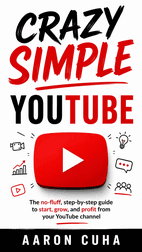
Aaron Cuha's Crazy Simple YouTube delivers a strategic, business-first system for professionals to use YouTube as a compounding lead-generation engine. Written for business owners, coaches, and consultants, it provides actionable guidance on channel setup, topic research, scripting, and analytics—challenging entertainment-focused myths like daily posting and subscriber obsession.
Feature
Insta.Page
Blinkist
Shortform
Summary Depth
Full Chapter-by-Chapter
15-min overview
Section-by-section guides
Audio Narration
✓
✓
✓
Visual Mindmaps
✓
✕
✕
AI Q&A
✓
✕
✕
Quizzes
✓
✕
✕
PDF Downloads
✓
✕
✓
Price
$89.99/yr
$146/yr (PRO)
$199/yr
*Competitor data last verified July 2026.
1 Page Summary
You are a professional librarian and book reviewer. Your task is to generate a concise 3-paragraph summary of the book 'Crazy Simple YouTube' by Aaron Cuha. Published by Kinetic Digital Publishers.
Crazy Simple YouTube presents a strategic, business-first approach to the platform, directly challenging the conventional advice aimed at entertainment creators. The book’s central thesis is that YouTube is a unique asset for professionals because, unlike other social media, video content compounds in value over time, continuing to generate leads and revenue for years. The author argues that most creators are led astray by myths like the need to post daily or obsess over subscriber counts. Instead, the book focuses on sustainable growth through a system that prioritizes watch time, click-through rate, and average view duration over vanity metrics. A key emphasis is that a well-built lead generation system can allow a creator with a small, engaged audience to out-earn one with a massive but passive following.
The book distinguishes itself by providing a complete, repeatable system rather than abstract inspiration. Aaron Cuha provides actionable, technical guidance across the entire content lifecycle, from channel setup and topic research to scripting, editing, and analytics. It emphasizes a "good enough" equipment philosophy, showing that a smartphone and a simple microphone are sufficient to start building a six-figure channel. Practical chapters cover structuring videos to prevent viewer drop-off at specific exit triggers, designing effective titles and thumbnails, and building a lean team for scaling. The book also addresses the psychological challenges of creation, such as the comparison spiral and burnout, framing resilience as a skill to be developed through predictable patterns and disciplined systems.
The intended audience is business owners, real estate agents, coaches, consultants, and other professionals who want YouTube to serve as a reliable client-generation engine, not a hobby. Readers will gain a concrete 90-day roadmap to move from zero to their first 10,000 subscribers, a framework for measuring true return on investment (based on lead value or cost per acquisition), and systems for repurposing content across other platforms with minimal effort. Ultimately, the book delivers a philosophy grounded in the belief that consistent, well-structured content—not viral luck—builds a valuable, compounding business asset that works for the creator on autopilot.
Chapter 1: The $387,000 Youtube Video
Overview
A single video can generate $387,000 over three years. That's not a theoretical number—it's what happens when you understand how YouTube content compounds over time instead of disappearing like an Instagram post or a tweet.
The key insight is deceptively simple: YouTube is the only platform where content gets more valuable with age. Your video keeps working while you sleep, while you take vacations, while you're busy with client work. It accumulates views, builds authority, and generates leads on autopilot.
Here's the timeline that plays out consistently for creators who understand the system:
Month one: Your video gets a few hundred views from search. The algorithm is testing it, measuring watch time, deciding if it deserves wider distribution.
Month three: With solid retention numbers, YouTube starts recommending your video to new audiences. Views climb steadily.
Month six: Your video ranks for search terms you didn't even target. It appears next to your competitors' content in suggested videos, pulling their audience to you for free.
Year one: That single video has generated dozens of leads, multiple clients, and thousands in revenue—with no signs of slowing down.
Year three: Hundreds of leads, dozens of clients, the revenue equivalent of a full-time salary. From one piece of content.
This is the YouTube compound effect. Every video you create becomes an asset that pays dividends indefinitely. Compare that to paid ads, which stop the moment you stop spending money. Or cold outreach, which requires constant effort. Or social media posts, which vanish within hours.
The chapter includes a practical prompt you can copy into your AI tools right now. It walks you through calculating your potential revenue based on your profession, average client value, and conversion rate. You'll see exactly what happens when you create one video per week and each generates two leads per month after six months.
The rest of the book follows a clear structure. Part One destroys the myths holding you back and sets up your channel for conversion. Part Two builds your content engine—topic research, titles, thumbnails, hooks, scripting, editing. Part Three turns your channel into a business asset with lead generation systems. Part Four scales everything with team building, revenue streams, and repurposing.
Every chapter follows the same format: a real story, the tactical framework, AI tools you can use immediately, a case study with real results, and an action step you can complete in one sitting. No theory for theory's sake. Just the system, chapter by chapter, until you have a YouTube channel that works as hard as you do.
Key Takeaways
YouTube content compounds over years, unlike social media posts that disappear in hours
A single video can generate the revenue equivalent of a full-time employee's salary over three years
The YouTube compound effect means your content works for you indefinitely
Every chapter provides real stories, tactical frameworks, AI tools, case studies, and actionable steps
The system is designed to turn your channel into a business asset that generates leads and revenue on autopilot
Key concepts: Chapter 1: The $387,000 Youtube Video
1. Chapter 1: The $387,000 Youtube Video
The YouTube Compound Effect
Content gets more valuable with age
Videos accumulate views and leads on autopilot
One video can generate $387,000 over three years
Timeline of a Successful Video
Month one: algorithm tests with a few hundred views
Month three: recommendations boost views steadily
Year one: dozens of leads and multiple clients
Year three: revenue equivalent to a full-time salary
Why YouTube Beats Other Platforms
Paid ads stop when spending stops
Social media posts vanish within hours
Cold outreach requires constant effort
YouTube content works while you sleep
Book Structure and Chapter Format
Part One: destroy myths and set up for conversion
Part Two: build content engine with research and editing
Part Three: turn channel into business asset
Each chapter has story, framework, AI tools, and action step
Practical Revenue Calculation
Use AI prompt to estimate potential revenue
Input profession, client value, and conversion rate
One video per week generates two leads monthly after six months
💡 Try clicking the AI chat button to ask questions about this book!
Chapter 2: Why Most Youtube Advice Is Wrong
Overview
Most business owners walk into YouTube carrying a bag of bad advice—and it’s not their fault. The platform is cluttered with gurus pushing tactics that might work for entertainment creators but actively sabotage professionals. This chapter calls out the two biggest offenders and shows you why chasing the wrong numbers will burn you out before you ever see results.
The first myth: you need to post daily. For a business owner just starting, that’s a recipe for quitting by month three. The smarter move is one video per week, poured into obsessively. Better hook, better content, better thumbnail. Once you have a system, you can scale to two. But starting with daily uploads? That’s how you trade momentum for exhaustion.
Then there’s the subscriber obsession. Daniel checked his count every morning like a stock ticker, mistaking each new sub for real progress. Here’s the truth: in 2026, YouTube serves videos based on interests and behavior, not subscription lists. A video can reach millions of strangers while half your subscribers never see it. Subscribers are a vanity metric. Real signals are watch time, click-through rate, and average view duration. Those three numbers tell you if your content is actually connecting.
The algorithm isn’t the enemy. For business owners, it’s the best ally—it rewards educational, specific, search-optimized content that answers real questions. If your video isn’t performing, look at your titles, thumbnails, hooks, or structure. All fixable. Stop blaming the algorithm. Start studying what it rewards.
The chapter includes an AI prompt to audit your current strategy against these myths. You feed in your posting frequency, metrics focus, and ideal video length, and it flags the bad advice hiding in your plan. Practical, actionable, and designed to stop you from running in the wrong direction.
One myth to drop today: if you’ve been obsessing over subscriber count, stop checking it for 30 days. Pick one piece of dead weight and cut it loose. Only then can the real learning stick.
Key Takeaways
Post one video per week initially, not daily—quality beats burnout.
Subscriber count is vanity; track watch time, CTR, and average view duration instead.
The algorithm rewards useful, searchable content—study what works, don’t fight it.
Use the provided AI prompt to audit your strategy for hidden myths before you waste time.
Drop one bad habit now (e.g., checking subscriber numbers) to reset your mindset for the chapters ahead.
Key concepts: Chapter 2: Why Most Youtube Advice Is Wrong
2. Chapter 2: Why Most Youtube Advice Is Wrong
The Daily Posting Myth
Posting daily leads to burnout by month three
Start with one quality video per week
Focus on better hook, content, and thumbnail
Scale to two videos only after you have a system
The Subscriber Obsession Trap
Subscriber count is a vanity metric
YouTube serves videos based on interests, not subscriptions
Real signals: watch time, click-through rate, average view duration
Poor performance means fixable issues in titles or hooks
Stop blaming the algorithm; study what it rewards
Focus on answering real questions for business owners
Practical Strategy Audit
Use AI prompt to audit your current strategy
Feed in posting frequency, metrics focus, and video length
Flags bad advice hiding in your plan
Actionable tool to stop running in wrong direction
Key Mindset Shifts
Drop one bad habit now to reset your mindset
Quality beats burnout for sustainable growth
Track real engagement metrics, not vanity numbers
Cut dead weight to let real learning stick
Chapter 3: The 2026 Youtube Algorithm Decoded
Overview
Chapter 3 strips away the mystery of YouTube’s 2026 algorithm and reveals the raw mechanics behind what actually drives growth. It’s not about luck, posting schedule hacks, or viral gimmicks—it’s about understanding three core metrics: watch time, engagement signals, and traffic sources. The chapter frames the algorithm as a business engine: YouTube wants to maximize ad revenue and user retention, so it rewards content that keeps people on the platform longer and more often. The real insight here is that the numbers don’t lie, and once you know which levers to pull, you can engineer your channel’s trajectory.
Watch Time: The Volume Play
Watch time is the total minutes viewers spend on your video, calculated as average view duration (AVD) multiplied by total views. It’s YouTube’s heavyweight metric because more minutes equal more ad slots and deeper platform engagement—simple business math. The chapter uses a concrete example: a 15-minute video with 40% retention produces 6 minutes of watch time per viewer, while a 3-minute video with 60% retention yields only 1.8 minutes. Even with lower percentage retention, the longer video generates over triple the watch time. That’s why the algorithm favors depth over brevity.
The author shares a real-world case from their @VanLife channel. When they made three- to four-minute videos, growth crawled at 300–400 subscribers per month. After switching to deeper content averaging 18 minutes, growth exploded to over 5,000 subscribers monthly. The accumulated watch time triggered algorithmic amplification that short-form content simply couldn’t match. The lesson: don’t obsess over keeping videos short to boost percentage retention—instead, optimize for total minutes of viewing.
Engagement Signals: The Trust Indicators
Beyond watch time, YouTube uses engagement signals to decide where to surface your videos. Click-through rate (CTR) and AVD are the main drivers for suggested traffic. A high-CTR thumbnail and title get people to click; strong AVD tells YouTube the video is worth recommending. If your retention holds, the algorithm expands your reach.
Another crucial source is external traffic—views from outside YouTube, like social media shares, blog embeds, or email links. The chapter explains that YouTube actually values external traffic because it brings fresh users to the platform. Sharing your new video across channels, embedding it in blog posts, and emailing your list creates an initial surge that can kickstart algorithmic momentum. For business channels, the ideal mix is heavy on search traffic (which captures intent-driven leads) plus suggested traffic (to broaden your audience). External traffic acts as the catalyst that gets the other two moving.
AI Integration: Your Algorithm Optimization Analyzer
The chapter includes a practical AI prompt designed to turn theory into action. “Algorithm Optimization Analyzer” asks you to pull four numbers for each of your last five videos: CTR percentage, average view duration as a percentage, total video length in minutes, and total watch time in hours. After averaging them, you score yourself against benchmarks:
CTR above 5% → you’re winning the click game; shift focus to retention and watch time. Below 4% → thumbnails or titles are the bottleneck.
AVD above 45% → your content keeps people engaged; consider going longer next time. Below 35% → viewers leave early; work on hooks, pacing, or structure.
Video length under 8 minutes → you’re leaving watch time on the table. Over 15 minutes with solid retention → you’re in the algorithm’s sweet spot.
Finally, identify your single biggest bottleneck—CTR, AVD, or video length—and commit to fixing it in your next video.
This prompt turns vague advice into a repeatable diagnostic. The chapter emphasizes starting with just one problem rather than trying to fix everything at once.
Key Takeaways
Watch time (total minutes) matters more than percentage retention. Longer videos almost always build more algorithmic momentum.
Engagement signals (CTR + AVD) drive suggested traffic; external traffic (from your own channels) kickstarts the cycle.
Use the algorithm analyzer prompt to diagnose your bottleneck—fixing one metric at a time beats scattered efforts.
For business channels, search traffic captures intent-driven leads, suggested traffic expands reach, and external traffic is the spark.
Key concepts: Chapter 3: The 2026 Youtube Algorithm Decoded
3. Chapter 3: The 2026 Youtube Algorithm Decoded
Algorithm as Business Engine
Maximizes ad revenue and user retention
Rewards content keeping users on platform longer
Three core metrics: watch time, engagement, traffic sources
Numbers don't lie; engineer your channel's trajectory
Watch Time: The Volume Play
Total minutes viewed = average view duration × views
Longer videos generate more algorithmic momentum
Case study: 18-min videos grew 5,000 subs/month
Optimize for total minutes, not percentage retention
Engagement Signals & Traffic Sources
CTR and AVD drive suggested traffic recommendations
External traffic brings fresh users to platform
Search traffic captures intent-driven leads
External views kickstart algorithmic momentum
AI Diagnostic: Algorithm Optimization Analyzer
Pull CTR, AVD, video length, and watch time data
Score against benchmarks to identify bottlenecks
CTR below 4% means thumbnails/titles need work
Fix one metric at a time, not everything at once
Key Takeaways for Growth
Watch time matters more than percentage retention
Engagement signals drive suggested traffic
External traffic from your channels sparks growth
Search traffic captures intent-driven leads
Chapter 4: Your Youtube Business Model
Overview
Chapter 4 lays out the fundamental truth that your YouTube channel is only as valuable as the business model powering it. You can have great content, a growing subscriber count, and consistent views, but without a clear revenue engine, it’s just a hobby. The chapter breaks down three primary models, each suited for different types of businesses and goals. It also includes a powerful case study and a practical prompt to help you map your own path.
The Authority Model: YouTube as a Living Portfolio
Not every channel needs to generate leads in the traditional sense. For authors, speakers, thought leaders, and executives, YouTube becomes a stage for positioning. The content acts as a living portfolio that proves expertise, not a direct sales funnel. The revenue isn’t tied to individual client calls; it flows from speaking engagements, book deals, consulting contracts, and board positions. The content strategy shifts from local search queries to thought leadership pieces like industry trend analyses, contrarian perspectives, and deep case studies. The call to action isn’t “book a call” but rather positioning you as the first name that comes to mind for event organizers and decision-makers. The revenue is harder to track directly—a conference organizer might watch twelve videos before offering a $15,000 speaking fee, and YouTube was the engine, even if it’s never acknowledged.
The Digital Products and Courses Model
This model is about creating scalable assets. Once you have a video-to-viewer-to-lead machine running, every video becomes an employee that works around the clock. With 50 videos, you have 50 entry points constantly generating leads and sales for digital products, courses, or memberships. The key is designing content that naturally points viewers toward your offerings, creating a self-sustaining system.
The Direct Lead Generation Machine
The chapter emphasizes that for service-based businesses, direct lead generation is almost always the primary play. It illustrates this with the story of Sarah, who had a YouTube channel with decent engagement but wasn’t converting. Within 30 days of implementing a proper business model, she generated 47 leads. Within 60 days, she had three clients under contract worth over $38,000 in commissions. By month six, her channel had produced over $140,000 in revenue from a mix of buyer and seller leads. The key insight: the content and audience stayed the same, but the business model behind the videos transformed everything. She was sitting on a gold mine and didn’t even know it.
Your Business Model Blueprint with AI Integration
The chapter provides a prompt to help you map out your specific YouTube business model using real numbers from your industry. You input your profession, market, primary model (direct lead gen, authority, digital products, affiliate, or ad revenue), plus your average client value and close rate. This turns abstract strategy into a concrete, data-driven plan.
Crazy Simple Action: Map Your Revenue Path
Before moving on, the chapter asks you to answer five questions to form the skeleton of your YouTube business model. Don’t overthink them:
Which business model is your primary play? For service-based businesses, it’s almost certainly direct lead generation. Commit to it.
What is the single most valuable thing you could offer a YouTube viewer for free? This becomes your lead magnet—a guide, checklist, calculator, free consultation, or market report.
Key Takeaways
Your business model determines whether your YouTube channel is a hobby or an asset—the content alone isn’t enough.
Authority channels focus on positioning, not direct leads, and revenue comes from opportunities like speaking and consulting.
Digital products turn videos into automated sales machines, with each video acting as a 24/7 employee.
The direct lead gen model can be wildly profitable once you align content with the right revenue path, as Sarah’s case proves.
Use the provided AI prompt to calculate your numbers and commit to one primary model before moving forward.
Key concepts: Chapter 4: Your Youtube Business Model
4. Chapter 4: Your Youtube Business Model
The Authority Model
YouTube as a living portfolio for positioning
Revenue from speaking, books, and consulting
Content focuses on thought leadership, not leads
Call to action positions you for opportunities
Digital Products and Courses Model
Creates scalable assets that work 24/7
Each video is an entry point for sales
Content naturally points to offerings
Builds a self-sustaining revenue system
Direct Lead Generation Machine
Primary play for service-based businesses
Sarah's case: $140K in six months
Same content, transformed business model
Align content with revenue path for profit
Business Model Blueprint with AI
Use AI prompt with real industry numbers
Input profession, market, and primary model
Include average client value and close rate
Turns abstract strategy into data-driven plan
Map Your Revenue Path
Commit to one primary business model
Identify your most valuable free offer
Create lead magnet like guide or calculator
Don't overthink—form the skeleton now
You've reached the end of the free chapters
Next chapter: “The “Good Enough” Equipment Stack” is locked
Keep reading Crazy Simple YouTube — and unlock all 600+ book summaries with audio, mindmaps and AI Q&A.
$0.00 due today · 7 days free, then $89.99/year ($7.49/mo) · Cancel anytime before day 7
Aaron Cuha is a fantasy author and game designer known for his work on the award-winning roleplaying game *Dungeon Crawl Classics* and his novel *The Dying Earth Companion*. With a background in computer science and interactive storytelling, he specializes in blending classic sword-and-sorcery tropes with innovative procedural mechanics.
Frequently Asked Questions about Crazy Simple YouTube
What is Crazy Simple YouTube about?
This book is a practical guide for business owners and creators to build a profitable YouTube channel by focusing on sustainable strategies, not viral tactics. It covers topic research, video structure, editing, audience building, lead generation, and conversion—all based on real case studies and data-driven methods. The author emphasizes that YouTube content compounds over time, and provides a step-by-step system from setup to scaling a channel that generates leads and revenue.
Who is the author of Crazy Simple YouTube?
Aaron Cuha is a YouTube strategist and entrepreneur who runs a YouTube management company. He draws from his experience managing channels like @VanLife and @GotCoach, sharing insights from thousands of hours of content production. His approach is grounded in real results, not theoretical advice.
Is Crazy Simple YouTube worth reading?
Absolutely—this book cuts through the noise of bad YouTube advice and gives you a repeatable system that actually works for business. It’s filled with concrete examples, actionable templates, and a 90-day roadmap that turns theory into results. Whether you’re a beginner or stuck, the author’s data-driven methods will help you grow a channel that generates leads and revenue without burnout.
What are the key lessons from Crazy Simple YouTube?
The most important lesson is to focus on watch time and engagement over vanity metrics like subscribers or daily posting. A single well-made video can compound in value over years, generating leads and revenue on autopilot. You don’t need expensive gear—a smartphone and good lighting suffice. And finally, building a community of engaged viewers who trust you is more valuable than a large passive audience.
📚 Explore Our Book Summary Library
Discover more insightful book summaries from our collection