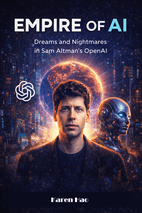
Karen Hao's Empire of AI traces the meteoric rise of artificial intelligence as a deliberately constructed imperial power, documenting its foundation in extracted data, concentrated governance, and a scale-over-safety culture. This critical history is for readers concerned about the technology's societal risks and undemocratic control.
Feature
Insta.Page
Blinkist
Shortform
Summary Depth
Full Chapter-by-Chapter
15-min overview
Section-by-section guides
Audio Narration
✓
✓
✓
Visual Mindmaps
✓
✕
✕
AI Q&A
✓
✕
✕
Quizzes
✓
✕
✕
PDF Downloads
✓
✕
✓
Price
$89.99/yr
$146/yr (PRO)
$199/yr
*Competitor data last verified July 2026.
1 Page Summary
Empire of AI by Karen Hao traces the meteoric rise of artificial intelligence from an academic niche to a world-altering force, framing it not as an inevitable technological march but as the deliberate construction of a new imperial power. The book meticulously documents how this empire was built on a specific foundation: the convergence of immense computational power, vast datasets scraped from the internet often without consent, and a research culture that prioritized scale and performance over safety, ethics, and understanding. Hao argues that a small, insular group of researchers and corporate labs, driven by a potent mix of idealism, competition, and profit, made foundational choices that embedded bias, opacity, and uncontrollability into the very architecture of modern AI systems.
Placing this development in historical context, Hao draws direct parallels to earlier empires, showing how AI's expansion replicates patterns of resource extraction, labor exploitation, and the consolidation of power. The "data colonies" are our digital lives, mined for raw material; the often-invisible "knowledge workers" labeling data face precarious conditions; and the governance of this new realm is concentrated in the hands of a few corporate and state actors. The narrative moves from the pivotal 2012 ImageNet breakthrough and the ensuing AI arms race, through the rise of generative models like GPT, to the present-day geopolitical struggle between the U.S. and China, illustrating how the empire's logic now shapes global politics, economics, and daily life.
The lasting impact, as outlined in the book, is a world increasingly governed by inscrutable systems that reinforce inequality, undermine democratic discourse, and create unprecedented risks. Hao's work is a powerful indictment of the path taken, concluding that without a fundamental reorientation—one that centers democratic control, ethical foresight, and a rejection of the "bigger is better" dogma—the AI empire will cement existing hierarchies and create new, potentially catastrophic forms of social and technical control. It is ultimately a call to action to dismantle and rebuild the foundations of this technology before its governance becomes irreversible.
Prologue: A Run for the Throne
Overview
The chapter opens with the sudden, chaotic firing of Sam Altman as CEO of OpenAI, an event that sent shockwaves through the company and the tech world. Employees, learning the news from a public statement, were left reeling, with the board’s vague charge of a lack of candor creating frantic speculation and deepening the crisis. A disastrous all-hands meeting only made things worse, as leadership offered almost no clarity, turning employee unease into outright anger.
This internal chaos quickly escalated into open revolt. Key executives, confronting the board, discovered a deep ideological rift: some board members believed that even destroying the company could align with the nonprofit’s mission to safely steward powerful AI. As the crisis unfolded over a tense weekend, with deadlines ignored and a new interim CEO appointed, employee defiance crystallized. The pivotal moment came when Microsoft CEO Satya Nadella offered jobs to Altman and the entire staff, flipping the dynamic and empowering a near-unanimous employee threat to leave. This pressure forced the board’s capitulation, leading to Altman’s reinstatement under a new board and a carefully staged narrative of reconciliation.
The author frames this dramatic saga as far more than corporate infighting; it was the spectacular failure of OpenAI’s original governance experiment. The idealistic non-profit structure, designed to ensure Artificial General Intelligence (AGI) benefited humanity, crumbled under pressure, revealing that control over AI’s future rested with a tiny elite. This struggle is presented as a microcosm of a much larger issue: the current paradigm of AI development, led by firms like OpenAI, operates like a modern AI empire. This system functions by extracting resources like data and creative work, exploiting labor through a global underclass, and concentrating power and wealth in the hands of a few tech giants.
Yet this path is not inevitable. The author argues that the scale-at-all-costs narrative is a choice, not a destiny, and that alternative futures are possible. These would prioritize tailored models for societal needs over a single-minded race to AGI, but achieving them requires collective action—through regulation, labor standards, and public resistance—to challenge the concentrated power of these emerging empires.
The Shocking Firing
On November 17, 2023, Sam Altman was abruptly fired as CEO of OpenAI during a sudden Google Meet call with four of the company’s five board members while he was at a Las Vegas hotel. The board, led by chief scientist Ilya Sutskever, stated Altman had not been “consistently candid,” hindering their oversight. President Greg Brockman was simultaneously removed from the board. The public announcement sent shockwaves through the company and the tech world, coming at the peak of OpenAI’s success following ChatGPT’s explosive launch and with a massive employee tender offer underway.
Employee Dismay and Speculation
Employees learned of the firing from the public announcement, leading to confusion and frantic speculation. Given Altman’s global celebrity and reputation as a charming leader, theories ranged from illegal activity and the recent abuse allegations from his sister to ethical issues with his external investments. The stark disconnect between Altman's public persona and the board’s vague “lack of candor” charge deepened the sense of crisis.
The Disastrous All-Hands Meeting
In a tense virtual all-hands, Sutskever and interim CEO Mira Murati faced a barrage of employee questions but provided almost no clarity. Sutskever repeatedly directed staff to parse the vague press release, telling them to “keep your expectations low.” Murati and COO Brad Lightcap assured employees that Microsoft and investors remained supportive, but they gave uncertain answers about the crucial tender offer for employee shares. Sutskever’s attempts to frame the crisis as a team-unifying event and his suggestion to “visualize the size of the [GPU] cluster” were seen as profoundly out of touch, turning unease into anger.
Leadership Revolt and Ideological Rift
The false unity presented in the all-hands collapsed immediately afterward. Executives, many blindsided by the firing, confronted the full board. They demanded the board resign and reinstate Altman, threatening a mass walkout. Board member Helen Toner revealed the core ideological conflict, stating that destroying the company could be “consistent with the mission” of the nonprofit board to ensure AGI benefits humanity. This sentiment, relayed to employees, solidified the view that the board was willing to sacrifice the company and their financial futures for its abstract ideals.
Escalating Crisis and Deadlines
Over the weekend, the crisis accelerated. Altman, Brockman, and three senior researchers who quit discussed forming a new company. Dozens of employees gathered at Altman’s mansion. Company leadership gave the board a 5 p.m. Saturday deadline to reverse course, which the board ignored. Throughout Sunday, as employees packed the OpenAI offices in solidarity with Altman, pressure mounted from investors and Microsoft. Despite this, the board held firm and, late Sunday, announced Emmett Shear as the new interim CEO instead of reinstating Altman.
Open Rebellion and a Turning Point
The announcement of Shear sparked open rebellion. Hundreds of employees angrily denounced Sutskever on Slack and walked out of the office to boycott Shear’s introductory speech. That night, Microsoft CEO Satya Nadella made a decisive move, announcing he was hiring Altman and Brockman to lead a new AI division and offering jobs to any OpenAI employee who wished to join. This guarantee flipped the mood from fear to defiance, giving employees a clear escape hatch and tremendous leverage against the board.
The chaotic employee revolt reached its crescendo with a nearly unanimous signed letter threatening mass defection to Microsoft, a pressure campaign that ultimately forced the board’s capitulation. Ilya Sutskever’s public regret marked a decisive turning point. Exhausted and facing the company’s imminent collapse, both sides negotiated a resolution: Sam Altman would return as CEO but without a board seat, while the old board would be largely replaced by new independent members like Bret Taylor and Larry Summers. The agreed-upon narrative was one of unity and reconciliation, a story immediately performed for public consumption through staged social media posts and office celebrations.
The Journalist’s Lens: A Failed Governance Experiment
The author frames these events not as mere corporate drama, but as the spectacular failure of OpenAI’s founding ideal: to govern world-altering AI for the benefit of humanity. From its inception as a non-profit with utopian ideals, the company devolved into a secretive, hyper-competitive entity obsessed with being first to achieve Artificial General Intelligence (AGI). The 2023 coup revealed that control over AI’s future was being decided by a tiny cabal of Silicon Valley elites and a corporate giant, Microsoft, with even employees locked out of the process. The non-profit board, the last vestige of the altruistic structure, crumbled under financial and internal pressure.
AI as Empire: Extraction, Exploitation, and Concentration
Through years of global reporting, the author concludes that the current paradigm of AI development, led by OpenAI, resembles a modern colonial empire. It operates by:
Extracting Resources: Scraping the creative work of artists and writers, the personal data of individuals, and vast natural resources (energy, water, land) for data centers.
Exploiting Labor: Relying on a global underclass of poorly paid data labelers and moderators, often in the Global South, working in precarious conditions.
Concentrating Power & Wealth: Triggering a ruinous scale race among tech giants that funnels trillions in market value upward while choking off diverse, independent research. The promised broad economic benefits remain elusive, with evidence suggesting these tools may actually increase worker workload while centralizing gains.
An Alternative Path is Possible
The narrative pushed by Altman—that colossal scale and relentless pursuit of AGI are inevitable for a prosperous future—is a rhetorical tool to justify this extraction. However, AI is not predetermined; its current form is the result of thousands of subjective choices by those in power. A different future is possible, one that uses smaller, tailored models to address real societal needs (healthcare, education, climate) and fosters diversity of thought. Achieving this requires collective action: strong privacy and IP laws, international labor standards, funding for alternative research, and public resistance to the industry’s self-serving narrative of inevitable progress at any cost.
Key Takeaways
The resolution of the OpenAI coup saw Sam Altman reinstated under a new board, but the episode conclusively shattered the myth of the company’s altruistic, human-first governance model.
The author positions the struggle as a critical failure in determining how society governs powerful AI, with control ceded to a small group of elites and corporate interests.
The dominant “scale-at-all-costs” AI paradigm is analyzed as a modern empire, built on the extraction of data and natural resources and the exploitation of global labor.
This trajectory is concentrating immense wealth and power while delivering questionable broad economic value and imposing severe social and environmental costs.
The future of AI is not fixed; alternative, more equitable paths exist but require deliberate policy, regulatory, and collective action to wrest control from the concentrated power of the “AI empires.”
Key concepts: Prologue: A Run for the Throne
1. Prologue: A Run for the Throne
The Sudden Firing and Initial Chaos
Sam Altman is abruptly fired via Google Meet while in Las Vegas, with the board citing 'lack of candor'
The public announcement shocks employees and the tech world during OpenAI's peak success with ChatGPT
President Greg Brockman is simultaneously removed from the board, deepening the leadership crisis
Employee Reaction and Failed Communication
Employees learn of the firing from public announcement, leading to confusion and frantic speculation
The disastrous all-hands meeting provides no clarity, with leadership telling employees to 'keep expectations low'
Sutskever's out-of-touch responses (like visualizing GPU clusters) turn unease into anger among staff
Leadership Revolt and Ideological Conflict
Executives confront the board demanding Altman's reinstatement and threatening mass walkout
Board member Helen Toner reveals ideological rift: destroying company could align with nonprofit mission
The board is seen as willing to sacrifice company and employee futures for abstract ideals about AGI safety
Weekend Escalation and Failed Negotiations
Altman, Brockman and senior researchers discuss forming new company while employees gather at Altman's mansion
Leadership gives board Saturday deadline to reverse course, which the board ignores
Board appoints Emmett Shear as new interim CEO instead of reinstating Altman, despite mounting pressure
Open Rebellion and Microsoft's Decisive Move
Shear's appointment sparks open rebellion with employees denouncing Sutskever and boycotting introductory speech
Microsoft CEO Satya Nadella hires Altman and Brockman, offering jobs to any OpenAI employee
Microsoft's guarantee flips mood from fear to defiance, giving employees leverage against the board
Broader Implications: Failure of Governance Experiment
The crisis reveals spectacular failure of OpenAI's original nonprofit governance structure
Control over AI's future rests with tiny elite, operating like a modern AI empire
Current AI development paradigm extracts resources, exploits labor, and concentrates power in few tech giants
Alternative Futures and Collective Action
The scale-at-all-costs narrative is a choice, not inevitable destiny for AI development
Alternative futures would prioritize tailored models for societal needs over single-minded AGI race
Achieving alternatives requires regulation, labor standards, and public resistance to challenge concentrated power
Resolution of the Coup: Staged Reconciliation
Employee revolt forced board capitulation through mass defection threat to Microsoft
Ilya Sutskever's public regret marked decisive turning point in negotiations
Sam Altman returned as CEO without board seat, old board replaced with independent members
Agreed narrative of unity was performed through staged social media and office celebrations
Failed Governance Experiment
Events represent failure of OpenAI's founding ideal to govern AI for humanity's benefit
Company devolved from non-profit utopian ideal to secretive, hyper-competitive AGI race
Coup revealed AI's future controlled by Silicon Valley elites and Microsoft
Non-profit board crumbled under financial and internal pressure
AI as Colonial Empire
Current AI paradigm resembles modern colonial empire in structure and operation
Extracts creative work, personal data, and natural resources for data centers
Exploits global underclass of poorly paid data labelers in precarious conditions
Concentrates power and wealth through ruinous scale race among tech giants
The Scale Narrative as Justification
Altman's narrative of inevitable scale and AGI pursuit justifies extraction model
Current AI form results from thousands of subjective choices by those in power
Promised broad economic benefits remain elusive while increasing worker workload
Industry narrative frames progress as inevitable to avoid accountability
Alternative Paths for AI Development
Different future possible with smaller, tailored models for societal needs
Requires fostering diversity of thought beyond current concentrated power structures
Needs strong privacy laws, IP protections, and international labor standards
Depends on funding alternative research and public resistance to industry narratives
Broader Implications and Required Actions
OpenAI coup shattered myth of altruistic, human-first governance model
Control over powerful AI ceded to small group of elites and corporate interests
Scale-at-all-costs paradigm imposes severe social and environmental costs
Future requires deliberate policy and collective action to counter AI empires
💡 Try clicking the AI chat button to ask questions about this book!
Chapter 1: Divine Right
Overview
On a summer evening in 2015, a pivotal dinner is set in motion in Silicon Valley. Sam Altman, the young president of Y Combinator, has gathered a group to discuss the future of artificial intelligence, waiting for the late arrival of Elon Musk. The two share a strategic alliance built on a shared existential threat: Musk’s profound fear, cemented after a clash with Google's Larry Page, that superintelligent AI could destroy humanity. This dread drove him to invest in DeepMind and publicly sound the alarm, framing the challenge as one of alignment between AI and human values. When Google bought DeepMind, Musk’s anxiety turned to action, leading him to back Altman’s vision for a counter-initiative.
That vision was OpenAI, conceived by Altman as a nonprofit "Manhattan Project for AI" to ensure the technology would belong to the world, not a corporate giant. With Musk’s endorsement, the project was born at a recruitment dinner, though the seeds of future fracture were sown even then. To understand the driving force behind this venture, the narrative turns to Sam Altman’s own origins, revealing a precocious and complex individual shaped by a competitive childhood, early technical prowess, and a defining duality of relentless ambition paired with deep-seated anxiety.
Altman’s real apprenticeship came with his first startup, Loopt, a venture that, while not a massive financial success, was foundational. There, he honed a superpower: an exceptional talent for storytelling and dealmaking, convincing investors and the media of an inevitable future where his vision was central. He cultivated a powerful network and demonstrated a key skill—listening intently to frame his proposals as the exact solution others desired, generating what some called a reality distortion field. Yet, this powerful charisma was shadowed by a troubling pattern. Former colleagues describe a tendency toward manipulation and dishonesty, with senior leaders at Loopt even urging the board to fire him for self-serving behavior. Consistently, Altman emerged from such crises stronger.
The sale of Loopt provided the capital for his ascent, which was strategically engineered under the guidance of two formidable mentors. From Paul Graham at Y Combinator, he absorbed a philosophy of relentless growth as a moral imperative and a cult-like belief in founders. From billionaire investor Peter Thiel, he learned the monopoly strategy—that "Competition Is for Losers"—and how to use money, advice, and access as weapons for building influence. Altman synthesized these lessons into a disciplined operation. He argued that economic growth was a primary moral good, cultivated relationships with relentless discipline through interlocking dinners and high-volume investments, and even contemplated a run for governor on a tech-prosperity platform.
As his power grew, so did his polished persona. He transformed from a brash founder into a measured, modest, and publicly inquisitive leader, mastering the art of public niceness. But this exterior could mask private frustrations, and his climb generated significant collateral damage. A growing chorus of detractors echoed the old accusations of self-interest, while his pursuit of success tragically unraveled his relationship with his sister, Annie, leading to a bitter and public estrangement.
Ultimately, the chapter argues that the grand project of shaping transformative technology like AI is not an impersonal force. It is a profoundly human drama, driven by polarized values, clashing egos, and the messy humanity of its architects. The restructuring of society hinges on the personal ambitions, rivalries, and flaws of a select few, making the questions of accountability, character, and human agency central to understanding where the world is headed.
The scene opens at an upscale Silicon Valley restaurant in the summer of 2015, where a group of men waits for a late Elon Musk. Sam Altman, the young president of Y Combinator, has convened the dinner to discuss artificial intelligence and humanity's future. Musk and Altman share a mutual, if strategically calculated, admiration. Musk sees Altman as a smart ally who mirrors his own grave concerns about AI, while Altman views Musk as a benchmark for conviction.
Musk’s Mounting AI Obsession
For years, Elon Musk had been consumed by the existential threat of advanced AI. A 2013 birthday party debate with Google co-founder Larry Page crystallized the rift: Page saw superintelligent AI as a natural evolution, while Musk saw a potential demon that could render humanity extinct. This fear drove Musk to invest $5 million in Demis Hassabis's DeepMind to "keep tabs" on it and to publicly warn about the dangers. When Google acquired DeepMind in 2014, Musk’s anxiety intensified. He perceived the new Google DeepMind AI Ethics Board as a "fraud" and began casting Hassabis as a supervillain whose ambition to create world-dominating AI was thinly veiled by his background in video games. Musk’s recommended reading, Nick Bostrom’s Superintelligence, provided the intellectual framework for his fears and proposed "alignment" as a solution.
The Alliance Forges a Nonprofit
Sam Altman, despite his own survivalist tendencies and doomsday preparations, shared Musk's core concern. In May 2015, he emailed Musk proposing a "Manhattan Project for AI" to be developed by someone other than Google, structured as a nonprofit so the technology "belongs to the world." Musk agreed. Altman’s subsequent dinner at the Rosewood Hotel was a recruitment pitch for this project, bringing together key figures like Greg Brockman and Ilya Sutskever. With Musk's endorsement, the nonprofit was named OpenAI. The text foreshadows future fractures, noting nearly all the men present would eventually clash with Altman and depart, and that Musk would later feel used as Altman's springboard to prominence.
Sam Altman’s Formative Years
The narrative then shifts to Altman’s origins, painting a portrait of a precocious, driven, and complex individual. Born in Chicago to a rational, disciplined doctor mother and a spiritual, service-oriented real estate father, Sam was the competitive eldest of four. He exhibited early technical prowess and a sharp strategic mind, evidenced by a childhood stock-picking win over his brother. At the prestigious John Burroughs School, he was a charismatic leader and high achiever, but also sensitive and anxious. His coming out as gay at seventeen showcased his willingness to confront opposition head-on. This duality—relentless ambition paired with deep-seated anxiety—would become a defining trait.
The Startup Apprenticeship: Loopt
At Stanford, Altman gravitated toward computer science and entrepreneurship. In 2005, he joined the first batch of Paul Graham's Y Combinator with his location-based social networking startup, Loopt. Though Loopt ultimately sold for a modest sum in 2012, this period was foundational. Altman honed his exceptional talent for storytelling and dealmaking, convincing investors and the media of an inevitable tech future where his vision was central. He cultivated a powerful network (including future Reddit and Twitch leaders) and demonstrated a key skill: listening intently and framing his proposals as the exact solution others desired. As Geoff Ralston later noted, Altman, like Steve Jobs, could generate a "reality distortion field," crafting compelling, believable narratives about the future that people desperately wanted to join.
The Mechanics of Influence and the Cost of Ascent
This portion of the chapter charts Sam Altman’s transformation from a founder with a middling track record into a central node of Silicon Valley power, detailing the methods, mentors, and personal costs of his relentless ascent.
A Pattern of Persuasion and Distrust
The narrative reinforces a duality in Altman’s character noted earlier: a powerful, almost reality-distorting ability to persuade and connect, paired with a troubling tendency toward manipulation and dishonesty. Former colleagues describe his attentiveness as a tool for influence, leading people to feel they are making progress while effectively “running in place.” This pattern manifested concretely at Loopt, where senior leaders twice urged the board to fire him, accusing him of self-serving behavior and a compulsion to distort the truth—even about insignificant details. These “paper cuts” fostered an atmosphere of distrust, yet Altman consistently emerged from such crises strengthened, with the Loopt board siding with him.
Building Wealth and a Network
The sale of Loopt, though Altman considered the $5 million payout a disappointment compared to his idol Steve Jobs, provided the foundational capital for his future. His lifestyle evolved to include private jets, luxury sports cars, and participation in Silicon Valley’s elite subcultures like Burning Man and ketamine use. Critically, he used his success to bring his brothers, Jack and Max, into his orbit, creating a tight familial and business partnership through Hydrazine Capital. His climb was strategically bolstered by two formidable mentors who shaped his ideology and tactics.
Mentors: Paul Graham and Peter Thiel
Paul Graham (YC): Graham’s early and extravagant belief in Altman was pivotal, comparing him to a young Bill Gates and later to Steve Jobs. He anointed Altman as his successor at Y Combinator, a decision that surprised many but which Graham made with singular conviction. Graham’s philosophy, especially the imperative of relentless growth, became core to Altman’s worldview. The infamous Y Combinator application question—“Please tell us about the time you most successfully hacked some (non-computer) system to your advantage”—suggested by Altman himself, encapsulated an ethos of rule-breaking that he would champion.
Peter Thiel: The billionaire investor became Altman’s second major mentor, providing most of the initial funding for Hydrazine Capital. Thiel imparted his “monopoly” strategy, arguing that “Competition Is for Losers” and that proprietary technology and network effects were key to building durable, valuable companies. From Thiel, Altman also learned to use advice, money, and access as strategic tools for building influential networks.
Operationalizing a Worldview
Altman synthesized these lessons into a coherent ideology and modus operandi:
Growth as a Moral Imperative: He argued that sustainable economic growth was a primary moral good, necessary for a functional democracy and public happiness, often glossing over the negative historical costs of such growth.
Strategic Networking: He cultivated relationships with relentless discipline, hosting interlocking dinner parties, making high-volume small investments (eventually tying him to over 400 companies), and connecting people with minimalist emails (e.g., “meet”). His generosity with resources created deep loyalty but also meant his inner circle was almost universally financially tied to him.
Political Maneuvering: Following Thiel’s playbook but in the opposite political direction, Altman engaged with Democratic politics, hosted fundraisers, and seriously contemplated a run for California governor on a platform of “prosperity from technology.”
The Manufactured Persona
As his responsibilities grew, Altman consciously refined his personal brand. He transitioned from a breezy, sometimes profane figure to a more measured, modest, and inquisitive leader. He built muscle, upgraded his wardrobe, and mastered the art of public niceness—giving credit, using friendly text emojis, and avoiding overt conflict. This polished exterior, however, could mask private flashes of anger and frustration, and his avoidance of direct “no”s could create confusion.
The Mounting Cost: Detractors and Family Estrangement
Altman’s accumulation of power generated a corresponding wave of detractors. The old accusations from Loopt—self-interest and dishonesty—persisted, viewed by some as devilish cleverness and by others as a source of fear. Most poignantly, his ascent unraveled his relationship with his younger sister, Annie. She observed him building emotional walls and adopting cold, tactical personas. A devastating rift occurred when, during a period of acute crisis following their father’s death, she felt the family, including Sam, declined to provide her with emergency financial support, leading her to cut off contact. Her subsequent public allegations of childhood sexual abuse and abandonment, which the family strenuously denies, would become an inescapable part of his and OpenAI’s public narrative. This personal tragedy mirrors the chapter’s broader themes about the human cost of concentrated power and the chasm between those riding the wave of technological progress and those left behind.
Key Takeaways
Altman’s rise was engineered through a powerful combination of persuasive charisma, strategic dishonesty, and an exceptional ability to recover from crises with more power than before.
His ideology and tactics were directly shaped by mentors Paul Graham (growth obsession, founder cult) and Peter Thiel (monopoly strategy, network-as-weapon).
He operationalized this into a disciplined practice of high-volume investing and strategic relationship-building, making his financial and social network his greatest currency.
A conscious refinement of his personal persona—from brash founder to polished, empathetic leader—aided his public ascent.
This climb generated significant collateral damage: widespread distrust among colleagues and the profound, bitter estrangement of his sister, highlighting the deep personal and social costs intertwined with his pursuit of power.
The Human Element at the Heart of Power
This concluding passage serves as a powerful thesis for the entire narrative, arguing that the grand, world-altering project of technological dominance is not driven by impersonal, inevitable forces, but is fundamentally a human drama. It posits that the restructuring of society and the planet itself—a process likened to terraforming—is being steered by the very personal, and often flawed, motivations of a select few individuals.
The core of the argument rests on three interconnected human factors:
Polarized Values: The direction of technological development is not neutral. It is a battleground for competing ideologies, ethical frameworks, and visions for the future. Whether a technology promotes openness or control, equality or hierarchy, is a reflection of the values of those who wield it.
Clashing Egos: The pursuit of dominance is fueled by personal ambition, rivalry, and the desire for legacy. Strategic decisions and critical innovations can often be traced to competitive pride, personal vendettas, or the sheer force of a founder's will, as much as to pure business logic.
Messy Humanity: Ultimately, those in positions of immense technological power are not omniscient gods or flawless systems. They are fallible people subject to biases, blind spots, emotions, and error. This "messy humanity" introduces unpredictability and profound consequences into systems that affect billions.
The passage reframes the conversation from one about abstract technological progress to one about accountability, character, and human agency. It suggests that to understand where our world is headed, we must look past the code and the hardware, and examine the hearts and minds of the architects.
Key Takeaways
The trajectory of transformative technology is not autonomous; it is personally directed by a small, influential group of people.
Societal and planetary changes driven by tech are profoundly shaped by the personal values, competing ambitions, and inherent flaws of these individuals.
True understanding of technological power requires examining the human narratives—the egos, conflicts, and values—behind it.
Key concepts: Chapter 1: Divine Right
2. Chapter 1: Divine Right
The Founding Dinner: A Strategic Alliance
Sam Altman convenes a 2015 Silicon Valley dinner to discuss AI's future, awaiting Elon Musk.
Musk and Altman share a strategic alliance based on a shared existential fear of superintelligent AI.
Musk's anxiety stems from a clash with Google's Larry Page and the acquisition of DeepMind.
The alliance's core challenge is framed as the 'alignment' of AI with human values.
Elon Musk's AI Obsession and Fear
Musk's existential fear was cemented in a 2013 debate with Larry Page about AI's nature.
He invested in DeepMind to 'keep tabs' on AI development and publicly warned of its dangers.
The Google acquisition of DeepMind intensified his anxiety, viewing its ethics board as a 'fraud'.
Nick Bostrom's 'Superintelligence' provided the intellectual framework for his alignment concerns.
Sam Altman's Vision: OpenAI as a Counter-Initiative
Altman proposed a 'Manhattan Project for AI' as a nonprofit to ensure it 'belongs to the world'.
The project, named OpenAI, was conceived as a counterweight to corporate giants like Google.
A recruitment dinner at the Rosewood Hotel gathered key founding figures like Greg Brockman and Ilya Sutskever.
The seeds of future fracture are sown, with most attendees predicted to eventually clash with Altman.
Sam Altman's Formative Background and Skills
Altman's character was shaped by a competitive childhood, technical prowess, and a duality of ambition and anxiety.
His first startup, Loopt, honed his superpower: storytelling, dealmaking, and creating a 'reality distortion field'.
This charismatic skill was shadowed by accusations of manipulation and self-serving behavior from colleagues.
The sale of Loopt provided the capital for his subsequent strategic ascent in Silicon Valley.
Altman's Strategic Mentorship and Philosophy
From Paul Graham (Y Combinator), he absorbed a philosophy of relentless growth as a moral imperative.
From Peter Thiel, he learned the 'monopoly strategy'—'Competition Is for Losers'—and using influence as a weapon.
He synthesized these into a disciplined operation, viewing economic growth as a primary moral good.
He cultivated power through interlocking networks, high-volume investments, and even considered a political run.
The Polished Persona and Human Cost
Altman transformed into a measured, publicly inquisitive leader, mastering the art of 'public niceness'.
This polished exterior could mask private frustrations and a pattern of generating collateral damage.
A growing chorus of detractors echoed old accusations of self-interest and manipulation.
His pursuit of success tragically unraveled his relationship with his sister, Annie, leading to a public estrangement.
The Core Argument: A Human Drama
The shaping of transformative AI is not an impersonal force but a profoundly human drama.
It is driven by polarized values, clashing egos, and the messy humanity of its architects.
Societal restructuring hinges on the personal ambitions, rivalries, and flaws of a select few.
Questions of accountability, character, and human agency are central to understanding the future.
Sam Altman's Formative Years
Born into a family with a rational, disciplined mother and a spiritual, service-oriented father, shaping his dualistic worldview
Exhibited early competitive drive and strategic mind through childhood achievements like stock-picking victories
Demonstrated courage and willingness to confront opposition by coming out as gay at age seventeen
Developed a defining personality trait combining relentless ambition with deep-seated anxiety
The Startup Apprenticeship: Loopt
Participated in Y Combinator's first batch with location-based social networking startup Loopt
Honed exceptional storytelling and dealmaking skills, convincing investors of an inevitable tech future
Cultivated a powerful network including future leaders of Reddit and Twitch
Developed Steve Jobs-like 'reality distortion field' through compelling narratives about the future
Patterns of Persuasion and Distrust
Demonstrated dual character: powerful persuasion ability paired with manipulative tendencies
Used attentiveness as an influence tool, making people feel progress while 'running in place'
Faced serious leadership challenges at Loopt with senior leaders twice urging his termination
Consistently emerged from crises strengthened despite fostering atmospheres of distrust
Building Wealth and Strategic Networks
Used Loopt's $5 million sale as foundational capital despite considering it disappointing
Adopted elite Silicon Valley lifestyle including private jets, luxury cars, and subculture participation
Created tight familial business partnership through Hydrazine Capital with brothers Jack and Max
Cultivated relationships with relentless discipline through interlocking dinner parties and investments
Mentorship and Ideological Formation
Paul Graham provided extravagant belief and succession at Y Combinator, comparing him to Gates and Jobs
Peter Thiel funded Hydrazine Capital and imparted monopoly strategy and network-building tactics
Adopted Graham's philosophy of relentless growth as a moral imperative
Embraced Thiel's view that 'Competition Is for Losers' and proprietary technology creates value
Operationalizing Power and Influence
Synthesized mentors' lessons into coherent ideology positioning growth as primary moral good
Made high-volume small investments tying him to over 400 companies for network influence
Used minimalist networking techniques (e.g., 'meet' emails) to connect people efficiently
Engaged in Democratic politics and seriously contemplated California gubernatorial run
The Manufactured Public Persona
Consciously refined personal brand from breezy figure to measured, modest leader
Mastered public niceness through credit-giving, friendly communication, and conflict avoidance
Polished exterior masked private flashes of anger and frustration
Avoidance of direct 'no's created confusion despite apparent clarity in public interactions
The Mounting Cost: Detractors and Family Estrangement
Altman's accumulation of power generated a corresponding wave of detractors, with old accusations of self-interest and dishonesty persisting.
His ascent unraveled his relationship with his younger sister, Annie, who observed him building emotional walls and adopting cold, tactical personas.
A devastating rift occurred when, following their father's death, she felt the family declined to provide emergency financial support, leading her to cut off contact.
Her subsequent public allegations of childhood sexual abuse and abandonment became an inescapable part of his and OpenAI's public narrative.
This personal tragedy mirrors broader themes about the human cost of concentrated power and the chasm between technological progress's beneficiaries and those left behind.
Key Takeaways: The Engineered Rise and Its Costs
Altman's rise was engineered through persuasive charisma, strategic dishonesty, and an exceptional ability to recover from crises with more power.
His ideology and tactics were directly shaped by mentors Paul Graham (growth obsession, founder cult) and Peter Thiel (monopoly strategy, network-as-weapon).
He operationalized this into a disciplined practice of high-volume investing and strategic relationship-building, making his network his greatest currency.
He consciously refined his personal persona from brash founder to polished, empathetic leader to aid his public ascent.
This climb generated significant collateral damage, including widespread distrust among colleagues and the profound, bitter estrangement of his sister.
The Human Element at the Heart of Power
The grand project of technological dominance is not driven by impersonal forces but is fundamentally a human drama, steered by the personal, often flawed motivations of a select few.
The direction of technology is a battleground for polarized values, reflecting the ideologies and ethical frameworks of those who wield it.
The pursuit of dominance is fueled by clashing egos, personal ambition, rivalry, and the desire for legacy, influencing strategic decisions.
Those in power are subject to 'messy humanity'—biases, blind spots, emotions, and error—introducing unpredictability into systems affecting billions.
Understanding technological power requires examining accountability, character, and human agency—the hearts and minds of the architects—rather than just the code and hardware.
Chapter 2: A Civilizing Mission
Overview
The chapter traces OpenAI's tumultuous journey from idealistic inception to pragmatic corporate partnership. It begins with the organization's founding, built on the complementary partnership of Greg Brockman’s operational hustle and Ilya Sutskever’s research brilliance, united by an audacious goal to build AGI as an open alternative to Big Tech giants. Their recruitment leveraged a powerful narrative of benefiting humanity and a massive funding pledge, yet this vision was immediately critiqued by figures like Timnit Gebru, who highlighted the field's lack of diversity and the founders' focus on speculative existential risks over present-day harms like algorithmic bias. Internally, a foundational tension emerged between the stated "open" ethos and operational secrecy, while a philosophical divide over AI safety—pitting long-term catastrophe against immediate societal impact—began to form.
Early internal struggles saw the lab rudderless and burning cash, leading to a pivotal strategic insight: the path to AGI was dictated by compute. The discovery of OpenAI’s Law, which showed compute demands doubling every few months, created an existential financial crisis. This forced a painful shift away from its nonprofit roots, triggering a clash with Elon Musk over control and capital that ended with his acrimonious departure. To survive, Sam Altman orchestrated a dual strategy: a public spectacle via the Dota 2 project to prove capability, and the creation of a novel capped-profit model designed to legally prioritize the mission over investor returns.
This new structure paved the way for the critical Microsoft partnership, a deal sealed only after a tailored demo for Bill Gates neutralized his skepticism. Parallel to these negotiations, Altman navigated a messy exit from Y Combinator to assume the CEO role at OpenAI full-time, where he implemented management reforms and solidified the for-profit transition. The chapter closes with the formalization of the $1 billion Microsoft investment, a pragmatic alliance that secured OpenAI's future but underscored its dramatic evolution from an open research collective to a well-funded entity navigating the immense commercial and infrastructural stakes of the AGI race.
The chapter opens with Greg Brockman’s commitment to build OpenAI, becoming its first cofounder. Sam Altman then handpicked Ilya Sutskever, a top AI researcher at Google, to join him. Their backgrounds set the stage for the organization's dual nature: Brockman, the pragmatic engineer and Stripe veteran, represented the startup hustle, while Sutskever, the prodigious scientist and protégé of Geoffrey Hinton, embodied the cutting-edge research pedigree. Their first meeting at the Rosewood dinner, orchestrated by Altman and Elon Musk, centered on the urgent need to compete with DeepMind and Google, with AGI—a term still viewed as fringe pseudoscience by the mainstream—as their audacious, unifying goal.
The early recruitment drive was a masterclass in persuasion. Brockman, with Altman and Musk's support, meticulously courted top talent, leveraging the allure of a $1 billion funding pledge and a mission positioned as a "third way" between Big Tech and the military-industrial complex. This careful framing, promoting openness and a benefit-to-humanity ethos, was a strategic narrative designed to attract idealistic researchers disillusioned by the ethical compromises at other firms. The successful poaching of Sutskever from Google, despite a staggering counteroffer, became a symbolic victory and a recruiting tool.
However, this grand vision was immediately met with a trenchant critique from within the AI community. Researcher Timnit Gebru, experiencing the field's stark lack of diversity and hostile culture firsthand at the very conference where OpenAI launched, saw the new lab not as a savior but as a symptom. She publicly challenged its homogeneous founding team and their focus on speculative existential risk, arguing that AI's adverse effects—like algorithmic bias and discrimination—were already causing real-world harm.
Internally, Brockman worked to forge a culture of monolithic purpose, inspired by historic moonshots like the Apollo program. He demanded physical cohesion in a San Francisco office and fostered a sense of unified technical staff. Yet, this very insistence on cultural and geographic unity inadvertently reinforced the industry's exclusionary patterns that critics like Gebru highlighted. Meanwhile, the definition of "AI safety" became an early fault line. While influential figures like Dario Amodei, aligned with the Effective Altim movement, focused on long-term, existential risks from rogue AI, other researchers advocated for addressing immediate, evidenced harms like bias and privacy—concerns that OpenAI's initial leadership tended to dismiss as outside their core role.
Key Takeaways
OpenAI was founded on the complementary partnership between Greg Brockman's engineering/operational prowess and Ilya Sutskever's research excellence, united by a belief in pursuing AGI.
Its launch was strategically framed as an open, non-profit alternative to Big Tech, using a narrative of benefiting humanity and a $1B funding pledge to attract top talent.
The organization's formation and culture were immediately critiqued for reflecting the AI field's lack of diversity and for prioritizing speculative existential risks over documented, present-day harms like algorithmic bias.
An ideological divide on "AI safety" emerged early, between those focused on long-term, catastrophic risks from misaligned superintelligence and those advocating for the mitigation of immediate societal impacts.
Internal Tensions and a New Strategic Focus
A foundational tension emerged early between OpenAI’s stated "open" ethos and its operational reality. When co-founder Dario Amodei questioned Sam Altman and Greg Brockman about the goal to release source code, he was met with vagueness. Amodei still joined to lead safety research, but by late 2020, he and his sister Daniela would leave, disturbed by a perceived departure from OpenAI’s original premise. They founded rival lab Anthropic, taking key staff and setting the stage for a competitive race. This period also saw the departure of Open Philanthropy's board representative, Holden Karnofsky, who nominated his former employee Helen Toner as a potential successor.
Internally, the organization was floundering. Despite assembling a stellar team, it lacked a coherent strategy, pursuing a scattered array of projects—from robotics to video games—with little innovative success. Leadership from Brockman and Chief Scientist Ilya Sutskever was strained, creating a rudderless, high-pressure environment with abrupt firings and no clear management. The lab was burning cash, mostly on salaries, and Elon Musk grew impatient, especially as DeepMind's victory in Go captured global admiration. Musk imposed unrealistic deadlines, frustrating researchers who understood the unpredictable nature of foundational work.
The Compute Epiphany and "OpenAI’s Law"
This pressure catalyzed a strategic pivot in early 2017. Brockman and Sutskever began crafting a focused research roadmap centered on one question: what would it truly take to reach AGI first? Sutskever’s key insight was that computational power, or "compute," was the paramount factor. However, a calculation based on the industry’s standard pace of improvement (Moore’s Law) revealed it would take far too long to reach brain-scale compute.
Simultaneously, researchers Dario Amodei and Danny Hernandez analyzed historical data, discovering that since 2012, the compute used for AI breakthroughs had been doubling every 3.4 months—exponentially faster than Moore’s Law. Dubbed "OpenAI’s Law," this trajectory became an existential mandate. To keep pace, OpenAI needed a massive, immediate increase in specialized chips called GPUs, primarily from Nvidia. This revelation meant the nonprofit needed not millions, but billions of dollars annually, challenging its very financial and legal structure.
The For-Profit Struggle and Musk’s Departure
The compute crisis forced a painful debate: should OpenAI become a for-profit to raise the necessary capital? In summer 2017, negotiations between Altman and Musk broke down over who would control the new entity. Both wanted to be CEO; Musk demanded majority equity and full control. Sutskever and Brockman initially leaned toward Musk but were swayed by Altman’s appeals about Musk’s unreliability.
A tense email exchange in September 2017 culminated in Musk issuing an ultimatum: he would cease funding unless they committed to remaining a nonprofit. He abruptly withdrew the for-profit option, leaving OpenAI in a financial bind. Altman, having abandoned his gubernatorial ambitions, worked to secure the leadership and find new funding without Musk. By early 2018, Musk formally stepped down as co-chair, having contributed less than $45 million of his pledged $1 billion. In a fiery all-hands meeting, he declared OpenAI would fail as a nonprofit and announced he would pursue AGI at Tesla instead.
Pivoting for Survival: Dota 2 and a New Structure
With Musk gone and capital desperately needed, Altman spearheaded a dual strategy: public demonstration and structural overhaul. To attract investors, OpenAI leaned into a compute-heavy project: an AI team to defeat world champions at the complex video game Dota 2. This was a conscious effort to mimic DeepMind’s publicity playbook, complete with an attempt at a documentary. Meanwhile, Altman devised a novel legal framework: a for-profit "limited partnership" (LP) that would be governed by and feed returns back into the original nonprofit. This structure capped investor returns and legally prioritized OpenAI’s mission over profit.
In April 2018, a new charter subtly signaled the shift, reframing the mission around building "highly autonomous systems" for "economically valuable work" and walking back the commitment to open-source everything.
The Microsoft Deal
The strategy converged in mid-2018. As the Dota 2 team racked up wins, Altman pitched Microsoft CEO Satya Nadella at a conference. Nadella was intrigued but questioned investing outside Microsoft’s own research division. Convinced by advisers that supporting both was viable, Microsoft entered serious talks. Altman accelerated the creation of the for-profit LP, code-named "Oregon Trail" and incorporated under the alias "SummerSafe LP"—a darkly humorous Rick and Morty reference about flawed safety measures.
By early 2019, senior Microsoft executives, including Kevin Scott and Bill Gates, were touring OpenAI’s offices under secrecy. As the monumental deal took shape, Altman faced parallel turbulence at Y Combinator, where frustration grew over his divided attention between the accelerator and OpenAI, echoing past conflicts from his Loopt days.
The YC Exit and OpenAI's New Leadership
Concerns about Sam Altman's divided attention between OpenAI negotiations and his duties at Y Combinator came to a head in early 2019. After Jessica Livingston urged him to step down due to absenteeism, Altman agreed to leave the YC presidency. Paul Graham flew in to finalize the decision. Altman then orchestrated a public narrative, announcing a transition to YC chairman in a blog post on March 8—a title he hadn't actually secured from the partnership. Days later, on March 11, Greg Brockman and Ilya Sutskever unveiled OpenAI LP, with Altman as CEO. This move was widely reported as a smooth career step, but behind the scenes, the chairman claim was retracted, and the blog post was edited to remove his name. At OpenAI, Altman's calm demeanor provided a stabilizing force after Elon Musk's intense tenure, and he quickly set about addressing management grievances.
Internal Reforms and a For-Profit Transition
Altman initiated several changes to strengthen OpenAI's operations. He brought in an executive coach for managers and installed key senior leaders: Brad Lightcap as CFO, promoted Bob McGrew to VP of research, and hired Mira Murati to oversee hardware strategy. With the formation of OpenAI LP, most employees resigned from the nonprofit and signed new contracts under the for-profit entity, now with equity. Compensation was tied to a payband structure that emphasized alignment with the OpenAI charter, from understanding it at junior levels to upholding it at executive levels. An internal FAQ reassured employees, starting with a simple "Yes" to the question, "Can I trust OpenAI?"
The Capped-Profit Controversy
OpenAI's shift to a "capped-profit" model—where early investors' returns were limited to 100 times their investment—sparked skepticism in the tech community. On Hacker News, critics pointed out that such caps were essentially meaningless for a company aiming to create artificial general intelligence (AGI), which could generate "orders of magnitude more value than any existing company," as Brockman defended. This structure was seen as walking back OpenAI's original nonprofit promise, yet it attracted significant investments, including over $60 million from the nonprofit, $10 million from YC, and $50 million each from Khosla Ventures and Reid Hoffman's foundation.
Winning Over Microsoft and the Gates Demo
Microsoft's investment was pivotal but required convincing co-founder Bill Gates. Gates was unimpressed by earlier demos like Dota 2 or the Rubik's Cube-solving robot hand; he wanted an AI that could digest books and answer research questions. OpenAI's closest fit was GPT-2, a large language model that could generate human-like text, though it was far from grasping scientific concepts. To sway Gates, a team flew to Seattle in April 2019 for a "Gates Demo" of an enhanced GPT-2. While still basic, it showed enough promise in summarization and Q&A to neutralize Gates' objections. Meanwhile, Microsoft executives like Kevin Scott emphasized the strategic need to catch up to Google in AI infrastructure, labeling OpenAI's ambition as a driver for innovation across datacenters, silicon, and software.
Sealing the Partnership
With Gates on board, Microsoft announced a $1 billion investment on July 22, 2019. Under the deal, Microsoft's returns were capped at 20 times its investment. Altman championed the partnership internally, highlighting Microsoft's resources and value alignment without significant compromises. For Microsoft, this was a pragmatic move to leapfrog into AI leadership, addressing gaps in language models and cloud infrastructure. The investment formalized a relationship that positioned OpenAI for accelerated growth while maintaining its charter-driven mission.
Key Takeaways
Sam Altman's transition from Y Combinator to OpenAI CEO was marked by behind-the-scenes tensions but publicly framed as a strategic career move.
Altman implemented management reforms at OpenAI, hiring senior leaders and tying employee compensation to alignment with the company's charter.
The shift to a capped-profit model faced criticism for potentially concentrating power, yet it secured crucial investments from venture firms and Microsoft.
Bill Gates' skepticism was overcome through a demo of GPT-2, highlighting OpenAI's iterative approach to meeting stakeholder expectations.
Microsoft's $1 billion investment, with a 20x return cap, was driven by strategic desires to compete with Google in AI, emphasizing the commercial and infrastructural stakes in AGI development.
Key concepts: Chapter 2: A Civilizing Mission
3. Chapter 2: A Civilizing Mission
Founding Vision and Recruitment
Complementary partnership between Greg Brockman (operations) and Ilya Sutskever (research) with AGI as the unifying goal
Recruitment leveraged a $1B funding pledge and a narrative of being an open, beneficial alternative to Big Tech
Strategic poaching of top talent like Sutskever from Google served as a symbolic victory
Immediate critique from Timnit Gebru on lack of diversity and focus on speculative risks over present harms
Early Cultural and Philosophical Divides
Brockman fostered a monolithic, moonshot culture demanding physical cohesion in San Francisco
Tension between stated 'open' ethos and operational secrecy from the beginning
Ideological split on AI safety: long-term existential risks vs. immediate societal impacts like bias
Internal culture inadvertently reinforced industry's exclusionary patterns highlighted by critics
Strategic Pivot and Financial Crisis
Realization that path to AGI was dictated by compute, leading to discovery of OpenAI's Law (compute doubling every few months)
Existential financial crisis forced shift away from nonprofit roots
Clash with Elon Musk over control and capital resulted in his acrimonious departure
Sam Altman orchestrated dual survival strategy: public spectacle (Dota 2) and novel capped-profit model
Corporate Transformation and Microsoft Partnership
Creation of capped-profit model designed to legally prioritize mission over investor returns
Critical Microsoft partnership secured after tailored demo neutralized Bill Gates' skepticism
Altman's messy exit from Y Combinator to assume full-time CEO role at OpenAI
$1 billion Microsoft investment formalized, marking evolution from open research collective to well-funded entity
Internal Tensions and Early Departures
Early tension between OpenAI's 'open' ethos and operational vagueness about releasing source code
Dario Amodei and Daniela Amodei left in late 2020, founding rival Anthropic and taking key staff
Holden Karnofsky departed from the board, nominating Helen Toner as potential successor
Organization lacked coherent strategy despite stellar team, pursuing scattered projects with little success
Rudderless, high-pressure environment with strained leadership and abrupt firings
The Compute Epiphany and Strategic Pivot
Early 2017 pivot focused research on one question: what would it take to reach AGI first?
Ilya Sutskever identified computational power ('compute') as the paramount factor
Dario Amodei and Danny Hernandez discovered compute for AI breakthroughs doubling every 3.4 months ('OpenAI's Law')
This exponential trajectory required massive, immediate increase in GPU chips from Nvidia
Compute crisis forced debate about becoming for-profit to raise necessary capital
Summer 2017 negotiations between Altman and Musk broke down over control and equity
Musk demanded majority equity and full control, both wanted CEO position
September 2017 ultimatum: Musk would cease funding unless they remained nonprofit
Musk formally stepped down early 2018, having contributed less than $45M of pledged $1B
Survival Strategy: Dota 2 and Structural Overhaul
Altman spearheaded dual strategy: public demonstration and structural overhaul
Dota 2 project designed to mimic DeepMind's publicity playbook with compute-heavy AI
Novel legal framework: for-profit 'limited partnership' governed by original nonprofit
Structure capped investor returns and legally prioritized mission over profit
April 2018 charter subtly reframed mission around 'economically valuable work'
Microsoft Partnership Formation
Mid-2018 convergence: Dota 2 wins coincided with Altman pitching Microsoft CEO Satya Nadella
Nadella initially questioned investing outside Microsoft's own research division
Microsoft entered serious talks after being convinced supporting both was viable
For-profit LP code-named 'Oregon Trail', incorporated as 'SummerSafe LP' with dark humor reference
Early 2019: Senior Microsoft executives toured OpenAI offices under secrecy
Leadership and Organizational Transitions
Altman faced parallel turbulence at Y Combinator over divided attention
Conflict echoed past tensions from his Loopt days between multiple commitments
Organizational transition from scattered projects to focused compute-driven strategy
Shift from open-source commitment to building 'highly autonomous systems'
Monumental Microsoft deal taking shape alongside internal leadership challenges
Altman's Transition from Y Combinator to OpenAI CEO
Concerns about absenteeism at Y Combinator led to Altman's departure orchestrated with Paul Graham's involvement.
Altman publicly announced a transition to YC chairman in a blog post, a title not formally secured from the partnership.
The announcement was quickly followed by OpenAI LP's unveiling with Altman as CEO, framing it as a smooth career step.
Behind the scenes, the chairman claim was retracted and the blog post was edited to remove Altman's name.
Altman's calm demeanor provided stability at OpenAI after Elon Musk's intense tenure.
Internal Reforms and Organizational Restructuring
Altman brought in an executive coach for managers and installed key senior leadership including Brad Lightcap, Bob McGrew, and Mira Murati.
Most employees resigned from the nonprofit to join the for-profit OpenAI LP with new contracts that included equity.
Compensation was tied to a payband structure emphasizing alignment with the OpenAI charter at all levels.
An internal FAQ directly addressed trust with a simple 'Yes' to 'Can I trust OpenAI?'
The Capped-Profit Model and Investment Strategy
OpenAI adopted a 'capped-profit' model limiting early investor returns to 100 times their investment.
The model faced skepticism as critics argued caps were meaningless for a company aiming to create AGI with potentially limitless value.
This structure was seen as walking back OpenAI's original nonprofit promise but attracted significant investments.
Key investments included over $60 million from the nonprofit, $10 million from YC, and $50 million each from Khosla Ventures and Reid Hoffman's foundation.
Winning Over Bill Gates and Microsoft
Bill Gates was unimpressed by earlier demos and demanded an AI that could digest books and answer research questions.
OpenAI presented an enhanced GPT-2 during the 'Gates Demo' in April 2019, showing promise in summarization and Q&A.
While GPT-2 was far from grasping scientific concepts, the demo was sufficient to neutralize Gates' objections.
Microsoft executives like Kevin Scott emphasized the strategic need to catch up to Google in AI infrastructure.
The Microsoft Partnership and Strategic Alignment
Microsoft announced a $1 billion investment on July 22, 2019, with returns capped at 20 times its investment.
Altman championed the partnership internally, highlighting Microsoft's resources and value alignment without significant compromises.
For Microsoft, this was a pragmatic move to leapfrog into AI leadership and address gaps in language models and cloud infrastructure.
The partnership positioned OpenAI for accelerated growth while maintaining its charter-driven mission.
Chapter 3: Nerve Center
Overview
The chapter opens inside OpenAI’s San Francisco offices, a sunlit, amenity-rich space that feels like an insulated bubble, sharply disconnected from the city’s social problems just outside its doors. This sense of entering an alternate universe sets the stage for a series of probing conversations with leaders Greg Brockman and Ilya Sutskever. They defend the company’s core mission of building beneficial artificial general intelligence (AGI), framing it as an inevitable force that could solve humanity's greatest challenges. Yet, when pressed on the practical downsides or the theoretical nature of AGI, their arguments become circular, justifying immense resource consumption and a relentless competitive drive as the necessary cost of staying on the "ramp of AI progress" to shape the future.
Brockman’s personal journey—from a teenage fascination with Alan Turing to becoming OpenAI’s intensely detail-oriented CTO—reveals a leader motivated by a blend of historical ambition and a belief in his unique destiny to guide AGI. This personal conviction fuels the company's strategic imperative: to race ahead at all costs, a mindset that fosters secrecy and justifies controversial structural shifts, like the capped-profit partnership with Microsoft. Grappling with how AGI's benefits might actually be distributed, Brockman fumbles for analogies, eventually settling on the vision of it becoming a public utility, though he has no concrete plan to make that happen.
When a critical public profile exposes the gap between OpenAI’s idealistic principles and its competitive, opaque operations, the reaction is telling. Co-founder Elon Musk tweets his skepticism, while internally, Sam Altman focuses on managing perception and investigating the leak rather than substantively addressing the criticisms. The chapter closes with OpenAI cutting off communication with the author for years, a definitive retreat into a defensive, insular posture that marks a stark departure from its founding ethos of openness.
The Pioneer Building and Office Environment
The narrative opens with the author's arrival at OpenAI's San Francisco offices in August 2019, located in the historic Pioneer Building. The space, shared with Neuralink, reflects Silicon Valley's obsession with office design as a tool for attracting talent. Sunlit lounges, catered meals, and board games create a cheerful, insulated atmosphere. This contrasts sharply with the surrounding Mission District, where gentrification and homelessness are rampant. The description foreshadows a later expansion to a second office dubbed "Mayo," where Sam Altman's lavish redesign—featuring waterfalls and designer furniture—further emphasizes the company's disconnect from external realities. Employees describe working at OpenAI as entering an "alternate universe," a bubble of optimism and resources.
Initial Interactions and Interview Setup
Greg Brockman, OpenAI's CTO, greets the author with cautious enthusiasm, noting the unprecedented access being granted. At the time, OpenAI was transitioning from a niche research nonprofit to a more influential entity, marked by controversial decisions like withholding GPT-2 and forming a capped-profit structure with Microsoft. The author's visit aims to profile this shift. Brockman and co-founder Ilya Sutskever settle into a glass meeting room for an interview, their demeanors contrasting: Brockman is eager and defensive, while Sutskever is relaxed and aloof. The stage is set for probing OpenAI's mission and methods.
Defining AGI and Its Purpose
The conversation quickly centers on OpenAI's core goal: ensuring beneficial artificial general intelligence (AGI). Brockman argues that AGI could solve complex global issues like climate change and healthcare by integrating vast specialties efficiently. When challenged on why AGI is needed over existing AI, Sutskever emphasizes that AGI would overcome human limitations in communication and incentive alignment. However, the author notes the theoretical nature of AGI and points to practical AI applications already making strides in climate and health through organizations like Climate Change AI. Brockman insists OpenAI's role is not to determine if AGI is built but to shape its "initial conditions" for humanity's benefit, echoing Silicon Valley's inevitability narrative.
Confronting Contradictions and Concerns
Pressing for specifics, the author questions the downsides of AGI development. Brockman cites deepfakes as a negative application, while Sutskever dismisses environmental costs from AI's energy consumption as a necessary trade-off for AGI's future benefits. The discussion becomes circular, with Brockman deflecting deeper ethical rabbit holes by emphasizing OpenAI's need to stay on the "ramp of AI progress." He cites Microsoft's increased market cap post-investment as proof of societal belief in AI's value. This reveals a foundational assumption: OpenAI must lead the race to AGI at any cost to influence its outcome, justifying resource consumption and secrecy.
Brockman's Personal Journey and Leadership Style
Over lunch, Brockman shares his origin story: a teenage fascination with Alan Turing's work led him to code a Turing test game, but he initially pursued product development at Stripe. There, he gained a reputation as a "10x engineer" but struggled with social nuances. His return to AI via OpenAI was driven by a lifelong obsession with AGI, exemplified by his wedding at the office with Sutskever officiating. Colleagues describe Brockman as intensely detail-oriented, capable of driving progress but prone to micromanagement and tunnel vision. His motivation blends a desire for historical recognition with a belief that he is uniquely positioned to shape AGI's trajectory.
OpenAI's Strategic Imperative
Brockman defends OpenAI's structural changes, insisting that mission-aligned investors enhance its long-term goals. He stresses that staying ahead in AI progress is non-negotiable; falling behind would undermine its ability to ensure beneficial AGI. This imperative creates a relentless, time-pressured environment where research advances are driven by competition rather than deliberation. The author realizes this mindset justifies excessive resource use—from compute power to data collection—and fosters a culture of secrecy, as seen in controlled interviews and post-visit warnings to employees. This sets the stage for OpenAI's far-reaching consequences in industry and policy.
Analogies for Benefit Distribution
Greg Brockman grapples with the practical challenge of redistributing AGI's benefits, reaching for historical analogies to illustrate his point. He describes the internet, fire, and cars as transformative technologies with both immense positives and serious drawbacks, emphasizing the need for control and shared standards. His eyes light up as he lands on a more fitting analogy: utilities. He envisions AGI as a centralized, low-cost, high-quality service that meaningfully improves lives, much like an electric company. However, his uncertainty is palpable; the mechanism for becoming this utility—whether through universal basic income or another method—remains undefined. He firmly reiterates the core commitment: to prevent a future where all economic value is locked within a single entity, a world he explicitly rejects.
Public Scrutiny and Defensive Posture
The publication of a critical profile, highlighting the misalignment between OpenAl's public ideals and its internal competitive, secretive operations, triggers a telling response. Elon Musk quickly tweets his concerns about OpenAl's lack of openness and his limited confidence in its safety leadership, while also calling for industry-wide regulation. Internally, Sam Altman acknowledges the article as "clearly bad" and a "fair criticism" of the perceived disconnect. His solution, however, is not substantive reform but strategic messaging: a plan to later reaffirm the company's original principles and promote its API as a tool for "openness and benefit sharing." He expresses most concern about the internal leak that made the story possible, launching an investigation. The chapter concludes with OpenAl cutting off communication with the author for three years, a move that underscores its retreat into a more defensive, insular posture.
Key Takeaways
OpenAl's leadership acknowledges the distribution problem but possesses only vague, analogical ideas (like becoming a "utility") for solving it, with no concrete implementation plan.
When faced with public criticism that accurately identifies a gap between its stated ideals and its practices, OpenAl's primary focus shifts to managing perception, investigating leaks, and controlling the narrative rather than addressing the core criticisms.
The external reaction, including from co-founder Elon Musk, reveals growing external and internal skepticism about the company's commitment to transparency and safety.
The company's decision to cease engagement with critical journalism marks a significant step away from its founding ethos of openness, opting for isolation.
Key concepts: Chapter 3: Nerve Center
4. Chapter 3: Nerve Center
The OpenAI Environment: An Insulated Bubble
Office design creates cheerful, amenity-rich spaces disconnected from surrounding social problems
Expansion to lavish 'Mayo' office with waterfalls emphasizes disconnect from external realities
Employees describe working at OpenAI as entering an 'alternate universe' of optimism and resources
Physical space reflects Silicon Valley's use of design to attract talent while fostering insulation
OpenAI's Strategic Shift and Defensive Posture
Transition from niche research nonprofit to influential entity with controversial decisions
Formation of capped-profit partnership with Microsoft marks structural departure
Company cuts off communication with critics, retreating into defensive insularity
Leadership focuses on managing perception rather than addressing substantive criticisms
Defending the AGI Mission: Circular Arguments
Leadership frames AGI as inevitable force to solve humanity's greatest challenges
When pressed on practical downsides, arguments become circular and theoretical
Justifies immense resource consumption as necessary cost of staying on 'ramp of AI progress'
Cites Microsoft's increased market cap as proof of societal belief in AI's value
Leadership Psychology and Personal Motivations
Greg Brockman's journey from teenage Turing fascination to OpenAI CTO reveals historical ambition
Brockman blends belief in unique destiny with intense detail-oriented leadership style
Karen Hao is a journalist and former senior editor at MIT Technology Review, known for her in-depth reporting on artificial intelligence, its societal impacts, and ethics. Her notable work includes the widely-read newsletter "The Algorithm," which critically examines AI's influence on policy, inequality, and daily life.
📚 Explore Our Book Summary Library
Discover more insightful book summaries from our collection