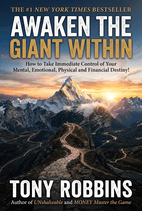
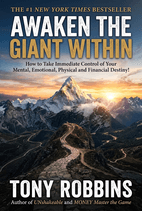
What is the book Awaken the Giant Within, Updated about?
Tony Robbins's Awaken the Giant Within, Updated presents the Neuro-Associative Conditioning framework for mastering emotional, physical, and financial destiny through deliberate control of beliefs, values, and habits. Written for anyone stuck between knowing what they want and achieving it, this self-help manual offers a systematic toolkit for instant transformation.
Feature
Insta.Page
Blinkist
Shortform
Awaken the Giant Within, Upda…
✓
✕
✓
Summary Depth
Full Chapter-by-Chapter
15-min overview
Section-by-section guides
Audio Narration
✓
✓
✓
Visual Mindmaps
✓
✕
✕
AI Q&A
✓
✕
✕
Quizzes
✓
✕
✕
PDF Downloads
✓
✕
✓
Price
$89.99/yr
$146/yr (PRO)
$199/yr
*Competitor data last verified July 2026.
1 Page Summary
Awaken the Giant Within, Updated by Tony Robbins is a comprehensive self-help manual built on a central premise: that individuals can take deliberate control of their emotional, physical, financial, and relational destinies by mastering the psychological forces that drive all behavior. Robbins argues that the primary engine of human action is the drive to avoid pain and pursue pleasure, and that lasting change occurs not by attacking behaviors but by reconditioning the associations that link pain and pleasure to our habits. The book’s framework—termed Neuro-Associative Conditioning (NAC)—provides a step-by-step method for breaking old patterns by attaching massive pain to staying the same and intense pleasure to changing, offering tools like emotional state management, targeted questioning, and the reshaping of personal vocabulary and metaphors.
Distinctive to the book is its integration of psychological theory with urgent, practical application, illustrated through dramatic case studies and personal anecdotes. Robbins introduces a “Master System” of five components—beliefs, values, rules, references, and identity—that he posits determine how every person evaluates their experiences and makes decisions. He explains how changing one’s beliefs, aligning personal values, rewriting the “rules” for when to feel happy, and expanding one’s identity can produce instant transformation, as demonstrated by stories ranging from a POW’s escape to a CEO’s leadership during a crisis. The book also includes a structured “Ten-Day Mental Challenge” and a seven-day program dedicated to emotional, physical, relationship, financial, and time-management mastery, culminating in a deliberate day of rest.
The intended audience is anyone who feels stuck between knowing what they want and actually achieving it, from those facing career or financial stagnation to individuals seeking deeper emotional connection or physical vitality. Readers will gain a systematic toolkit for self-assessment and change, including worksheets on values identification, emotional vocabulary expansion, and daily conduct tracking inspired by Benjamin Franklin. Ultimately, the book promises that by taking conscious control of thought patterns, emotional responses, and daily decisions, readers can awaken their potential to shape a purposeful future, affirming that circumstances are less important than the meaning we assign to them.
Chapter 1: Dreams of Destiny
Overview
Most people begin with a vision of the life they want, yet the grind of ordinary days buries that vision until it stops motivating any action. The dream softens, certainty fades, and destiny starts to feel like something that happens to us rather than something we shape.
In 1990, Tony Robbins flew his helicopter from a Los Angeles business meeting toward an event in Orange County. Over Glendale he hovered above the building where he had worked as a janitor twelve years earlier, nursing a 1960 Volkswagen and focused on survival rather than growth. In Irvine the off-ramp jam was his audience: seven thousand people, against an expected two thousand, for an auditorium holding five thousand. Surrounded, he heard stories of changed lives:
A mother used the book's state-management principles to get her son off Ritalin and have him retested at genius level; he had been labeled hyperactive and learning-disabled.
A couple near divorce after fifteen years of marriage was reconciled by learning about personal rules.
A salesman raised monthly income from $2,000 to $12,000 in six months; an entrepreneur grew revenue by $3 million in eighteen months; both applied quality questions and emotional management.
He was living his dream: contributing to others was his "why."
The moment of decision
Years earlier he had sat alone in his 400-square-foot Venice apartment, crying as a Neil Diamond song played, its lyric about a voice reaching no one. He declared he had had enough and resolved to demand more of himself.
The guiding question
The resolution became the "concentration of power": all resources aimed at one area, like a laser cutting through obstacles. Most people never direct their focus; they "major in minor things." His guiding question: what makes the difference in the quality of people's lives?
Robbins reports reaching more than 50 million people across a hundred countries and calls himself not a guru but a man determined to make the most of his life. Everyone carries a "sleeping giant" awaiting activation. Fewer than 10 percent of book buyers read past the first chapter, he claims.
The three principles of lasting change
Real change rests on three steps that apply equally to individuals, companies, and countries:
Raise your standards. Change what you demand of yourself; he wrote down what he would no longer tolerate and what he aspired to become. He names Lincoln, Keller, Gandhi, King, Parks, Mother Teresa, and da Vinci as models.
Change your limiting beliefs. Standards without belief are self-sabotage; beliefs are "unquestioned commands" shaping every action and feeling. Gandhi's certainty in nonviolent resistance, he writes, was the congruence that met tests a lesser man could not withstand.
Change your strategy. With standards and belief in place, find a role model already producing the results you want and learn their beliefs and thinking instead of reinventing the wheel.
The five master lessons
Emotional Mastery comes first because virtually everything we do aims to change how we feel. The United States holds 4 percent of the world's population but consumes 30 percent of its cocaine, Robbins reports; alcohol abuse kills over 3 million people yearly, and 21 million depressed Americans spend nearly $7 billion on antidepressants.
Physical Mastery matters because Robbins reports that one in five Americans dies of coronary disease or cancer; Thomas Moffett, a seventeenth-century physician, called this "digging our graves with our teeth."
Relationship Mastery begins with your own values, expectations, and rules before connecting deeply with others; the greatest resource, Robbins holds, is a relationship.
Financial Mastery is needed because, Robbins claims, most Americans reach sixty-five either broke or dead; more money brings more pressure, and the key is changing beliefs so money becomes a vehicle for contribution rather than a cure for unhappiness.
Time Mastery is not time management but deliberately distorting time into an ally; short-term evaluations create long-term pain, decisions need patience for lag time, and most people expect too much from a single year and too little from ten.
These five areas of mastery are not presented from a position of perfection. Hard times have come along, and each one became material for learning, persistence, and eventual success, with the same expansion available to anyone who applies the lessons. Even where personal dreams differ, the mechanics of converting an intangible vision into tangible reality are fundamental to any personal or professional achievement.
Built as an action guide
The book was originally written as an action guide, a practical textbook for raising the quality of life and the enjoyment drawn from it, and that purpose carries into this edition. It stands apart from the author's other titles in its ability to wake new resources of power that move a reader forward in what matters most. According to the book, millions of readers have used it over the three-plus decades since it first appeared. Skill is built through repetition, so the book is meant to be revisited again and again, each return serving as a trigger for answers already inside the reader. Nothing in it demands acceptance: readers take what seems useful and act immediately, knowing that even a single strategy can change a life and that used together they compound.
Models and leverage points
The strategies and organizing principles inside were modeled from exceptional people. The models include sports icons like Serena Williams, entertainment legends like Usher, culture shapers like Oprah Winfrey, corporate titans like Marc Benioff, world changers like Mother Teresa, history makers like Nelson Mandela, billionaire investors, and local everyday heroes. The material also draws on thousands of interviews accumulated over more than four decades of daily learning.
The aim is not a single isolated improvement. Skills for overcoming a fear, improving a relationship, or ending a procrastination pattern are valuable, and the book notes they can be learned elsewhere, including in earlier writing and at live events, but the focus here is creating global changes. Certain key leverage points exist in every life where one small adjustment can transform everything else. Three examples:
Replacing one word in your habitual vocabulary can permanently change your emotional patterns.
Changing the consistent questions you ask yourself changes what you focus on, and therefore the actions you take every day.
Altering a single belief can shift your level of happiness.
The book is ultimately meant as a pivot point that lifts an entire life to a new level, not merely a fix for one problem. The journey is offered with respect for the reader, with the reminder that life is a gift carrying the privilege, opportunity, and responsibility to grow what we have been given and offer something back to the world.
Key Takeaways
Treat this book as a repeated action guide rather than a one-time read, since lasting skill grows through rehearsal and revisiting.
Raise your own standards, uproot the beliefs that limit you, and model someone who already gets the results you want, in that order.
Apply Robbins's framework across five domains at once: emotional, physical, relationship, financial, and time mastery, since small changes in each can compound into a life pivot.
Expect one small adjustment, such as a single word, a recurring question, or one belief, to reshape far more than the problem it seems aimed at.
See the mechanics of turning a vision into reality as universal, even if your dream differs from Robbins's, and remember that the claims about his reach, statistics, and success stories come from him, not from independent sources.
Key concepts: Chapter 1: Dreams of Destiny
Chapter 1: Dreams of Destiny
The Dream vs. Reality
Vision buried by daily grind
Dream softens, certainty fades
Destiny feels passive, not shaped
Robbins' Turning Point
1990 helicopter flight over janitor past
7,000 attendees vs. 2,000 expected
Stories: Ritalin-free son, saved marriage, income jumps
Living dream: contributing to others
The Moment of Decision
Crying in 400-square-foot Venice apartment
Neil Diamond song: voice reaching no one
Declared enough, demanded more
Concentration of power: laser focus
Three Principles of Change
Raise standards: change what you demand
Change limiting beliefs: unquestioned commands
Change strategy: learn from role models
Models: Lincoln, Gandhi, King, da Vinci
Five Master Lessons
Emotional Mastery: everything aims at feelings
Physical Mastery: diet kills one in five
Relationship Mastery: start with own values
Financial Mastery: money as contribution
Action Guide Purpose
Practical textbook for quality of life
Revisit repeatedly for skill building
Take what's useful, act immediately
Strategies compound when combined
Models and Leverage
Modeled from exceptional people
Serena, Usher, Oprah, Benioff, Mandela
Four decades of daily interviews
Everyone carries a sleeping giant
💡 Try clicking the AI chat button to ask questions about this book!
Chapter 2: Decisions: The Pathway to Power
Overview
A decade arrives whether or not you steer it. Wanting a different life by then is not enough; preference fades into circumstances. The open question is what actually turns intention into a life you chose rather than one you endured.
Ten years from now you will arrive somewhere, as someone doing something; the question is whether the destination is designed or inherited. In 1980, at nineteen, Tony Robbins was broke, alone, and washing dishes in a bathtub. Within a year, he reports, he lost 38 pounds, earned $1 million a year, and moved to a castle near the ocean in Del Mar.
Every action is a cause that moves a person in a definite direction; what precedes action is decision, and destiny is shaped in those moments. Benjamin Disraeli wrote that "Man is not the creature of circumstances; circumstances are the creatures of men." People born with nothing routinely outpace the advantaged because they make new decisions about how to live.
Commitment versus preference
"I'd like to make more money" is a preference, not a commitment: a stated wish lacking the conviction to set it in motion. A true decision cuts off every other possibility; the Latin roots de, "from," and caedere, "to cut" say exactly that. Most people avoid resolute decisions because they are planning to act or reciting excuses, dismissed as BS, short for Belief Systems. Almost nothing is compulsory; commitment means holding to your standards even when things go wrong.
The Ultimate Success Formula
The route to any result:
Decide what you want.
Take action.
Notice what's working.
Change your approach until you achieve what you want.
Once commitment is real, the how reveals itself. Decision-making muscles weaken from disuse; the cure is making more decisions and learning from each one, failures included. Seven hundred books were read because a single distinction can change a life. The phrase profound knowledge comes from W. Edwards Deming: any simple distinction or tool that improves life as soon as it is understood. A missing distinction explains why some dream-achievers end up wealthy yet empty: they achieved goals without living their values.
One decision
By the book's account, Ed Roberts contracted polio at fourteen, two years before the Salk vaccine, and was paralyzed from the neck down, spending nights in an iron lung until his death in 1995. He became the first quadriplegic to graduate from UC Berkeley, directed California's rehabilitation department, and founded the Independent Living Movement. His starting point did not matter; his decision did.
Three decisions
Three decisions, made in every moment, control destiny:
What to focus on.
What things mean.
What to do about them.
Niagara Syndrome
Few people make those three decisions consciously, and the price is the Niagara Syndrome. Life is a river: people jump in without a destination, drift with the current, and wake five feet from the falls with no oars. The fall can be emotional, physical or financial. The remedy: paddle hard in a new direction, or plan ahead.
The master system
Decisions run through a master system in the brain, installed by parents, peers, teachers, television, advertisers and culture. Its five components:
core beliefs and unconscious rules
life values
references
habitual questions
emotional states
Together they prompt or block action and set success and happiness; changing any one fights causes, not effects. Conscious decisions can override the system.
Learning from mistakes
Wrong decisions are guaranteed. Success is good judgment; good judgment is experience; experience is usually bad judgment. Mastery takes as long as you decide: ten daily actions create ten months of experience in a day. So-called failures are only results.
Honda
Soichiro Honda sank everything into a piston ring Toyota first rejected, was refused concrete, bombed twice, and leveled by an earthquake, then bolted a motor to his bicycle, recruited five thousand bicycle shop owners by letter, and produced the Super Cub, which won the Emperor's Award.
Long-term focus
Short-term focus produces overeating, addiction and abandoned dreams; nationally it drives economic and political turmoil, the opioid crisis, educational malaise and mental-health problems. Robbins cites Harvard T.H. Chan School of Public Health data: U.S. childhood obesity rates tripled over three decades. Enron, Elizabeth Holmes, Sam Bankman-Fried, WeWork and Uber failed through short-term focus.
Billy Joel quit high school for music and at twenty-two was broke, sleeping in laundromats. After his girlfriend left, he planned suicide, then entered a mental institution. Persistence made him a top-five U.S. solo artist with 160 million records. Robbins carries one belief: "God's delays are not God's denials."
Six keys
Remember the true power of decisions: a real decision is measured by new action.
Realize the hardest step is commitment: decide quickly, change slowly, and never leave a decision without acting.
Make decisions often: the decision-making muscle strengthens with use.
Learn from your decisions: ask what is good about a failure and what it teaches.
Stay committed to your decisions but flexible in approach.
Enjoy making decisions, expecting any moment to open the floodgates.
A small early decision shaped a career: after filling a Texas event, the promoter skipped town without paying.
Decisions, not conditions
That unpaid event led to the public relations agent, who had been stiffed too, and she later became the literary agent who got the first book published. Another early decision made without due diligence: taking on a business partner without checking his character. Within a year, the partner had siphoned off $250,000 and left the corporation $758,000 in debt, while two hundred speaking events kept him on the road. Every expert advised bankruptcy. Rejecting that advice, he chose to rebuild, and the turnaround became one of his greatest successes. The lessons from that failure gave rise to the methods of Neuro-Associative Conditioning and Destiny Technologies used throughout the book.
Helen Keller called life either a daring adventure or nothing. The single distinction that matters: decisions, not conditions, determine destiny. All the techniques in this book, and every other book, podcast or event, are worthless unless a decision turns them into action. A genuine decision is measured by new behavior.
To prove the point, the closing instruction is to stop reading and make two decisions that have been postponed: one easy, one harder. Take the first step toward each immediately and commit to following through. That builds the decision-making muscle that will make life change possible.
Walls fall to persistence
Future challenges are certain. But the people of Germany, Korea and Northern Ireland show that walls, no matter how long they have stood, fall to human beings who decide to persist. They can be climbed over, broken through, tunnelled under, or opened with a door. The human spirit is unconquerable; the will to win and to shape one's own life is harnessed only when a person decides what they want and refuses to let any problem or obstacle stand in the way. Once that decision is made, conditions no longer rule, and life changes forever.
Key Takeaways
Treat any wish that produces no new behavior as a mere preference, because Robbins measures commitment only by the action that follows.
Believe that your background and current situation do not seal your fate; Robbins argues that the choices you make do.
Make the moment-to-moment decisions of focus, interpretation, and response deliberately, or you risk drifting into the current Robbins calls the Niagara Syndrome.
Hold your goal steady while your methods evolve; Robbins advises deciding fast, adjusting gradually, and treating every wrong turn as a lesson.
Expect obstacles to test you, then keep going; Robbins claims that stubborn refusal to quit breaks through even the most entrenched barriers.
Key concepts: Chapter 2: Decisions: The Pathway to Power
Chapter 2: Decisions: The Pathway to Power
Commitment vs. Preference
Preference is a wish; commitment cuts off alternatives
Latin roots: de (from) + caedere (to cut)
Excuses are Belief Systems (BS)
Commitment holds standards even when things go wrong
Ultimate Success Formula
Decide what you want
Take action and notice what works
Change approach until you achieve result
Decision-making muscle strengthens with use
Three Core Decisions
What to focus on
What things mean
What to do about them
These decisions control destiny in every moment
Niagara Syndrome
Life is a river; drift leads to falls
People wake too late without oars
Falls can be emotional, physical, or financial
Remedy: paddle hard or plan ahead
The Master System
Brain's decision system installed by culture
Five components: beliefs, values, references, questions, states
System prompts or blocks action
Conscious decisions can override it
Learning from Mistakes
Wrong decisions are guaranteed
Success = good judgment from experience
Experience often comes from bad judgment
Failures are only results, not final
Six Keys to Decisions
Real decisions measured by new action
Commit quickly, change slowly, act immediately
Decide often to build the muscle
Learn from failures; stay flexible in approach
Chapter 3: The Force That Shapes Your Life
Overview
Why would one person sacrifice their life for strangers while another acts without remorse? And why do we keep failing to change even when we know what we should do? Something beyond conscious choice seems to drive all behavior.
The Potomac crash
In 1982, an improperly de-iced Boeing 737 left Washington's National Airport during a snowstorm, stalled after takeoff, hit the 14th Street Bridge and fell into the Potomac. Rescuers dove into the icy water; one man passed life preservers to others, saving many lives but not his own. What drives a person to die for strangers while another behaves savagely?
The single driving force
Tony Robbins's answer: everything we do happens for a reason, and one force drives all behavior: avoiding pain and pursuing pleasure. It shapes relationships, finances, bodies and brains. People fail to change because they attack the behavior, the effect, instead of the cause. Procrastination shows this: acting feels more painful than not acting, until not acting becomes worse. Because fear of loss outweighs desire for gain, most people work harder to keep the $100,000 they have than to earn another.
Emotional threshold
Suffering alone does not change behavior; people must first hit what Robbins calls the emotional threshold. A destructive relationship ends only when pain becomes unbearable and someone decides "never again." Health changes come when clothes no longer fit and stairs leave a person winded. Pain becomes useful when paired with anticipating the pleasure change will bring.
Robbins describes many levels of pain and pleasure: humiliation, inconvenience and boredom are pain; ecstasy and comfort are pleasure. People weigh actions against expected pain or pleasure.
The most important lesson
Donald Trump and Mother Teresa, in Robbins's account, are driven by the same force. Trump linked pleasure to extravagant buildings, shrewd deals and influence, and pain to being second-best, which he equates with failure. Mother Teresa felt others' suffering as her own; ministering to the sick of Calcutta brought her God's pleasure and eased her own pain.
In this framework, what a person links pain and pleasure to shapes destiny. Robbins linked pleasure to learning early on, and even more to teaching it.
Doctors he has spoken with link massive pleasure to healing.
Musicians are driven because their art gives unmatched pleasure.
Jimi Hendrix, Elvis Presley, Kurt Cobain and Amy Winehouse linked drugs to escape, creating their own downfalls.
Formed associations
Robbins never drank or used drugs because of formed associations. Drunk relatives linked pain to alcohol. Beer was different: his father drank it and seemed more fun, so at twelve he asked his mother for a "brew." She made him drink a whole six-pack on the spot; he vomited over himself and the kitchen table. The smell of beer created a lasting neuro-association, and he never touched it again; the effects spread into learning, sports, laughter and helping schoolmates. Police films in elementary school linked drugs to ugliness and death.
Conditioning the association
Linking massive pain to a behavior makes a person avoid it at all costs, and it can be done deliberately. To protect his children from drugs, Robbins had Captain John Rondon of the Salvation Army show them addiction firsthand: a rotting tenement with addicts shooting up, child prostitutes and neglected children crying. They learned to link drugs to devastation.
Only humans can reinterpret pain as pleasure. A hunger striker's fasting pain is offset by the validation of his cause; disciplined exercisers convert exertion's discomfort into satisfaction. B. F. Skinner confined his daughter in a crib-size box for eleven months in the name of science. People can step out of that "Skinnerian box" by directing their associations, or live reacting like animals or machines.
Conditioning comes from peers, parents, teachers, coaches and media. Diets fail because behavior follows instinctive reaction, not intellectual calculation: people know chocolate is bad and reach for it anyway, because neuro-associations override the intellect. For lasting change, Robbins maintains, link pain to the old behavior and pleasure to the new, and condition it until consistent.
Healthy eating can be conditioned by the same mechanism: link pain to foods we no longer want and pleasure to nourishing foods. Fit people, Robbins claims, link pleasure to leaving food on the plate as a symbol of control. Because behavior follows association, a shift in what an act means changes it instantly; a smoker who links enough pain to smoking and enough pleasure to quitting can stop in one day.
Advertising and anchoring
Marketing sets associations when people do not set their own. Advertisers use music, imagery, pace and color to reach an emotional peak, then flash a product so it becomes anchored to the feeling. Pepsi used Michael Jackson in the 1980s for exactly that. Jackson’s voice, body and gestures produced intense pleasure in millions, and Pepsi reasoned that fans who bought albums to re-create the feeling would buy cola. The logic mirrors Pavlov’s conditioned-response experiments: a bell paired with food makes a dog salivate, and a product paired with a peak state elicits the state. Jackson refused to hold an empty Pepsi can on camera, yet the $15 million campaign worked. Sales soared; L.A. Gear later paid him $20 million, and his Sony contract was reported near $1 billion.
Advertisers condition ordinary goods the same way:
Mercedes: refined taste
Kia: frugal intelligence
Land Rover: adventure
Toyota: safety
Dior: romance
Gucci: an androgynous orgy
Corona: a tropical beach with Snoop Dogg
Robbins reports that denim, once unfashionable workwear, became a $64.5 billion fashion icon through such conditioning. Ocean Spray repeated the pattern in 2020: Nathan Apodaca posted a TikTok of himself longboarding while drinking cranberry juice to a Fleetwood Mac song. The video was shared millions of times, shoppers reenacted it until shelves emptied, and the brand was remade as the sponsor of good vibes. Political campaigns use the same anchoring, often manipulatively, and it keeps working. Companies call the data-driven version target marketing.
To take back control, a person must advertise in his own mind: attach intense pain to behaviors to stop, attach pleasure to new behaviors, and repeat until automatic. The first step is awareness that links between words, images, sounds and sensations are constantly forming. Montaigne’s calculus holds: avoid pleasures that lead to greater pains, accept pains that lead to greater pleasures. Most people instead choose short-term comfort, while every valuable goal, losing weight, building a body, discipline in business, relationships, confidence, fitness and finances, requires breaking through short-term pain.
The 2021-2022 crypto meltdown, which Robbins describes as the biggest collapse in digital finance history, is a large-scale version. Lenders and platforms funded projects involving assets like Bitcoin and Ethereum without scrutiny, DeFi products made borrowing easy, exchanges promised double-digit yields. When interest rates rose, bad loans surfaced, failures spread panic, and bankruptcies and massive losses followed. Robbins blames the mania, not the technology. In the 1980s arms race, the United States and Soviet Union spent an estimated $75,000 per second on weapons; Gorbachev renegotiated arms reductions because competing had become financially impossible and his people could not be fed.
Fear works the same way. People stay in unsatisfying relationships because the unknown feels more painful than familiar misery, the devil they know. Intimacy, starting a business and other valuable aims require overriding conditioned nervous-system responses and turning fear into power. Phobias like fear of flying anchor to past or imagined events rather than present reality. What drives avoidance is the belief that an action leads to pain, not pain itself.
A five-step change exercise
Robbins recommends this exercise:
Write down four actions you have been putting off.
Under each, answer why you have not acted and what pain you linked to the action.
List the pleasure the negative pattern has given you; that identifies the target.
List the full cost of not changing now, emotional, physical, financial and relational, over the next few years.
List the pleasure each action will bring now and later, and let that charge drive the change.
Key Takeaways
The author argues that lasting change never comes from attacking the surface behavior; you must condition yourself to link intense pain to the old pattern and real pleasure to the new one.
Robbins contends that suffering alone will not move you; you have to cross an emotional threshold where staying the same becomes unbearable and the payoff of changing feels vivid.
In Robbins's account, advertisers anchor products to peak emotions using the same pain-pleasure machinery, so you take back control by deliberately building your own associations and repeating them until they feel automatic.
He advises that comfortable misery usually wins because it feels safer than the unknown, and the way past that is to feel the full future cost of not acting and the pleasure action will bring.
Key concepts: Chapter 3: The Force That Shapes Your Life
Chapter 3: The Force That Shapes Your Life
The Single Driving Force
All behavior driven by avoiding pain and pursuing pleasure
People fail by attacking behavior, not its cause
Fear of loss outweighs desire for gain
Emotional Threshold
Suffering alone doesn't change behavior
Must hit emotional threshold for lasting change
Pain becomes useful when paired with anticipated pleasure
Linking Pain and Pleasure Shapes Destiny
Trump and Mother Teresa driven by same force
What we link pain/pleasure to determines our path
Musicians and doctors link pleasure to their crafts
Destructive links to drugs caused famous downfalls
Formed Neuro-Associations
Robbins avoided alcohol due to childhood conditioning
Mother made him drink six beers, creating pain link
Police films linked drugs to ugliness and death
Associations spread to learning and helping others
Conditioning Associations Deliberately
Can link massive pain to behavior to avoid it
Robbins showed children addiction's devastation firsthand
Humans can reinterpret pain as pleasure
Conditioning overrides intellect in behavior
Changing Behavior Through Reconditioning
Link pain to old behavior, pleasure to new
Diets fail because neuro-associations override knowledge
Fit people link pleasure to control over food
Smokers can quit in one day with enough association shift
Advertising and Anchoring
Marketers anchor products to emotional peaks
Pepsi used Michael Jackson to link pleasure to cola
Mirrors Pavlov's conditioned-response experiments
Products anchored to feelings like adventure or romance
Chapter 4: Belief Systems: The Power to Create and the Power to Destroy
Overview
Two brothers grow up in the same home, endure the same abuse, and become opposites. Two women turn seventy, and one declines while the other climbs mountains. What makes experience become destiny?
Beliefs, not events, decide a life
Two brothers raised by the same alcoholic, drug-addicted murderer gave the same answer: "What else could I have become, having grown up with a father like that?" One became an addict jailed for attempted murder; the other became a regional manager. Events do not shape us; beliefs about what events mean do. In Hanoi's Hoa Lo prison, one POW chose suicide while Captain Gerald Coffee endured it and later inspired others.
Pain, pleasure, and generalization
In the book's model, beliefs tell us what leads to pain and what to pleasure. Whenever something happens, the brain asks two questions:
Will this mean pain or pleasure?
What must I do to avoid pain and gain pleasure?
The answers rest on generalizations from experience, which let us open unfamiliar doors but can oversimplify. A few failed efforts become a belief in incompetence, a self-fulfilling prophecy. The challenge is threefold:
most beliefs are adopted without conscious choice;
belief often rests on misinterpreted past experience;
once adopted, a belief is treated as reality rather than interpretation.
Viktor Frankl observed that Holocaust survivors who endured best found empowering meaning in their suffering.
Beliefs change the body
Henry Beecher's Harvard experiment gave one hundred medical students a red capsule billed as a stimulant and a blue one billed as a tranquilizer, with contents reversed; half reacted per expectation, overriding the drugs' chemistry.
An idea with legs
According to the book, a belief is a feeling of certainty, and the nervous system cannot distinguish a vividly imagined event from a real one. An idea is a tabletop without legs; reference experiences are the legs. Global beliefs, giant generalizations stated as "Life is," "I am," or "People are," shape everything, so changing one reshapes life. Roger Bannister broke the four-minute mile in 1954 through mental rehearsal; thirty-seven runners matched him that year.
Learned helplessness
Robbins reports that Martin Seligman's research identifies three belief patterns behind learned helplessness: permanence, pervasiveness, and personal. Failures see problems as permanent and all-encompassing; achievers see them as temporary and contained. The third pattern turns a failed approach into a verdict on the self. The remedy is to find something you can control and act on it.
Changing a belief
Beliefs change through a two-part pattern: link massive pain to the old belief and pleasure to the new one, then create doubt; new experience helps only when it provokes questions. In 2004, investment director Catherine Jackson toured Texas prisons, saw entrepreneurial qualities in incarcerated men, and quit Wall Street to build the mentoring program that became Defy Ventures. QWERTY, the universal keyboard layout for 150 years, was designed to slow typists so keys would not jam; it became the standard through an 1882 contest and was never re-examined.
Opinions, beliefs, and convictions
Certainty comes in three grades. An opinion rests on few references and sways easily. A belief rests on many strong references and closes off new input. A conviction carries such intensity that questioning it provokes anger, and it compels action. To build one:
Start with the basic belief.
Reinforce it with new and more powerful references.
Find a triggering event, or create your own.
Take action.
Social proof
Social proof, following the crowd when unsure, can mislead: in a Cialdini experiment, subjects ignored a staged rape cry because planted actors did. The book notes that expert confidence has backed both leeches and opioids; Copernicus's 1543 model shows that even the senses mislead.
Pain as the ultimate shifter
Pain is the most powerful belief-shifter. In 2018, former Klan member Ken Parker renounced white supremacy after neighbor Pastor William McKinnon III answered his hatred with calm curiosity; the guilt over his ideology's harm finally outweighed the pride it gave him.
Pain's final act
Pastor McKinnon invited Ken to All Saints Holiness Church. Weeping during a sermon, Ken was baptized and publicly renounced his past on camera; cast out as a traitor, he found losing approval less painful than living a lie.
Choosing beliefs
Find people producing the results you want and ask what they believe differently. POWER-TALK!, a late-1980s audio interview magazine, grew out of that practice.
Truth's stages
Schopenhauer held that every truth passes through three stages:
Ridicule.
Violent opposition.
Acceptance as self-evident.
False beliefs in business
History contradicts the business belief that technological advancement is always good for humanity: Roentgen's X-rays, the Curies' radioactivity, and Rutherford and Soddy's atomic splitting led to nuclear reactions that Nazi scientists sought as a weapon. The Manhattan Project answered; atomic bombs fell on Hiroshima and Nagasaki in August 1945. Beliefs govern decisions and thereby the quality of the future.
Kaizen and CANI!
Kaizen, Japanese for constant improvement, applies to trade deficits, production lines, and relationships; tiny daily refinements compound. CANI! (Constant And Never-Ending Improvement) anchors that commitment, applied to business, relationships, spiritual life, health, and finances.
Auditing beliefs
Brainstorm empowering and disempowering beliefs: if-then beliefs, global beliefs, and beliefs about people, the self, opportunity, time, scarcity, and abundance. Circle the three most empowering and reinforce them. For the two most disempowering, attack their supporting references with seven questions:
How is the belief absurd?
Was its source worth modeling?
What does it cost emotionally?
What does it cost my relationships?
What does it cost me physically?
What does it cost me financially?
What does it cost my loved ones?
Then replace each with its antithesis, gather references for the new belief, and ask what you would have to believe to succeed, what successful people believe, or what you would have to believe to feel as you do.
Marva Collins's classroom
Marva Collins, a Chicago teacher, threw out the primers that read "See Spot run" and taught Shakespeare, Sophocles, and Tolstoy instead. Colleagues insisted the children could never grasp such material, and some attacked her personally, yet her students thrived. She believed so completely in each child's unique spirit and capacity to learn anything that her conviction, delivered with full congruency and love, brought students to believe in themselves, many for the first time.
At Westside Preparatory School, the private school Collins founded outside the Chicago city system, a four-year-old student named Talmadge E. Griffin recounted having just finished John Steinbeck's Of Mice and Men. He defined "permeate" and described the novel's lesson: the children never judged anyone by skin color, only the adults did. He vowed never to forget the lessons of a child.
The three organizing principles
Collins applied all three:
Holding students to a higher standard.
Helping them adopt empowering beliefs that broke old limitations.
Supplying specific skills and strategies for lifelong success.
Her students became confident and competent, with striking academic results and profound effects on everyday life, sustained over decades. Asked what Collins had taught him, Talmadge replied, "SOCIETY MAY PREDICT, BUT ONLY I WILL DETERMINE MY DESTINY!"
The unresolved belief
A power inside each person needs awakening, and it begins with conscious decisions that shape destiny. One core belief remains to be explored and resolved, and it turns on the answer to a question.
Key Takeaways
Treat your interpretation of an event, not the event itself, as the real shaper of your life, and consciously choose meanings that move you to act.
Because your nervous system treats a vividly imagined scene as a genuine experience (Robbins), rehearse the desired belief until it feels real.
Robbins reports that feelings of permanence, pervasiveness, and personalness signal learned helplessness; counter them by acting on something within your control.
To replace a limiting belief, connect substantial pain to the old belief and pleasure to the new, then cultivate doubt and seek experiences that raise questions.
Audit your beliefs by listing your most empowering and disempowering ones, then interrogate the latter for their emotional, relational, physical, financial, and social costs before swapping in their opposites.
Key concepts: Chapter 4: Belief Systems: The Power to Create and the Power to Destroy
Chapter 4: Belief Systems: The Power to Create and the Power to Destroy
Beliefs, Not Events, Shape Destiny
Events don't shape us; beliefs about their meaning do
Two brothers, same abuse, opposite outcomes
POWs in Hanoi: one suicide, one inspiration
Frankl: empowering meaning sustains Holocaust survivors
How Beliefs Work
Brain asks: pain or pleasure? What must I do?
Beliefs are generalizations from experience
Most beliefs adopted unconsciously, treated as reality
Nervous system can't distinguish vivid imagination from reality
Beliefs Change the Body
Beecher's experiment: expectations override drug chemistry
Tony Robbins is a renowned American author, life coach, and motivational speaker known for his high-energy seminars and bestselling self-help books, including "Awaken the Giant Within" and "Unlimited Power." His expertise lies in personal development, peak performance strategies, and business psychology.
Frequently Asked Questions about Awaken the Giant Within, Updated
What is Awaken the Giant Within, Updated about?
This guide explores how personal transformation happens through understanding the forces that drive all behavior: the avoidance of pain and the pursuit of pleasure. It explains how decisions, beliefs, questions, vocabulary, metaphors, values, rules, and identity shape destiny, and it offers a practical seven-day program for taking control of emotional, physical, relationship, financial, and time-related aspects of life. Drawing on real-life stories and case studies, the work argues that change can be instant when the right psychological levers are pulled.
Who is the author of Awaken the Giant Within, Updated?
The author is Tony Robbins, a well-known personal development strategist who transformed his own life from being broke and alone at nineteen to achieving success within a year. He developed methods like Neuro-Associative Conditioning and has worked with diverse audiences, using his own life story and examples from others to illustrate the principles. His approach combines ideas from psychology, neurolinguistic programming, and practical coaching.
Is Awaken the Giant Within, Updated worth reading?
It offers actionable, step-by-step strategies rather than vague inspiration, with exercises and a seven-day plan that address emotional, physical, relationship, financial, and personal standards. The principles are supported by compelling stories that show how ordinary people have used them to overcome serious obstacles and transform their results. If you are looking for concrete ways to break old patterns and build a more intentional life, it provides a comprehensive toolkit.
What are the key lessons from Awaken the Giant Within, Updated?
Decisions, not circumstances, determine destiny, and true commitment cuts off all other possibilities. Beliefs about what events mean shape outcomes more than the events themselves, so changing limiting beliefs can change a life. Since people are driven by avoiding pain and seeking pleasure, attaching massive pain to inaction and pleasure to new behavior is key to lasting change. Also, mastering the questions you ask, the words you use, and your values and rules gives you control over your emotions and daily experience.
📚 Explore Our Book Summary Library
Discover more insightful book summaries from our collection