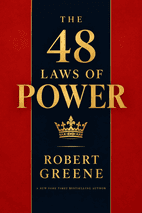
Robert Greene's The 48 Laws of Power distills strategic thinking into forty-eight laws drawn from historical case studies—Fouquet's fatal party, Bismarck's weak patron, Elizabeth I's marriage negotiations—covering reputation, timing, concealment, and dependence. Written for readers navigating courts, corporations, or politics who want to understand power structures strategically rather than morally.
Feature
Insta.Page
Blinkist
Shortform
Summary Depth
Full Chapter-by-Chapter
15-min overview
Section-by-section guides
Audio Narration
✓
✓
✓
Visual Mindmaps
✓
✕
✕
AI Q&A
✓
✕
✕
Quizzes
✓
✕
✕
PDF Downloads
✓
✕
✓
Price
$89.99/yr
$146/yr (PRO)
$199/yr
*Competitor data last verified July 2026.
1 Page Summary
Robert Greene's The 48 Laws of Power is built on a central thesis: power is a social game governed by recognizable patterns, and those who understand its rules can navigate it deliberately rather than accidentally. Across forty-eight laws, the book argues that appearances, perception, and positioning matter more than raw talent or good intentions—reputation must be guarded "with your life," accomplishments should seem effortless, and intentions are best concealed. Recurring principles include making others come to you rather than reacting to their moves, keeping people dependent on you rather than relying on past service or loyalty, concentrating your forces instead of scattering effort, and mastering timing so you act at the right moment rather than the tempting one. The laws also warn against the costs of trust misplaced in friends, of isolation behind fortresses, of outshining superiors, and of overreaching past the mark you aimed for, since victory is described as the most dangerous moment.
The author's approach is distinctive in its use of historical anecdote as instruction. Each law is illustrated through compact case studies drawn from across eras and cultures—Fouquet's fatal party for Louis XIV, Galileo's dedication of Jupiter's moons to the Medicis, Bismarck's cultivation of a weak patron, Elizabeth I's indefinite marriage negotiations, Mao's use of traditional literature to sell Communism to peasants, and Chuko Liang's seven releases of Menghuo. These stories are paired with strategic counsel, reversals that show when a law can backfire, and in several cases explicit frameworks, such as the five steps for creating a cultlike following or the four "money types." The tone is pragmatic and unsentimental, treating qualities like loyalty, gratitude, and mercy as poor currency in the pursuit of influence, while acknowledging tensions—honesty versus self-interest, transparency versus room to maneuver—rather than resolving them neatly.
The intended audience is readers who want to understand and operate within power structures—whether in courts, corporations, or politics—and who are willing to study human behavior strategically rather than morally. Readers will gain a vocabulary for reading situations and people: distinguishing types of dangerous opponents, finding another person's "thumbscrew," controlling options so others choose what you need while believing the choice is theirs, and re-creating a public identity rather than accepting the role society assigns. They will also encounter cautionary lessons about the fragility of position, the price of visible perfection, and the wisdom of knowing when to stop. The book ultimately offers a toolkit for observation and self-presentation, presented through history's examples rather than abstract theory.
LAW 1 - NEVER OUTSHINE THE MASTER
Overview
Wanting to be noticed by someone above you is natural. The problem is that standing out too much can make that person feel threatened. It's hard to know how much talent to show and how much to hold back.
Make superiors feel superior. Showing off your talent too freely makes them afraid.
Fouquet's Party
In 1661, Nicolas Fouquet was Louis XIV's finance minister. He expected a promotion after Jules Mazarin died, but Louis abolished the post. Fouquet threw a lavish party at Vaux-le-Vicomte to honor the king. The next day, D'Artagnan arrested him. He spent twenty years in solitary confinement. Louis chose Colbert and built Versailles using Fouquet's architects. Fouquet's display made the king feel his subjects admired the minister more than himself.
Galileo's Dedication
In 1610, Galileo discovered Jupiter's moons and dedicated them to the Medicis. He linked Jupiter and its four moons to the dynasty's symbol and sons. Cosimo II made him court philosopher and mathematician with a full salary. Give the master glory instead of challenging his authority. Quiet flattery and asking for his guidance keep your strengths out of sight and let him feel like the sun. Outshine a superior only when he is clearly falling.
Key Takeaways
Before you show your full ability, decide who gets the credit. Let your superior benefit from your talent instead of just watching it.
When you need patronage or a promotion, link your work to your patron's interests and symbols. That way, backing you boosts his own standing.
Treat a superior's vanity as a real limit. Keep your most visible successes modest enough that they don't invite comparison with him.
Hold off on any open challenge to his standing until his authority is already visibly crumbling. Until then, let him appear to be the source of your effectiveness.
Key concepts: LAW 1 - NEVER OUTSHINE THE MASTER
LAW 1 - NEVER OUTSHINE THE MASTER
The Danger of Outshining
Fouquet's lavish party made Louis XIV feel threatened and led to his downfall.
Showing talent too freely can make superiors feel insecure and resentful.
A superior's vanity is a real limit; keep visible successes modest.
Strategies for Flattery and Credit
Galileo dedicated Jupiter's moons to the Medicis, securing patronage.
Link your work to your patron's interests and symbols to boost their standing.
Let superiors take credit for your achievements to avoid comparison.
Timing and Discretion
Hold off open challenges until the superior's authority is visibly crumbling.
Quiet flattery and asking for guidance keep your strengths out of sight.
Outshine a superior only when he is clearly falling.
💡 Try clicking the AI chat button to ask questions about this book!
LAW 2 - NEVER PUT TOO MUCH TRUST IN FRIENDS, LEARN HOW TO USE ENEMIES
Overview
A leader's closest circle has the most access and the strongest reason to turn. Loyalty, gratitude, and shared history don't make you safe. Promote a friend just because you like him, and the threat is already inside the room.
Friendship is a poor qualification for power. Friends hide their real feelings to keep the peace, expect favors, and grow envious when those favors show how much they depend on you. A former enemy expects nothing, so he works hard to prove he earned his second chance. If you have no enemies, create one.
The Trusted Friend
Michael III, Byzantine emperor in the mid-ninth century, ignored the more qualified Bardas and made his stableboy friend Basilius chief councillor. Basilius grew rich, murdered Bardas, refused to repay loans, had Michael killed, and displayed his head on a pike.
The Emperor Who Used Enemies
In 959 General Chao K'uang-yin became Emperor Sung. He bought off his generals with estates and singers, then spared defeated rebel kings, including Ch'ien Shu, whose conspiracy papers he returned. Gratitude made them loyal vassals, and the Sung dynasty lasted over three hundred years.
Enemies as Tools
In 1807 Talleyrand recruited his most hated enemy, Fouché, to conspire against Napoleon, relying on shared self-interest rather than affection. Mao's strategy of sustained conflict had three components:
make sure you will win in the long run
create a convenient enemy if none exists
use that enemy to define your cause
Friends are still useful for dirty work and blame, but using them that way loses the friendship, and you have to watch them for envy and ingratitude.
Key Takeaways
Choose your councillors on ability rather than shared history: a friend promoted past his competence resents the debt he owes you, and that envy outlives the gratitude.
Spare the rival you have beaten and hand back the papers proving his plot; a man who holds his position by your mercy has every reason to defend it alongside you.
When no opponent is visible, create one, then let the struggle define what you stand for and bind your followers to the cause.
Recruit the man who once opposed you and now shares your interest, since self-interest can be read and predicted where affection cannot. If you spend a friendship on dirty work or blame, count it lost, and keep that man where you can watch him.
Key concepts: LAW 2 - NEVER PUT TOO MUCH TRUST IN FRIENDS, LEARN HOW TO USE ENEMIES
LAW 2 - NEVER PUT TOO MUCH TRUST IN FRIENDS, LEARN HOW TO USE ENEMIES
The Danger of Trusted Friends
Friends hide true feelings to keep peace and expect favors.
Promoting a friend past competence breeds envy and resentment.
Basilius, a stableboy friend, murdered his emperor and displayed his head.
The Power of Spared Enemies
Spare a defeated rival and return proof of his plot.
Gratitude for mercy makes him a loyal defender.
Emperor Sung spared rebel kings, and his dynasty lasted 300 years.
Enemies as Strategic Tools
Recruit a former enemy who shares your interest.
Self-interest is predictable; affection is not.
Talleyrand recruited his hated enemy Fouché against Napoleon.
Creating Enemies to Unite
If no enemy exists, create one to define your cause.
Use sustained conflict to bind followers together.
Mao's strategy: ensure long-term victory, create an enemy, define your cause.
Managing Friends and Enemies
Use friends for dirty work only if you accept losing them.
Watch friends for envy and ingratitude.
Keep former enemies close where you can observe them.
LAW 3 - CONCEAL YOUR INTENTIONS
Overview
Openness earns trust, until it hands others everything they need to anticipate you. Ambiguity protects your room to move, but it breeds suspicion that can shut you out before you begin. The tension is not whether to be transparent, but how to remain unread without becoming untrusted.
Concealing Intentions
Keep people off-balance by never revealing the purpose behind your actions; if they have no clue what you are up to, they cannot prepare a defense. The first method is to drag red herrings across the path: false sincerity, ambiguous signals, misleading objects of desire. Since people cannot distinguish the genuine from the false, they cannot pick out your real goal.
Ninon de Lenclos and the Marquis
Ninon de Lenclos, the infamous seventeenth-century French courtesan, at sixty-two took on the marquis de Sevigné, a handsome but inept twenty-two-year-old courting a difficult countess. She told him to treat the courtship as a siege of a citadel, planned move by move. He was to approach with nonchalance and confide in the countess as a friend, throwing her off the scent; then appear at a Paris fete surrounded by beautiful women so she would feel jealousy, which confers value on the desired man. Then he would fail to appear where she expected him and turn up at salons she frequented, keeping her unable to predict him.
The Fatal Word
The countess began laughing harder at his witticisms, asking about him, following him with her eyes. Then, alone with her, the marquis abandoned the plan and told her plainly that he loved her. She went polite, then cold; the spell broke. Deep down people sense when they are being seduced yet give in because being led along is pleasurable, and everything depends on suggestion. Announcing the intention turned a game into an artless show of passion; all his charming moves now looked conniving, and she felt used.
Bismarck's Red Herring
In 1850, Otto von Bismarck, a thirty-five-year-old deputy in the Prussian parliament, was a passionate supporter of German unification and admired Austria:
Prince William, next in line to the throne, wanted war; parliament backed mobilization.
King Frederick William IV and his ministers preferred to appease Austria.
Bismarck knew the Prussian military was unready and Austria might win; had he supported a losing war, his career would suffer.
So he gave a speech against the war, praising Austria and asking who would have the courage to face the crippled man and the father who lost his children. Deputies changed their votes, peace held, and the grateful king made him a cabinet minister and soon premier. From there he strengthened the army, crushed Austria, and unified Germany under Prussia.
Keys to Power
People are open books because talking freely is easy, and many believe honesty wins hearts. But honesty is a blunt instrument, and being predictable makes you impossible to respect or fear. Our first instinct is to trust appearances. Hide intentions not by secrecy but by talking endlessly about desires, just not the real ones: you seem friendly and open, you conceal your purpose, and rivals chase wild geese.
False sincerity works because people mistake it for honesty. Iago destroyed Othello this way, as did the con artist Yellow Kid Weil. Stay measured or you raise suspicion; espouse honesty publicly as a decoy. Talleyrand drew people in by feigning a confidence, which elicited a real one.
Selassie's Smoke Screen
By 1927 Haile Selassie was summoning Ethiopia's warlords to recognize him. Balcha of Sidamo brought 10,000 men camped nearby and 600 armed guards to a banquet he suspected was a trap. Selassie deferred and gave him top billing while another army bought his soldiers' weapons with baskets of gold. Balcha surrendered and entered a monastery. The wary are easiest to deceive.
A Bland Front
People attend to one thing at a time, so the grayest smoke screens work best.
The noble gesture: Joseph Duveen helped create the National Gallery in 1937, letting clients donate, dodge taxes, and clear wall space.
The pattern: Jay Gould let Western Union buy him out twice before seizing it.
The seamless blend: British civil servants passed secrets for years by fitting the old-boy network.
The Reversal
A known deceiver cannot play naive; P. T. Barnum admitted his tricks and was admired for it.
Key Takeaways
Keep decoy ambitions in circulation: speak openly and specifically about goals you have no intention of pursuing, so people who mistake frankness for honesty believe they have your measure.
Let attraction and intrigue build through suggestion and unpredictability, and never put the intention into words; a plain declaration turns your earlier moves into evidence of calculation and makes the other person feel used.
When your real objective is not yet reachable, argue publicly for the course you oppose, and let the gratitude and time that follow become the base for your actual aim.
Against a wary opponent, give conspicuous honors and a dull, plausible cover (a charitable gesture, a familiar business pattern, ordinary social belonging) while you quietly remove the resources that make resistance possible.
If people already know you are cunning, admit the tricks and let them enjoy the performance; a reputation for deception can be worn as a mask rather than hidden.
Key concepts: LAW 3 - CONCEAL YOUR INTENTIONS
LAW 3 - CONCEAL YOUR INTENTIONS
The Power of Ambiguity
Keep people off-balance by never revealing your true purpose.
Use red herrings and false sincerity to mislead others.
Revealing intentions turns seduction into calculation, making others feel used.
Honesty is a blunt instrument; being an open book invites manipulation.
The marquis lost the countess by declaring his love too plainly.
Strategic Deception
Bismarck opposed a war he secretly wanted, gaining power to later unify Germany.
Selassie used honors and gold to disarm a wary rival.
Argue for the opposite course to buy time and gratitude.
The Art of the Smoke Screen
Use bland, plausible covers like noble gestures or familiar patterns.
The grayest smoke screens work best because people focus on one thing at a time.
Duveen, Gould, and British civil servants hid ambitions behind ordinary fronts.
Turning Reputation to Advantage
If known as cunning, admit tricks and let others enjoy the performance.
A reputation for deception can be worn as a mask, not hidden.
P. T. Barnum was admired for openly admitting his tricks.
LAW 4 - ALWAYS SAY LESS THAN NECESSARY
Overview
The urge to explain yourself when you want to be understood is almost impossible to resist. But every extra sentence gives people more to use against you, costs you respect, and takes away your control. No amount of preparation removes that risk.
Say less than necessary and you appear greater and more in control. Extra words reveal your intentions and make you look foolish. Gnaeus Marcius was a celebrated Roman general who entered politics in 454 B.C. His battle scars moved the crowd. Then he boasted, insulted his opponents, and speculated about riches. The people rejected him. After he attacked democracy itself, Rome banished him.
Louis XIV turned silence into a tool of power. Ministers presented him with options. He listened, said, "I shall see," and decided privately weeks later. His silence kept courtiers off balance. They revealed more than they learned.
Kondrat Ryleyev was spared when the gallows rope broke. He joked that Russia could not even make rope properly. Nicholas I heard about it, tore up the pardon, and had him hanged again.
Silence can backfire. It can stir suspicion, especially in superiors, and people may read things into it that you never intended. Sometimes the court jester's talkativeness is safer. Looking weak and unpolished can throw listeners off and hide what you are really doing.
Key Takeaways
Answer requests for commitment with delay rather than detail: "I shall see" costs nothing and leaves the other party adjusting to a decision you have not yet made.
Treat words like money you spend. Anything past the point of being understood buys you nothing and gives listeners material to use against you.
Hold back boasts about your record and forecasts about your gains. Talk about what you have achieved invites rivals to test you, and talk about what you want invites them to find a way to charge you for it.
Read silence as a signal in its own right. From someone who holds power over you, a non-answer will be taken as displeasure or scheming. So a deliberate display of noise and unimpressive openness can hide more than reserve does.
Key concepts: LAW 4 - ALWAYS SAY LESS THAN NECESSARY
LAW 4 - ALWAYS SAY LESS THAN NECESSARY
The Power of Restraint
Extra words give others ammunition and erode your control.
Saying less makes you appear greater and more in control.
Treat words like money: spend only what's necessary.
Historical Lessons
Gnaeus Marcius boasted and was banished from Rome.
Louis XIV used 'I shall see' to keep courtiers off balance.
Kondrat Ryleyev's joke cost him his life.
Strategic Silence and Delay
Answer requests with delay, not detail: 'I shall see'.
Silence keeps others adjusting to your unspoken decisions.
Avoid boasting about achievements or forecasting gains.
Risks of Silence
Silence can stir suspicion, especially in superiors.
People may read unintended meanings into your silence.
Sometimes talkativeness or looking weak can hide your intentions.
Practical Applications
Hold back boasts and forecasts to avoid challenges.
Use noise and unimpressive openness to hide true motives.
Read silence from superiors as displeasure or scheming.
You've reached the end of the free chapters
Next chapter: “LAW 5 - SO MUCH DEPENDS ON REPUTATION—GUARD IT WITH YOUR LIFE” is locked
Keep reading The 48 Laws of Power — and unlock all 700+ book summaries with audio, mindmaps and AI Q&A.
$0.00 due today · 7 days free, then $89.99/year ($7.49/mo) · Cancel anytime before day 7
Robert Greene is an American author renowned for his groundbreaking books on strategy, power, and human behavior. Best known for works such as The 48 Laws of Power, Mastery, and The 33 Strategies of War, Greene combines historical insight, psychology, and philosophy to explore timeless patterns of human conduct. His book The Laws of Human Nature delves deeply into why people think, feel, and act the way they do, offering practical guidance for understanding and influencing human behavior. Greene’s work has attracted a global readership, particularly among leaders, creatives, and entrepreneurs seeking clarity in complex social dynamics.
Frequently Asked Questions about The 48 Laws of Power
What is The 48 Laws of Power about?
It sets out forty-eight rules for gaining and keeping influence, each illustrated through historical case studies that range from Louis XIV and Nicolas Fouquet to Talleyrand, Bismarck, Empress Wu, and Mao's campaigns in Manchuria. The laws cover tactics such as concealing your intentions, guarding your reputation, making others depend on you, controlling the options you offer, and mastering timing. Running through all of them is the idea that power is a social game shaped by appearances, perception, and other people's emotions rather than by raw force or merit alone.
Who is the author of The 48 Laws of Power?
Robert Greene is the author, and his method is thoroughly historical: every law is anchored in real episodes drawn from ancient Rome, Renaissance Italy, imperial China, and modern Europe and America. Rather than abstract theory, he lets these stories carry the argument, showing how figures like Galileo, Michelangelo, Elizabeth I, and Henry Kissinger either applied or ignored the principles he describes.
Is The 48 Laws of Power worth reading?
It is worth reading because the historical examples are vivid and memorable, turning abstract ideas about influence into concrete stories you can actually recall when you need them. The laws are practical and often counterintuitive—learning to say less than necessary, to let others come to you, or to make difficult accomplishments look effortless changes how you read everyday situations at work and in social circles. Even readers who resist its cold-blooded outlook will find it a sharp lens for understanding why some people accumulate influence while more talented ones stall.
What are the key lessons from The 48 Laws of Power?
Several laws revolve around restraint and self-presentation: never outshine the master, say less than necessary, conceal your intentions, and make your accomplishments seem effortless. Others focus on positioning—get others to do the work but take the credit, make people come to you, keep them dependent on you, and control the options so they choose what you need while believing it was their own idea. Reputation is treated as the foundation of power, to be guarded at all costs, while appearances and spectacle shape how people judge your strength before you ever speak. The later laws warn against overreach: plan all the way to the end, know when to stop after a victory, avoid stepping into a great predecessor's shoes, and stay formless so no fixed structure can be attacked.
📚 Explore Our Book Summary Library
Discover more insightful book summaries from our collection