The Social Security Money Code Summary by Garrett Monroe (Free)

Chapter 1: The Claiming Decision You Only Get to Make Once

Chapter 1 of 4
0:000:00
EN
1x
Voice
PDF

The Social Security Money Code

by Garrett Monroe

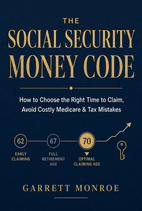
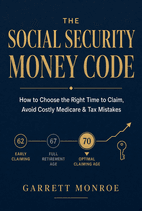
The Social Security Money Code book cover

What is the book The Social Security Money Code about?

Garrett Monroe's The Social Security Money Code reveals how claiming age permanently fixes your benefit amount and provides scenario-driven strategies for couples, divorced spouses, and widows to maximize lifetime income. It also exposes hidden tax and Medicare traps, including IRMAA surcharges, for pre-retirees and retirees seeking to avoid costly, irreversible mistakes.

FeatureInsta.PageBlinkist
Summary DepthFull Chapter-by-Chapter15-min overview
Audio Narration
Visual Mindmaps
AI Q&A
Quizzes
PDF Downloads
Price$89.99/yr$146/yr (PRO)
*Competitor data last verified July 2026.

1 Page Summary

Most financial decisions allow a do-over, but claiming Social Security is a one-way, permanent choice that fixes the size of every future check. Monroe’s central thesis is that filing at the wrong age—often 62, without comparing options—can cost tens of thousands of dollars in lifetime income, while waiting to age 70 can increase benefits by over 75% through guaranteed, inflation-adjusted delayed retirement credits. The book emphasizes that the decision is rarely individual: for married couples, early claims by the higher earner permanently shrink the survivor benefit, so strategies like having the lower earner claim first while the higher earner delays can maximize combined household income. Key tools introduced include the break-even age (typically late 70s to early 80s) and the necessity of verifying one’s actual earnings record rather than relying on outdated estimates.

The author’s approach is scenario-driven and rule-focused, breaking down complex regulations into actionable comparisons. Distinctive features include detailed chapters on often-overlooked benefits, such as divorced-spouse benefits (available after a 10-year marriage, without notifying the ex) and survivor benefits. For widows and widowers, Monroe explains that two separate benefits exist—your own retirement benefit and a survivor benefit—and that they cannot be collected simultaneously; the optimal sequence is usually to claim the smaller one first so the larger can grow to its peak. He also addresses four distinct survivor-benefit scenarios to illustrate how timing changes outcomes, as well as the earnings test for those working before Full Retirement Age, clarifying that withheld amounts are returned as a larger check later.

The book’s second half tackles hidden tax and Medicare traps. Monroe reveals that Social Security benefits can be taxed via “combined income” calculations, and that the order of withdrawals from taxable, tax-deferred, and Roth accounts significantly impacts how much of your check you keep—with a sound default of taxable first, tax-deferred second, and Roth last. He also explains Medicare enrollment deadlines and penalties, plus the Income-Related Monthly Adjustment Amount (IRMAA), a surcharge on Part B and Part D premiums triggered by income spikes like property sales or Roth conversions—a cliff effect where one dollar over a threshold costs the full surcharge. Intended for pre-retirees and retirees, especially couples and those navigating divorce, widowhood, or working while claiming, the book provides a practical, decision-oriented framework to avoid costly, permanent mistakes and maximize every dollar of earned retirement income.

Chapter 1: The Claiming Decision You Only Get to Make Once

Overview

Most financial decisions come with a do-over. Claiming Social Security does not: the first choice you make is the one that sticks, and no later correction will repair it.

A permanent decision

Claiming Social Security is a one-way decision: the age you file sets the amount of every check you will ever receive. Mike filed at 62 without comparing options and got about $1,400 a month; David, retiring from a similar career, waited to 70 and drew about $2,480. Over retirements into their mid-80s, the gap added roughly $100,000 of lifetime income. Claiming before Full Retirement Age locks in a permanently reduced check; delayed retirement credits reward each year of waiting up to 70, and the only escape hatch, withdrawing an application within 12 months, requires repaying what you received.

The household stakes

An early claim also shrinks survivor protection, because the surviving spouse generally keeps the larger of the two checks. The most expensive mistake at the claiming window is filing before running the numbers side by side. Couples should coordinate: when the higher earner files early, the spousal and survivor benefits meant for the other spouse can shrink. A larger check can also raise income taxes on benefits and income-based Medicare premiums.

Where guidance ends

The Social Security Administration explains the rules, tells you what a benefit will be at a given age, and processes applications, but it will not build your personal strategy, and answers vary by representative. Because no outsider sees your savings and dependents the way you do, the right approach is a framework for weighing options, starting from your own benefit estimates, rather than trusting whoever answers the phone.

Key Takeaways
  • Treat the claiming decision as permanent: the age you set controls every future check, and the only way to reverse it is to repay what you already received.
  • Run the household comparison before anyone files, since an early claim by the higher earner can shrink the survivor benefit more than it trims the worker’s own check.
  • Include taxes and income-based Medicare premiums in the math, because a larger monthly benefit can quietly cost you more outside Social Security.
  • Go to Social Security for your own benefit estimates, not for a final recommendation; only you can fit the numbers to your savings, dependents, and expected lifespan.

Key concepts: Chapter 1: The Claiming Decision You Only Get to Make Once

Chapter 1: The Claiming Decision You Only Get to Make Once

A Permanent Decision

  • Claiming age locks in every future check
  • Filing at 62 vs 70 can differ by $100,000
  • Early filing permanently reduces benefits
  • Only escape: withdraw within 12 months and repay

Household Stakes

  • Early claim shrinks survivor protection
  • Surviving spouse keeps larger of two checks
  • Higher earner's early filing cuts spousal benefits
  • Coordinate filing decisions as a couple

Hidden Costs of Larger Checks

  • Bigger benefits can raise income taxes
  • Higher income triggers Medicare premium surcharges
  • Run full tax math before deciding

Where Guidance Ends

  • SSA explains rules but won't build strategy
  • Answers vary by representative
  • No outsider knows your savings and dependents
  • Use your own benefit estimates as starting point

Key Takeaways

  • Treat claiming as permanent, no do-over
  • Compare household benefits before anyone files
  • Include taxes and Medicare premiums in math
  • Get estimates from SSA, decide for yourself

💡 Try clicking the AI chat button to ask questions about this book!

Chapter 2: What Will You Really Receive?

Overview

A permanent retirement decision is being made from a number that may be years out of date or secondhand, and the people making it do not know what their own record shows. The gap between assumption and fact is wide enough to change the decision itself.

Real figures, not guesses

Two people at one kitchen table may each quote a benefit: one trusts an old letter, one a friend's number, yet neither has looked at the actual earnings record. Claiming is permanent; only the actual record should anchor it. Record three figures:

  • 62: earliest and smallest.
  • Full Retirement Age (FRA): baseline.
  • 70: largest; delayed credits stop.

FRA is 66 for 1943 through 1954, rising two months per year to 67 by 1960. The formula averages the highest 35 indexed earnings years. Fewer working years insert zeros; replacing them lifts the check. Linda turned two zeros into paid years and gained about $40 monthly. Claiming at 62 reduces the baseline around 30%; waiting past FRA adds about 8% a year through 70.

Protect the record

Check your SSA statement, year by year, for missing or wrong wages; old W-2s and tax returns support corrections. Underreported self-employment income shrinks future benefits. The Social Security Fairness Act, signed January 2025, repealed WEP and GPO and made benefits retroactive to January 2024.

Key Takeaways
  • Since your claiming decision locks in for life, obtain your own official earnings record and compare the amounts it shows at 62, your full retirement age, and 70 before trusting anyone else's number.

  • Review your annual SSA statement for missing or underreported years, then submit old W-2s or tax returns to correct them; even a few zero years drag down the 35-year earnings average that sets your monthly check.

  • If any income came from self-employment, confirm that the SSA recorded it correctly, because an underreported year shrinks your benefit just like a missing one and may need a correction before you apply.

  • Ask whether the repeal of the Windfall Elimination Provision and the Government Pension Offset applies to your situation, since a recalculation could mean a larger benefit and back payments you have not yet claimed.

Key concepts: Chapter 2: What Will You Really Receive?

Chapter 2: What Will You Really Receive?

The Core Problem: Guessing vs. Facts

  • Permanent decision made from outdated or secondhand numbers
  • Most people never check their actual earnings record
  • Gap between assumption and fact can change the decision

Three Key Benefit Figures

  • 62: earliest and smallest benefit
  • Full Retirement Age: baseline amount
  • 70: largest, delayed credits stop
  • FRA ranges from 66 to 67 by birth year

How Benefits Are Calculated

  • Average of highest 35 indexed earnings years
  • Zero years drag down the average
  • Replacing zeros with paid years boosts monthly check
  • Claiming at 62 cuts ~30%; waiting past FRA adds ~8% yearly

Protecting Your Earnings Record

  • Review SSA statement year by year for errors
  • Submit old W-2s or tax returns to correct mistakes
  • Verify self-employment income was recorded properly
  • Underreported income shrinks future benefits

Recent Law Change: WEP and GPO Repeal

  • Social Security Fairness Act signed January 2025
  • Repealed Windfall Elimination Provision and Government Pension Offset
  • Benefits made retroactive to January 2024
  • Recalculation may mean larger benefit and back payments

Chapter 3: When to Claim: The $100,000 Social Security Question

Overview

Deciding when to start claiming retirement benefits means weighing smaller checks sooner against larger checks later, and the right answer changes with every personal situation. A wrong choice can quietly cost tens of thousands in lifetime income. But how is anyone supposed to know whether to take the money now or wait?

Claiming age fixes every future Social Security check, so few retirement decisions move more money. For most people the age-70 benefit exceeds the age-62 one by over 75%, and no universal best age exists; health, savings, income needs, and dependents decide it.

Claiming Early or Waiting

Claiming early fits fragile health, immediate income needs, thin savings, or wanting to enjoy your healthiest years now. Waiting to 70 earns delayed retirement credits of roughly 8% per year, a guaranteed raise with no market risk, and inflation adjustments compound on that larger base. The real choice is more checks or bigger checks.

Break-Even Age

Break-even age is when total lifetime benefits from waiting pass the early claim, typically the late 70s to early 80s. It frames the decision but cannot predict lifespan; weigh family history and current health.

Different Situations

A laid-off 62-year-old with modest savings can sensibly claim early, since a smaller check now keeps her from draining her reserves. A couple can blend: lower earner Susan claims first while higher earner Tom waits, so Tom's larger benefit becomes survivor protection.

Fear of Insolvency

Insolvency fear does not justify early claiming. According to the Social Security Board of Trustees, even if reserve funds deplete, ongoing payroll taxes are projected to cover roughly three-quarters of scheduled benefits; the realistic risk is reduction, not disappearance.

Action Plan
  1. Create or verify your account at ssa.gov.
  2. Record your age-62, FRA, and age-70 estimates.
  3. Choose a tentative claiming age and write down the reasons.
  4. Check for earnings-record errors, and confirm the 2025 WEP and GPO repeal if a public-sector pension applies.
Key Takeaways
  • Before you choose, verify your earnings record and pull the age-62, FRA, and age-70 amounts from ssa.gov, since one wrong number can lock in a smaller lifetime check.
  • Weigh claiming at 62 against waiting to 70 as a choice between needing income now and buying a guaranteed, inflation-protected raise for the rest of your life.
  • Use the break-even age only as a planning benchmark, and judge your expected side of it by your health and family history rather than treating it as a prediction.
  • For a married couple, coordinate claims so the higher earner delays while the lower earner starts early, making the larger benefit the survivor’s protection.
  • Reject the idea that insolvency justifies early claiming: the realistic risk is a partial cut to scheduled benefits, not the disappearance of Social Security.

Key concepts: Chapter 3: When to Claim: The $100,000 Social Security Question

Chapter 3: When to Claim: The $100,000 Social Security Question

The Core Decision

  • Claiming age fixes every future Social Security check
  • Age-70 benefit exceeds age-62 by over 75%
  • No universal best age; depends on personal factors
  • Real choice: more checks or bigger checks

Early vs. Delayed Claiming

  • Early fits fragile health, immediate needs, thin savings
  • Waiting earns ~8% annual delayed retirement credits
  • Delayed credits are guaranteed, no market risk
  • Inflation adjustments compound on larger base

Break-Even Age

  • When total lifetime benefits from waiting pass early claim
  • Typically late 70s to early 80s
  • Frames decision but cannot predict lifespan
  • Weigh family history and current health

Situation-Specific Strategies

  • Laid-off 62-year-old can sensibly claim early
  • Early claim prevents draining modest savings
  • Couples: lower earner claims first, higher earner waits
  • Higher earner's larger benefit becomes survivor protection

Insolvency Myth and Action Plan

  • Insolvency fear does not justify early claiming
  • Payroll taxes cover ~75% of benefits if reserves deplete
  • Risk is reduction, not disappearance
  • Verify ssa.gov account and earnings record

Chapter 4: Turning Two Benefits Into One Household Strategy

Overview

Married couples often treat their Social Security choices as two separate decisions, yet the household lives on one combined income that outlasts both spouses. The tension is that individually reasonable filing choices can quietly shrink the check the survivor depends on.

Married couples who file for Social Security separately make their first mistake, because both checks support one household. Coordination can add tens of thousands of dollars in lifetime income. In the example, Frank ($2,400 at full retirement age) and Joan ($1,200) each claim early, locking in roughly $1,800 and $900; when Frank dies first, Joan's survivor check carries that permanent reduction. Instead, the lower earner claims first while the higher earner delays, growing a benefit that rises roughly 8 percent yearly after full retirement age. Ask what's best for us, not for me. Common strategies: the stagger, both wait, or both claim early out of necessity.

Key Takeaways
  • Treat your two benefits as one household income stream, and choose claiming ages by what maximizes the couple's combined lifetime income, not each spouse's individual check.
  • Have the lower earner claim first while the higher earner delays, since a larger benefit later is what protects the survivor after the first death.
  • Model the stagger and the both-wait scenarios against your own cash flow needs before letting an immediate income squeeze force an early claim.
  • Remember that the reduction from one spouse's early claim carries over into the survivor benefit, so your claiming decision is effectively a bet on your joint longevity.
  • Use both-wait or the stagger as your default pair of options, and treat both-claim-early as the fallback for households that truly cannot cover expenses otherwise.

Key concepts: Chapter 4: Turning Two Benefits Into One Household Strategy

Chapter 4: Turning Two Benefits Into One Household Strategy

The Core Problem

  • Treating two benefits as separate decisions is the first mistake
  • Both checks support one household income
  • Early claims shrink the survivor's check permanently
  • Individually reasonable choices can hurt the couple

The Coordinated Strategy

  • Lower earner claims first, higher earner delays
  • Delayed benefit grows about 8% yearly after full retirement age
  • Larger benefit later protects the surviving spouse
  • Ask what's best for us, not for me

Choosing Among Scenarios

  • Model the stagger and both-wait against cash flow needs
  • Both-wait or stagger should be your default options
  • Both-claim-early is only a fallback for necessity
  • Claiming decisions are a bet on joint longevity
You've reached the end of the free chapters

Next chapter: “Breaking Down the Spousal Benefit: How Couples Can Make the Right Decisions” is locked

Keep reading The Social Security Money Code — and unlock all 500+ book summaries with audio, mindmaps and AI Q&A.

$0.00 due today · 7 days free, then $89.99/year ($7.49/mo) · Cancel anytime before day 7

About the Author

Garrett Monroe

Garrett Monroe is an investigative journalist and author specializing in true crime and environmental reporting, with a background covering forensic science for national publications. He is best known for his critically acclaimed books, *The Silent Witness* and *Toxic Legacy*, which explore cold-case forensics and corporate pollution scandals respectively. His work has been recognized with multiple awards for investigative excellence, and he frequently lectures on the intersection of science and justice.

Frequently Asked Questions about The Social Security Money Code

What is The Social Security Money Code about?
The book is a practical guide to Social Security claiming decisions, emphasizing that choosing when to file is a permanent, high-stakes choice. It walks through retirement, spousal, divorced-spouse, and survivor benefits, plus related topics like working while collecting, tax traps, withdrawal ordering, and Medicare surcharges. The goal is to help individuals and couples coordinate benefits into a larger lifetime household income stream by comparing real figures, break-even ages, and sequencing strategies.
Who is the author of The Social Security Money Code?
Garrett Monroe is the author of this retirement income planning guide. Using multiple illustrative case studies—such as couples like Frank and Joan, and retirees like Howard—Monroe explains technical Social Security and Medicare rules through concrete examples and actionable steps. The content reflects a planning-focused approach rather than an academic or political treatment.
Is The Social Security Money Code worth reading?
Yes, because it addresses one of the most consequential and irreversible financial decisions most people face—when to claim Social Security—and shows how seemingly small timing choices can shift lifetime income by six figures. Rather than offering a one-size-fits-all age, it provides clear frameworks like break-even age, household coordination, and withdrawal ordering that readers can apply to their own health, finances, and family situation. The real-world examples make complicated rules like survivor sequencing and IRMAA surcharges easy to understand.
What are the key lessons from The Social Security Money Code?
The core lesson is that claiming age permanently fixes your benefit, so compare your actual Social Security record at 62, Full Retirement Age, and 70 before deciding, as each year of waiting past FRA adds about 8% with no market risk. Couples should treat two benefits as one household income stream, often having the lower earner claim first while the higher earner delays to protect the survivor. Survivors and divorced spouses hold often-overlooked options with specific timing rules, such as claiming the smaller benefit first so the larger can grow. Finally, watch hidden tax and Medicare traps: combined income can make benefits taxable, withdrawal order determines how much you keep, and a single high-income year can trigger IRMAA surcharge cliffs.
0